 Mini Cooper
All generations, specs and history
Updated Published Sources (6) Report an error
By Felix Hartmann, Automotive Technology & EV Contributor Reviewed by Oleksandr Hnatiuk

- Built
- 2001–present
- Generations
- 4 · R50/R53 to F66
- Top power
- 225 kW (306 PS)
Timeline
Cooper generations
Click a generation for its own page


- Cooper R50/R53 2001–2006 · Hatchback
- Cooper R56 2006–2014 · Hatchback
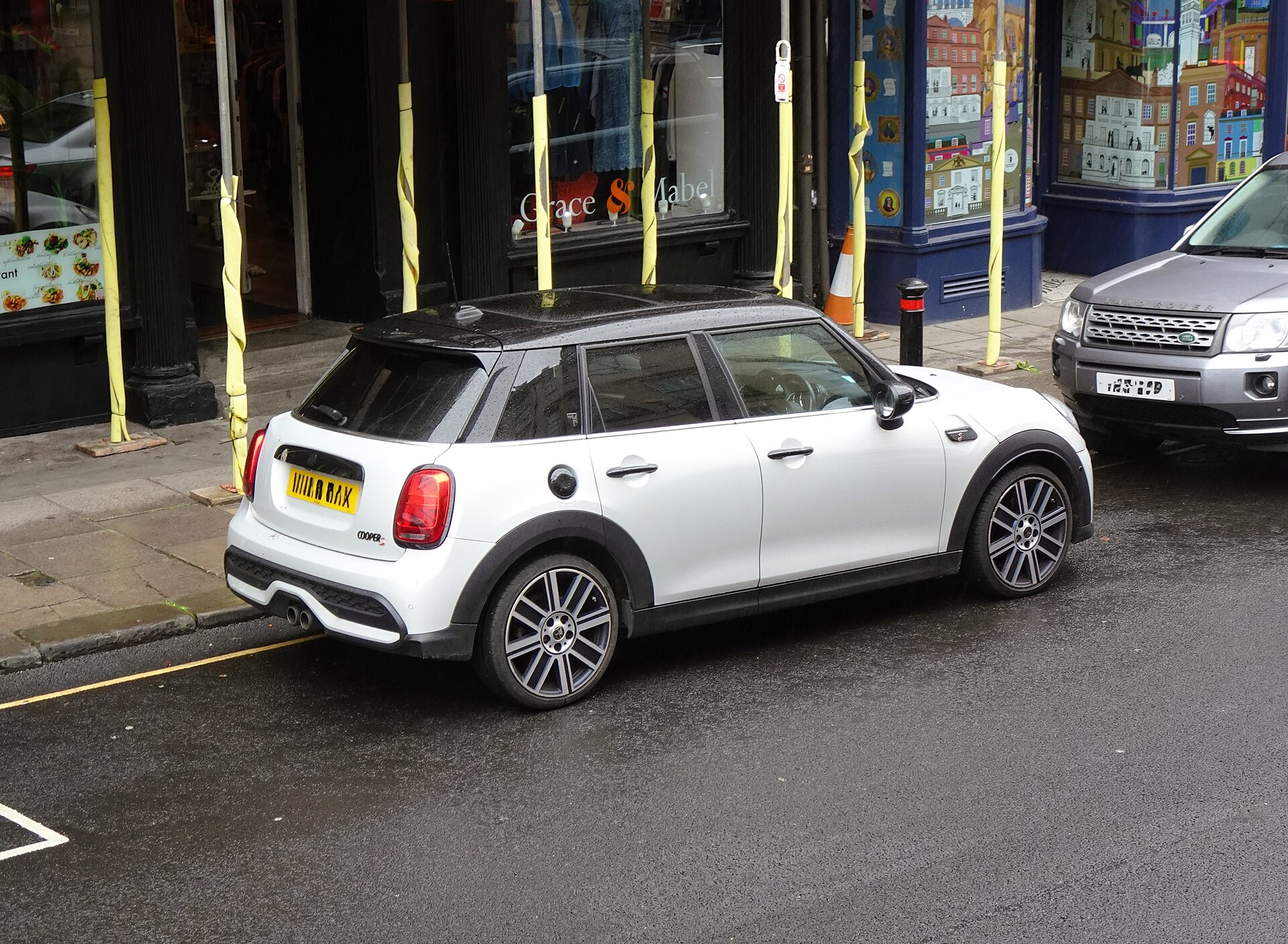
- Cooper F56 2014–2023 · Hatchback · 55–225 kW (75–306 PS)
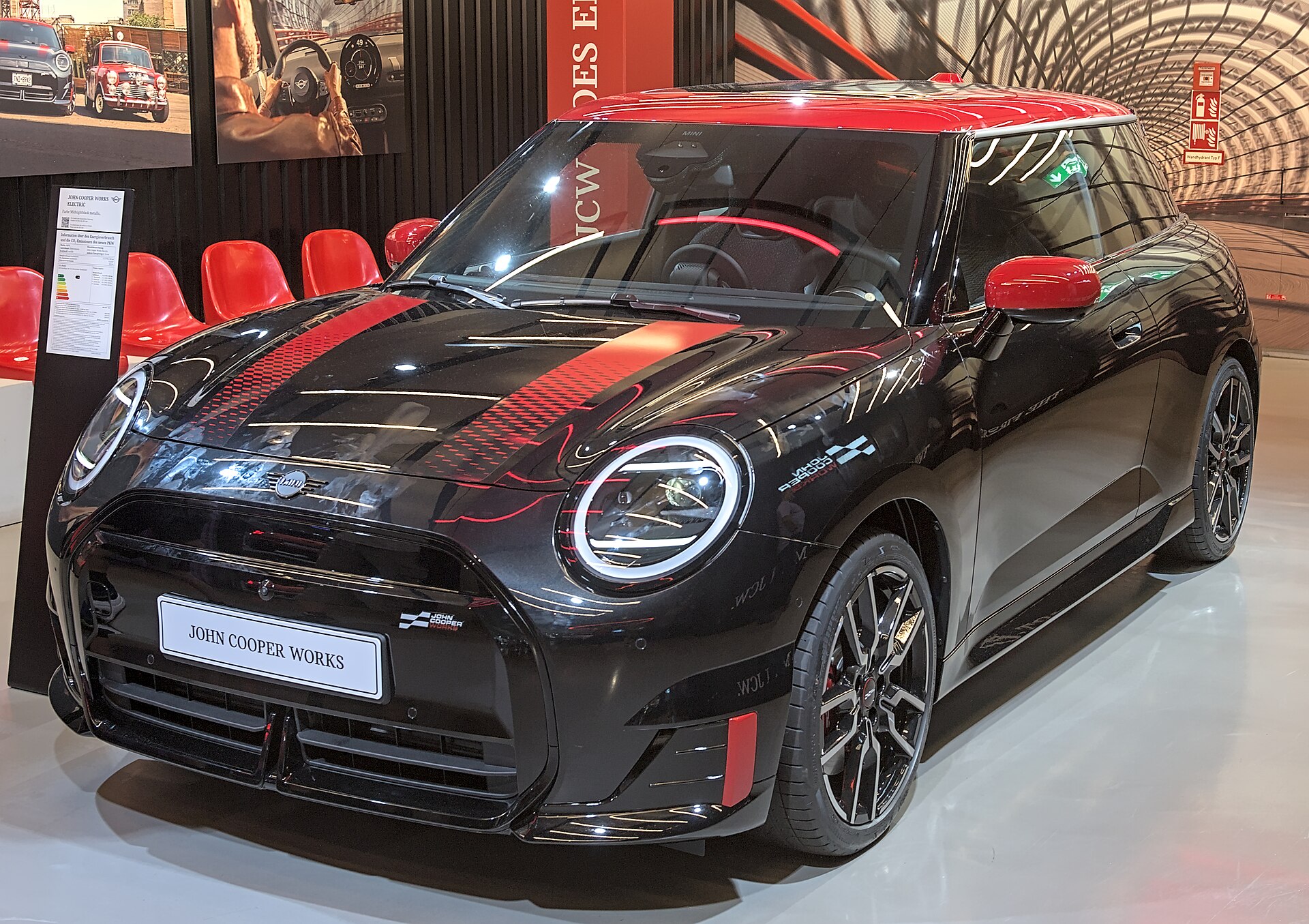
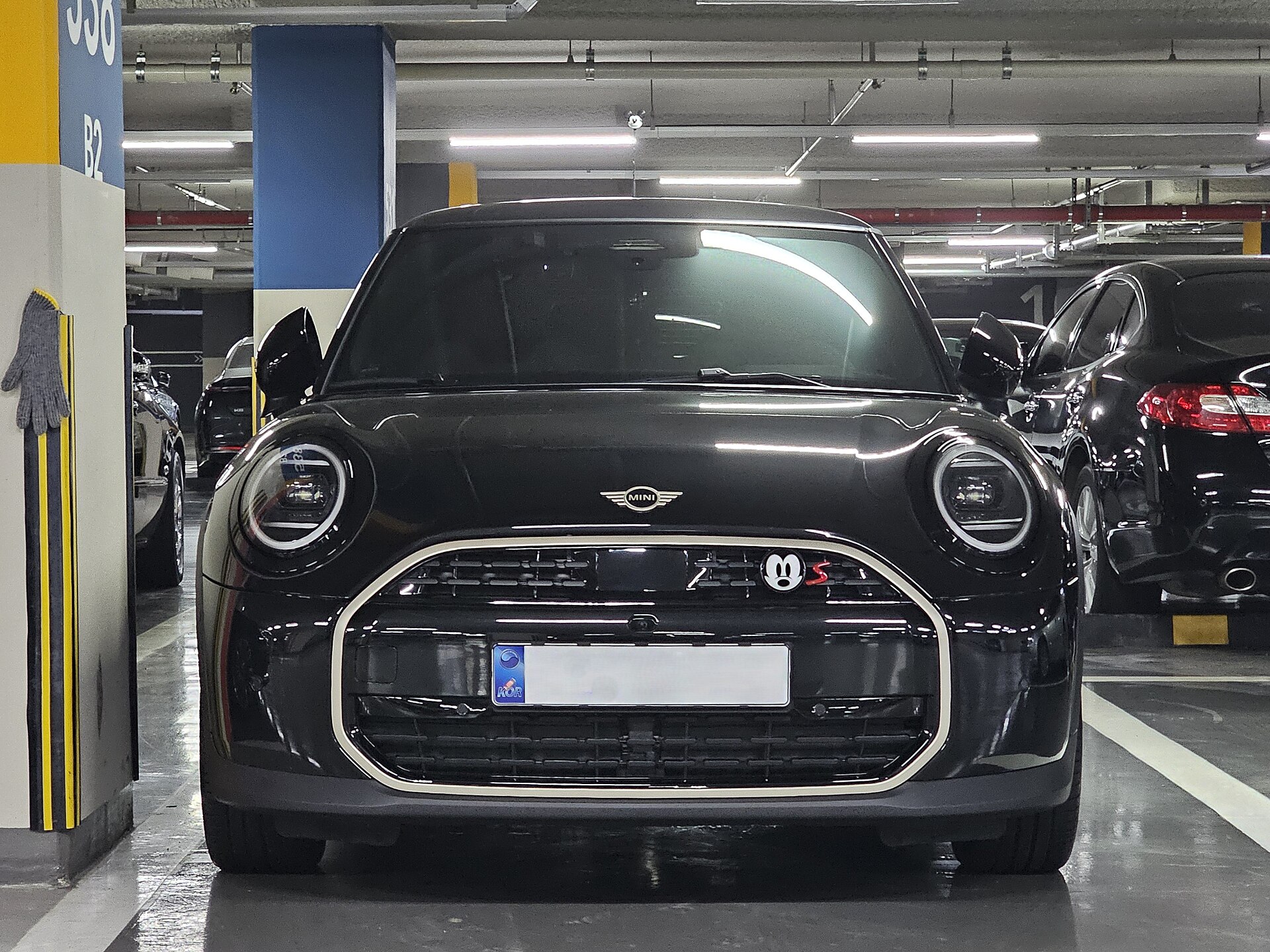
- Cooper F66 Current 2024–now · Hatchback
Newest first · 4 generations since 2001
-
2024
-
2014

-
2006
-
2001
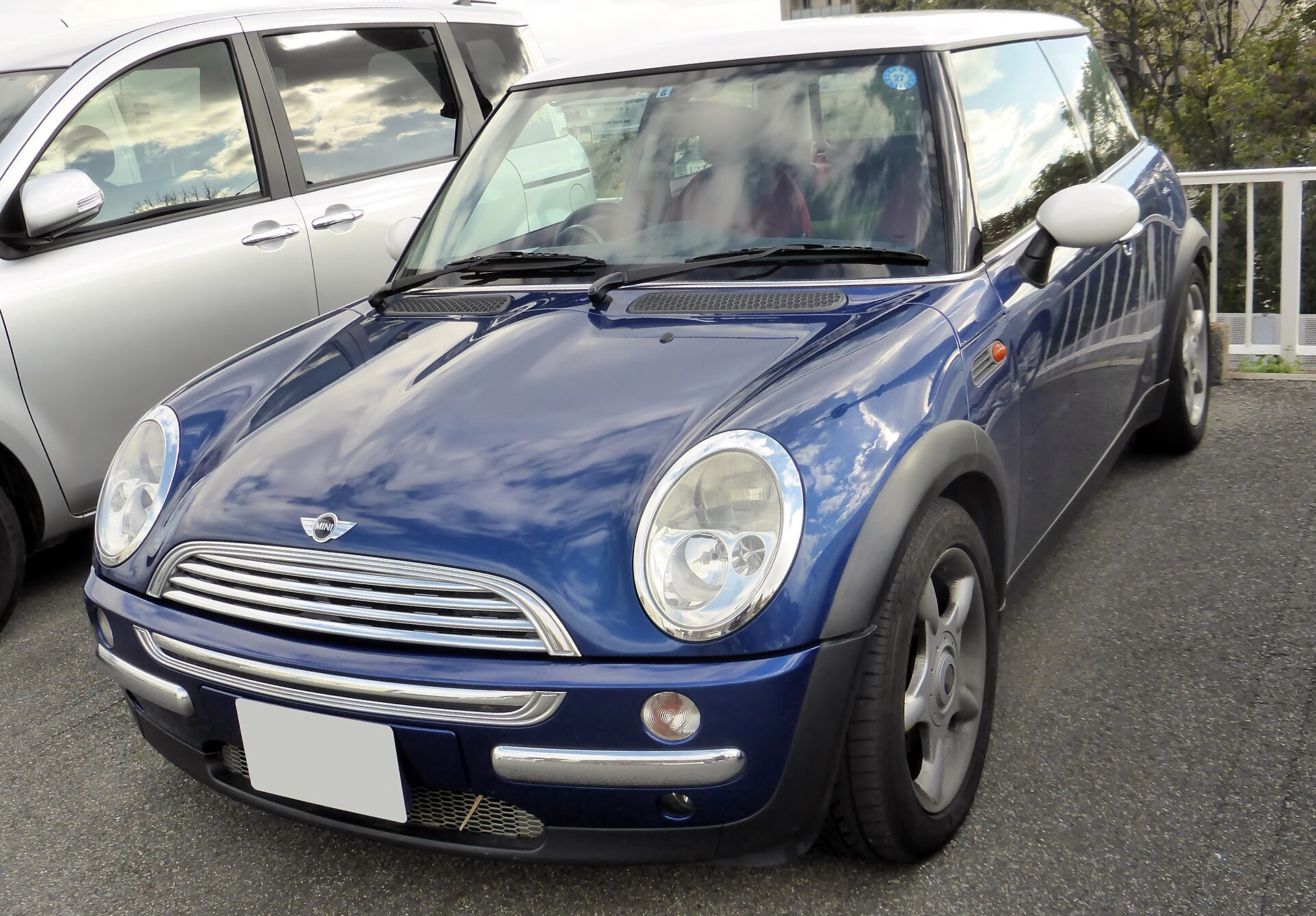
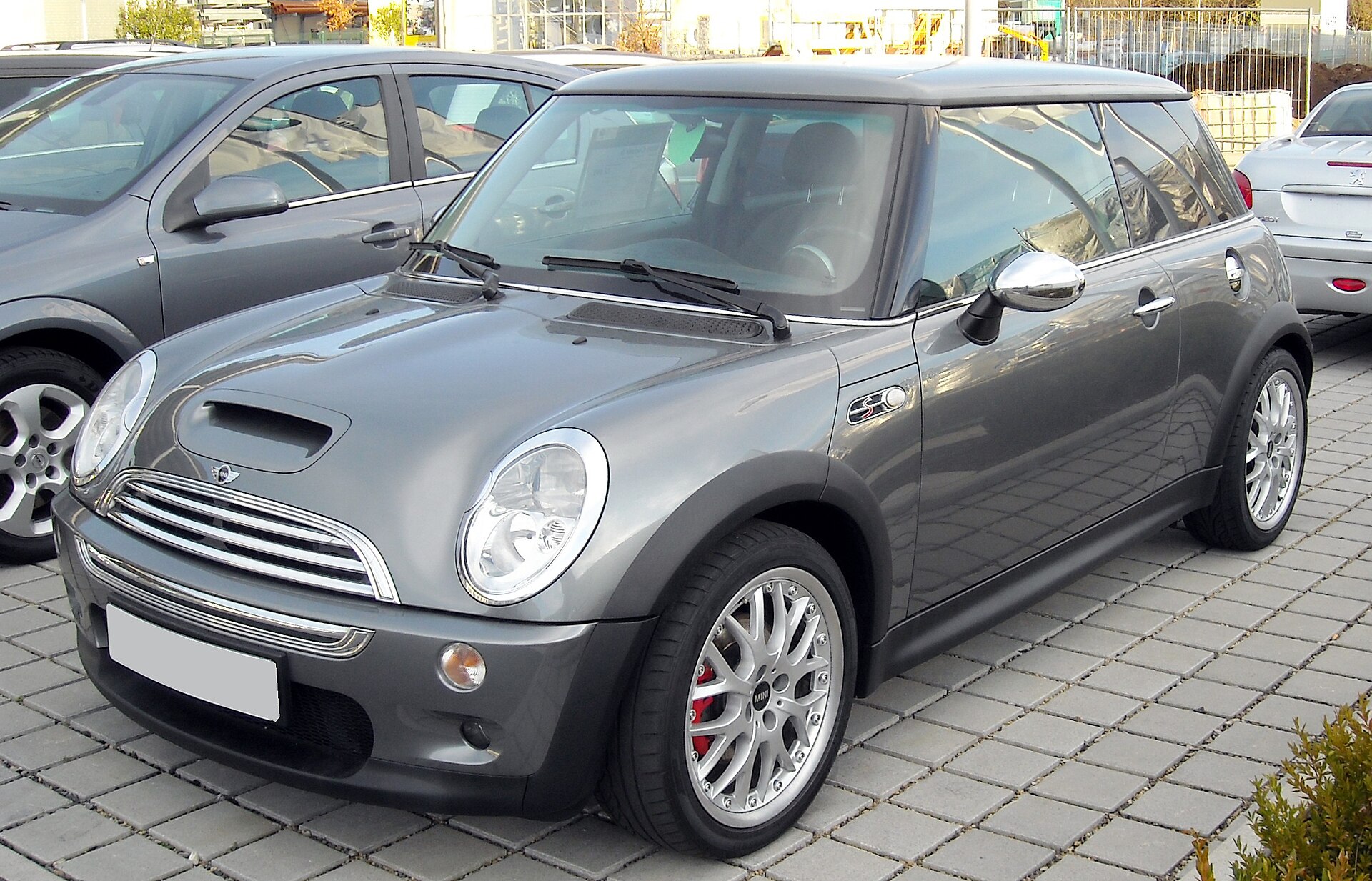
All generations by year: Cooper F66 (2024–now) · Cooper F56 (2014–2023) · Cooper R56 (2006–2014) · Cooper R50/R53 (2001–2006)
Which one is mine?
Pick the year of first registration to see which generation it is.
- F66 2024–present
- F56 2014–2023
- R56 2006–2014
- R50/R53 2001–2006
Which Mini Cooper F56 to buy: our verdict
Our verdict · Felix Hartmann
- Cooper (1.5, 100 kW): the best all-rounder: quick enough, economical and the most common on the used market.
- Cooper S (141 kW): the choice for keen drivers; post-2018 cars with the dual-clutch gearbox are smoother.
- John Cooper Works or JCW GP: for enthusiasts only; the GP is a limited collector's car.
- Cooper SE: a good second car for town use if you can charge at home; the small 32.6 kWh battery limits range.
- Avoid the low-power One First unless running costs matter more than performance.
The third-generation Mini Cooper, coded F56 for the three-door hatch, was revealed by BMW in November 2013 and sold from 2014 to 2023. It is 3,821 mm long, has a 211-litre boot and was built in Oxford, UK, and Born, Netherlands. Engines range from a 55 kW (75 PS) three-cylinder to the 225 kW John Cooper Works GP, plus the electric Cooper SE.
In short
- Body styles: three-door hatch (F56), five-door hatch (F55) and convertible (F57); updates in 2018 and 2021.
- Core engines: Cooper 1.5 three-cylinder with 100 kW (136 PS), Cooper S 2.0 with 141 kW (192 PS), John Cooper Works with 170 kW (231 PS).
- Electric Cooper SE from 2020: 135 kW (184 PS), 32.6 kWh battery; JCW GP of 2020: 225 kW, 3,000 built.
- Euro NCAP 2014: four stars (adult 79%, child 73%); succeeded by the electric J01 and the combustion F66 from 2023–2024.

Running cost
Fuel · Cooper F56 1.5 85 kW (116 PS) Hatchback
about 900 EUR fuel a year at 15,000 km
3.6 l/100 km · diesel at 1.65 EUR/l · change mileage, fuel price or version
Specs by version
Engines
| Version | Engine | Power | Gearbox |
|---|---|---|---|
| Diesel · 1 version | |||
| F56 · 1.5 85 kW (116 PS) Hatchback | 1.5 l · Diesel 1,500 cc | 85 kW 116 PS114 hp | Manual |
| Petrol · 2 versions | |||
| F56 · 1.5 100 kW (136 PS) Hatchback | 1.5 l · Petrol 1,500 cc | 100 kW 136 PS134 hp | - |
| F56 · 2.0 141 kW (192 PS) Hatchback | 2.0 l · 4 cyl · Petrol 2,000 cc | 141 kW 192 PS189 hp | - |
Performance
Show all 2 versions
| Version | Top speed | Fuel consumption | CO₂ |
|---|---|---|---|
| Diesel · 1 version | |||
| F56 · 1.5 85 kW (116 PS) Hatchback | 205 km/h127 mph | 3.6 l/100 km65.3 mpg US · 78.5 mpg UK | 123 g/km |
| Petrol · 1 version | |||
| F56 · 1.5 100 kW (136 PS) Hatchback | 210 km/h130 mph | 5.6 l/100 km42.0 mpg US · 50.4 mpg UK | 128 g/km |
Dimensions and weight
Show all 3 versions
| Version | Kerb weight | Boot |
|---|---|---|
| Diesel · 1 version | ||
| F56 · 1.5 85 kW (116 PS) Hatchback | 1,266 kg2,791 lb | 211 l7.5 cu ft |
| Petrol · 2 versions | ||
| F56 · 1.5 100 kW (136 PS) Hatchback | 1,284 kg2,831 lb | 211 l7.5 cu ft |
| F56 · 2.0 141 kW (192 PS) Hatchback | - | 211 l7.5 cu ft |
Verified Manufacturer and type-approval data from our catalog · Sources and methodology
Mini Cooper 3 at a glance
The F56 kept the familiar shape of the BMW-era Mini but grew in every direction. BMW quoted growth of 98 mm in length, 44 mm in width and 28 mm in wheelbase over the outgoing model. Three-cylinder engines arrived for the first time in the Cooper and One. The original Mini's story is told in our history of the classic Mini, and all models are on the Mini brand page.

| Generation detail | Value |
|---|---|
| Codes | F56 (3-door), F55 (5-door), F57 (convertible) |
| Revealed | November 2013 |
| Production | 2014–2023 |
| Plants | Oxford (UK); Born, Netherlands (VDL Nedcar, F56 and F57) |
| Drive | Front-wheel drive |
| Updates | 2018 (LCI-1), 2021 (LCI-2) |
| Successor | Electric J01 Cooper (2023) and combustion F66 (2024) |
The old 1cars text links the November reveal to the birthday of Sir Alec Issigonis, designer of the original 1959 Mini.
Three- and four-cylinder engines, from One First to JCW GP
| Model | Engine | Power | Torque | 0–100 km/h | Top speed |
|---|---|---|---|---|---|
| One First | 1.2 L 3-cyl petrol | 55 kW (75 PS) | 150 Nm | 13.4 s | 165 km/h |
| One | 1.2 L 3-cyl petrol | 75 kW (102 PS) | 180–190 Nm | 9.9 s | 195 km/h |
| Cooper | 1.5 L 3-cyl petrol (B38) | 100 kW (136 PS) | 220–230 Nm | 7.9 s | 210 km/h |
| Cooper S | 2.0 L 4-cyl petrol | 141 kW (192 PS) | 280 Nm | 6.8 s (auto 6.7 s) | 235 km/h |
| John Cooper Works | 2.0 L 4-cyl petrol | 170 kW (231 PS) | 320 Nm | 6.3 s (auto 6.1 s) | 246 km/h |
| One D | 1.5 L 3-cyl diesel | 70 kW (95 PS) | 220 Nm | 11.6 s | 190 km/h |
| Cooper D | 1.5 L 3-cyl diesel | 85 kW (116 PS) | 270 Nm | 9.2 s | 205 km/h |
| Cooper SD | 2.0 L 4-cyl diesel | 125 kW (170 PS) | 360 Nm | 7.2 s | 227 km/h |
| Cooper SE (2020) | Electric motor, 32.6 kWh | 135 kW (184 PS) | 270 Nm | 7.3 s | 150 km/h |
| JCW GP (2020) | 2.0 L 4-cyl petrol | 225 kW (306 PS) | 450 Nm | 5.2 s | 265 km/h |
At launch the gearboxes were a six-speed manual, a six-speed automatic and a six-speed sports automatic. The 2018 update replaced the automatic with a seven-speed dual-clutch gearbox on most versions, while the JCW moved to an eight-speed automatic. The 2021 update added a particulate filter to the Cooper S petrol, which cost about 10 hp.

All engines use BMW's TwinPower Turbo design with start-stop. In our catalogue the Mini Cooper is ranked #2 among the fastest hatchbacks by top speed, and it is ranked #6 among the most powerful hatchbacks.
Size, cabin and the 211-litre boot
| Parameter | Metric | Imperial |
|---|---|---|
| Length (3-door) | 3,821 mm | 150.4 in |
| Width (without mirrors) | 1,727 mm | 68.0 in |
| Height | 1,414 mm | 55.7 in |
| Wheelbase (3-door) | 2,495 mm | 98.2 in |
| Track, front and rear | 1,501 mm | 59.1 in |
| Length / wheelbase (5-door) | 3,982 / 2,567 mm | 156.8 / 101.1 in |
| Boot, seats up / folded | 211 / 731 l | 7.5 / 25.8 cu ft |
| Kerb weight, Cooper | 1,085–1,160 kg (by measuring method) | 2,392–2,557 lb |
| Fuel tank | 40 l | 10.6 US gal |
The cabin keeps the large round centre display, now surrounded by a ring of changing coloured light, and moves the speedometer from the centre console to a binnacle behind the steering wheel. According to the old 1cars text, an 8.8-inch touch screen and a head-up display were optional, the engine starts with a toggle switch, and the front seats have 23 mm longer cushions than before. The rear seat folds 40:60. The boot grew from 160–180 litres in the previous Mini to 211 litres, which is still small: in our catalogue's biggest-boot hatchbacks list the Mini is ranked #11.

Running costs and fuel economy
The three-cylinder Cooper is the economical choice: about 4.5–4.6 l/100 km (51–52 mpg US) on the older NEDC test with the manual gearbox, with CO2 of 105–107 g/km. The old 1cars text quotes 3.5–3.8 l/100 km for the Cooper D and 5.2–5.8 l/100 km for the Cooper S. Real-world figures on the newer WLTP test are higher. Premium pricing for parts and servicing is the Mini's main running-cost drawback.

Trims, options and equipment
Mini sold the F56 in a few engine-based versions with option packs rather than many fixed trims. According to the old 1cars text, typical options included LED headlights, the head-up display, Driving Assistant (camera-based adaptive cruise control, collision warning with city braking up to about 60 km/h, and traffic-sign recognition), a parking assistant, a panoramic sunroof, dual-zone climate control and a Harman Kardon sound system. Dynamic Damper Control, adjustable dampers, was offered for the first time on a Mini.
Safety: Euro NCAP 2014
| Test | Stars | Adult | Child | Pedestrian | Safety assist |
|---|---|---|---|---|---|
| Euro NCAP 2014 (Cooper 1.5) | 4 | 79% | 73% | 66% | 56% |
ANCAP gave the car five stars in 2014 under its own scheme. The F56 has six airbags and an active bonnet that lifts on impact to protect pedestrians, according to the old 1cars text.

Rivals: how the Mini Cooper compares
The F56 competes with premium small cars such as the Audi A1 and with sporty superminis. The Abarth 500C offers similar retro charm but less space, and mainstream hatchbacks such as the Hyundai i20 give more room for the money. The Mini's strengths are handling, cabin quality and engine choice; its weaknesses are a small boot, a firm ride on large wheels and high prices for options. Those who need more space can step up to the Mini Countryman.

Mini Cooper evolution in numbers
Did you know?
- The Mini Cooper has been around for 25 years: 4 generations in our catalog since 2001.
- The longest-running generation is the Cooper F56 (2014–2023): 9 years.
Image credits · Photos from Wikimedia Commons under free licences
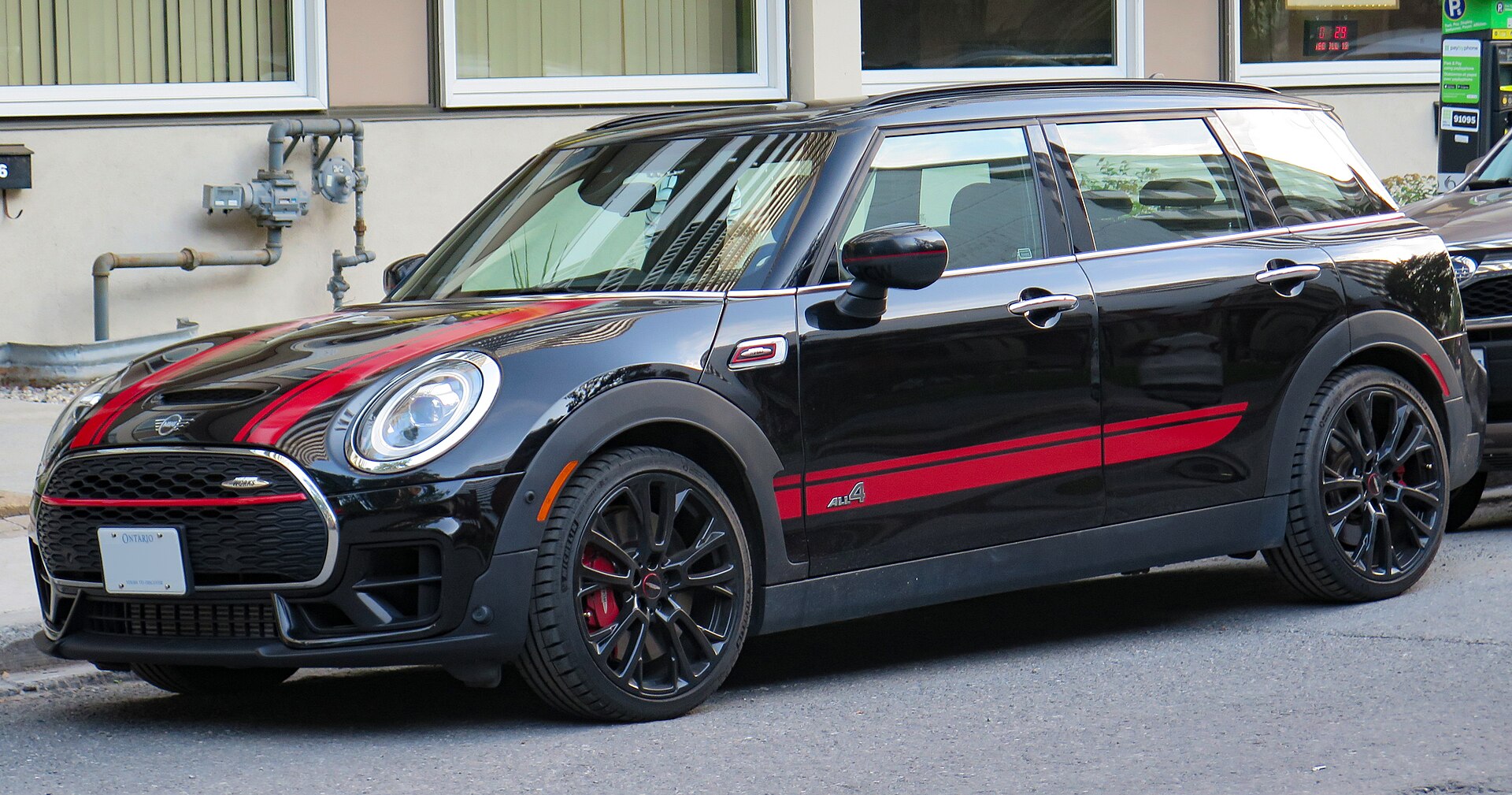
- Mini Cooper R50/R53 · Photo: Tokumeigakarinoaoshima / Wikimedia Commons, CC0
- Mini Cooper R56 · Photo: Rudolf Stricker / Wikimedia Commons, Attribution
- Mini Cooper F66 · Photo: Damian B Oh / Wikimedia Commons, CC BY-SA 4.0
Rivals
Compare with…
Compare Mini Cooper with
- Hyundai i20 quick spec comparison
- Abarth 500C quick spec comparison
-
In production
- Years
- 2008–present
- Body
- Hatchback
- Fuel
- Petrol, Hybrid
- Power
- 62–88 kW (84–120 PS)
3 generations
- I
- GB
- BC3


Mini Cooper in our rankings
- No. 5 of 42 · Most economical hatchbacks (3.6 l/100 km)
- No. 6 of 256 · Most economical cars (3.6 l/100 km)
- No. 109 of 912 · Longest-running car nameplates (25 years · top 13%)
- No. 16 of 106 · Most powerful hatchbacks (225 kW · top 17%)
- No. 74 of 305 · Oldest car models still on sale (25 years · top 25%)
- No. 80 of 304 · Lightest cars (1,266 kg · top 27%)
More economical than 97% of ranked cars in the 1CARS catalog (No. 6 of 256).
Mini Cooper photos 19


Mini Cooper videos 3

Crash test

Test drive

Video overview
FAQ
What years was the Mini Cooper F56 made?
The third-generation Mini was revealed in November 2013 and built from 2014 to 2023, with updates in 2018 and 2021. It was succeeded by the electric J01 Cooper in 2023 and the combustion-engined F66 Cooper from 2024.
What engines does the third-generation Mini Cooper have?
The Cooper has a 1.5-litre three-cylinder turbo with 100 kW (136 PS). Other versions use a 1.2-litre three-cylinder, a 2.0-litre four-cylinder in the Cooper S and JCW, 1.5 and 2.0-litre diesels, and an electric motor in the Cooper SE.
How big is the boot of the Mini Cooper F56?
The three-door F56 has 211 litres of boot space with the rear seats up and 731 litres with them folded. That is more than the 160–180 litres of the previous Mini but still small for the class, so the five-door F55 is better for families.
What should I check on a used Mini Cooper F56?
Ask for a full service history with regular oil changes, check for coolant leaks and warning lights, and test the gearbox: the dual-clutch unit on post-2018 cars should shift smoothly. Inspect tyres and suspension on cars with large wheels, and budget for premium parts prices.
How safe is the third-generation Mini?
Euro NCAP gave the 2014 Mini Cooper four stars, with 79% for adult occupant protection and 73% for child protection. ANCAP awarded five stars under its own rules. Six airbags and an active pedestrian-protection bonnet are standard.
Data sources
Data checked by an editor against the sources below.
- The text of this article (1cars archive)
- Wikipedia - Mini Hatch
- Wikipedia - Mini (BMW Group)
- Am-online
- Co
- EEA CO₂ monitoring (European Environment Agency, CC BY 4.0)