The History of Mini: From Issigonis's 1959 Small Car to BMW's MINI
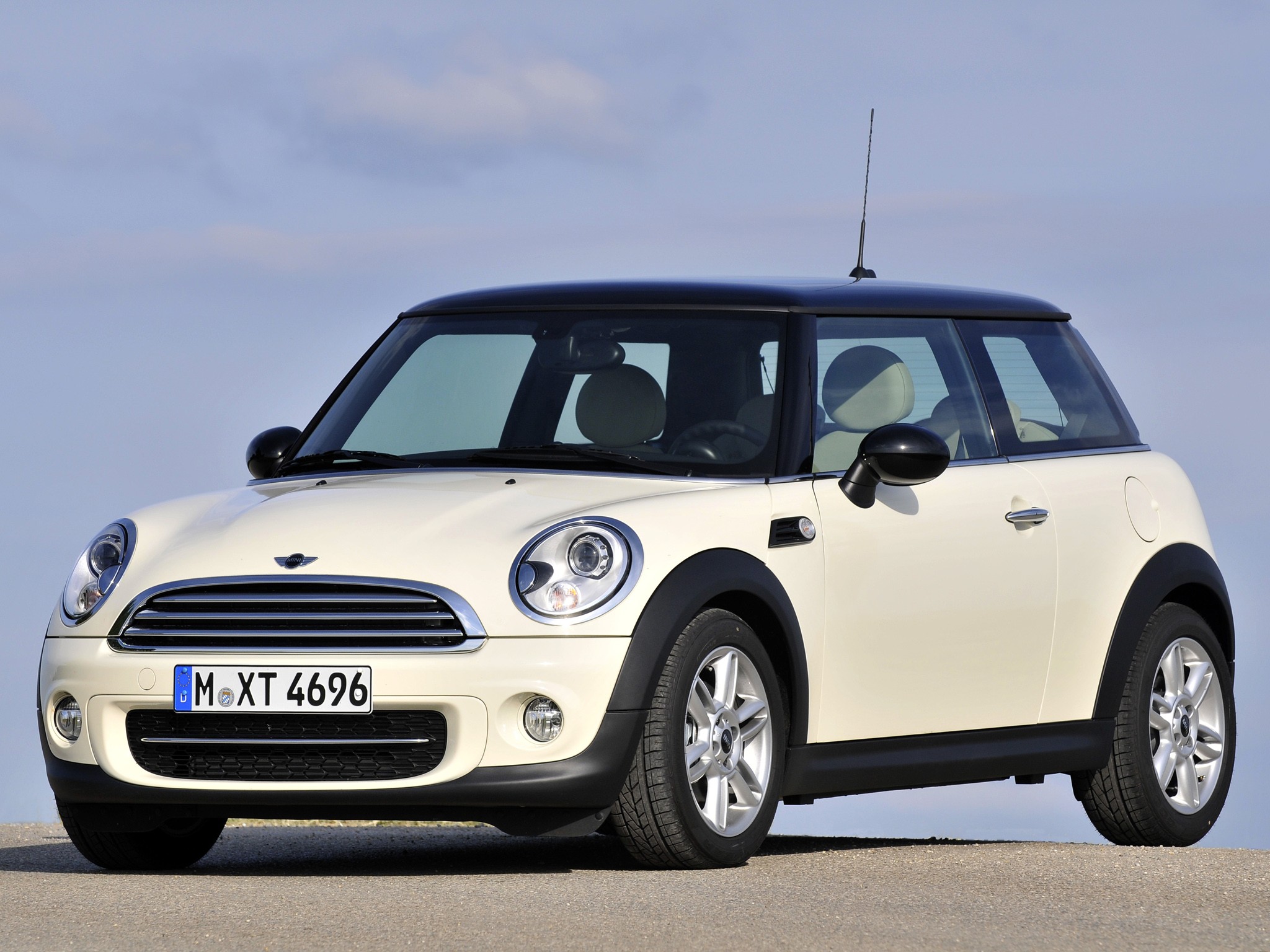
Mini is a British car brand owned by BMW since 1994. It began as a single car: the Mini designed by Alec Issigonis and launched by the British Motor Corporation (BMC) in August 1959. The classic Mini stayed in production until October 2000, with 5,387,862 built. Since July 2001 BMW has sold a new generation of MINI cars, built mainly in Oxford.

Key takeaways
- 1959: BMC launches the Mini as the Austin Seven and the Morris Mini-Minor, with a transverse engine and front-wheel drive.
- 1961–1967: the Mini Cooper and Cooper S turn a small family car into a rally winner at Monte Carlo.
- 1969: Mini becomes a brand in its own right; production passes two million the same year.
- 2001 to today: BMW's MINI grows into a family of hatchbacks, convertibles, crossovers and electric cars.
Mini key facts

| Fact | Value |
|---|---|
| First car | Mini, launched August 1959 by BMC |
| Designer | Sir Alec Issigonis |
| Brand in its own right | 1969 |
| Owner | BMW Group (since 1994) |
| Classic Mini production | 1959–2000, 5,387,862 cars |
| New MINI on sale | since July 2001 |
| Main plant | Oxford (Cowley), England |
| Worldwide sales, 2012 | 301,526 cars |
Alec Issigonis and a car for four adults
In the 1950s the British Motor Corporation wanted a very small, economical car for ordinary families. Its chief designer, Alec Issigonis, set himself a simple aim: to fit four adults and their luggage into the smallest possible body. You can read more about him in the profile of Alec Issigonis.

His solution was radical. The four-cylinder engine sits across the car and drives the front wheels, and the gearbox is built into the engine's oil sump below it. According to the old 1cars text, that layout reduced the engine bay to about 20 % of the body volume, leaving the rest for people and luggage. Small wheels at the corners added to the space inside.
Several prototypes were built in the late 1950s. The production car went on sale in August 1959 under two badges, Austin at Longbridge and Morris at Cowley in Oxford. The old 1cars text adds that the launch was promoted in more than a hundred countries at once and that dealers received thousands of cars in advance.
Timeline from 1959 to 2024

| Year | Event |
|---|---|
| 1959 | BMC launches the Mini (Austin Seven and Morris Mini-Minor) |
| 1961 | Mini Cooper with 997 cc, 55 bhp and front disc brakes |
| 1964 | Paddy Hopkirk wins the Monte Carlo Rally in a Cooper S |
| 1965 | One millionth Mini; the Moke goes on sale |
| 1969 | Mini becomes a separate brand; two million built |
| 1976 | Four million built |
| 1986 | Five millionth Mini leaves Longbridge |
| 1994 | BMW buys the Rover Group, including Mini |
| 2000 | BMW sells Rover but keeps Mini; last classic Mini in October |
| 2001 | New MINI Hatch (R50) goes on sale in July |
| 2010 | Countryman, the first MINI crossover |
| 2024 | New petrol Cooper and electric Aceman launched |
John Cooper and the Monte Carlo victories
The racing-car builder John Cooper saw the potential of the light, nimble Mini. In 1961 BMC launched the Mini Cooper with a 997 cc engine of 41 kW (55 bhp), front disc brakes and two-tone paint. It cost 680 pounds. The Cooper S followed in 1963–1964 with a 1,071 cc engine, a top speed of 100 mph (161 km/h) and 0–60 mph in 13.5 seconds; from 1964 it had a 1,275 cc engine.
Rallying made the car famous. Paddy Hopkirk won the Monte Carlo Rally in January 1964 in a 1,071 cc Cooper S, and Timo Mäkinen won again in 1965. In 1966 Mäkinen, Rauno Aaltonen and Hopkirk finished first, second and third, but the French organisers disqualified them over the cars' lighting. In 1967 the Mini won once more, its third official victory; many fans count it as the fourth.
The Cooper changed the car's image. A car designed for families on a budget became fashionable with wealthy buyers and celebrities. Production passed one million in 1965, and the open, jeep-like Mini Moke appeared the same year.
Riley Elf, Wolseley Hornet, Clubman and the 1960s range
BMC sold the car under several names. The Riley Elf and Wolseley Hornet were more luxurious versions with a longer boot and a traditional grille. Estate, van and pick-up versions widened the range.

From 1964 to 1971 the car used Hydrolastic suspension, with interconnected fluid-filled units. A Mark II range came in 1967 with a new grille and larger rear window, and an automatic gearbox was available. In 1968 BMC became part of British Leyland. In 1969 Mini became a brand in its own right, so the cars were simply called Mini rather than Austin or Morris. Production passed two million the same year.
The British Leyland and Rover years
The 1970s were harder. The Cooper S ended in 1971, but production still reached three million in 1972 and four million in 1976. Fuel prices doubled between January 1974 and January 1975, and the car's price passed 1,000 pounds for the first time.

Output then fell fast. In 1971 the factories built 320,000 cars; in 1978 production dropped below 200,000 for the first time in 17 years, and by 1981 it was under 70,000. By our calculation, yearly output fell by about 78 % in ten years. The Metro, launched in 1980, was meant to replace it, but the older car stayed in production. For the story of the company that built it, read the history of Rover.
Japanese buyers helped keep the car alive. Japanese sales rose from 1,000 to 12,000 cars in 1985, and the five millionth Mini left Longbridge in 1986. In 1984 the standard car finally received 12-inch wheels and front disc brakes. Sir Alec Issigonis died on 2 October 1988.
Revival of the Cooper and the end of the original car
Rover, owned by British Aerospace from 1988, brought back the Mini Cooper in 1990, first as a limited edition and then as a regular model. In 1991 fuel injection and a catalytic converter arrived. A convertible of 1992 cost 12,000 pounds, the most expensive version until then.
| Version | Year | Engine and power |
|---|---|---|
| Mini Cooper | 1961 | 997 cc, 41 kW (55 bhp) |
| Mini Cooper S | 1964 | 1,275 cc |
| Mini and Mini Cooper MPi | 1997 | 1,275 cc multi-point injection, 47 kW (63 bhp) |
| Mini Cooper S Works | 1999 | 1,275 cc, 67 kW (90 bhp), 164 km/h |
BMW bought the Rover Group in early 1994. When it sold Rover in March 2000, it kept the Mini brand. The last original two-door Mini, number 5,387,862, was built at Longbridge in October 2000.
BMW's new MINI from 2001
The new MINI Hatch, code R50, went on sale in July 2001. It kept the idea of a small, fun front-wheel-drive car but was larger, safer and far more refined. It was built at Plant Oxford, the old Cowley factory. For the history of the parent company, see the history of BMW.
The second generation, R56, arrived in 2006 with engines from Hams Hall. The range then grew quickly: the Clubman estate in 2008, the Countryman crossover in 2010, the Coupé in 2011, and the Roadster and Paceman in 2012. The old 1cars text notes that the line-up reached nine models in 2014 and was then cut back to five core models. The third-generation Hatch, F56, went on sale in 2014, together with the first five-door version. On 1cars you can read about the MINI Cooper of that era.
Sales grew with the range. MINI sold 216,538 cars worldwide in 2009, about 285,000 in 2011 and 301,526 in 2012. In 2012 the United States (66,123) and the United Kingdom (50,367) were the biggest markets, and the Countryman alone sold 102,250.
Electric cars and new crossovers today
The brand's newest chapter is electric. In 2023 BMW launched the electric Cooper E and SE (J01) and the third-generation Countryman (U25), built in Leipzig, Germany. In 2024 the electric Aceman crossover and the new petrol Cooper three-door, five-door and convertible followed. Production at the Dutch contract plant ended on 16 February 2024, and a plan to build electric MINIs in Oxford was paused in 2025.
| Model | Segment | Body | Years |
|---|---|---|---|
| Cooper (electric, J01) | Small car | 3-door hatchback | 2023– |
| Cooper (petrol, F65/F66/F67) | Small car | 3-door, 5-door, convertible | 2024– |
| Aceman (J05) | Small crossover | 5-door SUV | 2024– |
| Countryman (U25) | Compact crossover | 5-door SUV | 2023– |
The current MINI Countryman is the largest model, a long way from the 1959 original. To see how much the cars have grown, put a classic and a modern model side by side with the 1cars size comparison tool. The classic car is about 3.05 metres long; by our calculation, a 4.4-metre Countryman is more than 40 % longer. All models are listed on the Mini brand page.
Our verdict: the 1959 original or the BMW-era car
A classic Mini is a characterful, cheap-to-run classic with a huge parts supply and club scene, but it offers little crash protection by modern standards. Late fuel-injected Coopers from the 1990s are the easiest to live with; 1960s Cooper S models are collector cars. The new MINI suits buyers who want a small premium car with sharp handling. Choose the electric Cooper for town use, and the Countryman if you need family space. The 1cars comparison tool helps weigh a MINI against its rivals.
FAQ
Who designed the original Mini?
Sir Alec Issigonis designed the Mini for the British Motor Corporation. His transverse engine with the gearbox in the sump and front-wheel drive left most of the small body for passengers and luggage.
When was the first Mini made?
Sales began in August 1959, with BMC selling the same small car through its Austin and Morris dealer networks. Austin cars came from Longbridge and Morris cars from Cowley, Oxford.
How many classic Minis were built?
From 1959 to October 2000, 5,387,862 classic Minis were built. The last original two-door car left Longbridge in October 2000, after BMW had sold Rover but kept the brand.
Who owns Mini today?
BMW Group owns Mini. It bought the Rover Group in 1994 and kept the Mini brand when it sold Rover in 2000, then launched the new MINI in July 2001.
Why is the Mini Cooper famous?
The Mini Cooper, launched in 1961, combined the small car with tuning by John Cooper. Cooper S models won the Monte Carlo Rally in 1964, 1965 and 1967, which made the car a motor-sport icon.
Videos 2

Video 1
Video 2