Changan: History, Joint Ventures and Brands of the Chongqing Carmaker
Changan Automobile is a Chinese state-owned carmaker headquartered in Chongqing that traces its roots to an arsenal founded in 1862. It built its first vehicle in 1959, turned to civilian vehicles with Suzuki in 1984 and later partnered Ford and Mazda. Today it sells Changan, Deepal, Avatr and Nevo cars, about 2.47 million in 2025.

Key takeaways
- Origins: the Shanghai Foreign Gun Bureau, set up by Li Hongzhang in 1862, relocated to Chongqing in 1937.
- Vehicles from 1959; civilian minivans and trucks with Suzuki technology from 1984.
- Joint ventures: Changan Suzuki (1993–2018), Changan Ford (2001), Changan Mazda (2012), CAPSA with PSA (2010–2020).
- Electric brands Deepal and Avatr, the latter with CATL and Huawei technology; China Changan Automobile Group formed in July 2025.

Changan in brief: facts and figures
| Fact | Value |
|---|---|
| Claimed origin | 1862 (Shanghai Foreign Gun Bureau) |
| First vehicle | Changjiang Type 46 jeep, 1959 |
| Headquarters | Chongqing, China |
| Ownership | State-owned; China Changan Automobile Group (central SOE since July 2025) |
| Own brands | Changan, Deepal, Avatr, Nevo (Qiyuan), Kaicene |
| Joint ventures | Changan Ford, Changan Mazda; formerly Changan Suzuki and CAPSA |
| Sales 2025 (own and group brands) | about 2.47 million |
| R&D centres abroad | Turin, Yokohama, Birmingham, Plymouth (Michigan); design and engineering in Germany |
Current models, from the Changan CS35 to the Changan CX70T, are listed in the Changan catalogue.

From arsenal to vehicle maker (1862–1983)
Changan dates its foundation to 1862, when the statesman Li Hongzhang set up the Shanghai Foreign Gun Bureau to supply the army. The factory was renamed the Suzhou Arsenal in 1863, moved to Nanjing by 1865 as the Jinling Arsenal, and relocated to Chongqing in 1937 as the 21st Arsenal. After the founding of the People's Republic it became State-Owned Factory 456 in 1951. The link between that 19th-century factory and today's carmaker is institutional rather than technical, but the company presents the date as its birth year.

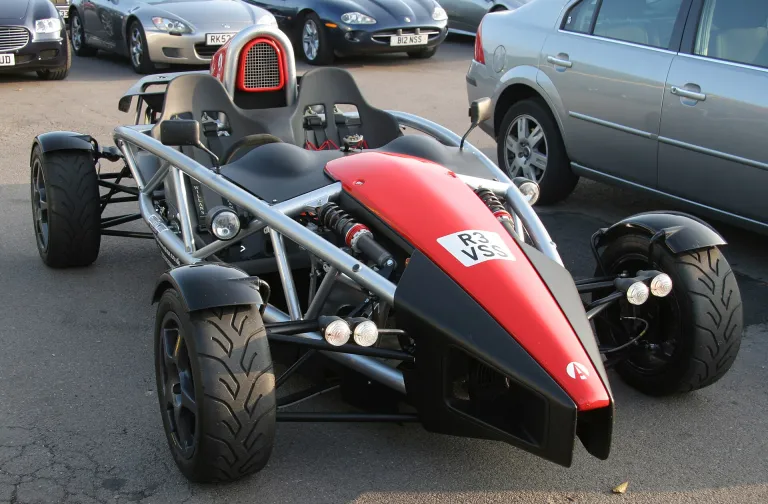
In 1959 the plant began building vehicles: the Changjiang Type 46, a military off-roader, is described as one of the first production vehicles made in China. For the next two decades the factory remained mainly a defence supplier.
Suzuki and the turn to civilian cars (1984–2000)
In 1984 the factory signed a technical cooperation agreement with Suzuki and began building Changan-branded minivans and light trucks based on the Suzuki Carry, marking its shift to civilian vehicles. Small, simple commercial vehicles suited China's growing economy and became the company's core business. In 1993 the partners formed Chongqing Changan Suzuki Automobile to build Suzuki passenger cars, beginning with the Alto. Suzuki's story is told in the history of Suzuki.
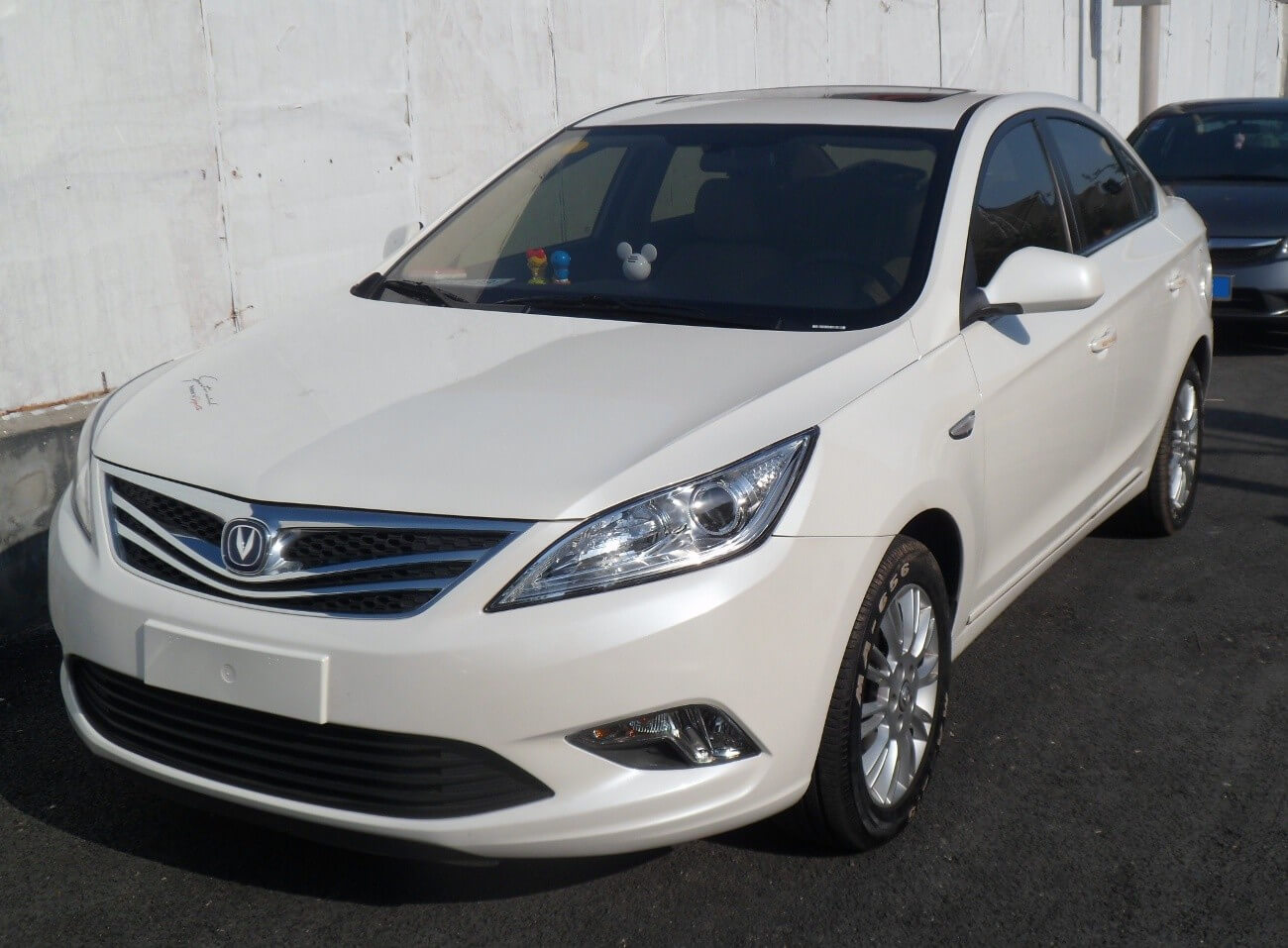
The Suzuki partnership lasted 25 years but never became a major source of sales. In 2018 Suzuki transferred its 50% stake to its partner, and in 2021 the company was renamed Chongqing Lingyao Automobile.
Joint ventures with Ford, Mazda and PSA (2001–2020)
Like other large Chinese carmakers, the company grew through joint ventures with foreign manufacturers, which could only build cars in China with a local partner.

- Changan Ford (2001): founded to assemble Ford cars, initially from kits, and later a full manufacturer of models such as the Ford Focus.
- Changan Mazda (2012): in November 2012 the earlier Changan Ford Mazda joint venture was split into Changan Ford and Changan Mazda.
- CAPSA (2010–2020): a 50/50 venture with PSA Peugeot Citroën, agreed in 2010, that built DS models from 2014 and was dissolved in 2020.
- Jiangling Holdings (2004–2019): a joint holding with Jiangling Motors Group, associated with the Landwind brand, split in 2019.
The PSA venture produced DS models for China, including the DS 5LS saloon and, from 2014, the DS 6 crossover, until the partners dissolved the venture in 2020. The Ford and Mazda ventures proved more durable and remain part of the group. Through the Jiangling holding, the group was also linked to the Landwind brand of SUVs until the holding was split in 2019. Ford's own history is told in the history of Ford.
Acquisitions and growth of own brands (2007–2020)
After six years of development, the company showed its first self-developed hybrid car in 2007. In 2009 it bought two smaller state-owned carmakers, Hafei and Changhe; Changhe later passed to BAIC, while the story of the Harbin-based maker is told in the history of Hafei.

Changan's own-brand passenger cars grew rapidly in the 2010s. The Alsvin saloon, the CS35 and CS75 SUVs and the Eado family car made the company one of the largest Chinese car brands, and in 2012 it ranked fourth among Chinese carmakers by output. In 2017 its commercial vehicle division was renamed Oshan, a passenger brand that was folded back into the main Changan brand in 2024. Kaicene continues as the brand for pickups, vans and light commercial vehicles.
| Year | Event |
|---|---|
| 1862 | Shanghai Foreign Gun Bureau founded by Li Hongzhang |
| 1937 | Factory moves to Chongqing |
| 1959 | Changjiang Type 46, the first vehicle |
| 1984 | Technical cooperation with Suzuki; civilian minivans and trucks |
| 1993 | Chongqing Changan Suzuki founded |
| 2001 | Changan Ford founded |
| 2007 | First self-developed hybrid car shown |
| 2009 | Acquisition of Hafei and Changhe |
| 2010 | CAPSA joint venture with PSA agreed |
| 2012 | Changan Mazda formed |
| 2018 | Suzuki leaves the joint venture |
| 2023 | Nevo (Qiyuan) brand launched |
| 2025 | China Changan Automobile Group formed; launch in Europe; Thai plant opens |
The electric era: Deepal, Avatr and Nevo (2020 to today)
Since 2020 the carmaker has shifted much of its range to electric and extended-range vehicles. Deepal offers electric and range-extender cars such as the Deepal S07. Avatr Technology is a premium electric brand created with the battery maker CATL and Chinese investors; Huawei supplies its intelligent-driving and cockpit systems, and Changan and its affiliates hold up to 40%. Nevo (also called Qiyuan), launched in 2023, covers more affordable electric and extended-range models such as the A05, A07 and Q07, while the main Changan brand continues with petrol, hybrid and electric SUVs such as the CS75 and UNI-V.

In July 2025 China Changan Automobile Group was formally established as a central state-owned enterprise under SASAC, with headquarters in Chongqing and Zhu Huarong as chairman. The move followed the cancellation in June 2025 of planned merger talks with Dongfeng. In June 2026 the group signed a strategic cooperation agreement with BAIC covering autonomous driving, parts purchasing, co-developed models and overseas sales, without any exchange of shares.
Factories, research and global expansion
The group's main plants are in and around Chongqing, with several production bases elsewhere in China. Abroad, it built light trucks in Oklahoma, USA, from 2007 to 2010 under the Tiger Truck brand, has assembled right-hand-drive cars in Karachi, Pakistan, with Master Motors since 2019, and opened a plant in Rayong, Thailand, in May 2025 to supply Southeast Asia, Australia, New Zealand and South Africa. CAOA Changan represents the brand in Brazil.

Research and design centres abroad include Turin, Yokohama, Birmingham and Plymouth, Michigan, plus a design and engineering team in Germany since 2024. In March 2025 Changan launched its brand in Europe at an event in Mainz, Germany, with a European sales headquarters in Munich.
Changan in numbers
| Year | Group sales (excluding foreign JV brands) |
|---|---|
| 2010 | 1,239,990 |
| 2016 | 1,682,741 |
| 2021 | 1,754,707 |
| 2023 | 2,097,794 |
| 2024 | 2,226,489 |
| 2025 | 2,468,197 |
In 2025, total production including joint ventures reached about 2.91 million vehicles. Own brands made up 76% of sales in 2021.

Landmark Changan models
| Model | Type | Why it matters |
|---|---|---|
| Changjiang Type 46 | Off-roader | First vehicle, 1959 |
| Changan minivans (Suzuki Carry-based) | Minivan, light truck | Start of civilian production, 1984 |
| Alsvin | Small saloon | Early own-brand passenger car |
| CS35 | Compact SUV | One of the first own-brand SUVs |
| CS75 | Mid-size SUV | Core model of the own-brand SUV range |
| UNI-V | Fastback | Changan's design-led UNI series |
| Deepal S07 | Electric SUV | Range-extender and electric SUV of the Deepal brand |
| Avatr 11 | Premium EV | Developed with CATL and Huawei technology |
Other brands from the country are covered in the Chinese cars section.
FAQ
Who owns Changan?
Changan is state-owned. Since July 2025 it has been part of China Changan Automobile Group, a central state-owned enterprise under China's SASAC, headquartered in Chongqing.
When was Changan founded?
Changan traces its origins to 1862, when Li Hongzhang founded the Shanghai Foreign Gun Bureau. The factory moved to Chongqing in 1937 and built its first vehicle, the Changjiang Type 46, in 1959.
Are Deepal and Avatr part of Changan?
Yes. Deepal is Changan's electric and range-extender brand. Avatr is a premium EV brand created by Changan with CATL and other investors, using Huawei technology; Changan and its affiliates hold up to 40%.
Which foreign brands has Changan worked with?
Changan has had joint ventures with Suzuki (1993–2018), Ford (since 2001), Mazda (since 2012) and PSA, whose CAPSA venture built DS cars from 2014 until 2020.
Is Changan sold in Europe?
Yes. Changan launched its brand in Europe in March 2025 at an event in Mainz, Germany, with a sales headquarters in Munich. Changan also runs a design and engineering team in Germany.
Photos (3)