 Jaguar XKR Coupe
Specs, engines and history
Published Sources (1) Report an error
By Felix Hartmann, Automotive Technology & EV Contributor
- Built
- 2005–2014
- Top power
- 405 kW (551 PS)
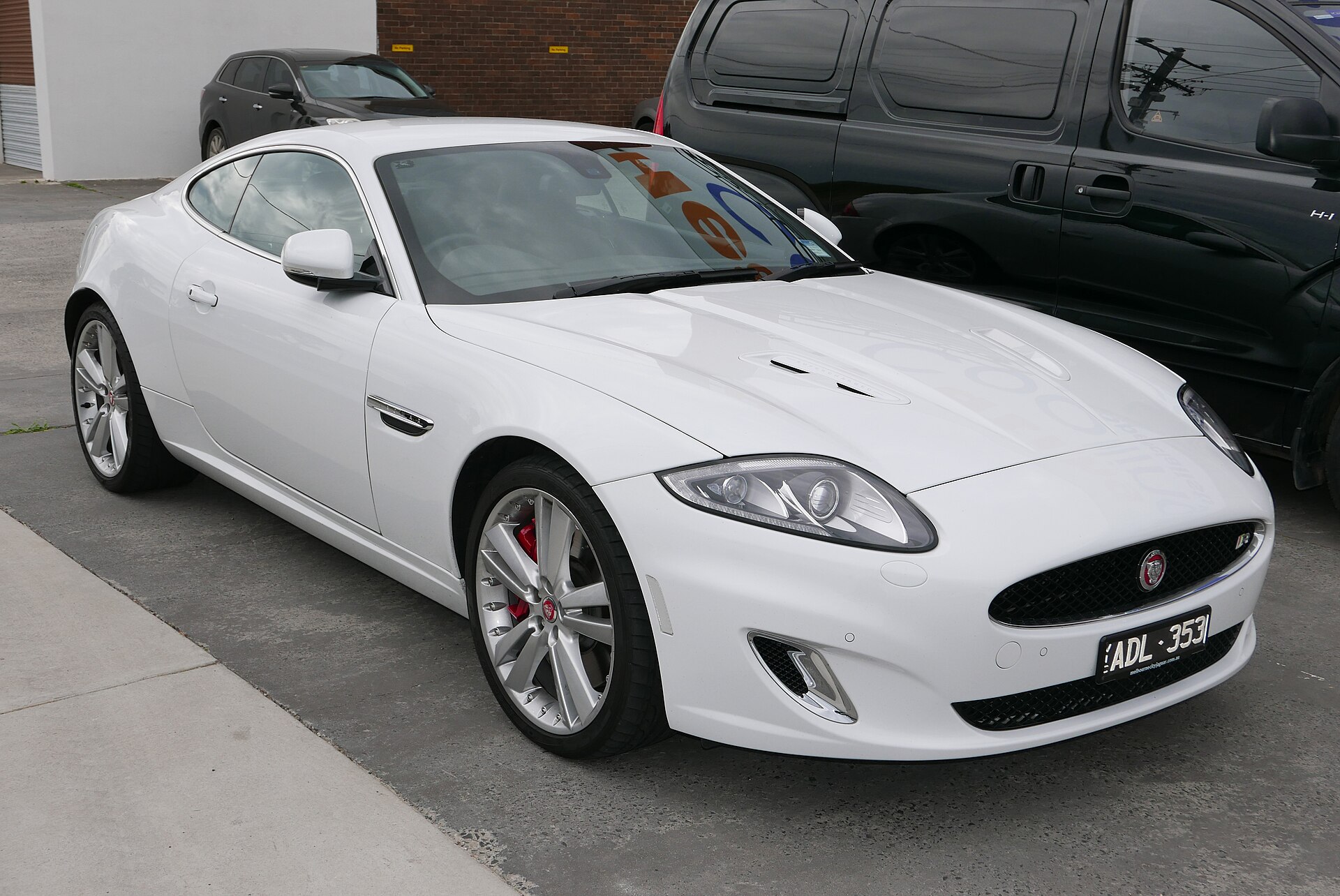
The Jaguar XKR of the X150 generation is the supercharged version of the aluminium XK grand tourer that Jaguar built at Castle Bromwich from late 2005 to July 2014. It was offered as a coupé and a convertible, first with a 4.2-litre V8 of 306 kW (416 PS), then from 2009 with a 5.0-litre V8 of 375 kW (510 PS). The XKR-S of 2011 raised output to 405 kW (550 PS) and the top speed to 300 km/h. The F-Type took over as Jaguar's sports car after the XK ended.
In short
- X150 XK and XKR production: December 2005 – July 2014, 27,612 cars in total.
- Aluminium bonded and riveted monocoque; the XK coupé weighs 1,595 kg, 91 kg less than the X100 it replaced.
- XKR 5.0: 375 kW (510 PS), 625 Nm, 0–100 km/h in 4.6 s, 250 km/h limited (280 km/h with the Speed Pack).
- XKR coupé price in Germany in 2009: €103,900.
Size at a glance
| Dimensions | Jaguar XK (X150) |
|---|---|
| Length | 4,790 mm188.6 in |
| Width | 1,892 mm74.5 in |
| Height | 1,320 mm52.0 in |
| Wheelbase | 2,750 mm108.3 in |
Specs by version
Engines
| Version | Engine | Power | Torque | Gearbox | Production years |
|---|---|---|---|---|---|
| XKR 4.2 V8 S/C | 8 cyl · Petrol AJ34S | 306 kW 416 PS410 hp | 560 Nm413 lb-ft | 6-sp Automatic | 2006–2008 |
| XKR 5.0 V8 S/C | 5.0 l · 8 cyl · Petrol 5,000 cc | 375 kW 510 PS503 hp | 625 Nm461 lb-ft | 6-sp Automatic | 2009–2014 |
| XKR-S 5.0 V8 S/C | 5.0 l · 8 cyl · Petrol 5,000 cc | 405 kW 551 PS543 hp | 680 Nm502 lb-ft | 6-sp Automatic | 2011–2014 |
Performance
Show all 3 versions
| Version | 0–100 km/h | Top speed |
|---|---|---|
| XKR 4.2 V8 S/C | 4.9 s 0–62 mph | 250 km/h155 mph |
| XKR 5.0 V8 S/C | 4.6 s 0–62 mph | 250 km/h155 mph |
| XKR-S 5.0 V8 S/C | - | 300 km/h186 mph |
Dimensions and weight
Show all 2 versions
| Version | Length | Width | Height | Wheelbase |
|---|---|---|---|---|
| XKR 4.2 V8 S/C | 4,790 mm188.6 in | 1,892 mm74.5 in | 1,320 mm52.0 in | 2,750 mm108.3 in |
| XKR 5.0 V8 S/C | 4,793 mm188.7 in | 1,892 mm74.5 in | 1,320 mm52.0 in | 2,750 mm108.3 in |
Verified Manufacturer and type-approval data from our catalog · Sources and methodology
Jaguar XKR at a glance: body, engines and plant
| Item | Jaguar XKR (X150) |
|---|---|
| Production | December 2005 – July 2014 (XK range) |
| Plant | Castle Bromwich, Birmingham, UK |
| Body styles | two-door 2+2 fastback coupé, convertible |
| Designer | Ian Callum |
| Construction | aluminium monocoque, bonded and riveted |
| Engines | 4.2 supercharged V8 (to 2008), 5.0 supercharged V8 (2009–2014) |
| Power range | 306–405 kW (416–550 PS) |
| Gearbox | six-speed ZF automatic (6HP26, then 6HP28) |
| Drive | rear-wheel drive, Active Differential Control on 5.0 cars |
| Predecessor / successor | XKR (X100) / Jaguar F-Type |
The XKR belongs to the XK family in our Jaguar catalogue. Its bonded aluminium construction was shared with the Jaguar XJ, and the name goes back to the XK120 of 1948.
From the 2005 launch to the Final Fifty
The X150 coupé appeared at the Frankfurt Motor Show in 2005, and the convertible at the Detroit show in January 2006. Ian Callum, who had also designed the Aston Martin DB7 and Vanquish, shaped the car. It was 162.6 mm longer and 61 mm wider than the X100 XK, yet lighter thanks to its aluminium body. In 2006 Top Gear named it both GT of the Year and Car of the Year.
The 2009 facelift was the big change. The new AJ-V8 Gen III engines arrived, and a rotary JaguarDrive selector replaced the gear lever. In February 2010 Jaguar announced the Speed Pack and Black Pack, and in March 2011 the XKR-S appeared at the Geneva show. The last regular XK run was the Final Fifty for the United States in 2014, and production ended in July 2014 after 27,612 cars.
| Year | Change |
|---|---|
| 2005 | XK coupé shown in Frankfurt; production starts in December |
| 2006 | convertible at Detroit |
| 2007 | XKR 4.2 supercharged in the range (Wikipedia's engine table: from 2006) |
| 2008 | limited 4.2 XKR-S (200 cars) and XKR Portfolio |
| 2009 | facelift, 5.0 V8, JaguarDrive selector, adaptive dampers |
| 2010 | XKR 75 (75 cars), XKR 175 for North America, Speed and Black Packs |
| 2011 | XKR-S 5.0 with 405 kW (550 PS) |
| 2013 | XKR-S GT (sources give 40–45 cars) |
| 2014 | Final Fifty edition; production ends in July |

Engines, transmissions and performance
| Version | Years | Engine | Power | Torque | 0–100 km/h | Top speed |
|---|---|---|---|---|---|---|
| XK 4.2 | 2006–2008 | 4.2 V8 (AJ34) | 221 kW (300 PS) | 420 Nm | 5.4 s | 250 km/h |
| XKR 4.2 | 2006–2008 | 4.2 supercharged V8 (AJ34S) | 306 kW (416 PS) | 560 Nm | 4.9 s | 250 km/h |
| XKR-S 4.2 | 2008 | 4.2 supercharged V8 | 309 kW (420 PS) | 560 Nm | 4.8 s | 280 km/h |
| XK 5.0 | 2009–2014 | 5.0 V8 (AJ-V8 Gen III) | 283 kW (385 PS) | 515 Nm | 5.2 s | 250 km/h |
| XKR 5.0 | 2009–2014 | 5.0 supercharged V8 | 375 kW (510 PS) | 625 Nm | 4.6 s | 250 km/h (280 with Speed Pack) |
| XKR 75 | 2010 | 5.0 supercharged V8 | 390 kW (530 PS) | 655 Nm | 4.4 s | 280 km/h |
| XKR-S 5.0 | 2011–2014 | 5.0 supercharged V8 | 405 kW (550 PS) | 680 Nm | 4.4 s | 300 km/h |
Figures are for the coupé; the convertible is about 0.1 s slower. For the 2011 XKR-S, Wikipedia gives both 4.0 s and 4.4 s to 100 km/h; the table uses the 4.4 s from its text. Jaguar's 2010 press release explains the 5.0 supercharged engine: direct injection at up to 150 bar, compression raised from 9.1:1 to 9.5:1, and an oil-change interval stretched from 10,000 to 15,000 miles (about 24,000 km) or 12 months. The 4.2 cars used a six-speed ZF 6HP26 automatic and the 5.0 cars the six-speed 6HP28, which Motor1 describes with paddle shifters.


Chassis and technology: Active Differential and adaptive dampers
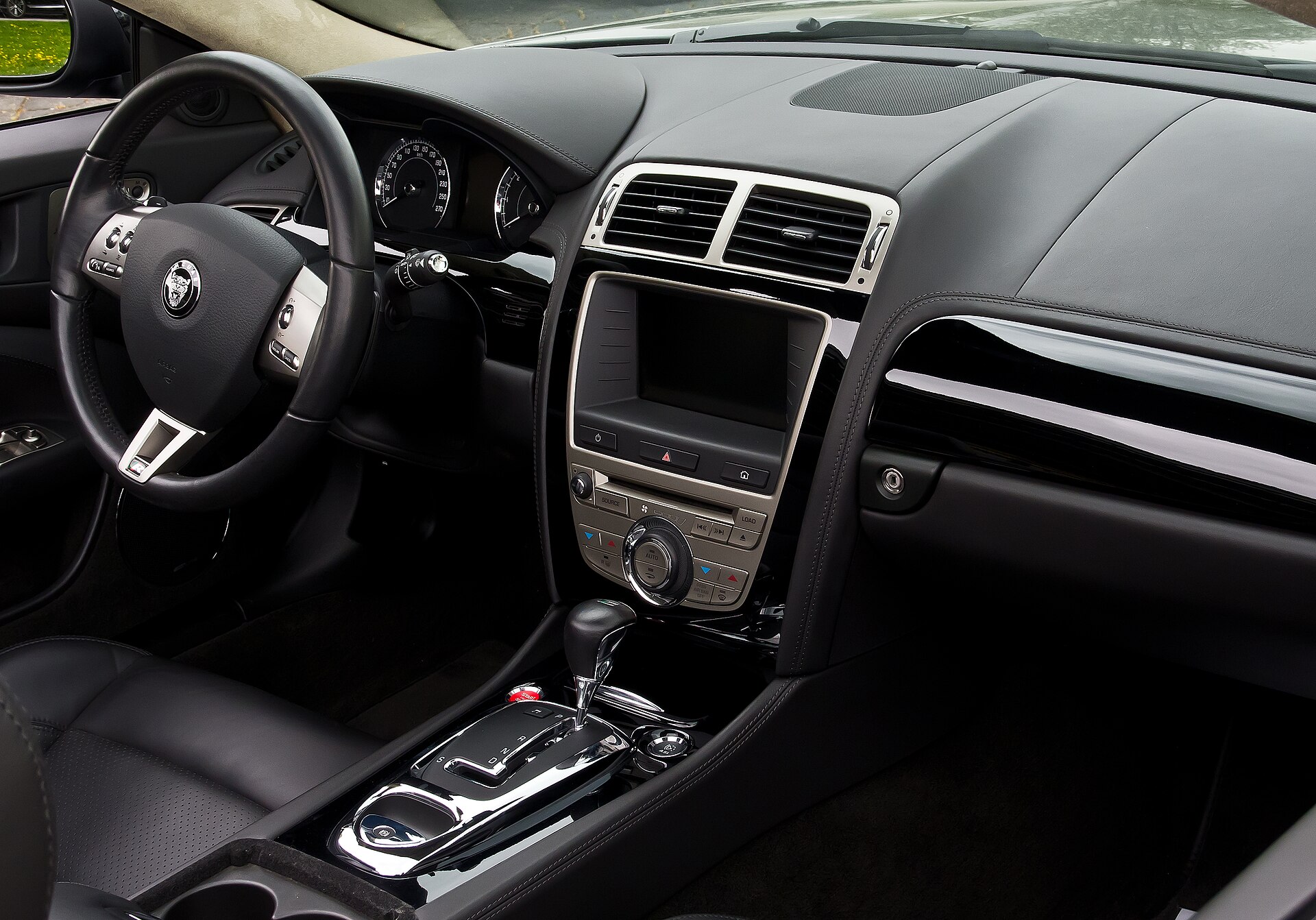
The 5.0 XKR introduced an electronically controlled rear differential, Active Differential Control, which shifts drive between the rear wheels instead of braking a spinning wheel. Adaptive Dynamics dampers replaced the earlier two-stage CATS system with continuously variable damping. The Portfolio of 2008 had 400 mm front and 350 mm rear brake discs, 20-inch BBS wheels and a 525 W Bowers & Wilkins sound system. The 2013 XKR-S GT added carbon-ceramic brakes.

Dimensions, weight and fuel economy
| Parameter | Metric | Imperial |
|---|---|---|
| Length (2010–2014) | 4,793 mm | 188.7 in |
| Width | 1,892 mm | 74.5 in |
| Height (coupé / convertible) | 1,320 / 1,328 mm | 52.0 / 52.3 in |
| Wheelbase | 2,750 mm | 108.3 in |
| Kerb weight XK coupé / convertible | 1,595 / 1,675 kg | 3,516 / 3,693 lb |
| Kerb weight XKR 5.0 convertible (Motor1 DE) | 1,800 kg | 3,968 lb |
| Fuel consumption XKR 5.0 convertible, EU combined | 12.3 l/100 km | 19.1 mpg US |
| CO2 XKR 5.0 convertible | 292 g/km | – |
Motor1 Germany's 2009 test of the XKR convertible reported about 13 l/100 km on country roads, with roughly twice that when driven hard. To set these figures against other grand tourers, use the car comparison tool.
Trims and special editions
Beyond the standard XKR, Jaguar used limited editions to keep the car fresh:
- XKR Portfolio (2008 model year): bigger brakes, BBS wheels, B&W audio.
- XKR-S 4.2 (2008): 200 cars, 50 of them with right-hand drive for the UK.
- XKR 75 (2010): 75 cars, 20 with right-hand drive, 390 kW (530 PS).
- XKR 175 (2010): 175 cars for the United States and 15 for Canada.
- XKR Special Edition (2011 model year): Speed Pack plus Black Pack, revealed at Geneva in March 2010.
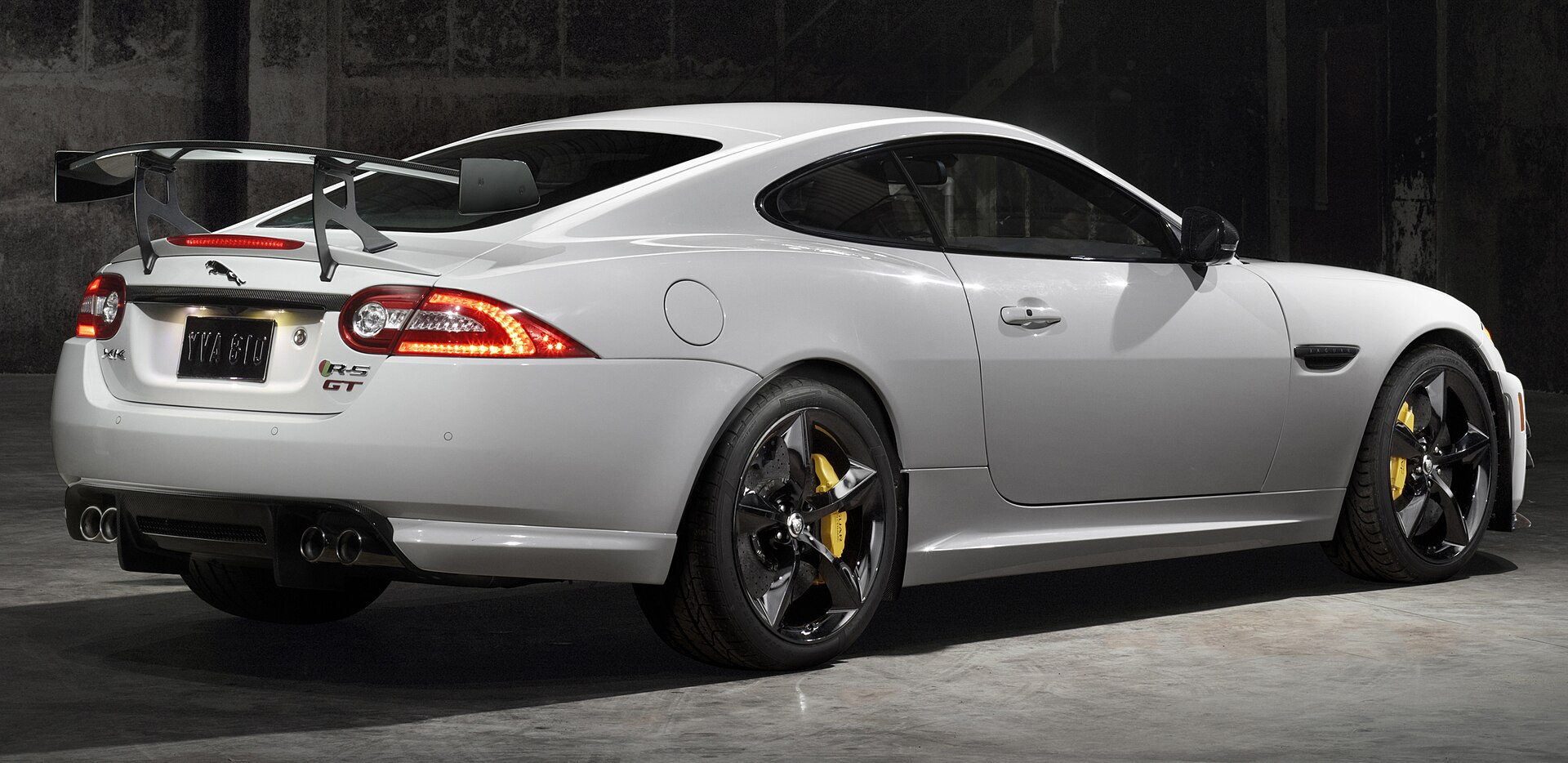
- XKR-S GT (2013): track-focused coupé with carbon-ceramic brakes, deliveries in the UK from October 2013.
- Final Fifty (2014): 25 coupés and 25 convertibles for the US market.
In Germany in 2009 Motor1 listed the XKR coupé at €103,900 and the convertible at €112,100.

Reliability, recalls and common problems
The Drives Today buying guide lists the usual weak points. On the 4.2 XKR, check the coolant "valley pipe" under the supercharger, the thermostat and the vacuum hoses. On the 5.0, look for water-pump failure, timing-chain noise and supercharger noise, which Jaguar addressed with a revised nose section. The e-diff can show an "E-Diff system error", sometimes cured by cleaning corroded connectors. Steel subframes rust along the seams, and suspension bushes wear.
Australian recalls covered side-airbag control modules on left-hand-drive cars built 2005–2009 (May 2008), the fuel pump of some naturally aspirated 5.0 XKs (August 2010), power-steering pipes on 2010 model-year cars (March 2011) and rear toe links on 2013 XKR-S cars used on track (April 2014). Check that the recall work has been done.
Rivals and which XKR to buy
Contemporary rivals included the Aston Martin DB9 and the Bentley Continental GT of 2011–2018. All three are front-engined 2+2 grand tourers; the Jaguar is the only one with a supercharged V8, and the Bentley the only one with four-wheel drive.
Verdict: the 5.0 XKR from 2009 is the best all-rounder, with more power, the JaguarDrive selector, the active differential and adaptive dampers. Early 4.2 XKRs are the cheapest way in, but check the cooling system first. The XKR-S, XKR 75 and XKR-S GT are collector cars and are priced as such.
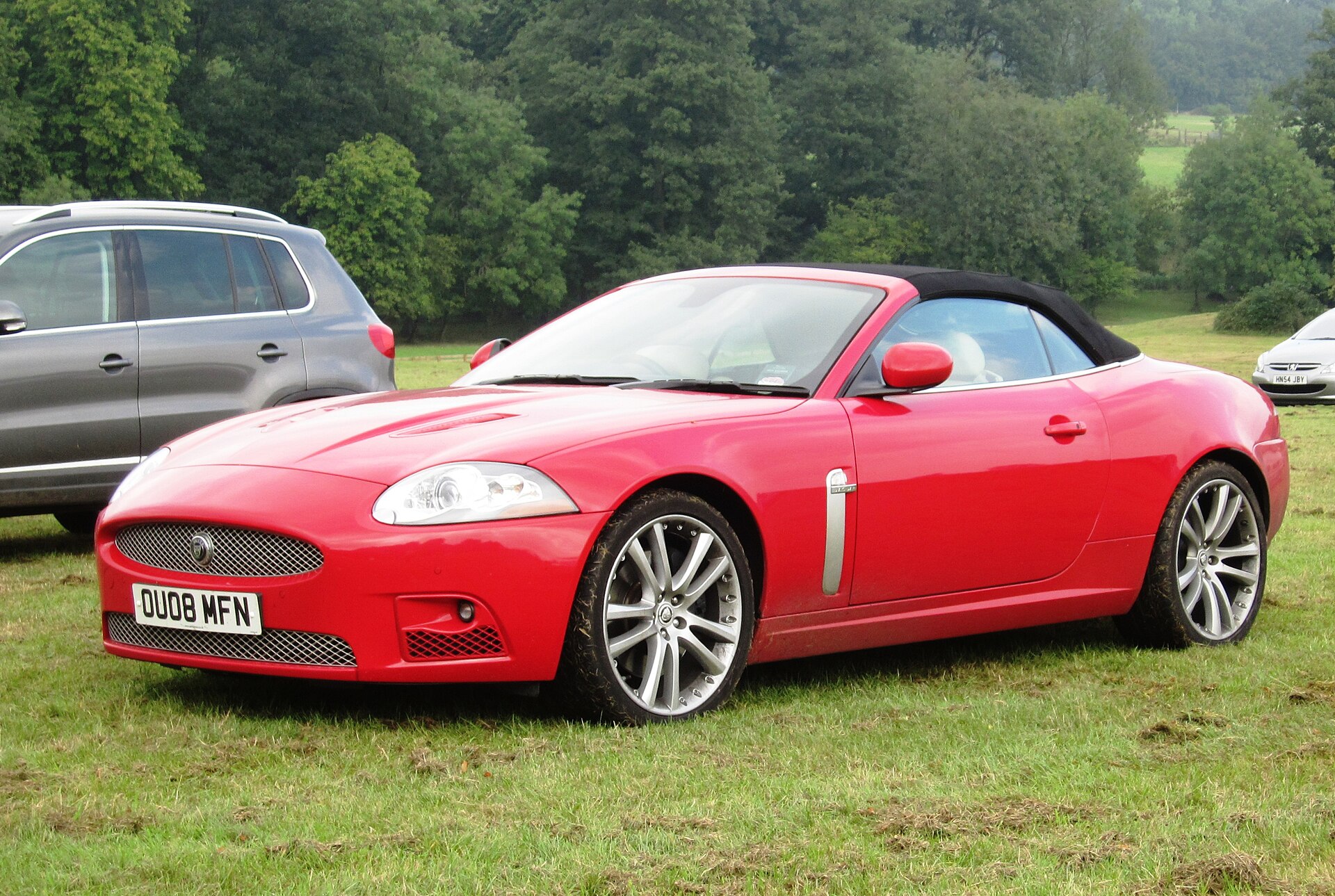
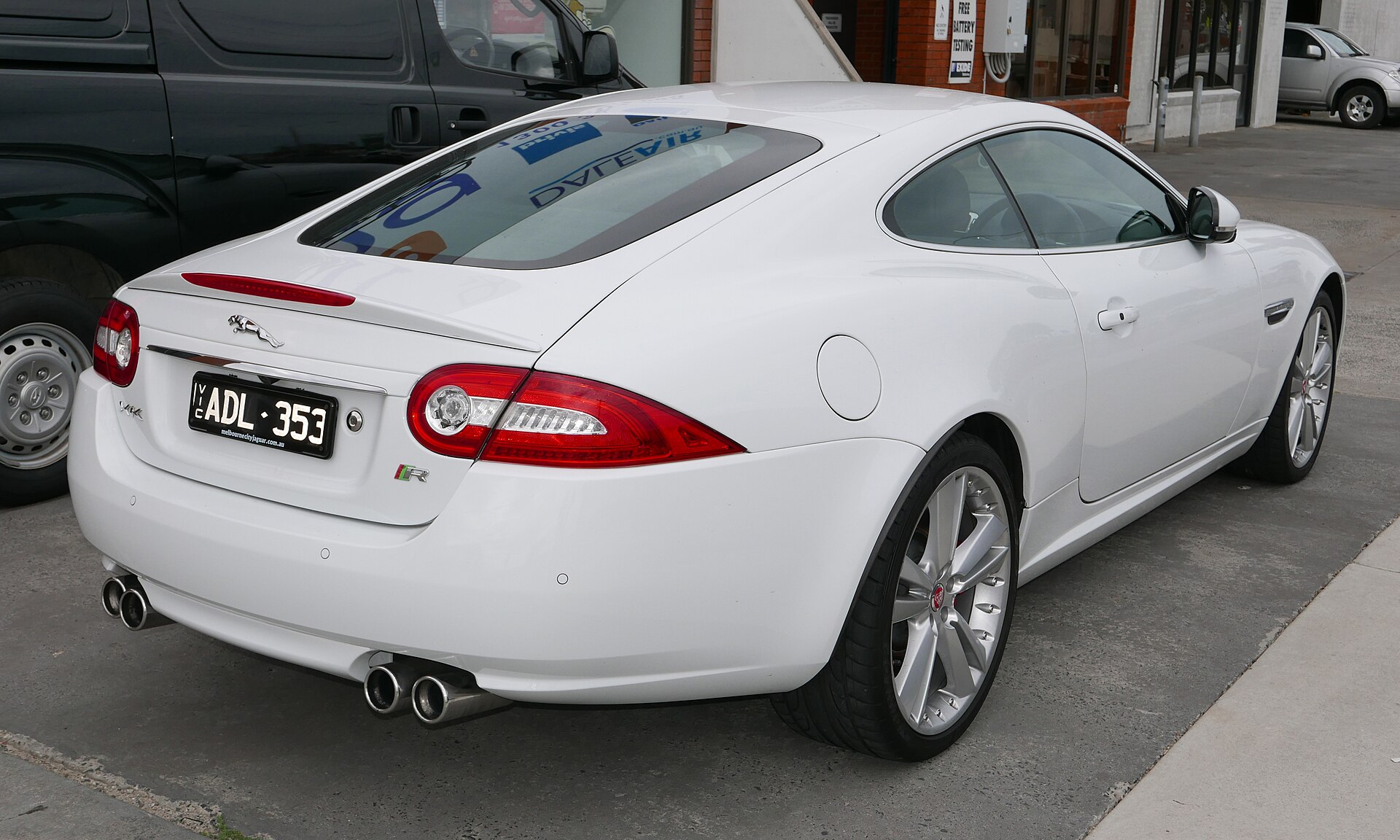
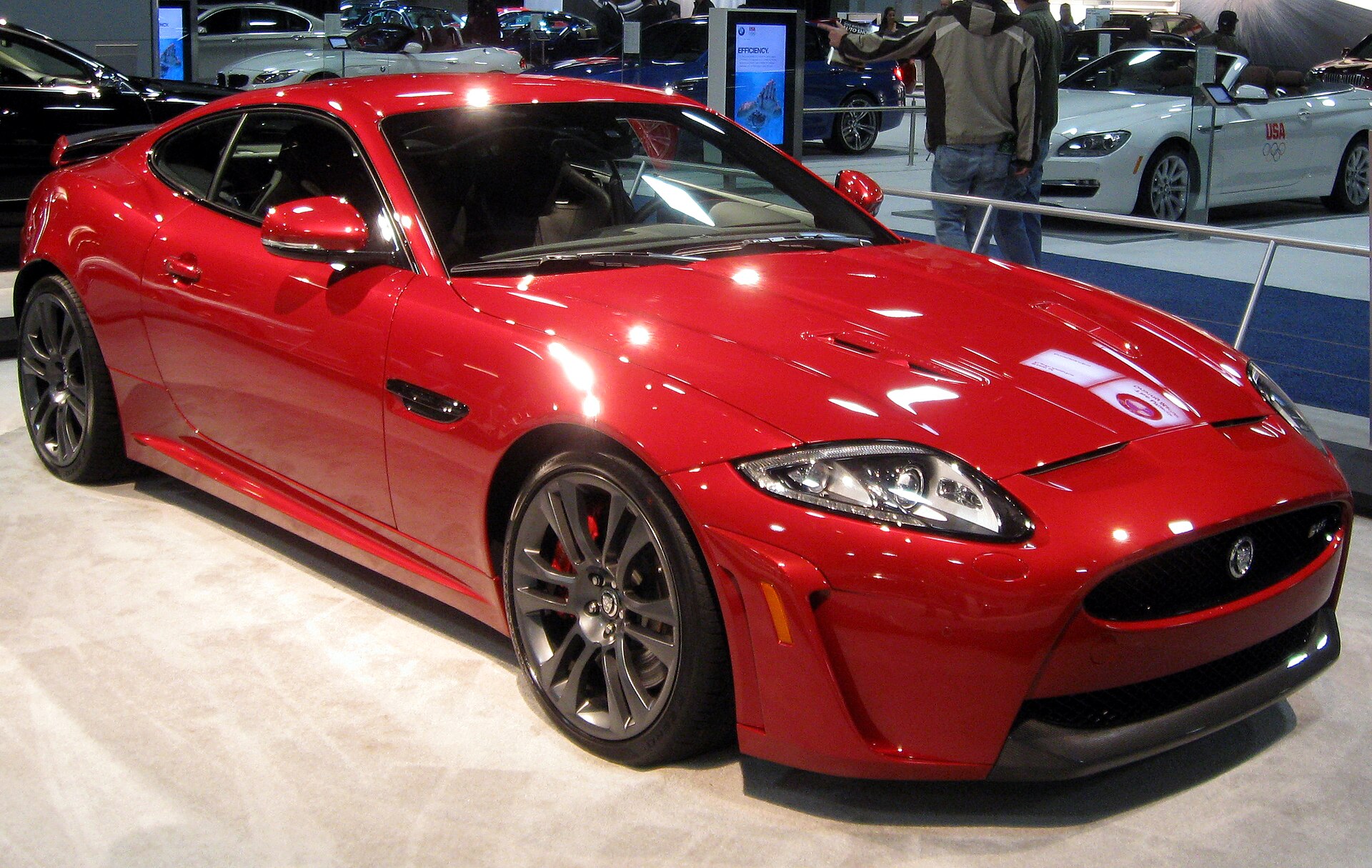
Photo gallery


Jaguar XKR Coupe in our rankings
- No. 55 of 376 · Fastest cars (300 km/h · top 15%)
- No. 35 of 201 · Most powerful cars of the 2000s (375 kW · top 19%)
- No. 185 of 1011 · Most powerful cars (405 kW · top 19%)
- No. 69 of 354 · Most powerful cars of the 2010s (405 kW · top 21%)
- No. 99 of 485 · Most torque: cars (680 Nm · top 21%)
- No. 22 of 99 · Longest coupes (4,793 mm · top 23%)
Faster than 85% of ranked cars in the 1CARS catalog (No. 55 of 376).
Jaguar XKR Coupe photos 7
FAQ
How much power does the Jaguar XKR have?
The 4.2 XKR (2006–2009) has 306 kW (416 PS); the 5.0 XKR (2009–2014) has 375 kW (510 PS); the XKR-S of 2011 has 405 kW (550 PS).
How many Jaguar XK and XKR X150 were built?
27,612 cars of all versions between December 2005 and July 2014.
What are the common problems of the XKR?
Cooling-system leaks on the 4.2, water pumps, timing chains and the electronic differential on the 5.0, plus rusty steel subframes and worn suspension bushes.
Is the XKR all-wheel drive?
No. Every X150 XK and XKR is rear-wheel drive with a six-speed automatic.
What replaced the Jaguar XKR?
Jaguar built no direct replacement; the F-Type became its sports car.
Data sources
Data checked by an editor against the sources below.