 Jaguar S-Type
All generations, specs and history
Published Sources (2) Report an error
By Felix Hartmann, Automotive Technology & EV Contributor
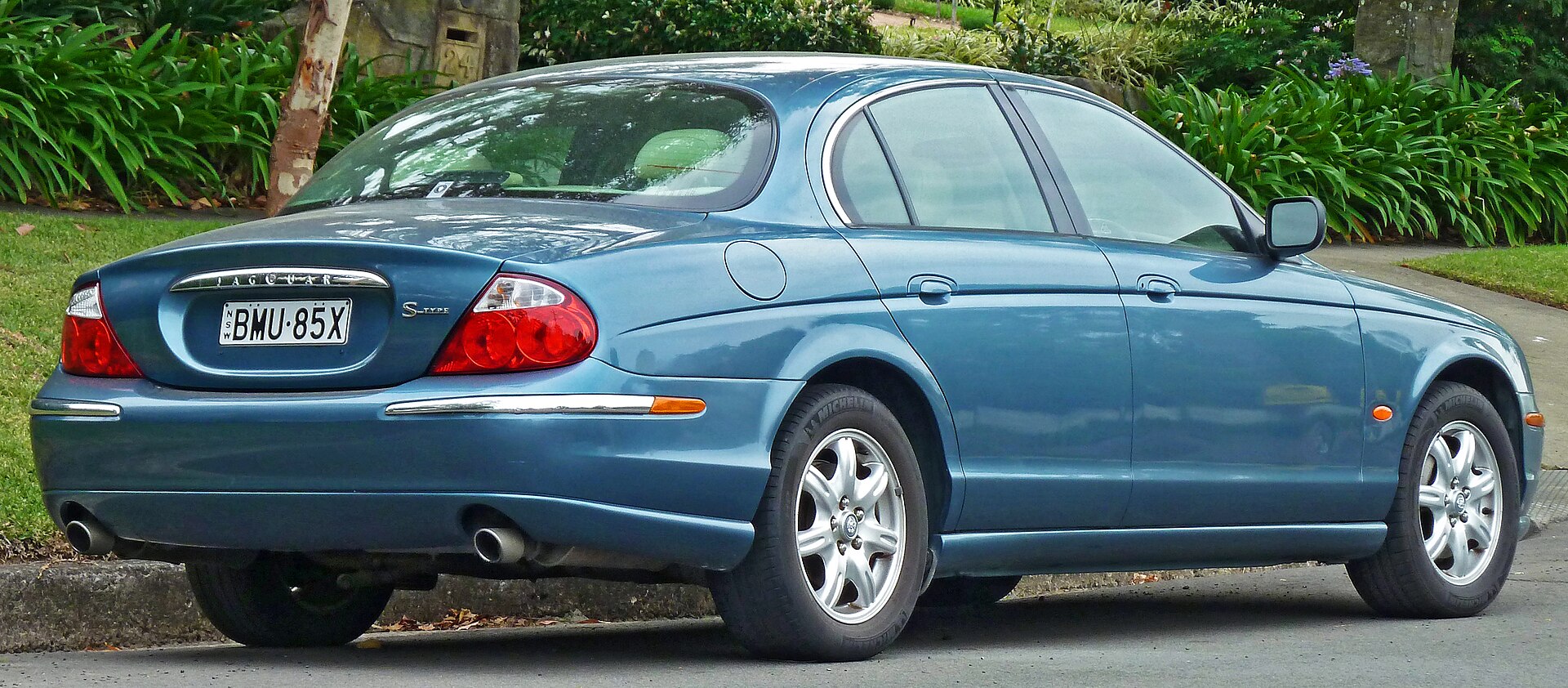
- Built
- 1963–2007
- Generations
- 2
- Top power
- 290 kW (394 PS)
Timeline
S-Type generations
Click a generation for its own page
- S-Type I 1963–1968 · Sedan · 157–164 kW (213–223 PS)
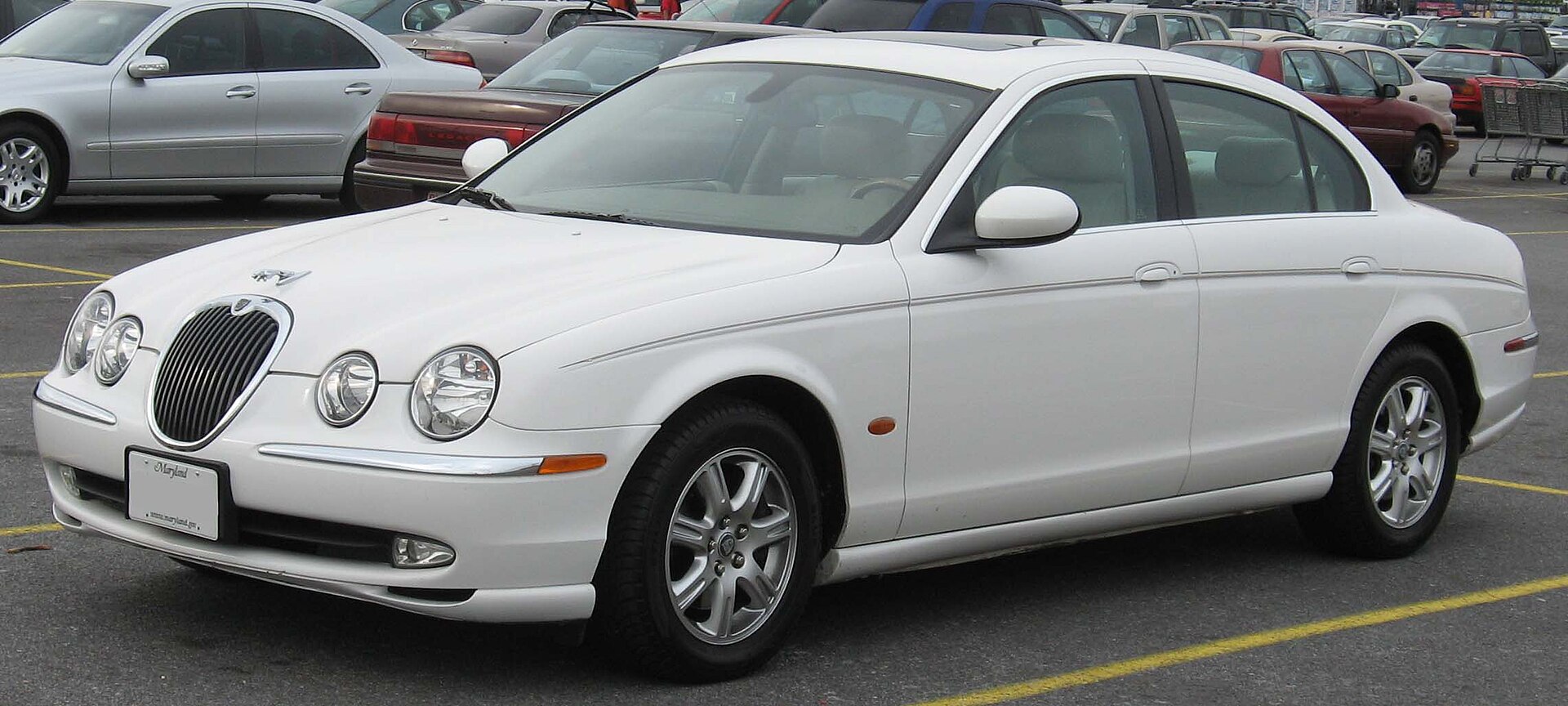
- S-Type X200 1999–2007 · Sedan · 145–290 kW (197–394 PS)
Newest first · 2 generations since 1963
-
1999
-
1963
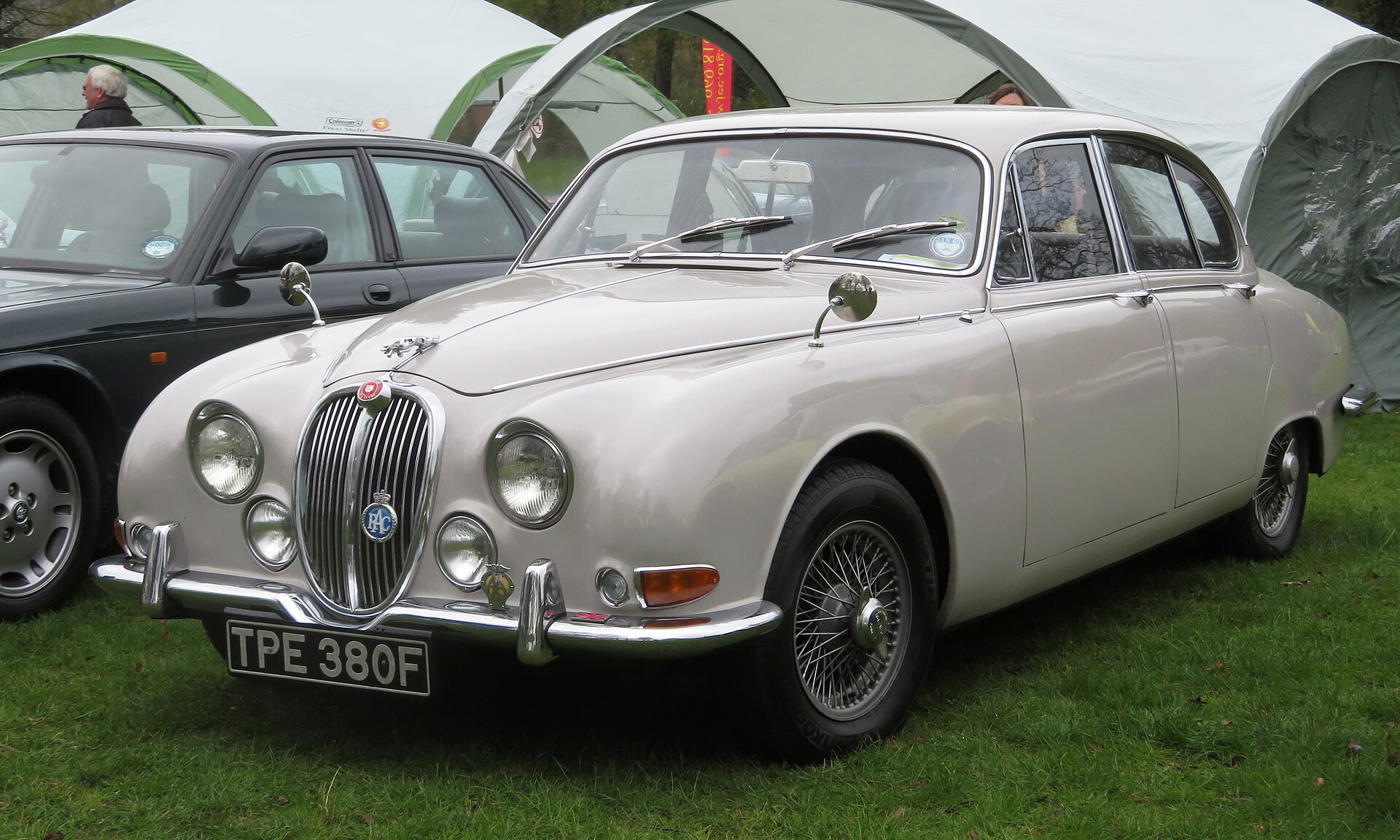


All generations by year: S-Type X200 (1999–2007) · S-Type I (1963–1968)
Which one is mine?
Pick the year of first registration to see which generation it is.
Check by VINWhich S-Type to buy
Our verdict · Felix Hartmann
- For economy and refinement: a 2004-2007 2.7 diesel with the six-speed automatic, the version the press liked most.
- For a classic feel: a 3.0 V6 manual; one reviewer called the 3.0 Sport manual a spiritual successor to the Mark 2.
- For performance: the S-Type R with 290 kW (389 hp) and a 250 km/h limiter.
- For collectors: a 1963-1968 S-Type 3.8, the original car with the bigger XK engine; fewer than 25,000 S-Types of that era were built.
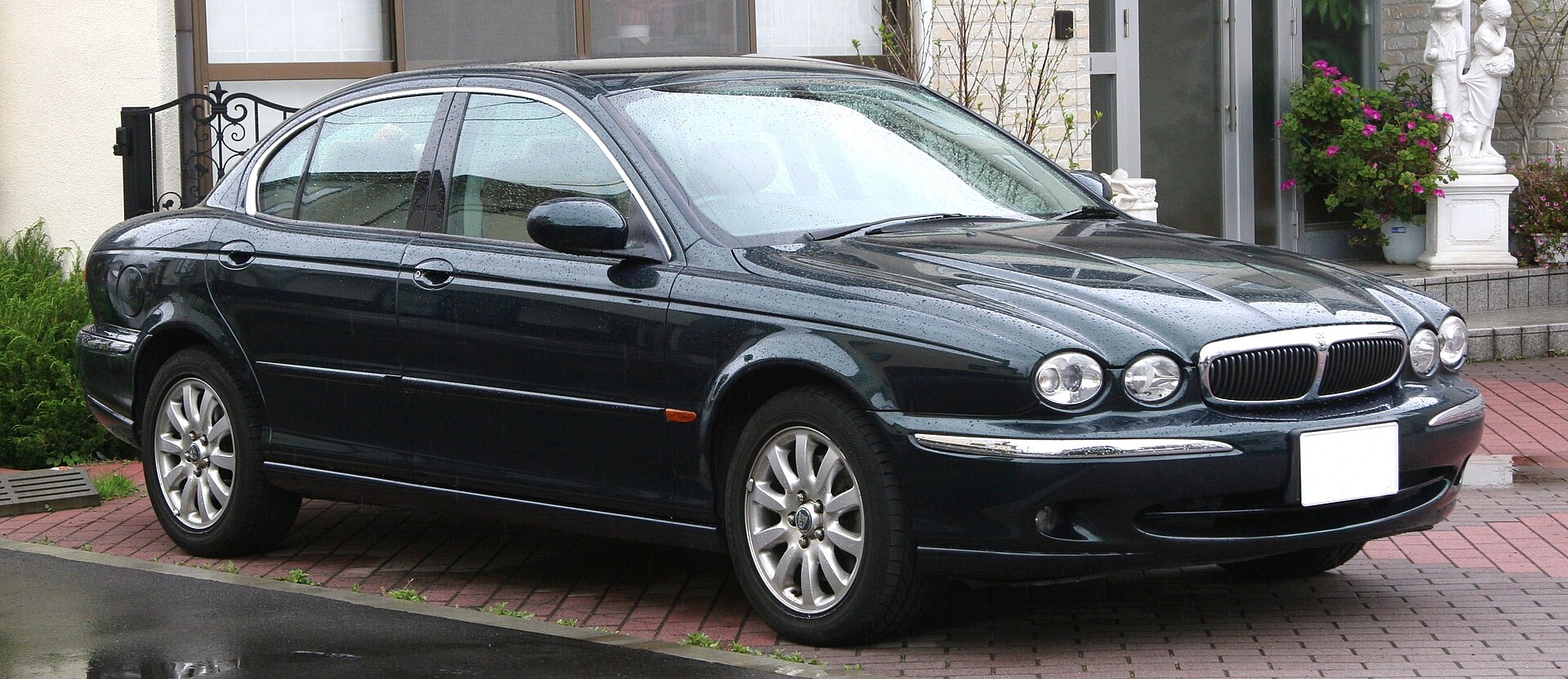
The Jaguar S-Type name covers two different executive saloons: a 1960s car built in Coventry from 1963 to 1968, and the retro-styled S-Type of 1999 to 2007, built at Castle Bromwich in Birmingham on a platform shared with the Lincoln LS. The modern car, the X200, is the one most buyers mean today: 291,386 were made, with V6 and V8 petrol engines, a supercharged S-Type R and, from 2004, a much-praised 2.7-litre twin-turbo diesel. It was replaced by the Jaguar XF.
In short
- Two generations: the S-Type of 1963-1968 (about 24,993 built) and the X200 of 1999-2007 (291,386 built).
- The X200 is a rear-wheel-drive four-door saloon on Ford's DEW98 platform, with engines from 145 kW (194 hp) to 290 kW (389 hp).
- Engines: 2.5 and 3.0 V6, 4.0 then 4.2 V8, supercharged 4.2 V8 in the S-Type R (2002), 2.7 V6 diesel (2004).
- The 1960s S-Type combined the Mark 2 body with independent rear suspension and the 3.4 or 3.8 XK six.
Jaguar S-Type at a glance
| Specification | S-Type (1963-1968) | S-Type X200 (1999-2007) |
|---|---|---|
| Segment | Executive saloon | Executive saloon (E-segment) |
| Plant | Browns Lane, Coventry | Castle Bromwich, Birmingham |
| Body style | Four-door saloon | Four-door saloon |
| Layout | Front engine, rear-wheel drive | Front engine, rear-wheel drive |
| Engines | 3.4 and 3.8 XK straight-six | 2.5 / 3.0 V6, 4.0 / 4.2 V8, 2.7 V6 diesel |
| Power | 157-164 kW (210-220 bhp) | 145-290 kW (194-389 hp) |
| Length | 4,750 mm | 4,808-4,913 mm |
| Built | about 24,993 | 291,386 |
| Successor | Jaguar 420 and XJ6 | Jaguar XF |
The other generations of Jaguar saloons are listed in our Jaguar catalogue.
Generations
| Generation | Code | Years | Body styles | Engines | Power (kW / hp) |
|---|---|---|---|---|---|
| S-Type (1963) | - | 1963-1968 | 4-door saloon | 3.4, 3.8 XK six | 157-164 kW (210-220 bhp) |
| S-Type | X200 | 1999-2007 | 4-door saloon | 2.5, 3.0 V6; 4.0, 4.2 V8; 4.2 V8 supercharged; 2.7 V6 diesel | 145-290 kW (194-389 hp) |
The original S-Type (1963-1968)
The first S-Type was a bridge between the compact Mark 2 and the large Mark X. It used the Mark 2's unitary bodyshell with a longer tail and a lower, flatter roofline, and it adopted a scaled version of the Mark X's independent rear suspension in place of the Mark 2's live axle. That made it about 152 kg heavier than the Mark 2.
| Engine | Capacity | Power | Torque |
|---|---|---|---|
| 3.4 XK six | 3,442 cc | 157 kW (210 bhp) | 293 Nm |
| 3.8 XK six | 3,781 cc | 164 kW (220 bhp) | 325 Nm |
Buyers could choose a four-speed manual, the same with Laycock overdrive, or a three-speed Borg-Warner 35 automatic; from October 1964 the manual had synchromesh on first gear too. Contemporary tests recorded 0-97 km/h (0-60 mph) in 10.2 seconds and 196 km/h (122 mph) for the 3.8 with manual and overdrive. Only the 3.8 was sold in the United States.
Production peaked at 9,741 cars in 1965. The Jaguar 420 of 1966 was meant to replace it but the two were sold side by side until 1968, when the XJ6 succeeded both.

The X200 S-Type (1999-2007)
Jaguar unveiled the second S-Type at the Birmingham International Motor Show on 20 October 1998, and production began at Castle Bromwich in March 1999. Its styling, by Geoff Lawson, deliberately echoed the 1960s car. Underneath, it was a product of the Ford era: the DEW98 platform was shared with the Lincoln LS and the eleventh-generation Ford Thunderbird.
The car evolved in three steps:
- 1999-2002: launch range with 3.0 V6 and 4.0 V8 (plus 2.5 V6 outside North America), a five-speed J-gate automatic, a U-shaped centre console and an optional leaping-cat bonnet mascot designed to break away in an accident.
- 2002-2003: the supercharged S-Type R arrives in 2002; for the 2003 model year the V8 grows to 4.2 litres, a six-speed ZF automatic replaces the five-speed, the dashboard and console are redesigned and an electronic parking brake replaces the lever.
- 2004-2007: a facelift credited to Ian Callum with new front and rear aprons, grille and rear lights, an aluminium bonnet, washer jets in the wiper arms and the new 2.7 V6 diesel.
Production ended in 2007, although North American model years ran to 2008. The XF that followed used a modified version of the same platform.


Engines, transmissions and performance (X200)
| Engine | Displacement | Power | Torque | Notes |
|---|---|---|---|---|
| 2.5 V6 petrol | 2,497 cc | 145 kW (194 hp) | 245 Nm | not sold in the US or Canada |
| 3.0 V6 petrol | 2,967 cc | 180 kW (241 hp) | 293 Nm | Jaguar heads and variable valve timing |
| 4.0 / 4.2 V8 petrol | 4,196 cc (4.2) | 210 kW (282 hp) (4.2) | 411 Nm | 4.2 from 2003 model year |
| 4.2 V8 supercharged (S-Type R) | 4,196 cc | 290 kW (389 hp) | 541 Nm | from 2002, Eaton M112 supercharger |
| 2.7 V6 twin-turbo diesel | 2,720 cc | 150 kW (201 hp) | 435 Nm | from 2004, Ford/PSA unit |
The V6 petrol engines belong to Ford's Duratec family. The S-Type R is limited to 250 km/h (155 mph); Wikipedia's text also quotes about 298 kW (400 hp) for it. Transmissions were a five-speed Getrag manual for V6 petrol models, a six-speed manual for the diesel, the five-speed Ford automatic until 2002 and the six-speed ZF 6HP26 automatic from 2003, both with Jaguar's J-gate selector. To translate period hp figures, use our power converter.
Dimensions, space and boot
| Parameter | Metric | Imperial |
|---|---|---|
| Length (2000-2001 / 2002-2005 / 2006-2007) | 4,808 / 4,854 / 4,913 mm | 189.3 / 191.1 / 193.4 in |
| Width | 1,819 mm | 71.6 in |
| Height | 1,415-1,448 mm | 55.7-57.0 in |
| Wheelbase | 2,908 mm | 114.5 in |
| Kerb weight | about 1,800 kg | about 3,968 lb |
| Boot | 400 l | 14.1 cu ft |
The figures are for the X200. Auto Express quotes 400 litres of boot space and found it short on height and smaller than rivals' boots. The rear seats split 60:40, but the wide transmission tunnel means the back is best for two adults. The 1960s S-Type was 4,750 mm long on a 2,730 mm wheelbase and weighed about 1,625 kg.
Fuel economy and running costs
Auto Express recorded a combined 36 mpg (about 7.8 l/100 km) for the 2.7 diesel with the six-speed automatic and described residual values as acceptable. The review also found that Jaguar dealers were highly rated by owners but charged high prices. Official figures for the petrol versions are not in our sources. For your own numbers, try the fuel cost calculator.
Trims and equipment
Auto Express judged standard equipment fairly generous for the price. The car was praised for its interior and ride on launch, though by 2006 the reviewers found the dashboard dated next to German rivals, if robust and logical. The 2003 update brought the Jaguar logo into the grille and a flip-open key.
Safety
Our sources show no Euro NCAP test for either S-Type; the 1960s car long predates crash testing. The X200 introduced a breakaway bonnet mascot designed to fold in an accident. US authority NHTSA tested the 2008 model-year car, but its published star counts are incomplete in our sources, so we do not quote them.
Reliability and known issues
Our sources do not document model-specific failures for the X200, so we do not list any. The road-test criticisms are on record: larger wheel options thump over sharp bumps, tyre noise is noticeable on concrete, and the S-Type R lacks a limited-slip differential and has audible supercharger whine. On the positive side, the 2.7 diesel was widely praised in Europe for refinement, quietness and economy.
Rivals
| Model | Engines | Power (kW / hp) | Boot (l) | Price from (EUR) |
|---|---|---|---|---|
| Jaguar S-Type X200 (1999-2007) | 2.5-4.2 petrol, 2.7 diesel | 145-290 kW (194-389 hp) | 400 | - |
| BMW 5 Series E39 (1995-2004) | 2.0-4.9 petrol, 2.0-2.9 diesel | 85-294 kW (114-394 hp) | - | - |
| Mercedes-Benz E-Class W211 (2002-2009) | 1.8-6.2 petrol, 2.1-4.0 diesel | 90-378 kW (121-507 hp) | - | - |
Auto Express also named the Audi A6 and the Citroën C6 HDi as rivals. New prices from the period are not shown because they are not comparable with today's euros; use our comparison tool to set the cars side by side.
Photo gallery

Jaguar S-Type: first vs latest generation
| Spec | S-Type I | S-Type X200 | Change |
|---|---|---|---|
| Years | 1963–1968 | 1999–2007 | 36 years apart |
| Most powerful version | 164 kW (223 PS) | 290 kW (394 PS) | +126 kW (+77%) |
Oldest and newest generation in the 1cars catalog. Power is the strongest version of each; other rows are shown only when both generations have the figure.
Jaguar S-Type in our rankings
- No. 46 of 174 · Most powerful sedans (290 kW · top 27%)
- No. 334 of 1011 · Most powerful cars (290 kW · top 34%)
- No. 546 of 1082 · Longest-running car nameplates (8 years · top 54%)
- No. 64 of 118 · Most powerful British cars (290 kW · top 55%)
- No. 64 of 97 · Most powerful cars of the 1960s (164 kW · top 66%)
- No. 299 of 411 · Cars with the most generations (2 generations)
More powerful than 73% of ranked sedans in the 1CARS catalog (No. 46 of 174).
FAQ
How many Jaguar S-Type generations are there?
Two cars carried the name: the S-Type of 1963-1968 and the unrelated X200 S-Type of 1999-2007.
Is the Jaguar S-Type the same as the Lincoln LS?
They are not the same car, but the 1999 S-Type shares Ford's DEW98 platform with the Lincoln LS and the eleventh-generation Ford Thunderbird.
Which S-Type is the fastest?
The S-Type R of 2002-2007, with a supercharged 4.2 V8 producing 290 kW (389 hp) and 541 Nm, limited to 250 km/h.
What replaced the Jaguar S-Type?
The Jaguar XF replaced the X200. The 1960s S-Type was succeeded by the 420 and the XJ6.
How big is the S-Type's boot?
Auto Express quotes 400 litres for the X200, with limited height.
Data sources
Data checked by an editor against the sources below.
- Wikipedia - Jaguar S Type (1999)
- Wikipedia - Jaguar S Type (1963)