 Jaguar Lister Jaguar Costin Roadster
Specs, engines and history
Updated Published Sources (3) Report an error
By Felix Hartmann, Automotive Technology & EV Contributor Reviewed by Oleksandr Hnatiuk
- Built
- 1959
- Top power
- 224 kW (305 PS)
Our verdict for collectors
Our verdict · Felix Hartmann
A genuine 1959 Costin is one of the rarest Jaguar-engined racing cars, and its value depends almost entirely on chassis history. Works cars and Cunningham cars sit at the top, while rebodied or re-engined cars cost much less. Buyers should insist on a documented chassis number, period race entries and FIA papers for historic racing. For most enthusiasts, a continuation car is the practical way to drive the shape, and our power-to-weight calculator shows how its 251 kW compares with modern track cars. More cars of the period are in our 1950s classics section.
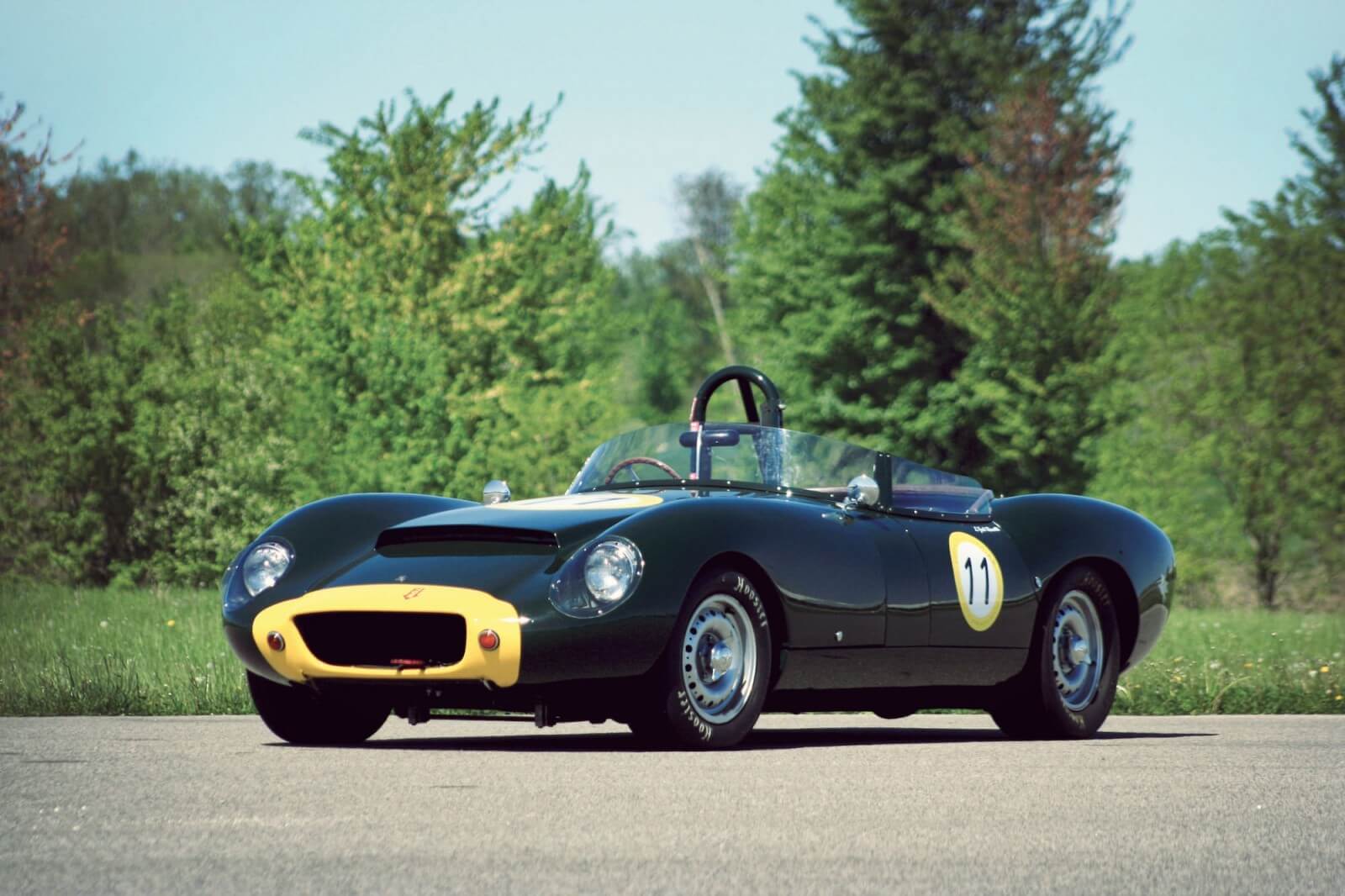
The Lister-Jaguar Costin is a front-engined sports racing car built in 1959 by Brian Lister's company in Cambridge, England. Aerodynamicist Frank Costin replaced the curvy "Knobbly" body with a sleek low-drag aluminium shell over Lister's tubular chassis. Works cars used Jaguar's XK straight-six, 3.0 litres for Le Mans and 3.8 litres with about 300 bhp elsewhere.
In short
- Maker: George Lister Engineering of Cambridge, racing from 1954; the Costin body replaced the "Knobbly" for the 1959 season.
- Engine: Jaguar XK straight-six, 3.0 litres under the Le Mans rules or 3.8 litres with about 224 kW (300 bhp).
- Racing: two works cars started Le Mans in 1959 and both retired; Stirling Moss ran third at Sebring before running out of fuel.
- Today: original cars sell for up to about one million US dollars, and Lister has built new continuation Costins since 2016.

Specs by version
Verified Manufacturer and type-approval data from our catalog · Sources and methodology
Lister-Jaguar Costin at a glance

| Fact | Detail |
|---|---|
| Maker | George Lister Engineering, Cambridge, England |
| Year | 1959 |
| Body designer | Frank Costin |
| Body | aluminium roadster, low-drag shape |
| Chassis | tubular steel ladder frame, de Dion rear axle |
| Engine | Jaguar XK straight-six, 3.0 or 3.8 litres |
| Power | about 186 kW (250 bhp) to 224 kW (300 bhp) |
| Gearbox | four-speed manual, all-synchromesh |
| Brakes | Dunlop discs, inboard at the rear |
| Estimated top speed | about 180 mph (290 km/h) |
Brian Lister and the road to the Costin
Brian Lister ran his family's engineering works in Cambridge and began building sports racing cars in 1954. His formula, inspired by Cooper, was a tubular ladder chassis with a de Dion rear axle and inboard brakes. The first car made its debut at Oulton Park's British Empire Trophy race in 1954 with Archie Scott Brown driving. Later that year, with a Bristol two-litre engine, Scott Brown won his class and finished fifth overall in the sports car race supporting the British Grand Prix.

For 1957 Lister built a new car around the 3.4-litre Jaguar D-type engine. With Jaguar no longer running its own works sports car team, private teams carried the XK engine into racing, and Lister became the most successful of them. Scott Brown won the Empire Trophy race in 1957, and the magazine writer John Bolster timed the car from 0 to 100 mph in 11.2 seconds. Its bulging bodywork gave it the nickname "Knobbly".
The old version of this page said that a factory fire led Jaguar to hand its racing programme to Lister. Lister was an independent company that bought Jaguar engines; it never built cars on Jaguar's behalf.
Why Lister needed a new body
The 1958 season brought success and tragedy. The Knobbly was refined and raced internationally, but it was unsteady at high speed. In 1958 Archie Scott Brown was killed when he crashed a Lister-Jaguar at Spa-Francorchamps. For 1959 Lister wanted a car that was faster in a straight line and more stable, and he turned to Frank Costin.

Costin worked as an aerodynamicist at the aircraft maker de Havilland. In 1954 he had drawn the body of the Lotus Mark VIII, and he later shaped the Vanwall that won the 1958 Formula One constructors' title. He designed the Lister body with low frontal area and a smooth surface and tested it at Goodwood. By 1959 every new Lister used the Costin design, and the Knobbly was out of production.
The body and engineering in detail
Motor Sport magazine described the new car in March 1959. The aluminium body had only one bulge, over the engine, and it doubled as an outlet for hot air from under the bonnet. The radiator had an entry duct, the oil cooler drew cold air from behind the front wheel arch, and a duct around the finned rear cover cooled the Salisbury final drive. The high tail and moulded screen followed Costin's design for the Lotus cars that won their class at Le Mans in 1957.

The chassis kept Lister's tubular frame, with independent front suspension and a de Dion tube at the rear on coil-over dampers. For 1959 Lister switched to Dunlop for tyres, wheels and disc brakes, and the inboard rear discs were cooled by a raised intake in the undertray, a method taken from the Vanwall. The four-speed all-synchromesh gearbox came from the D-type drivetrain.
| Engine version | Capacity | Power | Use |
|---|---|---|---|
| Jaguar XK 3.0 | about 3.0 litres | not published | Le Mans and other races under the 3-litre limit |
| Jaguar XK 3.8 | about 3.8 litres | about 224 kW (300 bhp) | British and American circuits |
| Chevrolet V8 | various | various | most customer Costins, especially in the United States |
Motor Sport estimated a top speed of about 180 mph, or 290 km/h, on 250 bhp. By our calculation, the 3.8-litre engine produced about 59 kW per litre; our power converter turns period bhp figures like these into kW and PS. The old version of this page gave 340 hp, a 3.0-litre engine with that output and a five-speed gearbox; none of those figures matches the period descriptions.
How many Costins were built
Production was tiny. The motoring site Supercars.net counts nine Costin-bodied Listers, two with Jaguar engines and seven with Chevrolet V8s, and Wikipedia also notes that the Costin bodywork was built around the Chevrolet Corvette engine for many cars. Because several cars were later rebuilt, re-engined or rebodied, this figure should be treated as approximate.

Individual chassis histories show how complicated the story is. Chassis BHL3 began in 1958 as a works Knobbly raced by Scott Brown, was rebuilt to Costin specification after a crash. It left the factory in 1959 with a 3.0-litre engine and appeared in the film "The Green Helmet". It later spent years in Australia with a Chevrolet V8 before returning to historic racing at the Goodwood Revival and Le Mans Classic.
Racing record in 1959
| Event | Drivers | Result |
|---|---|---|
| Sebring 12 Hours | Stirling Moss | running third, then out of fuel after a short refuelling stop |
| Sussex Trophy, Goodwood | Ivor Bueb | win |
| 24 Hours of Le Mans | Walt Hansgen and Peter Blond | retired, mechanical failure |
| 24 Hours of Le Mans | Ivor Bueb and Bruce Halford | retired, mechanical failure |
| SCCA C-Modified (United States) | Walt Hansgen, Cunningham team | national champion |
The works drivers for 1959 were Ivor Bueb and Bruce Halford, with others added for long races. In America, Briggs Cunningham ran a Jaguar-engined Costin, chassis BHL 123, for Walt Hansgen, who won the SCCA C-Modified national championship after a season at circuits including Virginia, Cumberland, Bridgehampton and Watkins Glen. Cunningham himself took third at Thompson Raceway.
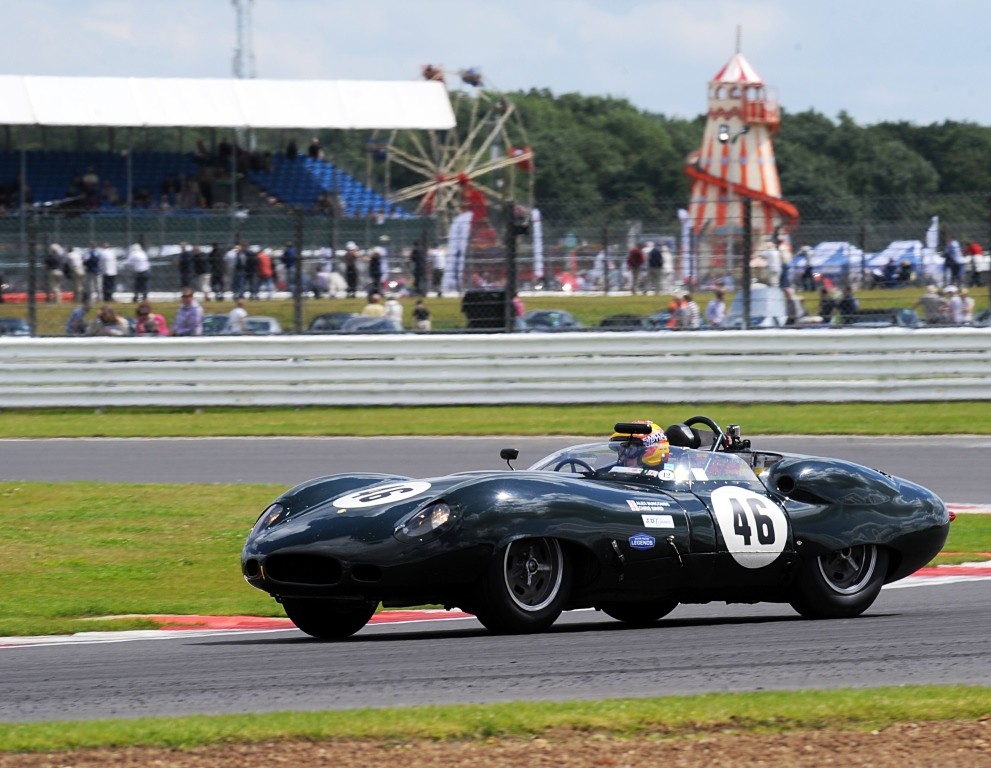
The wider picture was less kind. The rear-engined Cooper sports cars made front-engined designs like the Lister obsolete within a season, and by the end of 1959 Lister withdrew from racing, while continuing to build cars for customers. In all, Lister-Jaguars took more than 30 wins up to 1959.
Rivals: Lister, Ferrari and Aston Martin in 1959
| Car | Engine | Layout | Builder |
|---|---|---|---|
| Lister-Jaguar Costin | Jaguar XK straight-six | front engine | independent British team |
| Ferrari 250 Testa Rossa | 3.0-litre V12 | front engine | Ferrari works and customers |
| Aston Martin DBR1 | 3.0-litre straight-six | front engine | Aston Martin works, 1959 Le Mans winner |
At Le Mans the Lister faced the Ferrari 250 Testa Rossa and the Aston Martin DBR1, which won the race that year. Frank Costin's aerodynamic ideas also shaped the Maserati 450S Costin-Zagato of 1957, a car with a similar low-drag approach. Jaguar's side of the story is told in our history of Jaguar, and the XK engine's origins in our page on the Jaguar XK120.

Values and continuation cars
Original Costins rarely change hands. The ex-Cunningham BHL 123 sold at Gooding & Company's Scottsdale auction in 2010 for one million US dollars, about €740,000 at the exchange rate of the time. A car with a Costin-style body on a 1959 Jaguar XK150S chassis, raced for decades, made 363,000 US dollars at RM's Auburn sale in 2015. Both works Le Mans cars of 1959 have also been offered for sale; one changed hands in 2015.

In December 2016 the revived Lister company announced new Costin continuation cars, built on the original chassis jigs. The racing version cost 295,000 pounds plus VAT, about €350,000 at the time, with 12,500 pounds extra for a fully road-legal car; its engine produced 337 bhp (251 kW) at 6,750 rpm. The old version of this page gave a price of about 1.16 million US dollars without a date or source, so it has been removed.

Jaguar Lister Jaguar Costin Roadster in our rankings
- No. 212 of 557 · Biggest engines: cars (3,781 cc · top 39%)
- No. 35 of 79 · Most powerful convertibles and roadsters (224 kW · top 45%)
- No. 24 of 49 · Biggest engines: convertibles and roadsters (3,781 cc · top 49%)
- No. 433 of 859 · Most powerful cars (224 kW · top 51%)
- No. 78 of 109 · Most powerful British cars (224 kW · top 72%)
Bigger engine than 61% of ranked cars in the 1CARS catalog (No. 212 of 557).
Jaguar Lister Jaguar Costin Roadster photos 13


FAQ
What is a Lister-Jaguar Costin?
It is the 1959 version of Brian Lister's Jaguar-engined sports racing car, with a low-drag aluminium body designed by aerodynamicist Frank Costin. It replaced the 1957–1958 "Knobbly" Lister and raced at Sebring and Le Mans in 1959.
What engine does the Lister Costin have?
The works cars used Jaguar's XK straight-six. A 3.0-litre version served races under the 3-litre limit, such as Le Mans, and a 3.8-litre version with about 224 kW (300 bhp) for British and American circuits. Many customer cars used Chevrolet V8s.
How did the Lister Costin do at Le Mans?
Two works cars started the 1959 24 Hours of Le Mans, driven by Walt Hansgen and Peter Blond, and by Ivor Bueb and Bruce Halford. Both retired with mechanical problems.
How many Lister Costins were built?
Only a handful. One count gives nine Costin-bodied cars in total, most of them Chevrolet-powered, but rebuilds and re-engined cars make the exact number hard to fix.
How much is a Lister-Jaguar Costin worth?
The ex-Cunningham car sold for one million US dollars in 2010. Continuation cars announced in 2016 cost 295,000 pounds plus VAT, so a documented original costs several times as much.
Data sources
Data checked by an editor against the sources below.
- The text of this article (1cars archive)
- Supercars - 1959 Lister Costin
- Motorsportmagazine - The 1959 Lister Jaguar