 Jaguar Mark 2
Specs, engines and history
Published Sources (1) Report an error
By Felix Hartmann, Automotive Technology & EV Contributor
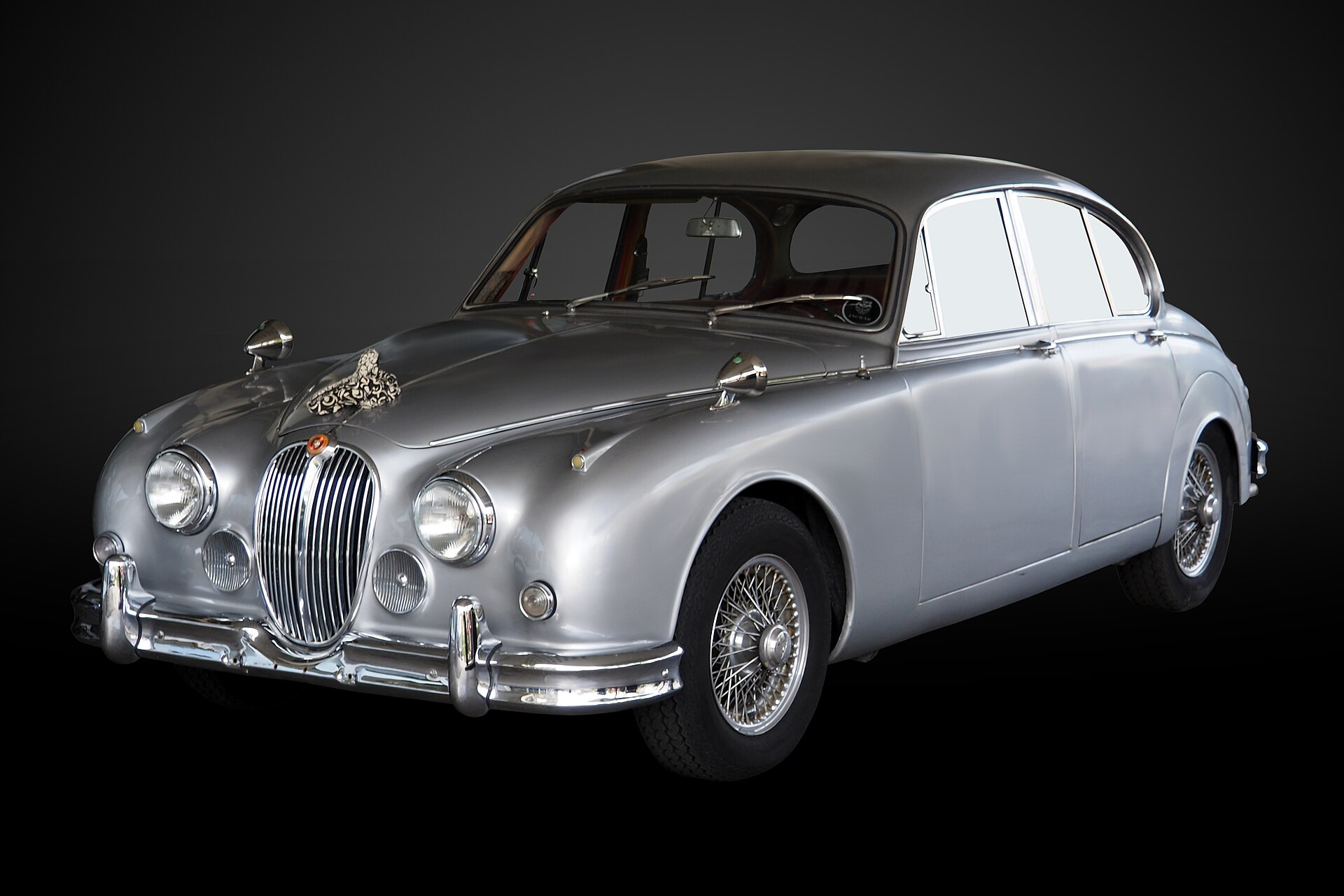
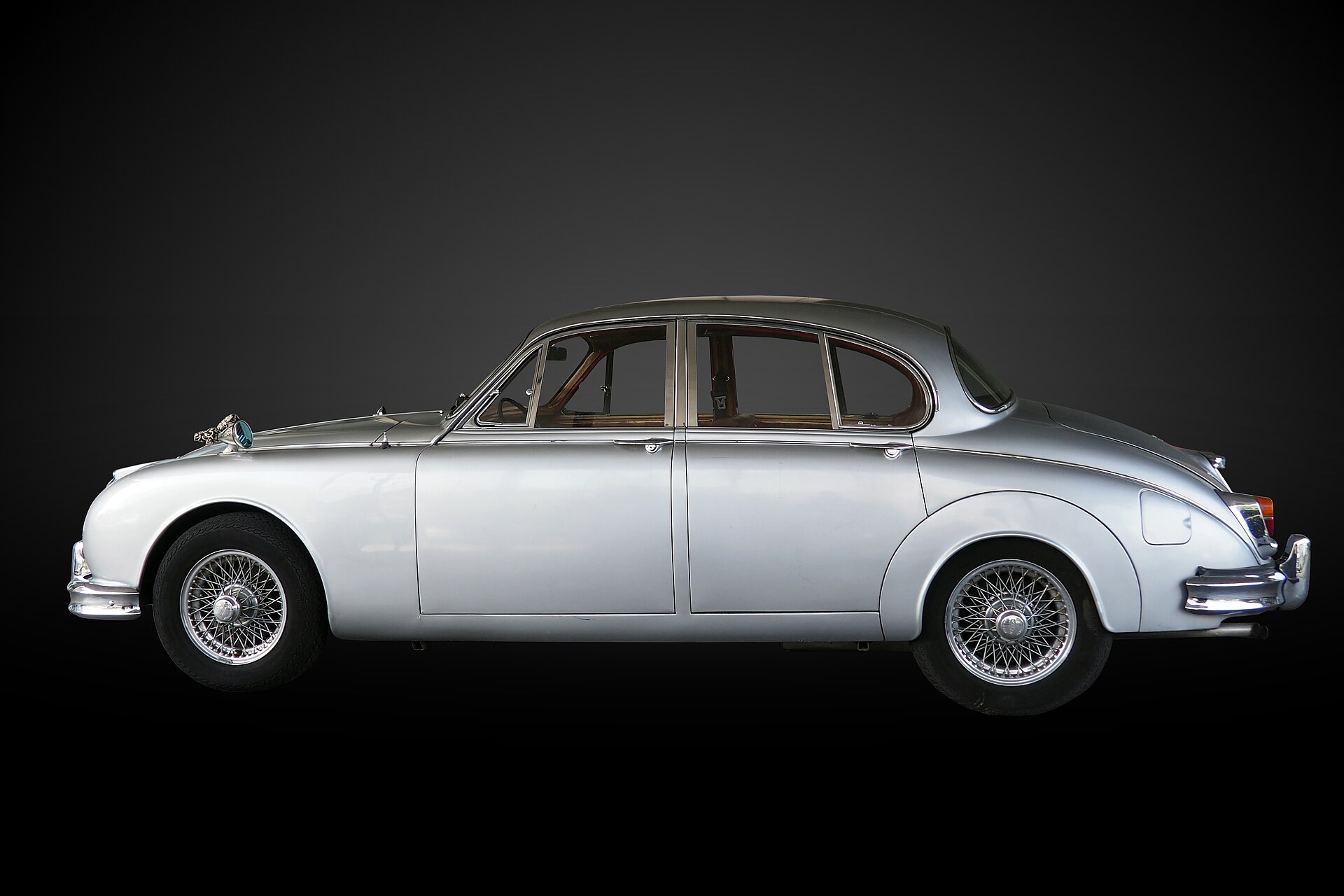
The Jaguar Mark 2 is the compact sports saloon that Jaguar built in Coventry from late 1959 to 1967, with the 2.4, 3.4 and 3.8-litre versions of the XK six. It developed the 1955 "Mark 1" saloon with much larger windows, a wider rear track and disc brakes on all four wheels. With the 3.8 engine it was one of the fastest four-door cars of its day, a winner in saloon-car racing and a favourite of police forces and criminals alike. The cheaper 240 and 340 carried it on until 1969.
In short
- 83,976 Mark 2 cars built in 1959–1967 (2.4: 25,173; 3.4: 28,666; 3.8: 30,141), plus 7,246 of the 240/340 in 1967–1969.
- Engines from 89 kW (120 bhp) in the 2.4 to 164 kW (220 bhp gross) in the 3.8; the 3.8 reached 201 km/h.
- Disc brakes all round as standard; manual, overdrive or Borg-Warner automatic gearboxes.
- A Daimler version with Jaguar body and a 2.5-litre V8 was built from 1962.
Mark 2 at a glance
| Item | Jaguar Mark 2 |
|---|---|
| Maker | Jaguar Cars Ltd, Coventry |
| Production | 1959–1967 (240/340 to 1969) |
| Number built | 83,976 (Wikipedia EN; the model split adds up to 83,980) |
| Body | four-door saloon, steel monocoque |
| Engines | XK straight-six, 2.4, 3.4 and 3.8 litres |
| Power | 89–164 kW (120–220 bhp, gross) |
| Gearboxes | four-speed manual, manual with overdrive, Borg-Warner automatic |
| Wheelbase / length | 2,718 mm / 4,572 mm |
| Predecessor / successors | 2.4 and 3.4 saloons of 1955–1959 / 240 and 340 (1967), XJ6 (1968) |
The Mark 2 is listed in our Jaguar catalogue. Its XK engine first appeared in the Jaguar XK120 sports car, and the company's origins are told in our article on Swallow Sidecars and SS Cars.
Development and production history
Jaguar introduced its first compact monocoque saloons in 1955; the 2.4 and 3.4 of 1955–1959 are now called the Mark 1. The Mark 2 was announced in October 1959 and was Jaguar's big new car of that year. It kept the basic bodyshell but gave it a much lighter look: the glass area grew by 18 per cent, the windscreen was wider, the front pillars slimmer and the rear window wrapped around. The front suspension geometry was revised and the rear track was widened.
The 3.8 was the fastest version. Wikipedia DE notes that it remained the fastest four-door production car until 1964. In the United States the car was sold as the Jaguar 3.8 Sedan.
| Year | Event |
|---|---|
| 1955 | compact 2.4 saloon (later called Mark 1) launched; a 3.4 follows before 1959 |
| October 1959 | Mark 2 announced in 2.4, 3.4 and 3.8 form |
| 1961 | peak year: 20,920 cars (Wikipedia DE) |
| 1962 | Daimler 2½-litre V8 saloon on the Mark 2 body |
| 1963 | 3.8 S-Type appears alongside the Mark 2 |
| September 1965 | Moss gearbox replaced by Jaguar's all-synchromesh unit (Classics World) |
| September 1967 | 3.8 discontinued; 240 and 340 replace the 2.4 and 3.4 |
| September 1968 | XJ6 launched; 340 ends |
| April 1969 | last 240 built |

Design and engineering
The Mark 2 kept a live rear axle located by a Panhard rod, with wishbone front suspension. Dunlop disc brakes at all four wheels were standard. Power steering, overdrive and an automatic gearbox were options. The standard tyres were Dunlop 6.40H15 cross-plies, with Pirelli 185VR15 radials as an option.
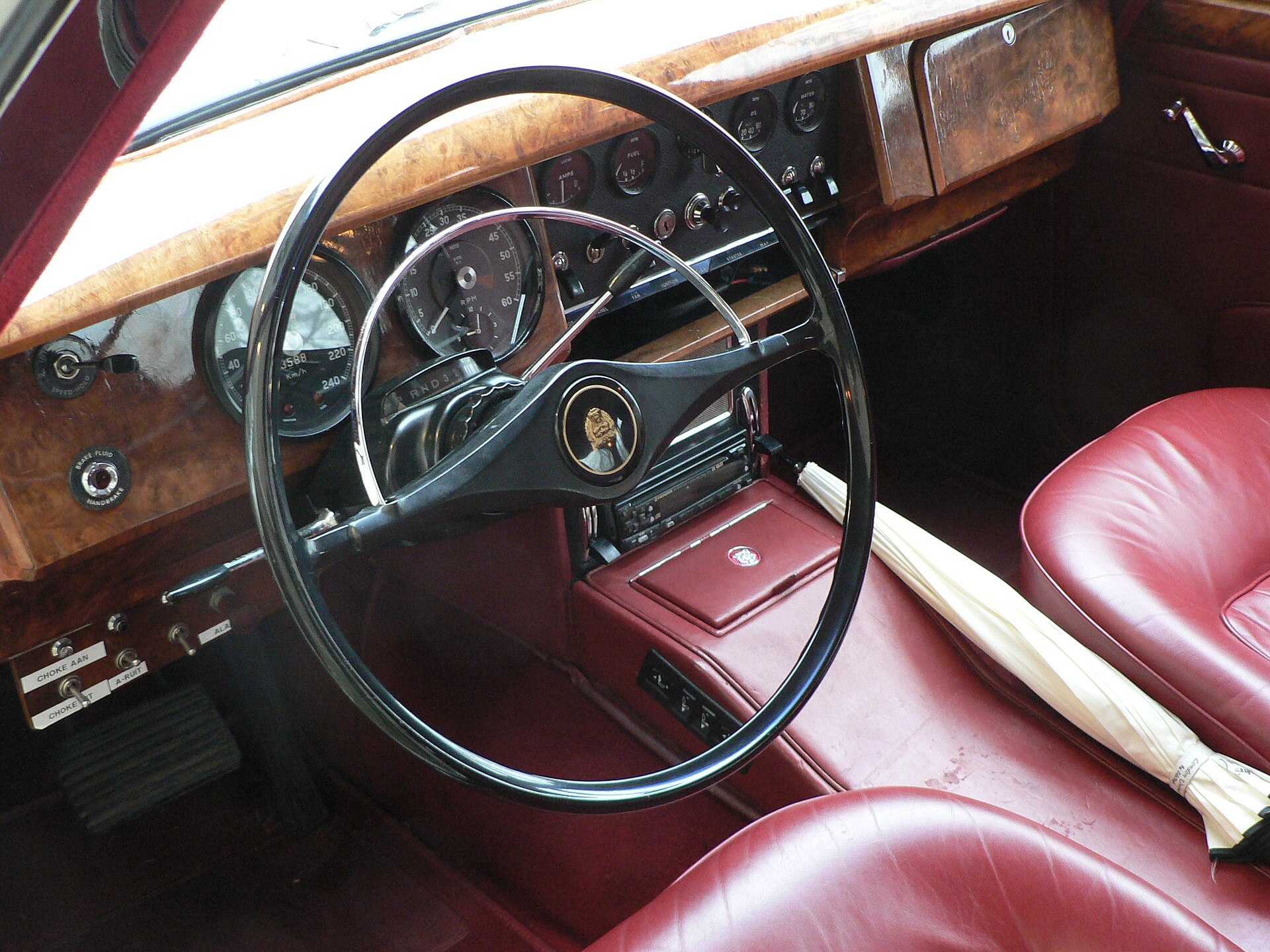
The interior followed the Jaguar formula of leather seats and walnut veneer; Classics World counts almost 30 separate pieces of walnut trim. The 240 and 340 of 1967 cut costs with Ambla vinyl instead of leather, tufted carpets and air vents in place of the fog lamps.

Engine and drivetrain
All Mark 2s use the twin-cam XK straight-six in three sizes:
- 2.4 (2,483 cc): 89 kW (120 bhp) at 5,750 rpm with twin Solex carburettors.
- 3.4 (3,442 cc): 157 kW (210 bhp gross) with twin SU HD6 carburettors.
- 3.8 (3,781 cc): 164 kW (220 bhp gross) with twin SU HD6s, about 22 kW (30 bhp) less than the E-Type's 3.8; Wikipedia estimates about 142 kW (190 bhp) DIN. A limited-slip differential was standard.
- 240 (1967–1969): the 2.4 with a straight-port head and twin SU HS6 carburettors, 99 kW (133 bhp) at 5,500 rpm.
The four-speed Moss gearbox had no synchromesh on first gear. From September 1965 Jaguar fitted its own all-synchromesh box. Overdrive was an option, and the automatic was a Borg-Warner unit (type 35 according to Wikipedia EN, DG according to Classics World).
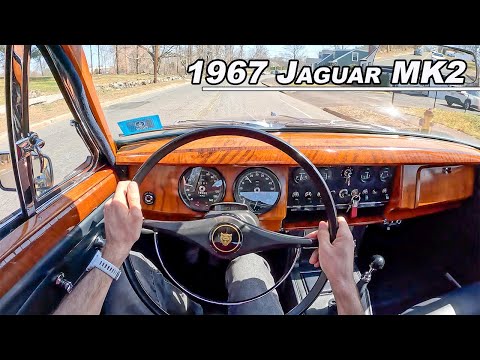
Jaguar Mark 2 specifications
| Parameter | Metric | Imperial |
|---|---|---|
| Engine (3.8) | 3,781 cc straight-six | 230.7 cu in |
| Power (2.4 / 3.4 / 3.8) | 89 / 157 / 164 kW | 120 / 210 / 220 bhp (gross) |
| Wheelbase | 2,718 mm | 107 in |
| Length | 4,572 mm | 180 in |
| Width | 1,702 mm | 67 in |
| Height | 1,473 mm | 58 in |
| Kerb weight (2.4 manual) | 1,440 kg | 3,174 lb |
| Top speed (3.8) | 201 km/h | 125 mph |
| Top speed (3.4 automatic, The Motor 1961) | 193 km/h | 119.9 mph |
| Fuel use (3.4 automatic, The Motor 1961) | 14.9 l/100 km | 19.0 mpg (imperial) |
The 3.8 needed 8.5 seconds from 0 to 60 mph; the 3.4 automatic tested by The Motor took 11.9 seconds. The 2.4 only passed 160 km/h (100 mph) in its later 240 form.
Variants and derivatives
| Variant | Years | Body / purpose | Engine | Notes |
|---|---|---|---|---|
| Mark 2 2.4 | 1959–1967 | saloon | 2.4 XK six, 89 kW (120 bhp) | 25,173 built |
| Mark 2 3.4 | 1959–1967 | saloon | 3.4 XK six, 157 kW (210 bhp) | 28,666 built |
| Mark 2 3.8 | 1959–1967 | saloon | 3.8 XK six, 164 kW (220 bhp) | 30,141 built; limited-slip differential |
| Daimler 2½-litre V8 / V8-250 | 1962–1969 | saloon on the Mark 2 body | 2.5 Daimler V8, 106 kW (142 bhp) | about 68 kg lighter than the 2.4 |
| 240 | 1967–1969 | cheaper saloon | 2.4 XK six, 99 kW (133 bhp) | 4,446 built |
| 340 | 1967–1968 | cheaper saloon | 3.4 XK six | 2,788 built |
| 380 | 1967 | 340 with the 3.8 engine | 3.8 XK six | 12 built, not a catalogue model |
Production figures differ by source: Wikipedia DE gives 88,927 cars for 1959–1969, with 30,627 of the 3.8, 29,318 of the 3.4 and 28,982 of the 2.4. The table uses the figures of Wikipedia EN and Classics World.

Racing, police cars and Inspector Morse
The 3.8 was a front-runner in saloon-car racing in the early 1960s:
- 1962 Australian Touring Car Championship – Bob Jane;
- 1962 Six Hours international saloon race – Michael Parkes and Jimmy Blumer;
- 1963 European Touring Car Challenge – Peter Nöcker;
- 1963 Australian Touring Car Championship – Bob Jane again, with a 4.1-litre engine;
- 1963 Brands Hatch 6 Hours – Roy Salvadori and Denny Hulme.
British police used Mark 2s on the new motorways, and its speed also made it a popular getaway car. On television, a Regency red 1960 Mark 2 became famous in Inspector Morse; given away in 2002, it sold for more than £100,000 in November 2005.
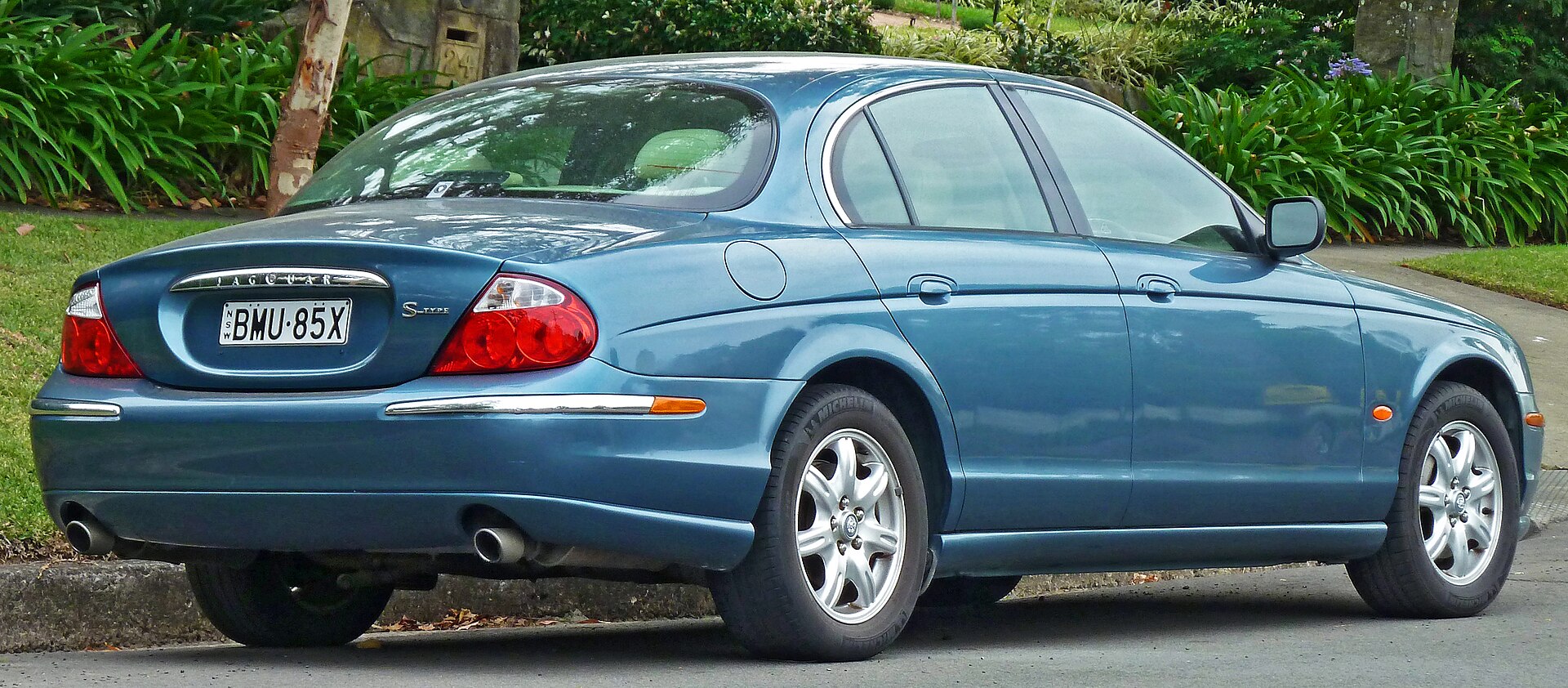
Later Jaguars borrowed the look: the second S-Type of 1999 took cues from the Mark 2, and the Japanese Mitsuoka Viewt of 1994 is a small hatchback with Mark 2-inspired styling. The Mark 2's successor as Jaguar's main saloon was the Jaguar XJ, launched in 1968; the wider history is in our history of Jaguar.
Prices then and now
In 1961 The Motor's 3.4 automatic test car cost £1,951 including £614 of purchase tax. The 240 sold for £1,364 in 1969. Classics World reported a 3.8 sold for £93,500 at Silverstone Auctions in May 2020. Excellent 3.8s and 3.4s were exceeding £50,000 in 2020. Most cars sold for under £30,000 in 2020, and that figure was also the usual ceiling for a 2.4 or 240.

Collecting a Mark 2 today: what to check
Classics World's buying guide lists the main checks:
- Rust: front chassis legs and jacking points by the A-posts, sills (repairs must be done on a jig), rear spring hangers, the Panhard rod mounting, floor pans and the bottoms of doors and boot lid.
- Authenticity: a genuine 3.8 has a chassis number beginning with "2"; some "3.8s" are built on 2.4 or Daimler shells.
- Engine: oil pressure of at least 40 psi (about 2.8 bar) when cruising; aluminium heads can corrode if the antifreeze is neglected.
- Gearbox: the Moss box of pre-September 1965 cars is slow but should not jump out of gear; parts are getting scarce.
- Interior: water damage to the walnut veneer and headlinings is expensive to put right.
Parts supply is good overall, and specialists support both the manual and automatic cars. For other classic saloons, see our classics section.
Photo gallery


Jaguar Mark 2 in our rankings
In production longer than 46% of ranked nameplates in the 1CARS catalog (No. 537 of 1082).
Jaguar Mark 2 photos 6
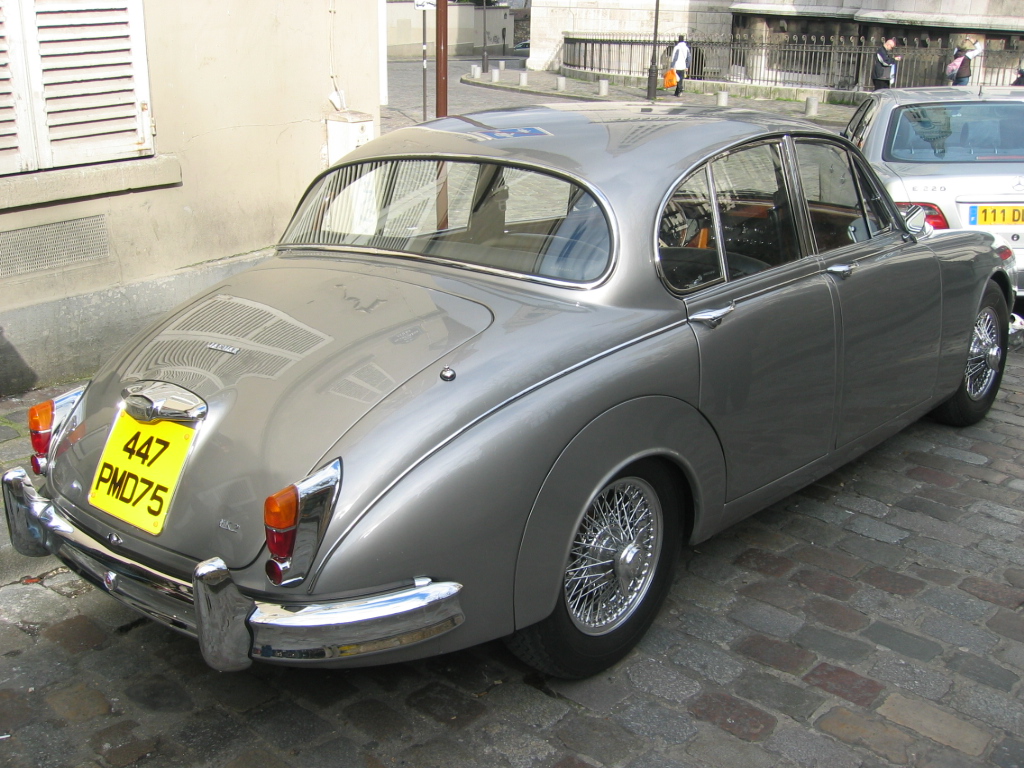
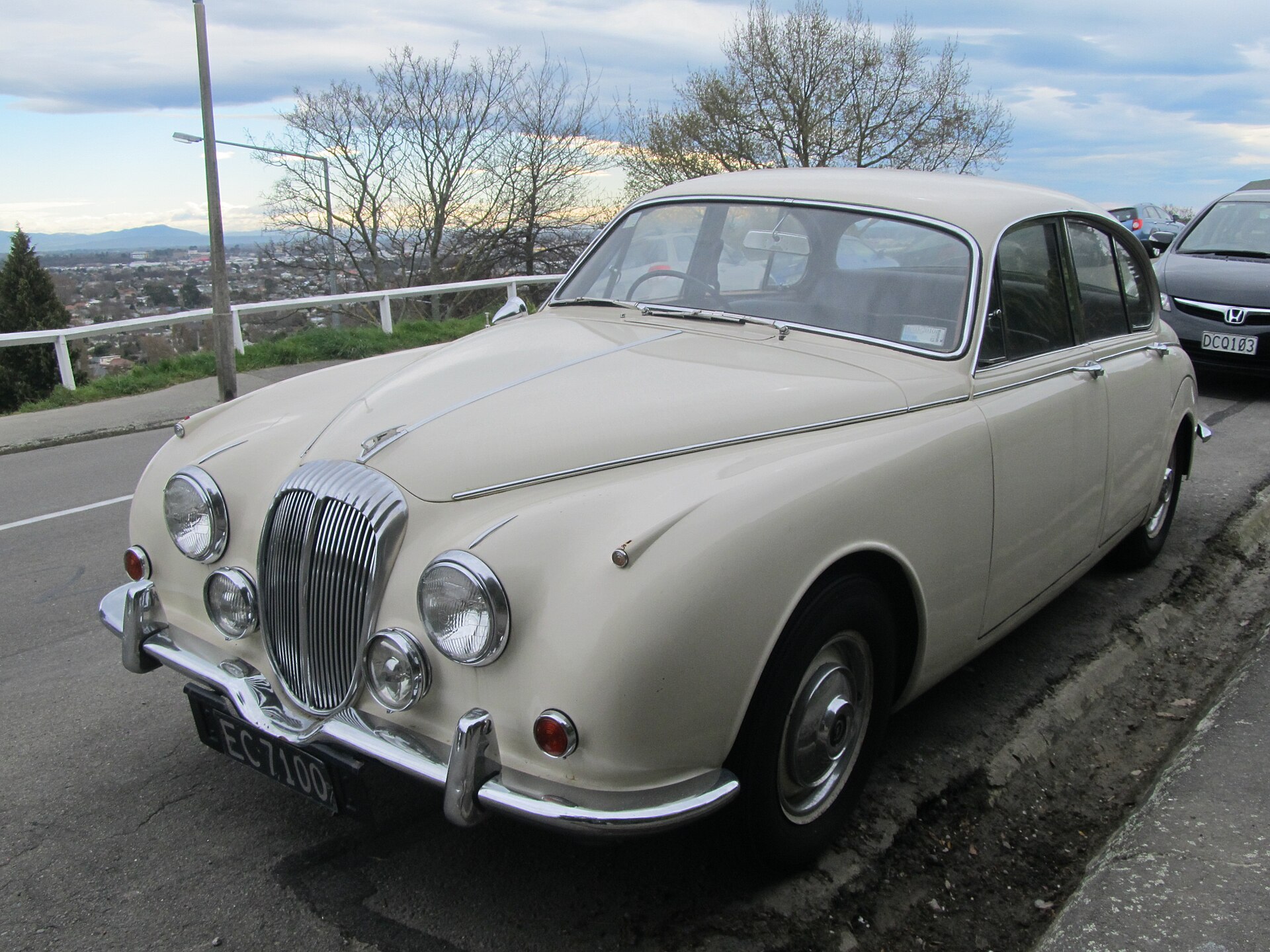
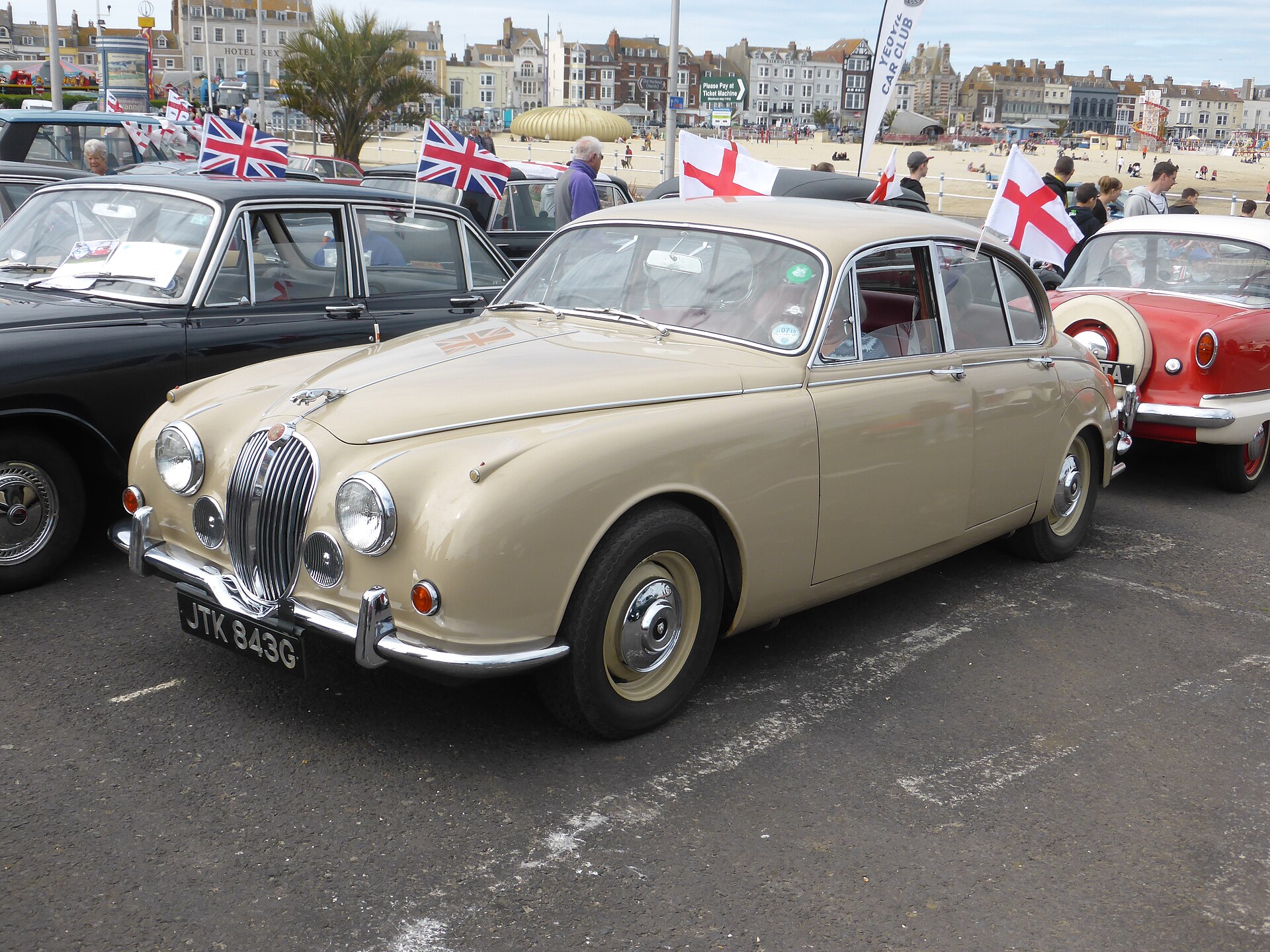
FAQ
When was the Jaguar Mark 2 produced, and where?
In Coventry, England, from October 1959 to 1967; the 240 and 340 derivatives followed until 1969.
How many Jaguar Mark 2s were built?
83,976 according to Wikipedia EN (2.4: 25,173; 3.4: 28,666; 3.8: 30,141). Wikipedia DE gives 88,927 for 1959–1969.
What engine does the Mark 2 have?
Jaguar's twin-cam XK straight-six in 2.4, 3.4 or 3.8-litre form, from 89 kW (120 bhp) to 164 kW (220 bhp gross); the Daimler version had a 2.5-litre V8.
What variants of the Mark 2 were made?
The 2.4, 3.4 and 3.8 Mark 2, the Daimler 2½-litre V8, and the 240 and 340 of 1967–1969, plus 12 cars called 380.
Is the Jaguar Mark 2 collectable, and what should buyers check?
Yes, especially the 3.8 manual. Check the structure for rust, the chassis number and the engine's oil pressure, and budget for interior wood repairs.
Data sources
Data checked by an editor against the sources below.