 Hyundai i10
All generations, specs and history
Published Sources (2) Report an error
By Sarah Whitmore, Senior Automotive Writer
- Built
- 2007–2026
- Generations
- 3 · PA to AC3
- Top power
- 74 kW (101 PS)
Timeline
i10 generations
Click a generation for its own page


- i10 PA 2007–2013 · Hatchback
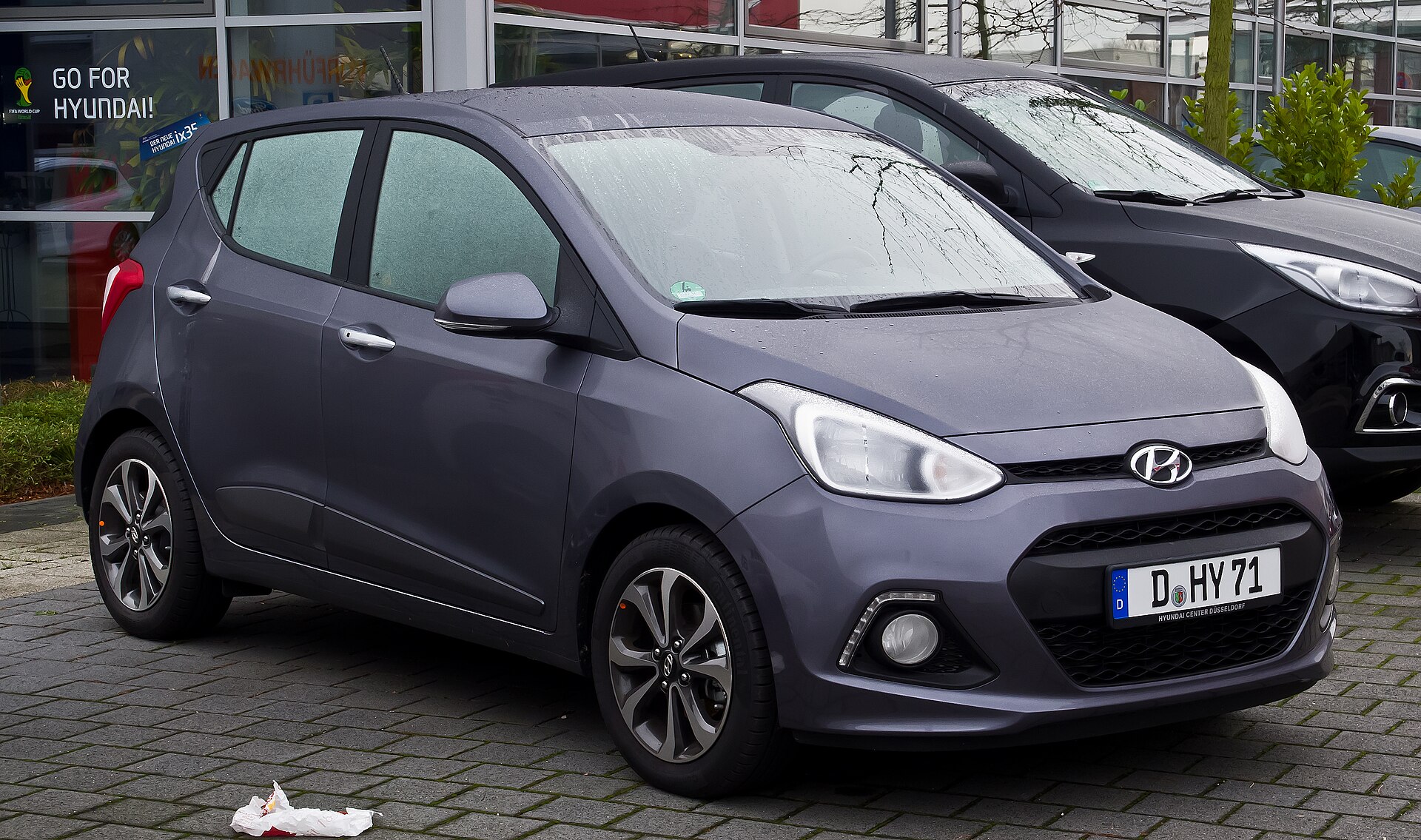
- i10 IA/BA 2013–2019 · Hatchback · 49–64 kW (67–87 PS)
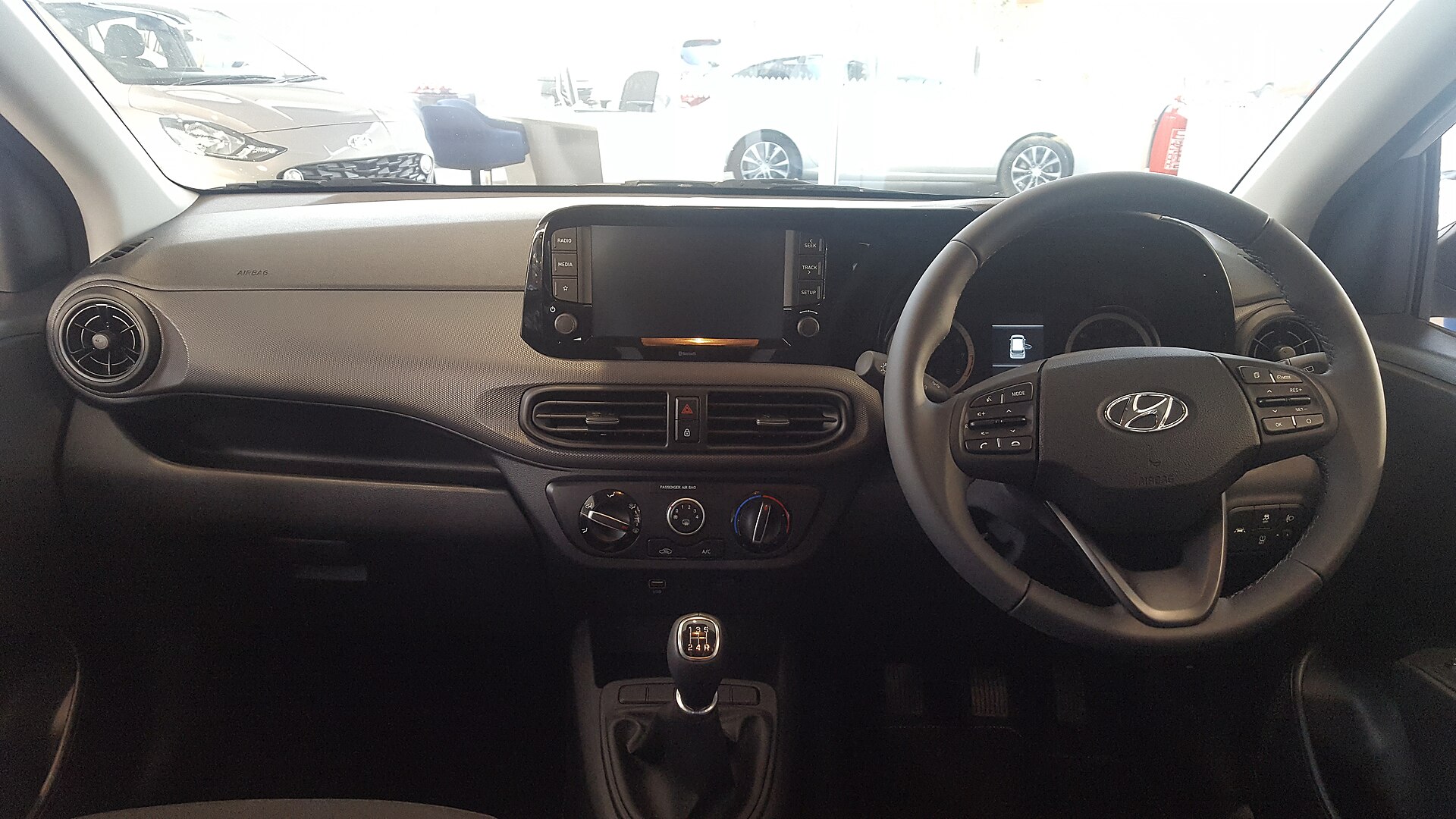
- i10 AC3 2019–2026 · Hatchback · 49–74 kW (67–101 PS)
Newest first · 3 generations since 2007
-
2019
-
2013
-
2007
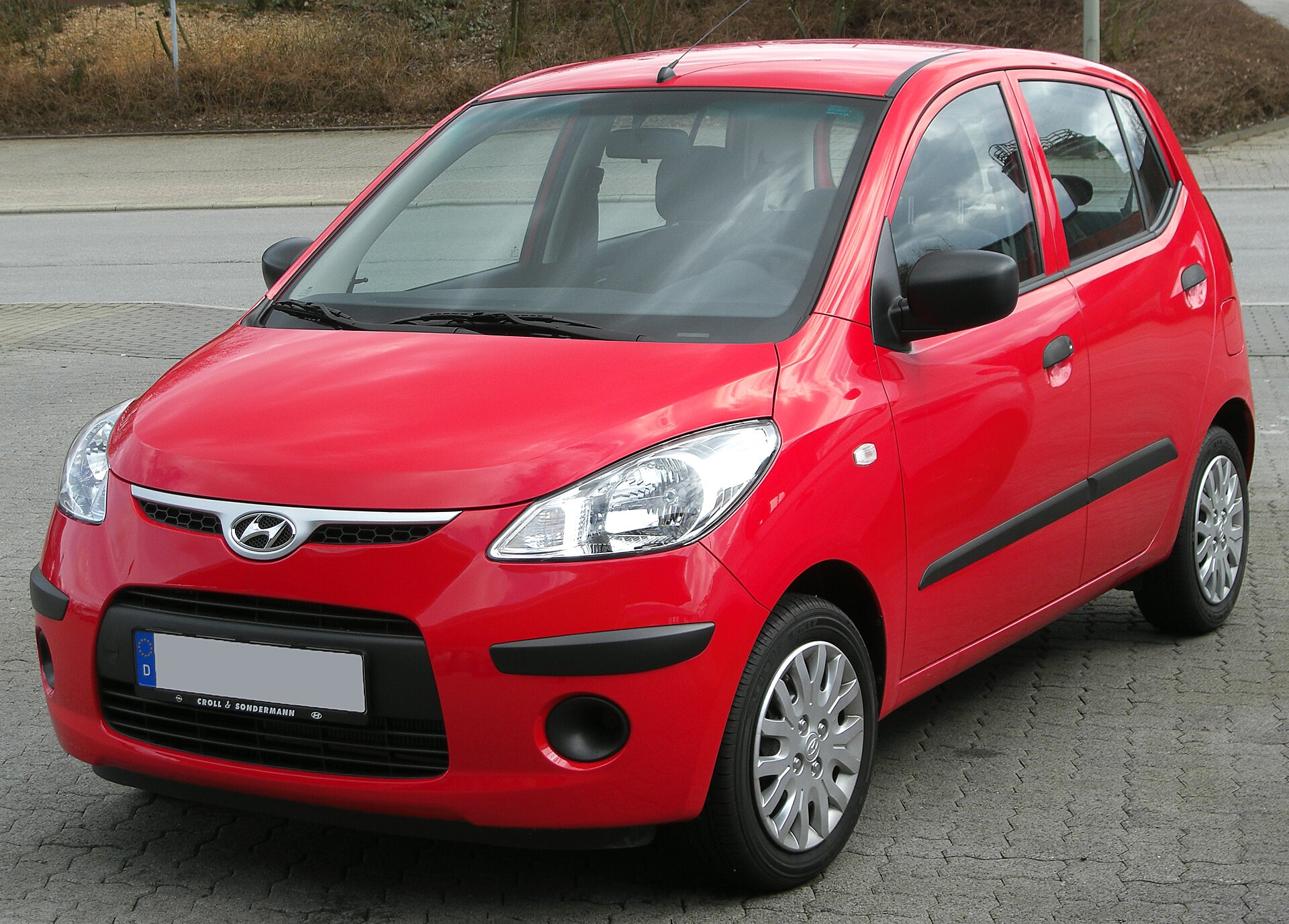
All generations by year: i10 AC3 (2019–2026) · i10 IA/BA (2013–2019) · i10 PA (2007–2013)
Which one is mine?
Pick the year of first registration to see which generation it is.
Check by VINWhich i10 to choose
Our verdict · Sarah Whitmore
- For town use: the 1.0 MPi with 49 kW and idle stop-and-go.
- For motorway trips: the 1.0 T-GDi with 74 kW and 172 Nm, 10.5 seconds to 100 km/h.
- For an automatic: the 1.2 MPi with the AMT gearbox.
- For a used buy: a facelifted 2023–2026 car with lane-keeping assistance and USB-C as standard.
- For safety: the third generation is rated three Euro NCAP stars (2020); check the equipment of the car you buy.
The i10 appears in our selection of the best small city cars. Its bigger sister is described in the guide to the Hyundai i20, and the brand in the article on Hyundai's history.
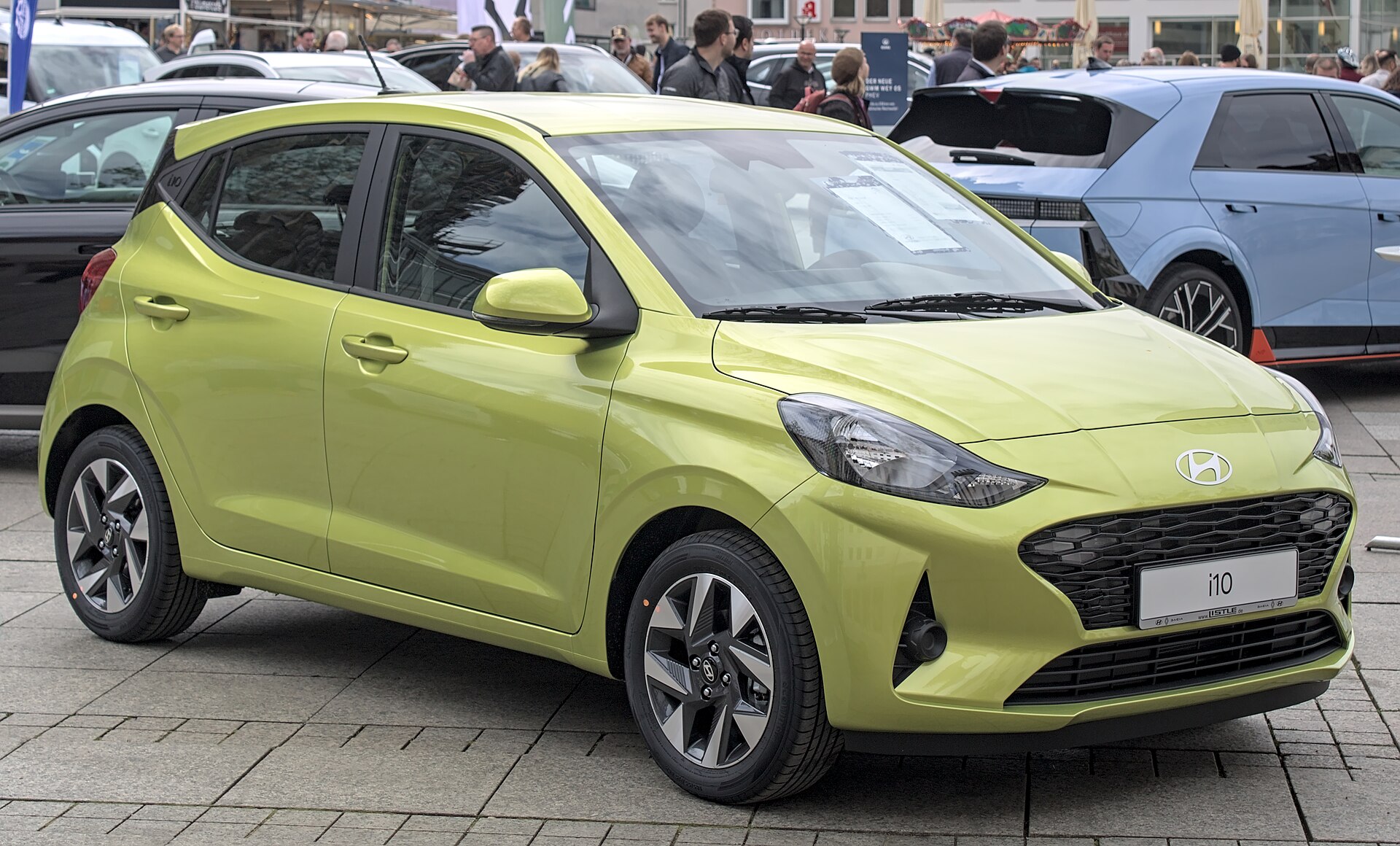
The Hyundai i10 is a small five-door city car that Hyundai sold in Europe for almost two decades. The first generation of 2007 came from Chennai in India. The second, launched in 2013, and the third, of 2019, were built in İzmit, Turkey, for the European market; the third was designed and developed in Europe. Production of the last European i10 ended in January 2026. In India Hyundai sold the related Grand i10 and Grand i10 Nios as separate models.
In short
- Three European generations: PA (2007–2013), IA/BA (2013–2019) and AC3 (2019–2026).
- Third-generation engines: 1.0 MPi with 49 kW (67 PS), 1.2 MPi with 62 kW (84 PS) and 1.0 T-GDi turbo with 74 kW (100 PS).
- Boot of 252 litres, up to 1,050 litres with the rear seats folded (third generation).
- German price of the i10 N Line in April 2024: from €22,190 (Motor1 Germany).
Specs by version
Engines
| Version | Engine | Power | Torque | Gearbox | Production years |
|---|---|---|---|---|---|
| Petrol · 5 versions | |||||
| IA · 1.0 MPi | Petrol | 49 kW 67 PS66 hp | 95 Nm70 lb-ft | - | - |
| IA · 1.25 MPi | Petrol | 64 kW 87 PS86 hp | 121 Nm89 lb-ft | - | - |
| AC3 · 1.0 MPi | 3 cyl · Petrol | 49 kW 67 PS66 hp | 96 Nm71 lb-ft | - | 2020 |
| AC3 · 1.2 MPi | 4 cyl · Petrol | 62 kW 84 PS83 hp | 118 Nm87 lb-ft | - | 2020 |
| AC3 · 1.0 T-GDi (N Line) | 3 cyl · Petrol | 74 kW 101 PS99 hp | 172 Nm127 lb-ft | 5-sp Manual | 2020 |
| LPG / CNG · 1 version | |||||
| IA · 1.0 LPi | LPG / CNG | 49 kW 67 PS66 hp | 90 Nm66 lb-ft | 5-sp Manual | - |
Performance
Show all 2 versions
| Version | 0–100 km/h | Top speed |
|---|---|---|
| AC3 · 2019–2026 | ||
| AC3 · 1.2 MPi | 12.6 s 0–62 mph | 171 km/h106 mph |
| AC3 · 1.0 T-GDi (N Line) | 10.5 s 0–62 mph | 185 km/h115 mph |
Dimensions and weight
Show all 1 versions
| Version | Length | Boot | Fuel tank |
|---|---|---|---|
| AC3 · 2019–2026 | |||
| AC3 · 1.0 T-GDi (N Line) | 3,675 mm144.7 in | 252 l8.9 cu ft | 36 l9.5 gal US |
Verified Manufacturer and type-approval data from our catalog · Sources and methodology
Hyundai i10 at a glance
| Specification | Hyundai i10 (Europe) |
|---|---|
| Production | 2007–2026; Chennai (India) for the first generation, İzmit (Turkey) from 2013 |
| Generations | PA, IA/BA, AC3 |
| Body | five-door city car (A segment) |
| Engines (AC3) | 1.0 and 1.2 Kappa II MPi petrol, 1.0 T-GDi turbo petrol |
| Gearboxes (AC3) | five-speed manual, automated manual (AMT) |
| Length (AC3 facelift) | 3,675 mm |
| Boot (AC3) | 252 to 1,050 litres |
| Fuel tank (AC3) | 36 litres |
| Euro NCAP (AC3, 2020) | three stars |
Generations
| Generation | Years | Plant | Engines in Europe | Boot |
|---|---|---|---|---|
| PA | 2007–2013 | Chennai, India | 1.0 petrol, 1.1 CRDi diesel | 225 l |
| IA/BA | 2013–2019 | İzmit, Turkey | 1.0 and 1.25 Kappa MPi | 252 l |
| AC3 | 2019–2026 | İzmit, Turkey | 1.0 and 1.2 MPi, 1.0 T-GDi | 252 l |
All generations are listed in the Hyundai catalogue.
First generation (2007–2013)
Hyundai announced the first i10 on 31 October 2007 in New Delhi. It was built in Hyundai's Chennai plant for India and for export, including Europe. The car was 3,565 mm long on a 2,380 mm wheelbase and had a 225-litre boot. A 1.1-litre three-cylinder CRDi diesel was offered in Europe and India alongside the petrol engines. In the UK the i10 became a popular buy during the 2009 government scrappage scheme. European sales rose from 353 cars in 2007 to 109,424 in 2009. In India it was named Indian Car of the Year 2008.

Second generation (2013–2019)
The second i10 was shown at the Frankfurt Motor Show in September 2013 and reached European showrooms in January 2014. It was built by Hyundai Assan in İzmit, Turkey, where production began in late September 2013, with a capacity of 200,000 cars a year. The car was 80 mm longer, 65 mm wider and 50 mm lower than before. Its boot grew by about 10 percent to 252 litres.
| Engine (second generation) | Power | Torque | Gearbox |
|---|---|---|---|
| 1.0 Kappa MPi | 49 kW (66 PS) | 95 Nm | five-speed manual or four-speed automatic |
| 1.0 Kappa LPi (LPG) | 49 kW (67 PS) | 90 Nm | five-speed manual |
| 1.25 Kappa MPi | 64 kW (87 PS) | 121 Nm | - |
Equipment could include automatic air conditioning, daytime running lights, curtain airbags, tyre pressure monitoring and hill-start assist; electronic stability control was standard on all European cars. In the 2014 Euro NCAP test the second i10 scored 79 percent for adult occupants, 80 for children, 71 for pedestrians and 56 for the assistance systems. A facelift followed in 2017.

Third generation (2019–2026)
The third i10 was revealed just before the Frankfurt Motor Show in September 2019, about a month after the Indian Grand i10 Nios. It was designed, developed and built in Europe. Compared with its predecessor the roof was 20 mm lower and the body 20 mm wider. Production started at Hyundai Assan in January 2020.
| Engine (third generation) | Power | Torque | 0–100 km/h | Top speed |
|---|---|---|---|---|
| 1.0 Kappa II MPi | 49 kW (67 PS) | 96 Nm | - | - |
| 1.2 Kappa II MPi | 62 kW (84 PS) | 118 Nm | 12.6 s (manual), 15.8 s (AMT) | 171 km/h |
| 1.0 T-GDi turbo | 74 kW (100 PS) | 172 Nm | 10.5 s | 185 km/h |
Both MPi engines have idle stop-and-go. They are offered with a manual gearbox or an automated manual (AMT); the turbo comes with a five-speed manual. The N Line, launched with the 1.0 T-GDi, adds a sportier body kit. In its 2020 WLTP data the N Line used 52.3 mpg (about 5.4 l/100 km) and emitted 123 g/km of CO2.

Facelift of 2023
Hyundai showed the updated i10 on 27 February 2023, and production of the facelift began in April 2023. Changes included new 15-inch alloys, a redesigned honeycomb grille, LED daytime running lights and integrated folding mirrors. A 4.2-inch instrument display, USB-C sockets and eCall became standard. Lane-keeping assistance and a rear-occupant alert were added, and the forward collision warning now also detects cyclists.
The facelifted N Line has its own bumpers and red accents but no extra power. In April 2024 Motor1 Germany gave its length as 3,675 mm and quoted a German price from €22,190, or €22,440 in its data table.


Safety
Euro NCAP gave the third-generation i10 three stars in 2020. It scored 69 percent for adult occupants, 75 for children, 52 for vulnerable road users and 59 for the assistance systems. The European car has more airbags, standard stability control and a stronger structure than the Indian Grand i10 Nios.
Running costs and reliability
Official fuel economy of the third generation is 49.6 to 55.4 mpg, about 5.1 to 5.7 l/100 km, with CO2 emissions of 116 to 123 g/km. Carwow notes that the engines are well proven and that the car has little new technology that could fail. Hyundai placed 17th of 32 brands in the 2024 Driver Power survey.
Photo gallery

Hyundai i10 evolution in numbers
Did you know?
- The Hyundai i10 ran for 19 years, from 2007 to 2026, over 3 generations in our catalog.
- The longest-running generation is the i10 AC3 (2019–2026): 7 years.
Hyundai i10 in our rankings
- No. 13 of 420 · Smallest cars (3,675 mm · top 4%)
- No. 11 of 67 · Smallest hatchbacks (3,675 mm · top 17%)
- No. 184 of 912 · Longest-running car nameplates (19 years · top 21%)
- No. 64 of 105 · Fastest cars of the 2020s (185 km/h · top 62%)
- No. 28 of 46 · Fastest hatchbacks (185 km/h · top 66%)
- No. 12 of 18 · Fastest Korean cars (185 km/h · top 67%)
Shorter than 96% of ranked cars in the 1CARS catalog (No. 13 of 420).
FAQ
Is the Hyundai i10 still made?
Production of the European i10 in İzmit, Turkey, ended in January 2026.
Where was the Hyundai i10 built?
The first generation in Chennai, India; the second and third generations for Europe in İzmit, Turkey.
How big is the i10 boot?
225 litres in the first generation and 252 litres in the second and third; up to 1,050 litres with the seats folded.
How safe is the Hyundai i10?
Euro NCAP gave the third generation three stars in 2020.
What is the most powerful i10?
The 1.0 T-GDi turbo with 74 kW (100 PS) and 172 Nm, used in the N Line.
Data sources
Data checked by an editor against the sources below.
- Wikipedia - Hyundai I10
- Automobile