 Hyundai Getz
Specs, engines and history
Published Sources (1) Report an error
By Felix Hartmann, Automotive Technology & EV Contributor
- Built
- 2002–2011
- Top power
- 81 kW (110 PS)
Which one to buy
Our verdict · Felix Hartmann
- Best all-rounder: a facelifted 1.4 with the manual gearbox; 71 kW (97 PS) is enough for the size.
- Lowest fuel use: the 1.5 CRDi with 65 kW (88 PS), rated at 4.5 l/100 km.
- Cheapest: the 1.1 with 49 kW (67 PS), fine for town but slow on the motorway.
- Avoid if you can: early cars from 2002-2004 if safety is your priority.
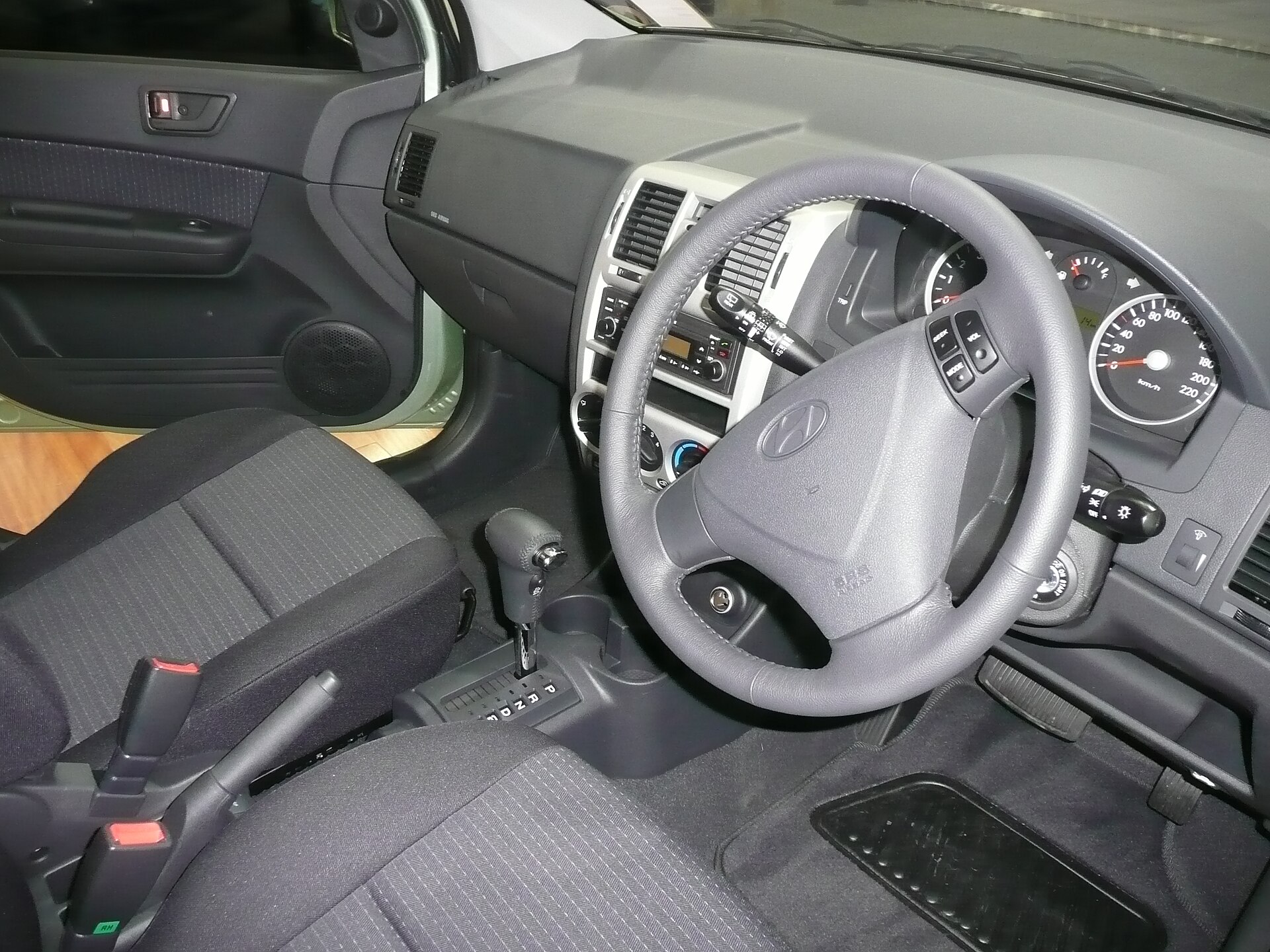
The Hyundai Getz is a supermini hatchback that Hyundai built from 2002 to 2011, with three or five doors and petrol engines from 1.1 to 1.6 litres plus a 1.5 CRDi diesel. Designed at Hyundai's European technical centre in Frankfurt, it was the brand's best-selling car in Europe from 2003 to 2008, and 1,390,084 were made in total. The i20 replaced it in most markets.
In short
- One generation (code TB), 2002-2011, facelifted in autumn 2005.
- Petrol engines from 46 kW (62 PS) to 78 kW (106 PS); diesels from 59 kW (80 PS) to 81 kW (110 PS).
- Euro NCAP: four stars in 2004, but weak pedestrian protection.
- Boot: 254 litres (ADAC); German list prices ran from about EUR 8,290 for special editions to EUR 16,690 (ADAC, 2005-2009).
Hyundai Getz at a glance
| Parameter | Detail |
|---|---|
| Segment | Supermini (B-segment) |
| Body | Three- and five-door hatchback |
| Platform | Hyundai-Kia TB |
| Built | Ulsan, South Korea (2002-2011); Chennai, India (2004-2009); kit assembly in several other countries |
| Production | 2002-2011 |
| Total built | 1,390,084 |
| Successor | Hyundai i20 (from late 2008) |
The Getz first appeared as the Hyundai TB concept at the 2001 Tokyo Motor Show; TB stood for "Think Basic", and that is the name the car carried in Japan. The production version was shown at the Geneva Motor Show in 2002. Korea knew it as the Hyundai Click, India as the Getz Prime, and in Venezuela it was sold as the Dodge Brisa. It shared parts with the Hyundai Atos, the Kia Picanto and the Accent of the same period.
Generations and facelift
There was only one Getz. The useful split for buyers is before and after the facelift.
| Generation | Code | Years | Body styles | Engines | Power (kW / hp) |
|---|---|---|---|---|---|
| Getz | TB | 2002-2005 | 3- and 5-door hatchback | 1.1, 1.3, 1.6 petrol; 1.5 CRDi (3-cyl.) | 46-77 kW (62-105 PS) |
| Getz facelift | TB | 2005-2011 | 3- and 5-door hatchback | 1.1, 1.4, 1.6 petrol; 1.5 CRDi (4-cyl.) | 49-81 kW (67-110 PS) |
2002-2005. The original car had a 1.1, a 1.3 and a 1.6 petrol engine. From 2004 Europe also got a 1.5 CRDi three-cylinder diesel licensed from VM Motori, with 59 kW (80 PS) and 182 Nm.
Facelift (autumn 2005). Shown at the Frankfurt Motor Show, the update brought new front and rear styling with rounder headlights and a new grille, a revised dashboard and trim, a new 1.4-litre petrol engine in place of the 1.3, and an updated 1.5 diesel. In the UK, air conditioning and side airbags became standard on the CDX. Germany also got the Getz Cross, a five-door 1.4 at EUR 14,990, from October 2006 (ADAC).

Engines and performance
| Engine | Years | Displacement | Power | Torque |
|---|---|---|---|---|
| 1.1 petrol | 2003-2005 | 1,086 cc | 46 kW (62 PS) | 94 Nm |
| 1.1 petrol | 2006-2009 | 1,086 cc | 49 kW (67 PS) | 99 Nm |
| 1.3 petrol | 2003-2005 | 1,341 cc | 60 kW (82 PS) | 117 Nm |
| 1.4 petrol | 2006-2009 | 1,399 cc | 71 kW (97 PS) | 126 Nm |
| 1.6 petrol | 2003-2005 | 1,599 cc | 77 kW (105 PS) | 143 Nm |
| 1.6 petrol | 2006-2009 | 1,599 cc | 78 kW (106 PS) | 144 Nm |
| 1.5 CRDi (3-cyl.) | 2004-2005 | 1,493 cc | 59 kW (80 PS) | 182 Nm |
| 1.5 CRDi | 2006-2009 | 1,493 cc | 65 kW (88 PS) | 215 Nm |
| 1.5 CRDi | 2008-2009 | 1,493 cc | 81 kW (110 PS) | 235 Nm |
Every engine came with a five-speed manual gearbox. A four-speed automatic was offered with the 1.3 and 1.6, and with the 1.4 after the facelift. All cars are front-wheel drive.
The numbers are modest. ADAC lists the five-door 1.1 at 15.6 seconds from 0 to 100 km/h and 150 km/h flat out, while the 65 kW 1.5 CRDi needs 12.1 seconds and reaches 173 km/h. Wikipedia's sources describe the 1.4 as efficient and reliable but short of power for air conditioning on hills, especially with the automatic.

Dimensions, space and boot
| Parameter | Metric | Imperial |
|---|---|---|
| Length | 3,810 mm (2002-2005); 3,825 mm (2005-2011) | 150.0 / 150.6 in |
| Width | 1,665 mm | 65.6 in |
| Height | 1,490 mm | 58.7 in |
| Wheelbase | 2,455 mm | 96.7 in |
| Kerb weight | 930-1,104 kg (Wikipedia); 1,055-1,187 kg EU (ADAC) | 2,050-2,617 lb |
| Boot | 254 l / 977 l | 9.0 / 34.5 cu ft |
| Fuel tank | 45 l | 9.9 imp gal |
At 3,825 mm the Getz is short even by supermini standards, but the tall body and 2,455 mm wheelbase give it a usable five-door cabin. The weight difference between the two sources comes down to the EU definition, which includes a driver.

Fuel economy and running costs
ADAC lists the facelifted 1.1 at 5.5 l/100 km and 130 g/km of CO2 on the NEDC cycle, and the 65 kW 1.5 CRDi at 4.5 l/100 km and 118 g/km. In ADAC's own Ecotest the diesel used 5.3 l/100 km. The fuel cost calculator turns these figures into a yearly bill.
The Getz is cheap to buy used, but most cars are now between 15 and 24 years old, so the condition of the individual car matters far more than the badge.
Trims and equipment
In Germany the facelifted Getz was sold as the base car, GL and GLS, with Hit, Team 08 and Edition Plus special editions at the bottom of the range. ADAC lists the five-door 1.1 at EUR 11,590 (2005), the 1.4 GLS five-door at EUR 13,390 and the 1.6 GLS automatic five-door at EUR 16,690. The 1.1 Hit three-door cost EUR 8,290 in 2007.

Safety
Euro NCAP tested the Getz in 2004 and gave it four stars, with 25 points for adult occupants, 37 for child occupants and 5 for pedestrians, a weak pedestrian result. In Australia, ANCAP found the 2002 three-door's frontal offset score was 9.60 out of 16, and the 2006 Used Car Safety Ratings rated 2002-2004 cars "significantly worse than average" for occupant protection. Even on the 2008 five-door tested by ANCAP, electronic stability control was only optional. Compare the score with newer cars on our safety ratings page.
Reliability and known issues
The sources used here do not report systematic mechanical faults. The points they do make are about safety, which falls short of more modern superminis, and about the 1.4 petrol, which feels slow with the automatic and the air conditioning running. On any car this old, rust, suspension wear and service history decide whether it is a good buy.
Sales and awards
Europe took 16,249 cars in 2002, 123,701 in 2004 (the peak) and 55,214 in 2008, before the i20 arrived. Australia bought 153,000. The Getz was What Car? Budget Car of the Year in 2003, Australia's Best Small Car in 2003 and 2005, and Portuguese Car of the Year 2004 as the 1.5 CRDi.
Rivals
| Model | Engines | Power (hp) | Boot (l) | Price from (EUR) |
|---|---|---|---|---|
| Hyundai Getz (2005-2009) | 1.1, 1.4, 1.6 petrol; 1.5 diesel | 67-106 | 254 | 11,590 (DE, 2005, 5-door 1.1) |
| Toyota Yaris (XP90, 2006-2009) | 1.0, 1.3, TS petrol; 1.4 D-4D | 70-133 | - | 11,675 (DE, 2006) |
| Volkswagen Polo (9N facelift) | 1.2-1.6 petrol; 1.4 and 1.9 TDI | 55-130 | - | 11,797 (DE, 2005) |
| Ford Fiesta (Mk6 facelift) | 1.3-1.6 petrol; 1.4 and 1.6 TDCi | 60-100 | 284 | 10,990 (DE, 2005) |
Prices were close: in Germany a three-door Getz 1.1 cost EUR 10,990 in 2005, exactly the same as a Fiesta 1.3 Ambiente, and the Getz's awards, such as What Car? Budget Car of the Year, were for value rather than for driving. Rival prices are ADAC list prices for the cheapest version of each car in the 2005-2006 model years. More Hyundai models are in the Hyundai catalogue.
Photo gallery

Hyundai Getz in our rankings
- No. 485 of 1082 · Longest-running car nameplates (9 years · top 49%)
- No. 104 of 141 · Most powerful hatchbacks (81 kW · top 74%)
- No. 912 of 1011 · Most powerful cars (81 kW · top 91%)
- No. 44 of 47 · Most powerful Korean cars (81 kW · top 94%)
In production longer than 51% of ranked nameplates in the 1CARS catalog (No. 485 of 1082).
FAQ
Which years did Hyundai make the Getz?
From 2002 to 2011 in South Korea, and from 2004 to 2009 in India. It was facelifted in autumn 2005.
What replaced the Hyundai Getz?
The Hyundai i20, introduced in late 2008, replaced it in most markets; in some markets the i10 took its place.
How big is the Getz boot?
254 litres, or 977 litres with the rear seat folded (ADAC).
How safe is the Hyundai Getz?
It scored four stars in Euro NCAP's 2004 test, but its pedestrian score was poor.
What engines did the Getz have?
Petrol engines of 1.1, 1.3, 1.4 and 1.6 litres and a 1.5 CRDi diesel, from 46 kW (62 PS) to 81 kW (110 PS).
Data sources
Data checked by an editor against the sources below.