 Hyundai Terracan
Specs, engines and history
Published Sources (3) Report an error
By Felix Hartmann, Automotive Technology & EV Contributor
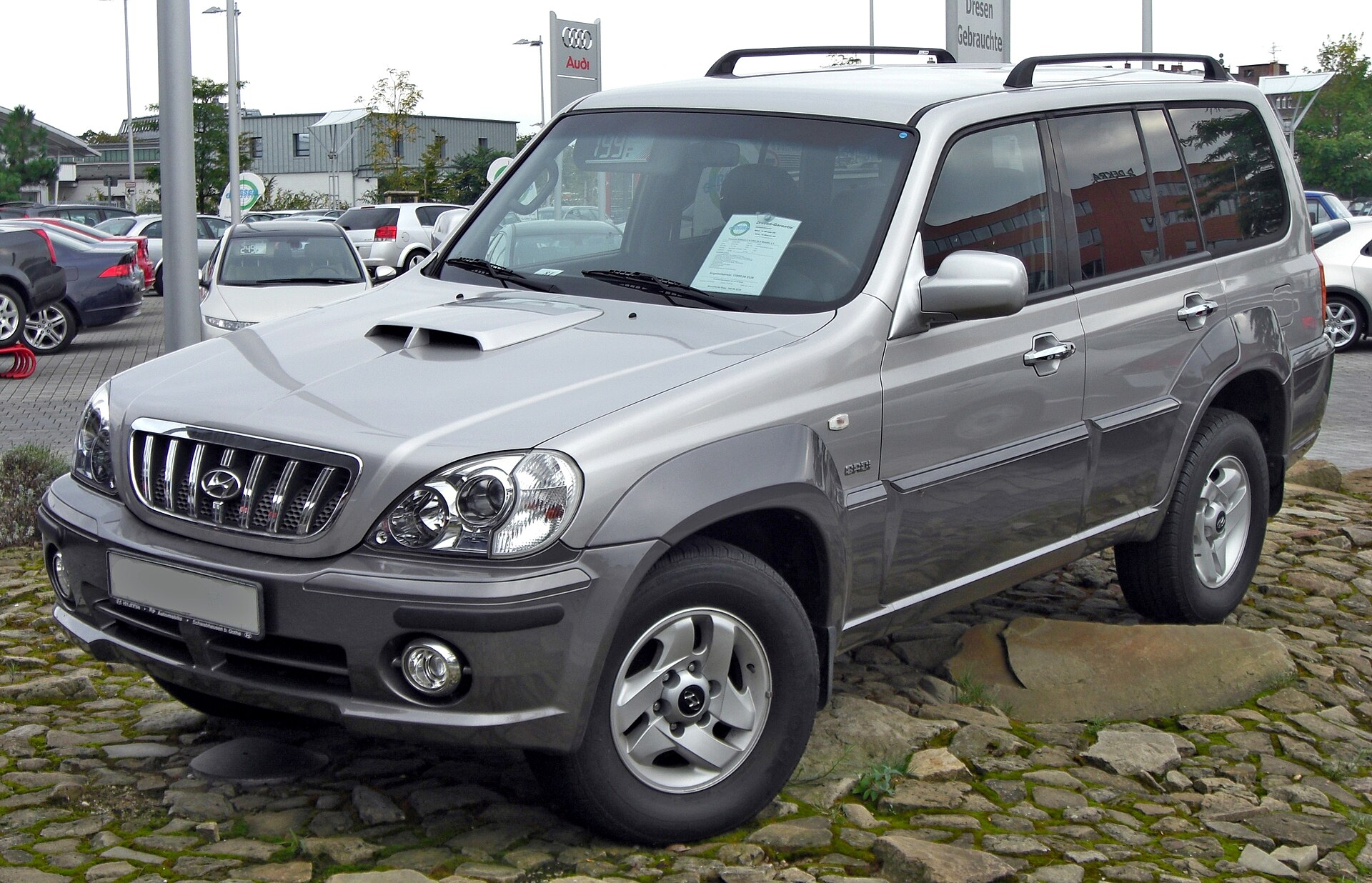
- Built
- 2001–2007
- Top power
- 145 kW (197 PS)
Which Terracan to buy
Our verdict · Felix Hartmann
- Best all-rounder: a 2004-2007 facelift with the 120 kW (163 PS) 2.9 CRDi and a full service history.
- For towing: a manual diesel with the factory tow bar; tow in fourth gear on long climbs.
- Smoothest: the 3.5 V6, if you can accept consumption of about 14 l/100 km.
- Avoid: cars with unknown timing-belt history or with signs of injector trouble (hard starting, smoke, diesel smell).
The Hyundai Terracan is the large body-on-frame four-wheel-drive SUV that Hyundai built in Ulsan, South Korea, from 2001 to 2007 under the code HP. It replaced the Galloper as Hyundai's flagship off-roader, sat on a separate ladder frame of Mitsubishi Pajero lineage, and was sold in Europe mainly with a 2.9-litre common-rail diesel of 110 kW (150 PS), later 120 kW (163 PS). It was Hyundai's last ladder-frame SUV: its successor, the Veracruz (ix55 in Europe), was a monocoque crossover.
In short
- Five-door, five- or seven-seat SUV on a full-length ladder frame, built 2001-2007 (Australia sold the last cars in 2008).
- Engines: 2.9 CRDi J3 diesel with 110-120 kW (150-163 PS) in Europe, a 3.5 V6 petrol with 143-145 kW, and a 2.5 turbodiesel with 76 kW (103 PS) in Korea.
- Dual-range transfer case with a 2.48:1 low range, limited-slip rear differential, live rear axle with coil springs.
- Today it is a cheap used 4x4: European listings run from about EUR 1,400 to EUR 11,900 (AutoScout24, October 2026).
Size at a glance
| Dimensions | Hyundai Terracan HP |
|---|---|
| Length | 4,710 mm185.4 in |
| Width | 1,860 mm73.2 in |
| Height | 1,840 mm72.4 in |
| Wheelbase | 2,750 mm108.3 in |
Specs by version
Engines
| Version | Engine | Power | Torque | Gearbox | Drive | Production years |
|---|---|---|---|---|---|---|
| Diesel · 2 versions | ||||||
| 2.9 CRDi | 2.9 l · 4 cyl · Diesel J3 | 110 kW 150 PS148 hp | - | 5-sp Manual | Four-wheel drive (4×4) | 2001–2004 |
| 2.9 CRDi | 2.9 l · 4 cyl · Diesel J3 | 120 kW 163 PS161 hp | 343 Nm253 lb-ft | 5-sp Manual | Four-wheel drive (4×4) | 2004–2007 |
| Petrol · 1 version | ||||||
| 3.5 V6 | 3.5 l · 6 cyl · Petrol G6AU | 145 kW 197 PS194 hp | 302 Nm223 lb-ft | 5-sp Manual | Four-wheel drive (4×4) | 2001–2007 |
Dimensions and weight
Show all 3 versions
| Version | Length | Width | Height | Wheelbase | Kerb weight |
|---|---|---|---|---|---|
| Diesel · 2 versions | |||||
| 2.9 CRDi | 4,710 mm185.4 in | 1,860 mm73.2 in | 1,840 mm72.4 in | 2,750 mm108.3 in | - |
| 2.9 CRDi | 4,700 mm185.0 in | 1,860 mm73.2 in | 1,840 mm72.4 in | 2,750 mm108.3 in | 2,219 kg4,892 lb |
| Petrol · 1 version | |||||
| 3.5 V6 | 4,710 mm185.4 in | 1,860 mm73.2 in | 1,840 mm72.4 in | 2,750 mm108.3 in | - |
Verified Manufacturer and type-approval data from our catalog · Sources and methodology
Hyundai Terracan at a glance
| Specification | Hyundai Terracan (HP) |
|---|---|
| Segment | Large SUV, body-on-frame |
| Production | February 2001 - October 2006 in Korea (sold until March 2007); to 2008 in Australia |
| Main plant | Ulsan, South Korea |
| Other production | India (Chennai, 2003-2007), China (Huatai/Hawtai, licence production) |
| Chassis | Separate ladder frame of Mitsubishi Pajero lineage, Hyundai-designed body |
| Body | 5-door wagon, 5 or 7 seats |
| Drive | Part-time 4WD with low range; on-demand Active Torque Transfer on some versions |
| Predecessor / successor | Hyundai Galloper / Hyundai Veracruz (ix55 in Europe) |
The Terracan is listed with the other models in our Hyundai catalogue.
History and model changes
Hyundai launched the Terracan in Korea on 13 February 2001. The design had been previewed by the Highland concept, and the name refers to the Tarascan state of pre-Columbian Mexico. The car went above the Galloper, which it replaced, and was positioned against the Mitsubishi Pajero and Toyota Land Cruiser at a lower price. It was never sold in the United States or Canada.
The 2.9 CRDi diesel arrived in August 2001, and it soon became the main engine in export markets. Australia received the Terracan in late 2001 (sources disagree between September and November), the UK in summer 2003, and India in 2003 as Hyundai's first SUV there, with the 2.9 CRDi and a manual gearbox only. In Germany, 15,110 Terracans were registered new between 2001 and 2008, with the best year in 2004 (3,678 cars).
The car was updated several times rather than replaced. Korea received a new grille and alloy wheels for the 2003 model year in August 2002, a stronger diesel in December 2003 and a "Power Plus" diesel in June 2004, when the V6 left the Korean range. In Europe the facelift came in September 2004, raising the 2.9 CRDi from 110 kW (150 PS) to 120 kW (163 PS). Australia's Series II facelift (October 2004) brought a new grille, headlights, bumpers, tail-lights, fog lights, side cladding and a revised centre console, and the CRDi diesel joined the range in January 2005.
Korean production ended on 12 October 2006, when the Veracruz arrived; dealers sold the remaining stock until March 2007. Australia continued with the HP.II until 2008, and licence production went on in China after that.


Design, chassis and four-wheel drive
The Terracan is a traditional off-roader. The body sits on a full-length ladder frame, which sources trace to the Mitsubishi Pajero: German and English Wikipedia name the second-generation Pajero, while GoAuto describes a heavily modified Galloper platform, itself based on the first Pajero. Either way, the body and interior are Hyundai's own design.
Front suspension uses double wishbones with torsion bars and an anti-roll bar. At the rear there is a live axle located by five links (two lower trailing arms, two upper links and a Panhard rod) on coil springs. Steering is recirculating ball, which reviewers called loose and vague on the road.
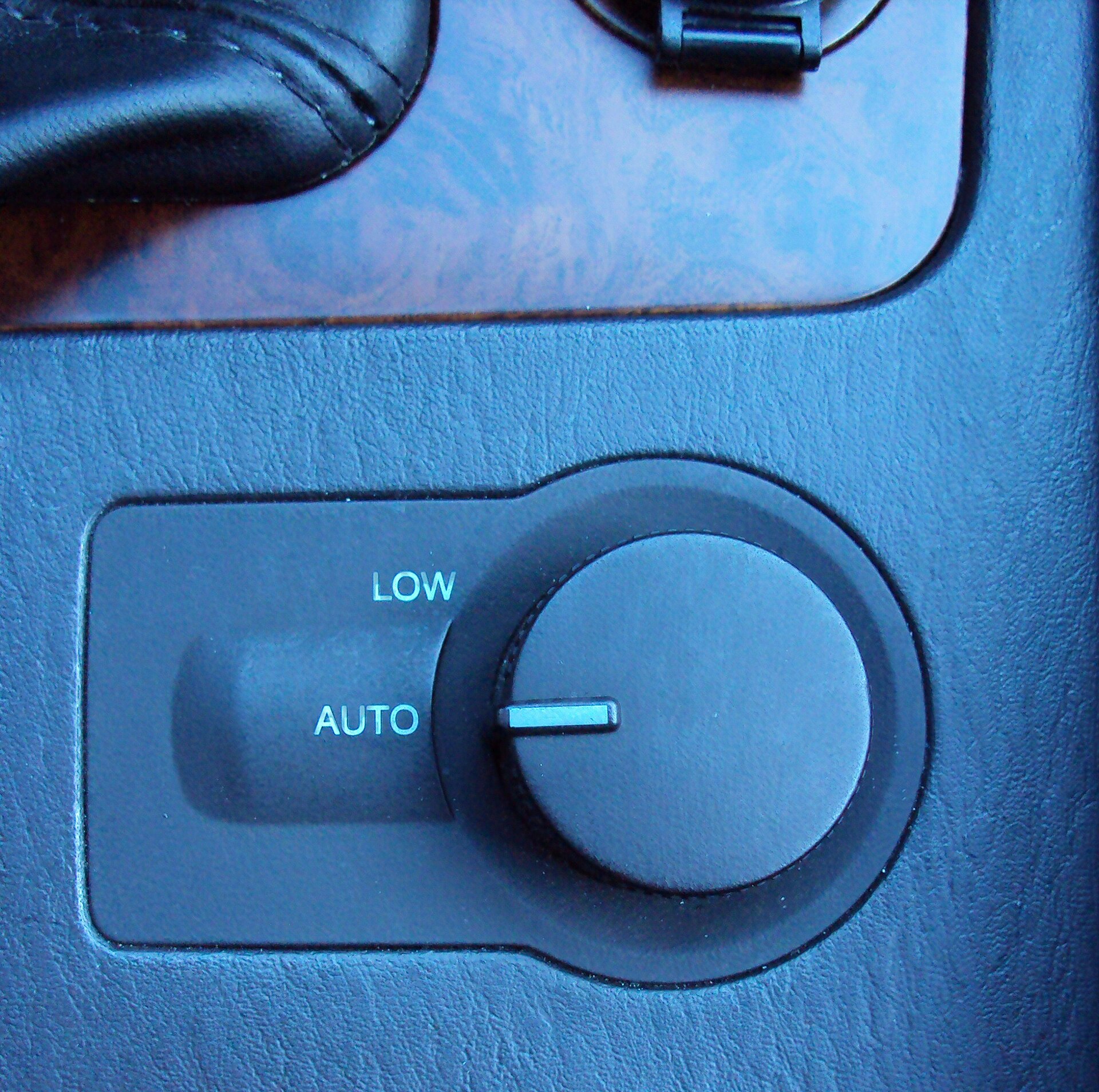
Every Terracan has a dual-range transfer case with a 2.48:1 low range and a limited-slip rear differential. Most versions have part-time four-wheel drive with an electric shift: a rotary knob on the dashboard selects 2H, 4H and 4L, and 2H to 4H can be changed on the move up to 80 km/h (50 mph in UK material). Some versions, such as the Australian Highlander, have Active Torque Transfer instead: the car runs in rear-wheel drive and an electronically controlled multi-plate clutch sends up to half the torque to the front axle when the rear wheels slip. Automatic cars have a hill-descent function in first gear low range and reverse.


Engines, transmissions and performance
| Engine | Code | Cylinders | Power | Torque | Markets and years |
|---|---|---|---|---|---|
| 2.9 CRDi diesel | J3 | I4, 2,902 cc | 110 kW (150 PS) | - | Europe, 2001-2004 |
| 2.9 CRDi diesel | J3 | I4, 2,902 cc | 120 kW (163 PS) | 343 Nm | Europe, 2004-2007 |
| 2.9 CRDi diesel | J3 | I4, 2,902 cc | 120 kW | 345 Nm | Australia, from 2005 |
| 3.5 V6 petrol | Sigma (G6AU) | V6, 3,497 cc | 143-145 kW (194-197 PS) | 302 Nm | Europe (not Germany), Australia, Korea to 2004 |
| 2.5 TCI diesel | D4BH | I4, 2,476 cc | 76 kW (103 PS) | about 235 Nm | Korea and other markets, to 2004 in Korea |
The 2.9 CRDi is a common-rail diesel with 1,600 bar injection and an intercooler, developed by Kia and also used in the Kia Carnival. In Korea it was rated progressively higher, from 110 kW (150 PS) at launch to 128 kW (174 PS) in the "Power Plus" version of 2004. The 3.5 V6 is an enlarged version of the Sigma engine from the Hyundai Grandeur, with a cast-iron block and aluminium heads; GoAuto called it "a gem".
Gearboxes were a five-speed manual or a four-speed automatic supplied by Aisin. French data for the 120 kW (163 PS) diesel give a top speed of 168 km/h and 8.7 l/100 km combined (222 g/km CO2). Motorlegend lists 0-100 km/h in 13.4 s for the 110 kW (150 PS) diesel; Australian testers timed the V6 at 9.5 s with the manual and 10.7 s with the automatic, using about 13.8 l/100 km. Auto Bild averaged 10.8 l/100 km over its 100,000 km long-term test of a 2.9 CRDi automatic.

Dimensions, towing and space
| Parameter | Metric | Imperial |
|---|---|---|
| Length | 4,700-4,710 mm | 185.0-185.4 in |
| Width | 1,860 mm | 73.2 in |
| Height | 1,840 mm | 72.4 in |
| Wheelbase | 2,750 mm | 108.3 in |
| Ground clearance (2.9 CRDi 163) | 216 mm | 8.5 in |
| Kerb weight (2.9 CRDi 163, French data) | 2,219 kg | 4,892 lb |
| Braked / unbraked towing (Europe) | 2,800 / 700 kg | 6,173 / 1,543 lb |
| Fuel tank | 75 l | 19.8 US gal |
Length differs by 10 mm between sources (4,700 or 4,710 mm), and kerb weights range from about 1,955 kg to 2,219 kg depending on version and how the weight was measured. Australian cars could tow 2.5 tonnes braked with the factory tow pack. At almost 4.7 m long and 1.84 m tall, the Terracan is worth checking against a garage door with the garage fit tool.
UK cars had five seats with a 60/40 split rear bench. Korean and Australian versions had a third row, which GoAuto described as "strictly kids only", with no head restraints.

Interior and equipment
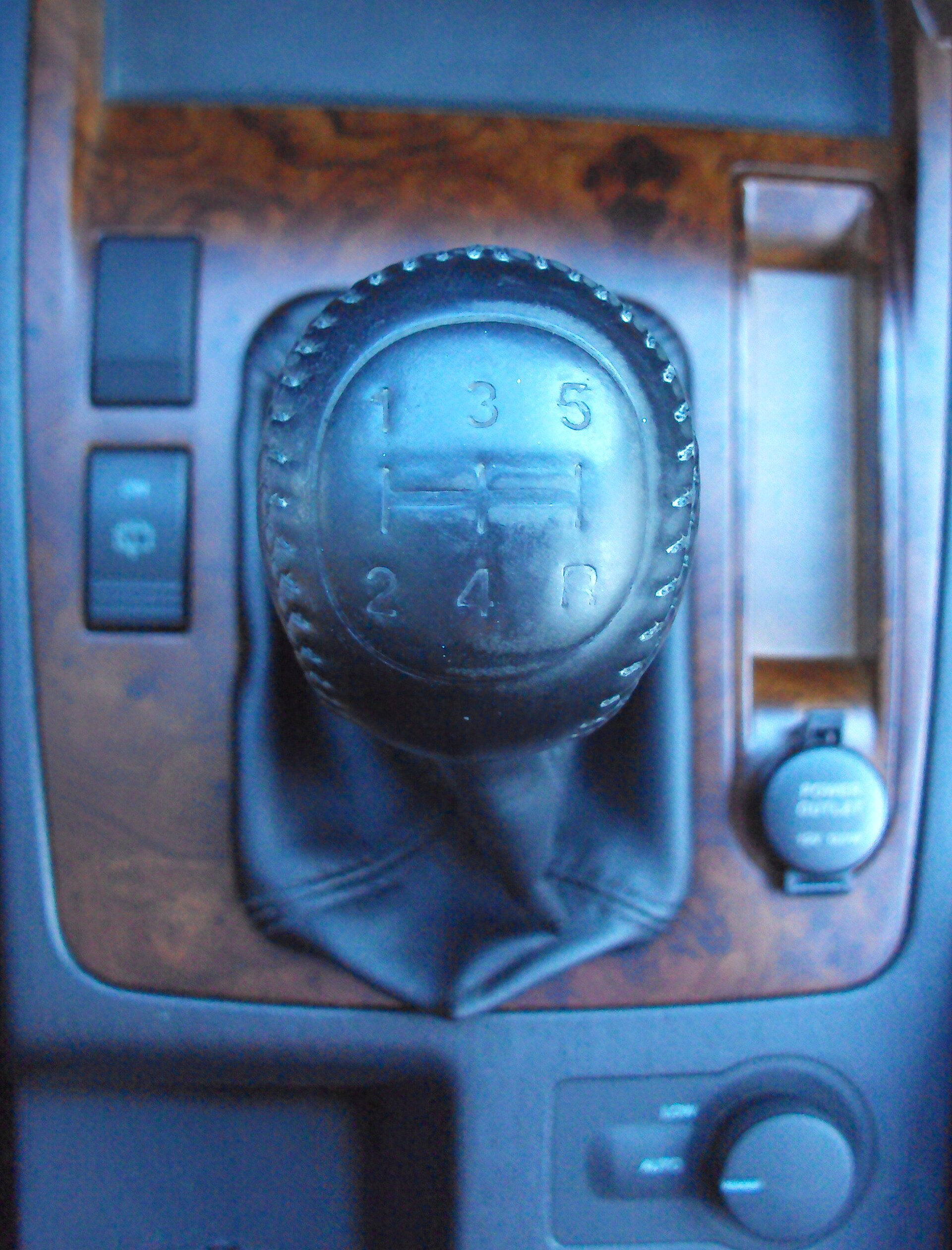
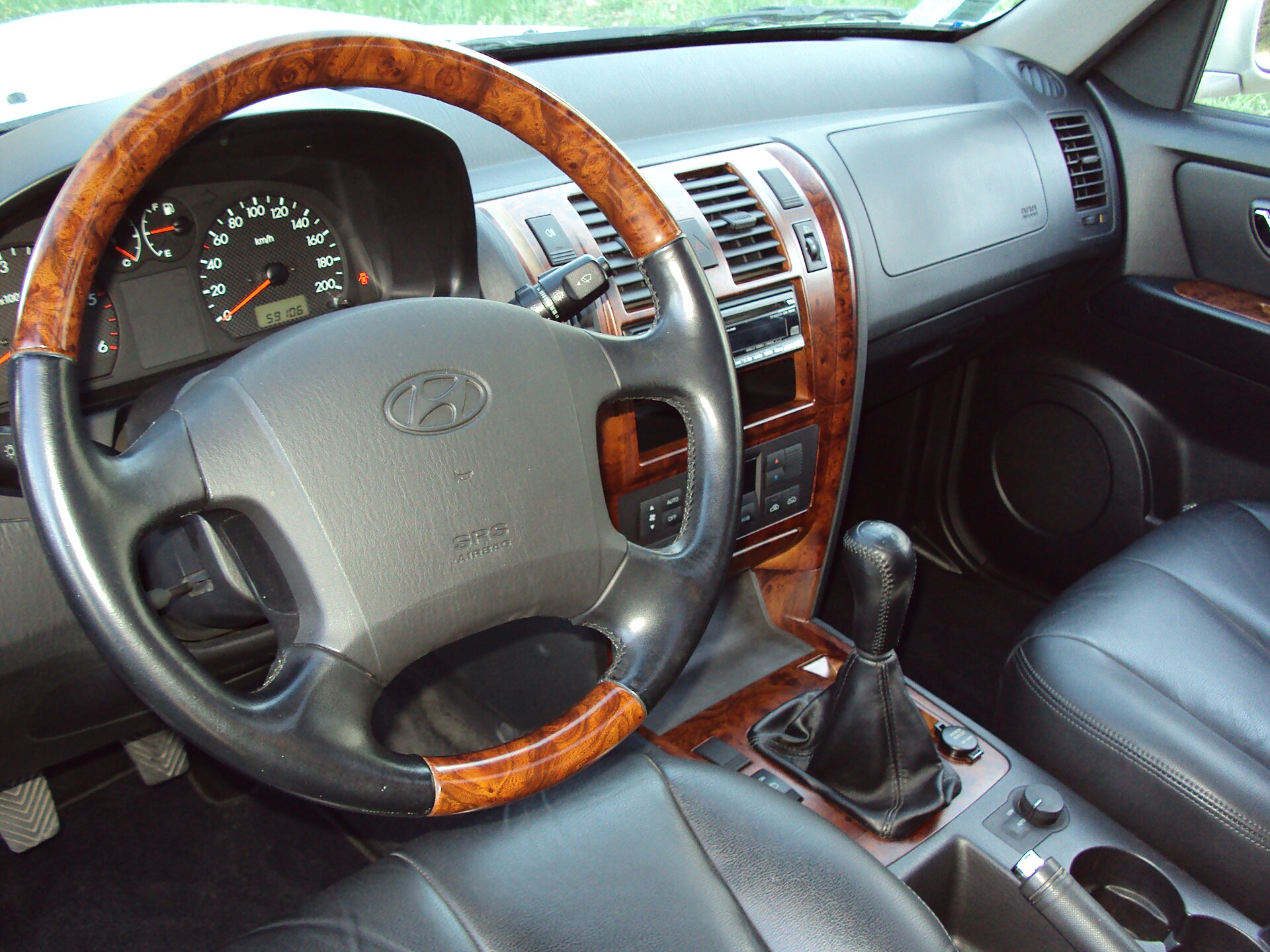
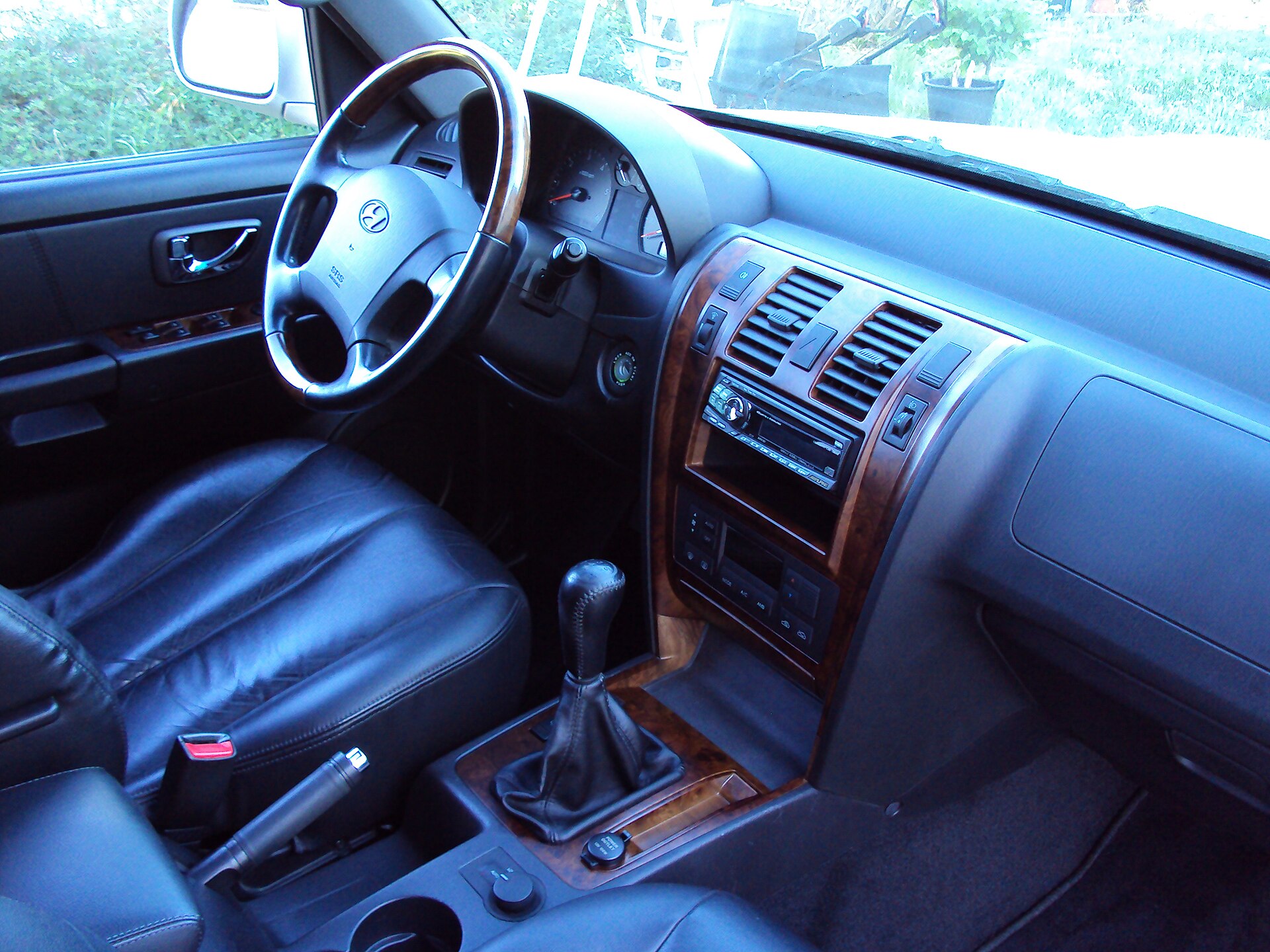
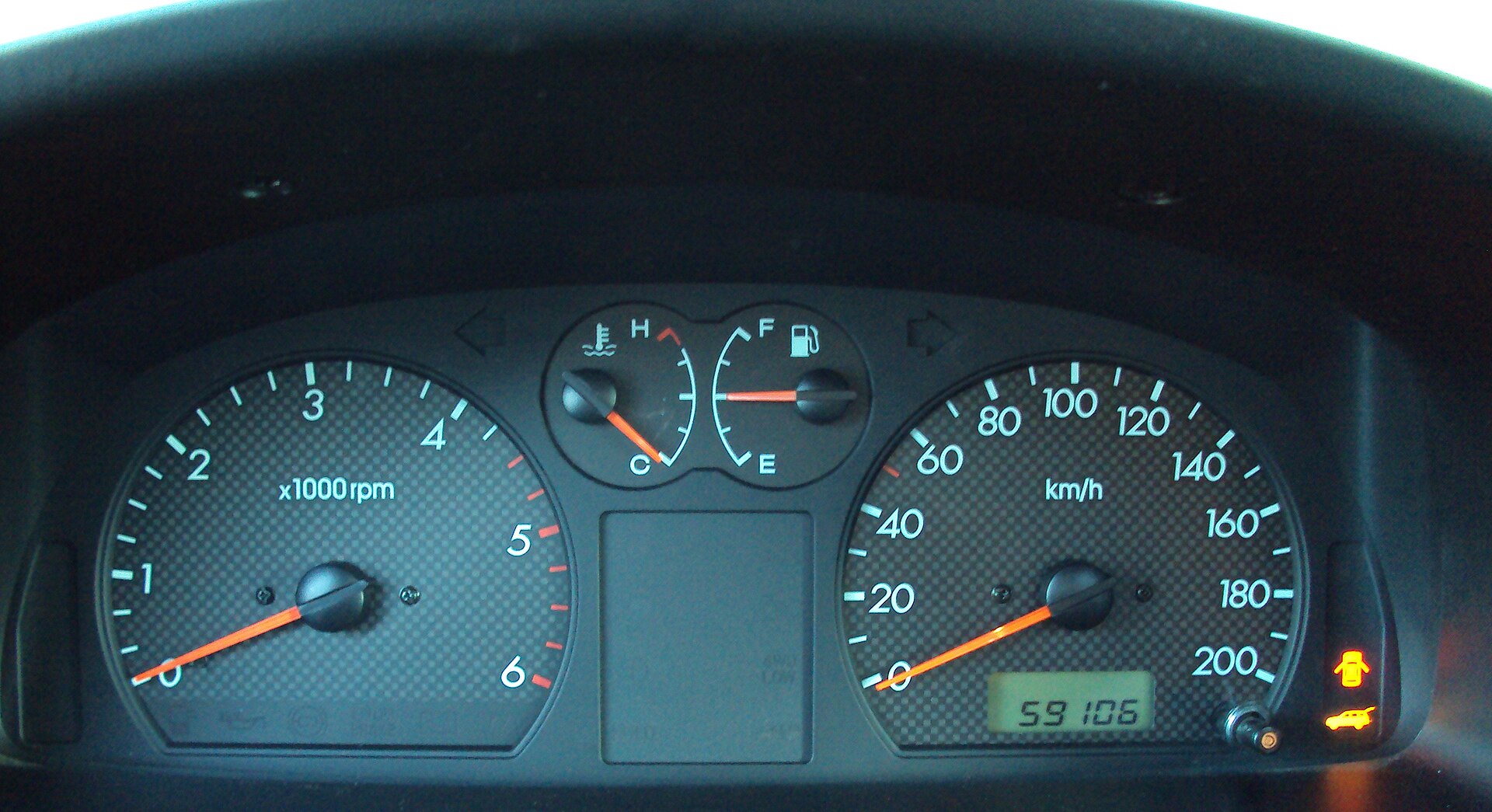
Inside, the Terracan follows Hyundai practice of the time: a wide dashboard with wood-effect trim on the higher versions, a separate rotary switch for the four-wheel-drive modes, and analogue dials. Australian cars had dual front airbags and pretensioning seat belts from the start; ABS with electronic brake-force distribution was fitted to the Highlander and became standard across the Australian range in February 2004. The RAC noted that the cabin materials did not wear as well as those of more expensive rivals, while Auto Express called the car "fantastic value for money".
Equipment varied a lot by market. Base Australian cars were sold as the Terracan, with the Highlander above them and the SLX added for the HP.II in November 2006 with a roof spoiler and black side steps.


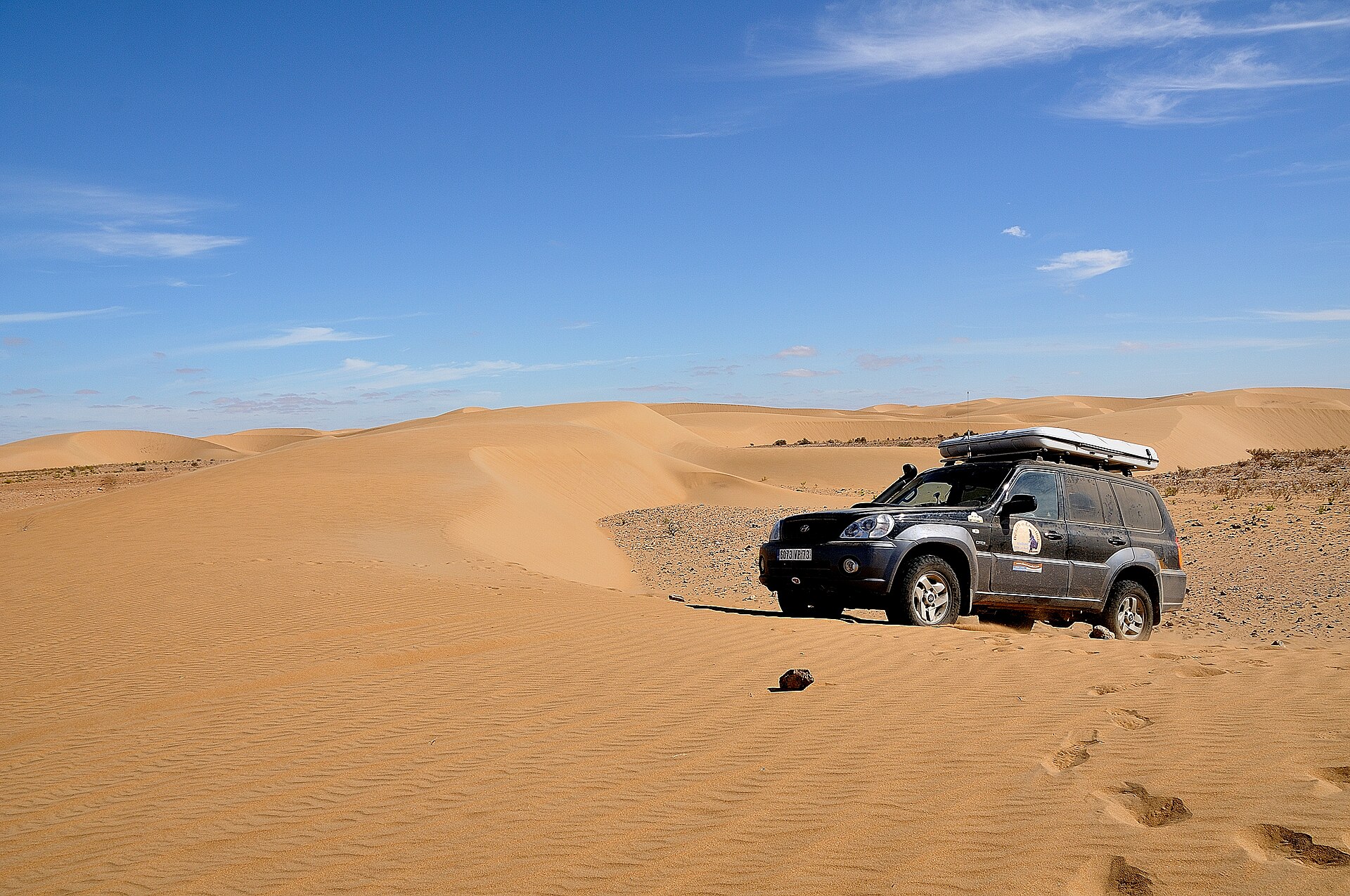
Off-road ability
With a ladder frame, a live rear axle, a low range and a limited-slip differential, the Terracan has the hardware of a proper off-roader rather than a soft-road crossover. Ground clearance is 216 mm. GoAuto wrote in 2003 that it "will even go a fair way off-road", and Australian owners use it on sand tracks and beaches such as Fraser Island. The weak points off road are the long overhangs and side steps, and the weight of more than two tonnes. For heavier use, Australian dealers sold a "Trek'n'Tow" suspension kit in 2005 that raised the car by 20 mm.


Safety
The Terracan has dual front airbags and seat-belt pretensioners with load limiters. In Australia, ABS with EBD was fitted to the Highlander from launch and became standard on every version in February 2004, so early base cars may not have it. We found no published Euro NCAP or ANCAP crash-test rating for the Terracan, which is typical for a large off-roader of its time.
Reliability and known issues
Auto Bild ran a 2.9 CRDi automatic for 100,000 km and summed it up as "a thoroughly solid, reliable vehicle". The faults it recorded were a broken EGR pipe, short-lived headlamp bulbs, voltage peaks on early cars (fixed with a free wiring retrofit) and a loose wiper arm; the timing-belt and auxiliary-belt change at the 90,000 km service made that service expensive. The RAC called the engine very durable.
Points to check on a used car:
- Diesel fuel system: owners report injector and fuel-system failures on the J3 engine, and leaking injector washers and return lines.
- Timing belt: check the belt change has been done on time.
- Cooling when towing: owners advise towing in fourth rather than fifth gear and a severe-duty service schedule.
- Underside: look for damage from off-road use and for corrosion on the frame.
- Service history: GoAuto quoted 15,000 km official intervals and 7,500 km recommended for the CRDi.

Prices: new and used
In France the 2.9 CRDi 163 Pack Confort cost EUR 31,530 new (September 2004). Today the Terracan is a budget used 4x4: an October 2026 snapshot of 20 AutoScout24 listings (model years 2003-2009, 90,000-479,000 km) ran from EUR 1,400 to EUR 11,900, with a median around EUR 3,000 and an average around EUR 4,480. Condition, rust and documented diesel maintenance matter more than the year.
Rivals
| Model | Chassis | Engines | Notes |
|---|---|---|---|
| Hyundai Terracan | ladder frame | 2.9 diesel, 3.5 V6, 2.5 diesel | from EUR 31,530 (France, 2004) |
| Mitsubishi Pajero / Shogun | monocoque with integrated frame (from 1999) | petrol and diesel | - |
| Toyota Land Cruiser (120) | ladder frame | petrol and diesel | - |
| Nissan Terrano II / Pathfinder | ladder frame | petrol and diesel | - |
| Kia Sorento (first generation) | ladder frame | petrol and diesel | - |
| SsangYong Rexton | ladder frame | petrol and diesel | - |
You can compare the Terracan with these cars in our comparison tool.
Photo gallery


Hyundai Terracan in our rankings
- No. 59 of 391 · Heaviest cars (2,219 kg · top 16%)
- No. 43 of 155 · Biggest engines: SUVs and crossovers (3,497 cc · top 28%)
- No. 41 of 144 · Heaviest SUVs and crossovers (2,219 kg · top 29%)
- No. 190 of 531 · Longest cars (4,710 mm · top 37%)
- No. 254 of 627 · Biggest engines: cars (3,497 cc · top 41%)
- No. 83 of 198 · Longest SUVs and crossovers (4,710 mm · top 43%)
Heavier than 84% of ranked cars in the 1CARS catalog (No. 59 of 391).
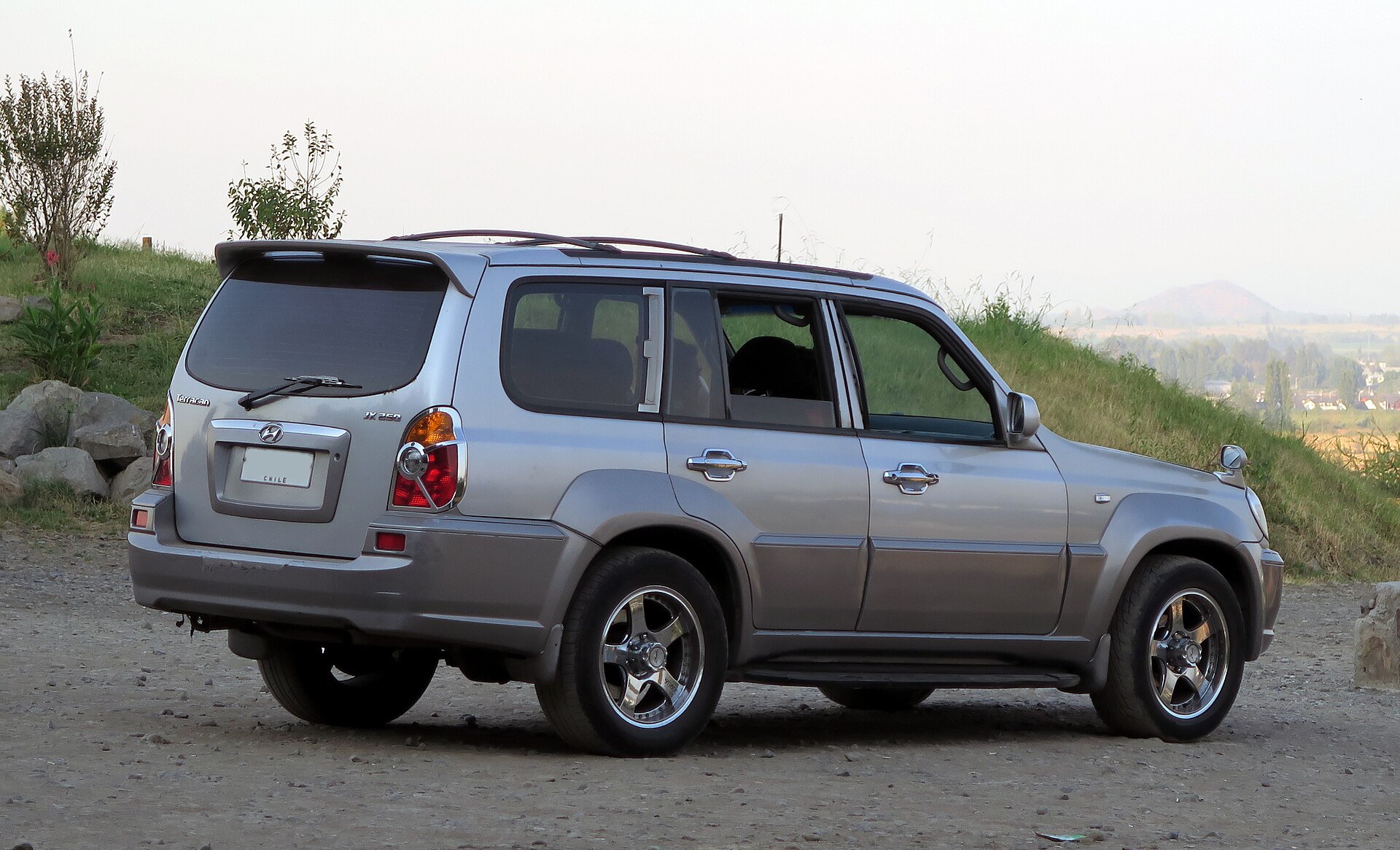
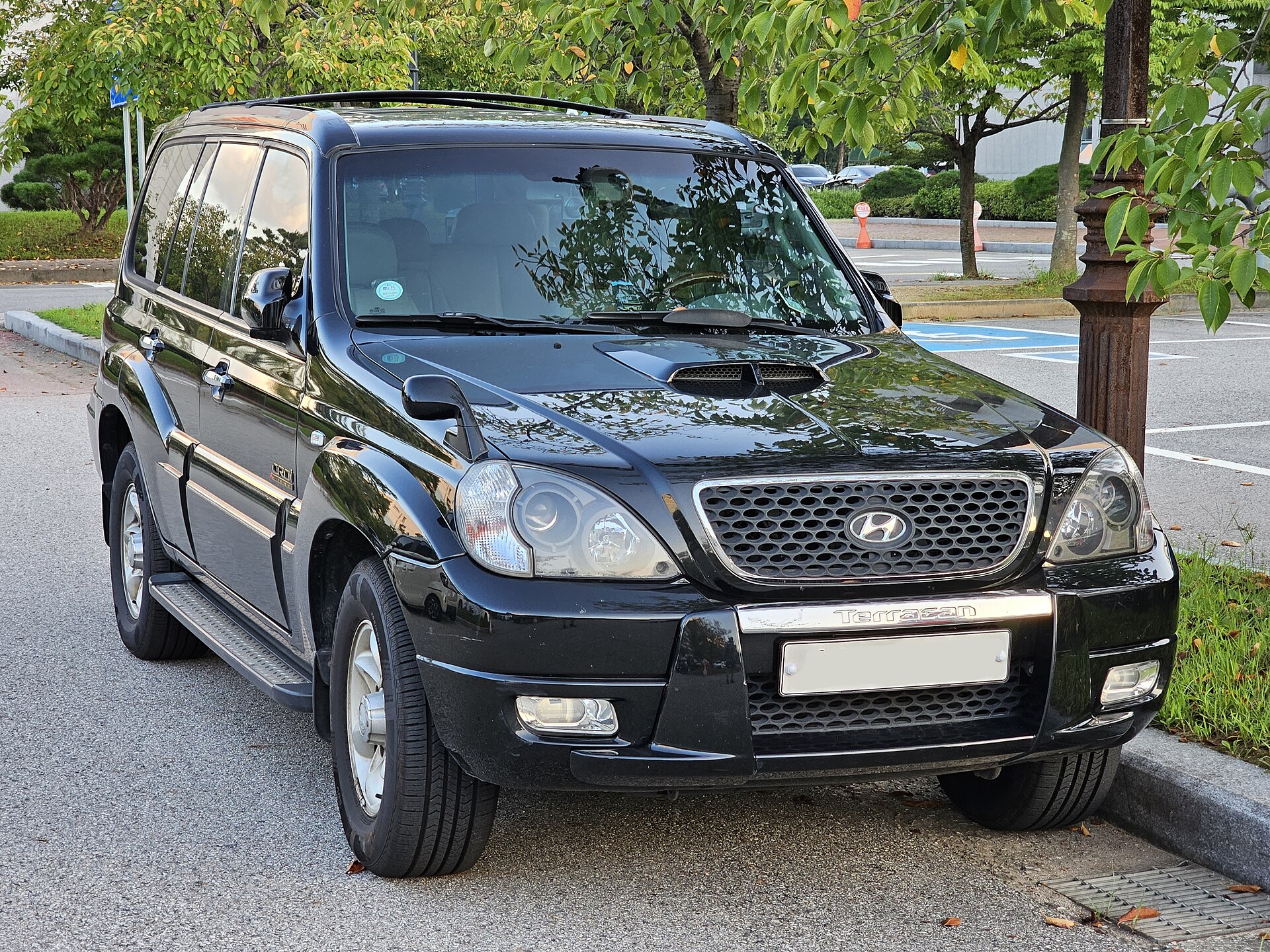
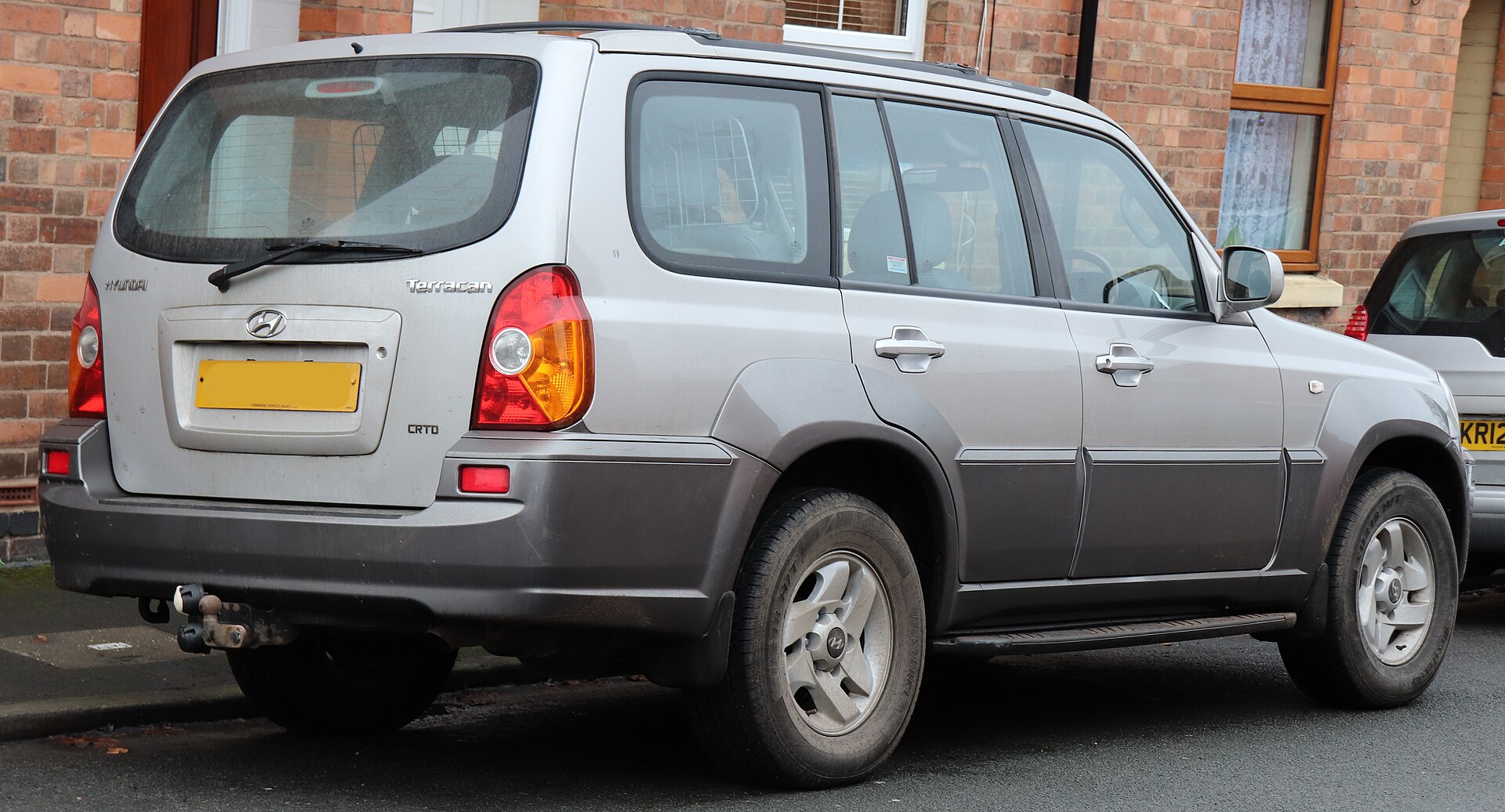
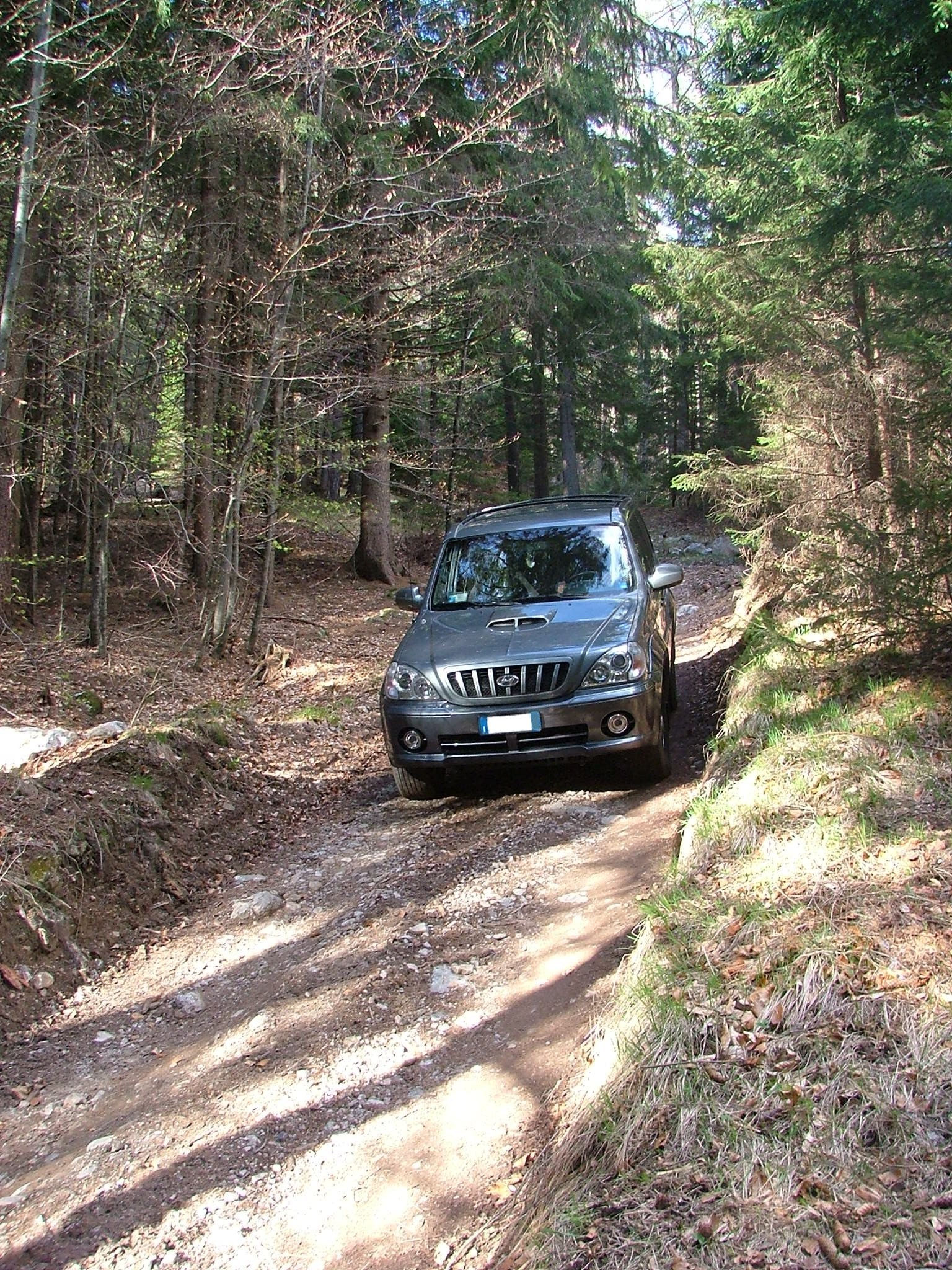
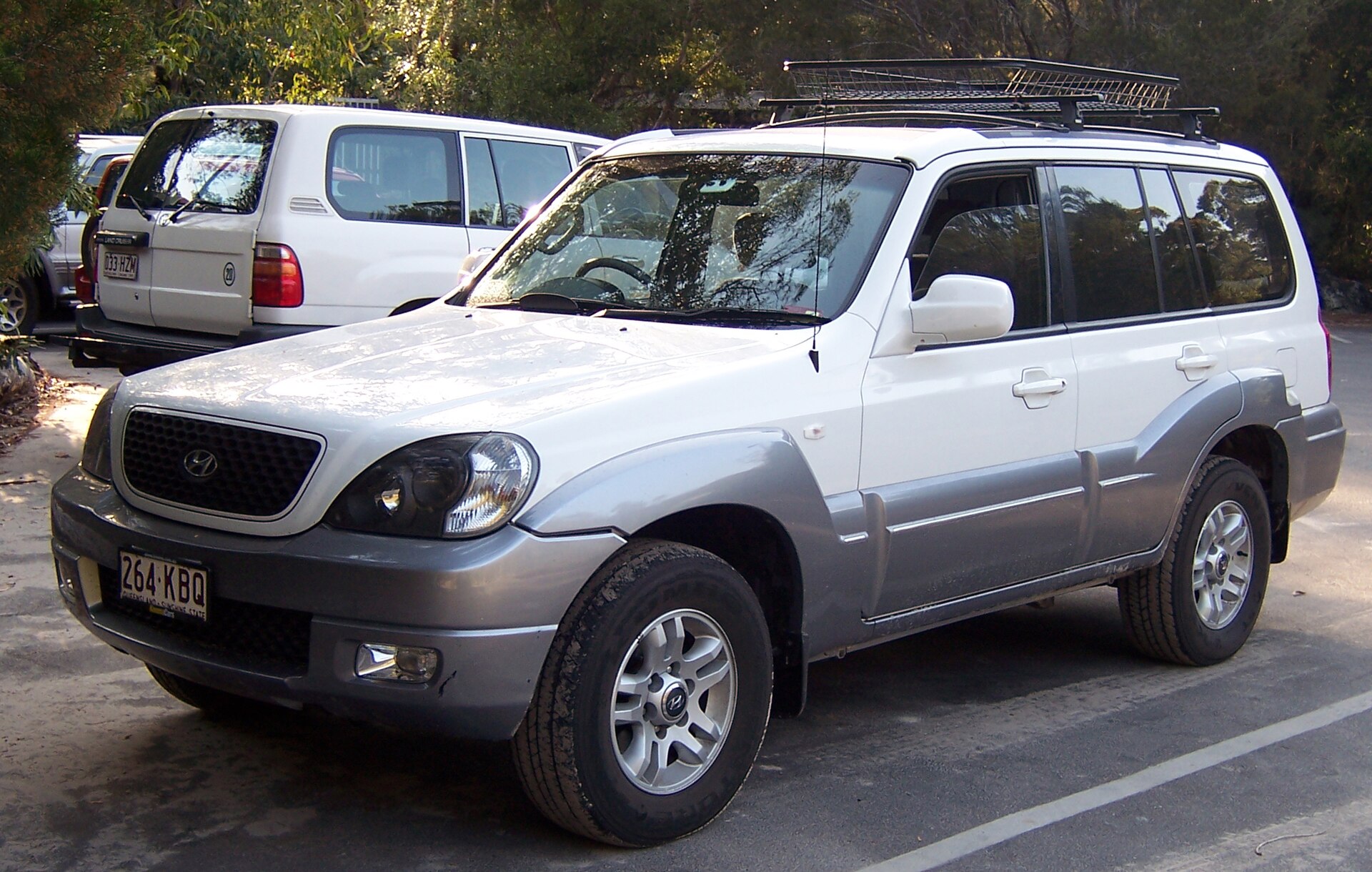
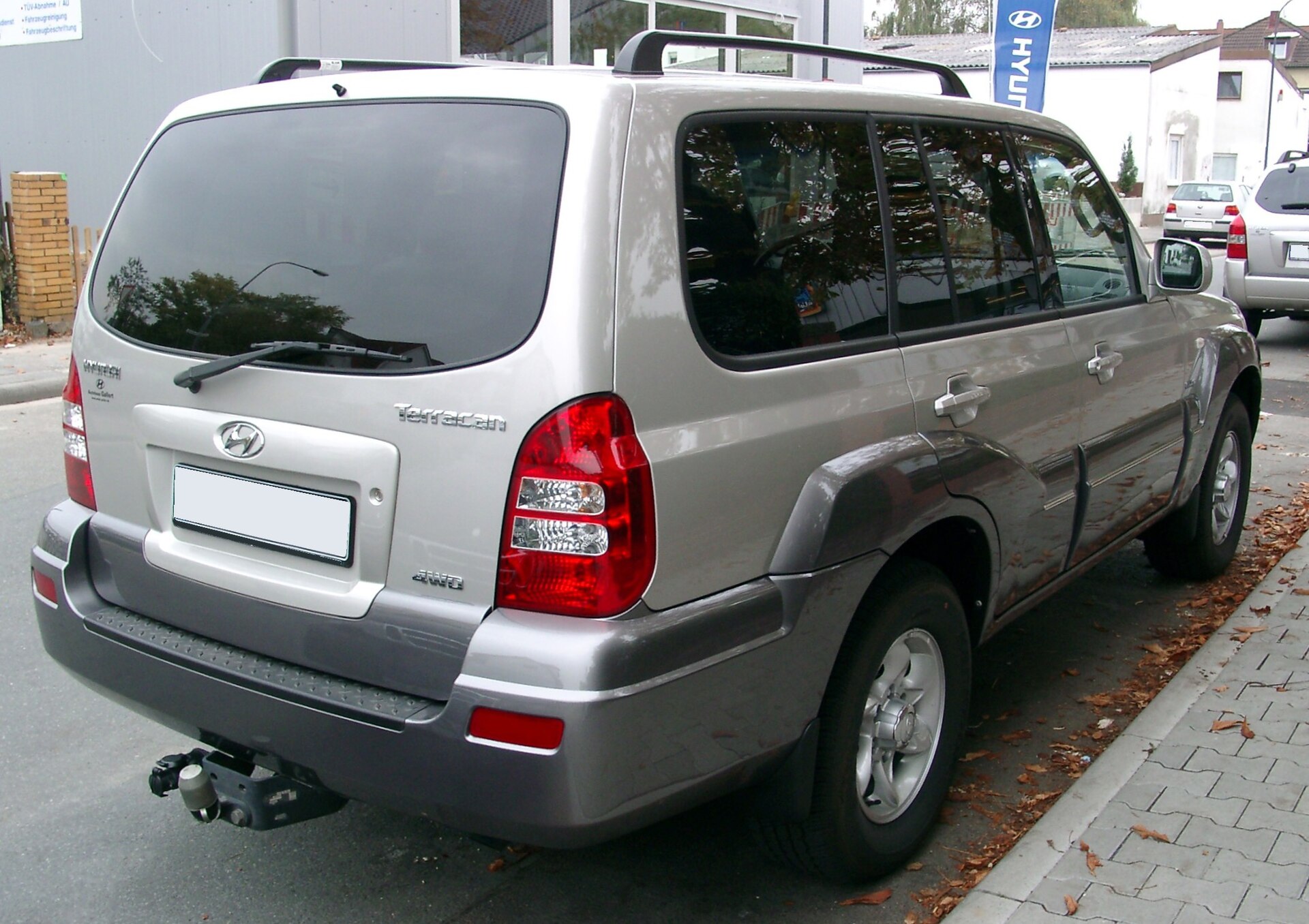
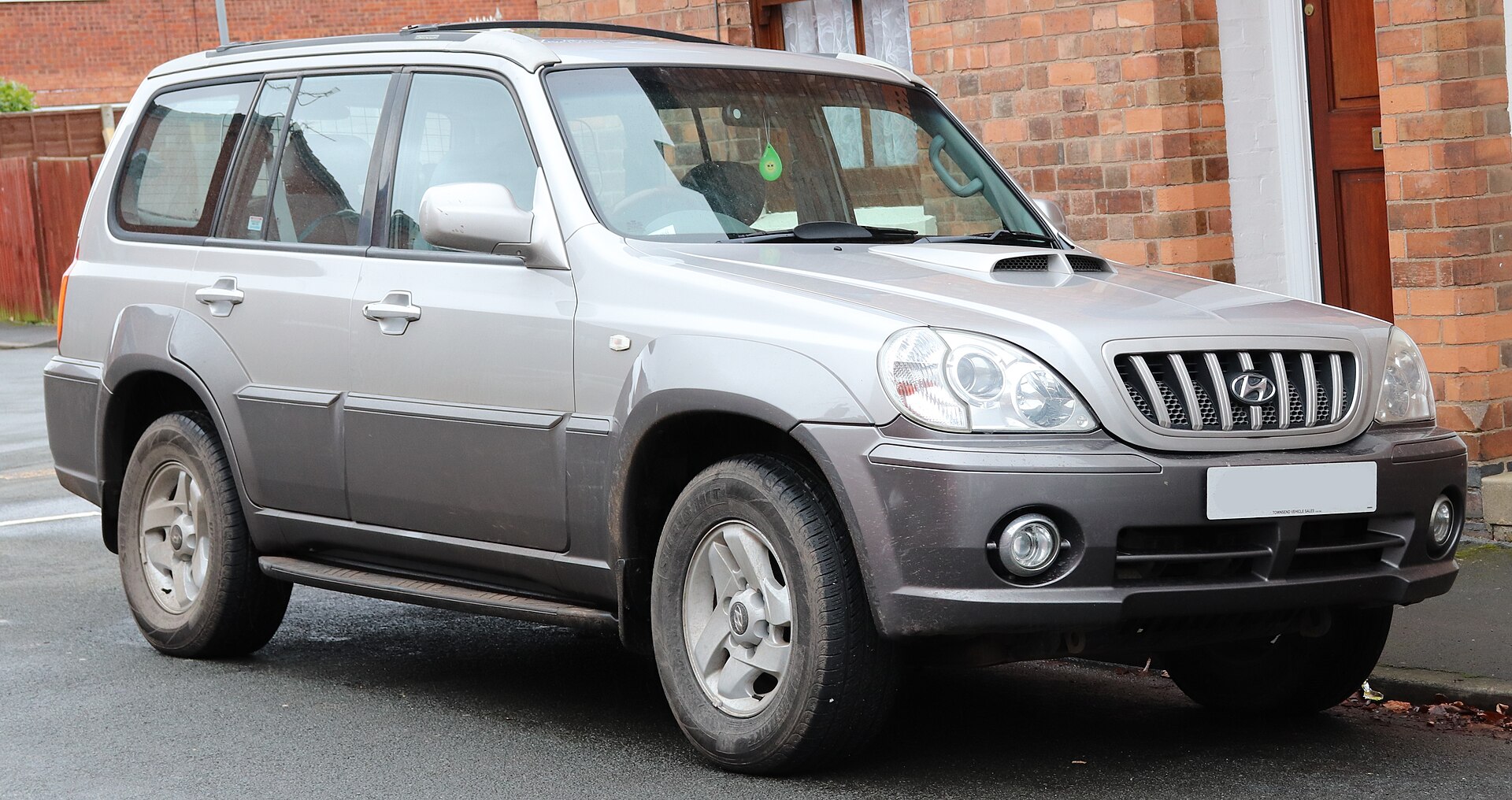
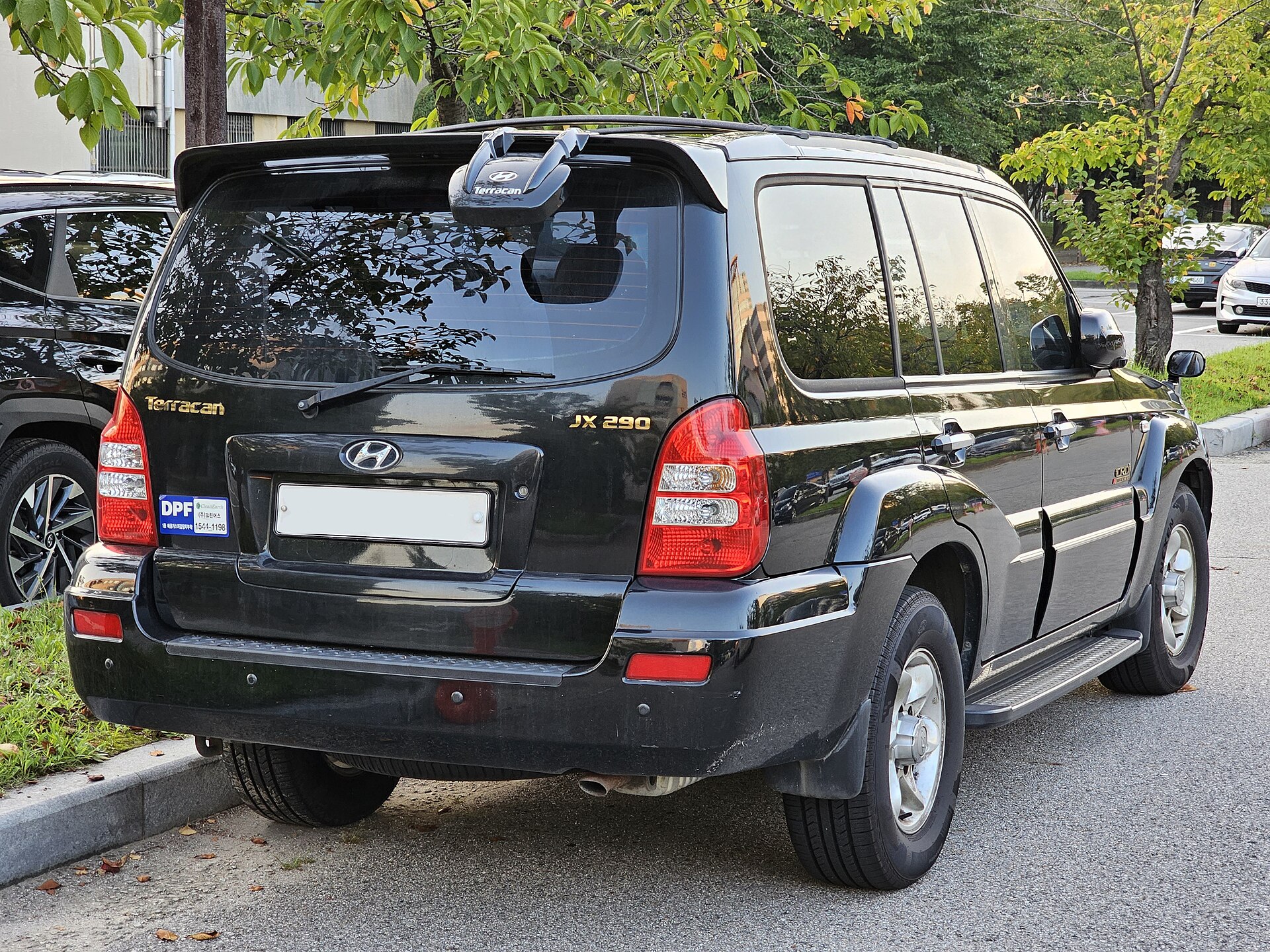
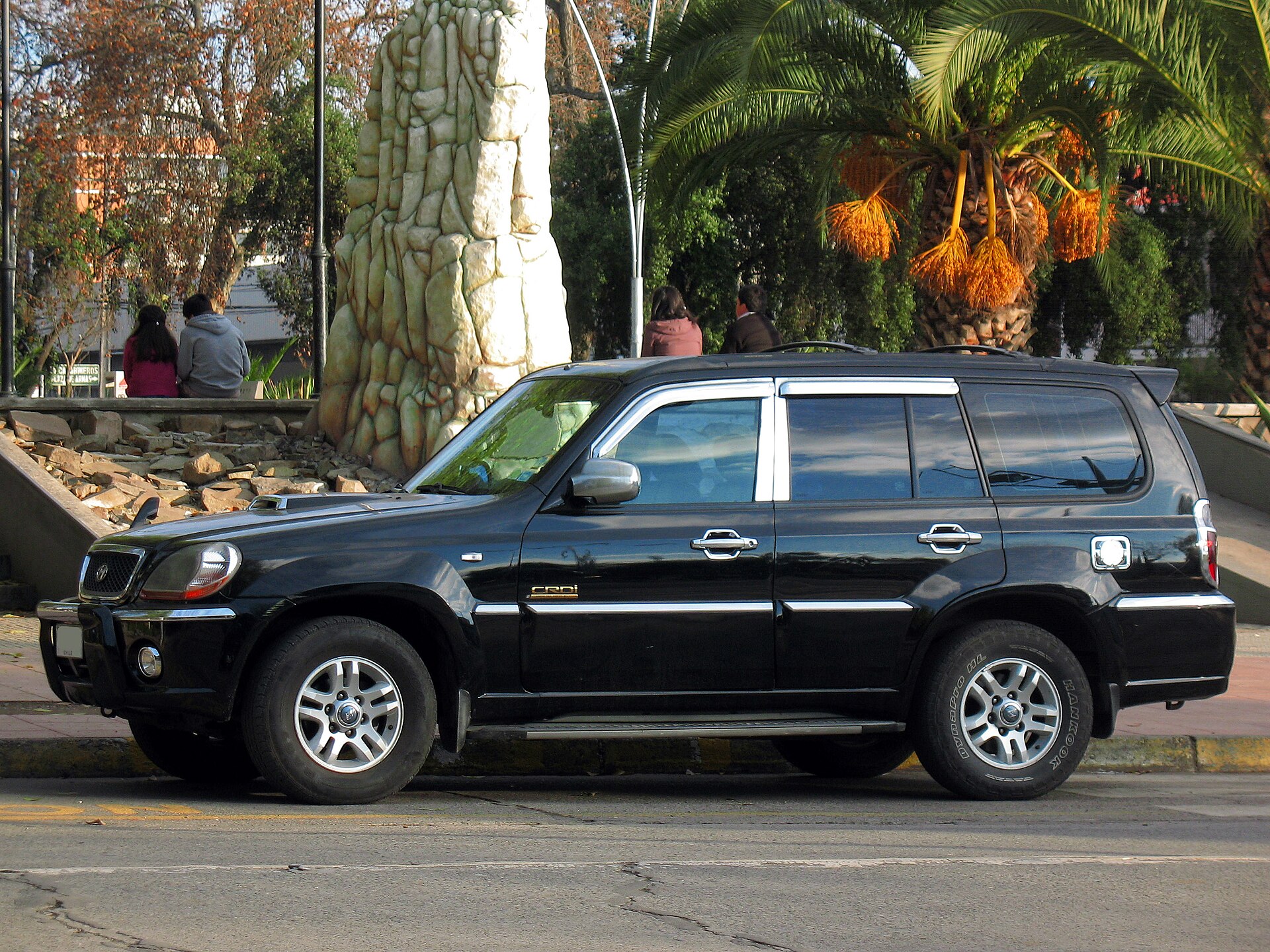
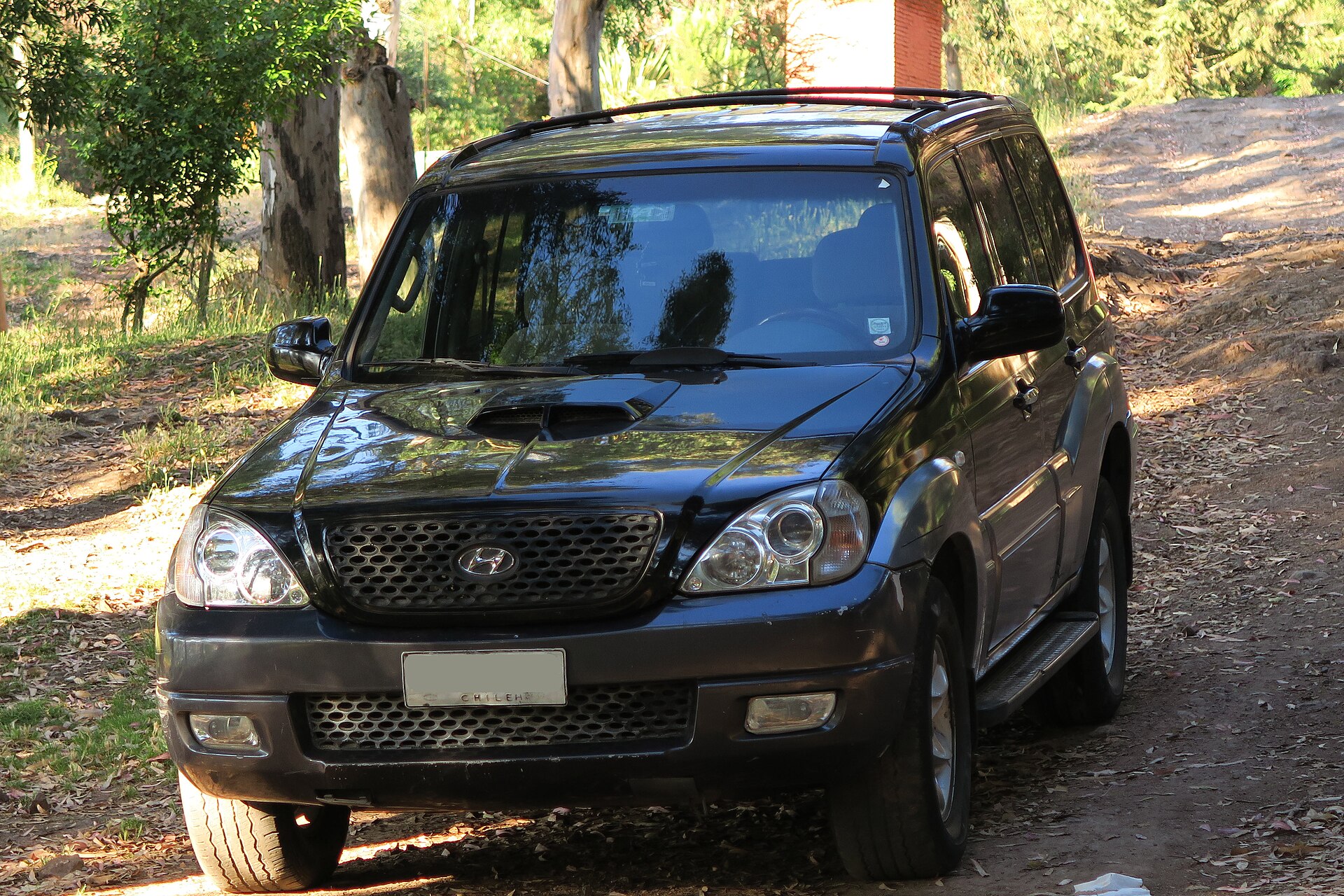
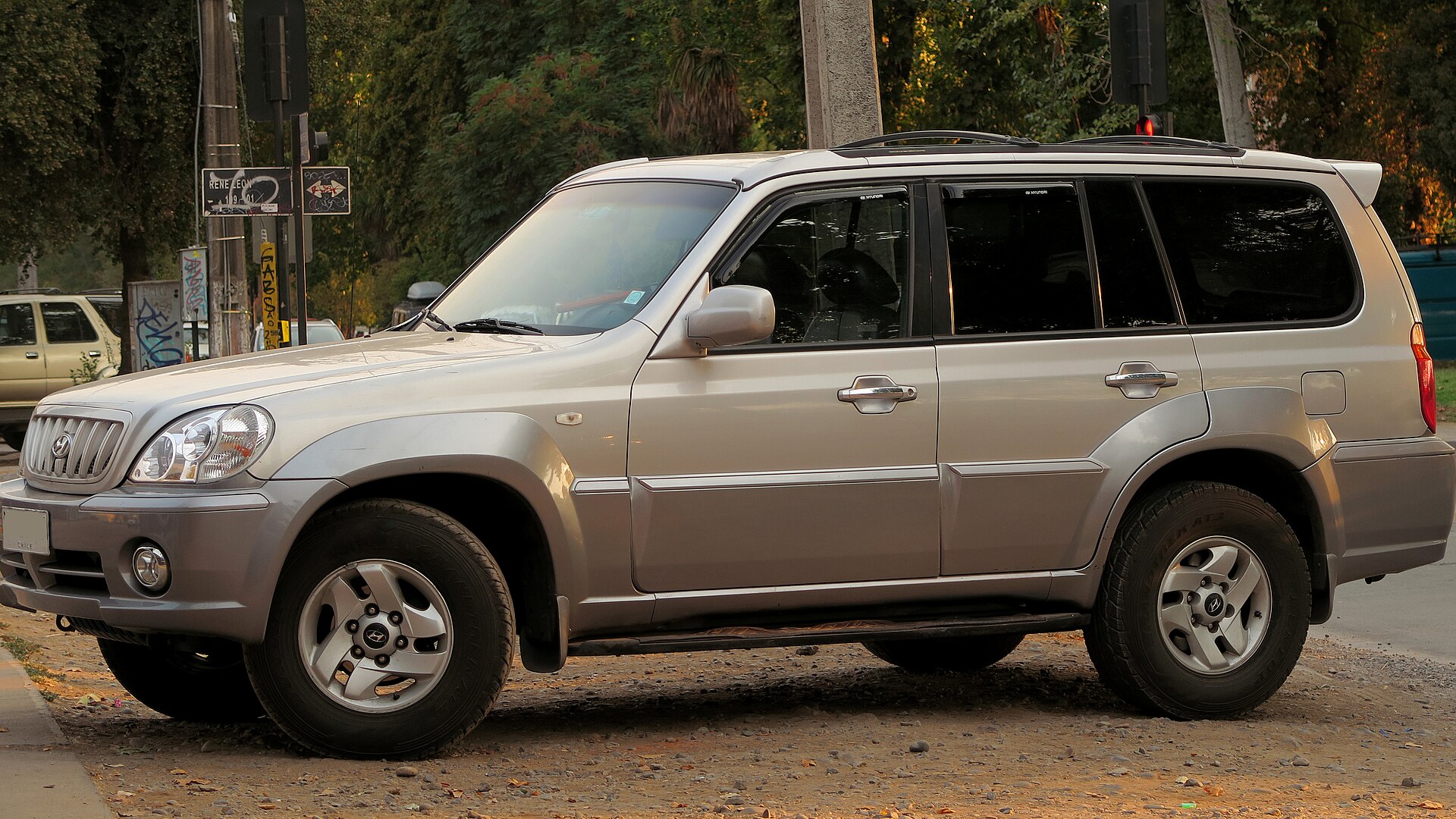
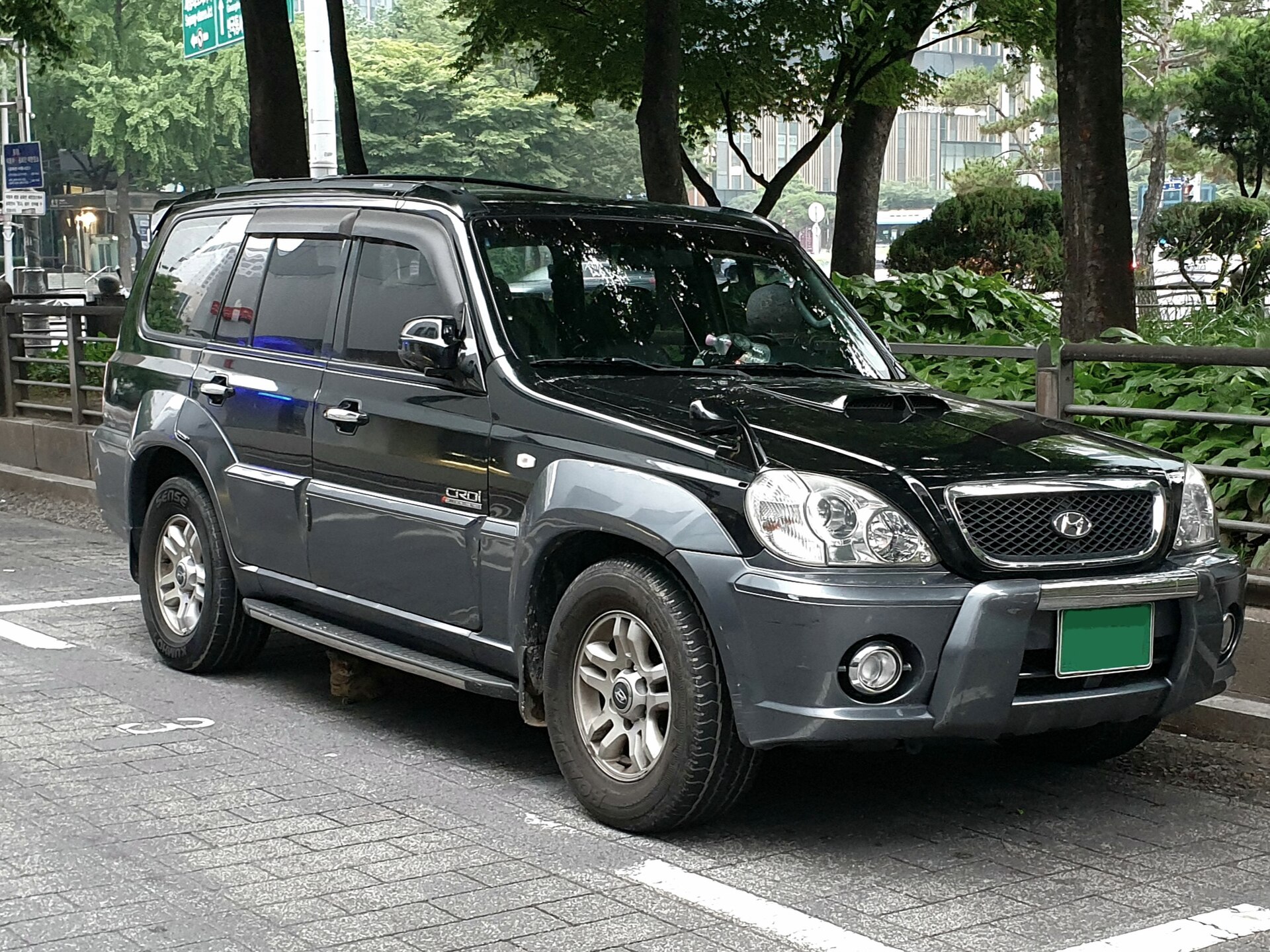
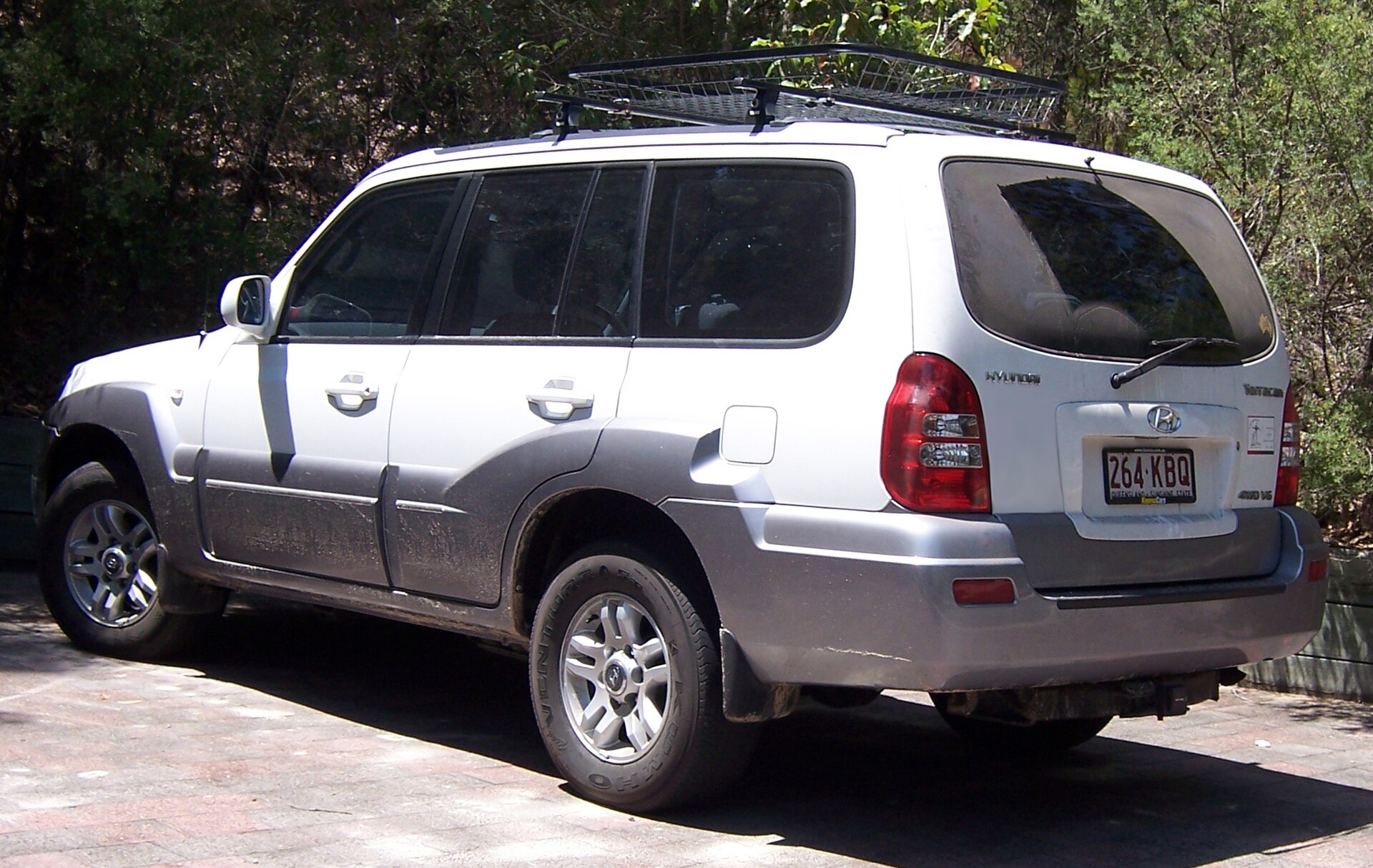
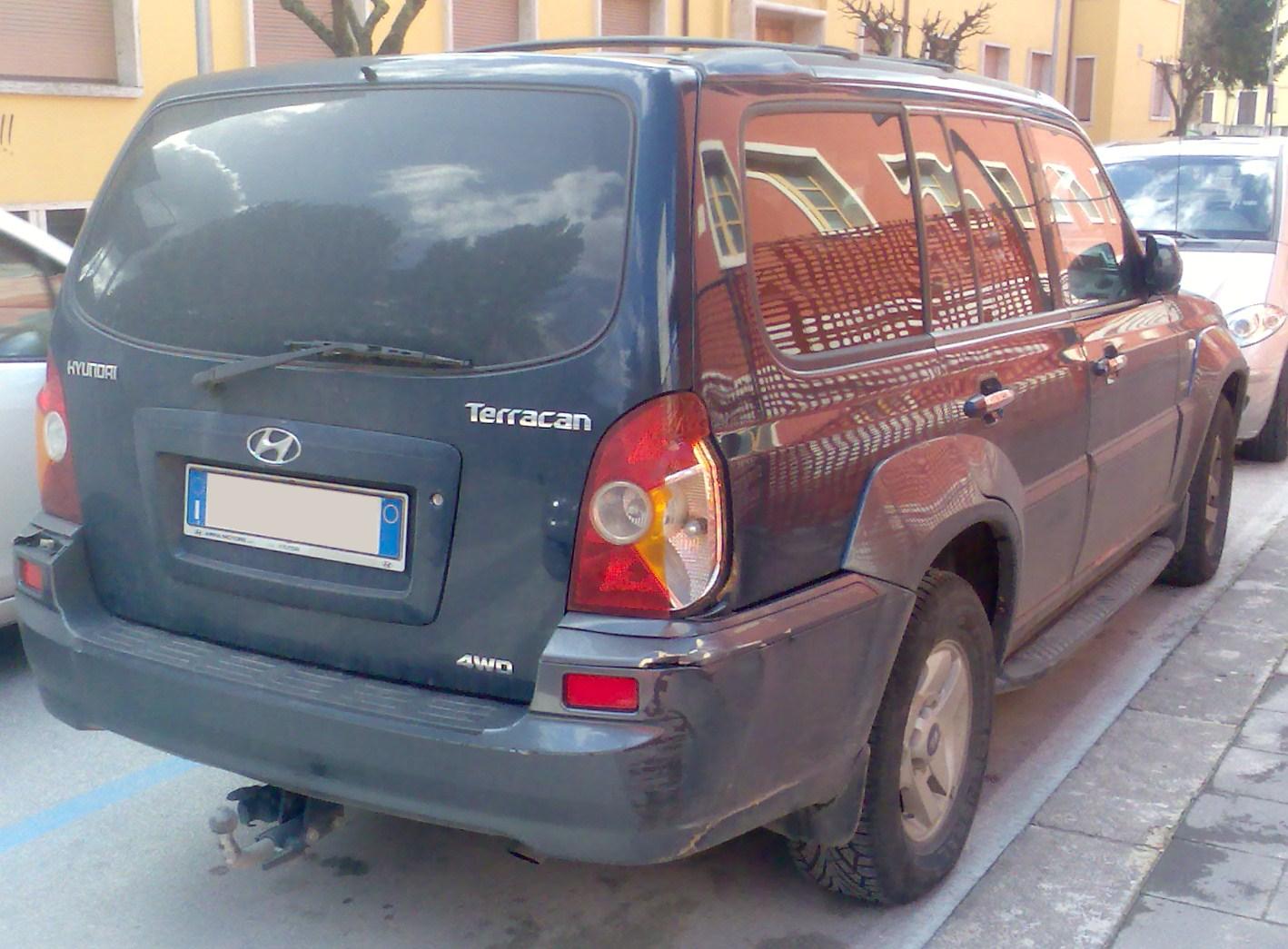
Hyundai Terracan photos 20
FAQ
When was the Hyundai Terracan made?
From February 2001 to October 2006 in Korea, with sales until March 2007. Australia sold the last cars in 2008, and licence production continued in China.
Is the Terracan a real off-roader?
Yes. It has a separate ladder frame, a dual-range transfer case with a 2.48:1 low range, a limited-slip rear differential and a live rear axle.
Which engine does the Terracan diesel have?
The 2.9-litre J3 common-rail four-cylinder, with 110 kW (150 PS) in Europe until 2004 and 120 kW (163 PS) and 343 Nm after the facelift.
What replaced the Hyundai Terracan?
The Hyundai Veracruz, sold in Europe as the ix55 from 2009. It is a monocoque crossover, so the Terracan was Hyundai's last body-on-frame SUV.
Is the Terracan reliable?
Auto Bild found it solid over 100,000 km. The main risks are the diesel injection system, the timing belt and the condition of the underside.
Data sources
Data checked by an editor against the sources below.
- Wikipedia - Hyundai Terracan
- Largus - 29 Crdi163 Pk Confort 834810
- Australiancar