 Hyundai NEXO
All generations, specs and history
Published Sources (2) Report an error
By Felix Hartmann, Automotive Technology & EV Contributor
- Built
- 2018–present
- Generations
- 2
- Top power
- 150 kW (204 PS)
Timeline
NEXO generations
Click a generation for its own page

Newest first · 2 generations since 2018
-
2025
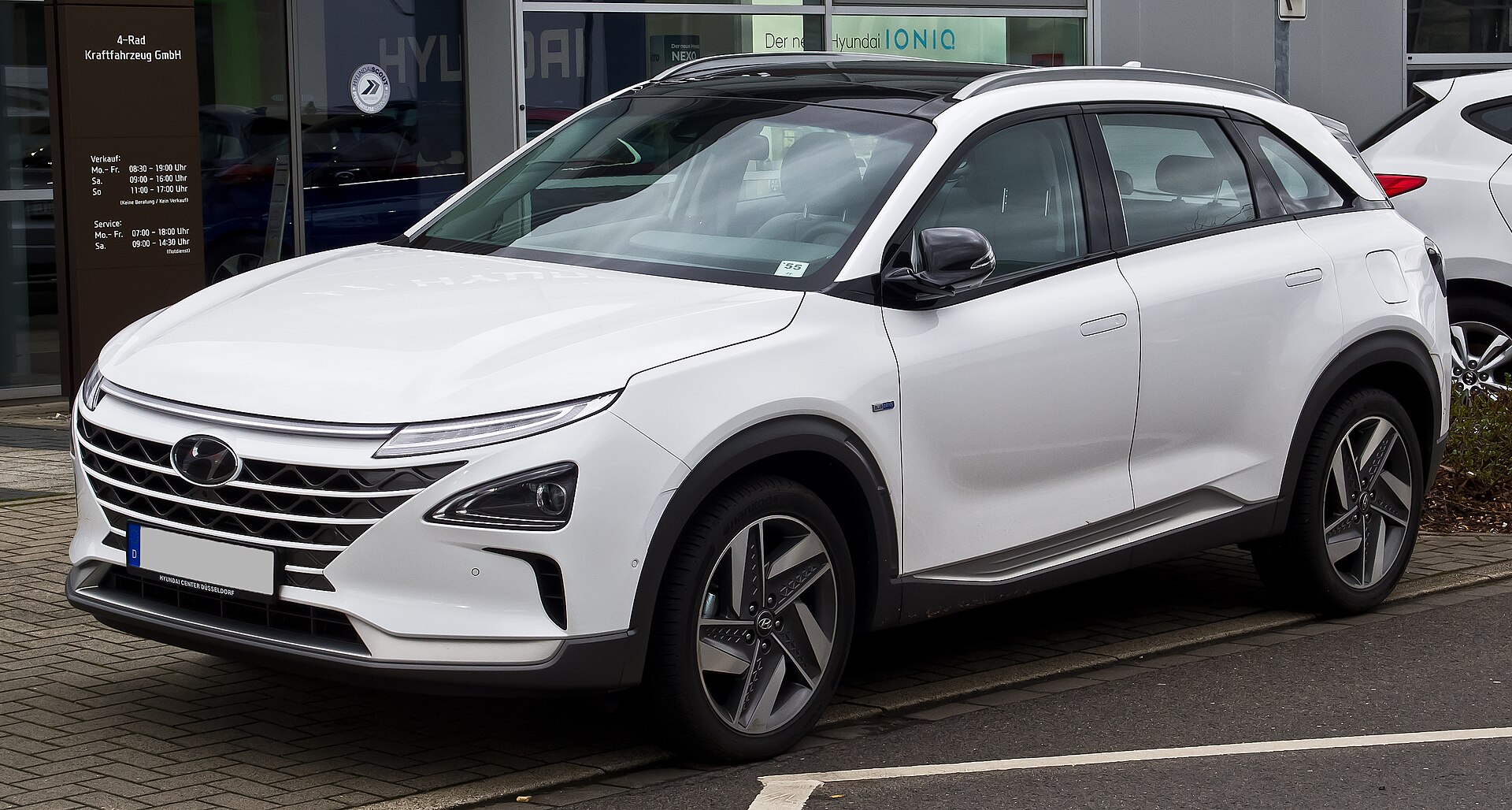
- 2018 I 2018–2024 · SUV · 113–120 kW (154–163 PS)
All generations by year: NEXO II (2025–now) · NEXO I (2018–2024)
Which one is mine?
Pick the year of first registration to see which generation it is.
Check by VINWhich one to buy
Our verdict · Felix Hartmann
- New: the NEXO II at EUR 69,900, if you live and drive near reliable hydrogen stations.
- Used: a first-generation car from 2018-2024, which cost EUR 77,490 new in Germany; check the remaining fuel cell and battery warranty and local station availability first.
- Otherwise: a battery-electric SUV will be easier to live with.
The Hyundai NEXO is a hydrogen fuel cell SUV: it makes its own electricity on board from hydrogen stored in high-pressure tanks, so it refuels like a petrol car and emits only water. The first generation was sold in Germany from 2018 to 2024 with 120 kW (163 PS) and 666 km of WLTP range; the second generation arrived in January 2026 at EUR 69,900 (ADAC). Both have five stars from Euro NCAP.
In short
- Two generations: NEXO I (2018-2024) and NEXO II (since 2025, in Germany since January 2026).
- First generation: 120 kW (163 PS), 395 Nm, 6.3 kg of hydrogen in three tanks, 666 km WLTP.
- Second generation: 150 kW (204 PS) system output in German specification, 6.7 kg of hydrogen, 0-100 km/h in 7.8 seconds.
- Euro NCAP: five stars in 2018 and again in 2025; sales are tiny: 10,527 cars worldwide in the best year, 2022.
Size at a glance
| Dimensions | Hyundai NEXO II |
|---|---|
| Length | 4,750 mm187.0 in |
| Width | 1,865 mm73.4 in |
| Height | 1,640 mm64.6 in |
| Wheelbase | 2,790 mm109.8 in |
| Boot | 510 L18.0 cu ft |
Specs by version
Engines
| Version | Engine | Power | Torque | Production years |
|---|---|---|---|---|
| NEXO II · Fuel Cell | Hydrogen | 150 kW 204 PS201 hp | 350 Nm258 lb-ft | 2026 |
Performance
Show all 1 versions
| Version | 0–100 km/h | Top speed | Range |
|---|---|---|---|
| NEXO II · Fuel Cell | 7.8 s 0–62 mph | 176 km/h109 mph | 826 km513 mi |
Dimensions and weight
Show all 1 versions
| Version | Length | Width | Height | Wheelbase | Kerb weight | Boot |
|---|---|---|---|---|---|---|
| NEXO II · Fuel Cell | 4,750 mm187.0 in | 1,865 mm73.4 in | 1,640 mm64.6 in | 2,790 mm109.8 in | 1,955 kg4,310 lb | 510 l18.0 cu ft |
Verified Manufacturer and type-approval data from our catalog · Sources and methodology
Hyundai NEXO at a glance
| Parameter | Detail |
|---|---|
| Segment | Mid-size SUV / crossover |
| Body | Five-door SUV, five seats |
| Powertrain | Hydrogen fuel cell, electric drive, small buffer battery |
| Predecessor | Hyundai ix35 Fuel Cell (Tucson FCEV) |
| Production | 2018 to date |
| Euro NCAP | Five stars (2018); five stars (2025) |
Hyundai revealed the NEXO at CES in Las Vegas on 8 January 2018. Sales started in South Korea in March 2018, in the United States (California only) in December 2018 and in the UK in March 2019. In Germany ADAC lists it from August 2018.

Generations
| Generation | Code | Years | Body styles | Engines | Power (kW / hp) |
|---|---|---|---|---|---|
| NEXO I | - | 2018-2024 | SUV | Fuel cell, front motor | 113-120 kW (154-163 PS) |
| NEXO II | - | 2025 to date | SUV | Fuel cell, electric motor | 150 kW (204 PS) system output (ADAC) |
First generation (2018-2024)
The first NEXO replaced the ix35 Fuel Cell and was a clear step forward: its three tanks hold 156 litres and 6.3 kg of hydrogen, against 140 litres and 5.6 kg in the Tucson FCEV. The electric motor drives the front wheels. Wikipedia's powertrain table gives 113-120 kW and 395 Nm; ADAC lists the German car at 120 kW (163 PS) and 395 Nm, with 0-100 km/h in 9.2 seconds and a top speed of 177 km/h.
Range figures depend on the test: ADAC lists 666 km WLTP and 756 km NEDC, while the American EPA figure is 611 km for the lighter Blue version and 570 km for the Limited. ADAC's own estimate at 10 °C and 90 km/h is 645 km.
Second generation (2025 to date)
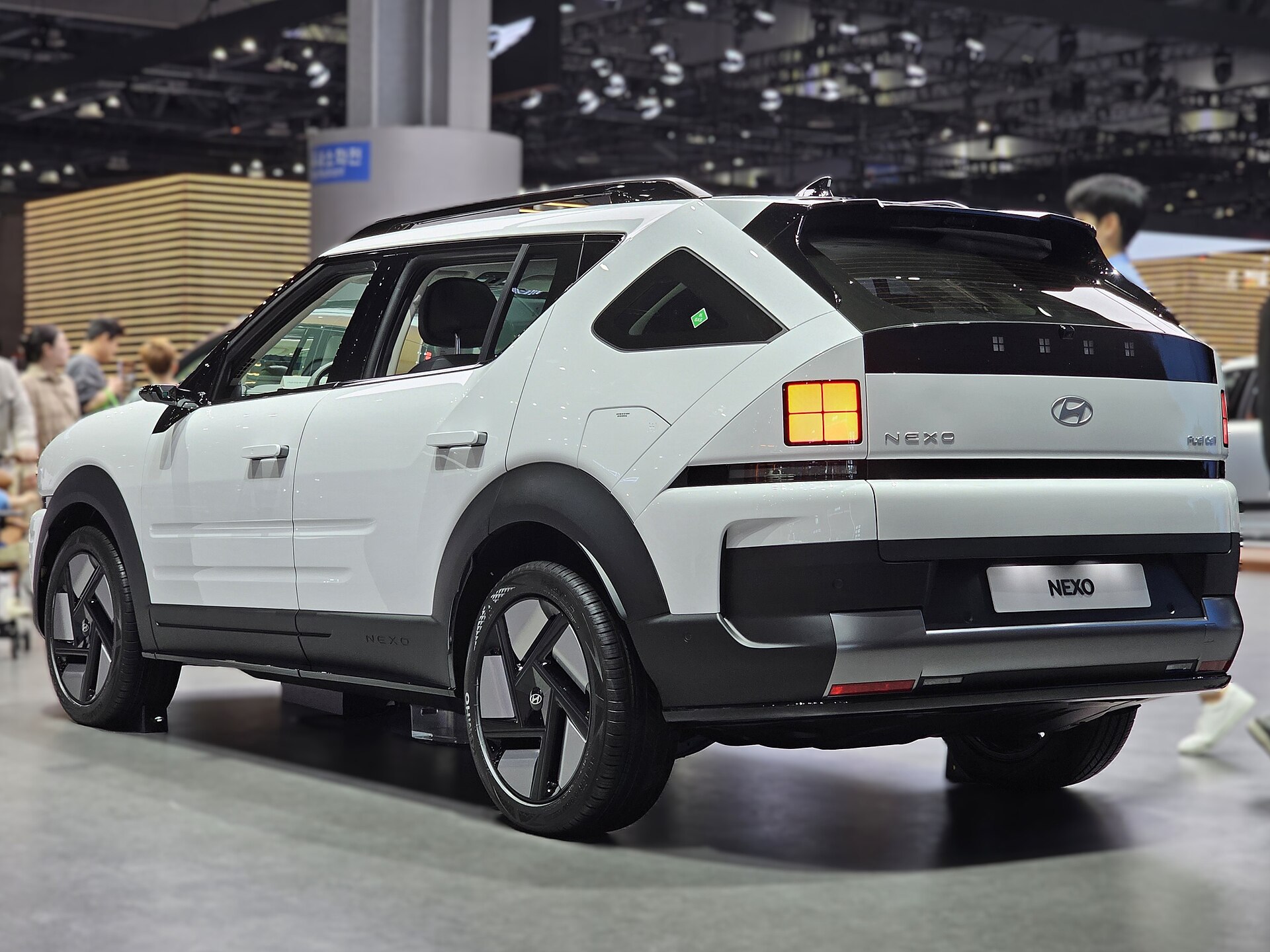
Hyundai previewed the second NEXO with the Initium concept on 31 October 2024 and revealed the production car on 3 April 2025. It is bigger than the first car. Wikipedia lists three tanks of 54.2 litres each, and ADAC gives the usable capacity as 6.7 kg of hydrogen.
The power figures differ between sources. Wikipedia lists the motor at 190 kW (258 PS); ADAC gives the German car a system output of 150 kW (204 PS) and 350 Nm, a 2.6 kWh nickel-cobalt-manganese battery and 0-100 km/h in 7.8 seconds. Hyundai quotes a range of around 700 km; ADAC lists 826 km on the old NEDC cycle and no WLTP range at the time of writing.

Powertrain and performance
| Parameter | NEXO I (2018-2024) | NEXO II (from 2026) |
|---|---|---|
| Power | 120 kW (163 PS) | 150 kW (204 PS) |
| Torque | 395 Nm | 350 Nm |
| Hydrogen capacity | 6.3 kg | 6.7 kg |
| 0-100 km/h | 9.2 s | 7.8 s |
| Top speed | 177 km/h | 176 km/h |
| Range | 666 km WLTP | 826 km NEDC |
| Consumption | 1.0 kg/100 km WLTP | 0.8 kg/100 km WLTP |
All figures are ADAC's for the German cars. A fuel cell car still has an electric motor and a battery; the difference from a battery-electric car is that the fuel cell stack recharges the battery and feeds the motor while you drive. Our electric cars section covers the battery-electric alternatives.


Dimensions and boot
| Parameter | NEXO I | NEXO II |
|---|---|---|
| Length | 4,670 mm (183.9 in) | 4,750 mm (187.0 in) |
| Width | 1,860 mm (73.2 in) | 1,865 mm (73.4 in) |
| Height | 1,630 mm (64.2 in) | 1,640 mm (64.6 in) |
| Wheelbase | 2,790 mm (109.8 in) | 2,790 mm (109.8 in) |
| Kerb weight (EU) | 1,889 kg (4,165 lb) | 1,955 kg (4,310 lb) |
| Boot | 461-1,466 l (16.3-51.8 cu ft) | 510-1,630 l (18.0-57.6 cu ft) |
The new car keeps the 2,790 mm wheelbase but is 80 mm longer, and the boot grows from 461 to 510 litres. It can also tow: ADAC lists 1,000 kg braked for the second generation.
Running costs and refuelling
The NEXO's running costs depend almost entirely on where you can fill up. ADAC lists combined consumption of 1.0 kg of hydrogen per 100 km for the first generation (1.2 kg in ADAC's Ecotest) and 0.8 kg for the second. Before buying, check which hydrogen stations are open on the routes you drive most.
Warranty in Germany is five years for the car, plus eight years or 200,000 km for the high-voltage battery (ADAC). Wikipedia cites a fuel cell warranty of ten years or 160,000 km for the first generation.
Trims and prices
| Version | Years | Price in Germany (EUR) |
|---|---|---|
| NEXO I | 2018-2024 | 77,490 |
| NEXO I Premium package | 2018-2021 | 82,500 |
| NEXO I Prime package | 2021-2024 | 82,890 |
| NEXO II | from January 2026 | 69,900 |
| NEXO II Prime | from January 2026 | 77,550 |
All prices are ADAC list prices before government incentives. The second generation is EUR 7,590 cheaper than the first at launch.
Safety
Euro NCAP awarded the first NEXO five stars in 2018, with 94 per cent for adult occupants, 89 per cent for children, 67 per cent for vulnerable road users and 80 per cent for safety assist. The second generation also scored five stars, in a test that ADAC dates December 2025: 90 per cent adult occupant, 85 per cent child occupant, 76 per cent vulnerable road users and 84 per cent safety assist. More on our safety ratings page.
Reliability and known issues
The sources used for this guide do not document recurring technical faults, so we list none. The main practical risk is the refuelling network rather than the car: a NEXO is only useful where hydrogen stations are open and supplied.
Sales
| Year | South Korea | Europe | Global |
|---|---|---|---|
| 2018 | 727 | 92 | 949 |
| 2019 | 4,194 | 362 | 4,987 |
| 2020 | 5,786 | 468 | 6,781 |
| 2021 | 8,502 | 214 | 9,602 |
| 2022 | 10,164 | 572 | 10,527 |
| 2023 | 4,328 | - | 4,552 |
| 2024 | 2,751 | 11 | 2,774 |
Rivals
| Model | Engines | Power (hp) | Boot (l) | Price from (EUR) |
|---|---|---|---|---|
| Hyundai NEXO II | Hydrogen fuel cell | 204 | 510 | 69,900 (DE, 2026) |
| Toyota Mirai II | Hydrogen fuel cell, RWD | 182 | 321 | 68,490 (DE, 2021) |
| Hyundai Ioniq 5 | Battery electric | 170-325 | 527 | 45,750 (DE, 2024) |
The Toyota Mirai is the NEXO's direct hydrogen rival, but it is a saloon with a much smaller boot. Hyundai's own battery-electric Ioniq 5 shows what the same money buys without the need for hydrogen stations. The Mirai's price is ADAC's German list price; boot volumes come from the 1cars catalogue. Compare them in our comparison tool.
Photo gallery

Hyundai NEXO: first vs latest generation
| Spec | NEXO I | NEXO II | Change |
|---|---|---|---|
| Years | 2018–2024 | 2025–present | 7 years apart |
| Most powerful version | 120 kW (163 PS) | 150 kW (204 PS) | +30 kW (+25%) |
Oldest and newest generation in the 1cars catalog. Power is the strongest version of each; other rows are shown only when both generations have the figure.
Hyundai NEXO in our rankings
- No. 83 of 321 · Biggest boot: cars (510 l · top 27%)
- No. 108 of 391 · Heaviest cars (1,955 kg · top 28%)
- No. 169 of 531 · Longest cars (4,750 mm · top 33%)
- No. 70 of 198 · Longest SUVs and crossovers (4,750 mm · top 36%)
- No. 55 of 140 · Biggest boot: SUVs and crossovers (510 l · top 40%)
- No. 215 of 509 · Widest cars (1,865 mm · top 43%)
Bigger boot than 73% of ranked cars in the 1CARS catalog (No. 83 of 321).
FAQ
How far can the Hyundai NEXO go on a tank?
The first generation is rated at 666 km WLTP. For the second generation ADAC lists 826 km on the NEDC cycle, and Hyundai quotes around 700 km.
How much hydrogen does the NEXO hold?
6.3 kg in the first generation and 6.7 kg in the second, in three tanks.
How much does the new NEXO cost?
EUR 69,900 in Germany, or EUR 77,550 for the Prime (ADAC, from January 2026).
Is the NEXO safe?
Yes. It scored five stars from Euro NCAP in 2018, and the second generation scored five stars in 2025.
Is the NEXO an electric car?
Yes, a fuel cell electric vehicle: an electric motor drives the wheels, and the electricity comes from a hydrogen fuel cell rather than from a large plug-in battery.
Data sources
Data checked by an editor against the sources below.