 Hyundai Genesis
All generations, specs and history
Published Sources (6) Report an error
By Sarah Whitmore, Senior Automotive Writer
- Built
- 2008–2016
- Generations
- 2 · BH to DH
Timeline
Genesis generations
Click a generation for its own page


- Genesis I (BH) 2008–2013 · Sedan
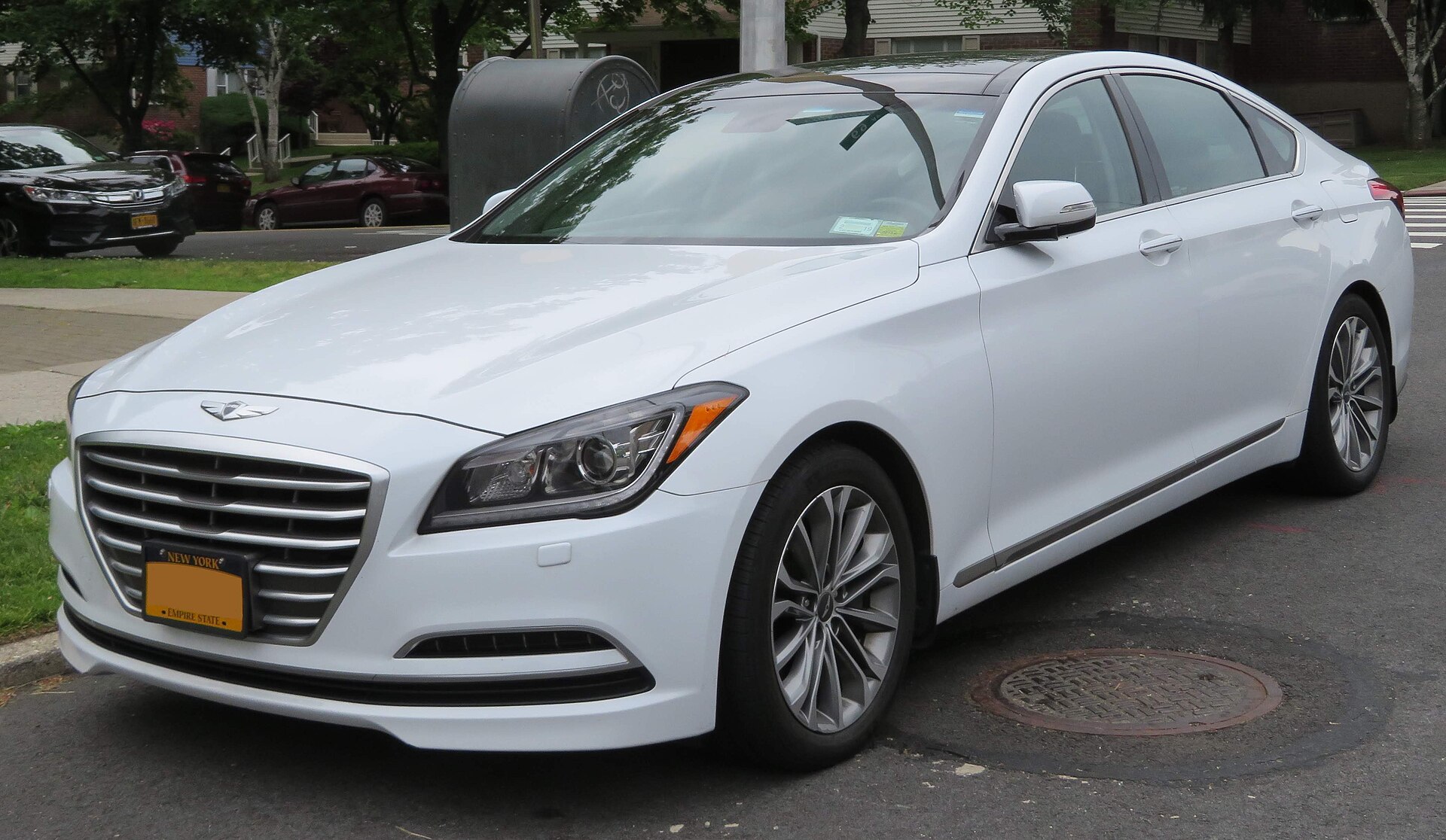
- Genesis II (DH) 2013–2016 · Sedan
Newest first · 2 generations since 2008
-
2013
-
2008
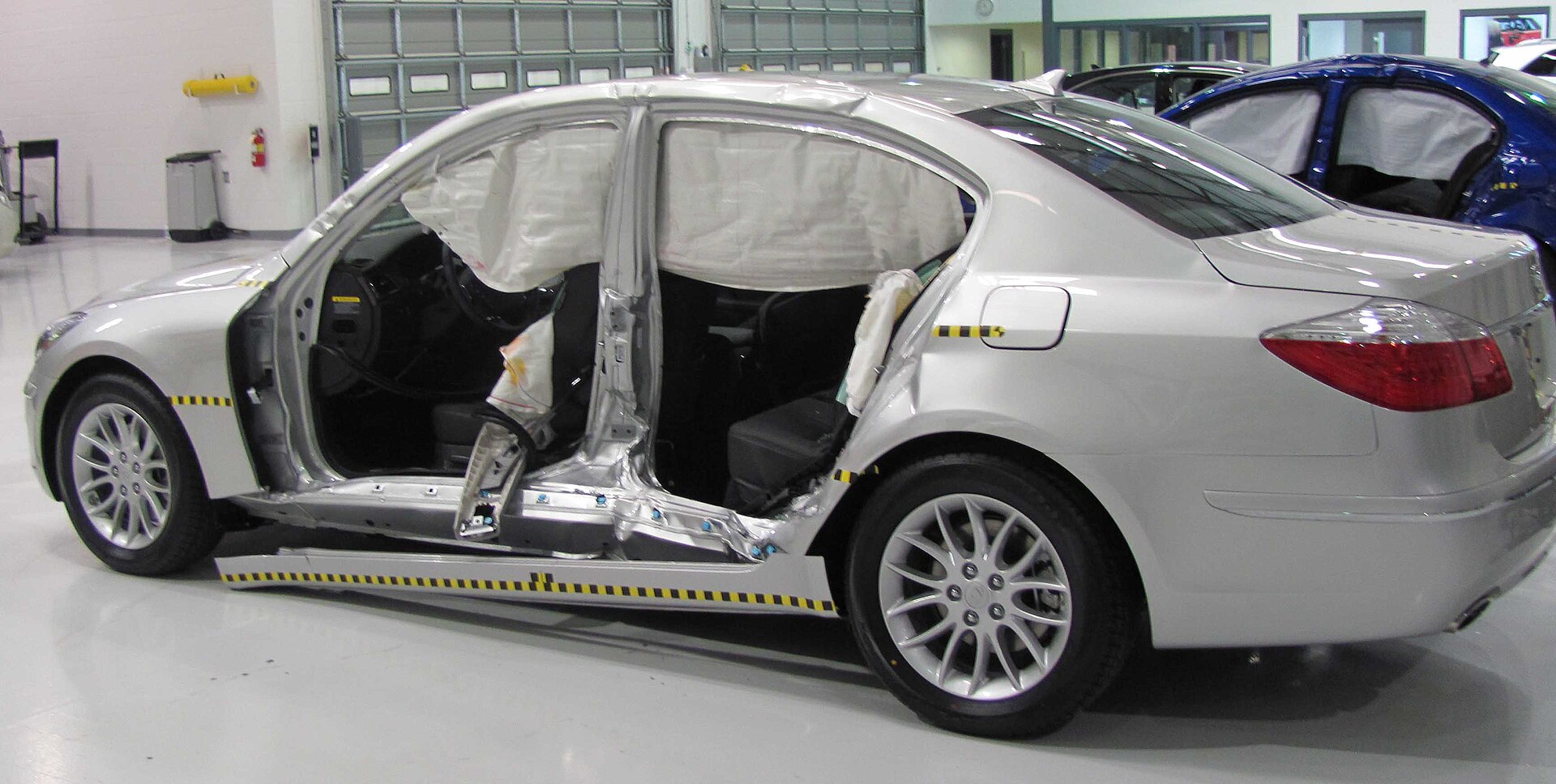
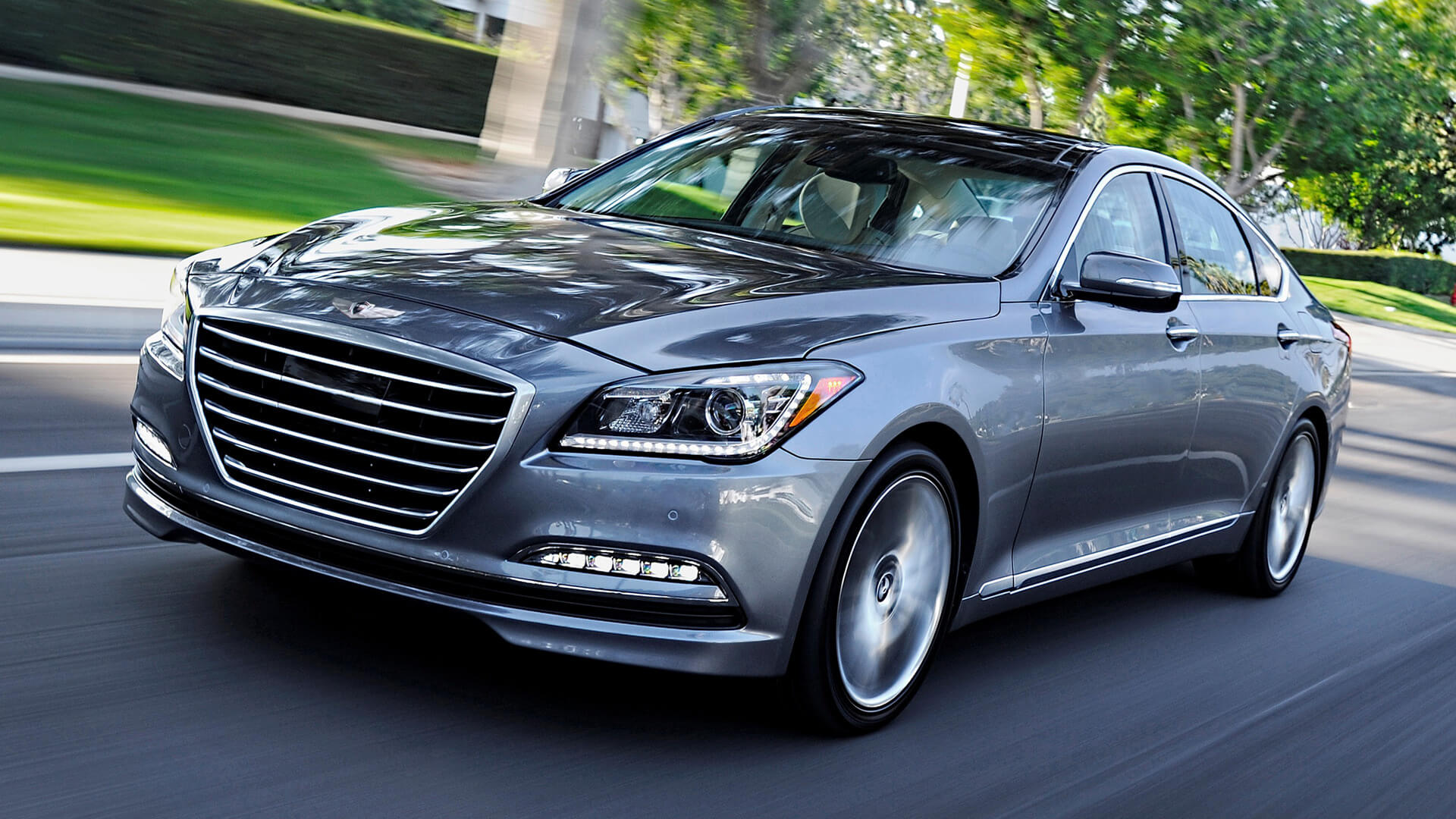
All generations by year: Genesis II (DH) (2013–2016) · Genesis I (BH) (2008–2013)
Which one is mine?
Pick the year of first registration to see which generation it is.
Check by VINThe Hyundai Genesis is a luxury saloon built by Hyundai Motor from 2008, offering elegant design, a luxurious cabin, high comfort and safety and an engaging drive. Development began in 2003, a concept appeared at the 2007 New York motor show, and the production car was unveiled at the 2008 Detroit motor show, replacing the Hyundai Dynasty in the range. The second generation (DH) was unveiled in Seoul in November 2013. In November 2015 Hyundai announced that Genesis would become a separate luxury brand, and the saloon continued as the Genesis G80. The name means "origin" or "beginning".
In short
- First generation BH (2008–2013): V6 and V8 engines, rear-wheel drive, 2009 North American Car of the Year.
- Second generation DH (2013–2016): V6 engines from 189 to 232 kW and a 5.0 V8 with 313 kW (425 PS), eight-speed automatic, optional HTRAC all-wheel drive.
- Longer than the Mercedes-Benz E-Class by 122 mm, with a 136 mm longer wheelbase.
- Continued as the Genesis G80 under the new Genesis brand.
Specs by version
Engines
| Version | Engine | Gearbox | Drive | Production years |
|---|---|---|---|---|
| BH · 2008–2013 | ||||
| BH · 3.8 L 6 cyl Automatic 8-spd · 2012 (EPA) | 3.8 l · 6 cyl 3,800 cc | 8-sp Automatic | Rear-wheel drive | 2012 |
| BH · 3.8 L 6 cyl Automatic 6-spd · 2011 (EPA) | 3.8 l · 6 cyl 3,800 cc | 6-sp Automatic | Rear-wheel drive | 2011 |
| BH · 3.8 L 6 cyl Automatic 6-spd · 2010 (EPA) | 3.8 l · 6 cyl 3,800 cc | 6-sp Automatic | Rear-wheel drive | 2010 |
| BH · 3.8 L 6 cyl Automatic 6-spd · 2009 (EPA) | 3.8 l · 6 cyl 3,800 cc | 6-sp Automatic | Rear-wheel drive | 2009 |
| BH · 4.6 L 8 cyl Automatic 8-spd · 2012 (EPA) | 4.6 l · 8 cyl 4,600 cc | 8-sp Automatic | Rear-wheel drive | 2012 |
| BH · 4.6 L 8 cyl Automatic 6-spd · 2011 (EPA) | 4.6 l · 8 cyl 4,600 cc | 6-sp Automatic | Rear-wheel drive | 2011 |
| BH · 4.6 L 8 cyl Automatic 6-spd · 2010 (EPA) | 4.6 l · 8 cyl 4,600 cc | 6-sp Automatic | Rear-wheel drive | 2010 |
| BH · 4.6 L 8 cyl Automatic 6-spd · 2009 (EPA) | 4.6 l · 8 cyl 4,600 cc | 6-sp Automatic | Rear-wheel drive | 2009 |
| BH · 5 L 8 cyl Automatic 8-spd · 2012 (EPA) | 5.0 l · 8 cyl 5,000 cc | 8-sp Automatic | Rear-wheel drive | 2012 |
| DH · 2013–2016 | ||||
| DH · 3.8 L 6 cyl Automatic 8-spd · 2014 (EPA) | 3.8 l · 6 cyl 3,800 cc | 8-sp Automatic | Rear-wheel drive | 2014 |
| DH · 3.8 L 6 cyl Automatic 8-spd · 2013 (EPA) | 3.8 l · 6 cyl 3,800 cc | 8-sp Automatic | Rear-wheel drive | 2013 |
Performance
Show all 11 versions
| Version | Fuel consumption |
|---|---|
| BH · 2008–2013 | |
| BH · 3.8 L 6 cyl Automatic 8-spd · 2012 (EPA) | 10.7 l/100 km22.0 mpg US · 26.4 mpg UK |
| BH · 3.8 L 6 cyl Automatic 6-spd · 2011 (EPA) | 11.2 l/100 km21.0 mpg US · 25.2 mpg UK |
| BH · 3.8 L 6 cyl Automatic 6-spd · 2010 (EPA) | 11.2 l/100 km21.0 mpg US · 25.2 mpg UK |
| BH · 3.8 L 6 cyl Automatic 6-spd · 2009 (EPA) | 11.2 l/100 km21.0 mpg US · 25.2 mpg UK |
| BH · 4.6 L 8 cyl Automatic 8-spd · 2012 (EPA) | 12.4 l/100 km19.0 mpg US · 22.8 mpg UK |
| BH · 4.6 L 8 cyl Automatic 6-spd · 2011 (EPA) | 11.8 l/100 km19.9 mpg US · 23.9 mpg UK |
| BH · 4.6 L 8 cyl Automatic 6-spd · 2010 (EPA) | 12.4 l/100 km19.0 mpg US · 22.8 mpg UK |
| BH · 4.6 L 8 cyl Automatic 6-spd · 2009 (EPA) | 12.4 l/100 km19.0 mpg US · 22.8 mpg UK |
| BH · 5 L 8 cyl Automatic 8-spd · 2012 (EPA) | 11.8 l/100 km19.9 mpg US · 23.9 mpg UK |
| DH · 2013–2016 | |
| DH · 3.8 L 6 cyl Automatic 8-spd · 2014 (EPA) | 11.2 l/100 km21.0 mpg US · 25.2 mpg UK |
| DH · 3.8 L 6 cyl Automatic 8-spd · 2013 (EPA) | 10.7 l/100 km22.0 mpg US · 26.4 mpg UK |
Verified Manufacturer and type-approval data from our catalog · Sources and methodology
Safety
-
DH · NHTSA 2016
US NCAP (NHTSA)
Stars from different years and organisations are not directly comparable: test protocols change every few years.
Hyundai Genesis at a glance
The Genesis is a full-size rear-wheel-drive luxury saloon with a longitudinal engine; the DH added all-wheel drive. It is distinct from the Hyundai Genesis Coupe, a separate sports car that shared its platform and name. More Hyundai models are listed in our Hyundai catalogue, and the successor brand's models are listed in our Genesis catalogue.
First generation: BH (2008–2013)
Production began in South Korea on 8 January 2008, and US sales started in August 2008; the BH was not sold in Europe. Engines included a 3.3 V6 with 192 kW (258 hp), a 3.8 V6 with 213 kW (286 hp) — later 248 kW (333 hp) in GDi form — a 4.6 Tau V8 with 269–287 kW (361–385 hp) and, in the R-Spec, a 5.0 V8 GDi with up to 320 kW (429 hp). Six-speed automatics were used at first, with an eight-speed automatic from 2012. The BH earned five-star NHTSA ratings, was an IIHS Top Safety Pick and became Hyundai's first North American Car of the Year in 2009, while its Tau V8 won a Ward's 10 Best Engines award.
Second generation: DH (2013–2016)
Exterior
The second Genesis, previewed by the HCD-14 concept at the 2013 Detroit show, kept large dimensions that benefit passenger comfort and looks more solid and striking than its predecessor. It was styled under Hyundai's "Fluidic Sculpture 2.0" philosophy, combining dynamic elements with soft, elegant lines. The front has a large bumper with an aerodynamic lip and intake, LED running lights, projector headlights and a big protruding hexagonal grille. In profile, a short front overhang, a long bonnet housing the 5.0 V8 on higher trims, a gently domed roof, steeply raked pillars and a crease at door-handle height stand out, along with large doors that open almost 90 degrees, a high window line, chrome window surrounds, a chrome strip along the bottom of the doors and chrome door-handle inserts. Bespoke 19-inch alloys are available, with 17- and 18-inch wheels on other versions. Ground clearance varies by version: 130 mm for the Sport, 155 mm with rear-wheel drive and 150 mm with all-wheel drive. The rear has a powerful bumper with trapezoidal exhaust outlets at the corners and LED tail lights. The Genesis is 122 mm longer than the Mercedes-Benz E-Class, with a wheelbase 136 mm longer.
Interior
The interior uses high-quality leather, real wood and aluminium. The front seats have electric adjustment, heating and ventilation, unobtrusive side support and adjustable head restraints, separated by a wide double armrest with a deep storage box. A thin, heated four-spoke multifunction steering wheel faces instruments with a graphic trip-computer display and a head-up display. A 9-inch infotainment screen is flanked by large air vents, above the hazard switch and well-arranged climate and audio controls. The long wheelbase gives generous rear space; the rear bench is shaped for two, with heating, ventilation and reclining backrests for the outer seats and a centre armrest housing controls for the rear climate zone and sun blind. A rear entertainment system with two touchscreens in the front head restraints is optional. The boot holds 493 litres and has a power lid. A CO2 sensor automatically ventilates the cabin when needed.
Engines and transmissions
| Engine | Power (kW / PS) | Torque | 0–100 km/h |
|---|---|---|---|
| 3.0 V6 GDi (Lambda) | 189 kW / 257 PS | 303 Nm | 8.6–9.0 s |
| 3.3 V6 GDi (Lambda) | 207 kW / 282 PS | 347 Nm | 7.2 s |
| 3.8 V6 GDi (Lambda) | 232 kW / 315 PS | 397 Nm | 6.5 s |
| 5.0 V8 GDi (Tau) | 313 kW / 425 PS | — | 5.4 s |
All engines have direct injection and variable valve timing and are paired with an eight-speed automatic with manual mode. Top speed is about 240 km/h, and published figures give about 11 l/100 km for the 3.0 and 11.6 l/100 km for the 3.8. Rear-wheel drive is standard; HTRAC all-wheel drive, developed with Magna and standard on the V8, uses an electronically controlled multi-plate clutch that can vary the torque split by driving mode (Eco, Normal, Sport and Snow), sending up to 90% to either axle.
Chassis and safety
The DH uses a heavily reworked version of its predecessor's platform with independent multi-link suspension front and rear, telescopic dampers and anti-roll bars; expensive versions have electronically controlled air suspension. All four brakes are discs (ventilated at the front). The share of advanced high-strength steel rose from 13.8% to 51.5%, increasing torsional rigidity by 16% and bending rigidity by 40%. The DH earned five stars from NHTSA in every category and a five-star ANCAP rating in 2014. Even the base car had nine airbags, front and rear parking sensors, a rear camera, stability control, automatic emergency braking, lane monitoring, blind-spot monitoring, adaptive cruise control, a surround-view camera, a head-up display, navigation, automatic parking and forward collision warning.
Key specifications by generation
| Parameter | BH | DH |
|---|---|---|
| Years | 2008–2013 | 2013–2016 |
| Drive | Rear-wheel drive | Rear or HTRAC AWD |
| Gearbox | 6-speed, later 8-speed automatic | 8-speed automatic |
| Top engine | 5.0 V8, up to 320 kW / 429 hp | 5.0 V8, 313 kW / 425 PS |
| Boot | — | 493 l |
Strengths and weaknesses
Owners praise the Genesis's design, comfort, stability, materials and build quality, sound insulation, ample power, spacious and safe interior. Drawbacks include high fuel consumption, low ground clearance, occasional climate-control faults and expensive parts. Rivals include the Mercedes-Benz E-Class, BMW 5 Series, Audi A6 and Lexus GS.
Image credits · Photos from Wikimedia Commons under free licences
- Hyundai Genesis I (BH) · Photo: Brady Holt / Wikimedia Commons, CC BY 3.0
- Hyundai Genesis II (DH) · Photo: Kevauto / Wikimedia Commons, CC BY-SA 4.0
Hyundai Genesis in our rankings
- No. 30 of 131 · Biggest engines: sedans (5,000 cc · top 25%)
- No. 137 of 557 · Biggest engines: cars (5,000 cc · top 27%)
- No. 460 of 912 · Longest-running car nameplates (8 years · top 53%)
- No. 174 of 256 · Most economical cars (10.7 l/100 km · top 71%)
- No. 39 of 49 · Most economical sedans (10.7 l/100 km · top 80%)
- No. 285 of 345 · Cars with the most generations (2 generations)
Bigger engine than 75% of ranked sedans in the 1CARS catalog (No. 30 of 131).
FAQ
Is the Hyundai Genesis the same as the Genesis G80?
Yes. After Hyundai created the separate Genesis brand, the DH saloon continued as the Genesis G80.
Did the Hyundai Genesis win any awards?
The first generation was the 2009 North American Car of the Year — the first for Hyundai.
What is the most powerful Hyundai Genesis?
The second-generation 5.0 V8 with 313 kW (425 PS), standard with HTRAC all-wheel drive.
Is the Hyundai Genesis front-wheel drive?
No, it is rear-wheel drive, with HTRAC all-wheel drive available on the second generation.
Data sources
Data checked by an editor against the sources below.
- Wikipedia — Hyundai Genesis
- Autocade — Genesis (BH)
- US EPA fueleconomy.gov — 31239.shtml
- US EPA fueleconomy.gov — 31240.shtml
- US EPA fueleconomy.gov — 31412.shtml
- NHTSA 5-Star Safety Ratings (US NCAP) — U.S. Government work, public domain