 Hyundai Accent
All generations, specs and history
Published Sources (1) Report an error
By Sarah Whitmore, Senior Automotive Writer
- Built
- 1994–present
- Generations
- 6
Timeline
Accent generations
Click a generation for its own page
X3 and LC overlapped in 1999–2000, so LC sits on a second lane
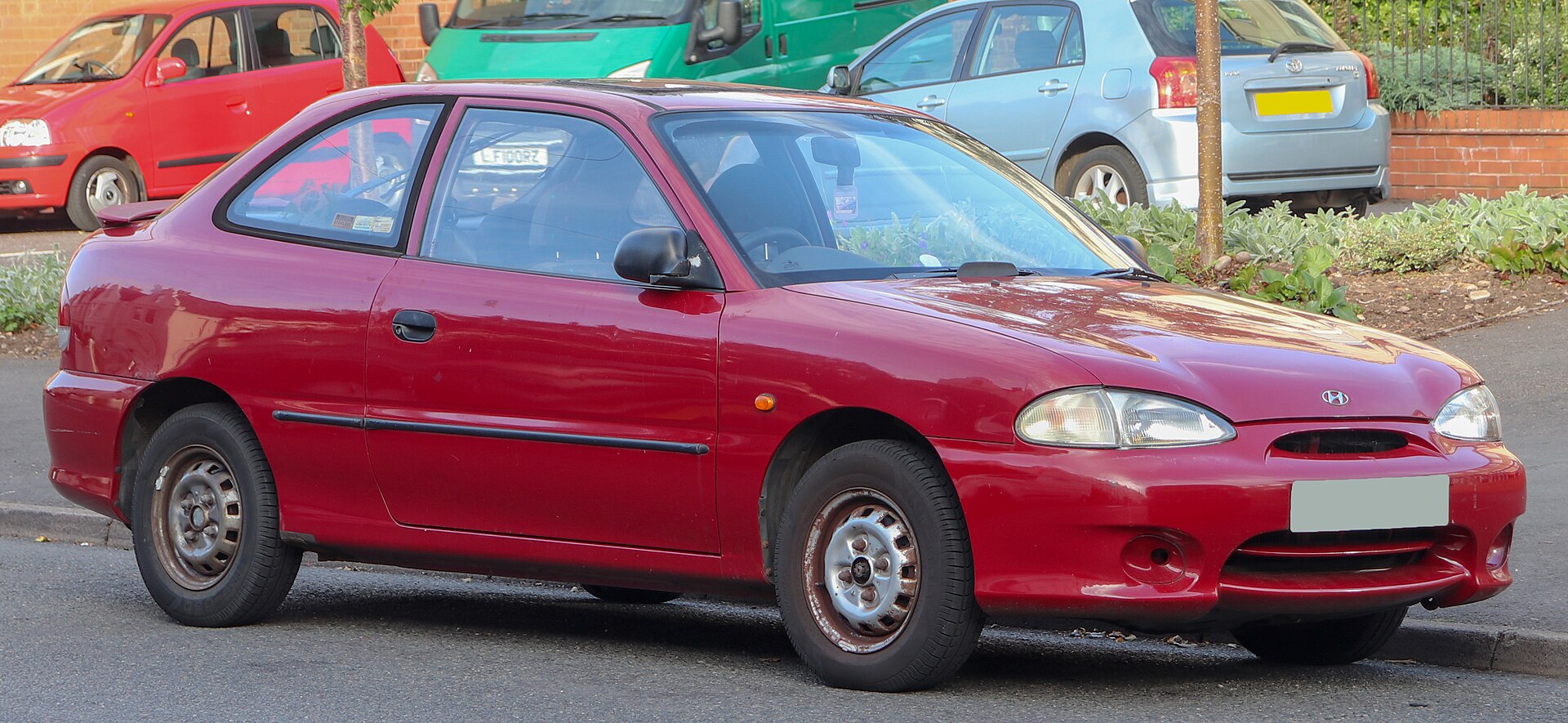
- Accent I (X3) 1994–2000 · Sedan, Liftback
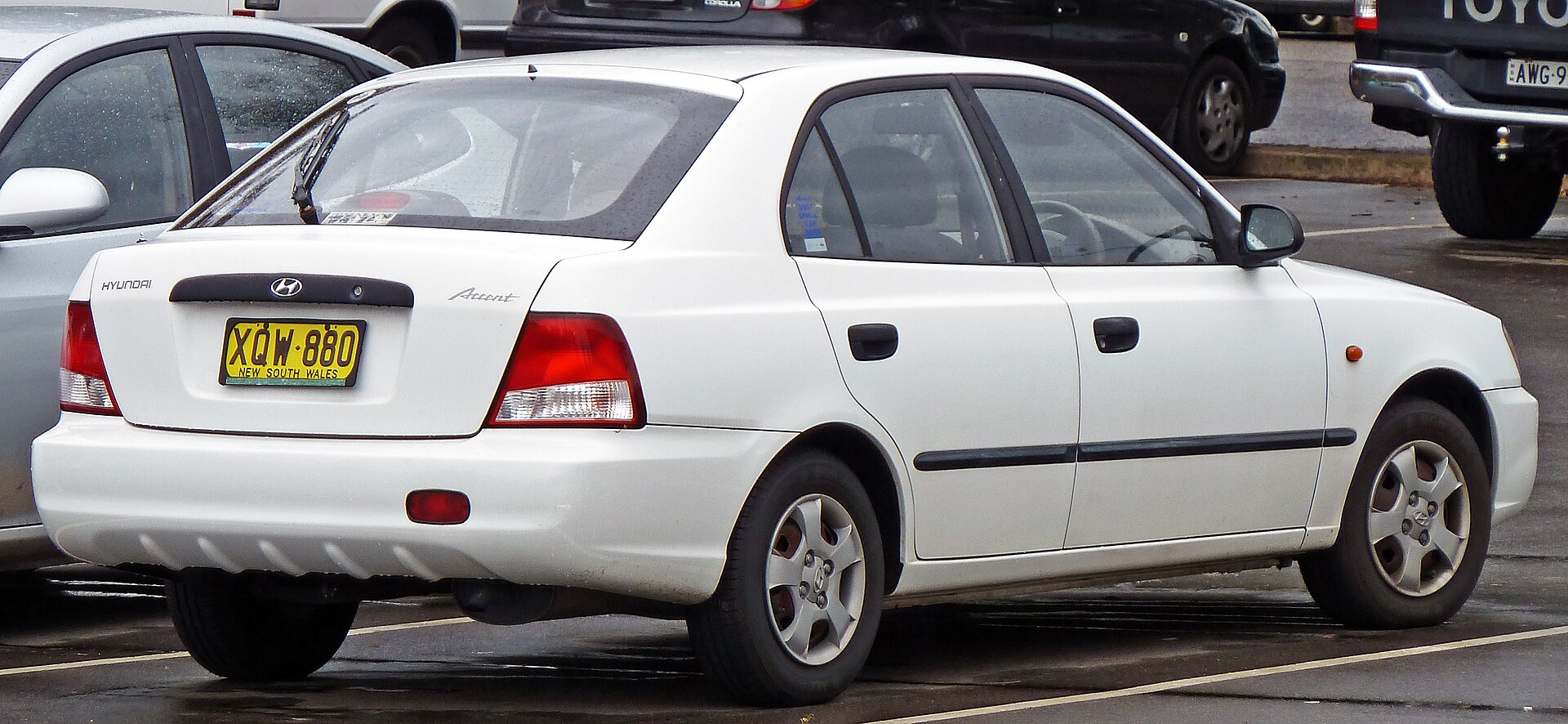
- Accent II (LC) 1999–2006 · Sedan, Liftback
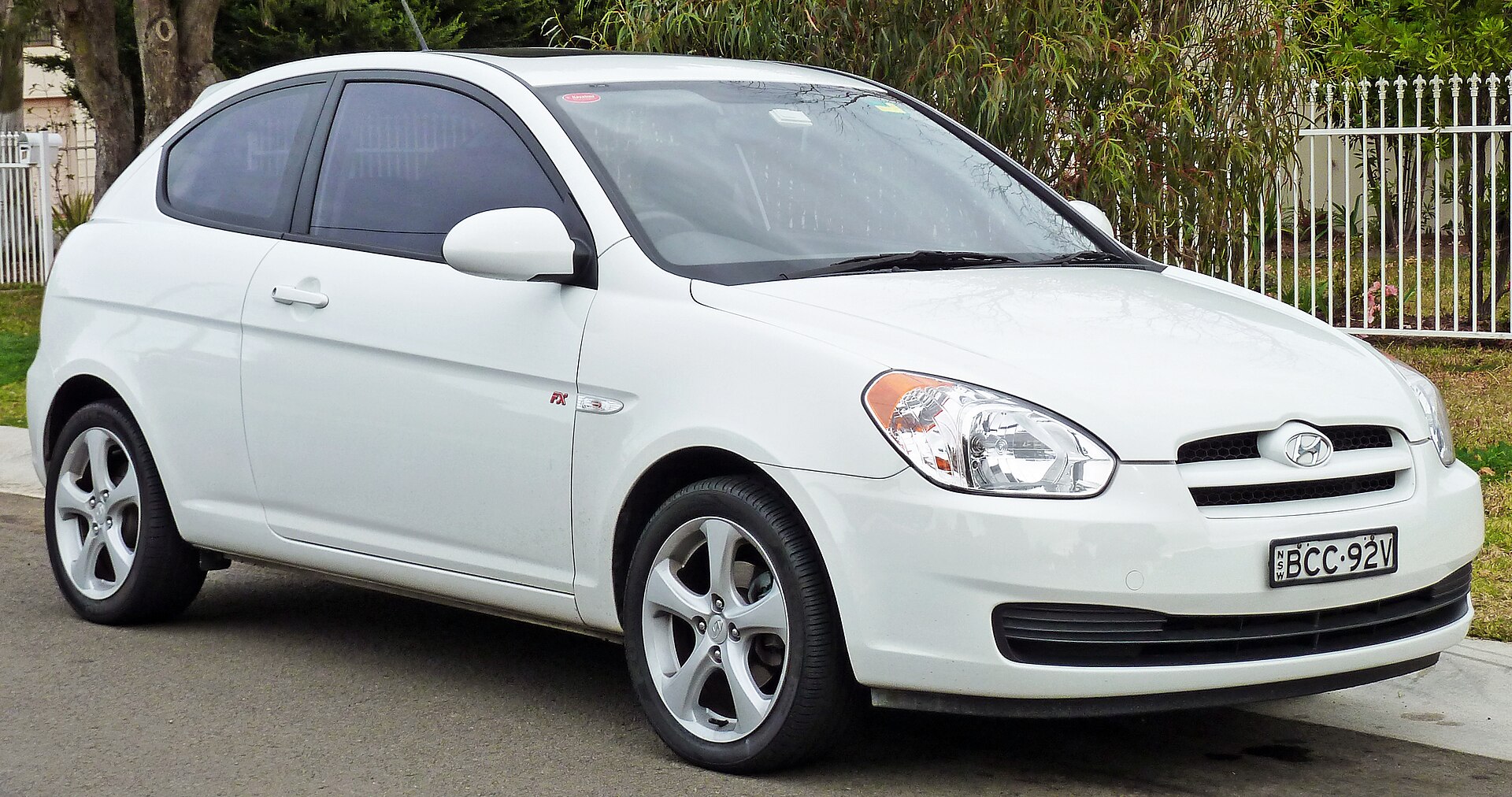
- Accent III (MC) 2005–2012 · Sedan, Hatchback
- Accent IV (RB) 2010–2019 · Sedan, Hatchback
- Accent V (HC) 2016–2023 · Sedan, Hatchback
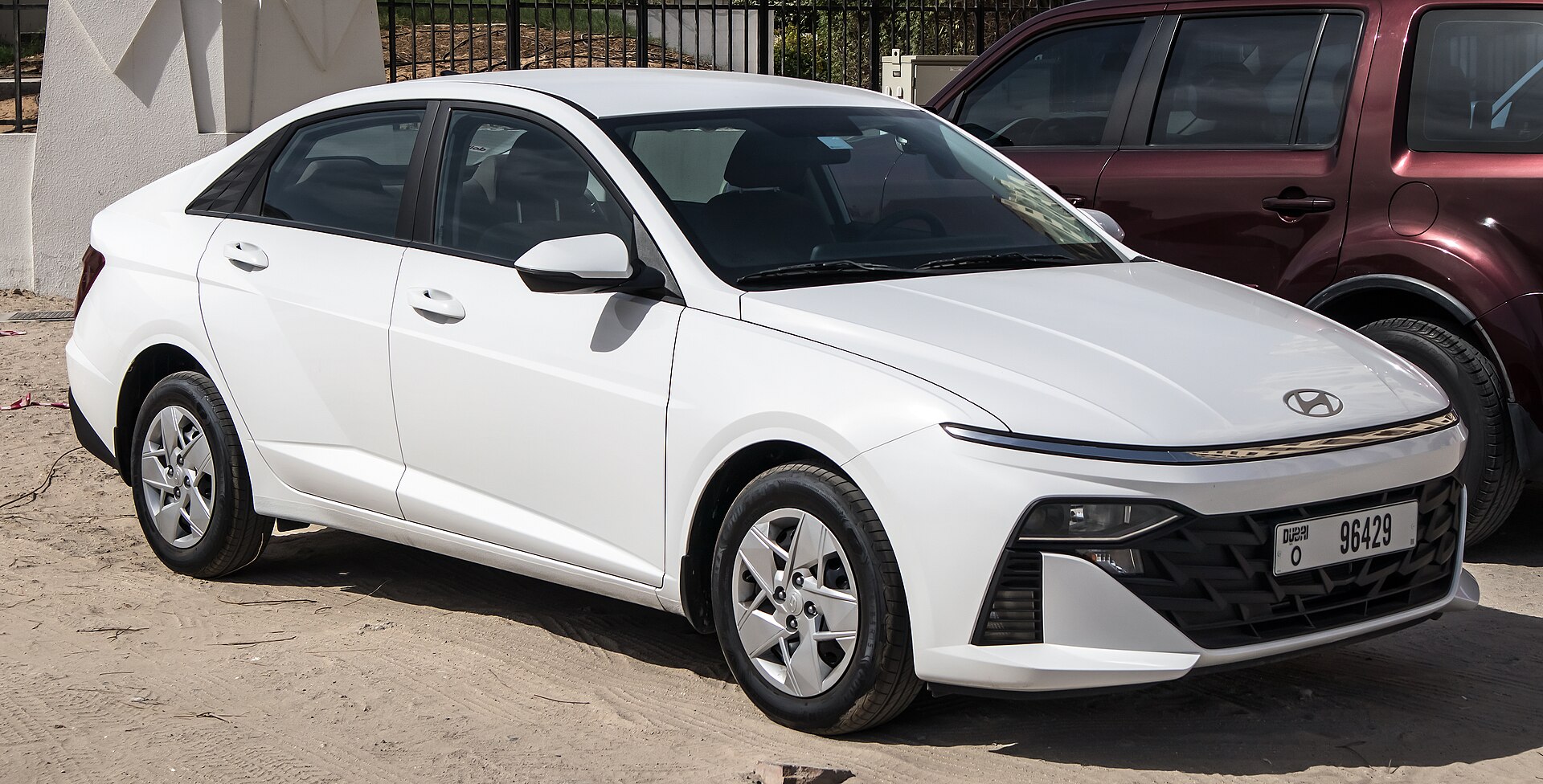
- Accent VI Current 2023–now · Sedan
Newest first · 6 generations since 1994
-
2023
-
2016
-
2010
-
2005
-
1999
-
1994


All generations by year: Accent VI (2023–now) · Accent V (HC) (2016–2023) · Accent IV (RB) (2010–2019) · Accent III (MC) (2005–2012) · Accent II (LC) (1999–2006) · Accent I (X3) (1994–2000)
Which one is mine?
Pick the year of first registration to see which generation it is.
Check by VINThe Hyundai Accent is a subcompact car - a B-segment model in European terms - that Hyundai Motor added to its range in 1994 as the replacement for the Excel. Over six generations it has been sold around the world, in some markets under the names Verna or Solaris. For Hyundai the Accent was a milestone: the company's earlier small cars had been built on Japanese platforms, while the Accent was largely its own engineering.
In short
- Five generations from 1994 to the early 2020s are covered here; the fifth was unveiled at the Chengdu motor show in 2016, and a sixth (BN7) arrived in 2023.
- Petrol engines from 1.3 to 1.6 litres (44–96 kW / 60–130 PS) plus 1.5-litre turbodiesels in the second and third generations.
- Front-wheel drive throughout, with manual or automatic gearboxes.
- Owners praise the comfortable ride, practical cabin and low parts costs; thin paint and modest sound insulation are the usual complaints.
Hyundai Accent at a glance
The Accent has always been a compact, front-wheel-drive family car with a transversely mounted four-cylinder engine and a monocoque body. Sedan and hatchback versions have been offered in every generation; the first generation also came in other body styles. More of the range from the Korean maker is collected in our Hyundai catalogue, and the background of the company is told in the history of Hyundai.
Hyundai Accent generations
First generation (X3, 1994–2000)
The original Accent was offered in four body styles and only with petrol engines. Its rounded, "bio-design" shape was fashionable in the early 1990s. A light facelift in 1997 brought a front bumper with a larger air intake and new tail lights, and the car stayed in production in this form until 2000 - although assembly in Egypt continued until 2006.
Inside, it offered good ergonomics and visibility, though the dashboard tended to creak and the rear bench was narrow for three.
Engines were 1.3- and 1.5-litre four-cylinder units with multi-point fuel injection, producing 44–73 kW (60–99 PS) and 105–134 Nm. Drive went to the front wheels through a five-speed manual or four-speed automatic gearbox. Suspension was independent all round - MacPherson struts with an anti-roll bar at the front, double transverse links at the rear - with hydraulic power steering, ventilated front discs and rear drums. ABS was available on higher trims.
Second generation (LC, 1999–2005)
The second Accent arrived in 1999 as a hatchback and sedan only, with a planned facelift in 2003. A low, sloping bonnet and steeply raked windscreen gave it a lower drag figure than its predecessor. Ground clearance rose to 170 mm, and the wheel arches were sized for 13-inch wheels.
The body steel is not prone to corrosion: rust usually points to poor repairs, although cars over ten years old can show rust on the rear wheel arches and sills, and paint can peel from the bumpers. The cabin is sensibly laid out but trimmed in cheap materials. Five people fit, though rear legroom is limited and the front seats give little lateral support. The sedan's boot holds 375 litres; the hatchback offers 321 litres, or 859 litres with the 60/40 split rear seat folded. A full-size spare sits under the floor.
Petrol engines ranged from 1.3 to 1.6 litres and 55–77 kW (75–105 PS), joined by a 1.5-litre turbodiesel with 60 kW (82 PS) and 182 Nm. Two common 1.5-litre petrol versions illustrate the performance: a 12-valve unit with 68 kW (92 PS) and 132 Nm, paired only with a five-speed manual, and a 16-valve unit with 75 kW (102 PS) and 134 Nm, offered with a four-speed automatic. Depending on version, 0–100 km/h took 10.5–14.2 seconds, top speed was 166–181 km/h and combined consumption 7.5–8.6 l/100 km.
The chassis kept independent suspension at both ends (MacPherson front; trailing and transverse links at the rear), rack-and-pinion steering with hydraulic assistance, front discs and rear drums. Pricier versions added four-channel ABS with EBD.
Third generation (2005–2011)
Introduced in 2005 as a sedan and a three-door hatchback, the third Accent was sold in its home market as the Verna. It was a clean break from its predecessor, with a more European look and new engineering, sharing its front-wheel-drive platform with the second-generation Kia Rio. Ground clearance is 155 mm.
The interior is plain, functional and roomy for the class; the front seats lack side support but offer plenty of adjustment. Boot space is 388 litres in the sedan and 269 litres in the hatchback; the rear seat folds 60/40, though not into a flat floor. Every version carried a full-size spare wheel.
Petrol engines were a 1.4 with 71 kW (97 PS) and 125 Nm and a 1.6 with 82 kW (112 PS) and 146 Nm, both 16-valve multi-point injection units. They reached 100 km/h in 10.2–12.3 seconds, topped out at 176–190 km/h and used 6.2–7.0 l/100 km. A 1.5-litre turbodiesel with 81 kW (110 PS) and 235 Nm reached 100 km/h in 11.5 seconds and 176 km/h, with combined consumption of just 4.6 l/100 km. Gearboxes were a five-speed manual or a four-speed automatic (petrol only). The rear suspension switched to a semi-independent torsion beam; brakes were ventilated discs at the front, drums at the rear, with four-channel ABS.
Fourth generation (2011–2017)
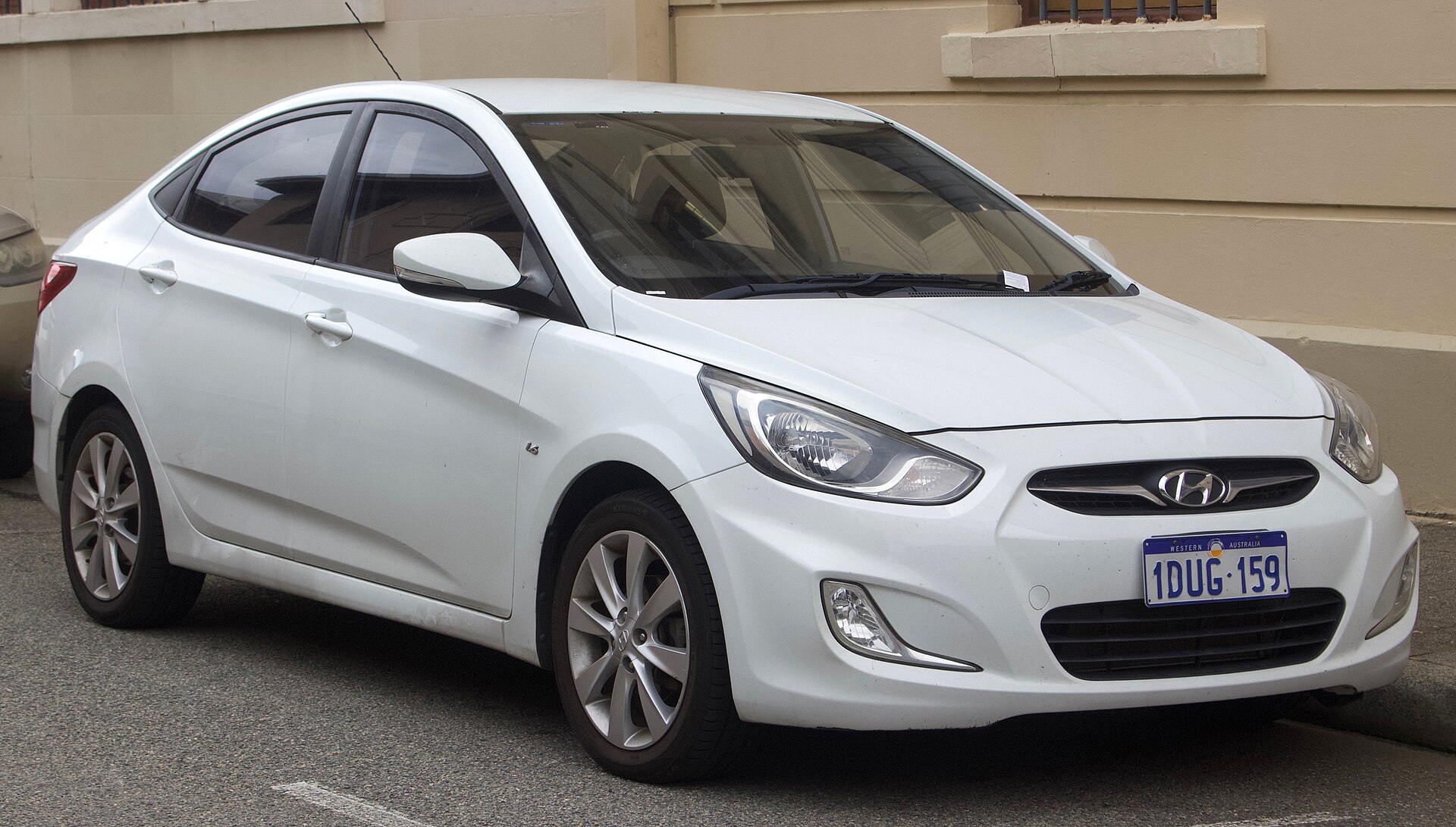
The fourth Accent was unveiled at the Beijing motor show in April 2010 and sold under different names around the world, with small differences in styling and engines between markets. A facelift after 2013 refreshed the exterior and interior and added new equipment; technical updates followed a year later.
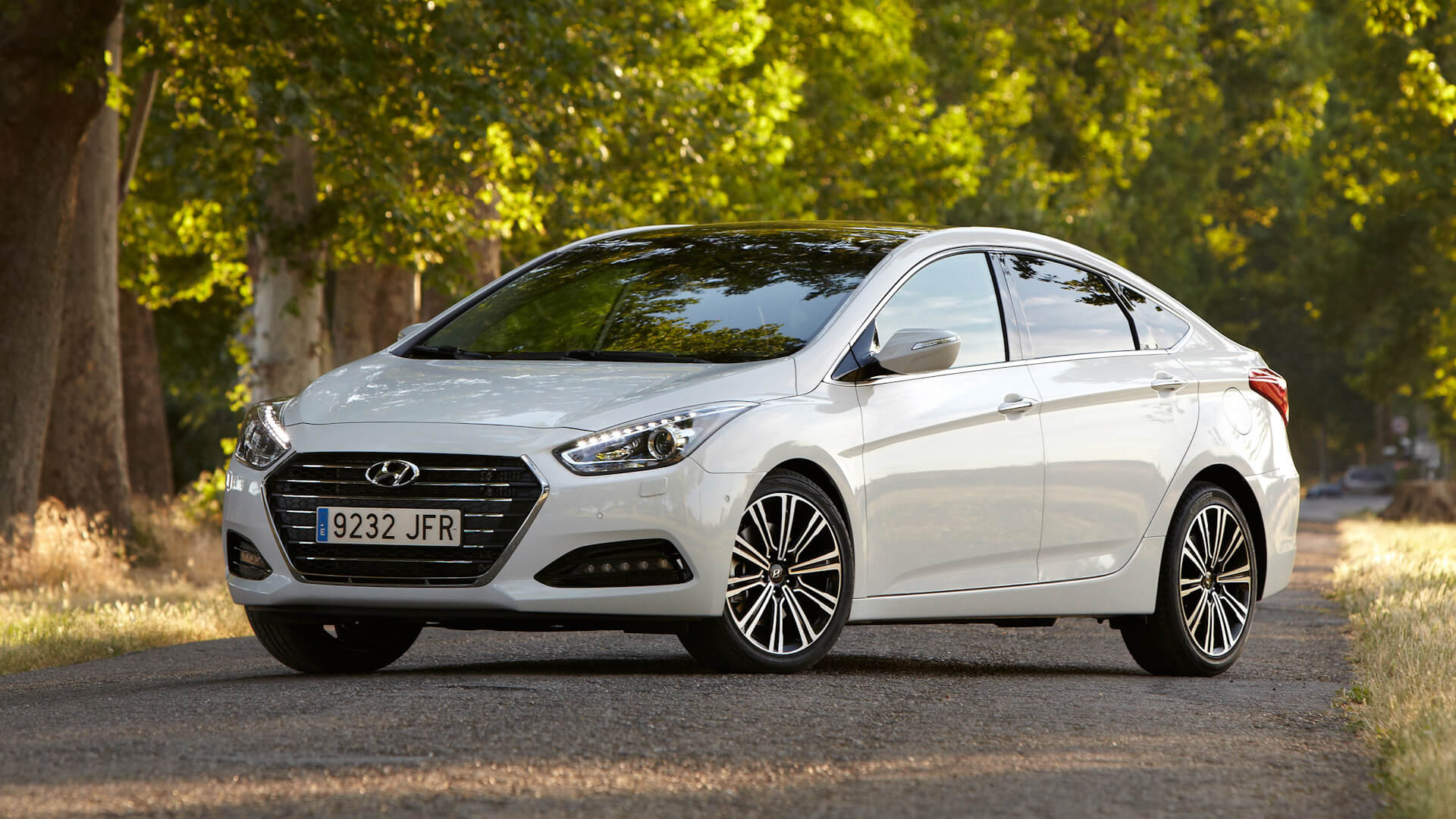
Styling followed Hyundai's "fluidic sculpture" theme, with swept-back headlights, L-shaped fog lamps and a large hexagonal grille. Ground clearance is 160 mm, and higher trims gained LED lighting after the facelift. Three adults in the back is a squeeze, but rear passengers get air ducts under the front seats. The sedan's boot holds 454 litres, and the rear seat folds 60/40.
The petrol engines came from the Gamma family:
- 1.4 litre, DOHC 16-valve with variable valve timing: 79 kW (107 PS), 135 Nm. With the five-speed manual, 0–100 km/h in 11.5 seconds and 190 km/h; with the four-speed automatic, 13.4 seconds and 170 km/h. Consumption with the manual: 7.6 l/100 km urban, 4.9 extra-urban, 5.9 combined.
- 1.6 litre: 90 kW (123 PS), 155 Nm, with six-speed manual and automatic gearboxes shared with the Elantra. 0–100 km/h in 10.3 seconds (manual) or 11.2 seconds (automatic); top speed 190/185 km/h; 6.1/6.5 l/100 km combined.
Suspension tuning was revised for a smoother ride. The front uses MacPherson struts with a stiffer anti-roll bar, the rear a torsion beam with coil springs. Ventilated front and solid rear discs were standard, and the rack-and-pinion steering received electric assistance.
Fifth generation (2016–2023)
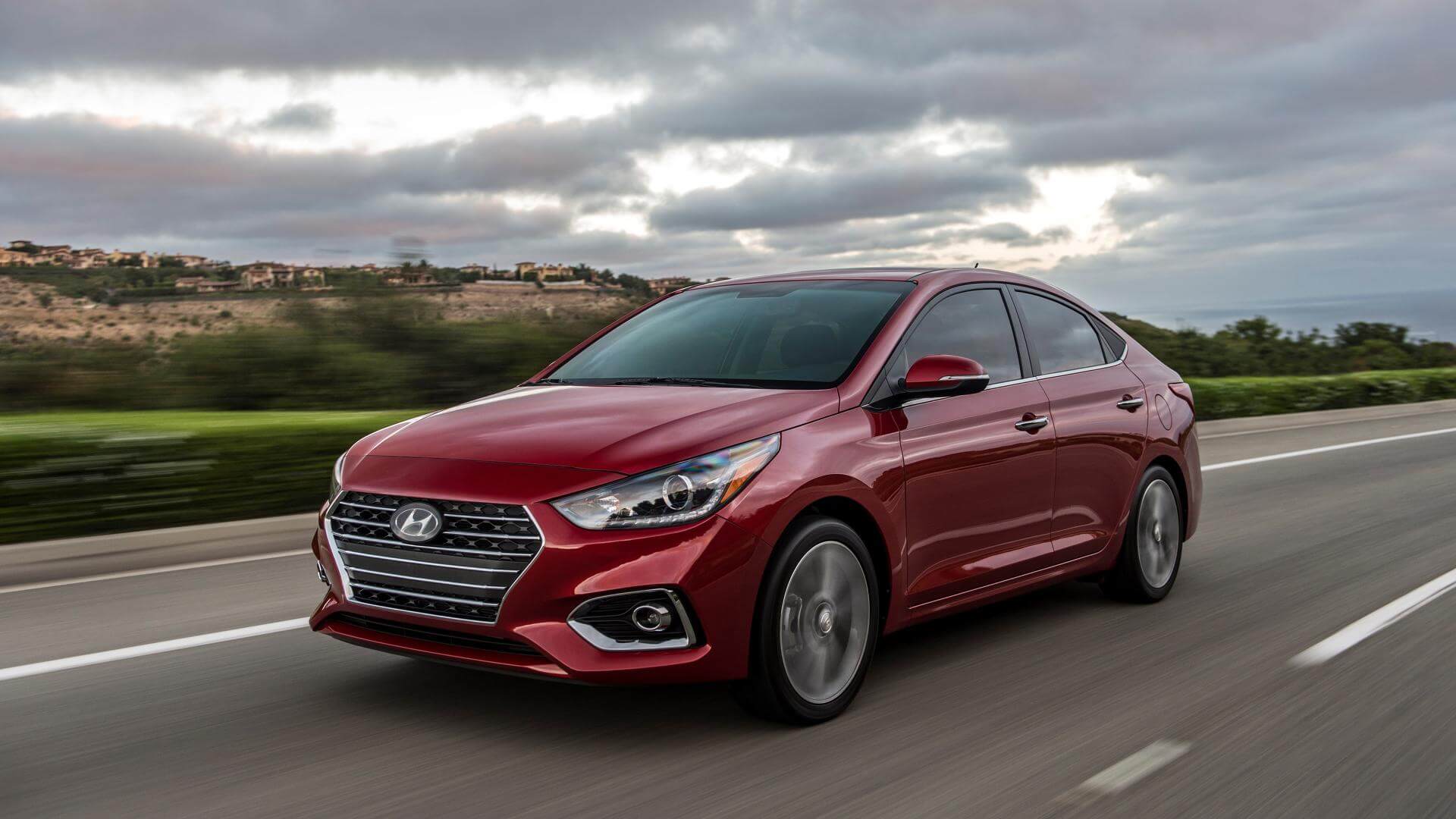
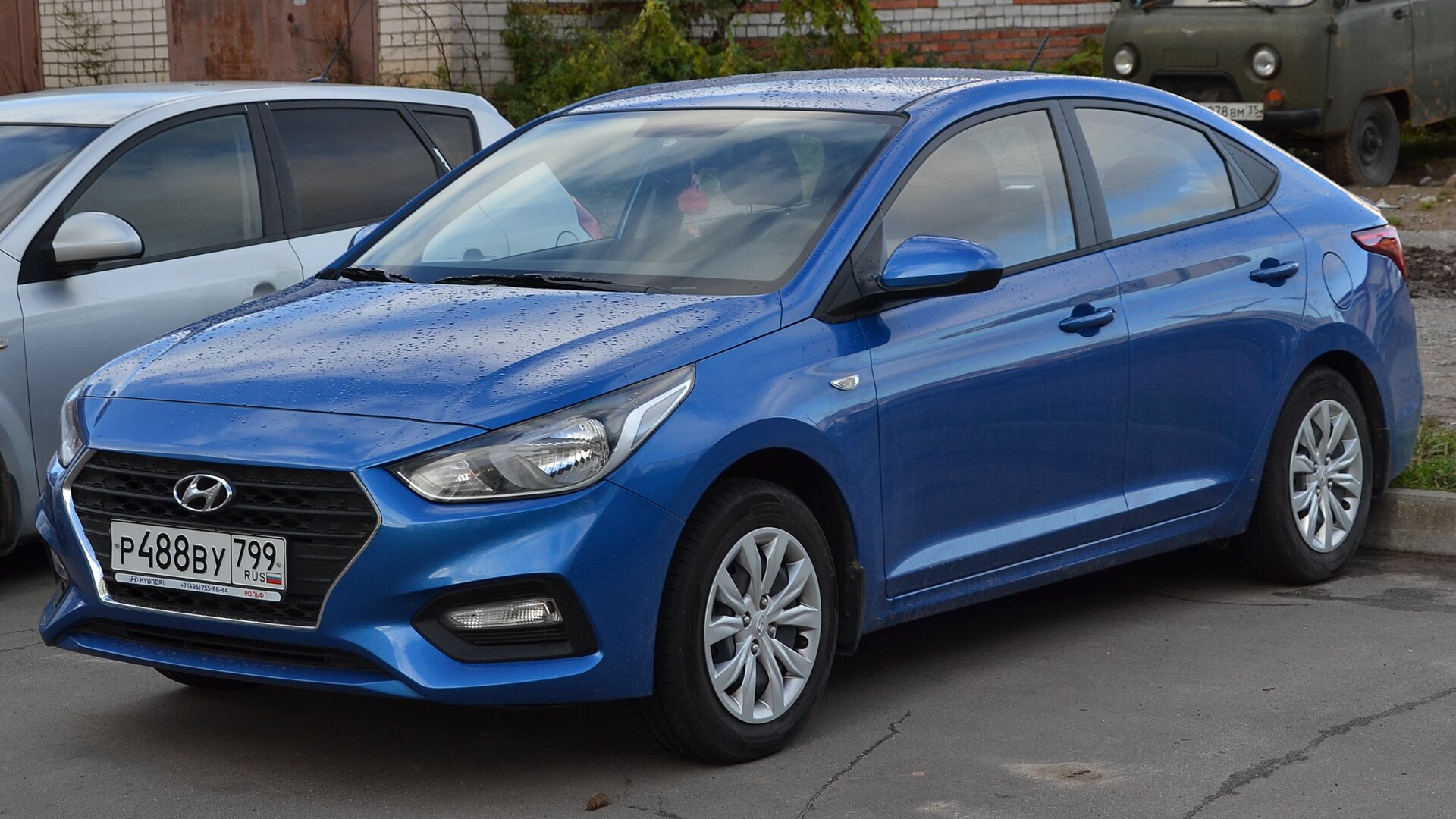
The fifth Accent, a sedan and a hatchback, was unveiled in Chengdu in 2016 and sold in North America and several other markets - in some of them again as the Solaris. It looks more grown-up than before, borrowing its design language from the Sonata and Elantra, with a trapezoidal lower air intake and strongly sculpted sides. Ground clearance is 160 mm, and a hands-free function opens the boot when the owner approaches with the key in a pocket.
An all-new dashboard is angled 6 degrees towards the driver, with a 7-inch touchscreen (5-inch on the base version) and a Supervision cluster on higher trims. Three average-sized adults fit in the rear, though there is no rear armrest. The boot holds 480 litres and grows more than two and a half times with the rear seats folded; every version has a full-size spare.
There are two petrol engines: a 1.4-litre Kappa with 74 kW (100 PS) and 132 Nm (top speed 185 km/h, 0–100 km/h in 12.2 seconds with the manual or 12.9 seconds with the automatic, 5.7 l/100 km), and a 1.6-litre Gamma with a chain-driven 16-valve head and dual variable valve timing, rated at 90 kW (123 PS) and 151 Nm (about 6.6 l/100 km). North American cars used only a 1.6-litre engine with 96 kW (130 PS). Both gearboxes have six speeds; the automatic is relaxed in normal mode but responds sharply in Sport mode.
The platform is an upgraded version of the previous one, with about 52% high-strength steel in the body. Suspension is MacPherson at the front and a torsion beam at the rear; disc brakes are fitted all round (ventilated at the front) with ABS and EBD, and the steering has electric assistance. Safety equipment, much of it standard on lower and middle trims, includes front airbags, ESP with hill-start assist, traction control, ISOFIX mounts, tyre-pressure monitoring, rear parking sensors and a rear camera with dynamic guidelines.
Engines and transmissions
| Generation | Petrol engines | Diesel | Power (kW / PS) | Gearboxes |
|---|---|---|---|---|
| 1st (1994–2000) | 1.3, 1.5 | - | 44–73 kW / 60–99 PS | 5-speed manual, 4-speed automatic |
| 2nd (1999–2005) | 1.3–1.6 | 1.5 turbodiesel | 55–77 kW / 75–105 PS (diesel 60 kW / 82 PS) | 5-speed manual, 4-speed automatic |
| 3rd (2005–2011) | 1.4, 1.6 | 1.5 turbodiesel | 71–82 kW / 97–112 PS (diesel 81 kW / 110 PS) | 5-speed manual, 4-speed automatic |
| 4th (2011–2017) | 1.4, 1.6 Gamma | - | 79–90 kW / 107–123 PS | 5- or 6-speed manual, 4- or 6-speed automatic |
| 5th (2016–2023) | 1.4 Kappa, 1.6 Gamma | - | 74–96 kW / 100–130 PS | 6-speed manual, 6-speed automatic |
Key specifications by generation
| Parameter | 2nd gen | 3rd gen | 4th gen | 5th gen |
|---|---|---|---|---|
| Ground clearance | 170 mm | 155 mm | 160 mm | 160 mm |
| Boot, sedan | 375 l | 388 l | 454 l | 480 l |
| 0–100 km/h | 10.5–14.2 s | 10.2–12.3 s (petrol) | 10.3–13.4 s | 12.2–12.9 s (1.4) |
| Top speed | 166–181 km/h | 176–190 km/h | 170–190 km/h | 185 km/h (1.4) |
| Combined consumption | 7.5–8.6 l/100 km | 4.6–7.0 l/100 km | 5.9–6.5 l/100 km | 5.7–6.6 l/100 km |
Strengths and weaknesses
Owners of the latest Accent like its looks, the soft and comfortable suspension, a practical, well-organised cabin that suits long trips, and the economy of both engines. Spare parts are affordable, and many jobs can be done at home. The automatic gearbox takes some getting used to but works well.
The common complaints are interior plastics that scratch easily, thin metal and factory paint that could be better, occasional glitches in the automatic climate-control mode and average sound insulation. Rivals include the Kia Rio, Toyota Yaris sedan, Honda City and Nissan Versa.
Image credits · Photos from Wikimedia Commons under free licences
- Hyundai Accent I (X3) · Photo: Vauxford / Wikimedia Commons, CC BY-SA 4.0
- Hyundai Accent II (LC) · Photo: OSX / Wikimedia Commons, Public domain
- Hyundai Accent III (MC) · Photo: OSX / Wikimedia Commons, Public domain
- Hyundai Accent IV (RB) · Photo: EurovisionNim / Wikimedia Commons, CC BY-SA 4.0
- Hyundai Accent V (HC) · Photo: Milhouse35 / Wikimedia Commons, CC BY-SA 4.0
- Hyundai Accent VI · Photo: © M 93 / Wikimedia Commons, CC BY-SA 3.0 de
Hyundai Accent in our rankings
- No. 56 of 912 · Longest-running car nameplates (32 years · top 7%)
- No. 46 of 345 · Cars with the most generations (6 generations · top 16%)
- No. 44 of 305 · Oldest car models still on sale (32 years · top 16%)
In production longer than 93% of ranked nameplates in the 1CARS catalog (No. 56 of 912).
FAQ
How many generations of the Hyundai Accent are there?
Six. The first appeared in 1994, followed by new generations in 1999, 2005, 2010–2011, 2016 and 2023 (BN7, also sold as the Verna).
Which engines does the Hyundai Accent use?
Mostly four-cylinder petrol engines from 1.3 to 1.6 litres, producing 44–96 kW (60–130 PS). The second and third generations were also available with a 1.5-litre turbodiesel of 60 kW (82 PS) and 81 kW (110 PS) respectively.
What is the fuel consumption of the Hyundai Accent?
It depends on the generation. The fifth-generation 1.4 uses about 5.7 l/100 km combined and the 1.6 about 6.6 l/100 km; the third-generation 1.5 diesel managed 4.6 l/100 km.
Is the Hyundai Accent the same car as the Hyundai Solaris and Verna?
They belong to the same family. The third generation was called Verna at home, and versions of the fourth and fifth were sold as the Solaris.
Data sources
Data checked by an editor against the sources below.