 Toyota MR2
All generations, specs and history
Published Sources (5) Report an error
By Sarah Whitmore, Senior Automotive Writer
- Built
- 1984–2007
- Generations
- 3 · AW11 to ZZW30
- Top power
- 180 kW (245 PS)
Timeline
MR2 generations
Click a generation for its own page


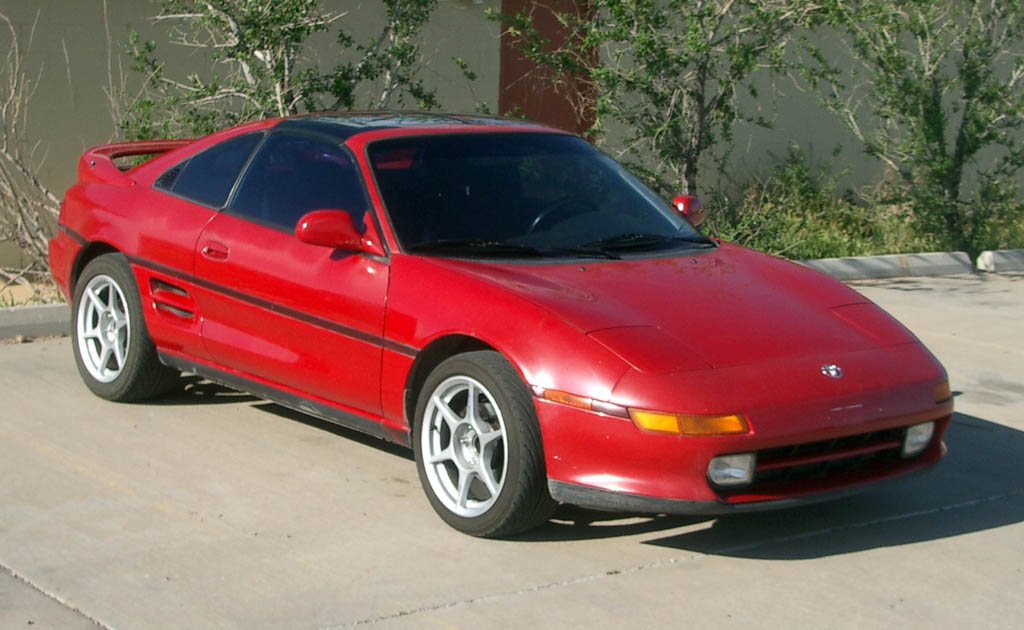
- MR2 AW11 1984–1989 · Coupe · 61–107 kW (83–145 PS)
- MR2 SW20 1989–1999 · Coupe · 97–180 kW (132–245 PS)
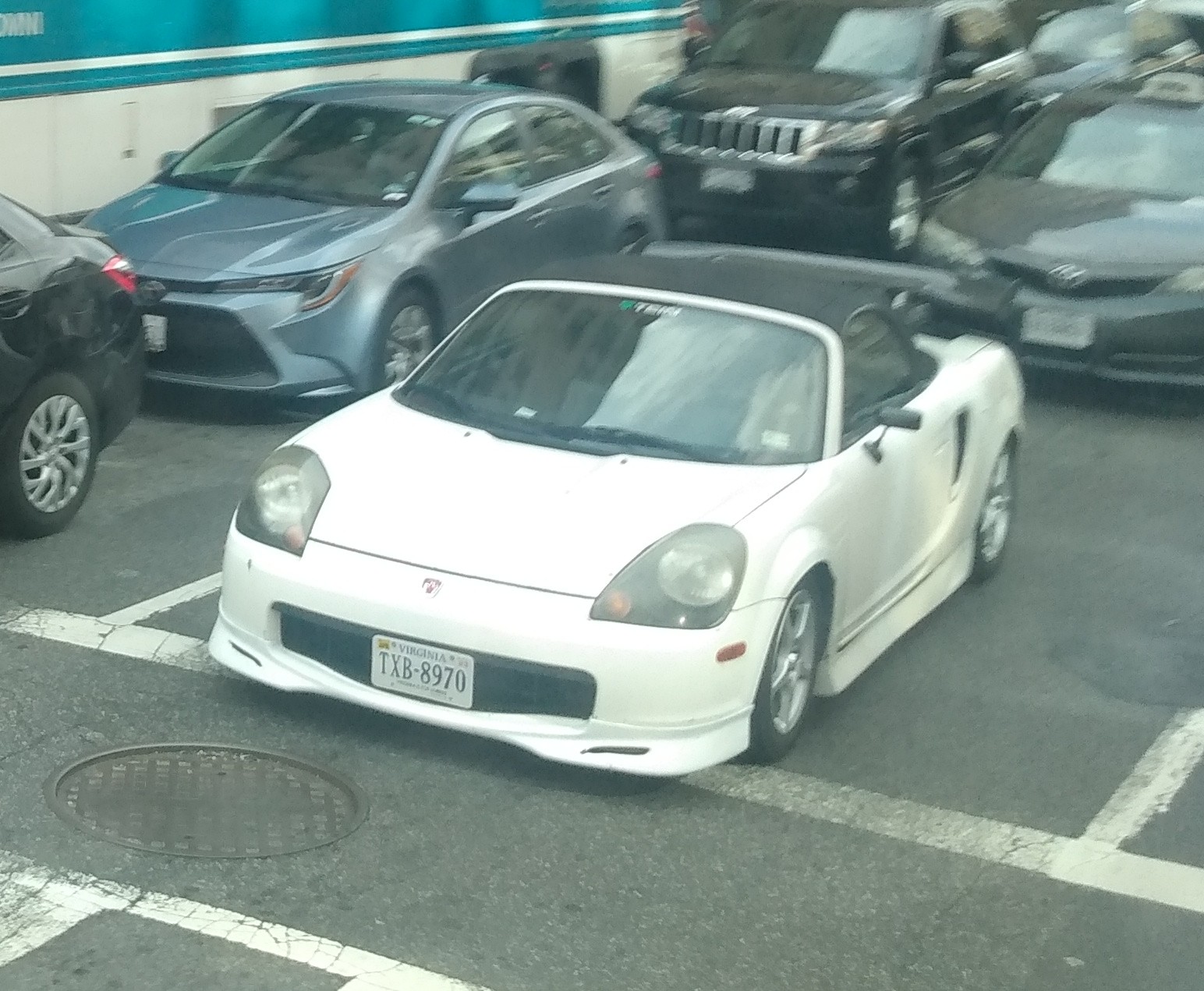
- MR2 ZZW30 1999–2007 · Roadster · 103 kW (140 PS)
Newest first · 3 generations since 1984
-
1999
-
1989
-
1984
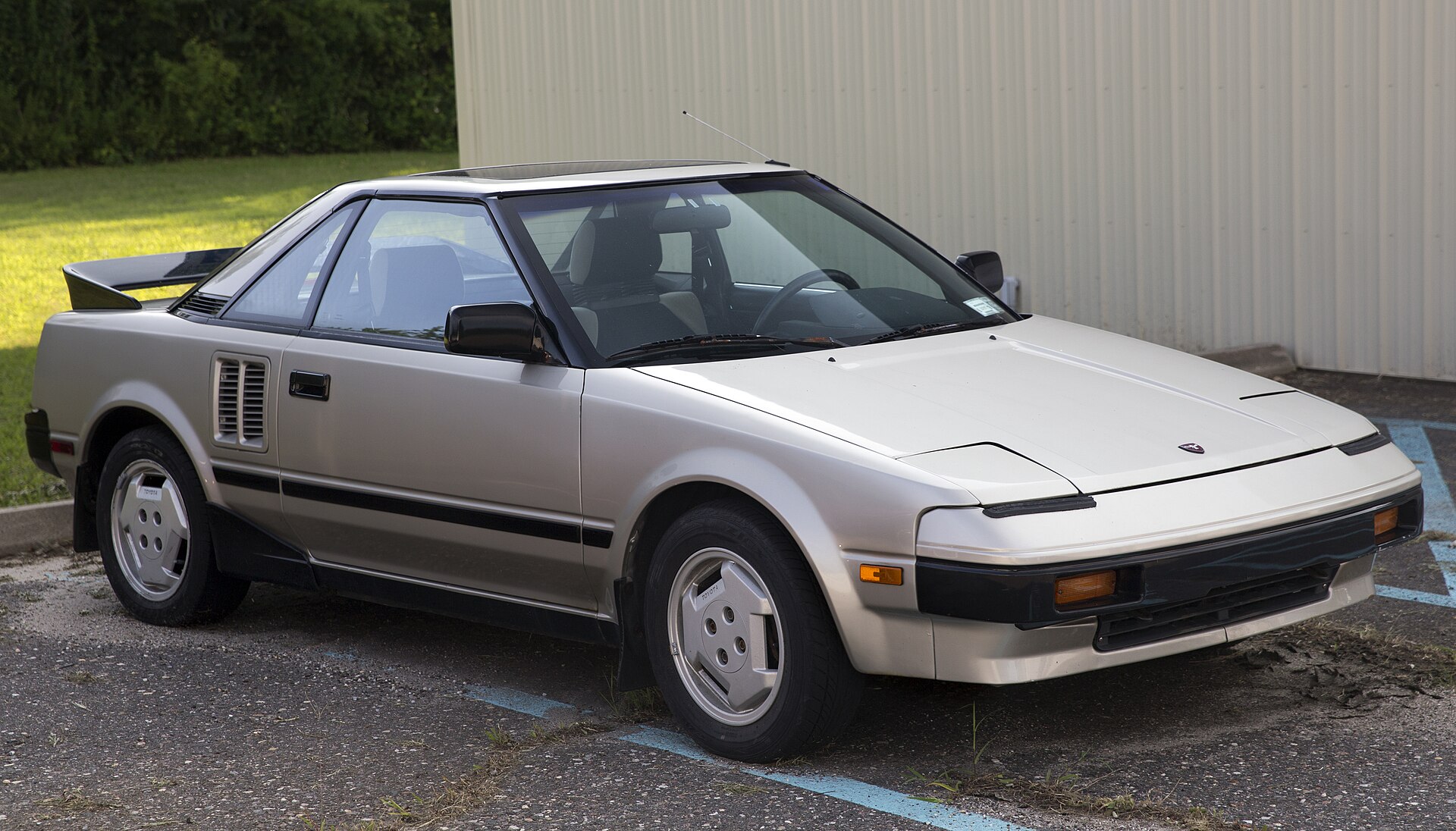
All generations by year: MR2 ZZW30 (1999–2007) · MR2 SW20 (1989–1999) · MR2 AW11 (1984–1989)
Which one is mine?
Pick the year of first registration to see which generation it is.
Check by VINWhich MR2 to choose
Our verdict · Sarah Whitmore
- For the lightest, simplest car: a naturally aspirated AW11 of 1984–1989 at about 950 kg.
- For performance: an SW20 Turbo from Rev 2 onwards, with the revised suspension and, from November 1993, 180 kW in Japan.
- For open-air driving and low running weight: the W30 MR-S or MR2 Spyder with the six-speed manual from 2002.
- For a front-engined alternative: Toyota's Supra of the same years, or set the MR2 against its rivals in our comparison tool.
Every Toyota is listed in the Toyota catalogue.
The Toyota MR2 is a two-seat sports car with its engine mounted behind the seats, built in three generations from 1984 to 2007. The first was Japan's first mass-produced mid-engined car, the second added a turbocharged version with up to 180 kW, and the third became a light open roadster sold as the MR-S in Japan and the MR2 Spyder in the United States. All three were built by Central Motors at Sagamihara.
In short
- W10 (AW11), 1984–1989: 1.6-litre 4A-GE twin-cam with 96 kW (130 PS), later supercharged; about 950 kg.
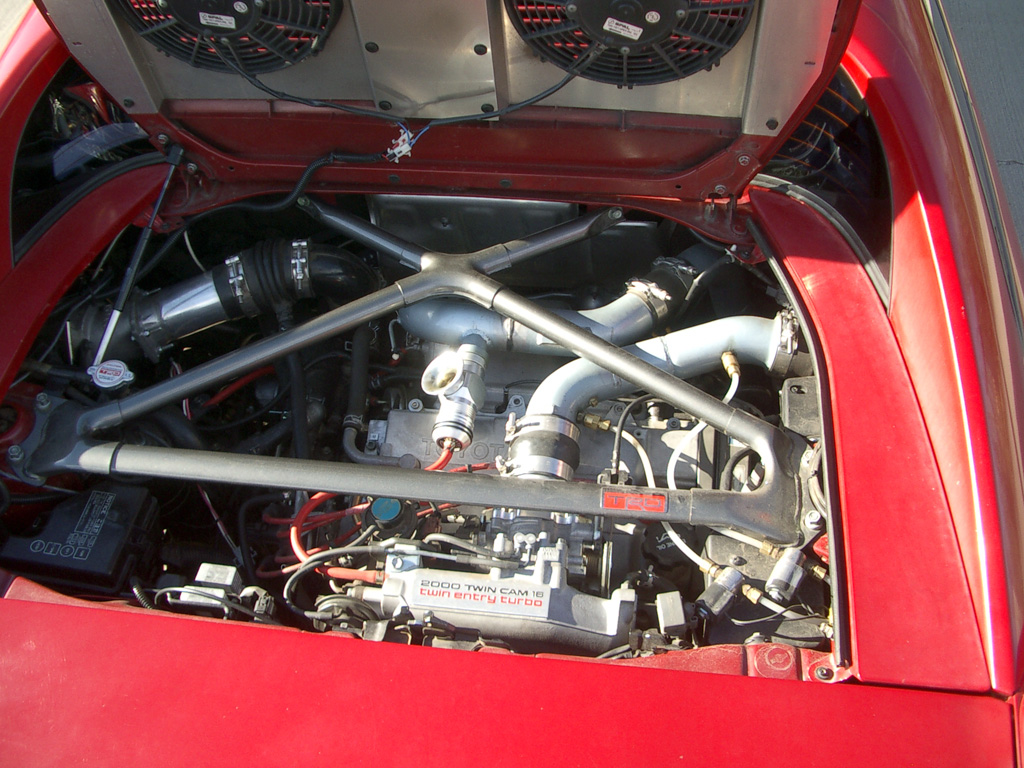
- W20 (SW20), 1989–1999: 2.0-litre engines, the 3S-GTE turbo with 165–180 kW (225–245 PS) in Japan; five revisions.
- W30 (ZZW30), 1999–2007: MR-S / MR2 Spyder / MR2 Roadster with a 1.8-litre 103 kW (140 PS), 996 kg.
- Japanese Car of the Year 1984–85; the name stands for "midship runabout two-seater".
Size at a glance
Toyota MR2 SW20
The Toyota MR2 ZZW30 is 295 mm shorter and 5 mm narrower than the Toyota MR2 SW20.
| Dimensions | Toyota MR2 ZZW30 | Toyota MR2 SW20 | Difference |
|---|---|---|---|
| Length | 3,885 mm153.0 in | 4,180 mm164.6 in | −295 mm−11.6 in |
| Width | 1,695 mm66.7 in | 1,700 mm66.9 in | −5 mm−0.2 in |
| Height | 1,240 mm48.8 in | 1,240 mm48.8 in | Same |
| Wheelbase | 2,450 mm96.5 in | 2,320 mm91.3 in | +130 mm+5.1 in |
| Boot | 90 L3.2 cu ft | 219 L7.7 cu ft | −129 L−4.6 cu ft |
Specs by version
Engines
| Version | Engine | Power | Gearbox | Drive | Production years |
|---|---|---|---|---|---|
| AW11 · 1984–1989 | |||||
| AW11 · 1500 S (3A-LU, AW10) | 1.5 l · 4 cyl · Petrol 3A-LU | 61 kW 83 PS82 hp | 5-sp Manual | Rear-wheel drive | 1984–1989 |
| AW11 · 1.6 (4A-GE, US) | 1.6 l · 4 cyl · Petrol 4A-GE | 84 kW 114 PS113 hp | - | Rear-wheel drive | - |
| AW11 · 1600 G (4A-GELU) | 1.6 l · 4 cyl · Petrol 4A-GELU | 96 kW 131 PS129 hp | 5-sp Manual | Rear-wheel drive | 1984–1989 |
| AW11 · 1600 G-Limited Supercharger (4A-GZE) | 1.6 l · 4 cyl · Petrol 4A-GZE | 107 kW 145 PS143 hp | - | Rear-wheel drive | 1986–1989 |
| SW20 · 1989–1999 | |||||
| SW20 · 2.2 (5S-FE, US) | 2.2 l · 4 cyl · Petrol 5S-FE | 97 kW 132 PS130 hp | - | Rear-wheel drive | - |
| SW20 · 2.0 G (3S-GE) | 2.0 l · 4 cyl · Petrol 3S-GE | 121 kW 165 PS162 hp | - | Rear-wheel drive | 1989–1993 |
| SW20 · 2.0 G-Limited (3S-GE, VVT-i) | 2.0 l · 4 cyl · Petrol 3S-GE | 147 kW 200 PS197 hp | Manual | Rear-wheel drive | 1997–1999 |
| SW20 · Turbo (3S-GTE, US) | 2.0 l · 4 cyl · Petrol 3S-GTE | 149 kW 203 PS200 hp | - | Rear-wheel drive | - |
| SW20 · 2.0 GT Turbo (3S-GTE) | 2.0 l · 4 cyl · Petrol 3S-GTE | 165 kW 224 PS221 hp | - | Rear-wheel drive | 1989–1993 |
| SW20 · 2.0 GT Turbo (3S-GTE, 245 PS) | 2.0 l · 4 cyl · Petrol 3S-GTE | 180 kW 245 PS241 hp | - | Rear-wheel drive | 1993–1999 |
| ZZW30 · 1999–2007 | |||||
| ZZW30 · 1.8 L 4 cyl Manual 5-spd · 2005 (EPA) | 1.8 l · 4 cyl 1,800 cc | - | 5-sp Manual | Rear-wheel drive | 2005 |
| ZZW30 · 1.8 L 4 cyl Manual 6-spd · 2005 (EPA) | 1.8 l · 4 cyl 1,800 cc | - | 6-sp Manual | Rear-wheel drive | 2005 |
| ZZW30 · 1.8 L 4 cyl Manual 5-spd · 2004 (EPA) | 1.8 l · 4 cyl 1,800 cc | - | 5-sp Manual | Rear-wheel drive | 2004 |
| ZZW30 · 1.8 L 4 cyl Manual 6-spd · 2004 (EPA) | 1.8 l · 4 cyl 1,800 cc | - | 6-sp Manual | Rear-wheel drive | 2004 |
| ZZW30 · 1.8 L 4 cyl Manual 5-spd · 2003 (EPA) | 1.8 l · 4 cyl 1,800 cc | - | 5-sp Manual | Rear-wheel drive | 2003 |
| ZZW30 · 1.8 L 4 cyl Manual 6-spd · 2003 (EPA) | 1.8 l · 4 cyl 1,800 cc | - | 6-sp Manual | Rear-wheel drive | 2003 |
| ZZW30 · 1.8 L 4 cyl Manual 5-spd · 2002 (EPA) | 1.8 l · 4 cyl 1,800 cc | - | 5-sp Manual | Rear-wheel drive | 2002 |
| ZZW30 · 1.8 L 4 cyl Manual 5-spd · 2001 (EPA) | 1.8 l · 4 cyl 1,800 cc | - | 5-sp Manual | Rear-wheel drive | 2001 |
| ZZW30 · 1.8 L 4 cyl Manual 5-spd · 2000 (EPA) | 1.8 l · 4 cyl 1,800 cc | - | 5-sp Manual | Front-wheel drive | 2000 |
| ZZW30 · 1.8 VVT-i (1ZZ-FE) manual | 1.8 l · 4 cyl · Petrol 1ZZ-FE | 103 kW 140 PS138 hp | Manual | Rear-wheel drive | 1999–2007 |
| ZZW30 · 1.8 VVT-i (1ZZ-FE) SMT | 1.8 l · 4 cyl · Petrol 1ZZ-FE | 103 kW 140 PS138 hp | 5-sp Automated manual | Rear-wheel drive | 2002–2007 |
Performance
Show all 9 versions
| Version | Fuel consumption |
|---|---|
| ZZW30 · 1999–2007 | |
| ZZW30 · 1.8 L 4 cyl Manual 5-spd · 2005 (EPA) | 9.4 l/100 km25.0 mpg US · 30.1 mpg UK |
| ZZW30 · 1.8 L 4 cyl Manual 6-spd · 2005 (EPA) | 9.0 l/100 km26.1 mpg US · 31.4 mpg UK |
| ZZW30 · 1.8 L 4 cyl Manual 5-spd · 2004 (EPA) | 9.4 l/100 km25.0 mpg US · 30.1 mpg UK |
| ZZW30 · 1.8 L 4 cyl Manual 6-spd · 2004 (EPA) | 9.0 l/100 km26.1 mpg US · 31.4 mpg UK |
| ZZW30 · 1.8 L 4 cyl Manual 5-spd · 2003 (EPA) | 9.4 l/100 km25.0 mpg US · 30.1 mpg UK |
| ZZW30 · 1.8 L 4 cyl Manual 6-spd · 2003 (EPA) | 9.4 l/100 km25.0 mpg US · 30.1 mpg UK |
| ZZW30 · 1.8 L 4 cyl Manual 5-spd · 2002 (EPA) | 9.8 l/100 km24.0 mpg US · 28.8 mpg UK |
| ZZW30 · 1.8 L 4 cyl Manual 5-spd · 2001 (EPA) | 9.8 l/100 km24.0 mpg US · 28.8 mpg UK |
| ZZW30 · 1.8 L 4 cyl Manual 5-spd · 2000 (EPA) | 9.8 l/100 km24.0 mpg US · 28.8 mpg UK |
Dimensions and weight
Show all 8 versions
| Version | Kerb weight |
|---|---|
| AW11 · 1984–1989 | |
| AW11 · 1500 S (3A-LU, AW10) | 920 kg2,028 lb |
| AW11 · 1.6 (4A-GE, US) | 1,066 kg2,350 lb |
| AW11 · 1600 G (4A-GELU) | 950 kg2,094 lb |
| AW11 · 1600 G-Limited Supercharger (4A-GZE) | 1,131 kg2,493 lb |
| SW20 · 1989–1999 | |
| SW20 · 2.0 G (3S-GE) | 1,160 kg2,557 lb |
| SW20 · 2.0 G-Limited (3S-GE, VVT-i) | 1,220 kg2,690 lb |
| SW20 · 2.0 GT Turbo (3S-GTE) | 1,240 kg2,734 lb |
| ZZW30 · 1999–2007 | |
| ZZW30 · 1.8 VVT-i (1ZZ-FE) manual | 996 kg2,196 lb |
Verified Manufacturer and type-approval data from our catalog · Sources and methodology
Toyota MR2 at a glance
| Parameter | Value |
|---|---|
| Generations | W10 (1984–1989), W20 (1989–1999), W30 (1999–2007) |
| Layout | transverse mid-engine, rear-wheel drive, two seats |
| Plant | Central Motors, Sagamihara (Kanagawa), Japan |
| Bodies | coupé (W10, W20); roadster (W30) |
| Engines | 1.5–2.2 l four-cylinder, naturally aspirated, supercharged or turbocharged |
| Power | 61–180 kW (83–245 PS) |
| Gearboxes | 5- and 6-speed manual, 4-speed automatic, 5-speed SMT (W30) |
| Weight | 920 kg (AW10) to 1,270 kg (SW20 GT-S) |
| Names | MR in France and Belgium; MR-S, MR2 Spyder, MR2 Roadster for the W30 |
| Awards | Japanese Car of the Year 1984–85; Car and Driver Ten Best 1986 and 1987 |
MR2 generations compared
| Generation | Code | On sale in Japan | Engines | Power | Weight |
|---|---|---|---|---|---|
| First | AW10 / AW11 | 8 June 1984 – 1989 | 1.5 3A-LU, 1.6 4A-GE, 1.6 4A-GZE supercharged | 61–107 kW (83–145 PS) | 920–1,131 kg |
| Second | SW20 | 17 October 1989 – 1999 | 2.0 3S-GE, 2.0 3S-GTE turbo, 2.2 5S-FE (US) | 97–180 kW | 1,160–1,270 kg |
| Third | ZZW30 | 12 October 1999 – 2007 | 1.8 1ZZ-FE | 103 kW (140 PS) | 960–1,010 kg |

How the MR2 began
Toyota started thinking about a car that would be fun to drive and use little fuel in 1976, but the oil crisis held the project back. Wikipedia dates the start of design work under engineer Akio Yoshida to 1979; Toyota UK says the idea was revived in 1980. A prototype called SA-X followed in 1981, and the SV-3 concept appeared at the Tokyo Motor Show in October 1983. Lotus engineer Roger Becker helped Toyota with the suspension and handling; Toyota's ties with Lotus at that time also produced the Lotus Excel, which used Toyota parts.
The name MR2 stands for "mid-ship runabout 2-seater" or "mid-engine, rear-wheel-drive, 2-seater". In France and Belgium the car was sold as the MR, because "MR2" read aloud in French sounds like a swear word.
First generation W10 (1984–1989)
The AW11 went on sale in Japan on 8 June 1984 and reached the United Kingdom about six months later. Its 1.6-litre 4A-GE twin-cam, shared with the Corolla, gave 96 kW (130 PS) in Japan at launch and later 88 kW (120 PS), 91 kW (124 PS) in Europe with no catalytic converter, 85 kW (116 PS) with one, and 84 kW (112 hp) in the United States. A Japan-only AW10 had a 1.5-litre 3A-LU with 61 kW (83 PS). For the naturally aspirated car Toyota UK quotes 8.2 seconds from 0 to 60 mph and 200 km/h (124 mph) flat out, with a weight split of 44:56.
In August 1986 a supercharged 4A-GZE with 107 kW (145 PS) and 186 Nm was added in Japan; the United States got it for 1988. It reached 100 km/h in 6.5 to 7.0 seconds but weighed up to 1,131 kg, against 950 kg for the lightest AW11 sold in Japan. The car was voted Japan Car of the Year for 1984–85 and was on Car and Driver's Ten Best list in 1986 and 1987. A Group S rally car, the 222D, was developed in 1985 but never raced after Group S was cancelled. First-generation production is quoted at 163,845 (Autoweek) or 166,104 (Hagerty).

Second generation W20 (1989–1999)
The SW20 arrived in October 1989. It was 245 mm longer and 30 mm wider than the first car, with an 80 mm longer wheelbase, and 159 to 181 kg heavier. Japanese buyers chose between the 2.0-litre 3S-GE with 121 kW (165 PS) and the 3S-GTE turbo with 165 kW (225 PS); the US Turbo had 149 kW (200 hp) and 271 Nm, the US base car a 2.2-litre 5S-FE with 97 kW (130 hp). The UK, the second-largest export market, also had a 2.0 base model with 89 kW (119 bhp). The US Turbo reached 60 mph in 6.1 seconds.
| Revision | Date | Main changes |
|---|---|---|
| Rev 1 | 1989 | launch |
| Rev 2 | January 1992 | revised suspension, 15-inch wheels with wider rear tyres, bigger brakes, viscous LSD on the Turbo |
| Rev 3 | November 1993 | Japanese 3S-GTE raised to 180 kW (245 PS), 3S-GE to up to 132 kW (180 PS), passenger airbag; US sales end in 1995 |
| Rev 4 | June 1996 | indicators in the front wings |
| Rev 5 | 1998–1999 | clear indicators, adjustable rear spoiler, 3S-GE with 147 kW (200 PS) in Japan |
The 1992 changes answered complaints about sudden oversteer at the limit. An SW20 won the GT300 class of the JGTC, Japan's GT championship, in 1998 and 1999, and Toyota Technocraft built 35 TRD2000GT conversions. Classic & Sports Car gives 130,732 second-generation cars.

Third generation W30: MR-S and MR2 Spyder (1999–2007)
The third MR2 was an open two-seater, sold from 12 October 1999 in Japan as the MR-S, from March 2000 in the United States as the MR2 Spyder and in Europe as the MR2 Roadster. Every version used the 1,794 cc 1ZZ-FE with 103 kW (140 PS) at 6,400 rpm and 171 Nm. Wikipedia lists 996 kg with the manual gearbox, and Toyota UK a weight from 960 kg, less than the 977 kg it gives for the first-generation car. It reached 100 km/h in 6.8 to 8.7 seconds depending on the gearbox. There was no boot at the back: Wikipedia lists an 11-litre space at the front and 42 litres behind the seats.
The SMT, an automated sequential gearbox without a clutch pedal, arrived in 2001 according to Toyota UK (2002 according to Wikipedia), and a six-speed manual and 16-inch wheels came with the 2002 facelift. An optional Torsen limited-slip differential followed in 2003. The catalogue also lists this generation as a separate model, MR2 Spyder.
| Year | US sales |
|---|---|
| 2000 | 7,233 |
| 2001 | 6,750 |
| 2002 | 5,109 |
| 2003 | 3,249 |
| 2004 | 2,800 |
| 2005 | 780 |
US sales totalled 27,941 and ended after the 2005 model year; production ended in July 2007. Limited editions included the V-Edition (1,000 cars), the TF300 for the UK (300 cars) and the Zagato-bodied VM180 in Japan.

Engines of all MR2 generations
| Engine | Generation | Market | Power | Torque |
|---|---|---|---|---|
| 3A-LU 1.5 | AW10 | Japan | 61 kW (83 PS) | - |
| 4A-GE 1.6 | AW11 | Japan (launch; later 88 kW) | 96 kW (130 PS) | - |
| 4A-GE 1.6 | AW11 | United States | 84 kW (112 hp) | - |
| 4A-GZE 1.6 supercharged | AW11 | Japan | 107 kW (145 PS) | 186 Nm |
| 3S-GE 2.0 | SW20 | Japan | 121–147 kW (165–200 PS) | - |
| 3S-GTE 2.0 turbo | SW20 | Japan | 165–180 kW (225–245 PS) | - |
| 3S-GTE 2.0 turbo | SW20 | United States | 149 kW (200 hp) | 271 Nm |
| 5S-FE 2.2 | SW20 | United States | 97–101 kW (130–135 hp) | - |
| 1ZZ-FE 1.8 | ZZW30 | all markets | 103 kW (140 PS) | 171 Nm |
The turbo car sold in Japan from 1993 had 88 percent more power than the first 1.6-litre MR2 of 1984, while weighing about 300 kg more (1,240–1,270 kg against 950 kg). Our power-to-weight calculator shows what such ratios mean on the road.

Photo gallery

Toyota MR2 evolution in numbers
Did you know?
- The Toyota MR2 ran for 23 years, from 1984 to 2007, over 3 generations in our catalog.
- The longest-running generation is the MR2 SW20 (1989–1999): 10 years.
- The biggest jump in power came with the MR2 SW20: up to 180 kW (245 PS), 73 kW more than the MR2 AW11.
- The most powerful Toyota MR2 is not the newest: the MR2 SW20 (1989–1999) offered up to 180 kW (245 PS), the MR2 ZZW30 up to 103 kW (140 PS).
Most powerful version, kW
Figures from the 1cars catalog: power is the strongest version of each generation; generations without the figure are left out.
Toyota MR2: first vs latest generation
| Spec | MR2 AW11 | MR2 ZZW30 | Change |
|---|---|---|---|
| Years | 1984–1989 | 1999–2007 | 15 years apart |
| Most powerful version | 107 kW (145 PS) | 103 kW (140 PS) | −4 kW (−4%) |
| Lightest kerb weight | 920 kg | 996 kg | +76 kg |
Oldest and newest generation in the 1cars catalog. Power is the strongest version of each; other rows are shown only when both generations have the figure.
Toyota MR2 in our rankings
- No. 4 of 15 · Most economical convertibles and roadsters (9.0 l/100 km)
- No. 5 of 79 · Lightest coupes (920 kg)
- No. 5 of 30 · Smallest convertibles and roadsters (3,885 mm)
- No. 5 of 24 · Lightest convertibles and roadsters (996 kg)
- No. 25 of 420 · Smallest cars (3,885 mm · top 6%)
- No. 16 of 304 · Lightest cars (920 kg · top 6%)
Shorter than 94% of ranked cars in the 1CARS catalog (No. 25 of 420).
FAQ
What does MR2 stand for?
"Mid-ship runabout 2-seater", also explained as "mid-engine, rear-wheel-drive, 2-seater".
How many generations of the MR2 are there?
Three: the W10 (1984–1989), the W20 (1989–1999) and the W30 roadster (1999–2007), sold as MR-S, MR2 Spyder or MR2 Roadster.
Which MR2 has a turbo?
The second-generation SW20 with the 3S-GTE: 165 kW (225 PS) in Japan at launch, 180 kW (245 PS) from 1993, and 149 kW (200 hp) in the United States.
What engine is in the MR2 Spyder?
The 1.8-litre 1ZZ-FE with 103 kW (140 PS) and 171 Nm, driving the rear wheels through a five- or six-speed manual or the SMT.
When did Toyota stop making the MR2?
Production of the third generation ended in July 2007; US sales had stopped after the 2005 model year.
Data sources
Data checked by an editor against the sources below.
- Wikipedia - Toyota MR2
- Jdmbuysell - Mr2
- US EPA fueleconomy.gov - 20508.shtml
- US EPA fueleconomy.gov - 20509.shtml
- US EPA fueleconomy.gov - 19389.shtml