 Lotus Seven
All generations, specs and history
Published Sources (1) Report an error
By Felix Hartmann, Automotive Technology & EV Contributor
- Built
- 1957–1973
- Generations
- 4
Timeline
Seven generations
Click a generation for its own page
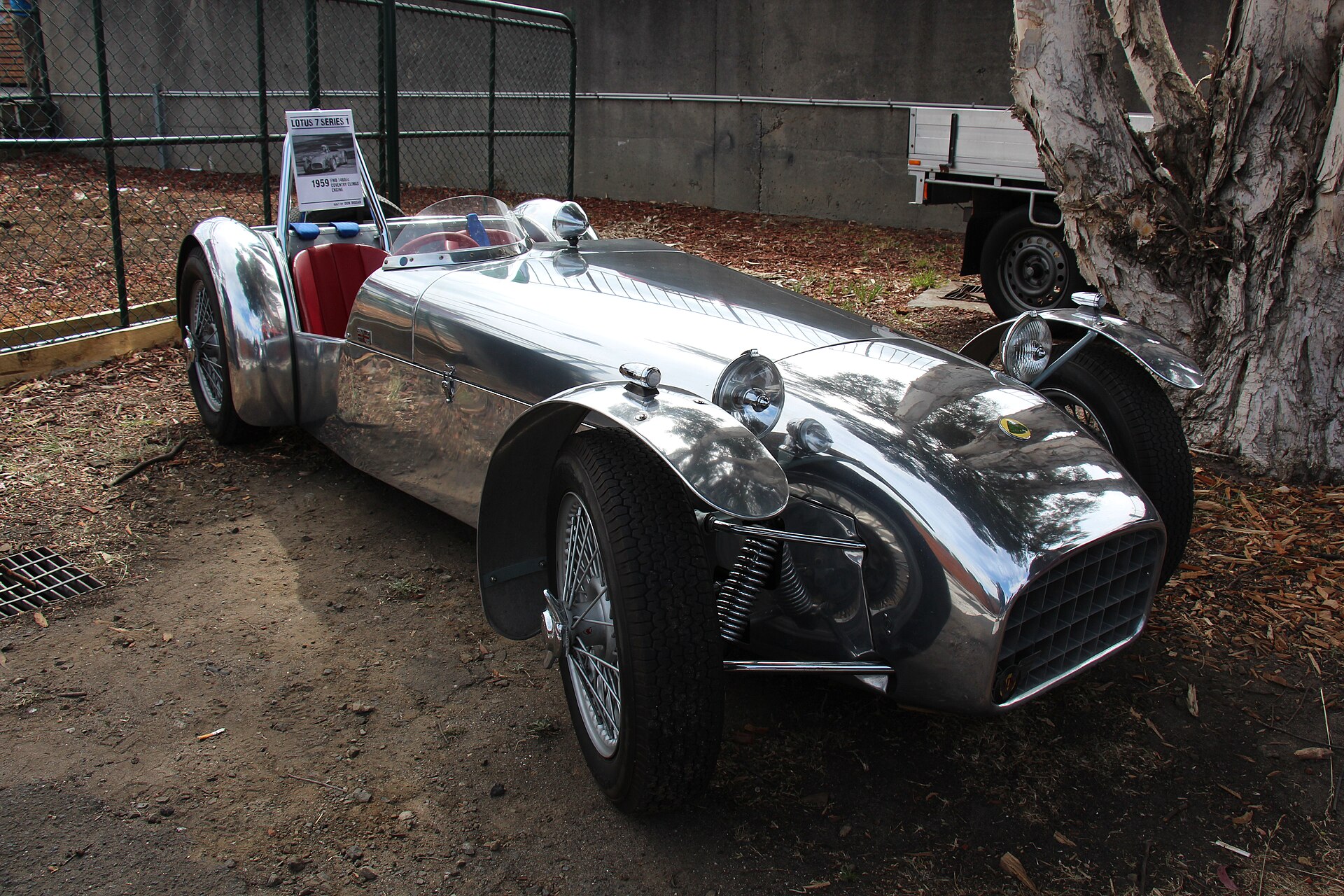
- Series 1 1957–1960 · Roadster
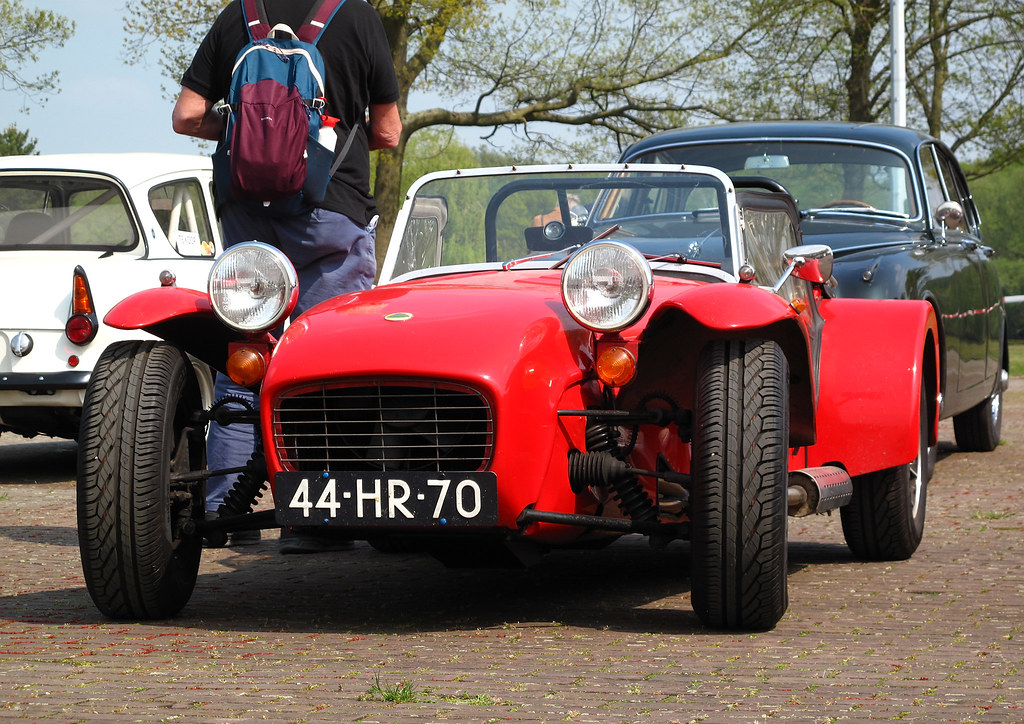
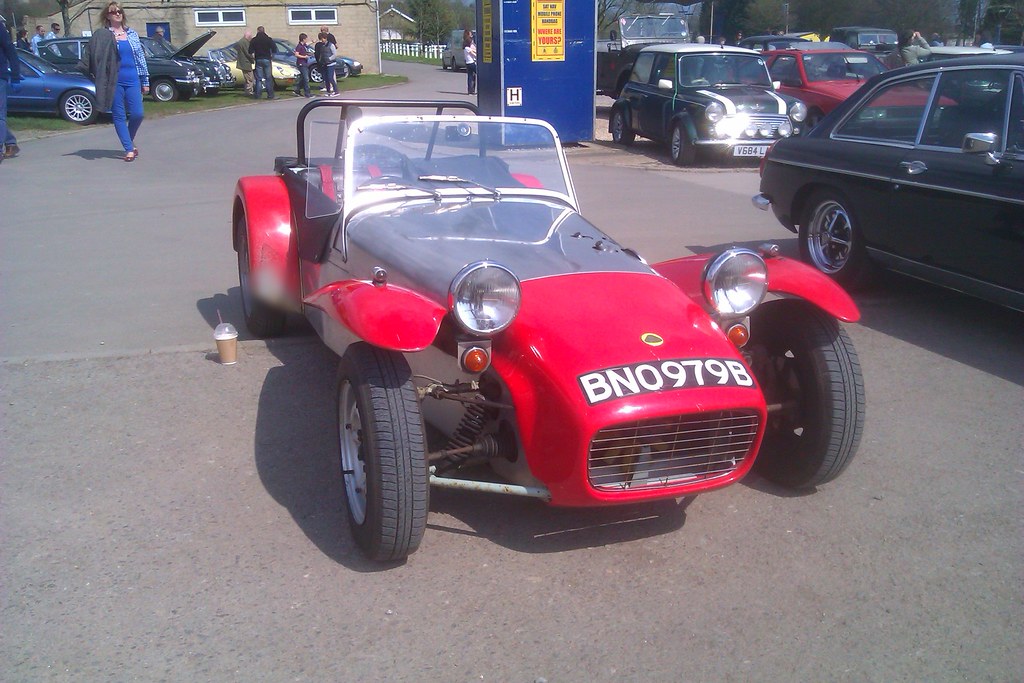
- Series 2 1960–1968 · Roadster
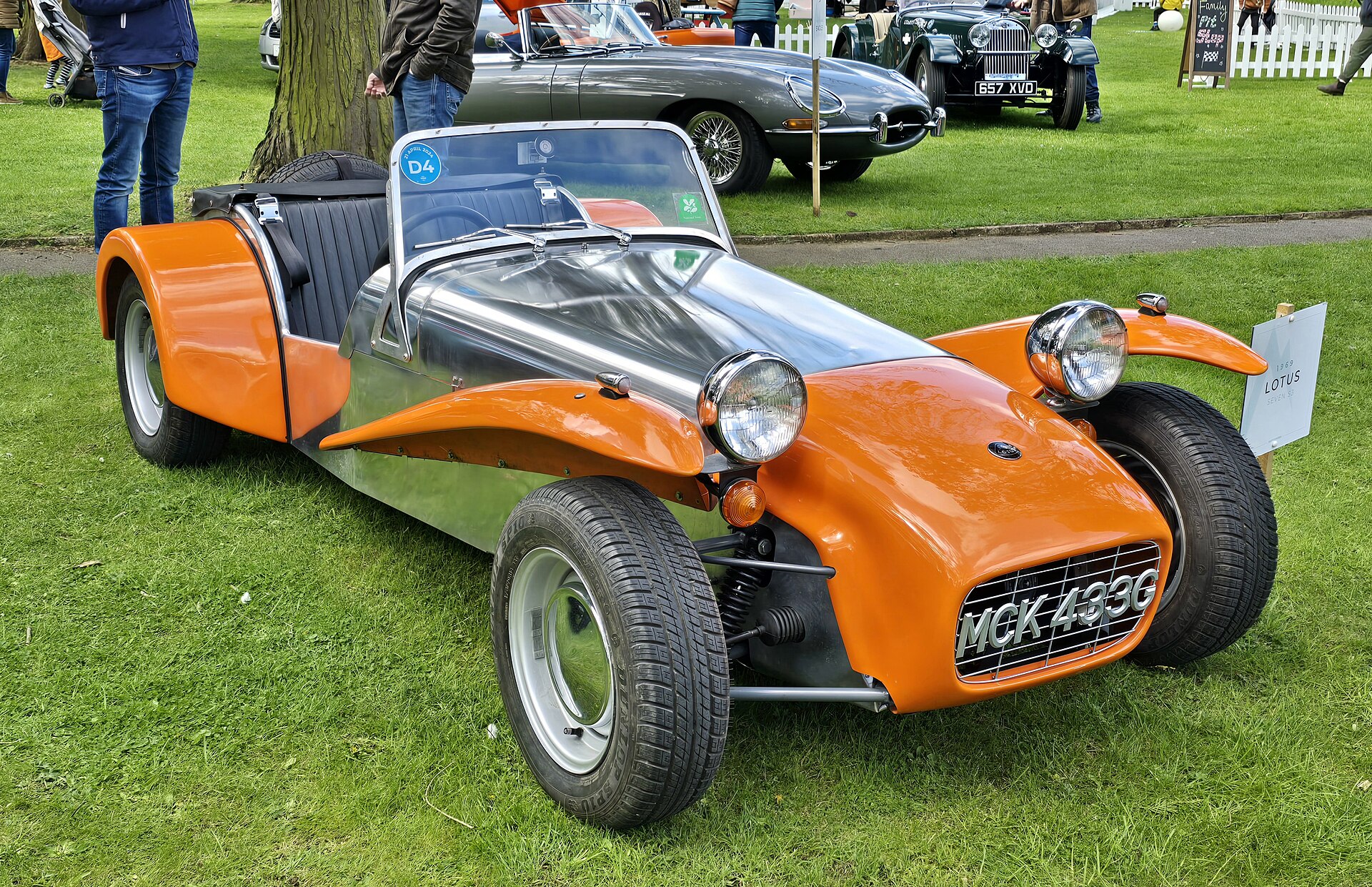
- Series 3 1968–1970 · Roadster
- Series 4 1970–1973 · Roadster
Newest first · 4 generations since 1957
-
1970
-
1968
-
1960
-
1957
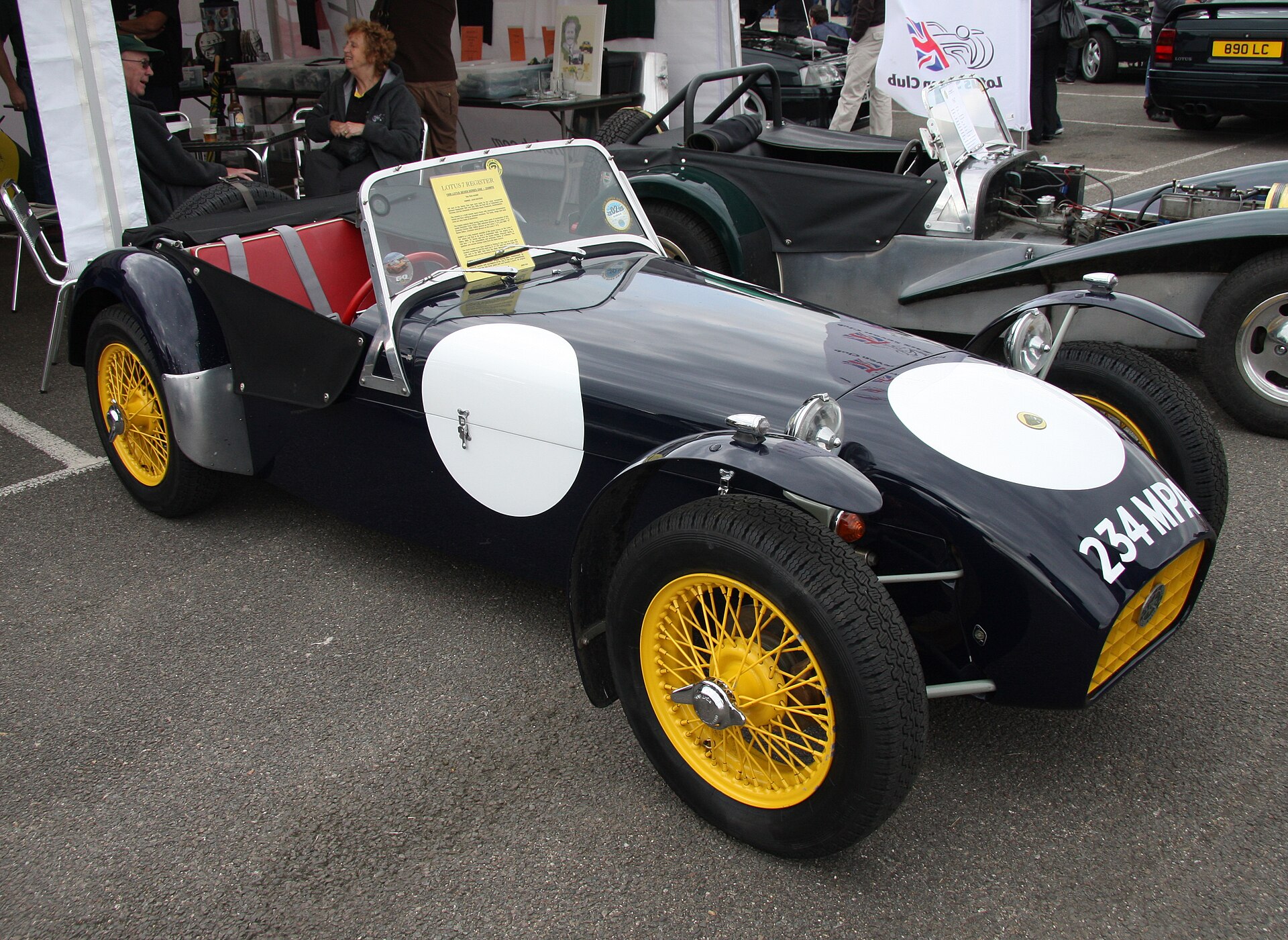


All generations by year: Series 4 (1970–1973) · Series 3 (1968–1970) · Series 2 (1960–1968) · Series 1 (1957–1960)
Which one is mine?
Pick the year of first registration to see which generation it is.
- Series 4 1970–1973
- Series 3 1968–1970
- Series 2 1960–1968
- Series 1 1957–1960
The Lotus Seven is the light, open two-seater that Lotus built from 1957 to 1973. Designed by Colin Chapman around the idea of performance through low weight and simplicity, it had a tubular spaceframe, flat aluminium panels, cycle wings and almost no comfort features. Most cars were sold as kits. When Lotus stopped making it, the rights passed to Caterham Cars, which has built the car as the Caterham Seven ever since - making the basic design one of the longest-lived in motoring.
In short
- Built 1957–1973 in Hornsey, Cheshunt and, from 1966, Hethel; more than 2,500 cars in four series, plus licence production in Argentina and New Zealand.
- Multi-tube steel spaceframe with stressed aluminium panels; early cars weighed about 500 kg.
- Engines from Ford, BMC, Coventry Climax, Cosworth and Lotus: from 27 kW (36 bhp) in the first Ford sidevalve cars to 78 kW (105 bhp) in the Super Seven 1500.
- Rights sold to Caterham Cars in 1973; the car is still built as the Caterham Seven.
Lotus Seven at a glance
| Specification | Lotus Seven |
|---|---|
| Production | 1957–1973 (Lotus); licence production in Argentina 1970–1975 and New Zealand until 1979 |
| Cars built | more than 2,500 (Lotus); 1,310 Series 2 |
| Series | S1 (1957), S2 (1960), S3 (1968), S4 (1970) |
| Body | open two-seater, aluminium panels, aluminium or fibreglass nose; S4 fibreglass body |
| Chassis | multi-tube steel spaceframe with stressed aluminium panels |
| Engines | Ford sidevalve, BMC A-Series, Coventry Climax FWA, Ford Kent, Cosworth, Lotus Twin Cam |
| Power | 27 kW (36 bhp) to 78 kW (105 bhp) in standard road versions |
| Weight | about 500 kg (early cars) |
| Predecessor / successor | Lotus Mark VI / Caterham Seven |
The Seven was the entry-level Lotus, sold alongside the Elite and later the Elan. All models are listed in the Lotus catalogue, and the story of the company is told in our history of Lotus.
History and development
The Seven replaced the Lotus Mark VI in 1957 as the most affordable car in the range. Its name was taken from an abandoned Lotus project, a Riley-engined single-seater. The Seven quickly became popular as a road-legal car that could also be used in clubman racing. Production followed Lotus's own moves: the first cars were assembled in Hornsey in north London, later cars in Cheshunt, and from 1966 at the new factory in Hethel, Norfolk.
Most Sevens in the United Kingdom were supplied as kits. Under the purchase tax system of the time, a car sold in parts avoided the tax charged on a complete car; Lotus was not even allowed to include assembly instructions. When the United Kingdom joined the European Economic Community on 1 January 1973 and introduced VAT, this advantage disappeared, and Lotus decided to leave the kit-car business behind.
Lotus sold the rights to the Seven to its remaining agents: Caterham Cars in England and Steel Brothers Limited in New Zealand. Caterham soon ran out of Series 4 kits and introduced its own version based on the Series 3, which it has built ever since as the Caterham Seven.
Chassis and construction
The Seven is built around a multi-tube steel spaceframe with high sides for stiffness. Flat aluminium panels, especially the floor, are riveted to the frame and help to triangulate it - a stressed-skin construction that avoided the cost of curved panels. The Series 1 frame was close to Lotus's racing practice; from the Series 2 the frame was simplified to cut cost.
At the front are double wishbones with coil springs; the upper arm doubles as part of the anti-roll bar to save weight. At the rear is a live axle located by trailing arms and a triangular centre member, using parts from Ford, Standard and Austin. Steering is by rack and pinion.
Early cars weighed about 500 kg, and the weight rose only slightly over the years. The centre of gravity is very low - the highest point of the car is about 900 mm above the road - and the weight distribution is close to 50:50, although the car is more front-heavy than modern mid-engined sports cars.
Aerodynamics and driving character
The open body with separate wings is the Seven's weak point at speed. Wikipedia gives a drag coefficient of 0.65 to 0.75 depending on the bodywork. Above about 110 km/h the nose produces more lift than downforce. The details matter: the full-length "clamshell" front wings fitted to many cars add both drag and lift, while small cycle wings that turn with the front wheels and a low aero screen instead of a full windscreen improve the top speed.
On the other hand, the low weight makes the Seven quick in the conditions it was designed for: club circuits, hill climbs and twisting roads. The live rear axle adds unsprung weight compared with independent suspension, but the car's light weight, direct steering and low seating position give the driver an immediate feel for the road that became the reason for its long life. According to Wikipedia, the Cosworth-engined cars of the early 1960s reached 0–60 mph in just over seven seconds.
Series 1 to Series 4
| Series | Years | Main engines | Key features |
|---|---|---|---|
| S1 | 1957–about 1960 | Ford sidevalve 1,172 cc, 27 kW (36 bhp); BMC A-Series; Coventry Climax FWA | aluminium nose; drum brakes on early cars, front discs later |
| S2 / Super Seven | 1960–1968 | Ford Kent 1,340 and 1,499 cc; Cosworth 1,340 cc 63 kW (85 bhp); Super Seven 1500 78 kW (105 bhp) | simpler frame, fibreglass nose; 1,310 built |
| S3 | 1968–about 1970 | Ford Kent crossflow 1,599 cc; Lotus Twin Cam in the Twin Cam SS | Ford Cortina rear axle; 13 Twin Cam SS built |
| S4 | 1970–1973 | Ford Kent 1,298 and 1,599 cc; Lotus Twin Cam | larger, squarer fibreglass body; heater as standard |
The Series 2 used a Standard Companion rear axle that caused problems; the Series 3 solved this with a rear axle from the Ford Cortina. The Super Seven Twin Cam SS was shown at the Earls Court motor show in 1969. The Series 4 was the most different: its fibreglass body replaced most of the aluminium panels, and a heater was fitted as standard.

Engines and performance
The Seven was designed to take whatever engine the customer could afford. The first cars used the 1,172 cc Ford sidevalve engine; BMC A-Series and Coventry Climax FWA engines were also available. With the Series 2 came the Ford Kent engines from the Consul Classic, and with them the Cosworth-tuned Super Seven. Later cars used the 1,599 cc crossflow Kent or the Lotus Twin Cam from the Elan.
In 1958 the magazine The Motor tested a Seven with a tuned 1,172 cc Ford engine and a close-ratio gearbox. It recorded a top speed of 129 km/h and fuel consumption of 9.1 litres per 100 km. Its acceleration was remarkable for such a small engine, thanks to the low weight. A race-prepared Seven was timed at 204 km/h at the 1962 Natal Grand Prix in South Africa.

Production outside the United Kingdom
From 1970 to 1975 Lotus Argentina SA built about 51 Sevens under licence in Martínez, near Buenos Aires; they were sold as Lotuses, not as replicas. In New Zealand, Steel Brothers Limited of Christchurch assembled Series 4 cars from Lotus kits until March 1979, when the last of 95 kits was used. A modernised, wider Series 4 called the Super 907, with the Lotus 907 twin-cam engine, was planned for the United States in 1978, but only one car was finished.
The Prisoner
The Seven's most famous screen role is in the opening titles of the television series The Prisoner (1967–1968). Patrick McGoohan drives a Series 2 Lotus Seven with the registration KAR 120C. The car seen in the final episode, "Fall Out", was a different one, driven by Caterham's managing director Graham Nearn.
Legacy
Few car designs have lasted as long as the Seven. Caterham has kept the basic layout in production for more than five decades, and more than 160 companies have offered replicas or cars inspired by it - often called "Locost" or "clubman" cars - from Westfield and Birkin to Superformance and the Caterham-licensed Chinkara. In the Netherlands, Donkervoort developed its own S7 and S8 models with Ford engines and later the D8 with Audi powertrains. Caterham has challenged many of these copies in court.
The Seven also captures Colin Chapman's engineering philosophy in its purest form: performance through low weight and simplicity. The same thinking returned decades later in cars such as the Lotus Elise.


Lotus Seven evolution in numbers
Did you know?
- The Lotus Seven ran for 16 years, from 1957 to 1973, over 4 generations in our catalog.
- The longest-running generation is the Series 2 (1960–1968): 8 years.
Image credits · Photos from Wikimedia Commons under free licences
- Lotus Series 1 · Photo: Brian Snelson / Wikimedia Commons, CC BY 2.0
- Lotus Series 2 · Photo: Classic Morris Man / Flickr, CC BY 2.0
- Lotus Series 3 · Photo: Calreyn88 / Wikimedia Commons, CC BY-SA 4.0
- Lotus Series 4 · Photo: Rutger van der Maar / Flickr, CC BY 2.0
Lotus Seven in our rankings
- No. 227 of 912 · Longest-running car nameplates (16 years · top 27%)
- No. 89 of 345 · Cars with the most generations (4 generations · top 41%)
In production longer than 73% of ranked nameplates in the 1CARS catalog (No. 227 of 912).
FAQ
When was the Lotus Seven built?
Lotus built it from 1957 to 1973; Caterham Cars has built it as the Caterham Seven since then.
How much does a Lotus Seven weigh?
Early cars weighed about 500 kg; the weight increased only slightly in later series.
Why were most Lotus Sevens sold as kits?
In the United Kingdom a car sold in kit form avoided purchase tax. The advantage ended when VAT was introduced in 1973.
Which car appears in The Prisoner?
A Series 2 Lotus Seven registered KAR 120C, driven by Patrick McGoohan in the opening titles.
Data sources
Data checked by an editor against the sources below.