 Lotus 340R
Specs, engines and history
Published Sources (1) Report an error
By Felix Hartmann, Automotive Technology & EV Contributor
- Built
- 2000
- Top power
- 139 kW (189 PS)
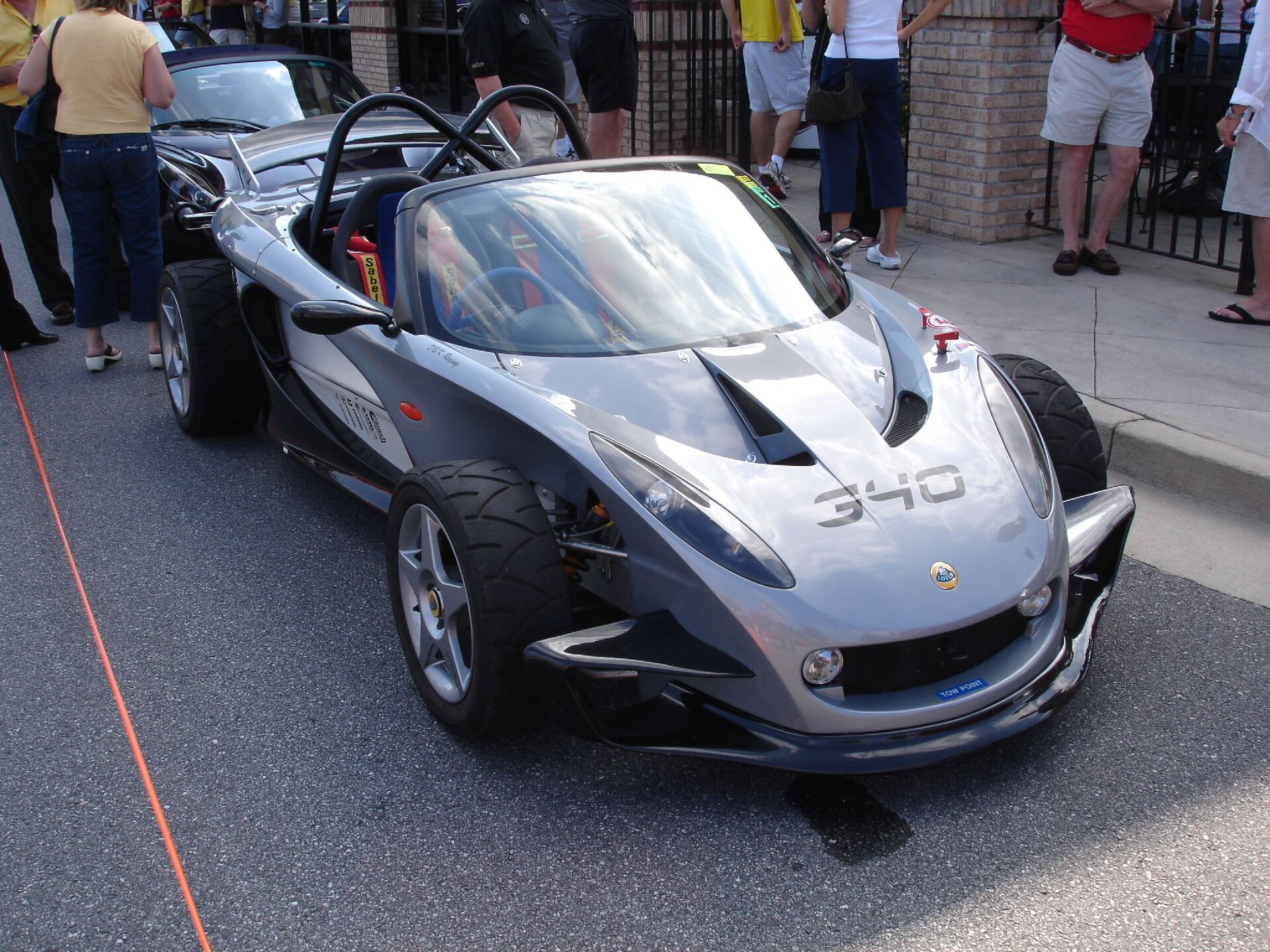
The Lotus 340R is a limited-edition roadster built at Hethel in 2000 as a special version of the Elise. It has no roof and no doors, a body made specially for it and a Rover K-series engine in its most powerful VHPD form. Only 340 cars were made, and all of them were sold before production began. The 340R first appeared as a concept at the British International Motor Show in 1998.
In short
- Concept at the 1998 British International Motor Show; production in 2000 at Hethel, England; 340 cars, all pre-sold.
- 1.8-litre Rover K-series VHPD engine: 132 kW (179 PS) at 7,800 rpm and 172 Nm; 139 kW (190 PS) with optional Lotus parts.
- Kerb weight of 701 kg and a five-speed manual gearbox.
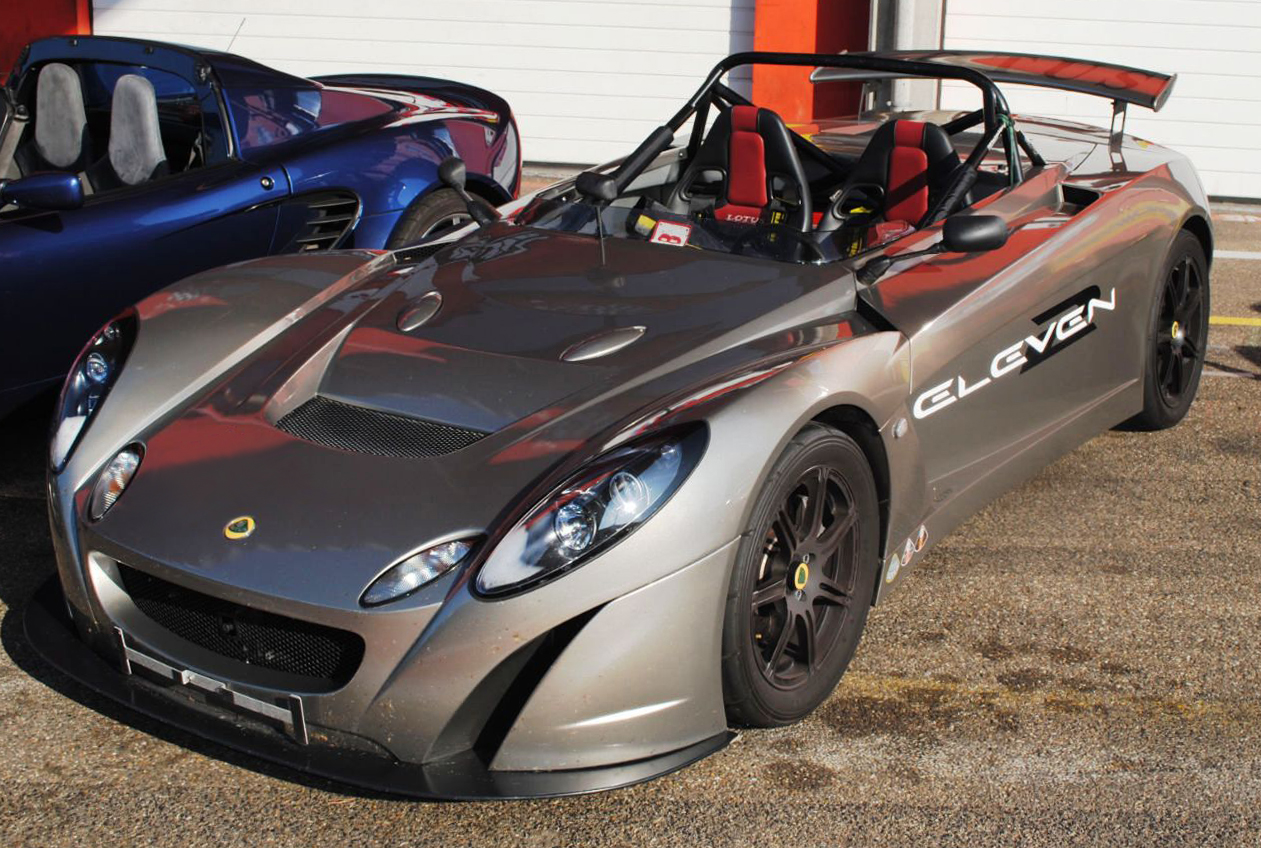
- Designed by Russell Carr; successor: the Lotus 2-Eleven.
Lotus 340R at a glance
| Specification | Lotus 340R |
|---|---|
| Production | 2000, Hethel (England) |
| Cars built | 340 |
| Designer | Russell Carr |
| Body | open two-seater, no roof or doors |
| Layout | mid-engine, rear-wheel drive |
| Engine | 1.8-litre Rover K-series I4, VHPD |
| Power | 132 kW (179 PS) at 7,800 rpm; 139 kW (190 PS) with options |
| Torque | 172 Nm at 6,750 rpm; 189 Nm with options |
| Gearbox | five-speed Rover PG1 manual |
| Kerb weight | 701 kg |
| Successor | Lotus 2-Eleven |
The 340R is a special edition of the Lotus Elise. All Lotus models are in the Lotus catalogue.
From concept to production
The idea came from Lotus chief executive Chris Knight, who wanted a track-oriented road car in the spirit of the original Lotus Seven. According to Autozine, it was developed in a brainstorm with Autocar magazine and chief designer Russell Carr. The company showed the 340R as a concept car at the British International Motor Show in 1998. In 2000 it built exactly 340 cars at its Hethel factory in Norfolk, and every one of them was sold before manufacture began.
Technically the 340R is closely related to the Elise of the time. It uses the Elise's extruded aluminium tub with double-wishbone suspension and unassisted steering, and stiffer springs and better dampers taken from the Elise Sport 190. Most cars were painted silver and black, although some were delivered in other factory colours. Autozine reports that about one third of the cars were sold in Britain, the rest in mainland Europe and Japan.

Body without roof or doors
The most striking feature of the 340R is its body. The designers gave it a custom-built shell with no roof and no doors, which makes the car look very different from the Elise on which it is based. The fibreglass bodywork covers only part of the car: the four wheels stand exposed, small winglets sit at the nose, the side panels are made of frosted translucent acrylic, and the engine, exhaust and gearbox are partly visible at the rear. There are no windows and no luggage space.
The car is about 3,610 mm long and has a kerb weight of only 701 kg.

Engine and performance
The engine is a 1.8-litre Rover K-series four-cylinder in its VHPD (Very High Power Derivative) version. In standard form it produces 132 kW (179 PS) at 7,800 rpm and 172 Nm at 6,750 rpm. With optional parts from the factory accessories range, the output rises to 139 kW (190 PS) at 7,500 rpm and 189 Nm at 5,600 rpm. Power goes to the rear wheels through a five-speed Rover PG1 manual gearbox.
| Figure | Lotus 340R (standard engine) |
|---|---|
| Power | 132 kW (179 PS) at 7,800 rpm |
| Torque | 172 Nm at 6,750 rpm |
| 0–160 km/h | 10.7 s |
| Top speed | 214 km/h |
| Kerb weight | 701 kg |
| Power-to-weight | about 188 kW per tonne |
The same engine tune was used in the first-generation Exige, which also produced 132 kW (179 PS) at 7,800 rpm. In the 340R, however, it has much less weight to move, which gives a power-to-weight ratio of about 188 kW per tonne.

The name and the weight
The name comes from the concept's target power-to-weight ratio of about 254 kW (340 bhp) per tonne. The road car did not reach it: Jalopnik calculates about 199 kW (267 bhp) per ton for the production car, and Autozine says that safety, emissions and noise rules lowered the figure. Weights differ between sources - Wikipedia gives a kerb weight of 701 kg, Autozine 675 kg - but all agree that the 340R was clearly lighter than an Elise of the same period.
What testers said
In Autocar's handling test of 2000, the 340R lapped faster than every rival except the Caterham R500, including the Lamborghini Diablo GT and the Porsche 996 Turbo, according to Autozine. Its grip came from the Yokohama semi-slick tyres, large brakes and the downforce of its front and rear wings. Road & Track wrote that its power-to-weight ratio "approaches that of the Ferrari 360 Modena".
The 340R and the Series 1 Exige compared
The 340R and the first Exige were built at Hethel at almost the same time, and both use the VHPD version of the K-series engine. They took opposite approaches. The Exige added a fixed hard top and a rear wing, while the 340R removed the roof and doors.
| Specification | Lotus 340R (2000) | Lotus Exige Series 1 (2000–2001) |
|---|---|---|
| Body | open, no roof or doors | fixed hard top, rear wing |
| Engine | 1.8 K-series VHPD | 1.8 K-series VHPD |
| Power | 132 kW (179 PS) | 132 kW (179 PS) |
| Gearbox | five-speed manual | five-speed manual |
| Top speed | 214 km/h | 219 km/h |
| Cars built | 340 | 604 |
Tyres developed with Yokohama
For the 340R the company worked with Yokohama to develop a special tyre, the A038R. Its successor, the A048, was later used on the Series 2 Elise 111R and the Exige S2 240.
Legacy
The 340R showed how far the company could take the Elise idea of light weight and simplicity. It has no roof or doors and weighs 701 kg. Wikipedia lists the Lotus 2-Eleven as its successor. More about the brand is in our history of Lotus.
Lotus 340R in our rankings
- No. 51 of 79 · Most powerful convertibles and roadsters (139 kW · top 65%)
- No. 120 of 170 · Most powerful cars of the 2000s (139 kW · top 71%)
- No. 604 of 859 · Most powerful cars (139 kW · top 71%)
- No. 90 of 109 · Most powerful British cars (139 kW · top 83%)
More powerful than 35% of ranked convertibles and roadsters in the 1CARS catalog (No. 51 of 79).
FAQ
How many Lotus 340Rs were built?
340, all built in 2000 at Hethel and all sold before production started.
What engine does the Lotus 340R have?
A 1.8-litre Rover K-series VHPD four-cylinder with 132 kW (179 PS), or 139 kW (190 PS) with optional Lotus parts.
Is the Lotus 340R based on the Elise?
Yes. It is a limited special edition of the Elise with its own body without roof or doors.
What replaced the Lotus 340R?
Wikipedia lists the Lotus 2-Eleven as its successor.
How fast is the Lotus 340R?
Wikipedia gives a top speed of 214 km/h and 10.7 seconds from 0 to 160 km/h with the standard engine.
Data sources
Data checked by an editor against the sources below.