 Lotus Elan +2
Specs, engines and history
Published Sources (2) Report an error
By Felix Hartmann, Automotive Technology & EV Contributor
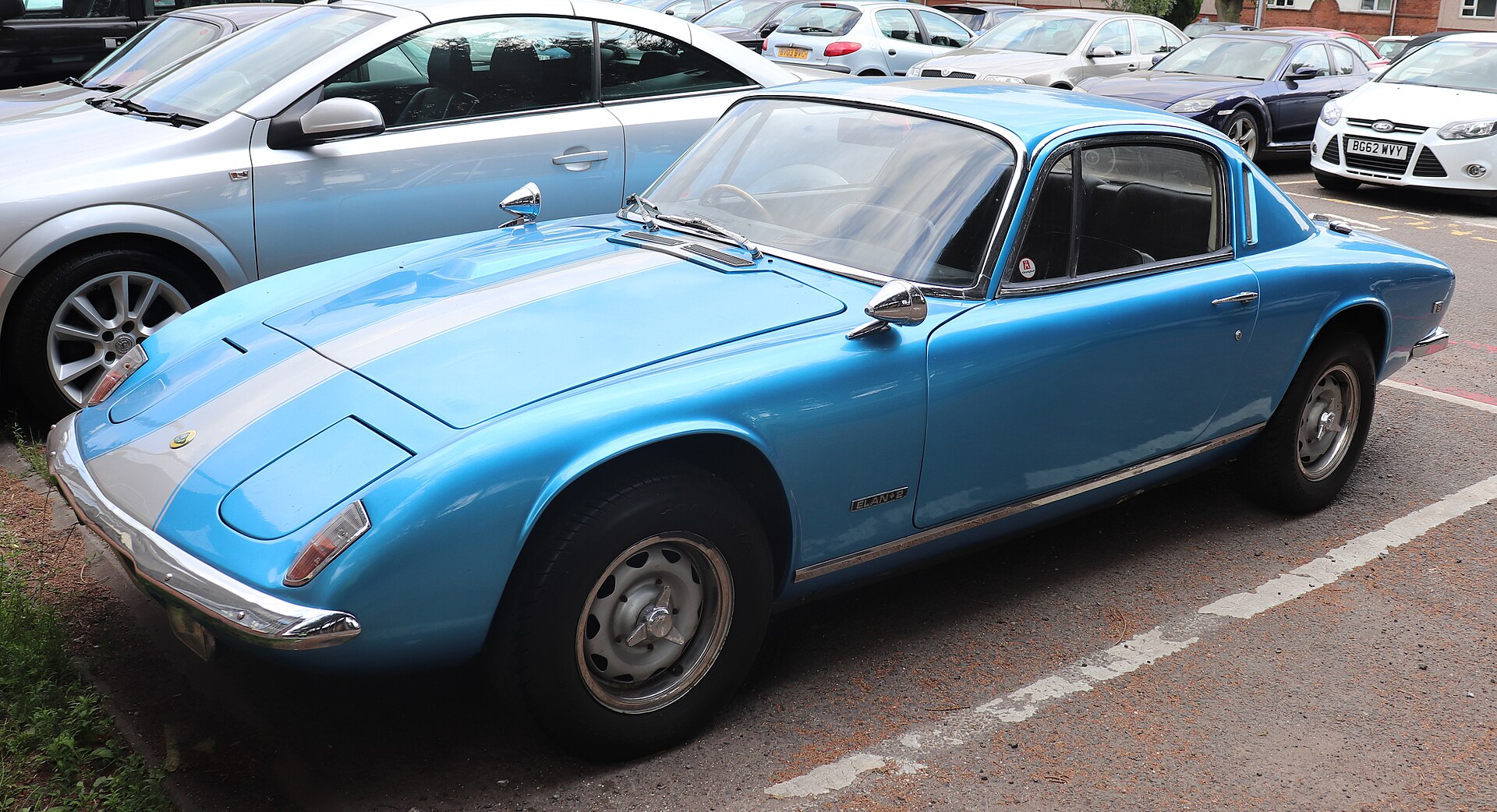
- Built
- 1967–1975
- Top power
- 94 kW (128 PS)
The Lotus Elan +2 is the four-seat version of the Lotus Elan, built from 1967 to 1975. The +2 has a longer wheelbase, a wider track and two small rear seats, while keeping the Elan's steel backbone chassis, fibreglass body and twin-cam engine. Officially it is the Lotus Type 50.
In short
- Introduced in 1967 and built until 1975, two years longer than the two-seat Elan; about 5,200 cars according to one estimate (3,300 according to Bolster).
- Ford-based Lotus Twin Cam four-cylinder: 81–94 kW (108–126 bhp) depending on version; Big Valve engine from 1971.
- Versions: +2 (1967), +2S (1968), +2S 130 (1971) and +2S 130/5 with a five-speed gearbox.
- Top speed about 193 km/h.
At a glance: Lotus Elan +2
| Specification | Lotus Elan +2 (Type 50) |
|---|---|
| Production | 1967–1975 |
| Cars built | about 5,200 (estimate); 3,300 according to Bolster |
| Body | fixed-head coupé, 2+2 seats, fibreglass |
| Chassis | steel backbone |
| Engine | Ford-based Lotus Twin Cam four-cylinder; Big Valve from 1971 |
| Power | 81–94 kW (108–126 bhp) |
| Gearbox | five-speed on the +2S 130/5 (Austin Maxi-based) |
| Suspension | double wishbones front, Chapman struts rear |
| Top speed | about 193 km/h |
The Elan +2 belongs to the classic Lotus range in the Lotus catalogue, which also includes later models such as the Lotus Elise.
History of the Lotus Elan +2
The +2 was introduced in 1967 and was aimed at established families. Motor Sport reported that the design brief required the car to carry two adults and two children 1,000 miles (about 1,600 km) in comfort with their luggage.
The +2 outlived the original. The two-seat Elan ended in 1973, while the +2 continued until 1975. Estimates of the total production vary: one figure given in Wikipedia is about 5,200 cars, while the motoring writer Bolster gave 3,300. Fewer than 1,200 are thought to remain on the road, and a voluntary owners' register listed about 330 cars in April 2018.
The two-seat Elan behind it
The +2 was derived from the original Elan, a two-seat sports car designed by Ron Hickman and introduced in 1962 as the Elan 1500 roadster. Its backbone chassis weighed only about 40 kg, and the complete car weighed between about 640 kg (Series 1) and 703 kg (late coupés), according to the workshop manual.
The engine of both cars is the 1,558 cc Lotus Twin Cam. It was based on the 1,498 cc Ford Kent engine, with a two-valve alloy twin-cam cylinder head designed by Harry Mundy. In the two-seater it produced 67 kW (90 bhp) at 5,500 rpm in standard form, 69 kW (93 bhp) at 6,000 rpm as the SE and 94 kW (126 bhp) at 6,500 rpm as the Sprint.
| Two-seat Elan version | Power | Weight |
|---|---|---|
| Standard (S1–S4) | 67 kW (90 bhp) at 5,500 rpm | 640–703 kg |
| SE | 69 kW (93 bhp) at 6,000 rpm | 694–703 kg |
| Sprint | 94 kW (126 bhp) at 6,500 rpm | 694–703 kg |
In Britain the Elan was also sold as a kit for the customer to assemble, which reduced the tax payable. Production estimates for the two-seater range from about 8,700 to more than 12,000 cars, and the original Elan is often named as the inspiration for the Mazda MX-5 of 1989.
Design and chassis
The +2 follows the engineering of the two-seater. A steel backbone chassis carries the engine, suspension and drivetrain, and the body is made of fibreglass. Compared with the two-seater, the +2 has a longer wheelbase and a wider track, making room for two small rear seats that are best suited to children.
The suspension is of the same design as the Elan's — double wishbones at the front and Chapman struts at the rear — with some parts enlarged. Power-assisted brakes were standard, with dual circuits in some markets.

Engine and performance
Like the two-seat Elan, the +2 uses a Ford-based drivetrain with Lotus's 1,558 cc twin-cam four-cylinder engine. Tested outputs ranged from 81 to 94 kW (108–126 bhp) net, depending on the version. From 1971 the +2S 130 used the more powerful Big Valve engine.
| Version | Year | Engine | Gearbox |
|---|---|---|---|
| Elan +2 | 1967 | Lotus Twin Cam | not stated |
| Elan +2S | 1968 | Lotus Twin Cam | not stated |
| Elan +2S 130 | 1971 | Big Valve Twin Cam | not stated |
| Elan +2S 130/5 | later | Big Valve Twin Cam | five-speed manual (Austin Maxi-based) |
Wikipedia gives a top speed of about 193 km/h and 0–161 km/h in 21.8 seconds for the +2, without naming the exact version.

Versions: +2, +2S, +2S 130 and 130/5
The original +2 of 1967 was followed in 1968 by the more luxurious +2S. In 1971 the +2S 130 received the Big Valve version of the twin-cam engine. Later +2S 130 cars, known as the +2S 130/5, had a five-speed gearbox based on the unit from the Austin Maxi.

Legacy
The Elan +2 was the Elan for families and remained in production until 1975, two years after the two-seater. For the history of the company, read our history of Lotus.
Photo gallery

Lotus Elan +2 in our rankings
- No. 452 of 912 · Longest-running car nameplates (8 years · top 53%)
- No. 730 of 859 · Most powerful cars (94 kW · top 86%)
- No. 100 of 109 · Most powerful British cars (94 kW · top 92%)
- No. 300 of 313 · Most powerful coupes (94 kW · top 96%)
In production longer than 47% of ranked nameplates in the 1CARS catalog (No. 452 of 912).
FAQ
How many Lotus Elan +2s were built?
Estimates differ: about 5,200 according to one figure, 3,300 according to Bolster.
What engine does the Elan +2 have?
The Ford-based 1,558 cc Lotus Twin Cam four-cylinder, with 81–94 kW (108–126 bhp) depending on the version; the +2S 130 has the Big Valve engine.
How many seats does the Elan +2 have?
Four: two full seats in front and two small rear seats suited to children, made possible by a longer wheelbase and wider track than the two-seat Elan.
What is the +2S 130/5?
A late version of the +2S 130 with the Big Valve engine and a five-speed gearbox based on the unit from the Austin Maxi.
How fast is the Elan +2?
Its top speed is about 193 km/h; Wikipedia does not say which version this figure refers to.
Data sources
Data checked by an editor against the sources below.
- Wikipedia — Lotus Elan 2
- Wikipedia — Lotus Elan