 Lotus 3-Eleven
Specs, engines and history
Published Sources (1) Report an error
By Felix Hartmann, Automotive Technology & EV Contributor
- Built
- 2016–2018
- Top power
- 343 kW (466 PS)
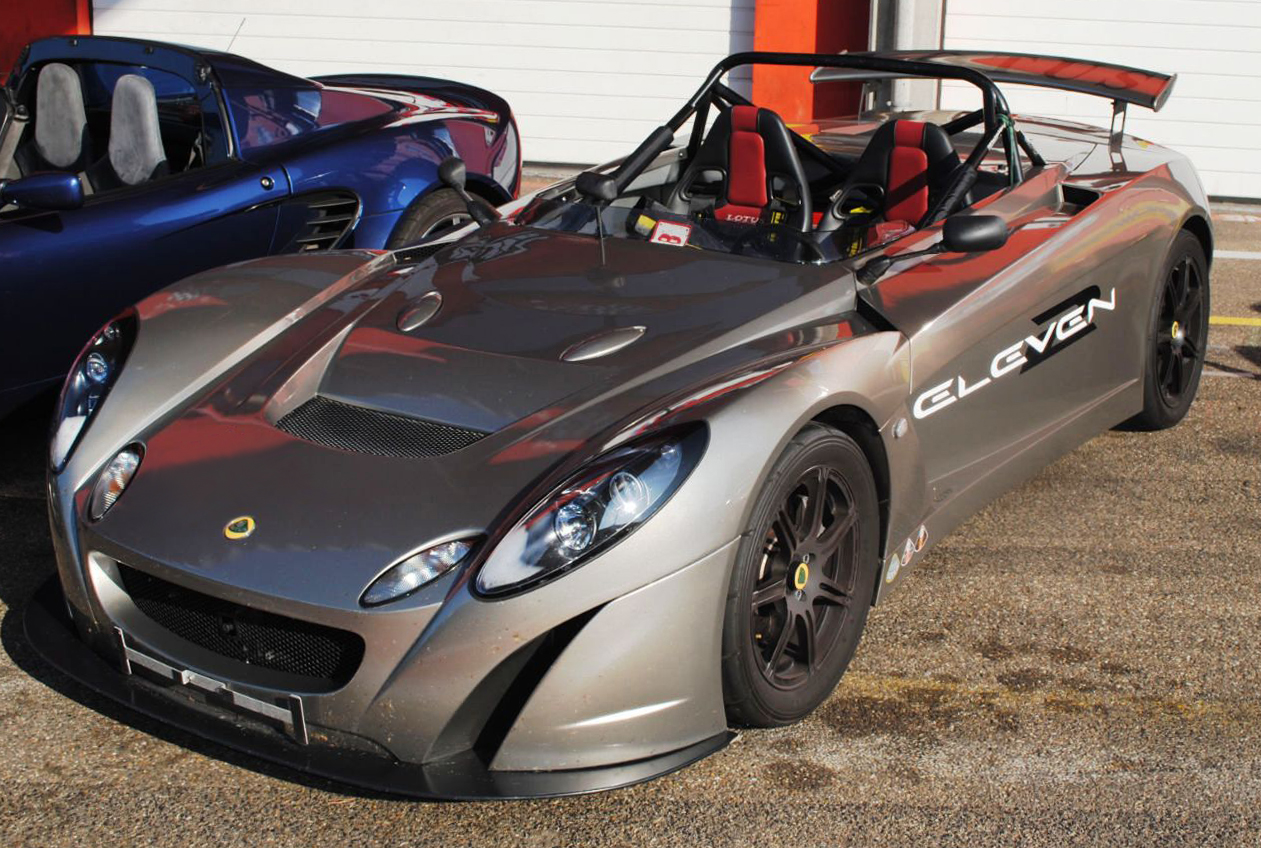
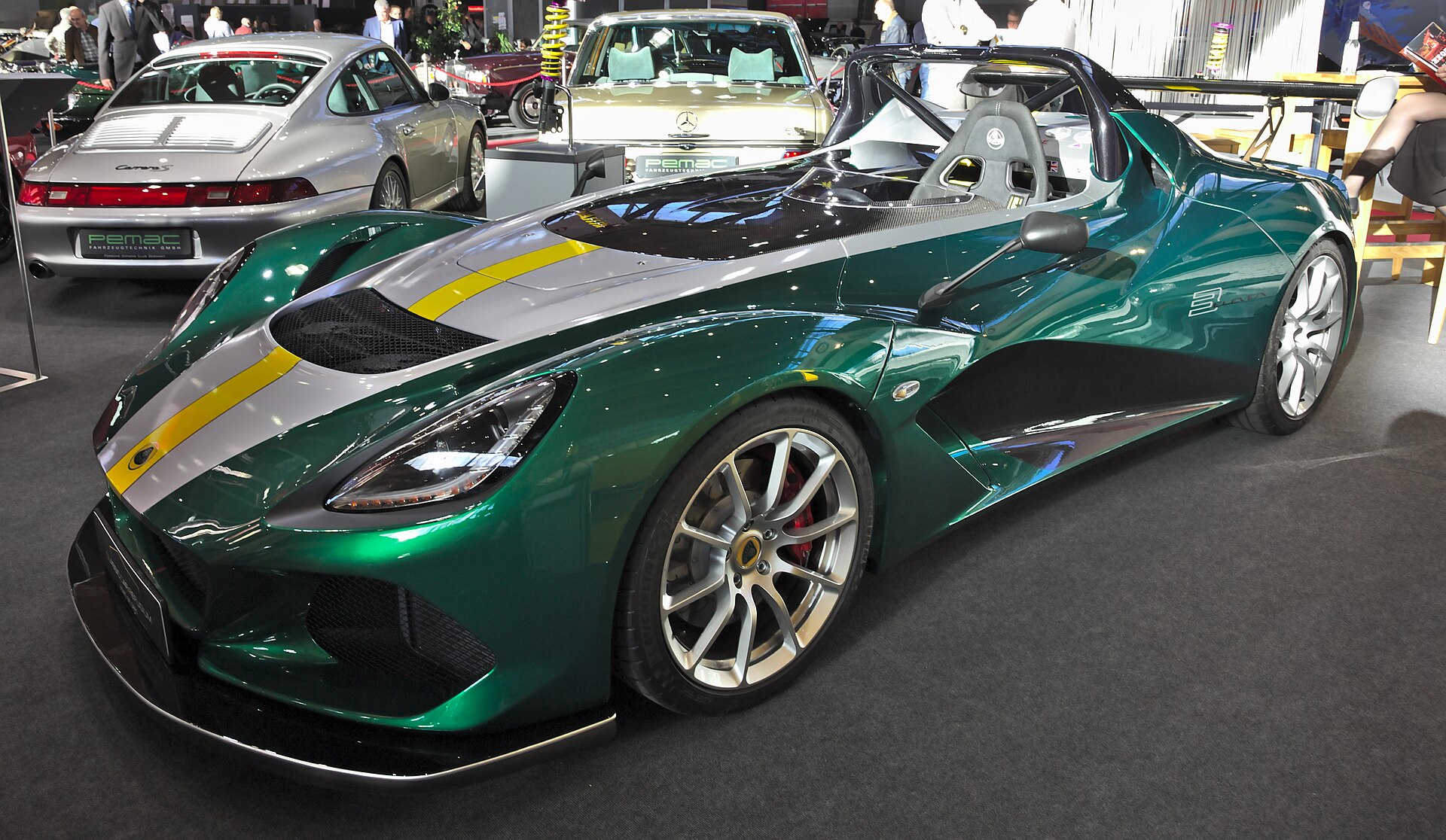
The Lotus 3-Eleven is an open, two-seat track car that Lotus built at Hethel, Norfolk, from 2016 to 2019. It was offered both as a road-legal car and as a pure racing version. Revealed at the Goodwood Festival of Speed in 2015, it has no roof, no windscreen and no doors, and it uses a supercharged 3.5-litre V6 from the Evora family. Lotus built 311 cars, followed by 20 examples of the more powerful 3-Eleven 430.
In short
- Shown at Goodwood in 2015, launched in 2016; 311 cars built 2015–2018 plus 20 of the 3-Eleven 430 in 2018–2019; designer Russell Carr.
- 3.5-litre Toyota 2GR-FE V6 with an Edelbrock supercharger: 306 kW (416 PS) in road form, 343 kW (466 PS) in race form.
- Six-speed manual (road) or paddle-shift sequential gearbox (race); 925 kg (road) and 890 kg (race).
- 0–100 km/h in 3.3 seconds (road) or 2.9 seconds (race); top speed 290 km/h.
Lotus 3-Eleven at a glance
| Specification | Lotus 3-Eleven |
|---|---|
| Production | 2016–2019, Hethel (United Kingdom) |
| Cars built | 311, plus 20 3-Eleven 430 |
| Body | open two-seater without roof, windscreen or doors; mid-engine, rear-wheel drive |
| Engine | 3.5-litre V6 (Toyota 2GR-FE), Edelbrock Roots-type supercharger |
| Power | 306 kW (416 PS) road; 343 kW (466 PS) race; 321 kW (436 PS) 3-Eleven 430 |
| Torque | 410 Nm (road), 525 Nm (race) |
| Gearbox | six-speed manual (road); six-speed sequential with paddles (race) |
| Weight | 925 kg (road), 890 kg (race) |
| Top speed | 290 km/h |
The 3-Eleven shares its engine family with the Lotus Evora and sits alongside the lightweight Lotus Elise in the Lotus line-up of the time. All models are listed in the Lotus catalogue.
History and the name
Lotus unveiled the 3-Eleven at the Goodwood Festival of Speed in 2015 and began deliveries in 2016. The car was designed under Russell Carr, who also led the design of the Evora. The original run of 311 cars was built from 2015 to 2018. In February 2018 Lotus added the 3-Eleven 430, of which 20 were built in 2018 and 2019.
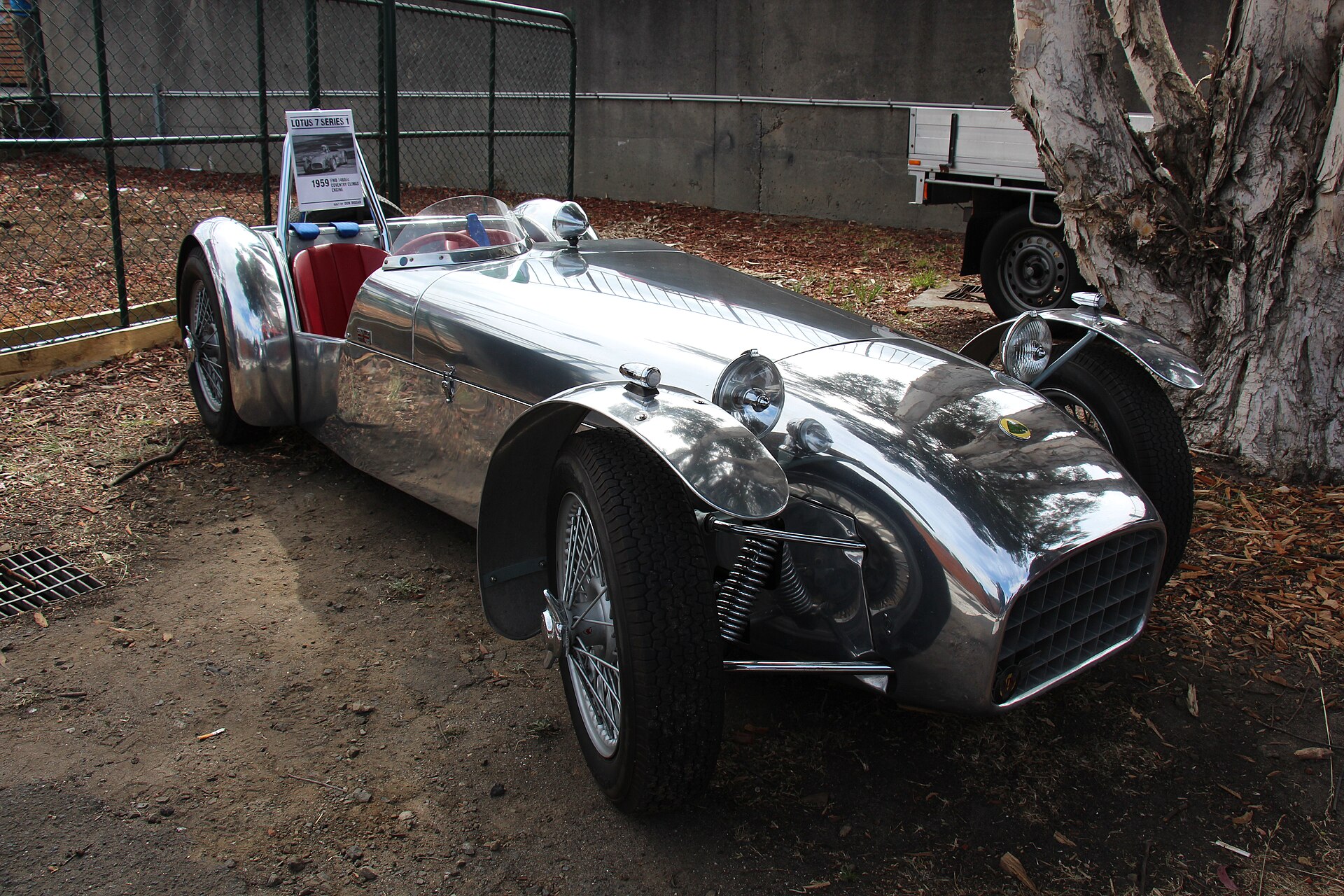
The name recalls one of Lotus's most successful early racing cars, the Eleven of 1956–1958. Designed by Colin Chapman with a body by aerodynamicist Frank Costin, the Eleven weighed from 412 kg and used Coventry Climax engines such as the 1,100 cc FWA. About 270 were built. An Eleven finished seventh overall at the 1956 24 Hours of Le Mans. The model also took several class wins at Le Mans and Sebring, and a 750 cc version won the Index of Performance at Le Mans in 1957. In 1956 Stirling Moss set a class world record of 230 km/h at Monza in a streamlined Eleven.

Road and Race versions
Lotus sold it in two forms with clear differences:
| Specification | 3-Eleven Road | 3-Eleven Race |
|---|---|---|
| Power | 306 kW (416 PS) at 7,000 rpm | 343 kW (466 PS) at 7,000 rpm |
| Torque | 410 Nm at 3,000 rpm | 525 Nm at 3,500 rpm |
| Gearbox | six-speed manual (Aisin) | six-speed sequential, paddle-operated (Aisin) |
| Weight | 925 kg | 890 kg |
| 0–100 km/h | 3.3 s | 2.9 s |
| Top speed | 290 km/h | 290 km/h |
The Road version is registered for public roads; the Race version is a pure track car, 35 kg lighter and with more power and torque. Both have the same open body.

Engine and performance
The engine is the 3.5-litre Toyota 2GR-FE V6 that Lotus also used in the Evora, here fitted with an Edelbrock Roots-type supercharger. In road form it produces 306 kW (416 PS) at 7,000 rpm and 410 Nm at 3,000 rpm. The race engine delivers 343 kW (466 PS) and 525 Nm. The 3-Eleven 430 of 2018 produced 321 kW (436 PS).
With less than 1,000 kg to move, the car is quick. Wikipedia gives 3.3 seconds from 0 to 100 km/h for the Road and 2.9 seconds for the Race. Both reach 290 km/h. The power-to-weight ratio of the Road version is about 331 kW per tonne, and of the Race version about 385 kW per tonne.

Cockpit, practicality and price
The driver sits in an open cockpit with no roof, no windscreen and no doors. Practicality is not the point: the Road version exists so that a track-focused car can also be registered for public roads.
At launch in 2016 Lotus priced the Race version noticeably higher than the Road version. Both prices were published in pounds sterling for the UK market. No official euro price is available in the sources used here.
The 3-Eleven and the Evora
It is closely related to the Evora: Wikipedia lists it as a related model, and both use the same supercharged Toyota V6. In the Evora GT430 of 2017 this engine produced 321 kW (436 PS), the same output as the 3-Eleven 430. The difference is in what surrounds it. The Evora is a 2+2 coupé weighing more than 1,250 kg. The open car strips away the roof, doors and windscreen to stay under a tonne.
| Model | Power | Weight |
|---|---|---|
| Evora GT430 (2017) | 321 kW (436 PS) | 1,258 kg |
| 3-Eleven Road | 306 kW (416 PS) | 925 kg |
| 3-Eleven 430 (2018) | 321 kW (436 PS) | — |
| 3-Eleven Race | 343 kW (466 PS) | 890 kg |

Timeline
| Year | Event |
|---|---|
| 1956 | Lotus Eleven finishes seventh overall at Le Mans; Stirling Moss sets a class record at Monza |
| 1957 | A 750 cc Eleven wins the Index of Performance at Le Mans |
| 2015 | 3-Eleven unveiled at the Goodwood Festival of Speed |
| 2016 | Launch of the Road and Race versions |
| 2018 | 3-Eleven 430 announced in February; original run ends after 311 cars |
| 2019 | Last of 20 3-Eleven 430s built |
Legacy
The car picked up the idea of the 1950s Eleven — a light, open car built for speed. Lotus combined it with the most powerful version of Lotus's supercharged V6 of its time. With only 331 cars in total, it remained a rare, specialised model. For the brand's history see our history of the Lotus car company.
Lotus 3-Eleven in our rankings
- No. 222 of 859 · Most powerful cars (343 kW · top 26%)
- No. 82 of 312 · Most powerful cars of the 2010s (343 kW · top 27%)
- No. 23 of 79 · Most powerful convertibles and roadsters (343 kW · top 30%)
- No. 51 of 109 · Most powerful British cars (343 kW · top 47%)
- No. 848 of 912 · Longest-running car nameplates (2 years · top 96%)
More powerful than 74% of ranked cars in the 1CARS catalog (No. 222 of 859).
FAQ
How many Lotus 3-Elevens were built?
311 cars between 2015 and 2018, plus 20 of the 3-Eleven 430 in 2018–2019.
How powerful is the Lotus 3-Eleven?
The supercharged 3.5-litre V6 produces 306 kW (416 PS) in road form and 343 kW (466 PS) in the Race version.
Is the 3-Eleven road legal?
The Road version is; the Race version is intended for the track only.
Where does the name come from?
It recalls the Lotus Eleven of 1956–1958, a successful racing car designed by Colin Chapman with a body by Frank Costin.
Data sources
Data checked by an editor against the sources below.