 Lotus Elite (Type 75)
Specs, engines and history
Published Sources (2) Report an error
By Felix Hartmann, Automotive Technology & EV Contributor
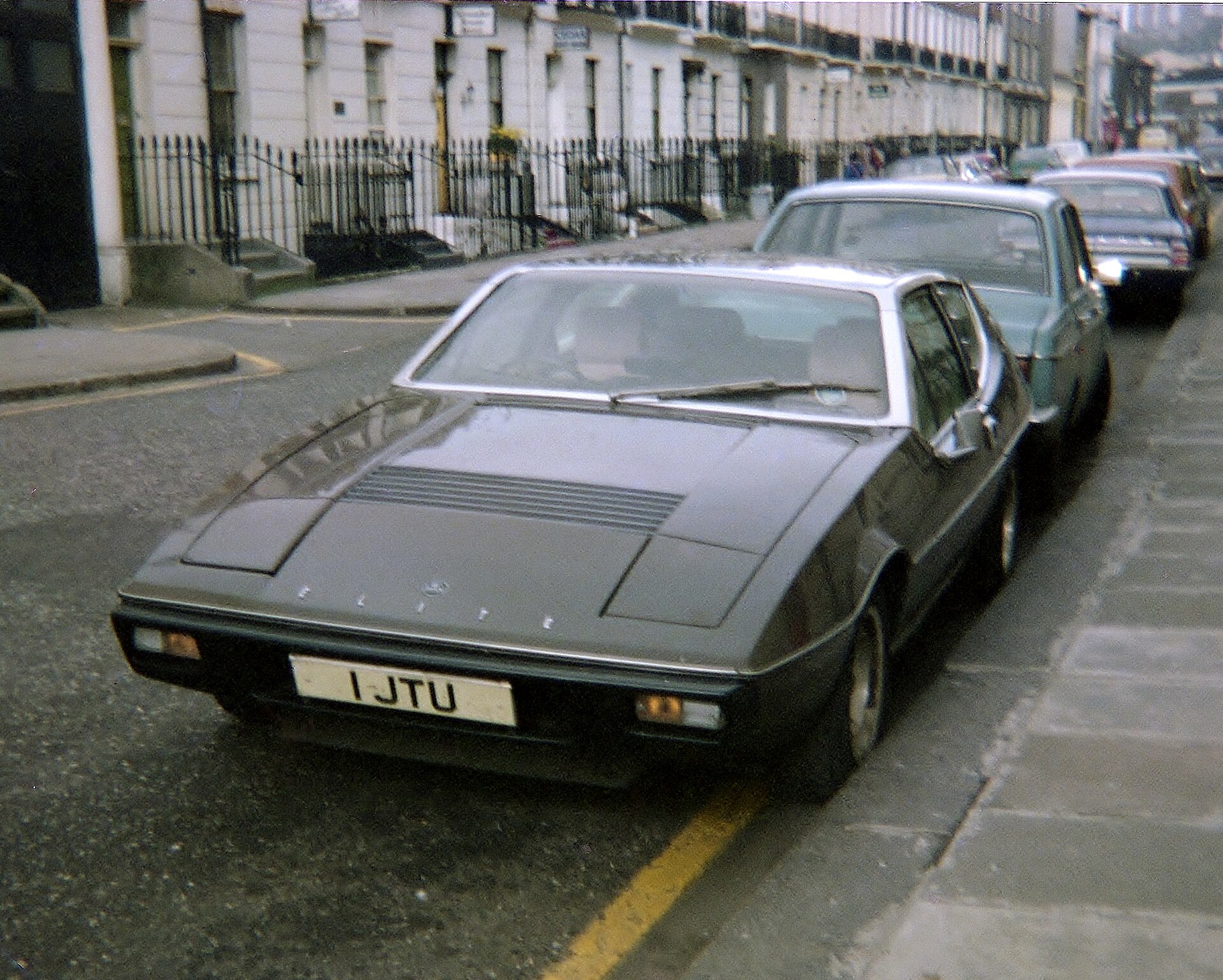
The Lotus Elite of 1974, known inside the company as the Type 75, is a four-seat sports car that Lotus built from 1974 to 1982. It replaced the Elan Plus 2 and was the first car of Colin Chapman's plan to move Lotus upmarket, away from its kit-car past. Its glass-fibre body has a shooting-brake rear with a glass hatch, and it was powered by Lotus's own 2.0-litre 16-valve engine. From 1980 it was built as the Type 83 with a 2.2-litre engine. Wikipedia counts 2,535 cars.
In short
- Announced in May 1974; built until 1982, from 1980 as the Type 83 Elite 2.2.
- Four seats, glass-fibre body on a steel backbone chassis, glass rear hatch; drag coefficient 0.30 (claimed).
- Lotus 907 engine: 1,973 cc aluminium four-cylinder with 16 valves and twin overhead camshafts, 116 kW (155 hp).
- 0–60 mph in 8.1 s and a top speed of 201 km/h; 2,535 built.
Lotus Elite (Type 75) at a glance
| Specification | Lotus Elite (Type 75 / Type 83) |
|---|---|
| Production | 1974–1982 (Type 83 from 1980) |
| Cars built | 2,535 (Wikipedia) |
| Body | four-seat shooting brake, glass-fibre, glass rear hatch |
| Designer | Oliver Winterbottom (body); chassis layout by Colin Chapman |
| Chassis | steel backbone, independent suspension with coil springs |
| Engine | Lotus 907, 1,973 cc, DOHC, 16 valves; Type 83: Lotus 912, 2,174 cc |
| Power | 116 kW (155 hp) (907) |
| Gearbox | four- or five-speed manual; automatic optional from 1976 |
| Weight | "not much over" 1,043 kg (Wikipedia, Elite and Eclat) |
| Top speed | 201 km/h |
| Predecessor | Lotus Elan Plus 2 |
The name had first been used on the Elite Type 14 of 1957–1963, a two-seat coupé with a glass-fibre monocoque. Lotus models from all periods are in the Lotus catalogue; our history of Lotus explains how Chapman's company grew.
A new kind of Lotus
By the early 1970s Lotus wanted to leave its kit-car image behind. Wikipedia sums up the aim of the new Elite: "With this design Lotus sought to position itself upmarket and move away from its kit-car past." The car was announced in May 1974 and replaced the Elan Plus 2, the company's earlier 2+2.
Instead of a small two-seater, the new Elite offered four seats, a large glass hatch at the rear and optional luxury equipment. Wikipedia describes the Elite and its fastback sister, the Eclat, as the last Lotus road cars with significant design input from Colin Chapman.
Design by Oliver Winterbottom
The body was styled by Oliver Winterbottom. He later explained that the basic layout of the chassis and suspension had been designed by Chapman himself. Wikipedia classifies the body as a four-seat shooting brake: the roof runs on to an upright tail, which is closed by a large glass hatch.
Lotus claimed a drag coefficient of 0.30 for the body. The body is made of glass fibre and sits on a steel backbone chassis. This construction was derived from the Elan and the Europa.


Engine, gearbox and performance
The Lotus 907 is an aluminium-block four-cylinder with two overhead camshafts and four valves per cylinder. It displaces 1,973 cc and produces 116 kW (155 hp). Before the Elite, the same engine had already been used in the Jensen-Healey sports car.
| Figure | Elite Type 75 |
|---|---|
| Engine | Lotus 907, 1,973 cc, DOHC, 16 valves |
| Power | 116 kW (155 hp) |
| 0–60 mph | 8.1 s |
| Top speed | 201 km/h |
| Drag coefficient | 0.30 (claimed) |
Depending on the specification, a four- or five-speed manual gearbox was fitted. From January 1976 an automatic gearbox became optional. Wikipedia says that the Elite and the Eclat had kerb weights "not much over" 1,043 kg.

Trim levels 501 to 504
Lotus sold the Elite in four trim levels, numbered from 501 to 504. Each step added more equipment:
| Trim | Equipment added |
|---|---|
| 501 | base model |
| 502 | air conditioning |
| 503 | air conditioning and power steering |
| 504 | air conditioning, power steering and automatic gearbox |
Even the base 501 had four seats and the glass hatch; the higher numbers simply added comfort features. The 504, with all three extras, was the most fully equipped Elite of the first series.

The Type 83 Elite 2.2
In 1980 the Type 83, also called the Elite Mark 2, replaced the Type 75. The main change was the larger 2,174 cc Lotus 912 engine. The chassis was now galvanised against corrosion, and the five-speed BMC gearbox gave way to a Getrag Type 265. Electric headlamp lifts replaced the vacuum-operated system.
The exterior gained a front spoiler, a new rear bumper and rear lights taken from the Rover SD1. Production of the Elite ended in 1982.
| Specification | Type 75 | Type 83 |
|---|---|---|
| Years | 1974–1980 | 1980–1982 |
| Engine | Lotus 907, 1,973 cc | Lotus 912, 2,174 cc |
| Chassis | steel backbone | galvanised steel backbone |
| Gearbox | four- or five-speed (BMC five-speed) | Getrag Type 265 five-speed |
| Headlamps | vacuum-operated | electric |
Eclat and Excel
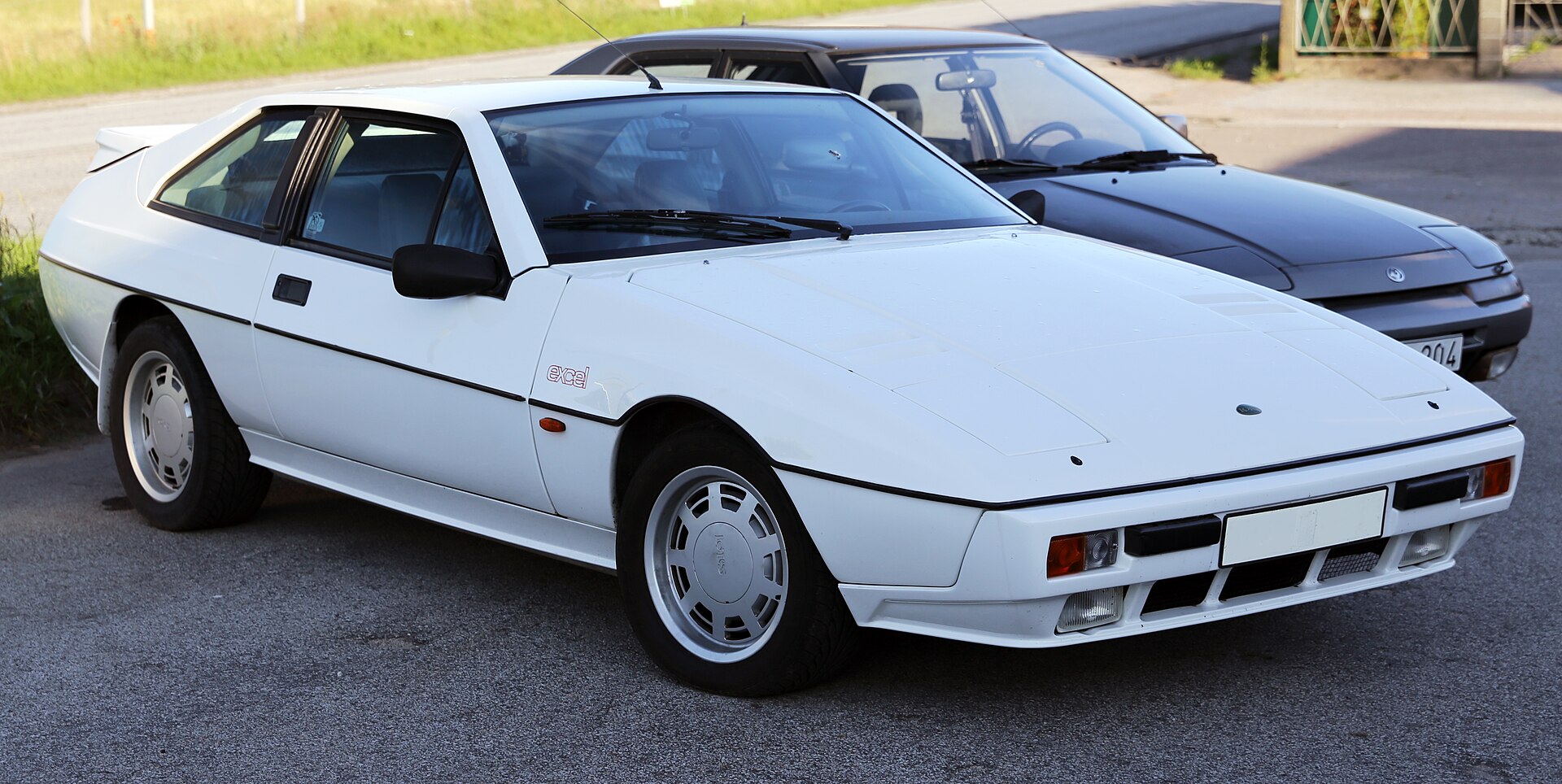
The Elite was the starting point for a family of four-seat Lotus coupés. It formed the basis of the Eclat of 1975, which used the same lower body with a fastback roof, and later of the Excel 2+2. The Eclat later evolved into the Excel, so the Elite's basic engineering stayed in production long after the Elite itself had ended in 1982.
Legacy
The Elite did not make Lotus a mainstream maker, but it changed the brand's direction. It gave the company a four-seat model with luxury equipment and its own 16-valve engine, and its chassis and lower body lived on in the Eclat and Excel. For the mid-engined sports car of the same era, see our Lotus Esprit article.
Photo gallery

Lotus Elite (Type 75) in our rankings
In production longer than 47% of ranked nameplates in the 1CARS catalog (No. 456 of 912).
FAQ
What is the difference between the Elite Type 75 and Type 83?
The Type 83 of 1980 has the larger 2.2-litre Lotus 912 engine, a galvanised chassis, a Getrag gearbox, electric headlamps and Rover SD1 tail lights.
What engine does the 1974 Lotus Elite have?
The Lotus 907, a 1,973 cc aluminium four-cylinder with twin overhead camshafts and 16 valves, producing 116 kW (155 hp).
How many of the 1974 Elites were made?
Wikipedia lists 2,535 cars of the Type 75 and Type 83 together, built between 1974 and 1982.
Who designed the Elite?
Oliver Winterbottom styled the body, while Colin Chapman designed the basic chassis and suspension layout, according to Winterbottom.
Data sources
Data checked by an editor against the sources below.
- Wikipedia - Lotus Elite (1974)
- Wikipedia - Lotus Elite