Long-Running Cars: Guests from the Past Built for Decades
Long-running cars are models that stay in production long after their design has aged. The Volkswagen Beetle was built until 2003, the Kombi van until 2013 and the Land Rover Defender until 2016, while the Mercedes G-Class, Toyota Land Cruiser 70, Lada Niva and UAZ-452 are still made today. We list eleven such cars, with the dates, numbers and reasons behind their long lives.
Key takeaways
- Selection: one basic design kept in production for at least 40 years, with only gradual updates.
- Now ended: VW Beetle (2003), VW Kombi (2013), Citroën 2CV (1990), classic Mini (2000), Morgan 4/4 (2018), Hindustan Ambassador (2014), Land Rover Defender (2016).
- Still built in 2026: Mercedes-Benz G-Class (since 1979), Toyota Land Cruiser 70 (1984), Lada Niva (1977), UAZ-452 (1965).
- Most common reasons for the end: new safety and emissions rules, falling demand and the cost of updating an old body.

How we chose these long-running cars
A long-running name is different from a long-running design: each new Corolla or Golf generation is a new car. This list covers the opposite case: cars whose basic body and engineering stayed recognisably the same for four decades or more, so a car built at the end looked much like one built at the start.

Each entry gives the start and end of production and, where reliable figures exist, the number built.
Volkswagen Beetle (1945–2003): 21.5 million of one shape
The Beetle's design dates from the late 1930s, but series production for private buyers began only after the Second World War, in 1945. Volkswagen kept the same rear-mounted, air-cooled flat-four and the same basic shape while engines grew from 1,131 cc to 1,584 cc and the details changed in small steps.

German production of the saloon ended in 1978, and Mexico carried on. The last Type 1 left the Puebla plant on 30 July 2003 after 21,529,464 had been built, more than any other car of a single design. By our calculation that is 58 years of series production. Our Volkswagen Beetle page covers every version.
Volkswagen Type 2 Kombi (1950–2013): the van that outlived the Beetle
The Transporter, or Type 2, followed the Beetle in late 1949 and went on sale in 1950 with the same air-cooled engine at the rear. In Germany it was replaced by new generations in 1967 and 1979, but Volkswagen do Brasil kept building its own versions of the early vans as the Kombi. Brazil switched the Kombi to a water-cooled 1.4-litre flex-fuel engine in December 2005, its first big mechanical change in decades.

Production ended on 31 December 2013, after a farewell run of 600 Last Edition vans. Compared with the Beetle's 58 years of series production, the Kombi lasted five years longer. New Brazilian rules requiring airbags and anti-lock brakes were among the reasons, because the old body could not take them economically.
Citroën 2CV (1948–1990): a farm car that lasted 42 years
Citroën presented the 2CV at the Paris Motor Show on 7 October 1948 after a brief from Pierre-Jules Boulanger for a cheap, robust car for rural France. Its air-cooled flat-twin grew from 375 cc and 6.6 kW (9 hp) to 602 cc and about 21 kW (29 hp), but the corrugated bonnet, canvas roof and long-travel suspension hardly changed.
French production stopped in 1988 and the last 2CV, a Charleston, was built at Mangualde in Portugal on 27 July 1990. About 3.87 million saloons were made, and more than 9 million cars when the vans and derivatives are included. The full story is in our Citroën 2CV history.
Classic Mini (1959–2000): 41 years of the same box
The British Motor Corporation launched the Mini in August 1959, designed by Alec Issigonis after the Suez fuel crisis. A transverse A-series engine of 848 cc and about 25 kW (34 hp) drove the front wheels, which left about 80 % of the car's floor area for people and luggage. Cooper and Cooper S versions won the Monte Carlo Rally in 1964, 1965 and 1967.
Engines grew to 1,275 cc, but the body stayed the same until the last car was built at Longbridge, Birmingham, on 4 October 2000. About 5.39 million were made, and in 1999 the Mini came second only to the Ford Model T in the Car of the Century vote.
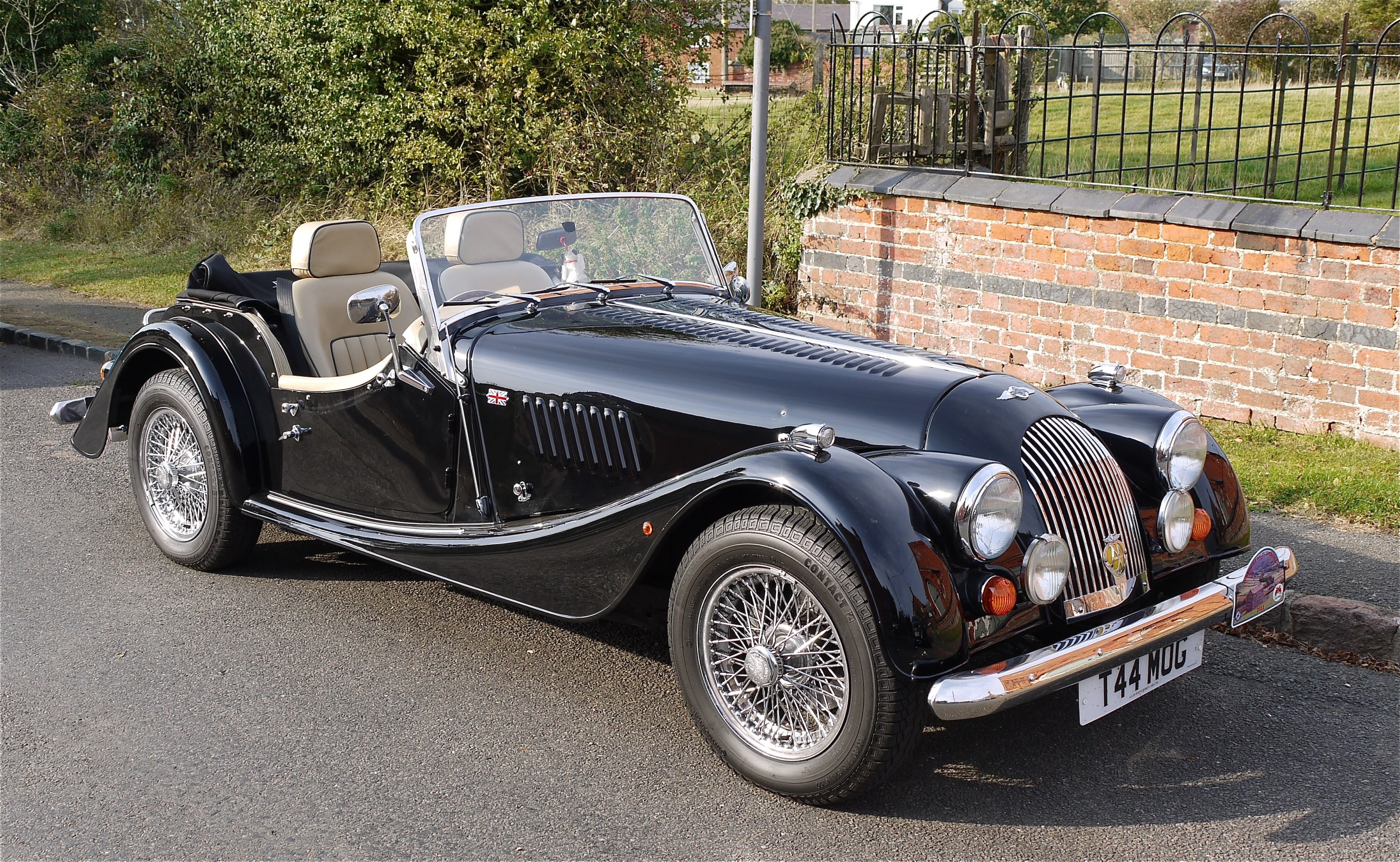
Morgan 4/4 (1936–2018): the longest span on this list
Morgan made three-wheelers until 1936, when the 4/4 became its first four-wheeled car. With breaks during the Second World War and between 1951 and 1955, it stayed in production until 2018, by our calculation an 82-year span. The traditional body, mounted on a wooden frame over a steel chassis, changed little, while the engines changed many times: a 1,122 cc Coventry Climax at first, then Standard, Ford and Fiat units, and finally a 1,595 cc Ford Sigma from 2009 to 2018.
Built by hand in small numbers, the 4/4 had still not reached 10,000 cars by 2006. Morgan's wider story is told in our history of Morgan.
Hindustan Ambassador (1957–2014): a British design in India
The Ambassador was a rebadged Morris Oxford Series III, whose tooling Hindustan Motors acquired from Morris in 1956. Built at Uttarpara in West Bengal on largely the same assembly line for its whole life, it dominated the Indian market for decades and became the standard taxi and government car. A 1,489 cc BMC B-series petrol engine was joined by a diesel in 1980, described as India's first diesel car, and by a 1,817 cc Isuzu petrol engine in 1992.
Demand fell once modern small cars arrived, and stricter emission rules ended taxi sales in 11 Indian cities from April 2011. Production was halted in May 2014, after 2,200 cars in its final financial year. In February 2017 Groupe PSA bought the Ambassador brand for 800 million rupees, about 8.3 million US dollars or roughly €7.8 million at the time.
Land Rover Series and Defender (1948–2016): 67 years of one idea
The first Land Rover appeared at the Amsterdam Motor Show in April 1948 as a simple aluminium-bodied utility vehicle. Series I, II and III models were followed by the coil-sprung One Ten in 1983 and the Ninety in 1984, renamed Defender for the 1991 model year. The flat panels, separate chassis and upright cabin stayed throughout.
The last one, a soft-top Defender 90, left the Solihull line at 9:22 on 29 January 2016, after a continuous run of 67 years and just over two million Series and Defender vehicles. A completely new Defender was unveiled in September 2019. Our Land Rover Defender page follows both.
Mercedes-Benz G-Class (since 1979): from army vehicle to luxury SUV
The G-Class began as a military off-roader, suggested to Mercedes-Benz by the Shah of Iran, Mohammad Reza Pahlavi. Development started under a 1972 agreement with Steyr-Daimler-Puch in Graz, Austria, where production began in 1979 and continues today. The W460 was sold to private buyers from September 1979 in short- and long-wheelbase forms, with a convertible and panel vans.
The more luxurious W463 arrived in 1990, and a heavily re-engineered second-generation W463 was launched in January 2018 while keeping the boxy shape, the exposed door hinges and three locking differentials. The 400,000th G-Class was built on 4 December 2020 and the 500,000th in April 2023. The current Mercedes-AMG G 63 produces 430 kW (585 PS), nearly eight times the 56 kW of a Lada Niva.
Toyota Land Cruiser 70 (since 1984): the working Land Cruiser
Toyota introduced the 70 Series in 1984 to replace the 40 Series, first as a light-duty model and then as the basic, heavy-duty Land Cruiser for work in remote areas. It is offered as single- and double-cab pickups, wagons and a troop carrier, and short-wheelbase models are built by Toyota Auto Body at its Yoshiwara plant.
Updates came gradually: a 4.5-litre V8 diesel in 2007, a limited 30th-anniversary run for Japan in 2014, and a 2.8-litre four-cylinder diesel with an automatic gearbox in 2023. By our calculation the 70 Series has now been in production for 42 years, longer than any other Land Cruiser line.
Lada Niva (since 1977): the compact 4x4 that kept going
The VAZ-2121 Niva entered series production on 5 April 1977. It combined a compact monocoque body with permanent four-wheel drive, a lockable centre differential, a two-speed transfer box and coil springs all round, and its 1.6-litre engine produced 56 kW (76 PS). It is often described as the first mass-produced off-roader with a monocoque body, and from 1978 it was exported to Western Europe.
The car was renamed Lada 4x4 in 2006 and Niva Legend in 2021, with fuel injection and updated equipment, but the 1977 shape is still in production. It is not the same car as the later Chevrolet Niva. Its predecessors are covered in our page on all-wheel-drive cars from the USSR.
UAZ-452 (since 1965): the oldest design still in series production
The UAZ-452 is a forward-control four-wheel-drive van developed from the UAZ-450 of 1958 and built since 1965. Its rounded body earned the nickname Bukhanka, or "loaf". It was designed for military and state use and later sold to private buyers.
The engine grew from about 55 kW (75 PS) in 1965 to 82.5 kW (112 PS) from a 2.7-litre petrol unit today, but the body and layout remain those of the 1960s. With 61 years of production by our count, it is usually described as the oldest vehicle design still in series production. Our UAZ-452 page explains the variants.
Eleven long-running cars compared
| # | Model | Production | Years in production | Status | Built (approx.) | Main reason it lasted |
|---|---|---|---|---|---|---|
| 1 | VW Beetle (Type 1) | 1945–2003 | 58 | Ended | 21.5 million | Cheap, simple, global production |
| 2 | VW Type 2 Kombi | 1950–2013 | 63 | Ended | not published as one total | Brazilian production of the early design |
| 3 | Citroën 2CV | 1948–1990 | 42 | Ended | 3.87 million (9.2 million with derivatives) | Low cost, low running costs |
| 4 | Classic Mini | 1959–2000 | 41 | Ended | 5.39 million | Space efficiency, motor sport image |
| 5 | Morgan 4/4 | 1936–2018 | 82 (with breaks) | Ended | under 10,000 by 2006 | Hand-built traditional sports car |
| 6 | Hindustan Ambassador | 1957–2014 | 57 | Ended | not published | Taxi and government fleet use |
| 7 | Land Rover Series / Defender | 1948–2016 | 67 | Ended | just over 2 million | Toughness, military and farm use |
| 8 | Mercedes-Benz G-Class | 1979– | 47 | In production | over 500,000 by 2023 | Army origin, later luxury demand |
| 9 | Toyota Land Cruiser 70 | 1984– | 42 | In production | not published | Work fleets in remote regions |
| 10 | Lada Niva | 1977– | 49 | In production | not published as one total | Off-road ability at a low price |
| 11 | UAZ-452 | 1965– | 61 | In production | not published | Military and utility use |
Why some designs refuse to retire
Three patterns explain most of these cases. First, tooling that has long been paid for makes an old car cheap to build, which suits buyers who value price and repairability over modern comfort, as with the Beetle, the 2CV, the Ambassador and the Niva. Second, work vehicles such as the Land Cruiser 70, the UAZ-452 and the early Land Rover sell on durability and ease of repair in remote places, where a new design brings little benefit. Third, a few cars become symbols in their own right: the G-Class turned its military shape into a luxury product.
The end usually came through regulation rather than lack of buyers. Airbag and anti-lock brake requirements stopped the Brazilian Kombi, emission limits removed the Ambassador from city taxi fleets, and the cost of meeting new rules with an old body ended several others. Survivors such as the G-Class have been re-engineered underneath while keeping the familiar shape.
Which long-running car to buy today
For a classic to drive, the Beetle, the 2CV and the classic Mini are the easiest choices: production numbers were huge, parts are plentiful and specialists exist across Europe. A Series Land Rover or early Defender suits owners who want a usable off-roader with a long history, while a late Brazilian Kombi offers the old van shape with a water-cooled engine. Our car finder filters the catalogue by body type and years.
If you want one of the survivors new, the G-Class is the easiest to buy through a regular dealer; the Land Cruiser 70, Niva and UAZ-452 are sold new only in selected markets. Whatever you choose, judge the individual car on rust, chassis condition and records, and estimate yearly running costs with our cost of ownership calculator.
FAQ
Which car has been in production the longest without a full redesign?
Among cars still being built, the UAZ-452 van has kept its basic 1965 design for 61 years. Among cars that have ended, the Morgan 4/4 spanned 82 years from 1936 to 2018, with breaks, and the Land Rover Series and Defender ran continuously for 67 years until 2016.
When was the last Volkswagen Beetle made?
The last original Beetle, the Type 1, was built at Puebla in Mexico on 30 July 2003. In total 21,529,464 were produced, more than any other car built to one basic design. German production of the Beetle saloon had already ended in 1978.
Why did the Volkswagen Kombi stop production in 2013?
Brazil, the last place the early-style Kombi was built, introduced rules requiring airbags and anti-lock brakes, and adapting the old body was not worthwhile. The last one was built on 31 December 2013, closing a final run of 600 Last Edition vans.
Is the Mercedes-Benz G-Class still the same car as in 1979?
The shape and the basic concept are the same, and production is still in Graz, Austria. Underneath, the car has changed a lot: the W463 of 1990 added luxury, and the second-generation W463 of 2018 brought new suspension, engines and electronics while keeping the boxy body.
Is the Lada Niva still in production today?
Yes. Series production began in April 1977, the name changed twice, first to Lada 4x4 and then to Niva Legend, and the original body and permanent four-wheel-drive layout are still built, now with fuel injection and updated equipment.