Land Rover Defender — From Solihull Workhorse to Slovak-Built 4x4
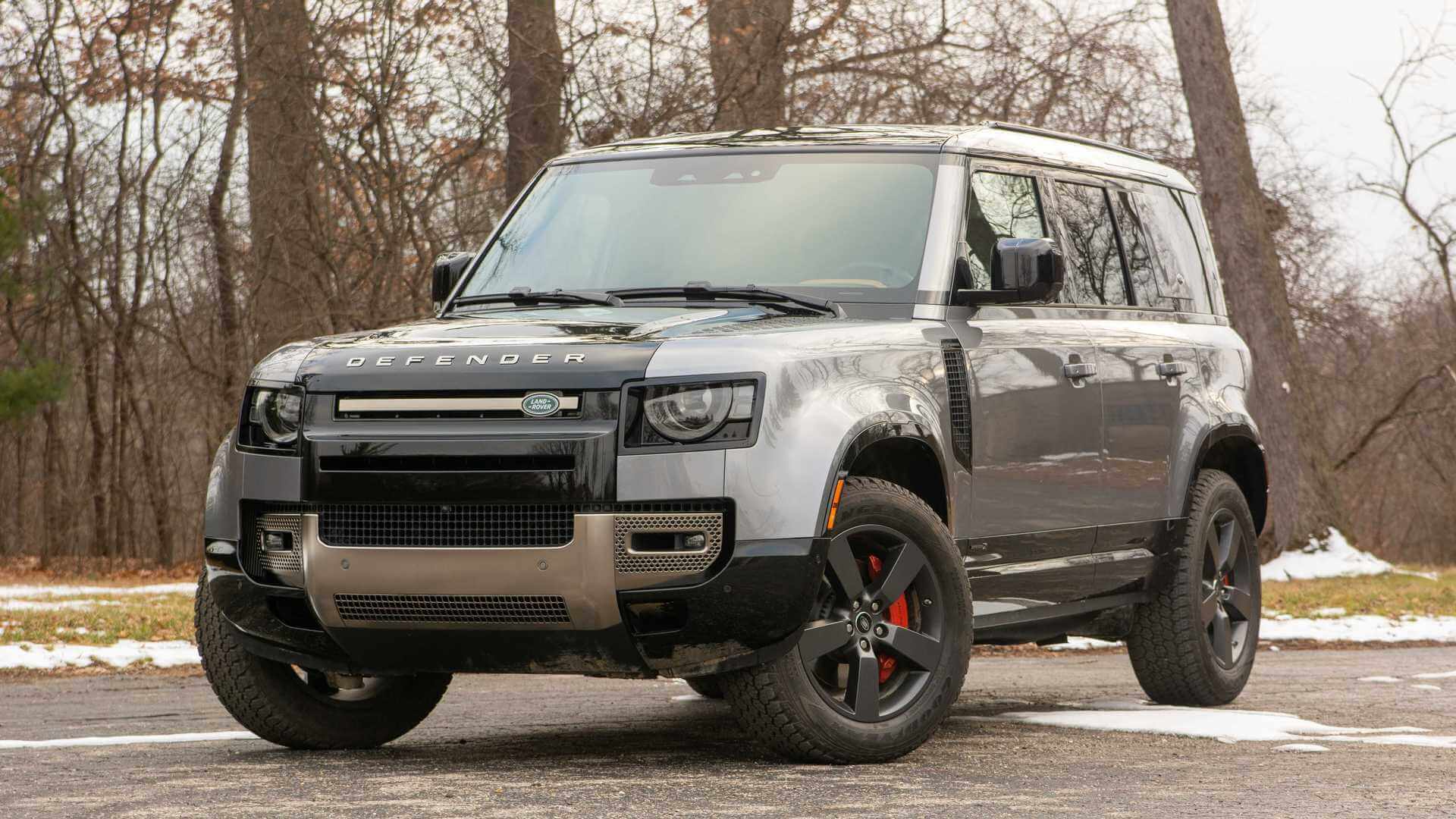
The Land Rover Defender is the British maker's dedicated off-roader and the direct descendant of the 1948 Land Rover Series. There have been two very different generations: the classic ladder-frame car, built in Solihull from 1983 to January 2016 and called Defender from 1990/91, and the L663 with an aluminium monocoque, built in Nitra, Slovakia, and delivered to customers since 2020. The numbers 90, 110 and 130 have marked the body lengths in both.
Key takeaways
- Classic Defender: 1983–2016, steel ladder chassis, aluminium body panels, coil springs and permanent four-wheel drive; engines from 51 kW (68 hp) to 143 kW (192 hp).
- Production of the classic ended at Solihull on 29 January 2016, after just over two million Series and Defender vehicles.
- L663: revealed on 10 September 2019 at the Frankfurt Motor Show, aluminium monocoque (D7x), independent suspension, eight-speed automatic, 147 kW (200 PS) to 467 kW (635 PS).
- Euro NCAP gave the L663 five stars in 2020; in Germany the 110 started at €72,600 and the 90 at €68,900 in 2026.
Land Rover Defender at a glance
| Specification | Classic Defender | Defender L663 |
|---|---|---|
| Production | 1983–2016, Solihull (England) | since 2019, Nitra (Slovakia) |
| Structure | steel ladder chassis, aluminium body | aluminium monocoque, D7x platform |
| Suspension | live axles with coil springs | independent, coil or air springs |
| Bodies | 90, 110, 127/130: wagon, hardtop, soft top, pickup, double cab | 90 (three doors), 110 and 130 (five doors) |
| Engines | 2.2–3.5-litre diesels, 2.5 petrol, V8s, 2.8 straight-six | 2.0 four-cylinder, 3.0 straight-six, 5.0 V8, 4.4 twin-turbo V8 |
| Power | 51–143 kW (68–192 hp) in series models | 147–467 kW (200–635 PS) |
| Gearbox | four-, five- and six-speed manuals; automatic on some V8s | eight-speed ZF automatic |
| Drive | permanent 4WD, two-speed transfer box | permanent 4WD, two-speed transfer box, locking differentials |
| Predecessor | Land Rover Series III | classic Defender |
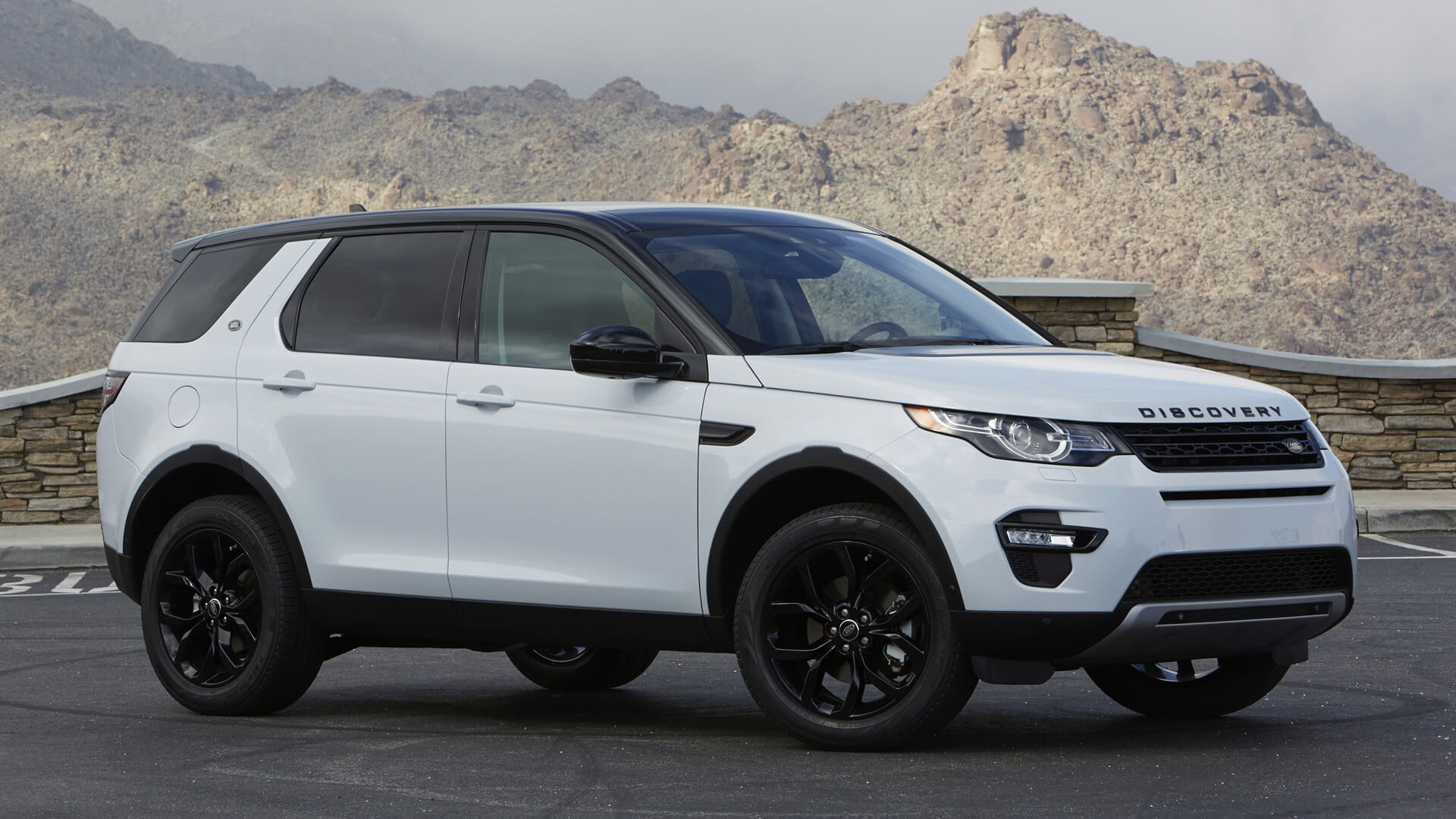
Both generations sit in the Land Rover catalogue next to the Range Rover family and the Land Rover Discovery Sport. The company story behind them is told in our history of Land Rover.
Size at a glance
| Dimensions | Land Rover Defender L663 |
|---|---|
| Length | 4,758 mm187.3 in |
| Width | 2,008 mm79.1 in |
| Height | 1,967 mm77.4 in |
| Wheelbase | 3,022 mm119.0 in |
From Series Land Rover to Ninety and One Ten
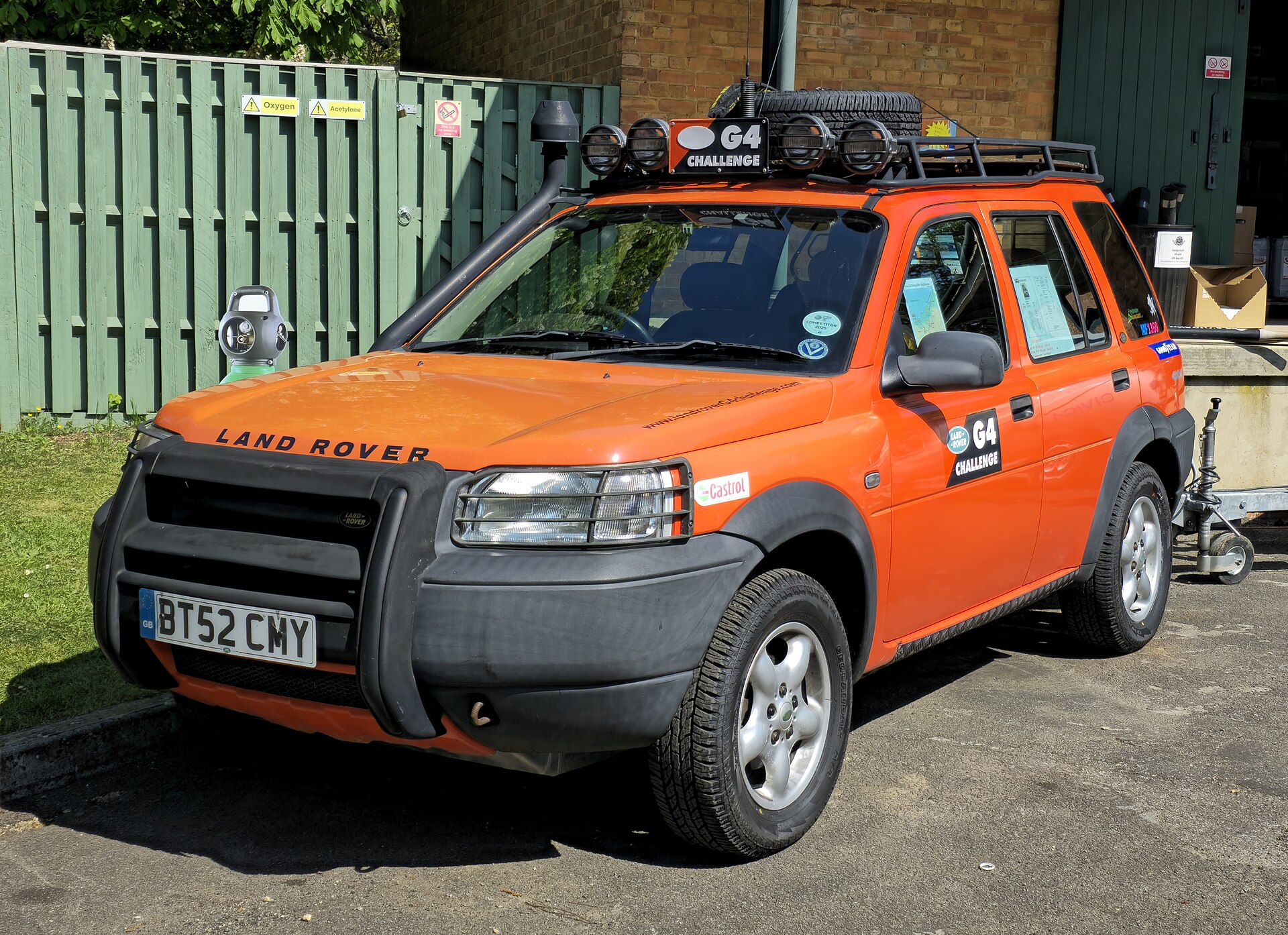
The cars that became the Defender were launched as the One Ten in 1983, the Ninety in 1984 and the long One Two Seven in 1985. The names gave the wheelbase in inches: 110 inches (2,794 mm), 92.9 inches (2,360 mm) and 127 inches (3,226 mm). Compared with the Series III they replaced, they brought coil springs front and rear, which improved ride comfort and axle articulation, and a permanent four-wheel-drive system with a lockable centre differential taken from the Range Rover. A part-time 4WD option was offered at first, but it found few buyers and was gone by 1984.
The name Defender arrived in 1990/91. The Ninety and One Ten became the Defender 90 and Defender 110, and the long-wheelbase car was later sold as the Defender 130.
Payloads reached about 0.6 t for the Ninety, 1.03 t for the One Ten and 1.4 t for the One Two Seven. Body choices ranged from soft top and hardtop to station wagon, pickup, double-cab pickup and high-capacity pickup.

Engines of the classic Defender
The engine range followed the market. Early cars had naturally aspirated petrol and diesel four-cylinders and the Rover V8; from 1990 the direct-injection Tdi diesels carried most of the sales, followed by the five-cylinder Td5 and, at the end, Ford-sourced four-cylinder diesels.
| Engine | Introduced | Power | Torque |
|---|---|---|---|
| 2.5 diesel, naturally aspirated | 1980s | 51 kW (68 hp) | — |
| 2.5 petrol | 1985 | 62 kW (83 hp) | — |
| 3.5 V8 petrol | 1985 | 85 kW (114 hp); 100 kW (134 hp) from 1986 | — |
| 2.5 Diesel Turbo | 1986 | 63 kW (85 hp) | 203 Nm |
| 200Tdi 2.5 | 1990 | 80 kW (107 hp) | 264 Nm |
| 300Tdi 2.5 | 1994 | 83 kW (111 bhp) | 264 Nm |
| Td5 2.5 five-cylinder | 1998 | 91 kW (122 hp) | 300 Nm |
| 2.4 Duratorq (Ford) | 2007 | 91 kW (122 hp) | 359 Nm |
| 2.2 diesel (Ford) | 2012 | 91 kW (122 hp) | 359 Nm |
Two petrol versions stood outside the usual line-up. South Africa received the Defender 2.8i from 1997 to 2001 with BMW's 2,793 cc straight-six, rated at 143 kW (192 hp) and 280 Nm; 1,395 were built. For North America and the 50th Anniversary edition, Land Rover used the Range Rover's 4.0-litre V8 with 140 kW (190 hp) and an automatic gearbox.
The 2007 update with the 2.4 engine brought a six-speed manual gearbox, and the 110 station wagon was now listed with seven seats. The 2.2 that followed in 2012 kept the same output; it was the first Defender engine with a diesel particulate filter, needed for newer emission rules.

The last Solihull years and special editions
Limited editions became a regular part of the classic Defender's later life. The 50th Anniversary model of 1998 was built 1,071 times, 385 of them for the UK. In 2002 a Black edition followed with 92 Defender 90s and 144 double-cab 110s.
The two-millionth Series or Defender vehicle was assembled in May 2015, and the final Defender, a soft-top 90, left the Solihull line on 29 January 2016, closing a run that had started with the Series I in 1948.
In 2018 Land Rover Classic offered the Defender Works V8, 150 restored cars with Jaguar's 5.0-litre V8 and a ZF eight-speed automatic. Wikipedia quotes both 298 kW (400 bhp) and 302 kW (405 hp) for this conversion, with 515 Nm. Land Rover still offers a Works V8 conversion for Defenders of the 2012–2016 model years.

L663: a clean-sheet Defender
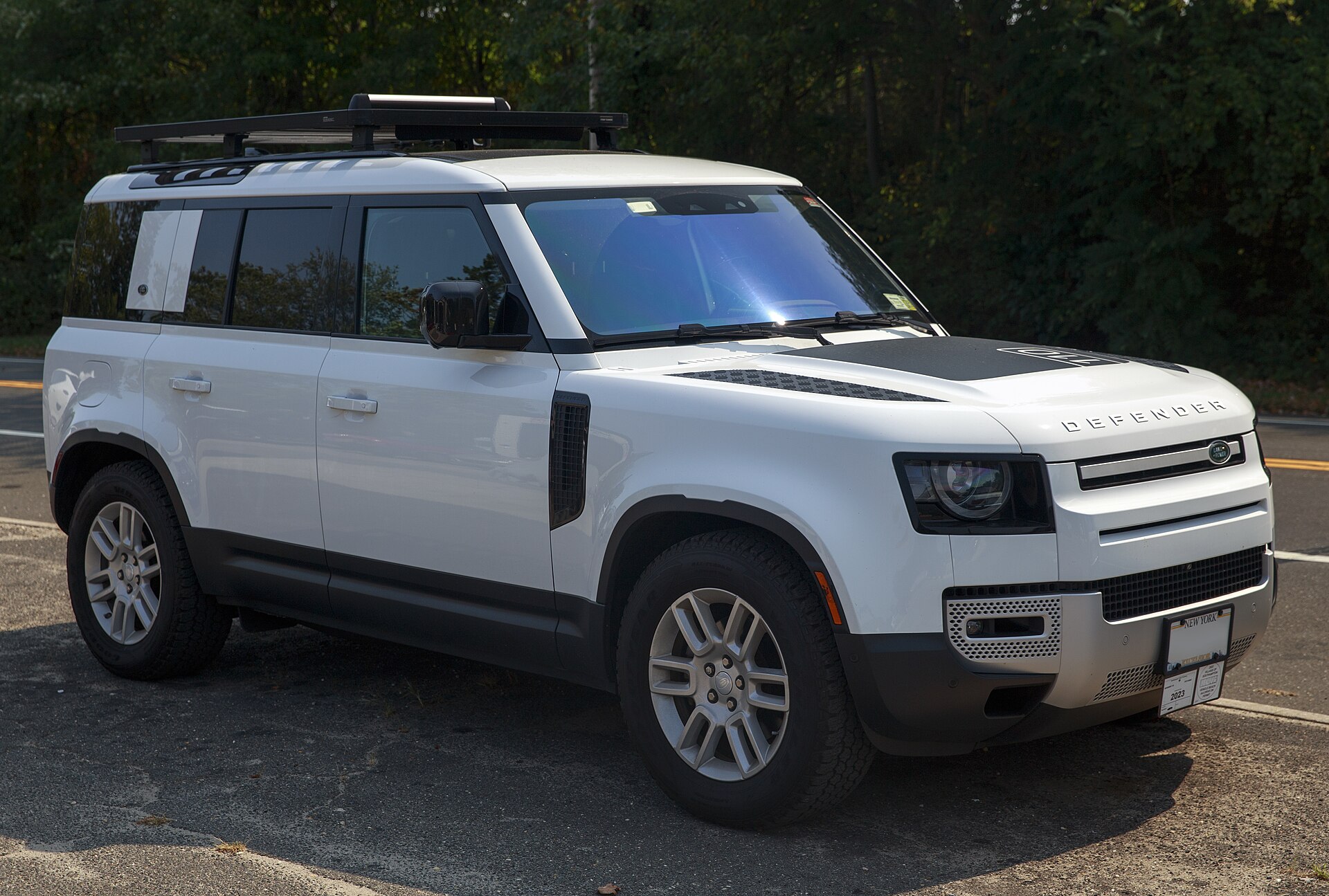
The second-generation Defender was revealed on 10 September 2019 at the Frankfurt Motor Show as the first all-new design since 1983. It shares no components with the classic. The body is an aluminium monocoque on JLR's D7x architecture, and all four wheels are independently suspended, with coil springs or air suspension. The 110 reached customers in early 2020 and the 90 later that year; the 130, a five-door with a longer rear overhang for three seat rows and up to eight seats, followed the same recipe.
Production takes place in JLR's plant in Nitra, Slovakia, which opened on 25 October 2018. All versions use permanent four-wheel drive, a two-speed transfer case and an eight-speed ZF automatic gearbox; centre and rear differential locks are available.
Ground clearance is 291 mm for the 110 and for the 90 with air suspension, and 226 mm for the 90 with coil springs. The front winch mount is rated for 4,536 kg.

L663 engines and performance
The range combines four- and six-cylinder petrol and diesel engines with plug-in hybrid and V8 versions. Figures below are for the 110 unless stated; the 90 is usually 0.1–0.2 s slower to 100 km/h.
| Version | Engine | Power | Torque | 0–100 km/h |
|---|---|---|---|---|
| D200 (2020–) | 3.0 straight-six diesel, mild hybrid | 147 kW (200 PS) | 500 Nm | 9.8–10.2 s |
| D250 (2020–) | 3.0 straight-six diesel, mild hybrid | 183 kW (249 PS) | 570 Nm | 8.0–8.3 s |
| D300 (2020–) | 3.0 straight-six diesel, mild hybrid | 221 kW (300 PS) | 650 Nm | 6.7–7.0 s |
| D350 (2024–) | 3.0 straight-six diesel, mild hybrid | 257 kW (350 PS) | 700 Nm | 6.4 s |
| P300 | 2.0 turbo four-cylinder petrol | 221 kW (300 PS) | 400 Nm | 8.0 s |
| P400 | 3.0 turbo straight-six petrol, mild hybrid | 294 kW (400 PS) | 550 Nm | 6.0 s |
| P400e | 2.0 petrol plug-in hybrid, 13.1 kWh battery | 297 kW (404 PS) | 640 Nm | 5.4 s |
| P525 V8 | 5.0 supercharged V8 petrol | 386 kW (525 PS) | 625 Nm | 5.2 s |
| OCTA (2024–) | 4.4 twin-turbo V8 petrol, mild hybrid | 467 kW (635 PS) | 750 Nm | — |
Early cars also offered 2.0-litre four-cylinder diesels with 147 kW (200 PS) and 177 kW (240 PS) until 2021. Wikipedia gives the P400e an electric range of about 43 km.
The OCTA, shown in July 2024 and offered only as a 110, sits above the V8. It uses a BMW-built S68 twin-turbo V8, "6D Dynamics" suspension, 33-inch tyres and Brembo brake discs of 400 mm at the front. Its wading depth is 1 metre, and the top speed is 210 km/h on 20-inch wheels or 249 km/h on 22-inch wheels.


Sizes: 90, 110 and 130 compared
The new car is larger in every direction than the classic, and the numbers no longer describe the wheelbase. The 110 and 130 share a 3,022 mm wheelbase; the 130 adds length behind the rear axle.
| Body | Wheelbase | Length | Height |
|---|---|---|---|
| Classic Defender 90 | 2,360 mm | 4,077 mm (1990–94) | — |
| Classic Defender 110 | 2,794 mm | about 4,600 mm | — |
| Classic Defender 130 | 3,226 mm | 5,182 mm | — |
| L663 Defender 90 | 2,587 mm | 4,323–4,583 mm | 1,969–1,974 mm |
| L663 Defender 110 | 3,022 mm | 4,758–5,018 mm | 1,967 mm |
| L663 Defender 130 | 3,022 mm | 5,170–5,358 mm | — |
Lengths vary with the version and equipment. The L663 is 2,008 mm wide with the mirrors folded, and its kerb weight runs from 2,228 to 2,697 kg depending on body and engine. Before buying, owners of narrow garages can check the fit with our garage fit calculator.

Safety and the 2025 update
Euro NCAP tested a Defender 110 2.0 diesel SE and published a five-star rating in December 2020. The car scored 85 % for adult occupants, 85 % for child occupants, 71 % for vulnerable road users and 79 % for safety assist. Additional checks in 2021 confirmed that the rating also applies to the plug-in hybrid.
On 28 May 2025 Land Rover unveiled the update for the 2026 model year. The headlights and tail lights now sit flush with the body, the touchscreen grows from 11.4 to 13.1 inches, and Adaptive Off-Road Cruise Control was added. In the European Union a driver attention monitor mounted on the steering column is standard.
Prices in Germany
Land Rover Germany listed the following starting prices in October 2026, including 19 % VAT:
| Version | Price from (Germany, 2026) |
|---|---|
| Defender 90 | €68,900 |
| Defender 110 | €72,600 |
| Defender 130 | €100,800 |
| Defender OCTA | €181,400 |
Which Defender to choose
The classic Defender suits buyers who want a simple vehicle with a separate chassis and live axles, and who accept a cramped cabin and a basic level of safety equipment. Cars with the 200Tdi or 300Tdi date from 1990–1998, while the 2.4 and 2.2 cars of 2007–2016 have the six-speed gearbox and a diesel particulate filter on the last versions.
The L663 is the choice for families and anyone who drives long distances on the road as well as off it. The 110 with a six-cylinder diesel is the middle of the range, the 90 is the shortest and most agile, and the 130 is the only Defender with eight seats. Those comparing it with other large off-roaders, such as the Toyota Land Cruiser 200, can line up the figures in our car comparisons.
Photo gallery

FAQ
What do 90, 110 and 130 mean on a Defender?
On the classic car they gave the wheelbase in inches (about 93, 110 and 127). On the L663 they are body names: a three-door 90, a five-door 110 and a five-door 130 with three seat rows.
When did the old Defender stop being built?
The last classic Defender was built at Solihull on 29 January 2016. The new generation was revealed in September 2019 and went on sale in 2020.
Where is the new Defender made?
At JLR's plant in Nitra, Slovakia, which opened in October 2018.
How safe is the Defender L663?
Euro NCAP rated it five stars in 2020, with 85 % for adult occupants and 85 % for child occupants.