The History of Land Rover: From an Anglesey Farm to a Global 4x4 Brand
Land Rover is a British maker of four-wheel-drive vehicles. Today it is part of Jaguar Land Rover (JLR), owned by India's Tata Motors since 2008. The name began as a single utility vehicle that the Rover Company launched on 30 April 1948 at the Amsterdam Motor Show. It grew into a brand with the Range Rover, Discovery and Defender families, and in 2016 it sold a record 434,582 vehicles.

Key takeaways
- 1947: Rover's chief designer Maurice Wilks and his brother Spencer design the first Land Rover on Maurice's farm in Anglesey, Wales.
- 1948–1985: the Series I, II and III utility models; the Range Rover arrives in 1970.
- Owners: Rover, British Leyland, British Aerospace (1988), BMW (1994), Ford (2000), Tata Motors (2008).
- Today: Range Rover, Defender and Discovery models built in the UK, Slovakia, India, China and Brazil.

The brand in figures

| Fact | Value |
|---|---|
| First vehicle | Land Rover (later Series I), launched 30 April 1948, Amsterdam |
| Creators | Maurice Wilks (chief designer) and Spencer Wilks (managing director) of Rover |
| Separate company | Land Rover Limited, 1978, within British Leyland |
| Parent today | Jaguar Land Rover Limited, owned by Tata Motors since 2 June 2008 |
| Main UK sites | Solihull and Halewood plants; Gaydon and Whitley engineering centres |
| Overseas plants | Nitra (Slovakia), Pune (India), Changshu (China, with Chery), Itatiaia (Brazil) |
| Best sales year | 434,582 vehicles in 2016 |
The Wilks brothers and the 1948 original
After the war, steel for car bodies was scarce. The Rover Company had a factory at Solihull, near Birmingham, and its chief designer, Maurice Wilks, used an ex-army Jeep on his farm at Newborough on Anglesey. In 1947 he and his brother Spencer, Rover's managing director, decided to build a British farm vehicle of the same kind. The first prototype used a Jeep chassis and components.

The production version had an aluminium-alloy body, because aluminium was easier to get than steel, and a 1.6-litre petrol engine with about 37 kW (50 hp). The old 1cars text noted that early vehicles were painted in light green shades taken from surplus aircraft paint. After the British Army ordered 1,878 vehicles in 1949, Land Rovers were also offered in the army's dark green. Full Series I production began at Solihull soon after the launch. The first pre-production vehicle, known as "Huey" (HUE 166), survives at the British Motor Museum in Gaydon. King George VI granted the brand a Royal Warrant in 1951.
The Series years and the first Range Rover (1948–1978)
Sales went far beyond the farming market Rover expected. Nearly 200,000 had been built when the Series II arrived in 1958. The Series IIA followed in 1961, and more than half a million Series II and IIA vehicles were made in their 13-year run. The one-millionth vehicle left the line in 1976. Military versions such as the Forward Control (1962) and the air-portable Lightweight (1968) widened the range. The Series III ran from 1971 to 1985.

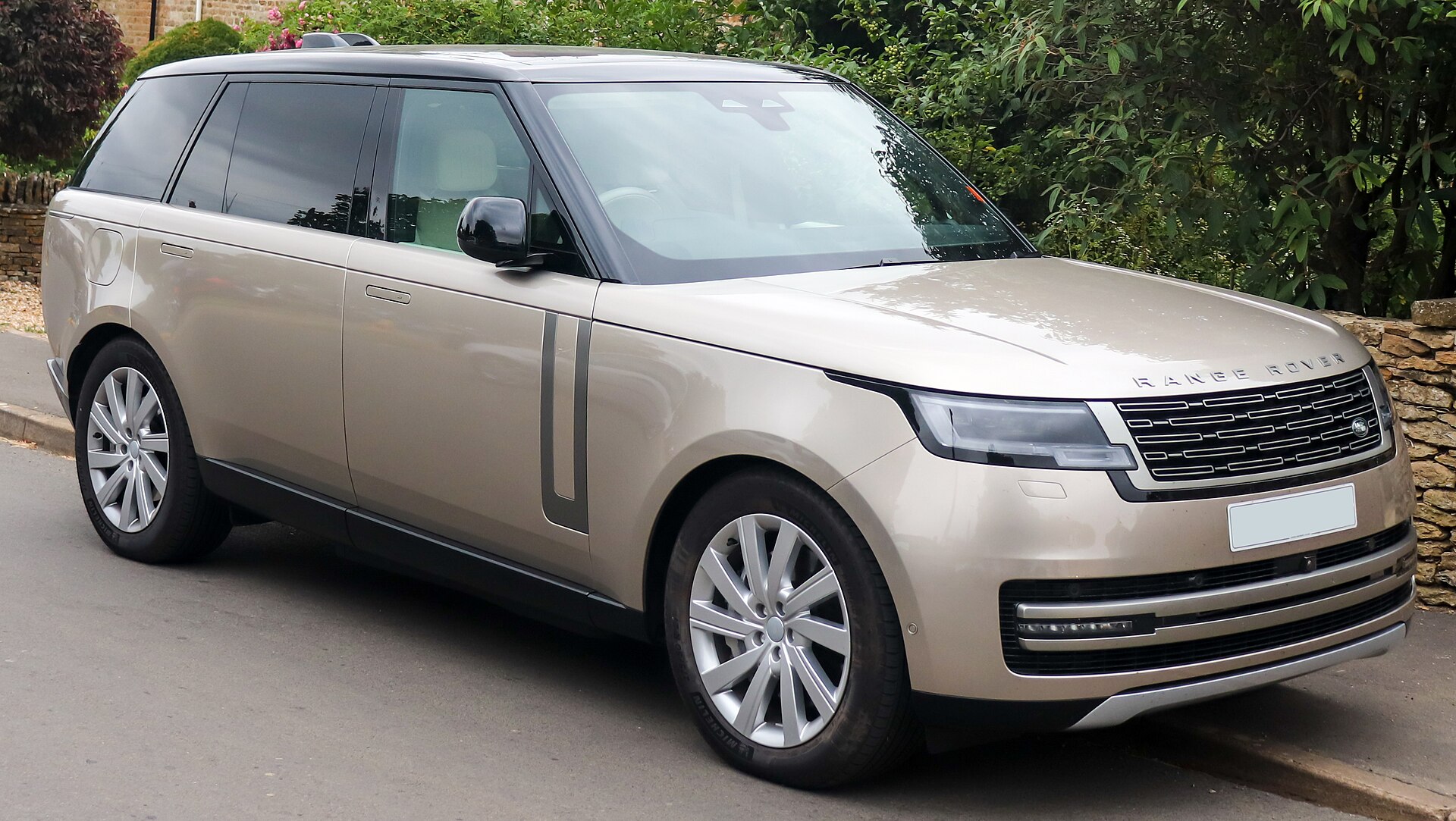
In 1967 Rover became part of Leyland Motors, later British Leyland. Three years later it launched the Range Rover, which combined the off-road ability of the utility models with a comfortable cabin and a 3.5-litre V8. It created the luxury 4x4 class. After the state took over British Leyland in 1975, the group made the 4x4 business a separate company, and Land Rover Limited followed in 1978.
Ninety, One Ten, Discovery and Defender (1979–1999)
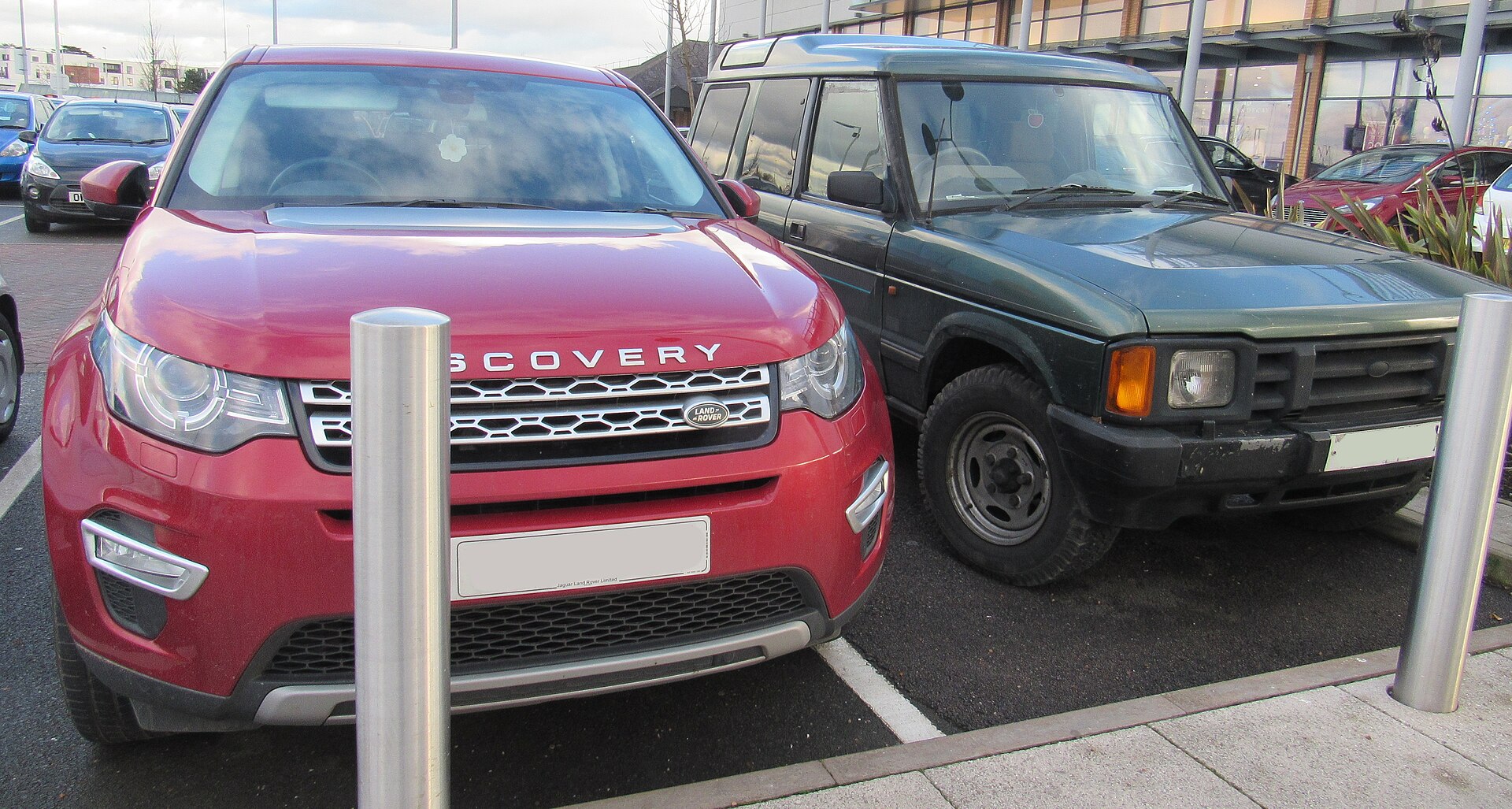
From 1980 Solihull built only four-wheel-drive models, and a five-door Range Rover was added. The Ninety and One Ten models of 1983–1984 brought coil springs and more comfort to the utility range. In 1988 the Rover Group was privatised and sold to British Aerospace. The family-sized Discovery appeared in 1989 and was replaced by the Discovery II in 1998. In 1990 the Ninety and One Ten took the name Defender. The British Army ordered 8,000 military Defenders, codenamed "Wolf", in 1996.

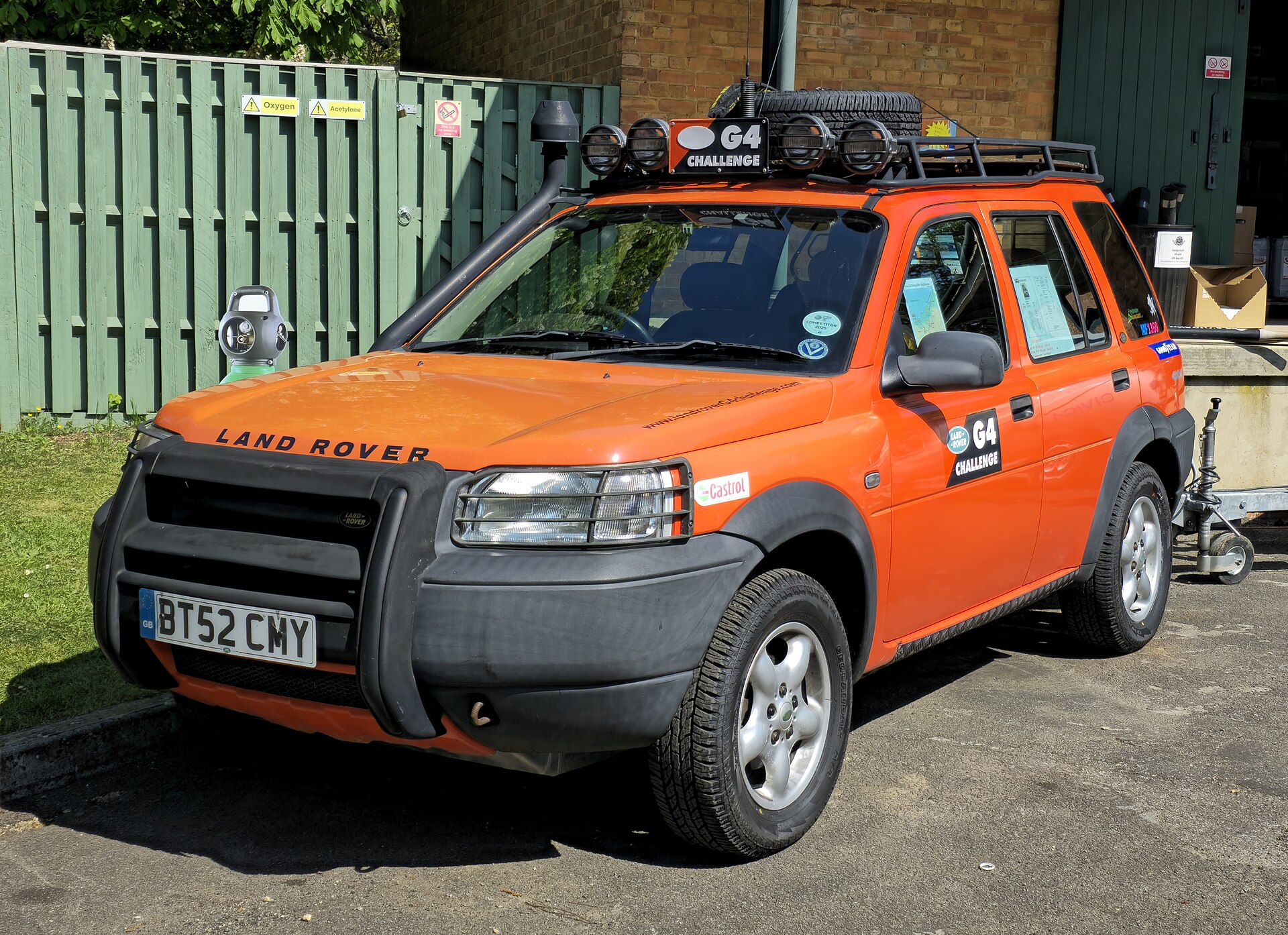
BMW bought the Rover Group in 1994, the year the second-generation Range Rover went on sale. The compact Freelander followed in 1997, the brand's first monocoque model and a big seller in Europe. Halewood near Liverpool, a former Ford plant, later made Freelander bodies, and Pune in India assembled kits. Partners such as Santana in Spain built licensed or kit versions of the utility models.
Ford, Tata and Jaguar Land Rover (2000–2019)
In 2000 BMW sold the brand to Ford, which placed it in its Premier Automotive Group with Jaguar, Volvo and Aston Martin. Ford agreed on 26 March 2008 to sell Jaguar and Land Rover to Tata Motors, and the sale was completed on 2 June 2008. On 1 January 2013 the two brands merged into Jaguar Land Rover Limited.

The Tata years brought strong growth. The Range Rover Evoque of 2011 opened a new compact premium class, and a joint venture with Chery began building Evoques at Changshu in China in 2014. The company unveiled the Velar on 1 March 2017. New plants opened in Pune (2011), Itatiaia in Brazil (June 2016) and Nitra in Slovakia (October 2018). The original Defender ended production in 2016 after 68 years of the Series and Defender line.
The new Defender and the house of brands (2019–today)
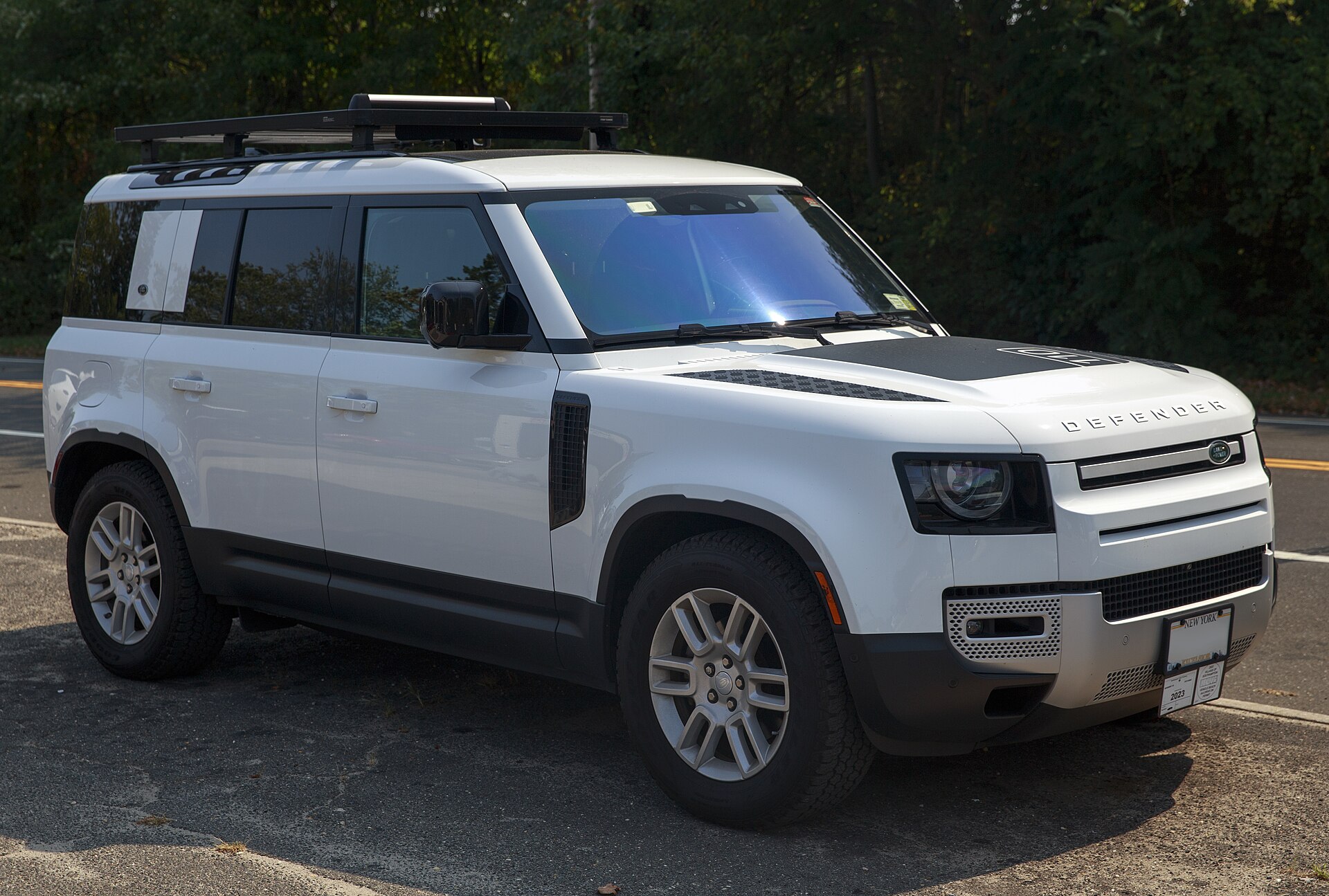
JLR revealed the new Defender (L663) in 2019 and put it on sale in 2020. It is built in Nitra alongside the Discovery and uses a monocoque body instead of the old separate chassis.

JLR now markets its 4x4s under three family names, Range Rover, Defender and Discovery, with the original brand as the maker behind them. The Discovery Sport, built at Halewood and abroad, was the best-selling model in 2018 with 95,520 units. The performance side is covered by the Sport SVR, and the sister brand's story is told in the history of Jaguar.
Landmark models since 1948
| Model | Years | Why it matters |
|---|---|---|
| Series I | 1948–1958 | The original utility 4x4, built on a Jeep-inspired layout |
| Series III | 1971–1985 | Last of the leaf-sprung Series line |
| Range Rover (Classic) | 1970–1996 | Created the luxury 4x4 class |
| Discovery | 1989– | Family 4x4 between the utility models and the Range Rover |
| Defender (Ninety/One Ten) | 1983–2016 | Coil-sprung utility icon; name from 1990 |
| Freelander | 1997–2015 | First monocoque Land Rover |
| Range Rover Evoque | 2011– | Opened the compact premium SUV class |
| Defender (L663) | 2020– | Modern monocoque reboot |
The Series and original Defender line lasted 68 years. By our calculation that is about 2.7 times the 25-year life of the first Range Rover. The 2016 sales record was about three times the 144,371 vehicles sold in 2009, a year after the Tata takeover.

Expeditions, rallies and the Camel Trophy
The brand's reputation was built in hard use rather than on circuits. The Series models and Defenders became standard transport for armies, aid agencies and expeditions across Africa, Asia and Australia. They were the vehicles of the Camel Trophy adventure competition, and heavily modified versions have also run in the Dakar Rally. About 70 % of all the vehicles ever made are said to be still on the road.

Compared with Jeep and Toyota
Its two historic rivals are Jeep, whose wartime vehicle inspired the first Land Rover, and Toyota with the Land Cruiser. Jeep stayed closer to the simple off-roader, and Toyota built a reputation for reliability in remote regions. The British brand moved further upmarket than both, with the Range Rover as a luxury car. The trade-off is reliability: owner surveys have often placed recent models below average. To compare current models on size and data, use the 1cars comparison tool, the ranking of the most powerful SUVs and the 4x4 section.

Which of the 4x4s to buy
For classic collectors, a Series IIA or III is the simplest and cheapest entry, while a Defender 90 or 110 has the strongest values. For a family vehicle, a used Discovery Sport is the most affordable modern choice, and the Discovery offers seven seats with real off-road ability. The new Defender is the best all-rounder of today's range. Buyers of any recent model should check the service record, air suspension and electronics, and ask for an extended warranty.

FAQ
Who founded Land Rover?
Land Rover was created by Maurice Wilks, chief designer of the Rover Company, and his brother Spencer Wilks, Rover's managing director. They designed the first vehicle in 1947 on Maurice's farm in Anglesey, and it was launched in Amsterdam on 30 April 1948.
Who owns Land Rover now?
Land Rover belongs to Jaguar Land Rover Limited, which India's Tata Motors bought from Ford in June 2008. Earlier owners included British Leyland, British Aerospace, BMW and Ford.
When did the original Defender stop production?
The original Defender left the Solihull line for the last time in 2016, closing a run that began with the Series I in 1948. The new Defender (L663) was revealed in 2019 and is built in Nitra, Slovakia.
Where are Land Rovers made?
Land Rovers are built at Solihull and Halewood in England, at Nitra in Slovakia, in Pune in India, at Changshu in China with Chery, and at Itatiaia in Brazil. Engineering is based at Gaydon and Whitley in the UK.
Is Land Rover the same as Range Rover?
Range Rover began in 1970 as a Land Rover model. Today it is one of three family names, with Defender and Discovery, used by Jaguar Land Rover. All of them are made by the same company.
Photos (2)


Videos 2

Video 1

Video 2