
 Land Rover Range Rover Velar
Specs, engines and history
Updated Published Sources (7) Report an error
By Felix Hartmann, Automotive Technology & EV Contributor Reviewed by Oleksandr Hnatiuk

- Built
- 2017–present
- Top power
- 405 kW (551 PS)
- New price
- from about €56,400 (2017)
- Used price today
- about €19,500–32,500 (AutoScout24, Nov 2026)
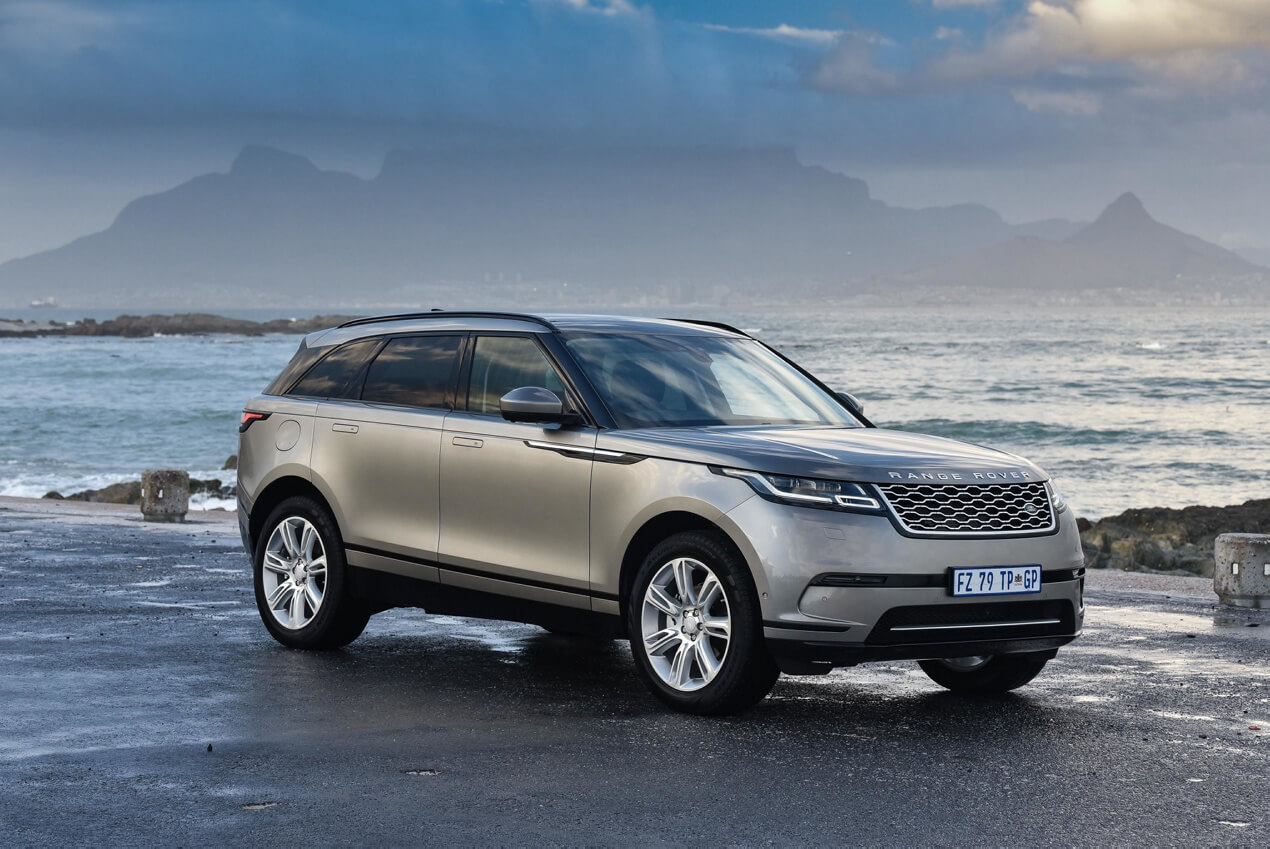
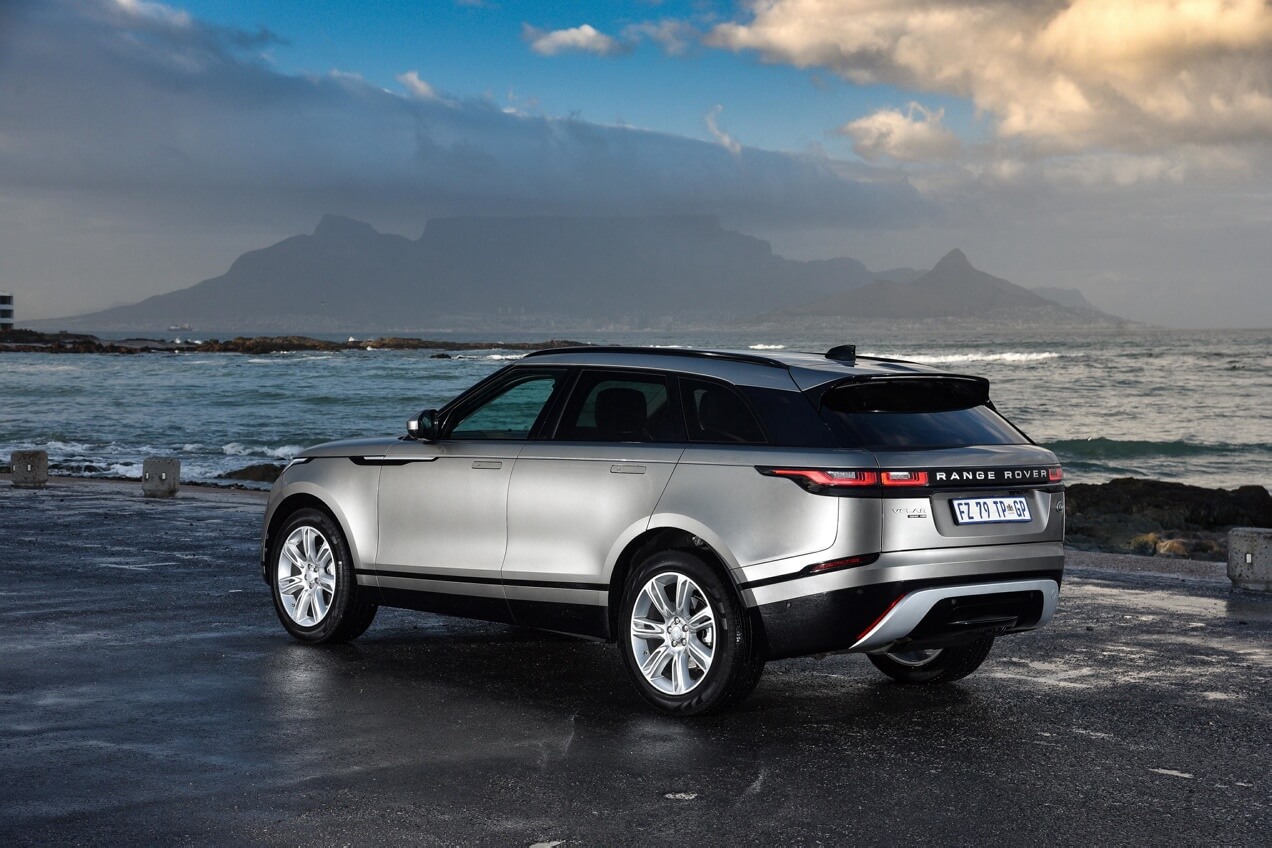
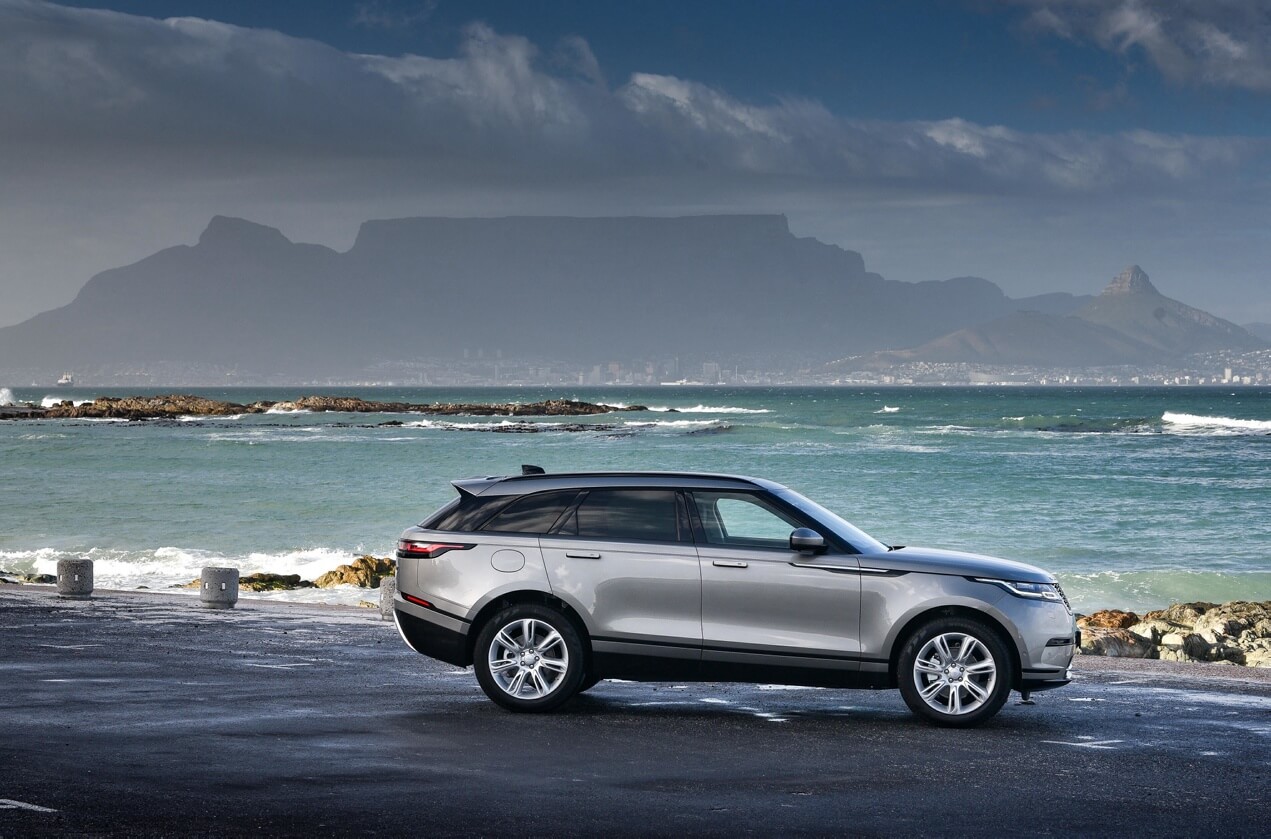
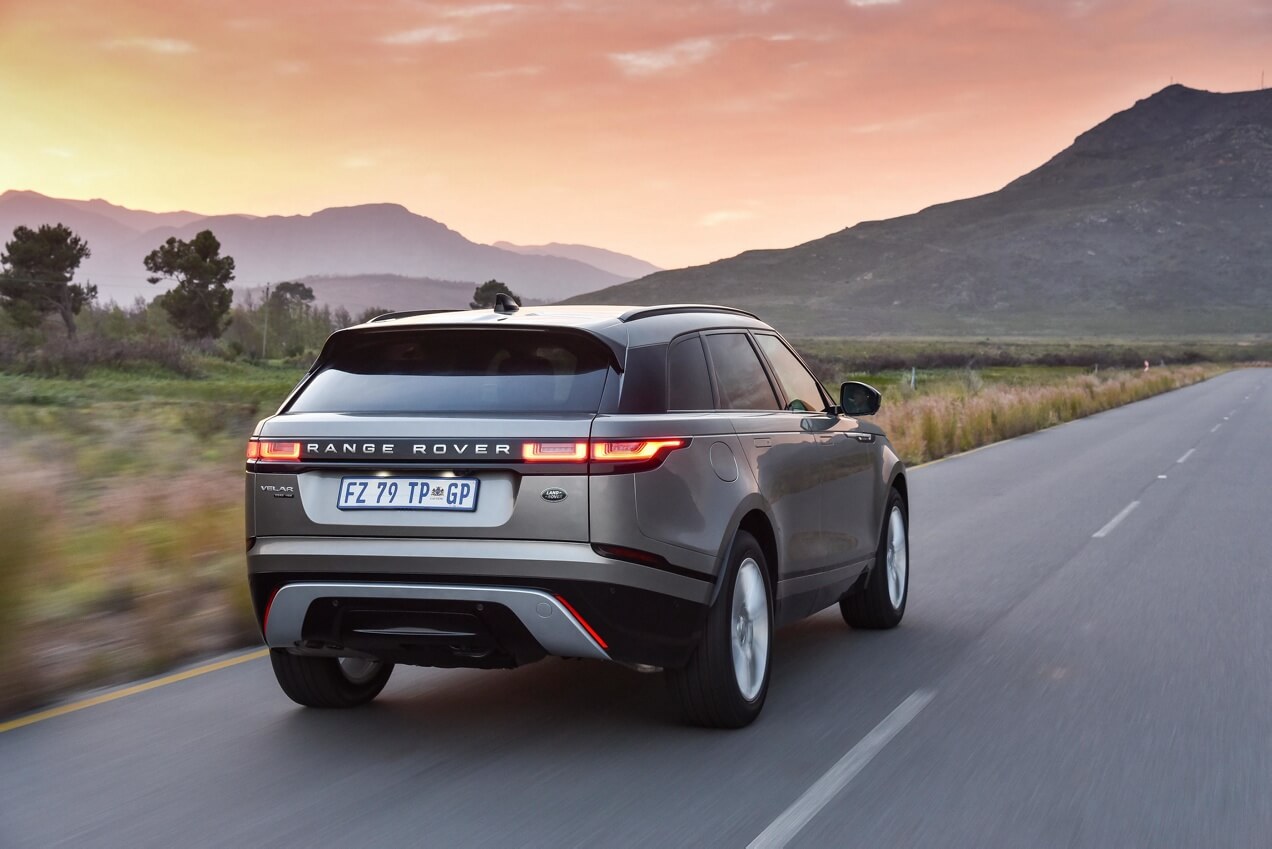
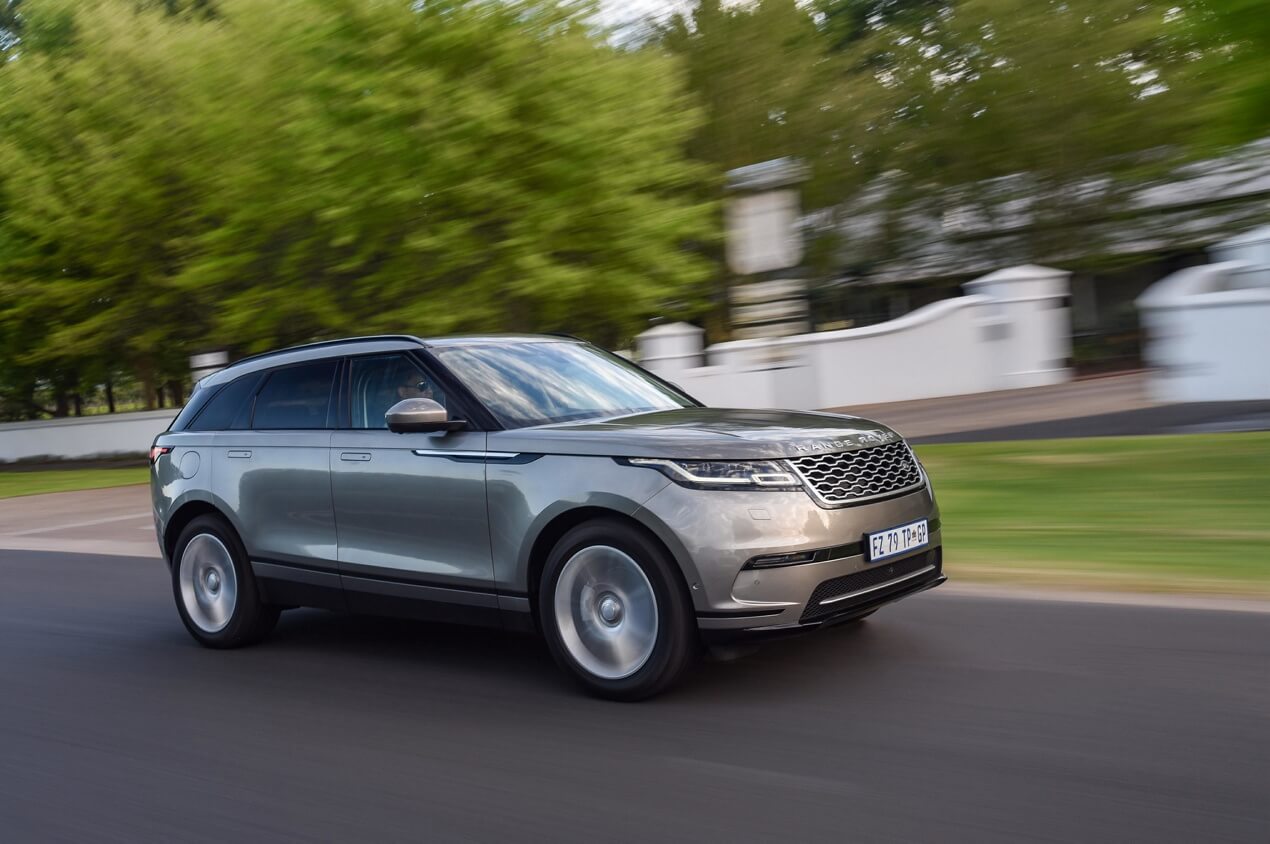
The Range Rover Velar is a mid-size luxury SUV that Land Rover unveiled at London's Design Museum on 1 March 2017 and has built in Solihull ever since. It sits between the Evoque and the Range Rover Sport, shares its aluminium platform with the Jaguar F-Pace, and has offered engines from 132 to 405 kW, including a plug-in hybrid since 2020.
In short
- Launch: revealed 1 March 2017, shown at Geneva a week later, on sale from summer 2017; built in Solihull, England.
- Engines: four- and six-cylinder petrol and diesel units, a 5.0 V8 special edition and the P400e plug-in hybrid with 297 kW.
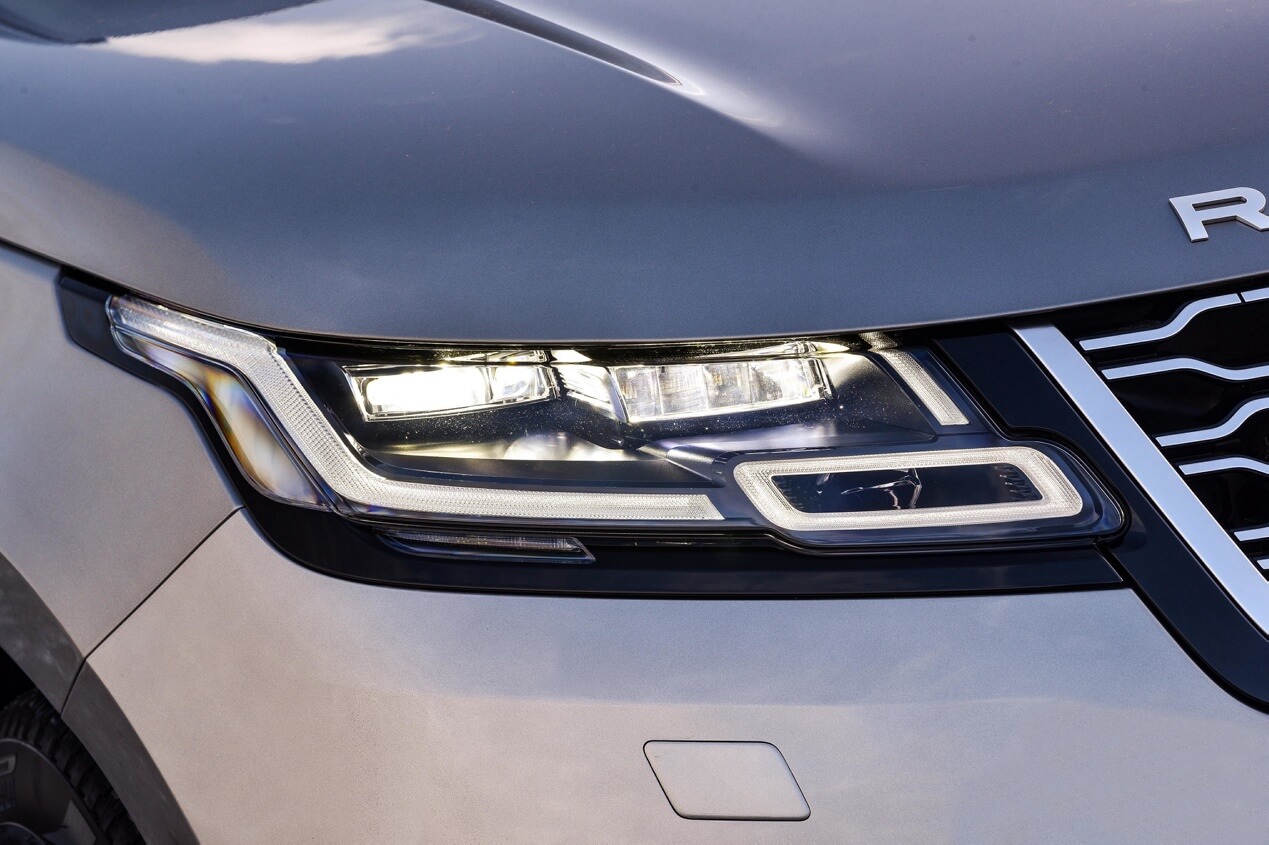
- 2023 facelift: one 11.4-inch curved screen, pixel LED lights and a PHEV battery good for 64 km on electricity.
- Next step: Land Rover has said the second-generation Velar will be battery-electric only.

Size at a glance
| Dimensions | Land Rover Range Rover Velar |
|---|---|
| Length | 4,797 mm188.9 in |
| Width | 1,933 mm76.1 in |
| Height | 1,685 mm66.3 in |
| Wheelbase | 2,874 mm113.1 in |
| Boot | 559 L19.7 cu ft |
Running cost
Fuel · Range Rover Velar D300 (3.0 V6)
about 1,950 EUR fuel a year at 15,000 km
7.8 l/100 km · diesel at 1.65 EUR/l · change mileage, fuel price or version
Specs by version
Engines
| Version | Engine | Power | Torque | Gearbox | Drive | Production years |
|---|---|---|---|---|---|---|
| Plug-in hybrid · 1 version | ||||||
| P400e (2.0 PHEV) | 4 cyl · Plug-in hybrid | 297 kW 404 PS398 hp | - | - | All-wheel drive | 2020 |
| Diesel · 6 versions | ||||||
| 2 L 4 cyl Automatic (S8) · 2019 (EPA) | 2.0 l · 4 cyl · Diesel 2,000 cc | - | - | 8-sp Automatic | All-wheel drive | 2019 |
| D180 | 4 cyl · Diesel | 132 kW 179 PS177 hp | 430 Nm317 lb-ft | 8-sp Automatic | All-wheel drive | 2017–2020 |
| D200 | 4 cyl · Diesel | 150 kW 204 PS201 hp | - | - | All-wheel drive | 2020 |
| D240 | 4 cyl · Diesel | 177 kW 241 PS237 hp | 500 Nm369 lb-ft | 8-sp Automatic | All-wheel drive | 2017–2020 |
| D275 | 6 cyl · Diesel | 202 kW 275 PS271 hp | 625 Nm461 lb-ft | 8-sp Automatic | All-wheel drive | 2018–2020 |
| D300 (3.0 V6) | 6 cyl · Diesel | 221 kW 300 PS296 hp | 700 Nm516 lb-ft | 8-sp Automatic | All-wheel drive | 2017–2020 |
| Petrol · 6 versions | ||||||
| P250 | 4 cyl · Petrol | 184 kW 250 PS247 hp | 365 Nm269 lb-ft | 8-sp Automatic | All-wheel drive | 2017 |
| P300 | 4 cyl · Petrol | 221 kW 300 PS296 hp | 400 Nm295 lb-ft | 8-sp Automatic | All-wheel drive | 2017–2020 |
| P340 | 6 cyl · Petrol | 250 kW 340 PS335 hp | 450 Nm332 lb-ft | 8-sp Automatic | All-wheel drive | 2018 |
| P380 | 6 cyl · Petrol | 279 kW 379 PS374 hp | 450 Nm332 lb-ft | 8-sp Automatic | All-wheel drive | 2017–2020 |
| P400 (3.0 I6) | 6 cyl · Petrol | 294 kW 400 PS394 hp | - | - | All-wheel drive | 2020 |
| SVAutobiography Dynamic Edition (5.0 V8) | 8 cyl · Petrol | 405 kW 551 PS543 hp | - | - | All-wheel drive | - |
| Other · 12 versions | ||||||
| 2 L 4 cyl Automatic (S8) · 2026 (EPA) | 2.0 l · 4 cyl 2,000 cc | - | - | 8-sp Automatic | All-wheel drive | 2026 |
| 2 L 4 cyl Automatic (S8) · 2025 (EPA) | 2.0 l · 4 cyl 2,000 cc | - | - | 8-sp Automatic | All-wheel drive | 2025 |
| 2 L 4 cyl Automatic (S8) · 2024 (EPA) | 2.0 l · 4 cyl 2,000 cc | - | - | 8-sp Automatic | All-wheel drive | 2024 |
| 2 L 4 cyl Automatic (S8) · 2023 (EPA) | 2.0 l · 4 cyl 2,000 cc | - | - | 8-sp Automatic | All-wheel drive | 2023 |
| 2 L 4 cyl Automatic (S8) · 2022 (EPA) | 2.0 l · 4 cyl 2,000 cc | - | - | 8-sp Automatic | All-wheel drive | 2022 |
| 2 L 4 cyl Automatic (S8) · 2021 (EPA) | 2.0 l · 4 cyl 2,000 cc | - | - | 8-sp Automatic | All-wheel drive | 2021 |
| 2 L 4 cyl Automatic (S8) · 2020 (EPA) | 2.0 l · 4 cyl 2,000 cc | - | - | 8-sp Automatic | All-wheel drive | 2020 |
| 2 L 4 cyl Automatic (S8) · 2019 (EPA) | 2.0 l · 4 cyl 2,000 cc | - | - | 8-sp Automatic | All-wheel drive | 2019 |
| 3 L 6 cyl Automatic (S8) · 2020 (EPA) | 3.0 l · 6 cyl 3,000 cc | - | - | 8-sp Automatic | All-wheel drive | 2020 |
| 3 L 6 cyl Automatic (S8) · 2019 (EPA) | 3.0 l · 6 cyl 3,000 cc | - | - | 8-sp Automatic | All-wheel drive | 2019 |
| 5 L 8 cyl Automatic (S8) · 2021 (EPA) | 5.0 l · 8 cyl 5,000 cc | - | - | 8-sp Automatic | All-wheel drive | 2021 |
| 5 L 8 cyl Automatic (S8) · 2020 (EPA) | 5.0 l · 8 cyl 5,000 cc | - | - | 8-sp Automatic | All-wheel drive | 2020 |
Performance
Show all 20 versions
| Version | Fuel consumption | CO₂ |
|---|---|---|
| Diesel · 6 versions | ||
| 2 L 4 cyl Automatic (S8) · 2019 (EPA) | 8.4 l/100 km28.0 mpg US · 33.6 mpg UK | - |
| D180 | 7.0 l/100 km33.6 mpg US · 40.4 mpg UK | 183 g/km |
| D200 | 6.5 l/100 km36.2 mpg US · 43.5 mpg UK | 171 g/km |
| D240 | - | 189 g/km |
| D275 | - | 206 g/km |
| D300 (3.0 V6) | 7.8 l/100 km30.2 mpg US · 36.2 mpg UK | 205 g/km |
| Petrol · 2 versions | ||
| P250 | 9.6 l/100 km24.5 mpg US · 29.4 mpg UK | 218 g/km |
| P300 | - | 230 g/km |
| Other · 12 versions | ||
| 2 L 4 cyl Automatic (S8) · 2026 (EPA) | 10.2 l/100 km23.1 mpg US · 27.7 mpg UK | - |
| 2 L 4 cyl Automatic (S8) · 2025 (EPA) | 10.2 l/100 km23.1 mpg US · 27.7 mpg UK | - |
| 2 L 4 cyl Automatic (S8) · 2024 (EPA) | 10.2 l/100 km23.1 mpg US · 27.7 mpg UK | - |
| 2 L 4 cyl Automatic (S8) · 2023 (EPA) | 10.2 l/100 km23.1 mpg US · 27.7 mpg UK | - |
| 2 L 4 cyl Automatic (S8) · 2022 (EPA) | 10.2 l/100 km23.1 mpg US · 27.7 mpg UK | - |
| 2 L 4 cyl Automatic (S8) · 2021 (EPA) | 10.2 l/100 km23.1 mpg US · 27.7 mpg UK | - |
| 2 L 4 cyl Automatic (S8) · 2020 (EPA) | 10.2 l/100 km23.1 mpg US · 27.7 mpg UK | - |
| 2 L 4 cyl Automatic (S8) · 2019 (EPA) | 10.2 l/100 km23.1 mpg US · 27.7 mpg UK | - |
| 3 L 6 cyl Automatic (S8) · 2020 (EPA) | 11.8 l/100 km19.9 mpg US · 23.9 mpg UK | - |
| 3 L 6 cyl Automatic (S8) · 2019 (EPA) | 11.8 l/100 km19.9 mpg US · 23.9 mpg UK | - |
| 5 L 8 cyl Automatic (S8) · 2021 (EPA) | 13.8 l/100 km17.0 mpg US · 20.5 mpg UK | - |
| 5 L 8 cyl Automatic (S8) · 2020 (EPA) | 13.8 l/100 km17.0 mpg US · 20.5 mpg UK | - |
Dimensions and weight
Show all 12 versions
| Version | Wheelbase | Kerb weight | Boot | Fuel tank |
|---|---|---|---|---|
| Plug-in hybrid · 1 version | ||||
| P400e (2.0 PHEV) | 2,874 mm113.1 in | - | - | - |
| Diesel · 5 versions | ||||
| D180 | 2,874 mm113.1 in | 1,899 kg4,187 lb | 559 l19.7 cu ft | 92 l24.3 gal US |
| D200 | 2,874 mm113.1 in | 2,049 kg4,517 lb | - | - |
| D240 | - | 1,968 kg4,339 lb | - | - |
| D275 | - | 2,090 kg4,608 lb | 559 l19.7 cu ft | 92 l24.3 gal US |
| D300 (3.0 V6) | - | 2,164 kg4,771 lb | 559 l19.7 cu ft | 92 l24.3 gal US |
| Petrol · 6 versions | ||||
| P250 | - | 1,996 kg4,400 lb | 559 l19.7 cu ft | 92 l24.3 gal US |
| P300 | - | 1,941 kg4,279 lb | - | - |
| P340 | - | - | 559 l19.7 cu ft | 92 l24.3 gal US |
| P380 | - | - | 559 l19.7 cu ft | 92 l24.3 gal US |
| P400 (3.0 I6) | 2,874 mm113.1 in | - | - | - |
| SVAutobiography Dynamic Edition (5.0 V8) | 2,874 mm113.1 in | - | - | - |
Verified Manufacturer and type-approval data from our catalog · Sources and methodology
Range Rover Velar specifications at a glance

| Item | Figure |
|---|---|
| Model code | L560 |
| Production | 2017 to date, Solihull, England |
| Platform | JLR iQ[Al] (D7a), mostly aluminium |
| Length / width / height | 4,803 / 1,930 / 1,665 mm |
| Wheelbase | 2,874 mm |
| Power range | 132–405 kW (180–550 PS) |
| Gearbox | 8-speed ZF automatic, all-wheel drive |
| Towing | up to 2,500 kg |
| Safety | five stars, Euro NCAP 2017 |
A Range Rover name from 1969
"Velar" is not a new word for Land Rover. In 1969 the engineers who built pre-production prototypes of the first Range Rover badged them Velar to hide what they were testing. Almost half a century later the name returned for the fourth model in the Range Rover family. Land Rover released teaser photos on 22 February 2017, unveiled the car in London on 1 March and showed it to the public at the Geneva Motor Show on 7 March.

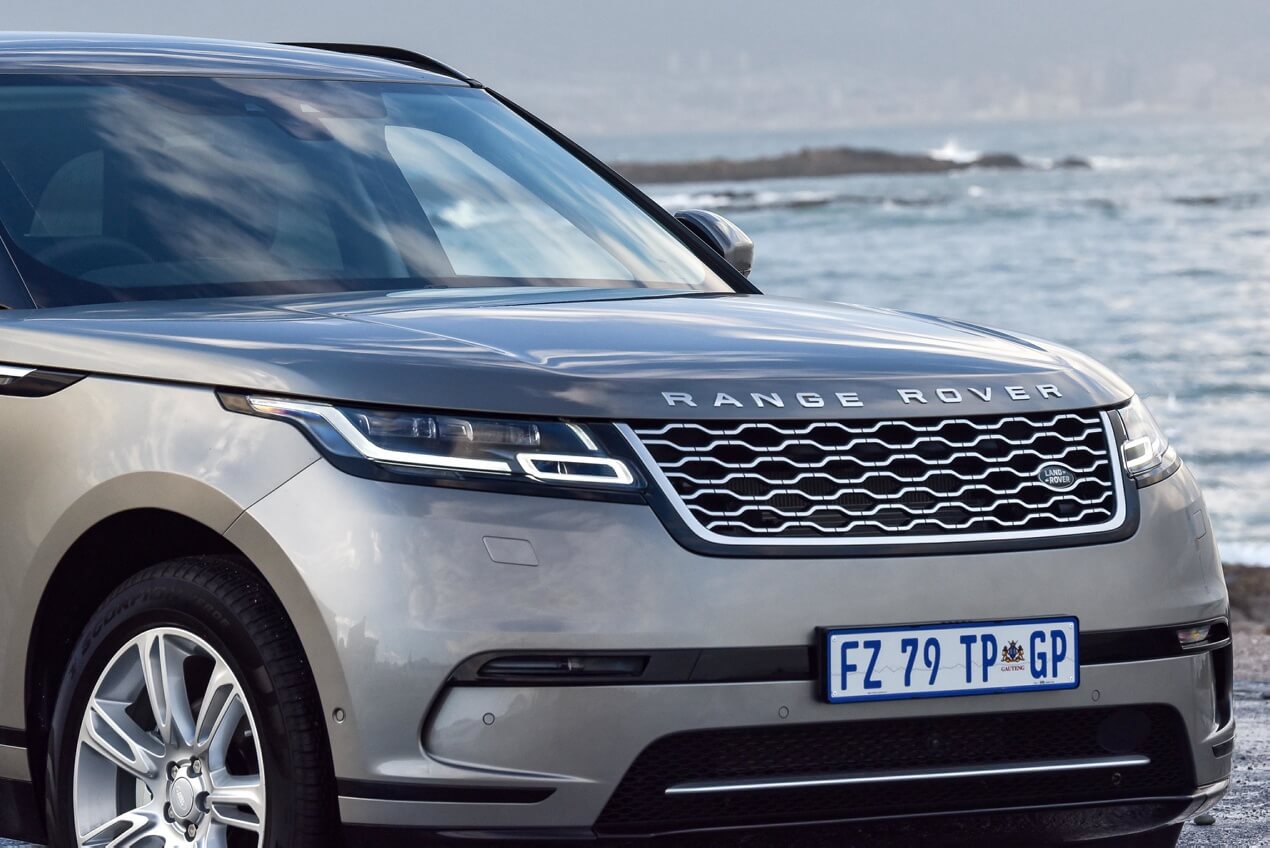
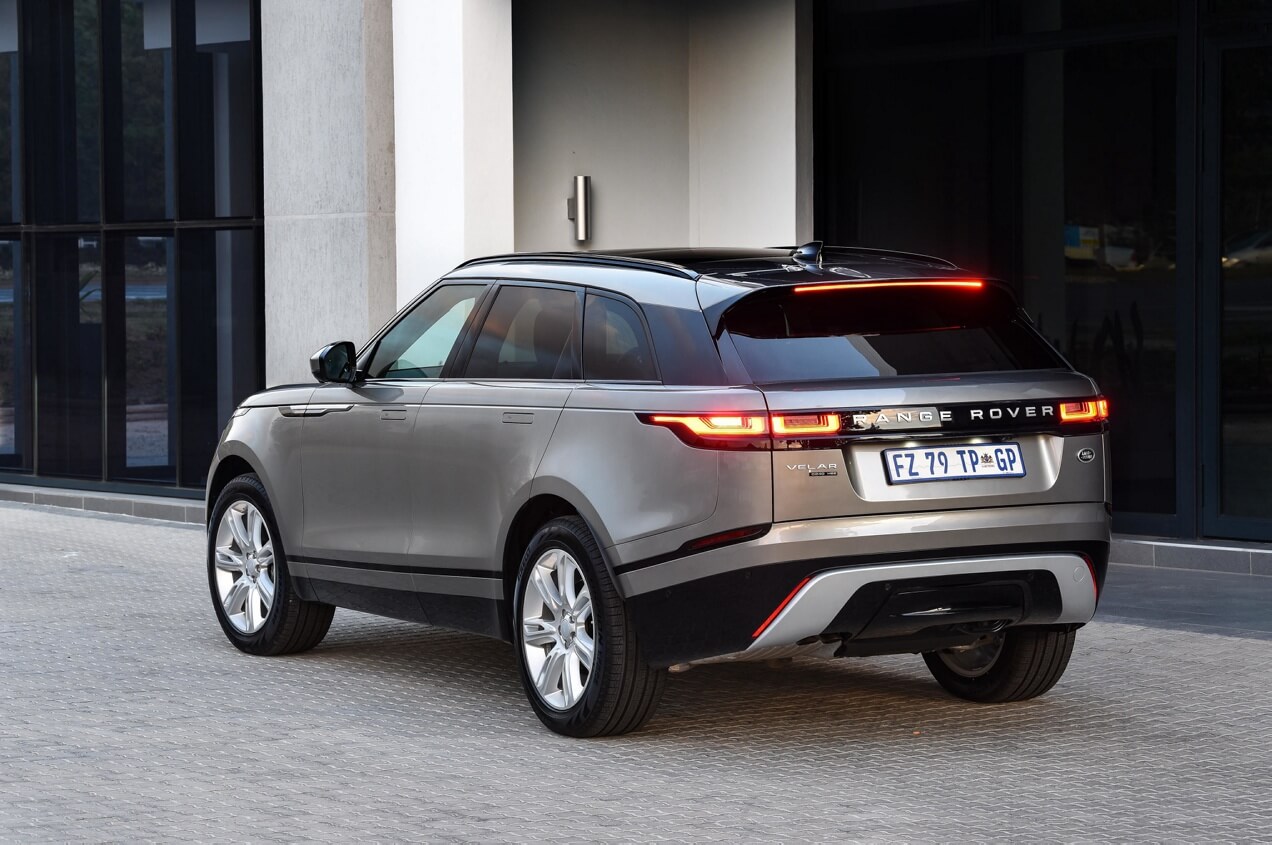
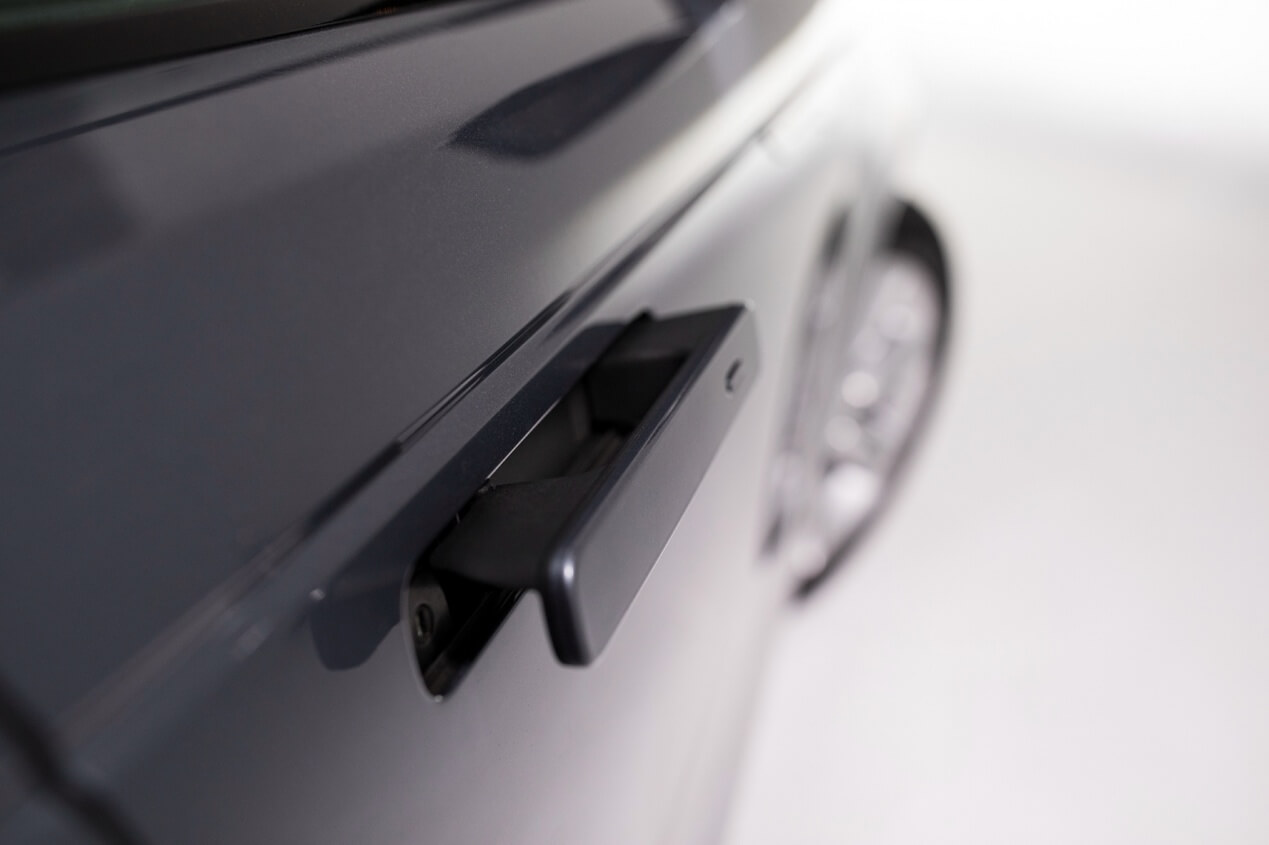
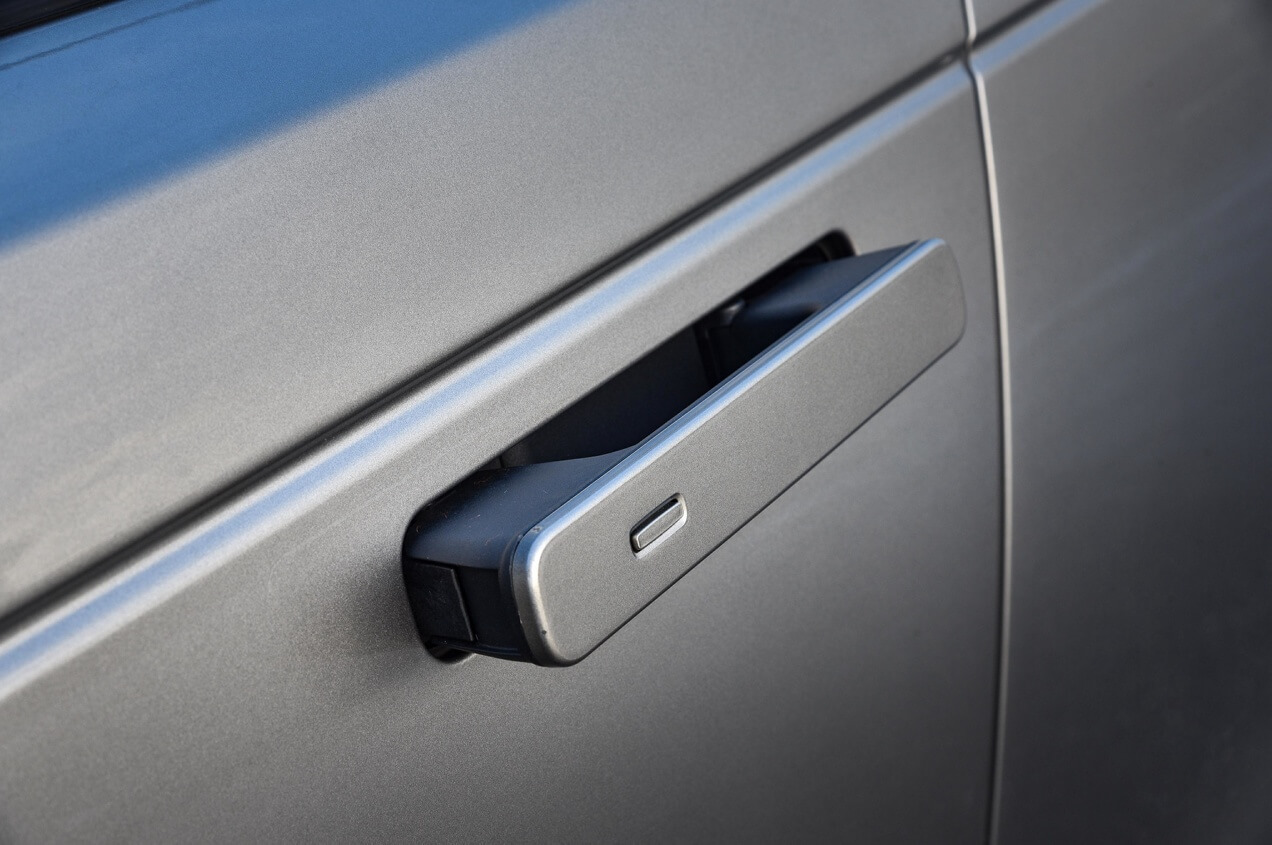
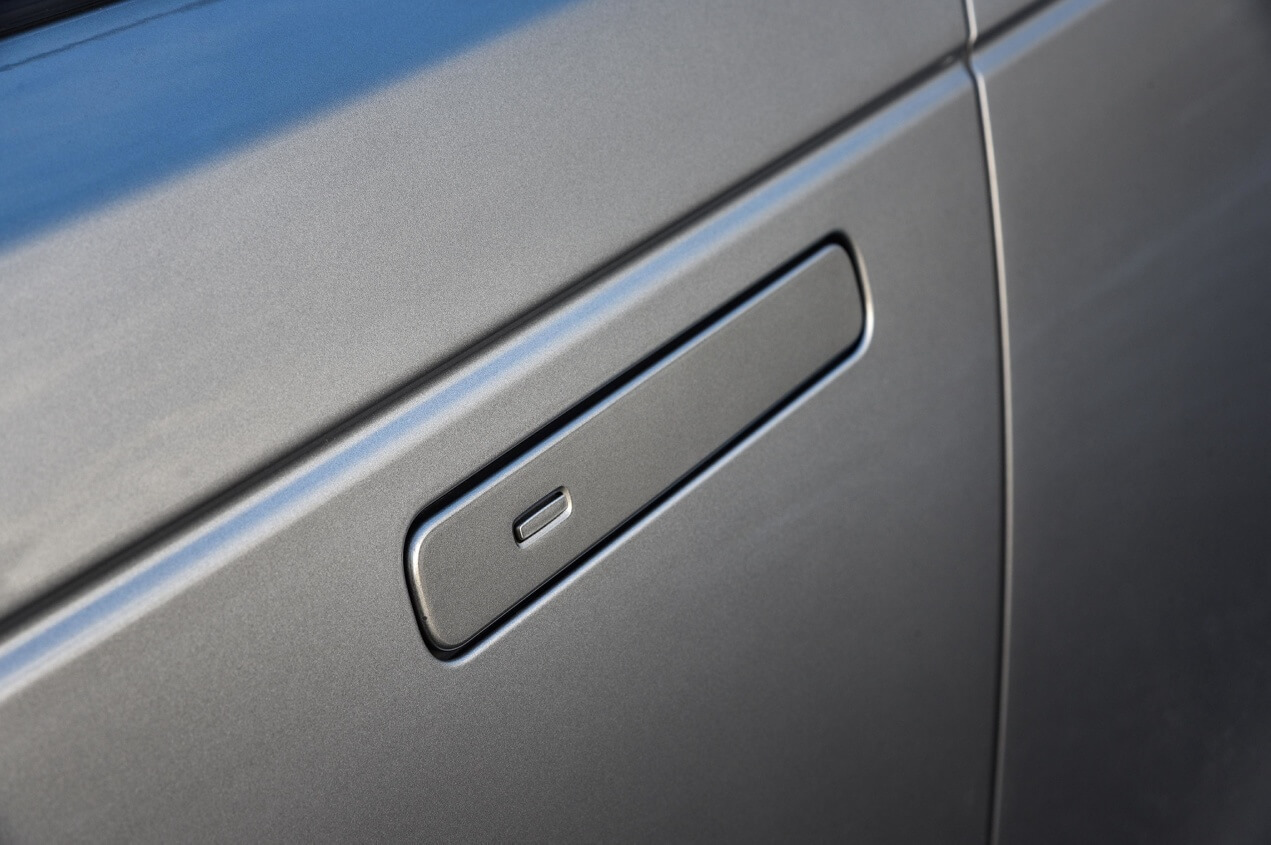
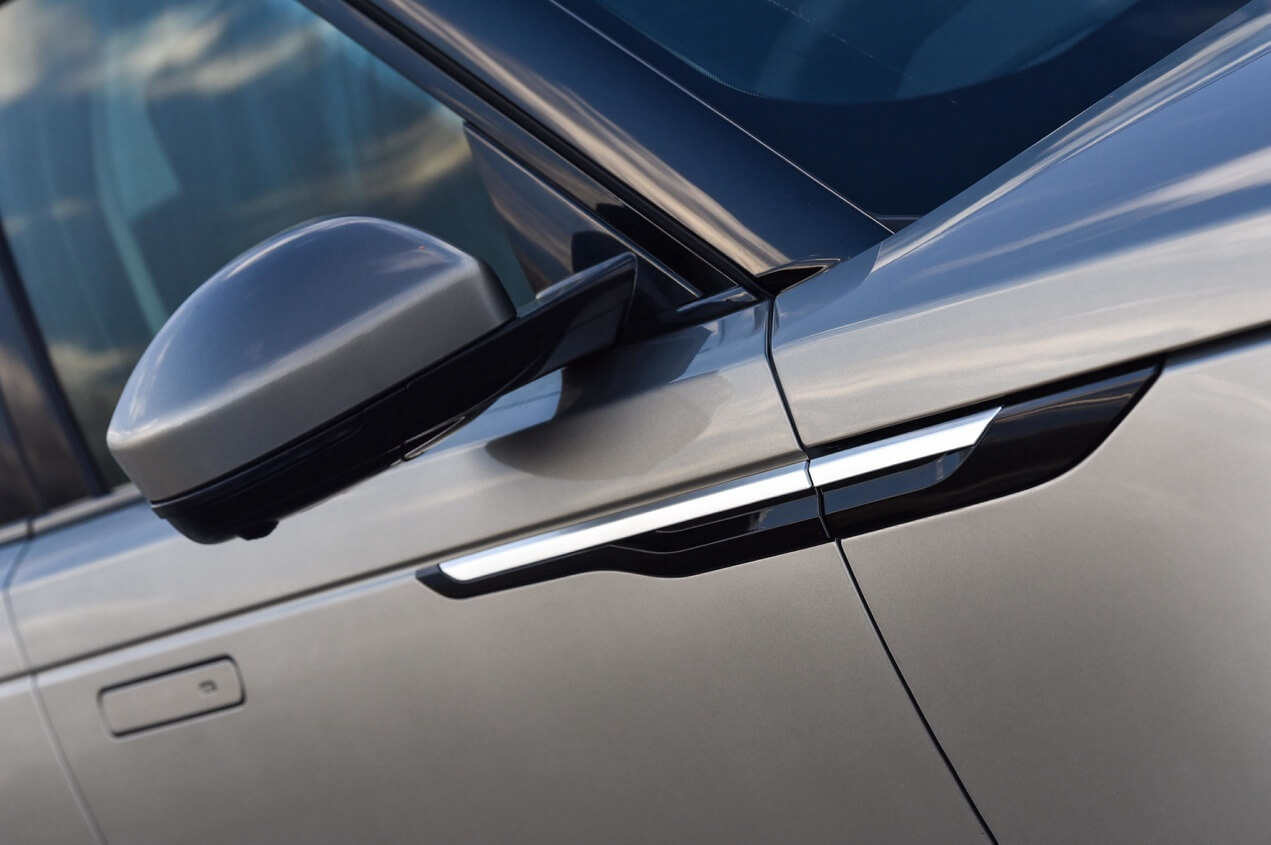
The Velar was the first Range Rover designed to look as smooth as possible. Flush door handles slide out when the car is unlocked, the bodywork has few visible joints, and inside two 10-inch touchscreens replaced most buttons. In 2018 it won the World Car Design of the Year award. The wider background of the brand is told in our history of Land Rover.
Platform shared with the Jaguar F-Pace
Under the skin the Velar uses the same iQ[Al] architecture as the Jaguar F-Pace, XE and XF. CAR magazine put the share of aluminium in the body at 81 %, with steel making up the rest. The wheelbase is identical to the Jaguar's at 2,874 mm, while the Velar body is 72 mm longer. The front suspension uses double wishbones and the rear an integral-link layout.

All six-cylinder cars had air suspension as standard at launch, while four-cylinder cars came on steel springs with air springs as an option. Terrain Response 2 adjusts the drivetrain for grass, gravel, snow, mud and sand, and the old version of this page quoted 600 mm wading depth. That is less than a Range Rover Sport manages, but enough for flooded tracks. With 2,500 kg of towing capacity, the Velar can pull a mid-size caravan or a horse trailer.
Velar engines and power, 2017–2020
The first engine range had six choices, later extended to eight. All of them drove all four wheels through an eight-speed ZF automatic.

| Version | Engine | Power | Torque | Built |
|---|---|---|---|---|
| D180 | 2.0 diesel, I4 | 132 kW (180 PS) | 430 Nm | 2017–2020 |
| D240 | 2.0 twin-turbo diesel, I4 | 177 kW (240 PS) | 500 Nm | 2017–2020 |
| D275 | 3.0 twin-turbo diesel, V6 | 202 kW (275 PS) | 625 Nm | 2018–2020 |
| D300 | 3.0 twin-turbo diesel, V6 | 221 kW (300 PS) | 700 Nm | 2017–2020 |
| P250 | 2.0 turbo petrol, I4 | 184 kW (250 PS) | 365 Nm | 2017–2020 |
| P300 | 2.0 turbo petrol, I4 | 221 kW (300 PS) | 400 Nm | 2017–2020 |
| P380 | 3.0 supercharged petrol, V6 | 279 kW (380 PS) | 450 Nm | 2017–2020 |
| SVAutobiography Dynamic | 5.0 supercharged petrol, V8 | 405 kW (550 PS) | 680 Nm | 2019–2020 |
The 3.0 supercharged V6 came from the Jaguar F-Type. A 250 kW P340 version of it was added in 2018. The SVAutobiography Dynamic Edition was a short-run special by Land Rover's SVO division with the 5.0-litre supercharged V8, and it is the most powerful Velar so far. By our calculation, the top V8 has three times the power of the entry D180, a wide spread for one body.
Mild hybrids and the P400e plug-in
For the 2021 model year, announced in autumn 2020, Land Rover rebuilt the engine list around its new Ingenium units. The V6 diesels gave way to a 3.0-litre straight-six diesel (D300, 650 Nm), and the supercharged V6 to a 3.0-litre straight-six petrol (P400, 294 kW). Both use 48-volt mild-hybrid technology, and so does the new four-cylinder D200 diesel with 150 kW.

The biggest change was the P400e plug-in hybrid. It combines a 2.0-litre turbo petrol engine with an electric motor for a total of 297 kW (404 PS) and 640 Nm. In its 2023 form the battery holds 19.2 kWh, of which 15.4 kWh are usable. Using the usable figure and the 64 km electric range, the car needs roughly 24 kWh per 100 km on battery power by our calculation. That makes the P400e worth it mostly for drivers who can charge at home and keep daily trips short.
The 2023 facelift
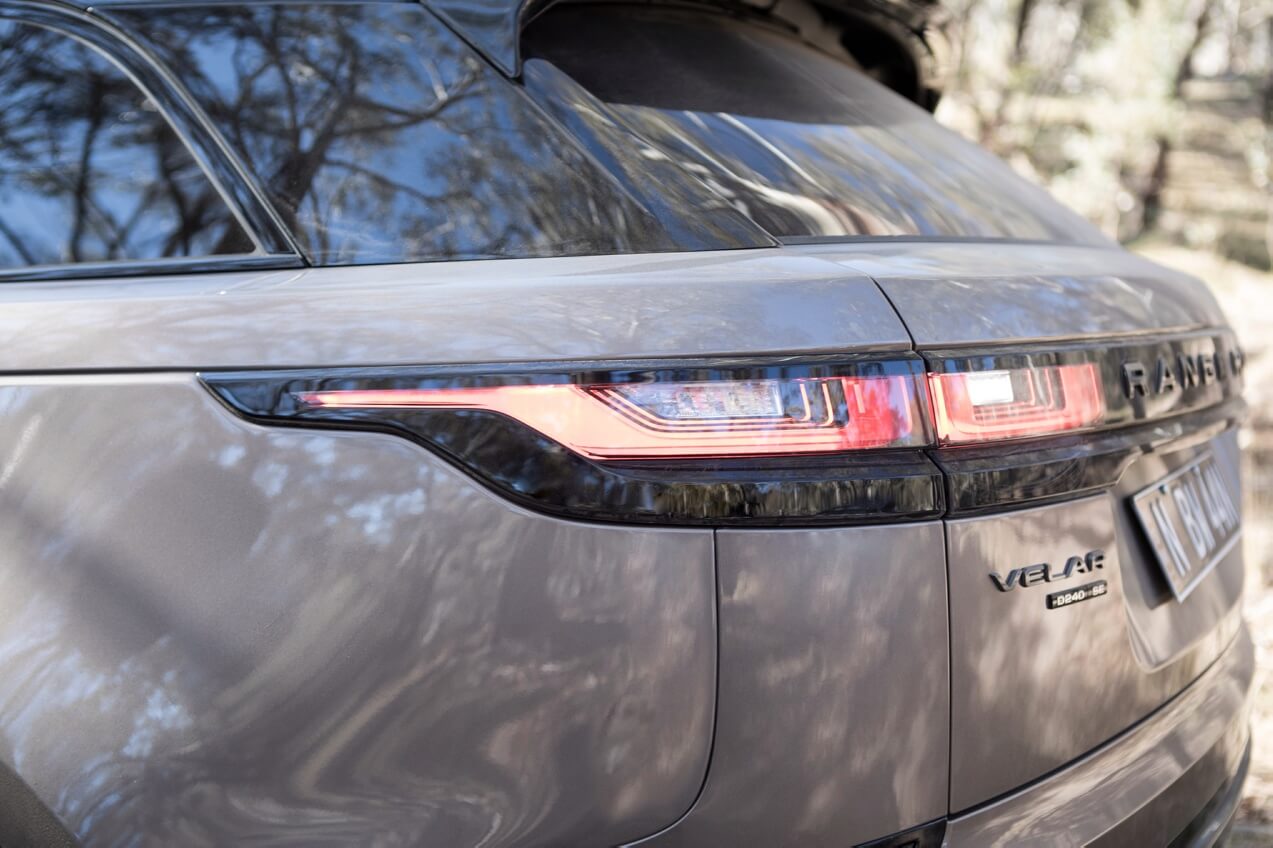
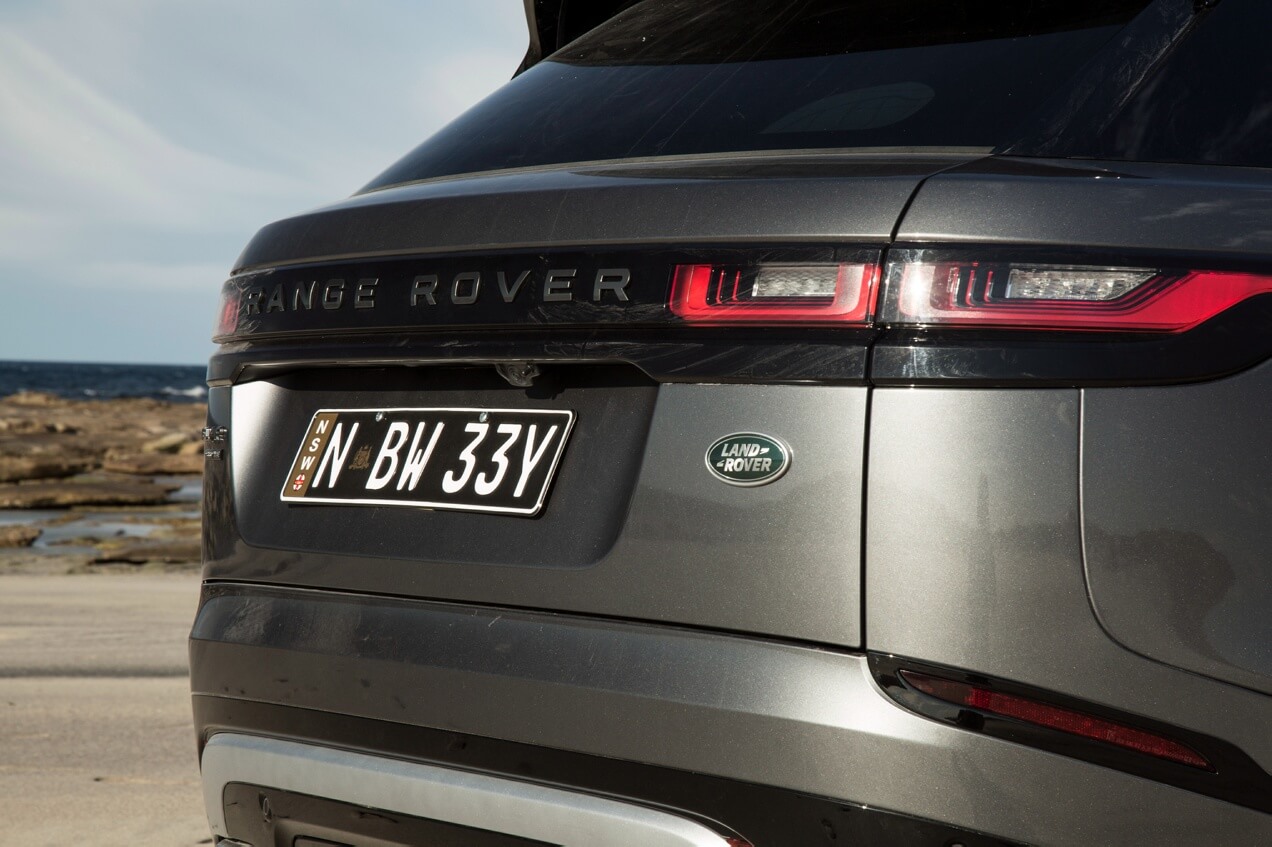
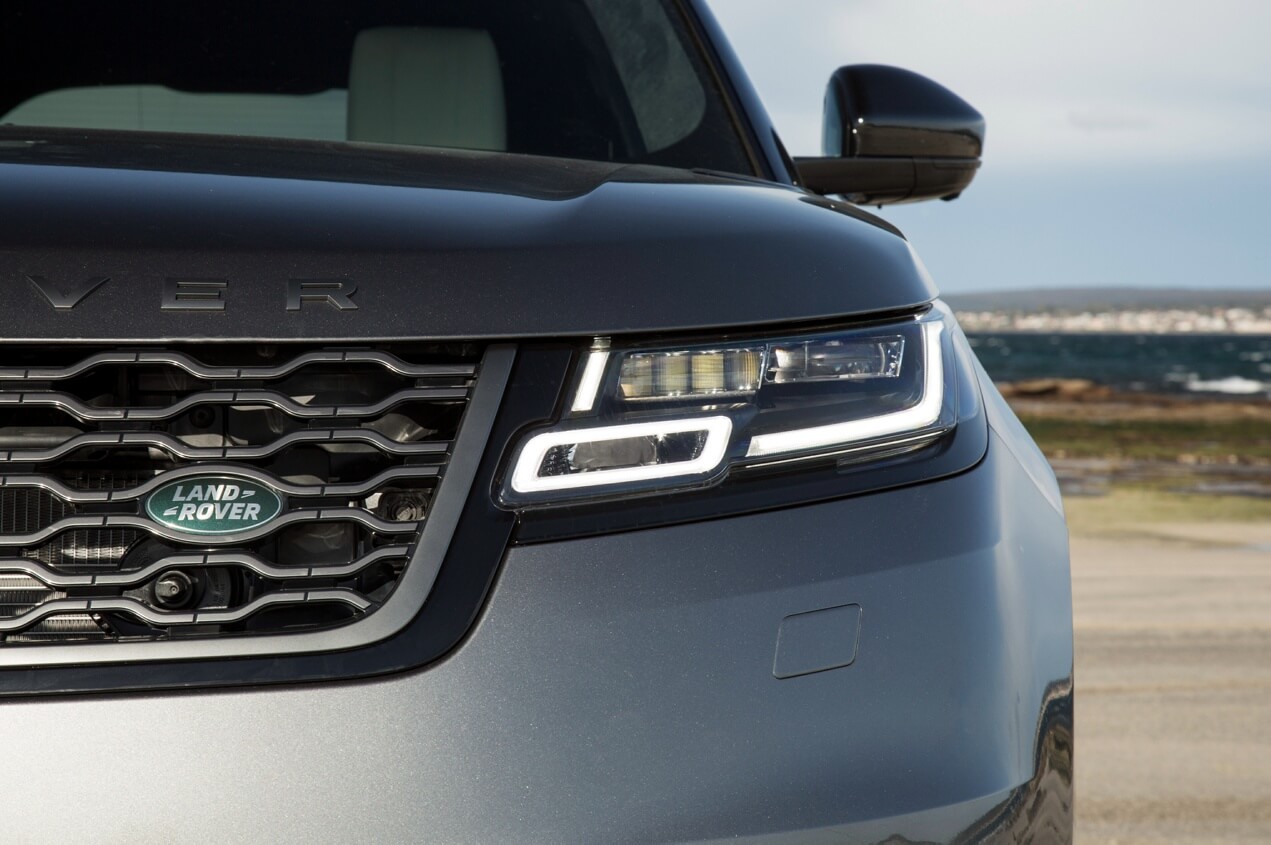
Land Rover presented an updated Velar in February 2023, sold as the 2024 model year. The two touchscreens made way for a single floating 11.4-inch curved glass display running the Pivi Pro system. Pixel LED headlights and new tail lights changed the face and rear, and Active Road Noise Cancellation was claimed to lower cabin noise by at least 4 dB.

| Item | 2017 launch car | 2023 facelift |
|---|---|---|
| Main screens | two 10-inch touchscreens | one 11.4-inch curved touchscreen |
| PHEV electric range | – (PHEV from 2020) | 64 km, up from 53 km |
| PHEV charging | – | 50 kW DC (0–80 % in about 30 min); 7 kW AC (0–100 % in about 2.5 h) |
| Engines | D180 to P380, V8 special | P250, P340, P400, D200, D300, P400e |
| Over-the-air updates | infotainment | about 80 % of control units |
Safety and practicality
Euro NCAP tested the Velar in 2017 and awarded five stars. ANCAP, using the same tests, published the detailed scores: 93 % for adult occupants, 85 % for child occupants, 74 % for pedestrians and 72 % for safety assist. The plug-in hybrid and the SV models were not part of that rating.

The Velar is a strict five-seater, despite claims of a third row in the old version of this page. The old page also quoted a 559-litre boot that grows to 1,731 litres with the 40/20/40 rear seats folded, and ground clearance of 213 mm on springs or 251 mm on air suspension. Those numbers come from early cars and differ slightly by version, so check the figures for the exact car. Our size comparison tool puts the Velar next to its rivals.
Prices and the electric future
At the 2017 launch in the United Kingdom, CAR magazine listed the Velar from 44,830 pounds (about €51,000 at the time) up to 85,450 pounds (about €97,500) for the First Edition. A well-equipped R-Dynamic HSE diesel cost 67,480 pounds (about €77,000).

The model has a clear future. In April 2023 Jaguar Land Rover confirmed that the second-generation Velar will be a battery-electric car on its new EMA platform, to be built at Halewood. Until then, the current car remains on sale with mild-hybrid and plug-in hybrid engines.
Velar against its rivals: who it suits
The Velar competes with the Porsche Macan, BMW X4, Mercedes GLC Coupé and Audi Q5 Sportback, and its own sister car, the F-Pace. Against the Macan it is the comfort- and design-led choice while the Porsche is sharper to drive, as our Velar vs Porsche Macan comparison shows. Buyers who need seven seats or serious off-road ability should look at the Discovery or the Range Rover Sport instead, while the smaller Range Rover Evoque offers the same design language for less money.

It suits buyers who value design and comfort and drive mostly on roads. For a used car, a 2021-on mild-hybrid six-cylinder is the most refined choice, and the P400e makes sense with home charging. Early D180 cars are the cheapest way in, but feel slow in a car of this size. All Land Rover models are in our Land Rover catalogue.
Popular comparisons
Land Rover Range Rover Velar in our rankings
- No. 21 of 195 · Most powerful diesel cars (221 kW · top 11%)
- No. 12 of 111 · Most torque: diesel cars (700 Nm · top 12%)
- No. 36 of 266 · Most powerful SUVs and crossovers (405 kW · top 14%)
- No. 23 of 162 · Biggest engines: SUVs and crossovers (5,000 cc · top 15%)
- No. 49 of 334 · Biggest boot: cars (559 l · top 15%)
- No. 75 of 447 · Heaviest cars (2,164 kg · top 17%)
More powerful than 89% of ranked diesel cars in the 1CARS catalog (No. 21 of 195).
Land Rover Range Rover Velar photos 41




Land Rover Range Rover Velar videos 10

Land Rover Range Rover Velar video 1

Land Rover Range Rover Velar video 2

Land Rover Range Rover Velar video 3

Land Rover Range Rover Velar video 4

Land Rover Range Rover Velar video 5

Land Rover Range Rover Velar video 6

Land Rover Range Rover Velar video 7

Land Rover Range Rover Velar video 8

Land Rover Range Rover Velar video 9

Test drive
FAQ
What is the difference between the Range Rover Velar and the Range Rover Sport?
The Velar is smaller, lighter and built on the aluminium platform of the Jaguar F-Pace, with a focus on design and road comfort. The Range Rover Sport is larger, more capable off-road and available with more powerful engines.
Is the Range Rover Velar a hybrid?
Since the 2021 model year every Velar has some electrification. Most engines are 48-volt mild hybrids, and the P400e is a plug-in hybrid with 297 kW and around 64 km of electric range after the 2023 update.
Where is the Range Rover Velar built?
All Velars are assembled at Jaguar Land Rover's Solihull plant near Birmingham, England, alongside other Range Rover models. The future electric Velar is planned for the Halewood plant.
How many seats does the Range Rover Velar have?
The Velar has five seats in two rows. There has never been a seven-seat version; buyers who need a third row should look at the Land Rover Discovery or the long-wheelbase Range Rover.
What does the name Velar mean?
Velar was the code name painted on pre-production Range Rover prototypes in 1969 to disguise them during testing. Land Rover revived it in 2017 for its new mid-size model.
Data sources
Data checked by an editor against the sources below.
- The text of this article (1cars archive)
- Wikipedia - Range Rover Velar
- Euro NCAP - Velar Joins The Ranks Of Europe S Safest Suvs
- US EPA fueleconomy.gov - 48990.shtml
- US EPA fueleconomy.gov - 47737.shtml
- US EPA fueleconomy.gov - 46730.shtml
- EEA CO₂ monitoring (European Environment Agency, CC BY 4.0)


