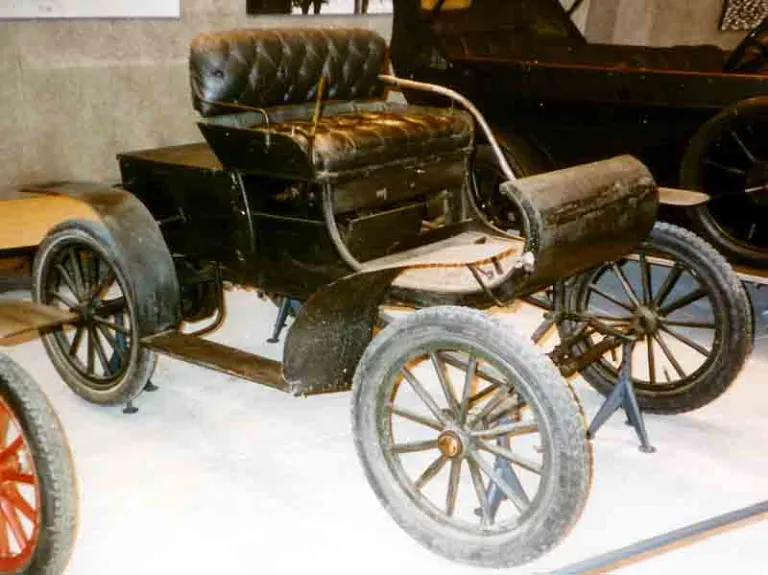
Morgan: History, Landmark Models and Today's Range
The Morgan Motor Company is a small British sports-car maker that has built cars at Pickersleigh Road in Malvern Link, Worcestershire, since 1910. H.F.S. Morgan began with a three-wheeler; four-wheelers followed with the 4/4 in 1936. The Morgan family ran the firm for more than a century until the investment group Investindustrial announced a majority stake in March 2019.

Key takeaways
- H.F.S. Morgan built his first car in 1909, and production began at Pickersleigh Road in 1910, which is why sources give both years for the founding.
- Three-wheelers were Morgan's only product until 1936 and stayed in production until 1952.
- The 4/4, launched in 1936, ran until 2018 with only two breaks, an 82-year life for one model name.
- Since 2019 Morgan has been majority-owned by Investindustrial and builds about 630 cars a year (September 2025 figure).

Morgan at a glance
Morgan is a family-founded, now investor-owned British maker of low-volume sports cars, known for ash-framed bodywork and engines bought in from larger manufacturers. Key facts as of October 2026:
| Fact | Value |
|---|---|
| Founded | First car 1909; production from 1910 (sources differ on the founding year) |
| Founder | Harry Frederick Stanley (H.F.S.) Morgan, 1881–1959 |
| Registered as a company | 1912, private limited company |
| Site | Pickersleigh Road, Malvern Link, Malvern, Worcestershire, England |
| Owner | Investindustrial (majority stake announced 5 March 2019; size of stake not disclosed) |
| Output | About 630 cars a year (September 2025) |
| Staff | Roughly 220–250 (2023 figures) |
| Construction | Ash wood frame on a chassis; since 2019 the bonded-aluminium CX-Generation platform |
| Current range | Supersport 400, Supersport, Plus Four, Super 3 |

1904–1912: from railway engineer to car maker
Morgan began as one man's personal project. H.F.S. Morgan left the Great Western Railway in 1904 and opened a garage in Malvern Link. He designed and built his first car for his own use in 1909; one section of the English Wikipedia article puts the first car as early as 1908, and Morgan itself celebrated its centenary in July and August 2009.

Production started at Pickersleigh Road in 1910, and in 1912 the business was registered as the Morgan Motor Company, a private limited company with H.F.S. Morgan as managing director. The factory has stayed on the same road ever since.
The layout of that first car set the pattern for decades: a light two-seater with a motorcycle V-twin engine mounted in front of the front axle, fully exposed.
1910–1952: the three-wheeler years
For its first quarter-century Morgan built nothing but three-wheelers. The early cars, often called Runabouts, used air-cooled motorcycle V-twin engines and a very light body, which made them quick for their size.

Output approached 1,000 cars a year before the First World War. In 1913 a Morgan won the Cyclecar Grand Prix at Amiens in France, the result that established the brand in racing. After the war demand grew further, and Grace's Guide puts production at about 18,000 three-wheelers between 1919 and 1930.
The V-twin models were built until 1939. From 1932 Morgan also offered the F-Series, with a four-cylinder Ford side-valve engine under a conventional bonnet. The four-seat F4 and its sporting F-Super ran from 1936 until 1951 or 1952, and the last three-wheelers left the factory in 1952. The year 1936 marks the arrival of the first four-wheeler, not the end of the three-wheelers.
1936–1968: four wheels with the 4/4 and the Plus 4
The 4/4 moved Morgan into four-wheeled sports cars without changing its character. The name means four wheels and four cylinders. A prototype was tested in 1935, according to German sources, and the car went on sale in 1936 with a 1,122 cc Coventry Climax engine. The first series reached 1,720 cars.

The Plus 4, announced at the Earl's Court show in 1950, added a larger engine: the 2,088 cc four-cylinder from the Standard Vanguard. From 1953 the Plus 4 took the Triumph TR2 engine of 1,991 cc and 67 kW (90 bhp). This was Morgan's habit from the start: the company built frames, bodies and suspensions itself and bought engines from bigger firms.
While the Plus 4 was in production, the 4/4 paused from March 1951 to September 1955. It came back as the Series II with a 1,172 cc Ford 100E side-valve engine of 27 kW (36 bhp). Later series used Ford engines too: the Series III of October 1960 had a 997 cc Ford 105E unit with 29 kW (39 bhp), and the Series V of February 1963 a 1,498 cc Ford 116E. The 4/4 1600 of February 1968 sold 5,448 cars, the best figure of any early series.
Two Plus 4 offshoots show how cautious Morgan's customers were about change. The aluminium-bodied Plus 4 Super Sports of 1962 was a success, with just over 100 built. The fibreglass Plus 4 Plus coupé, announced in 1963, found only 26 buyers.
1968–2004: the Rover V8 in the Plus 8
The Plus 8 gave Morgan's traditional body a V8. Sources date its launch to 1968 or 1969. It used the Rover 3.5-litre V8, an aluminium engine derived from a Buick design, which is covered in the history of Rover.

The Plus 8 stayed in production until 2004, when the Rover V8 itself went out of production. Its most powerful version, with fuel injection, appeared at the end of 1983 and is quoted at up to 152 kW (204 bhp). The Plus 4 had ended in 1969, but Morgan revived it in 1985 with a 2.0-litre Fiat Twin Cam engine. That revival ran until 2000, and a later Plus 4, from 2005 to 2020, used Ford's 2.0-litre Duratec with 108–115 kW depending on version.
2000–2018: Aero 8, a new 3 Wheeler and family succession
The Aero 8 broke with Morgan's traditional construction. Unveiled at the Geneva Motor Show in 2000 under Charles Morgan and delivered from 2001, it had a bonded-aluminium chassis with ash elements in the body, engineered with Chris Lawrence. Power came from BMW's 4.4-litre N62 V8 with 248 kW (333 bhp) and 450 Nm (332 lb-ft).

The Aero 8 went through several series and spin-offs, including the AeroMax coupé of about 100 cars, the Aero SuperSports of 2009 and a Series 5 shown at Geneva in March 2015 with a 4.8-litre BMW V8. Sources disagree on when production ended: the German Wikipedia says series production stopped in 2010, the English article gives 2018. German sources put the total at about 700 cars plus 100 AeroMax. The Plus 8 name also returned from 2012 to 2018, now with a BMW 4.8-litre V8.
In March 2011 Morgan revived the three-wheeler. The Morgan 3 Wheeler was unveiled at Geneva on 3 March 2011 with an S&S V-twin of about 60 kW (81 hp) and a weight of about 550 kg (1,213 lb). European deliveries began in February 2012, and production ended in summer 2021 with the P101 run-out edition. An electric version, the Morgan EV3, was shown as a prototype between 2016 and 2018, but its production was cancelled at the end of 2018.
Behind the scenes, management passed through the family. Peter Morgan, son of the founder, was chairman from 1959 until his death on 20 October 2003. His son Charles Morgan was named managing director in 2010 and was removed in January 2013. After that, non-family chairmen led the company.
Motorsport: from Amiens to Le Mans
Apart from the 1913 Amiens victory, Morgan's best racing results are class wins. After Amiens, three-wheelers raced at Brooklands, and a 4/4 was entered at Le Mans in 1938.

The best-known result came in 1962, when Chris Lawrence and Richard Shepherd-Barron won the 1,601–2,000 cc GT class at Le Mans in a Plus 4 Super Sports. Morgan returned to the race with a factory Aero 8 in the GT2 class in 2003 and 2004. From 2007 to 2009 Aero 8 GT3 cars raced in the FIA GT3 European Championship, an Aero 8 GT ran in the 2008 Britcar 24 Hours at Silverstone, and in 2012 a Morgan-badged LMP2 prototype took part in the Le Mans 24 Hours.
2019 onward: Investindustrial and the CX-Generation platform
The sale to Investindustrial ended Morgan's period of family control. A press release on 5 March 2019 announced that the investment group had taken a majority stake. Neither the size of the stake nor the price was published, and the family is reported to have kept a minority holding.

The same month, the Plus Six appeared at Geneva. It introduced the CX-Generation platform, a bonded-aluminium structure that still carries an ash frame for the body. The Plus Six used BMW's B58 3.0-litre (2,998 cc) turbocharged six with 250 kW (340 PS), weighed 1,075 kg (2,370 lb) dry, reached 100 km/h in 4.2 seconds and had a top speed of 267 km/h (166 mph). It was built until 2025, with closing editions of 50 Midsummer cars in 2024 and 30 Pinnacle cars announced in October 2024.
A new Plus Four on the CX platform was revealed online in March 2020; its BMW B48 2.0-litre turbo engine is quoted at 190 kW (258 PS). On 24 February 2022 Morgan presented the Super 3, the successor to the 3 Wheeler, with a 1,496 cc Ford three-cylinder of 87 kW (118 PS) and a dry weight of 635 kg (1,400 lb). The Supersport replaced the Plus Six in March 2025 with the same B58 engine and 250 kW (340 PS), and a Supersport 400 rated at 300 kW (402 bhp) was announced in April 2026.
Annual output is lower than it was in the 2000s. German sources give about 1,000 cars a year and 75,000 built in total by 2009; the English Wikipedia gives about 630 a year in September 2025. Grace's Guide describes a pace of nine cars a week, with about three months to build each car, a figure it does not date.
Morgan today: the range in October 2026
In October 2026 Morgan lists four models on its official website: the Supersport 400, the Supersport, the Plus Four and the Super 3. The Midsummer Coupé is offered as a special commission. The Plus Six is no longer in the range.
| Model | Segment | Body | Years |
|---|---|---|---|
| Supersport 400 | High-performance sports car | Two-seater | 2026– |
| Supersport | Sports car | Two-seater | 2025– |
| Plus Four | Sports car | Two-seat roadster | 2020– |
| Super 3 | Three-wheeler | Open two-seater | 2022– |
All Morgan models with full specifications are collected in the Morgan catalogue. Among British sports-car names with a similarly long history, the history of MG is a useful companion read.
Landmark Morgans
Eight cars mark the main turns in Morgan's history, from the first three-wheeler to the CX-Generation models.

| Model | Years | Why it matters |
|---|---|---|
| Three-wheeler (V-twin and F-Series) | 1910–1952 | Founding product; won at Amiens in 1913 |
| 4/4 | 1936–2018 | First four-wheeler; production interrupted only by the war and 1951–55 |
| Plus 4 | 1950–1969, 1985–2000, 2005–2020 | Larger engines; class win at Le Mans in 1962 |
| Plus 8 | 1968–2004 | Rover V8 in the traditional body |
| Aero 8 | from 2000 | First bonded-aluminium chassis; BMW V8 |
| 3 Wheeler | 2011–2021 | Revival of the three-wheel formula |
| Plus Six | 2019–2025 | Launched the CX-Generation platform |
| Super 3 | 2022– | Current three-wheeler with a Ford three-cylinder |
Older Morgans and their contemporaries are listed in the classic car archive on 1cars.
Morgan timeline
These are the dated milestones of Morgan history.

| Year | Event |
|---|---|
| 1904 | H.F.S. Morgan leaves the Great Western Railway and opens a garage in Malvern Link |
| 1909 | First Morgan car built |
| 1910 | Production starts at Pickersleigh Road |
| 1912 | Morgan Motor Company registered |
| 1913 | Cyclecar Grand Prix win at Amiens |
| 1936 | 4/4 introduced, the first four-wheeled Morgan |
| 1950 | Plus 4 announced at Earl's Court |
| 1952 | Last three-wheeler of the original era |
| 1962 | GT class win at Le Mans with a Plus 4 Super Sports |
| 1968 | Plus 8 with the Rover V8 (some sources say 1969) |
| 2000 | Aero 8 unveiled at Geneva |
| 2011 | 3 Wheeler unveiled at Geneva |
| 2019 | Investindustrial majority stake; Plus Six and CX-Generation platform |
| 2022 | Super 3 presented |
| 2025 | Supersport replaces the Plus Six |
| 2026 | Supersport 400 announced |
Morgan in numbers
Key production figures, with the year of each source where it matters:
- About 18,000 three-wheelers built between 1919 and 1930 (Grace's Guide).
- 1,720 cars of the first 4/4 series and 5,448 of the 4/4 1600 from 1968.
- 26 Plus 4 Plus coupés, built from 1963.
- About 700 Aero 8s plus about 100 AeroMax coupés (German Wikipedia).
- About 75,000 Morgans built in total by 2009 (German Wikipedia).
- About 630 cars a year in September 2025.

FAQ
Who founded Morgan?
Harry Frederick Stanley Morgan, usually written H.F.S. Morgan, founded the company. A former Great Western Railway engineer, he built his first car in 1909, started production in Malvern Link in 1910 and registered the Morgan Motor Company in 1912.
Who owns Morgan?
Investindustrial, a European investment group, holds a majority stake announced on 5 March 2019. The size of the stake was not published, and the Morgan family is reported to have kept a minority share.
Where are Morgan cars made?
Morgan cars are built at the company's factory on Pickersleigh Road in Malvern Link, Worcestershire, England, where production started in 1910.
What does 4/4 mean?
The name stands for four wheels and four cylinders. It marked the 1936 car as Morgan's first four-wheeler after more than 25 years of three-wheelers. The 4/4 was built until 2018.
Is the Morgan Plus Six still made?
No. The Plus Six was built from 2019 to 2025 and ended with limited Midsummer and Pinnacle editions. Its successor, the Supersport, uses the same BMW six-cylinder engine and was presented in March 2025.
How many cars does Morgan build a year?
About 630 cars a year, according to a September 2025 figure. German sources give around 1,000 cars a year for 2009, so output is now lower than it was then.
Photos (2)


Videos 3

Video 1

Video 2

Video 3