The History of Iveco: Five Truck Makers Under One Name
Iveco is an Italian maker of vans, trucks, buses and special vehicles, founded on 1 January 1975 when Fiat merged five commercial-vehicle brands from Italy, France and Germany. Based in Turin, it builds about 150,000 vehicles a year, from the Daily van to the S-Way truck. In July 2025 it agreed to sell its vehicle business to Tata Motors.

Key takeaways
- Founded in 1975 from Fiat Veicoli Industriali, OM, Lancia Veicoli Speciali, Unic and Magirus-Deutz; the name stands for Industrial Vehicles Corporation.
- Landmark models: the Daily (1978), the TurboStar (1984), the EuroCargo and EuroTech, Truck of the Year in 1992 and 1993, and the Stralis.
- Grew through Iveco Ford Truck (1986), Pegaso (1990), Seddon Atkinson (1991) and Irisbus; spun off from CNH Industrial on 1 January 2022.
- Dakar Rally truck wins in 2012, 2016 and 2023; Tata Motors' takeover was due to complete in the fourth quarter of 2026.

Iveco at a glance
| Fact | Value |
|---|---|
| Founded | 1 January 1975, by merger |
| Name | Industrial Vehicles Corporation (Industria Veicoli Commerciali) |
| Headquarters | Turin, Italy; holding company Iveco Group N.V., Amsterdam |
| Products | Vans, light, medium and heavy trucks, buses, fire and special vehicles, engines (FPT Industrial) |
| Output | About 150,000 commercial vehicles a year |
| Employees | About 34,000 (2021) |
| Revenue | 12.6 billion euros (2021) |
| Network | About 5,000 sales and service outlets in more than 160 countries |
The company has long been part of the Fiat family. Its roots go back to Fiat's first trucks, described in the history of Fiat, and to the commercial vehicles of Lancia, whose story is in the history of Lancia.

Origins: the 1975 merger
In the early 1970s, European truck makers faced rising costs and fierce competition. Fiat answered by combining its own commercial-vehicle business with four other makers. On 1 January 1975 the new company brought together Fiat Veicoli Industriali in Turin, OM in Brescia, Lancia Veicoli Speciali, Unic from France and Magirus-Deutz from Germany. Each brand kept its badge for a while, but engineering and the model range were gradually unified under the Iveco name. Magirus-Deutz from Ulm brought air-cooled Deutz diesels and a long tradition of fire engines and turntable ladders, while Unic gave the group a foothold in France.

Five decades of vans and trucks
1975–1989: the Daily and the TurboStar
The first vehicle developed as an Iveco was the Daily of 1978, a light commercial vehicle designed to be as tough as a small truck. It became the company's best-known product and is still built today. The company even built an electric Daily as early as 1986. Two years after the Daily, in 1980, the company introduced its first turbodiesel for heavy trucks.

In 1984 came the TurboStar long-haul truck, which became a best-seller in Italy and a strong player in Europe: about 50,000 were sold in its first seven years. In 1986 it took a 52% stake in Iveco Ford Truck Ltd, a joint venture with Ford of Europe's truck division. In the mid-1980s Astra, a maker of dumpers and construction vehicles in Piacenza, joined the group.
1990s: the Euro range and expansion
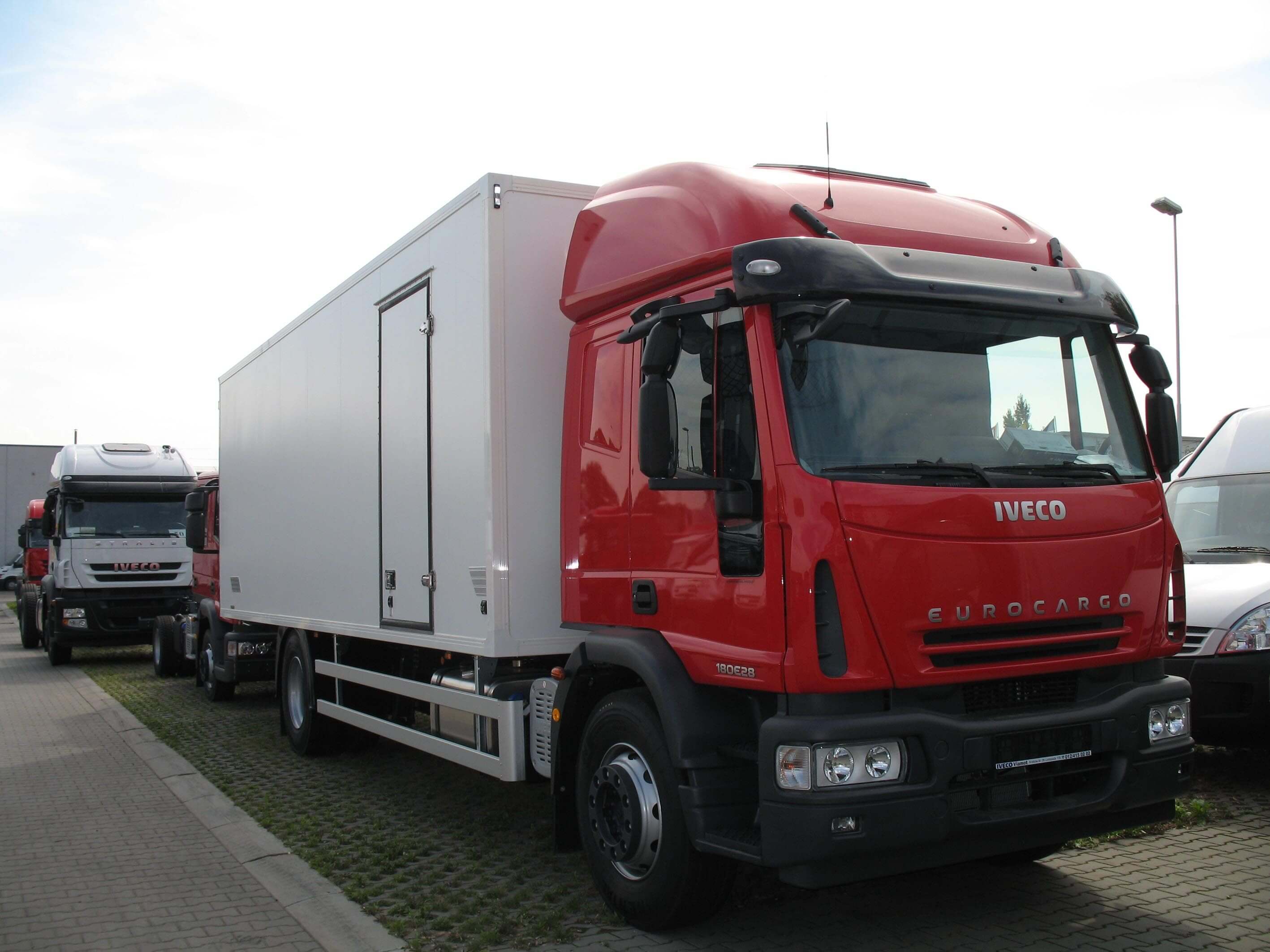
In 1990 the group bought 60% of ENASA of Spain, owner of the Pegaso brand, and in 1991 it acquired Seddon Atkinson, a British truck maker. The range was renewed as the EuroCargo, EuroTech, EuroTrakker and EuroStar. The EuroCargo was named International Truck of the Year in 1992 and the EuroTech in 1993, the first time one manufacturer won the award two years running. The Cursor 10 of 1999 was the first common-rail diesel for heavy trucks.
During the decade it also bought several makers of fire, rescue and municipal vehicles. It also set up an Australian unit and an assembly plant and joint ventures in China. According to the old 1cars account, it agreed with the Sinopec group to build fire-fighting vehicles there.
2000s–2010s: Stralis, Irisbus and gas trucks
The Stralis replaced the EuroTech and EuroStar as the heavy long-haul truck. Irisbus had been formed in 1999 by combining the bus businesses of Iveco and Renault, and in 2003 the group took full control of it; today it trades as Iveco Bus. In 2004 it formed SAIC Iveco Hongyan with SAIC Motor in China. Iveco Motors, launched in 2004, merged into Fiat Powertrain Technologies a year later, the origin of today's FPT Industrial engines.
On 1 January 2011 the business became part of Fiat Industrial, together with CNH and FPT Industrial. In April 2012 it presented the Stralis LNG, a liquefied-natural-gas truck with a range of up to 750 km, and gas power became one of its specialities. The heavy range was later replaced by the Way family: the S-Way for road haulage, the T-Way for off-road work and the X-Way for light off-road use.
2022 to today: independence and Tata Motors
Iveco Group was spun off from CNH Industrial with effect from 1 January 2022 and listed on Borsa Italiana. Its Australian truck plant stopped production in June 2022. On 30 July 2025 the group announced the sale of its commercial-vehicle business to Tata Motors for about 3.8 billion euros. Its defence businesses, IDV and Astra, were to go to Leonardo for 1.7 billion euros. By early September 2026 Tata had all regulatory approvals. Its tender offer of 14.10 euros per share was due to end in early November 2026, and completion was expected in the fourth quarter of 2026.
Vehicles that made the name
| Model | Years | Why it matters |
|---|---|---|
| Iveco Daily | 1978– | First Iveco-branded vehicle; light truck toughness in a van |
| TurboStar | 1984–1990s | About 50,000 sold in seven years; the breakthrough in long-haul |
| EuroCargo | 1991– | International Truck of the Year 1992 |
| EuroTech | 1992– | International Truck of the Year 1993 |
| Stralis | 2000s–2020s | Long-haul flagship; LNG version from 2012 |
| S-Way | 2019– | Current heavy truck for road haulage |
Motorsport and engineering firsts
Iveco trucks have won the Dakar Rally truck class three times. Gerard de Rooy won in a Powerstar for the Petronas De Rooy team in 2012 and again in 2016, and Janus van Kasteren won in 2023.

On the engineering side, the company claims the first common-rail diesel for heavy trucks (Cursor 10, 1999) and an early electric van (1986). Its Euro VI Cursor and Tector engines use High Efficiency SCR (HI-eSCR) exhaust treatment. It says its LNG trucks emit about 60% less NOx and 70% fewer particulates than Euro VI diesels.
Ownership changes, plants and divisions
The group reports 27 production plants and 6 research centres in 16 countries, in Europe, China, South Africa and Latin America. Its divisions cover:
- Iveco Bus, which builds city, intercity and coach buses;
- Magirus, the fire-fighting and aerial-ladder specialist from Ulm;
- Iveco Defence Vehicles and Astra, heavy and military vehicles, sold to Leonardo;
- FPT Industrial, the engine and powertrain business.

Iveco compared with its European rivals
Among European heavy-truck makers, Iveco is smaller than Daimler Truck and the Volvo Group. It does, however, cover a wide span of sizes with one badge, from a 3.5-tonne Daily to 44-tonne road tractors. Compared with the Volvo FH and the MAN TGS, its particular strengths are its natural-gas versions and the width of its range under one badge. Trucks and vans can be compared in the 1cars comparison tool, and its rivals are grouped in the truck section.

Today's vans, trucks and buses
| Model | Segment | Body | Years |
|---|---|---|---|
| Daily | Light commercial, 3.5–7 t | Van, chassis cab, minibus, 4x4 | 1978– |
| Eurocargo | Medium truck, about 7–19 t | Chassis cab, 4x2 and 4x4 | 1991– |
| S-Way | Heavy road truck | Tractor and rigid | 2019– |
| T-Way | Heavy off-road truck | Rigid, tipper | 2021– |
| X-Way | Heavy light-off-road truck | Rigid | 2020– |
| Iveco Bus | Buses and coaches | City, intercity, coach | – |
All Iveco models are listed in the Iveco catalogue.
FAQ
Who owns Iveco today?
Since its spin-off from CNH Industrial in 2022, Iveco Group has been an independent company listed on Borsa Italiana. In July 2025 it agreed to sell its vehicle business to Tata Motors, and the deal was expected to close in the fourth quarter of 2026.
When was Iveco founded and by whom?
Fiat founded Iveco on 1 January 1975 by merging Fiat Veicoli Industriali, OM, Lancia Veicoli Speciali, Unic from France and Magirus-Deutz from Germany into one commercial-vehicle company based in Turin.
What does the name Iveco stand for?
Iveco is short for Industrial Vehicles Corporation, in Italian Industria Veicoli Commerciali. It was adopted at the 1975 merger, when the five founding brands began to share one range and one badge.
Where are Iveco vehicles made?
The group reports 27 production plants in 16 countries, mainly in Italy, Spain, France and Germany, with further plants in China, South Africa and Latin America. Australian truck production ended in June 2022.
What is Iveco's most famous model?
The Daily is the best-known model: launched in 1978, it was the first vehicle under the new badge and is still in production. In heavy trucks, the TurboStar, the EuroCargo and the Stralis are the landmark models.
Photos (3)