Fiat: History of the Italian Car Maker from 1899 to Today
Fiat, short for Fabbrica Italiana Automobili Torino, was founded in Turin on 11 July 1899 by a group of investors that included Giovanni Agnelli. It became Italy's largest car maker by 1910 and is best known for small cars such as the Topolino and the Nuova 500. Since 2021 the brand has been part of Stellantis.

Key takeaways
- First car: the 3½ CV of 1899, based on a design bought from Ceirano.
- Landmark small cars: Topolino (1936), 600 (1955), Nuova 500 (1957), Panda, Uno, Punto and the 2007 500.
- Group expansion: Lancia (1969), a Ferrari shareholding (1969), Alfa Romeo (1986) and Maserati (1993).
- Fiat Chrysler Automobiles from 2014, Stellantis from 2021.

Fiat at a glance
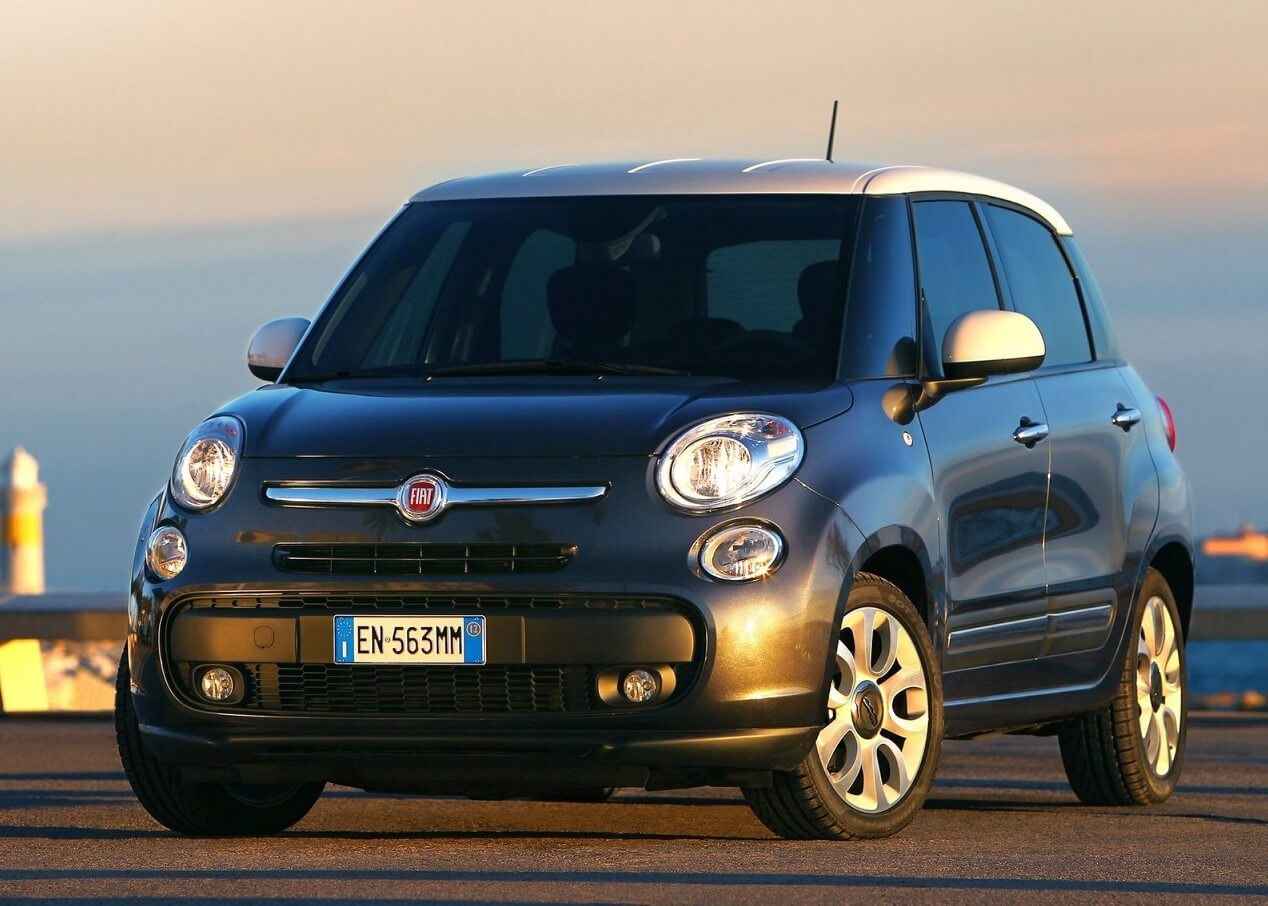
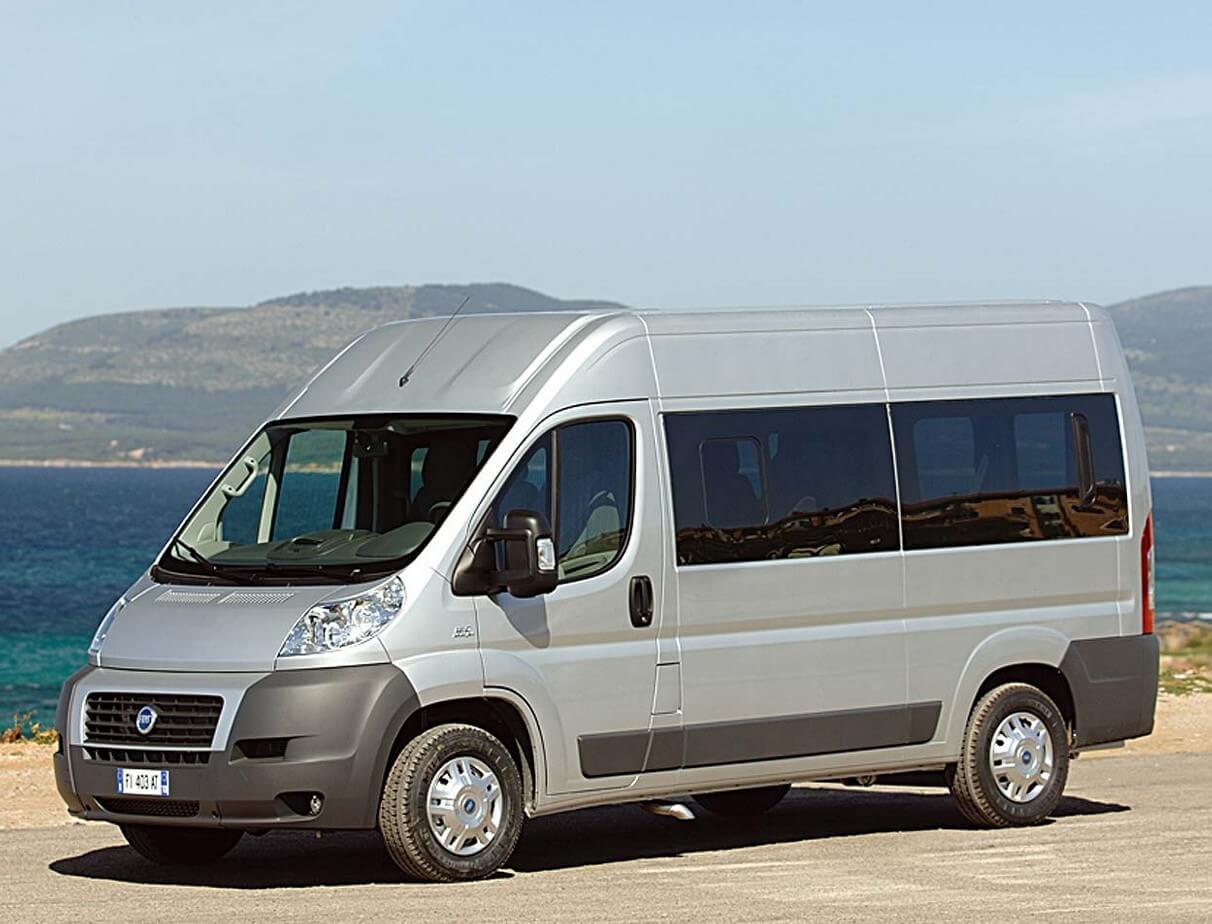
For most of the 20th century Fiat was the dominant car maker in Italy and one of Europe's largest. It specialised in city cars and superminis, which in 2011 accounted for 84% of its European sales, and its designs were built under licence on several continents. The brand's current models, including the Fiat 500 and the Fiat Doblò, are listed in the Fiat catalogue.

| Fact | Value |
|---|---|
| Full name | Fabbrica Italiana Automobili Torino |
| Founded | 11 July 1899, Turin, Italy |
| Founders | Group of investors including Giovanni Agnelli |
| Famous plants | Lingotto (1923), Mirafiori |
| European Car of the Year | 9 wins (1967–2008) |
| Parent today | Stellantis (since 2021) |
| Main shareholder history | Agnelli family through Exor |
Origins: the founders and the first car (1899–1910)
Fiat was established on 11 July 1899 in Turin. Among its founders was Giovanni Agnelli, who soon became the leading figure in the company. The first car, the 3½ CV, was based on a design bought from Ceirano GB & C. The first factory opened in 1900, and output grew from 135 cars in 1903 to 1,149 in 1906, when Fiat sold shares on the Milan stock exchange. By 1910 Fiat was Italy's largest car maker. The FIAT initials first appeared as a logo in 1901.
Fiat also looked abroad early. In 1908 it built a factory in Poughkeepsie, New York, and began making luxury cars there a year later.
Fiat history by era
1910s–1930s: Lingotto and the Topolino
During the First World War Fiat supplied vehicles and equipment to the Allies. In 1923 it opened the Lingotto factory in Turin, then the largest car factory in Europe and the first Fiat plant to use assembly lines. A red shield logo was introduced in 1931. In 1936 Fiat launched the 500 "Topolino", a tiny two-seater city car; its later 500C version was built until 1955. During the Second World War Fiat built aircraft, vehicles and armoured vehicles.
1950s–1960s: the economic miracle
After the war Fiat played a central role in Italy's economic boom. The rear-engined Fiat 600 arrived in 1955 and the Nuova 500, designed by Dante Giacosa, in July 1957. The Nuova 500 used a 479 cc air-cooled two-cylinder engine with 10 kW (13 hp), was 245 mm shorter than the 600 and remained in production until 1975, with 3,893,294 built. Fiat also helped found car industries abroad: it supported the creation of SEAT in Spain in 1950, Zastava in Yugoslavia began assembling Fiats in 1955, and Polski Fiat in Poland began building the 125p in 1967. The Fiat 124 became European Car of the Year in 1967 and was built under licence in several countries, including Turkey, as the TOFAŞ Murat, and India. Gianni Agnelli, grandson of the founder, became chairman in 1966 and led Fiat for three decades.
1969–1993: building a group
Fiat took control of Lancia, maker of cars such as the Lancia Delta, in 1969 and became a shareholder in Ferrari the same year. The rhomboid logo of 1968 appeared on cars in the early 1970s. Fiat's output in Italy peaked at 1.4 million cars in 1970, when it employed more than 100,000 people there. The 128 (1970) and 127 (1972) won European Car of the Year, as did the Uno in 1984 and the Tipo in 1989. In motorsport the Fiat 131 Abarth won 18 World Rally Championship events between 1976 and 1981, with constructors' titles in 1977, 1978 and 1980 and drivers' titles in 1978 and 1980; later Lancia took over the group's rally role. The oil crises of 1973 and 1979 hit Fiat hard, and in 1984 it withdrew from the US market. In 1986 Fiat bought Alfa Romeo from the Italian state, and in 1993 it acquired Maserati, whose story is told in the history of Maserati.
1993–2009: Punto, Panda and crisis
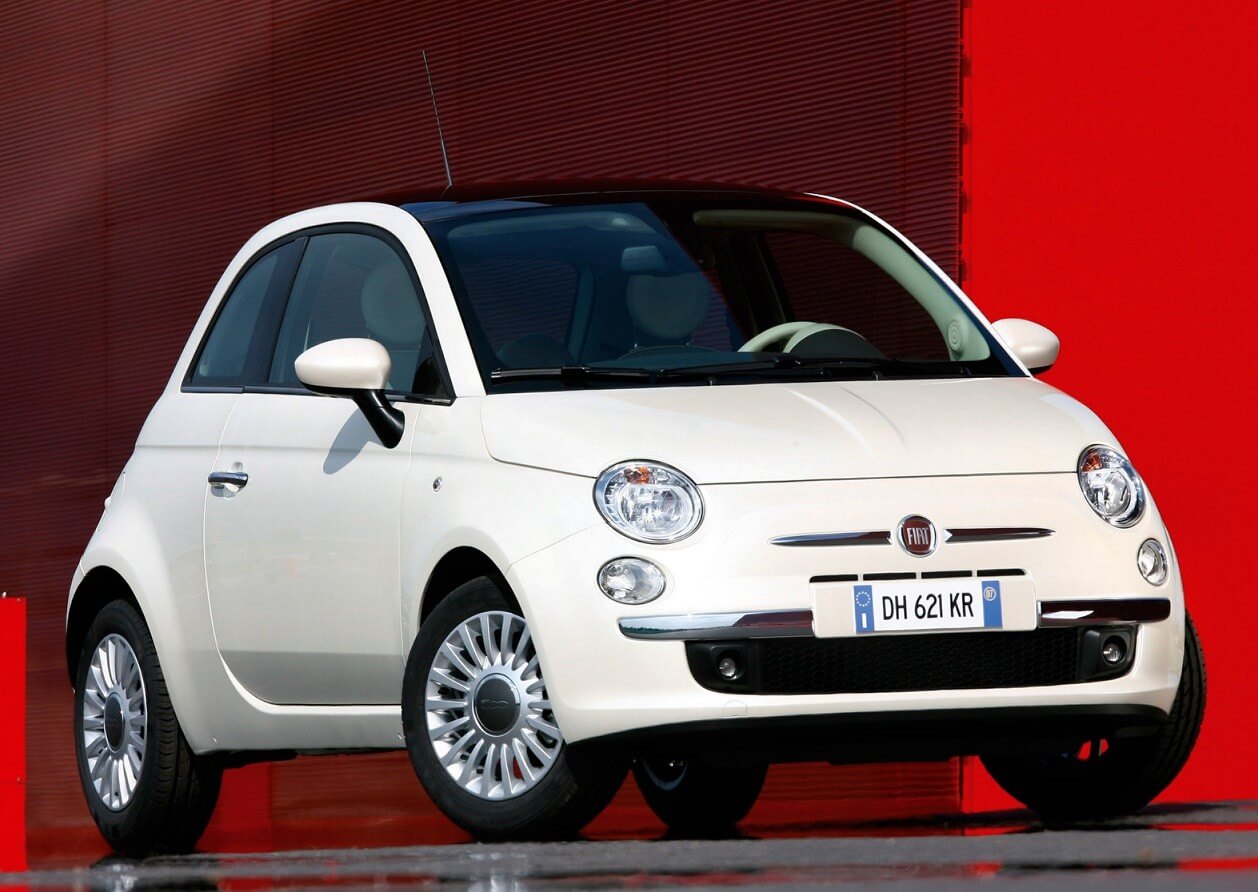
The Punto, launched in the early 1990s and on sale in the UK from March 1994, was European Car of the Year 1995, and the Bravo/Brava won in 1996. The wreath badge returned for Fiat's centenary in 1999. As of 2002 Fiat still built more than one million vehicles a year at six plants in Italy, but by the early 2000s the company was in deep financial trouble; Gianni Agnelli died on 24 January 2003, and in 2004 Sergio Marchionne became chief executive. The second-generation Panda was European Car of the Year 2004, and the retro-styled 500, launched in mid-2007, won the title in 2008, Fiat's ninth.
2009 to today: Chrysler, FCA and Stellantis
In January 2009 Fiat took a 20% stake in Chrysler, which returned the brand to North America after 25 years, and the 500 was built for that market in Toluca, Mexico. Fiat and Chrysler merged into Fiat Chrysler Automobiles, effective in October 2014, and in 2021 FCA merged with PSA to form Stellantis. The current range includes the 500e electric city car, the 600 and the Grande Panda.
Landmark Fiat models

| Model | Year | Why it matters |
|---|---|---|
| 3½ CV | 1899 | Fiat's first car |
| 500 "Topolino" | 1936 | Small car for the masses |
| 600 | 1955 | Rear-engined family car of the economic boom |
| Nuova 500 | 1957 | Dante Giacosa design, 3.9 million built |
| 124 | 1966/67 | European Car of the Year 1967, built under licence worldwide |
| 128 / 127 | 1970 / 1972 | European Car of the Year winners |
| 131 Abarth | 1976–1981 | Three WRC manufacturers' titles |
| Uno | 1983/84 | European Car of the Year 1984 |
| Punto | 1993 | European Car of the Year 1995 |
| Panda (2nd gen.) | 2003 | European Car of the Year 2004 |
| 500 | 2007 | European Car of the Year 2008, retro icon |
Fiat around the world
Fiat has been a market leader in Brazil for many years, where the Uno was introduced in October 1984, and it has a strong position in Argentina. In India, Premier Automobiles built the Fiat 1100 and 124 under licence. In 1976 Libya took a shareholding in Fiat, and Egyptian assembly by El-Nasr brought Fiat designs to North Africa. Fiat's plants and partners have also assembled cars in Egypt, Turkey and elsewhere, and its licensed designs became the basis of national car industries in Spain, Poland and Yugoslavia. The Abarth tuning brand, part of the group, has long produced sporty versions of Fiat's small cars.

The Fiat logo through the years
Fiat's badge has changed many times and mirrors the company's history. The FIAT initials first appeared in logo form in 1901, two years after the founding. In 1931 Fiat introduced a red shield with the four letters, which remained the brand's sign during the Topolino era. The rhomboid logo, with the letters set in four diamond-shaped cells, was introduced in 1968 and phased in on cars during the early 1970s, the period of the 127 and 128. For the company's centenary in 1999, Fiat brought back a round badge with a laurel wreath inspired by its early emblems, and later versions developed this circular design further.

Fiat in numbers

| Milestone | Value |
|---|---|
| Founded | 11 July 1899 |
| Output in 1903 / 1906 | 135 / 1,149 cars |
| Italy's largest car maker | by 1910 |
| Lingotto opened | 1923 |
| Peak Italian output | 1.4 million cars (1970) |
| European Car of the Year wins | 9 |
| Nuova 500 production | 3,893,294 |
| WRC victories (131 Abarth) | 18 |
FAQ
What does FIAT stand for?
FIAT stands for Fabbrica Italiana Automobili Torino, meaning Italian Automobile Factory of Turin. The company was founded under this name on 11 July 1899, and the initials first appeared as a logo in 1901.
Who founded Fiat?
Fiat was founded by a group of investors in Turin that included Giovanni Agnelli, who became its leading figure. His grandson Gianni Agnelli chaired the company from 1966 to 1996.
Who owns Fiat today?
Since 2021 Fiat has been a brand of Stellantis, formed by the merger of Fiat Chrysler Automobiles and PSA. Before that, Fiat and Chrysler had merged into FCA in 2014.
How many times has Fiat won European Car of the Year?
Fiat models have won nine times: the 124 (1967), 128 (1970), 127 (1972), Uno (1984), Tipo (1989), Punto (1995), Bravo/Brava (1996), Panda (2004) and 500 (2008).
Which brands has Fiat owned?
Over its history the Fiat group took control of Lancia, became a Ferrari shareholder in 1969, bought Alfa Romeo in 1986 and Maserati in 1993. These brands are now part of Stellantis, except Ferrari.
Photos (8)