Kia Turns Its Gwangju Factory Into an Electric and PBV Production Hub
Kia will build a new electric vehicle factory at its Autoland Gwangju complex in South Korea, with Kia and parent Hyundai Motor Group investing 3 trillion won (about US$2.2 billion) by 2029. The project, reported by Just Auto on 9 November and electrive on 11 November, turns a plant that mostly builds combustion-engined cars into a base for electric and software-defined vehicles, led by Kia's PBV vans.
Key takeaways
- Investment: 3 trillion won by 2029, part of Hyundai Motor Group's 125 trillion won domestic programme.
- A new EV factory building plus expanded existing lines at Autoland Gwangju.
- Focus on purpose-built vehicles (PBVs) such as the PV5 with modular bodies.
- 200 autonomous Hyundai Ioniq 5 test cars will run in the city.
What Kia will build in Gwangju
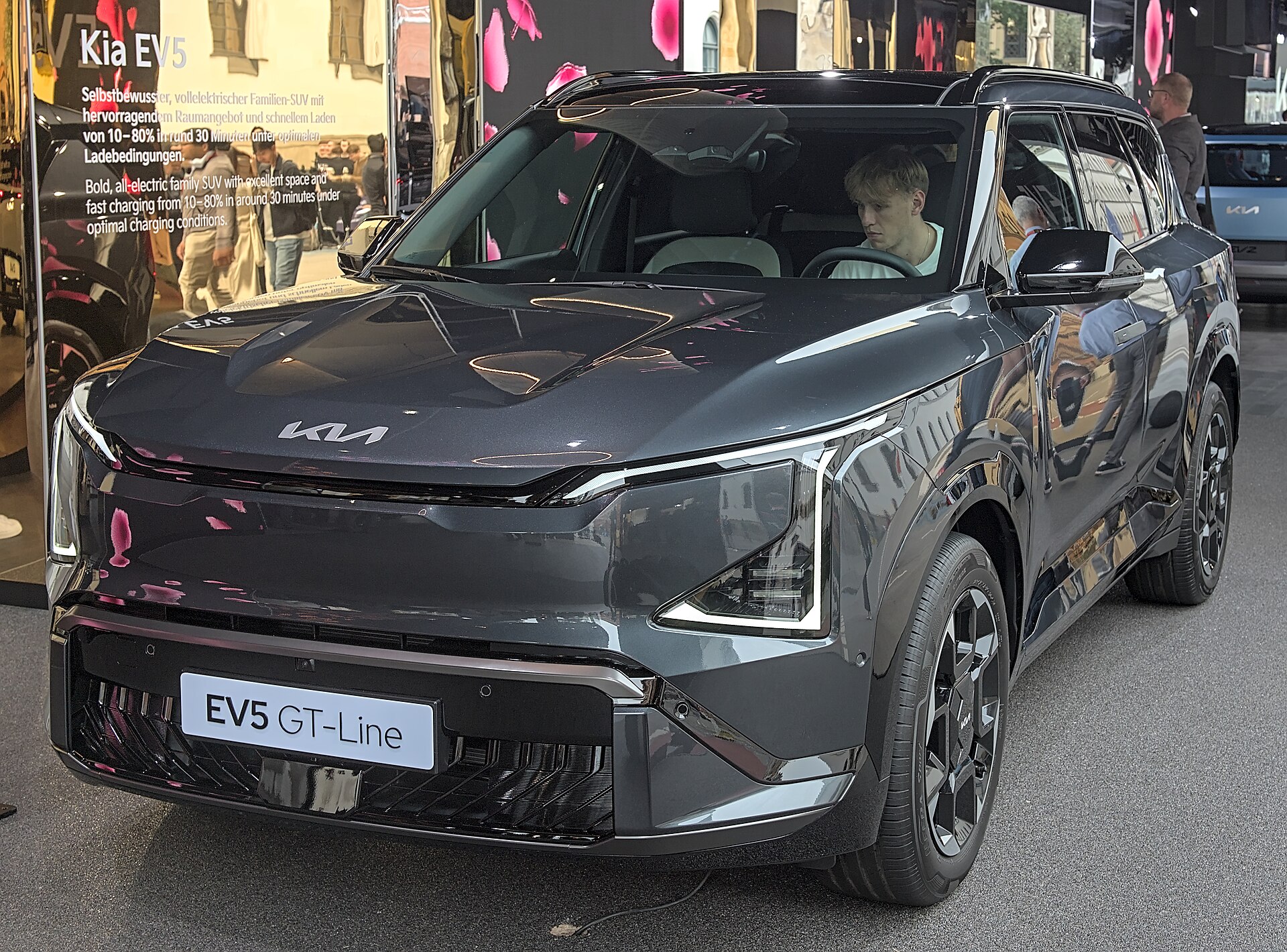
Gwangju already produces the Kia Seltos small SUV and the EV5 electric SUV, but its output has been dominated by petrol and diesel models. The investment, worth about 2 billion euros at the exchange rate quoted by electrive in November 2026, pays for a new factory building dedicated to electric cars and upgrades to the existing lines so they can handle software-defined vehicles. Neither report gives a planned capacity or job figure.
The main product will be electric purpose-built vehicles. Kia's PBVs use a common electric base whose interior and upper structure can be changed, and its Easy-Swap system allows the same vehicle to switch between cargo and passenger use. The PV5 van already uses this approach, and on 10 November Kia announced UK prices for chassis-cab and high-roof versions.
A city-wide test bed
The factory is only part of the deal. Hyundai Motor Group is building what it calls an integrated mobility ecosystem with the city of Gwangju, Chonnam National University and the Gwangju Institute of Science and Technology. Planned trials include on-demand buses, autonomous public shuttles, last-mile delivery vans and remotely driven PV5 vehicles for people with reduced mobility. A fleet of 200 self-driving Hyundai Ioniq 5 cars will collect data in normal city traffic to train the driving software.
Kia president and chief executive Song Ho-sung said the plan would build "a production system for future vehicles" and "accelerate the commercialization of PBV-based technologies". The Gwangju project sits inside the group's wider pledge, announced in November 2025, to invest about 125 trillion won in South Korea over five years.
What it means for buyers
For European buyers the effect is indirect but real: Kia is building up dedicated capacity for electric vans and specialist vehicles, a segment where it is still new, which should mean more body styles and steadier supply of PBV models later in the decade. The current line-up is in the Kia catalogue, and the brand's path from bicycles to electric cars is told in the history of Kia.
Sources
- Just Auto: Kia to build new EV plant in Gwangju (9 Nov 2026) (accessed 12 Nov 2026)
- electrive: Kia invests billions in electric and PBV Centre (11 Nov 2026) (accessed 12 Nov 2026)
Found a mistake? Report an error