 Hyundai Ioniq 5
Specs, engines and history
Published Sources (2) Report an error
By Felix Hartmann, Automotive Technology & EV Contributor
- Built
- 2021–present
- Top power
- 478 kW (650 PS)
Which Ioniq 5 to choose
Our verdict · Felix Hartmann
- For the longest range: the 84 kWh with rear-wheel drive.
- For towing and winter roads: the 84 kWh all-wheel drive with 239 kW.
- For track days: the Ioniq 5 N.
- For a used buy: a 72.6 or 77.4 kWh car before 2024, with a full service history, because ADAC records a high breakdown rate for the 2022 cars.
The earlier electric Hyundai is described in our guide to the Hyundai Ioniq, the smaller electric SUV in the article on the Hyundai Kona, and a sister EV from the group in the guide to the Kia Niro. All versions are listed in the Hyundai catalogue.
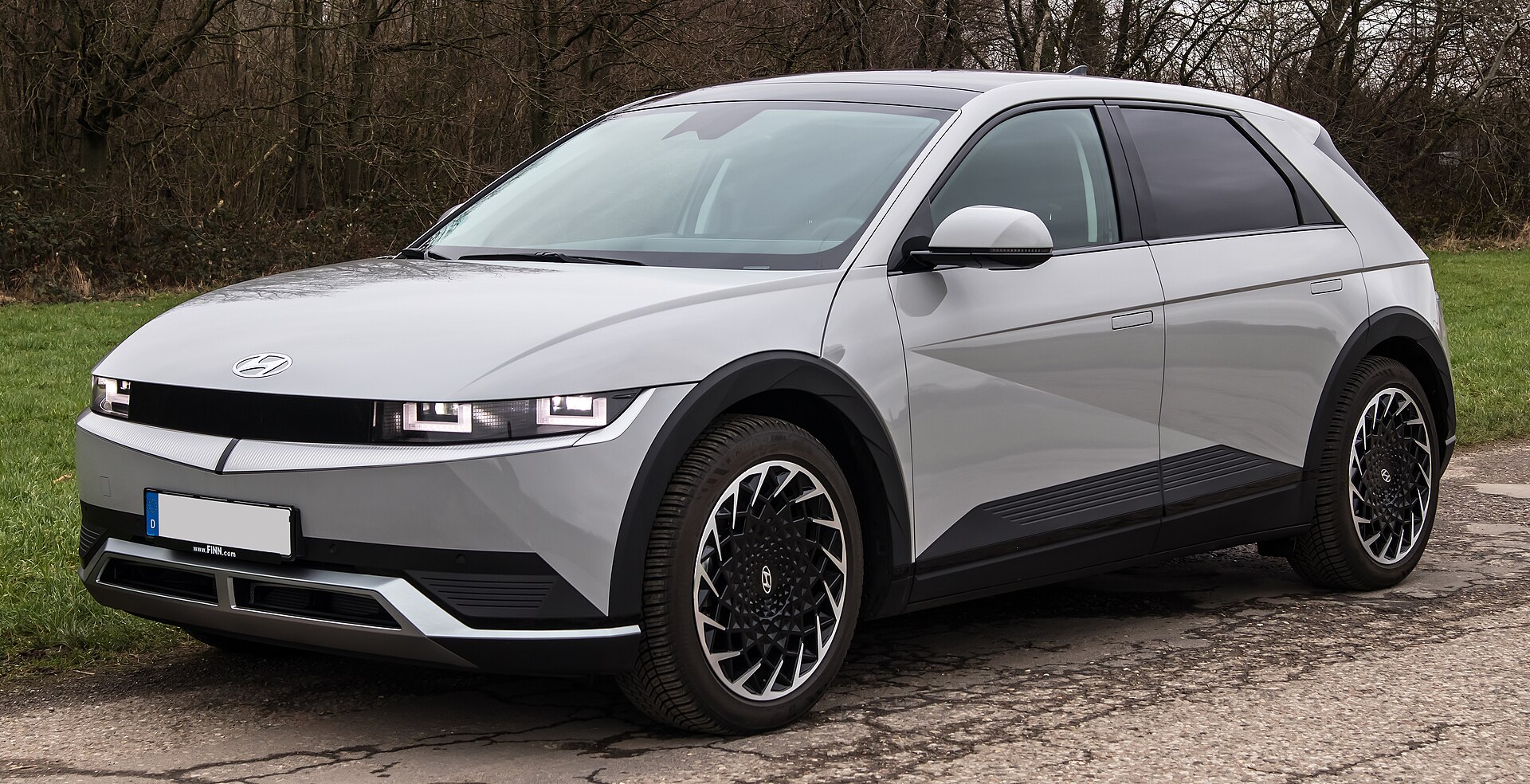
The Hyundai Ioniq 5 is a battery-electric crossover revealed on 23 February 2021 and built since March 2021. It was the first model on Hyundai's E-GMP platform, with an 800-volt electrical system and a 3,000 mm wheelbase. A facelift in March 2024 brought an 84 kWh battery, and the 448 kW Ioniq 5 N, shown at Goodwood in July 2023, is the performance version. In 2022 the Ioniq 5 was named World Car of the Year.
In short
- One generation (project code NE) since 2021; plants in South Korea, the USA, Indonesia, India and other Asian countries.
- Batteries from 58 to 84 kWh, rear- or all-wheel drive, 125 to 239 kW (170 to 325 PS); the N has 448 kW and 478 kW with boost.
- Body 4,635 mm long (4,655 mm after the facelift) on a 3,000 mm wheelbase; boot about 527 litres.
- German list price from €50,750 for the 63 kWh version, valid from October 2025 (ADAC).
Size at a glance
| Dimensions | Hyundai Ioniq 5 NE |
|---|---|
| Length | 4,635 mm182.5 in |
| Width | 1,890 mm74.4 in |
| Height | 1,605 mm63.2 in |
| Wheelbase | 3,000 mm118.1 in |
| Boot | 527 L18.6 cu ft |
Specs by version
Engines
| Version | Engine | Power | Torque | Gearbox | Drive | Production years |
|---|---|---|---|---|---|---|
| 58 kWh RWD | Electric | 125 kW 170 PS168 hp | 350 Nm258 lb-ft | Single-speed | Rear-wheel drive | 2021–2024 |
| 63 kWh RWD | Electric | 125 kW 170 PS168 hp | — | Single-speed | Rear-wheel drive | 2024 |
| 77.4 kWh RWD | Electric | 168 kW 228 PS225 hp | 350 Nm258 lb-ft | Single-speed | Rear-wheel drive | 2022–2024 |
| 84 kWh RWD | Electric | 168 kW 228 PS225 hp | 350 Nm258 lb-ft | Single-speed | Rear-wheel drive | 2024 |
| 72.6 kWh AWD | Electric | 225 kW 306 PS302 hp | 605 Nm446 lb-ft | Single-speed | All-wheel drive | 2021–2022 |
| 84 kWh AWD | Electric | 239 kW 325 PS321 hp | 605 Nm446 lb-ft | Single-speed | All-wheel drive | 2024 |
| Ioniq 5 N | Electric | 448 kW 609 PS601 hp | 740 Nm546 lb-ft | Single-speed | All-wheel drive | 2023 |
Performance
Show all 6 versions
| Version | 0–100 km/h | Top speed | Range |
|---|---|---|---|
| 58 kWh RWD | 8.5 s 0–62 mph | 185 km/h115 mph | 384 km239 mi |
| 77.4 kWh RWD | 7.3 s 0–62 mph | — | — |
| 84 kWh RWD | 7.3 s 0–62 mph | — | — |
| 72.6 kWh AWD | 5.2 s 0–62 mph | — | 460 km286 mi |
| 84 kWh AWD | 5.1 s 0–62 mph | — | — |
| Ioniq 5 N | 3.4 s 0–62 mph | 260 km/h162 mph | 448 km278 mi |
Dimensions and weight
Show all 7 versions
| Version | Length | Width | Height | Wheelbase | Battery |
|---|---|---|---|---|---|
| 58 kWh RWD | 4,635 mm182.5 in | 1,890 mm74.4 in | 1,605 mm63.2 in | 3,000 mm118.1 in | 58 kWh |
| 63 kWh RWD | 4,655 mm183.3 in | 1,890 mm74.4 in | 1,605 mm63.2 in | 3,000 mm118.1 in | 63 kWh |
| 77.4 kWh RWD | 4,635 mm182.5 in | 1,890 mm74.4 in | 1,605 mm63.2 in | 3,000 mm118.1 in | 77 kWh |
| 84 kWh RWD | 4,655 mm183.3 in | 1,890 mm74.4 in | 1,605 mm63.2 in | 3,000 mm118.1 in | 84 kWh |
| 72.6 kWh AWD | 4,635 mm182.5 in | 1,890 mm74.4 in | 1,605 mm63.2 in | 3,000 mm118.1 in | 73 kWh |
| 84 kWh AWD | 4,655 mm183.3 in | 1,890 mm74.4 in | 1,605 mm63.2 in | 3,000 mm118.1 in | 84 kWh |
| Ioniq 5 N | 4,715 mm185.6 in | 1,940 mm76.4 in | 1,585 mm62.4 in | 3,000 mm118.1 in | 84 kWh |
Verified Manufacturer and type-approval data from our catalog · Sources and methodology
Hyundai Ioniq 5 at a glance
| Specification | Hyundai Ioniq 5 |
|---|---|
| Production | since March 2021 |
| Plants | Ulsan (South Korea), Georgia Metaplant (USA, since 2024), Cikarang (Indonesia), Chennai (India) and others |
| Platform | E-GMP, 800 V |
| Body | five-door crossover |
| Drive | rear-wheel drive or all-wheel drive (two motors) |
| Battery | 58, 63, 72.6, 77.4 or 84 kWh |
| Power | 125 to 239 kW; Ioniq 5 N 448 kW (478 kW with boost) |
| Length / wheelbase | 4,635–4,655 mm / 3,000 mm |
| Boot | about 527 l, 1,587 l with the seats folded; front compartment 57 l (RWD) or 24 l (AWD) |
| Kerb weight | 1,800 to 2,160 kg (N: 2,205 to 2,235 kg) |
From the 45 concept to production
The Ioniq 5 was previewed by the Hyundai 45 EV Concept at the Frankfurt Motor Show in September 2019. The production design by Lee Ji-hyeon kept the angular shape and pixel lights. Hyundai revealed the car on 23 February 2021, and US sales started in December 2021 as a 2022 model.
Inside, two 12-inch screens sit under one glass panel. The "Universal Island" centre console slides back by 140 mm, and the front seats are about 30 percent slimmer than usual to give more rear legroom. Some markets offer digital side mirrors with cameras and OLED screens. Recycled materials, including PET bottles, are used in the trim.

Versions before the facelift
| Battery | Drive | Power | Torque | 0–100 km/h | WLTP range |
|---|---|---|---|---|---|
| 58 kWh | rear | 125 kW (170 PS) | 350 Nm | 8.5 s | 384 km |
| 58 kWh | all-wheel | 173 kW (235 PS) | 605 Nm | 6.1 s | 360 km |
| 72.6 kWh | rear | 160 kW (218 PS) | 350 Nm | 7.4 s | 451–481 km |
| 72.6 kWh | all-wheel | 225 kW (306 PS) | 605 Nm | 5.2 s | 430–460 km |
| 77.4 kWh | rear | 168 kW (228 PS) | 350 Nm | 7.3 s | — |
| 77.4 kWh | all-wheel | 239 kW (325 PS) | 605 Nm | 5.1 s | — |
The standard car has a top speed of 185 km/h. Wikipedia gives only US EPA ranges for the 77.4 kWh versions, so no WLTP figure is shown here.
The 2024 facelift
Hyundai revealed the update on 3 March 2024. The 84 kWh battery replaced the 77.4 kWh pack, and the body grew to 4,655 mm. With 84 kWh the rear-wheel-drive car has 168 kW and 350 Nm, the all-wheel-drive car 239 kW and 605 Nm, with 7.3 and 5.1 seconds to 100 km/h. A smaller battery of 63 kWh replaced the 58 kWh version; ADAC lists it with 125 kW (170 PS). The N Line styling package was added to the range, first in Korea from March 2024.

Charging and 800 volts
The 800-volt system allows high DC charging power: Wikipedia gives a peak of 175 kW for the 58 kWh battery, 233 kW for the 77.4 kWh battery and 238 kW for the 84 kWh battery. Hyundai states that five minutes of charging add 100 km of WLTP range. On AC the car charges at 11 kW. Vehicle-to-load (V2L) supplies up to 3.6 kW from a socket under the rear seat and an external port.
Real-world results depend on temperature. In a winter test of the 2023 model year, Autonotizen.de saw just under 70 kW at 20 percent charge and up to 130 kW above 45 percent. It reached 80 percent after 30 minutes. Consumption in the same test was 22.3 kWh/100 km against 17.9 kWh/100 km WLTP, which meant a real range of about 340 km.

Ioniq 5 N
The N was introduced at the Goodwood Festival of Speed on 14 July 2023. It uses the 84 kWh battery and two motors with 448 kW (609 PS) and 740 Nm. N Grin Boost raises this to 478 kW (650 PS) and 770 Nm for 10 seconds, enough for 0–100 km/h in 3.4 seconds. Top speed is 260 km/h and the WLTP range 448 km. The body is 50 mm wider and 20 mm lower, and the N e-shift simulates an eight-speed gearbox. A racing version, the eN1 Cup car, is about 270 kg lighter.

Standard Ioniq 5 compared with the Ioniq 5 N
| Figure | Ioniq 5 (84 kWh RWD) | Ioniq 5 N |
|---|---|---|
| Power | 168 kW | 448 kW (478 kW boost) |
| 0–100 km/h | 7.3 s | 3.4 s |
| Length | 4,655 mm | 4,715 mm |
| Kerb weight | 1,985–2,160 kg (84 kWh) | 2,205–2,235 kg |
- The N has 2.7 times the power of the rear-wheel-drive 84 kWh car (448 against 168 kW) and is 60 mm longer.
- The 0–100 km/h time of the N is 3.9 seconds shorter, while its kerb weight is at least 45 kg higher than the heaviest 84 kWh standard car.
- The earlier Hyundai Ioniq liftback offered hybrid, plug-in and electric versions on a conventional platform; the Ioniq 5 is electric only.
Safety and reliability
Euro NCAP gave the Ioniq 5 five stars in 2021, with 88 percent for adult occupants, 86 percent for children, 63 percent for pedestrians and 88 percent for safety assistance. The N was not tested. In the USA, IIHS named the 2022 and 2026 models Top Safety Pick+.
The ADAC breakdown statistics are less flattering: 28.2 breakdowns per 1,000 vehicles for cars registered in 2022 and 19.5 for 2023.
Sales
Global sales were 65,906 in 2021, 99,536 in 2022, 114,988 in 2023 and 93,349 in 2024. In Europe registrations peaked at 30,996 in 2022; in the USA they grew to 47,039 in 2025.
Prices in Germany
| Version | List price (ADAC) | Valid |
|---|---|---|
| 63 kWh Centriq 2WD, 125 kW | €50,750 | from October 2025 |
| 84 kWh Centriq 2WD, 168 kW | €54,100 | from October 2025 |
Photo gallery


Hyundai Ioniq 5 in our rankings
- No. 1 of 38 · Most powerful Korean cars (478 kW)
- No. 1 of 19 · Quickest Korean cars, 0–100 (3.4 s)
- No. 1 of 18 · Fastest Korean cars (260 km/h)
- No. 2 of 48 · Fastest electric cars (260 km/h)
- No. 3 of 45 · Quickest electric cars, 0–100 (3.4 s)
- No. 5 of 81 · Quickest SUVs and crossovers, 0–100 (3.4 s)
More powerful than 97% of ranked Korean cars in the 1CARS catalog (No. 1 of 38).
FAQ
What is the range of the Hyundai Ioniq 5?
From 360 km WLTP (58 kWh, AWD) to 481 km (72.6 kWh, RWD) before the facelift; the N has 448 km.
How fast does the Ioniq 5 charge?
Up to 238 kW DC with the 84 kWh battery. Five minutes add about 100 km of WLTP range, according to Hyundai.
Is the Ioniq 5 all-wheel drive?
Rear-wheel drive as standard, all-wheel drive with a second motor as an option.
How powerful is the Ioniq 5 N?
448 kW (609 PS), and 478 kW (650 PS) for 10 seconds with N Grin Boost.
Did the Ioniq 5 win any awards?
Yes, including World Car of the Year, World Electric Vehicle of the Year and German Car of the Year in 2022.
Data sources
Data checked by an editor against the sources below.
- Wikipedia — Hyundai Ioniq 5
- ADAC — 1generation Facelift