The History of Kia: Eight Decades from Bicycles to Electric Cars
Kia is South Korea's oldest car manufacturer, founded in 1944 in Seoul as Kyungsung Precision Industry, a maker of steel tubing and bicycle parts. It built motorcycles and trucks before its first car, the Brisa of 1974. After bankruptcy in 1997, Hyundai took control, and in 2025 Kia sold a record 3,135,803 vehicles.
Key takeaways
- 1944–1973: bicycle parts, Korea's first domestic bicycle, Honda-licensed motorcycles and Mazda-based trucks.
- 1974–1997: the Brisa, then the Pride with Ford and Mazda, the Sephia and the first Sportage, ending in bankruptcy in the Asian financial crisis.
- 1998 onwards: part of Hyundai Motor Group; Peter Schreyer's design from 2006 and new plants in Europe, the US, Mexico and India.
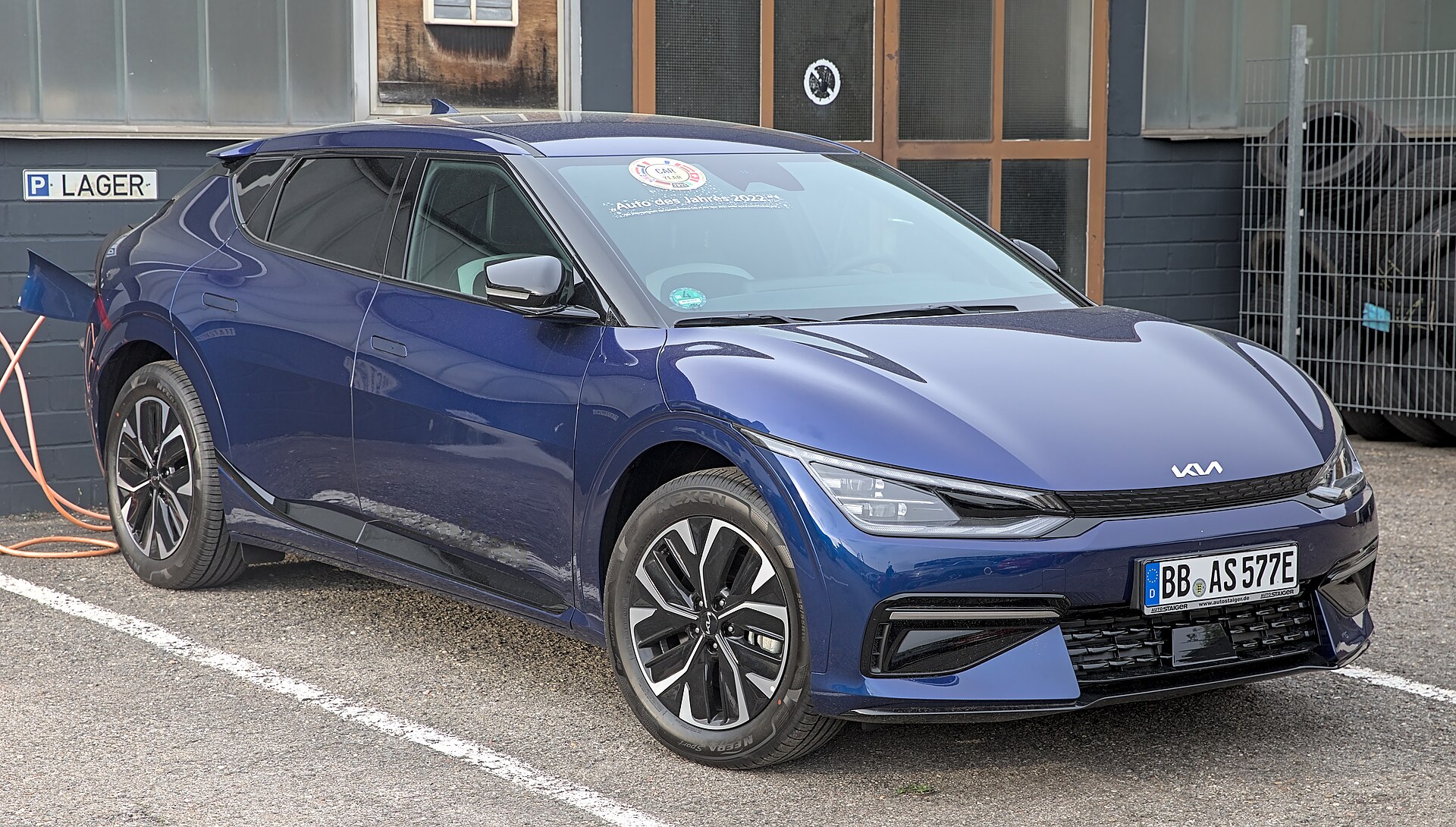
- Since 2021 the company is called Kia Corporation, with a new logo and an electric range led by the EV6 and EV9.

Kia at a glance

| Fact | Value |
|---|---|
| Founded | 1944, Seoul, as Kyungsung Precision Industry |
| Headquarters | Seoul, South Korea |
| Parent | Hyundai Motor Company holds 35.17 % (2025) |
| Name | From the characters "ki" (to arise) and "a" (Asia): "rising from Asia" |
| Global sales 2025 | 3,135,803 vehicles (record) |
| Employees 2025 | 51,026 |
| Leadership (2025) | Chairman Chung Eui-sun, CEO Song Ho-sung, design chief Karim Habib |
From steel tubes to motorcycles (1944–1973)
Kia began as a small workshop producing steel tubing and bicycle parts. Its first plant opened in Yeongdeungpo, Seoul, in January 1945, followed by a second in Busan. In 1952 the company took the name Kia Industries and presented the Samchully, the first bicycle made in Korea.

Motor vehicles came step by step. From 1957 Kia built small motorcycles under licence from Honda. In January 1962 it started production of the K-360, a small three-wheeled delivery vehicle, and Mazda-licensed trucks followed; the T-600 three-wheeler entered production in 1969. In June 1973 Kia opened the Sohari plant, its first integrated vehicle factory.
The first cars: Brisa, Pride and the Ford–Mazda link (1974–1990)
The Brisa pickup entered production in August 1973, and in October 1974 Kia unveiled the Brisa passenger car, based on the Mazda Familia. The Brisa II followed in 1975. In 1981 the government's industrial consolidation forced Kia to stop making passenger cars and concentrate on light commercial vehicles. Kia made the most of it with the Bongo one-tonne diesel van and truck, launched in September 1980, which became one of its best-known products.

Kia returned to cars in 1986 with Ford and Mazda as partners. Production of the Pride, a small car based on the Mazda 121, started in December 1986. Only 26 were built in 1986, but more than 95,000 left the plant the following year, many of them exported to the United States as the Ford Festiva from January 1987. The mid-size Concord saloon followed in October 1987, and in 1990 the company became Kia Motors Corporation.
Going global: Sephia, Sportage and export markets (1991–1997)
Kia began selling cars in Europe in 1991, at first only the Pride. The Sephia saloon, often described as its first car of its own design, reached Europe in 1994. In the United States, Kia Motors America was incorporated in October 1992, and sales began in 1993–1994 at four dealerships in Portland, Oregon, with the Sephia and the Kia Sportage compact SUV. The Sportage was one of the first compact SUVs on the market and became the model most associated with the brand in Europe.

In Europe the Mentor (a Sephia derivative, later sold as the Shuma hatchback) and the Credos saloon tried to win buyers with long equipment lists and low prices. Their sales were modest: buyers still preferred established European brands.
Collapse and the Hyundai takeover (1997–2005)
Fast expansion left the company with heavy debts. When the Asian financial crisis hit in 1997, the company declared bankruptcy. In 1998 Hyundai Motor Company won the auction for Kia and acquired 51 % of the shares, forming the Hyundai Motor Group. Hyundai later reduced its stake; in 2025 it held 35.17 %, or 36.99 % together with related parties.

Under the new owner, the two brands began to share platforms, engines and purchasing, while keeping separate design, marketing and dealer networks. Models such as the Sorento SUV (2002), the Picanto and the second-generation Sportage were the first fruits of the alliance. The parent's own story is told in the history of Hyundai.
Design-led growth: Peter Schreyer and new plants (2006–2020)
The turning point came in 2006, when Kia hired Peter Schreyer, formerly of Audi and Volkswagen, as chief design officer. His "tiger nose" grille, introduced on the Kee concept at the 2007 Frankfurt motor show, gave every Kia a recognisable face. Cars such as the Soul, the Optima, the Kia cee'd and the Stinger grand tourer of 2017 changed how buyers saw the brand.

The company also built factories close to its markets:
| Plant | Production start | Note |
|---|---|---|
| Žilina, Slovakia | December 2006 | Main European plant (cee'd, Sportage, from 2025 the EV4) |
| West Point, Georgia, USA | November 2009 | Opened February 2010 |
| Nuevo León, Mexico | 2016 | Announced in August 2014 |
| Anantapur, India | 2019 | 350,000 vehicles a year; Kia entered India in July 2019 |
Awards followed. The Kia Telluride, a three-row SUV built in Georgia, was named World Car of the Year in 2020. In 2014, Pope Francis used a Kia Soul during his visit to South Korea, a widely reported image of the brand's new self-confidence.
Kia Corporation and the electric era (2021–today)
In January 2021 the company dropped "Motors" from its name, became Kia Corporation and introduced a new angular logo. The same year it launched the EV6, its first car on Hyundai Group's dedicated E-GMP electric platform, which was named European Car of the Year 2022. The large EV9 SUV followed and won World Car of the Year in 2024. In November 2021 Kia set a goal of carbon neutrality by 2045.

The range continues to widen. The Kia Niro is sold as a hybrid, plug-in hybrid and electric car, and the Tasman pickup debuted in October 2024. At its EV Day in Tarragona, Spain, in February 2025 the company presented the EV4, the PV5 van and the Concept EV2. Mass production of the EV4 began in Slovakia in August 2025. Current and past electric models are listed in the 1cars electric-car section.
Key Kia models through the decades

| Model | Launched | Why it matters |
|---|---|---|
| K-360 | 1962 | First motor vehicle, a three-wheeled van |
| Brisa | 1974 | First passenger car, Mazda-based |
| Bongo | 1980 | Light commercial that kept Kia alive in the 1980s |
| Pride | 1986 | Ford–Mazda partnership, exported as Ford Festiva |
| Sportage | 1993 | Early compact SUV, Kia's best-known model |
| cee'd | 2006 | First Kia designed and built in Europe |
| Telluride | 2019 | World Car of the Year 2020 |
| EV6 | 2021 | European Car of the Year 2022 |
How Kia compares with Hyundai today
The two group brands share most of their technology, but Kia positions itself as the more design-led and youthful one. Compared with its 2013 total of about 2.75 million sales, Kia's 2025 figure of 3.14 million is around 14 % higher, and the US alone took 852,155 Kias in 2025. To compare rival SUVs with exact figures, see our Sportage vs Outlander comparison.

Which Kia to choose today
For a family car, the Sportage hybrid or plug-in hybrid is the brand's best all-rounder, and the three-row Sorento suits buyers who need seven seats. The Niro makes sense for drivers who want low running costs without changing their charging habits, while the EV6 and EV9 are the choice for buyers ready to go fully electric. The Ceed family remains the value pick among compact hatchbacks and estates.

On the used market, cars from the Schreyer era onwards (from about 2010) are the better buy: they are better built and better equipped than earlier models. In Europe, Kia's seven-year, 150,000 km warranty transfers to the next owner, so a young used car with service records keeps part of its cover. Older models from before 2006 are simple and cheap, but rust protection and safety equipment lag behind. All models in our database are in the Kia catalogue.
FAQ
Who owns Kia?
Kia is part of Hyundai Motor Group. Hyundai Motor Company bought 51 % in 1998 after Kia's bankruptcy and held 35.17 % in 2025, or 36.99 % with related parties.
When was Kia founded?
Kia was founded in 1944 in Seoul as Kyungsung Precision Industry, which made steel tubing and bicycle parts. It took the name Kia Industries in 1952, built its first car in 1974 and became Kia Motors in 1990.
What does the name Kia mean?
The name comes from the Sino-Korean characters "ki", meaning to arise, and "a", standing for Asia. Together they are usually translated as "rising from Asia" or "rising out of the East".
Where are Kia cars made?
Most Kias come from plants in South Korea. Kia also builds cars in Žilina (Slovakia), West Point (Georgia, USA), Nuevo León (Mexico) and Anantapur (India), and through partners in other countries.
What was Kia's first car?
Kia's first passenger car was the Brisa, unveiled in October 1974 and based on the Mazda Familia. Before that it had built bicycles, motorcycles, the K-360 three-wheeler and trucks.
Photos (5)