
 Kia Soul
All generations, specs and history
Updated Published Sources (6) Report an error
By Sarah Whitmore, Senior Automotive Writer Reviewed by Oleksandr Hnatiuk

- Built
- 2008–2025
- Generations
- 3
- Top power
- 150 kW (204 PS)
- New price
- from about €33,990 (2019)
Timeline
Soul generations
Click a generation for its own page


- Soul I 2008–2013 · Hatchback · 93–104 kW (126–141 PS)
- Soul II 2013–2019 · Hatchback · 81–150 kW (110–204 PS)
- Soul III 2019–2025 · Hatchback · 90–150 kW (122–204 PS)
Newest first · 3 generations since 2008
-
2019

-
2013

-
2008

All generations by year: Soul III (2019–2025) · Soul II (2013–2019) · Soul I (2008–2013)
Which one is mine?
Pick the year of first registration to see which generation it is.
Check by VINWhich Kia Soul to buy
Our verdict · Sarah Whitmore
For a used petrol car, the second generation (2013–2019) is the most rounded choice. Its stiffer body, larger boot and revised suspension make it better to drive than the first generation, and the 1.6 GDi or 2.0 engines with a six-speed automatic suit relaxed driving. Buyers who want performance should look for the 1.6 T-GDi with the seven-speed dual-clutch gearbox. For electric driving, the third-generation e-Soul with its 64 kWh battery offers far more range than the 27 kWh first Soul EV, so check the battery's condition and charging history on any used example.
The Kia Soul is a compact, boxy five-door hatchback with a crossover-like high seating position, built from 2008 until October 2025. Launched at the 2008 Paris Motor Show and styled under Peter Schreyer, it became famous for its design awards, its hamster advertising and its electric versions.
In short
- First generation (2008–2013): 1.6 and 2.0 petrol and 1.6 CRDi diesel with 93–104 kW; Red Dot design award 2009.
- Second generation (2013–2019): stiffer body, 1.6 T-GDi with 150 kW (201 hp) and the first Soul EV with a 27 kWh battery.
- Third generation (2019–2025): shared platform with the Hyundai Kona; e-Soul with a 64 kWh battery and 150 kW.
- More than one million Souls had been produced by 2015; US sales exceeded 100,000 a year from 2011 to 2018.

Specs by version
Engines
| Version | Engine | Gearbox | Drive | Production years |
|---|---|---|---|---|
| Soul II · 1.6 L 4 cyl Automatic (AM7) · 2018 (EPA) | 1.6 l · 4 cyl 1,600 cc | 7-sp Dual-clutch | Front-wheel drive | 2018 |
| Soul II · 1.6 L 4 cyl Automatic (S6) · 2018 (EPA) | 1.6 l · 4 cyl 1,600 cc | 6-sp Automatic | Front-wheel drive | 2018 |
| Soul II · 1.6 L 4 cyl Manual 6-spd · 2018 (EPA) | 1.6 l · 4 cyl 1,600 cc | 6-sp Manual | Front-wheel drive | 2018 |
| Soul II · 2 L 4 cyl Automatic (S6) · 2018 (EPA) | 2.0 l · 4 cyl 2,000 cc | 6-sp Automatic | Front-wheel drive | 2018 |
| Soul II · 1.6 91 kW (124 PS) | 1.6 l 1,600 cc | 6-sp Manual | - | - |
| Soul II · 94 kW (128 PS) | - | - | - | - |
| Soul II · 97 kW (132 PS) | - | Automatic | - | - |
| Soul III · 1.6 L 4 cyl Automatic (AM-S7) · 2022 (EPA) | 1.6 l · 4 cyl 1,600 cc | 7-sp Dual-clutch | Front-wheel drive | 2022 |
| Soul III · 1.6 L 4 cyl Automatic (AM-S7) · 2021 (EPA) | 1.6 l · 4 cyl 1,600 cc | 7-sp Dual-clutch | Front-wheel drive | 2021 |
| Soul III · 1.6 L 4 cyl Automatic (AM-S7) · 2020 (EPA) | 1.6 l · 4 cyl 1,600 cc | 7-sp Dual-clutch | Front-wheel drive | 2020 |
| Soul III · 1.6 L 4 cyl Automatic (AM7) · 2019 (EPA) | 1.6 l · 4 cyl 1,600 cc | 7-sp Dual-clutch | Front-wheel drive | 2019 |
| Soul III · 1.6 L 4 cyl Automatic (S6) · 2019 (EPA) | 1.6 l · 4 cyl 1,600 cc | 6-sp Automatic | Front-wheel drive | 2019 |
| Soul III · 1.6 L 4 cyl Manual 6-spd · 2019 (EPA) | 1.6 l · 4 cyl 1,600 cc | 6-sp Manual | Front-wheel drive | 2019 |
| Soul III · 2 L 4 cyl Automatic (variable gear ratios) · 2025 (EPA) | 2.0 l · 4 cyl 2,000 cc | CVT | Front-wheel drive | 2025 |
| Soul III · 2 L 4 cyl Automatic (variable gear ratios) · 2024 (EPA) | 2.0 l · 4 cyl 2,000 cc | CVT | Front-wheel drive | 2024 |
| Soul III · 2 L 4 cyl Automatic (variable gear ratios) · 2023 (EPA) | 2.0 l · 4 cyl 2,000 cc | CVT | Front-wheel drive | 2023 |
| Soul III · 2 L 4 cyl Automatic (variable gear ratios) · 2022 (EPA) | 2.0 l · 4 cyl 2,000 cc | CVT | Front-wheel drive | 2022 |
| Soul III · 2 L 4 cyl Automatic (variable gear ratios) · 2021 (EPA) | 2.0 l · 4 cyl 2,000 cc | CVT | Front-wheel drive | 2021 |
| Soul III · 2 L 4 cyl Manual 6-spd · 2021 (EPA) | 2.0 l · 4 cyl 2,000 cc | 6-sp Manual | Front-wheel drive | 2021 |
| Soul III · 2 L 4 cyl Automatic (variable gear ratios) · 2020 (EPA) | 2.0 l · 4 cyl 2,000 cc | CVT | Front-wheel drive | 2020 |
| Soul III · 2 L 4 cyl Manual 6-spd · 2020 (EPA) | 2.0 l · 4 cyl 2,000 cc | 6-sp Manual | Front-wheel drive | 2020 |
| Soul III · 2 L 4 cyl Automatic (S6) · 2019 (EPA) | 2.0 l · 4 cyl 2,000 cc | 6-sp Automatic | Front-wheel drive | 2019 |
Performance
Show all 19 versions
| Version | Fuel consumption |
|---|---|
| Soul II · 1.6 L 4 cyl Automatic (AM7) · 2018 (EPA) | 8.4 l/100 km28.0 mpg US · 33.6 mpg UK |
| Soul II · 1.6 L 4 cyl Automatic (S6) · 2018 (EPA) | 8.7 l/100 km27.0 mpg US · 32.5 mpg UK |
| Soul II · 1.6 L 4 cyl Manual 6-spd · 2018 (EPA) | 8.7 l/100 km27.0 mpg US · 32.5 mpg UK |
| Soul II · 2 L 4 cyl Automatic (S6) · 2018 (EPA) | 8.7 l/100 km27.0 mpg US · 32.5 mpg UK |
| Soul III · 1.6 L 4 cyl Automatic (AM-S7) · 2022 (EPA) | 8.1 l/100 km29.0 mpg US · 34.9 mpg UK |
| Soul III · 1.6 L 4 cyl Automatic (AM-S7) · 2021 (EPA) | 8.1 l/100 km29.0 mpg US · 34.9 mpg UK |
| Soul III · 1.6 L 4 cyl Automatic (AM-S7) · 2020 (EPA) | 8.1 l/100 km29.0 mpg US · 34.9 mpg UK |
| Soul III · 1.6 L 4 cyl Automatic (AM7) · 2019 (EPA) | 8.4 l/100 km28.0 mpg US · 33.6 mpg UK |
| Soul III · 1.6 L 4 cyl Automatic (S6) · 2019 (EPA) | 8.4 l/100 km28.0 mpg US · 33.6 mpg UK |
| Soul III · 1.6 L 4 cyl Manual 6-spd · 2019 (EPA) | 8.7 l/100 km27.0 mpg US · 32.5 mpg UK |
| Soul III · 2 L 4 cyl Automatic (variable gear ratios) · 2025 (EPA) | 7.8 l/100 km30.2 mpg US · 36.2 mpg UK |
| Soul III · 2 L 4 cyl Automatic (variable gear ratios) · 2024 (EPA) | 7.8 l/100 km30.2 mpg US · 36.2 mpg UK |
| Soul III · 2 L 4 cyl Automatic (variable gear ratios) · 2023 (EPA) | 7.8 l/100 km30.2 mpg US · 36.2 mpg UK |
| Soul III · 2 L 4 cyl Automatic (variable gear ratios) · 2022 (EPA) | 7.8 l/100 km30.2 mpg US · 36.2 mpg UK |
| Soul III · 2 L 4 cyl Automatic (variable gear ratios) · 2021 (EPA) | 7.8 l/100 km30.2 mpg US · 36.2 mpg UK |
| Soul III · 2 L 4 cyl Manual 6-spd · 2021 (EPA) | 8.7 l/100 km27.0 mpg US · 32.5 mpg UK |
| Soul III · 2 L 4 cyl Automatic (variable gear ratios) · 2020 (EPA) | 7.8 l/100 km30.2 mpg US · 36.2 mpg UK |
| Soul III · 2 L 4 cyl Manual 6-spd · 2020 (EPA) | 8.7 l/100 km27.0 mpg US · 32.5 mpg UK |
| Soul III · 2 L 4 cyl Automatic (S6) · 2019 (EPA) | 8.7 l/100 km27.0 mpg US · 32.5 mpg UK |
Verified Manufacturer and type-approval data from our catalog · Sources and methodology
Kia Soul at a glance
Kia designed it to stand out. An upright, boxy shape, high roof and vertical tailgate give a roomy cabin in a short body, and a wide range of colours was offered. All Souls are front-wheel drive. The brand's story is told in the history of Kia, and other Kia models, such as the Kia Sportage and Kia Carnival, are in the Kia catalogue.

| Generation | Years | Main plants | Engines | Electric version |
|---|---|---|---|---|
| Soul I | 2008–2013 | Gwangju (KR), Yancheng (CN), Oskemen (KZ) | 1.6, 2.0 petrol; 1.6 CRDi | – |
| Soul II | 2013–2019 | Gwangju (KR) | 1.6 MPi/GDi/T-GDi, 2.0, 1.6 CRDi | Soul EV (2014), 27 kWh |
| Soul III | 2019–2025 | Gwangju (KR) | 1.6 MPi, 1.6 T-GDi, 2.0 MPi | e-Soul (2019), 64 kWh |
First generation (2008–2013)
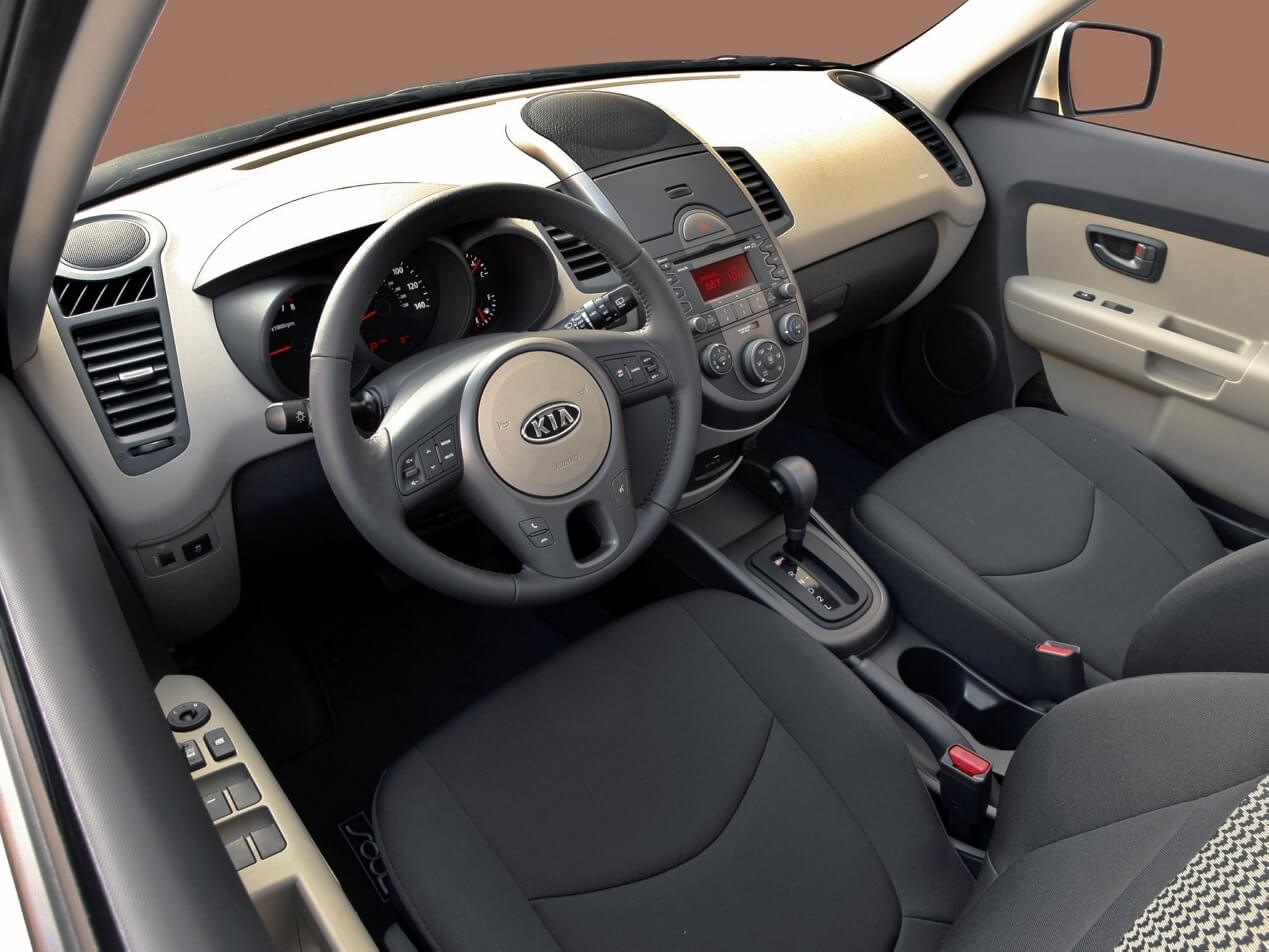
The Soul concept appeared at the 2006 Detroit auto show and was styled by Michael Torpey under Peter Schreyer. The production car, based on the platform of the Hyundai i20 era, followed at the Paris Motor Show in 2008. Its high roof and long wheelbase made the cabin very roomy for five people. The boot is small in standard form, but with the rear seats folded it grows to 818 litres.

| Engine | Power | Torque |
|---|---|---|
| 1.6 Gamma MPI petrol | 93 kW (126 PS) | 156 Nm |
| 2.0 Beta II petrol | 104 kW (142 PS) | 186 Nm |
| 1.6 CRDi diesel | 94 kW (128 PS) | 260 Nm |
At launch, gearboxes were a five-speed manual and a four-speed automatic. From 2012 six-speed manual and automatic units arrived, together with a 1.6 GDi of 138 hp and a 2.0 Nu of 164 hp. The Soul won a Red Dot design award in 2009, and its "A new way to roll" hamster commercials were named Automotive Ad of the Year. In its 2009 Euro NCAP test it received five stars, with 75% for adult occupants and 86% for children.
Second generation (2013–2019)
Design and interior
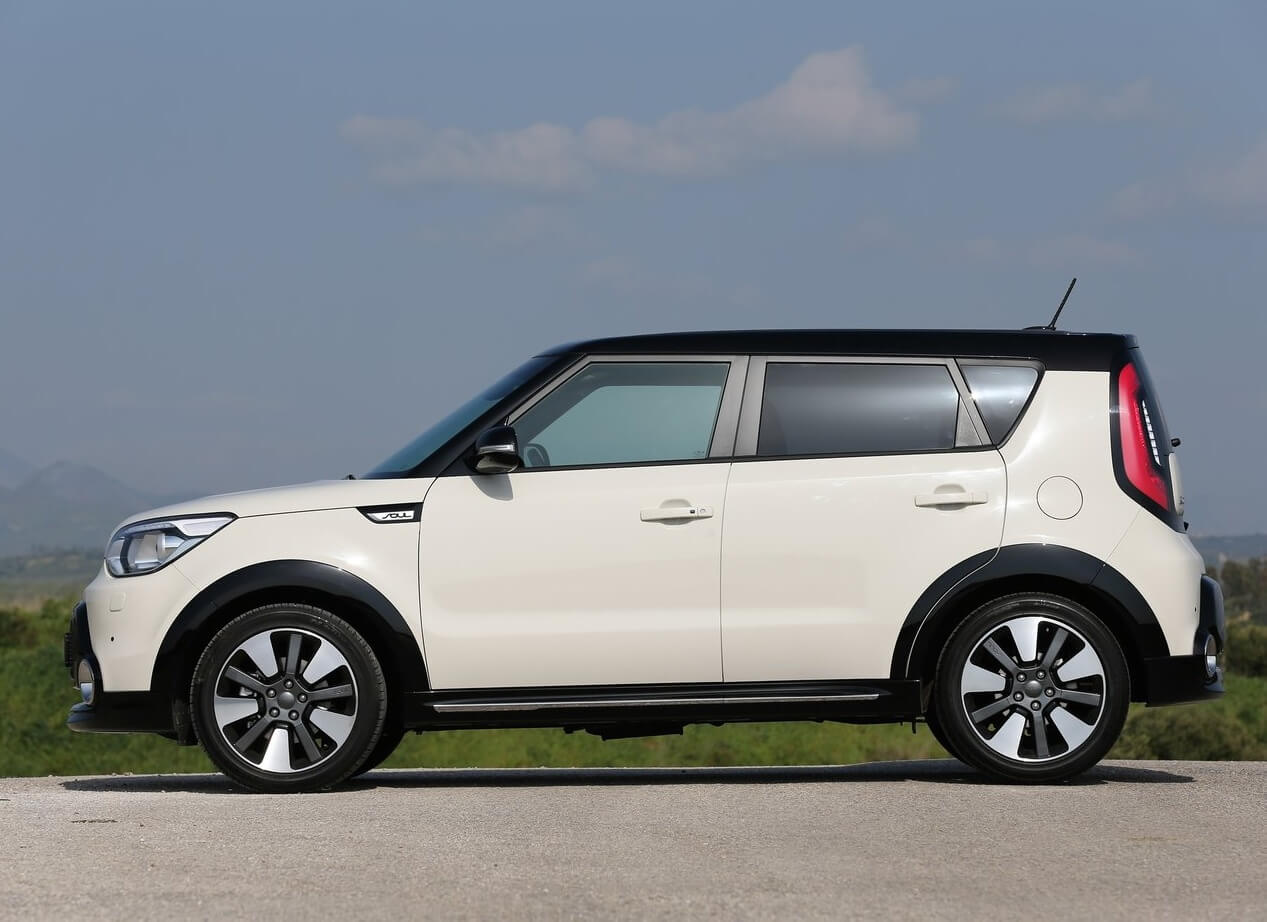
Revealed at the New York and Frankfurt shows in 2013 and based on the Track'ster concept, the second generation kept the boxy shape. It grew slightly, with a 2,570 mm wheelbase, 1,800 mm width and 1,600 mm height. The body became 29% stiffer and uses 66% high-strength steel, and the suspension and steering were revised. New headlights with LED strips, a bolder bumper and wheels of 16 to 18 inches modernised the look; ground clearance is up to 165 mm. Inside, the cabin has an almost flat rear floor, a central rear head restraint and a larger boot than before. The second Soul won a Red Dot award in 2014 and iF design awards in 2014 and 2016.

Petrol, turbo and diesel engines
| Engine | Power | Torque | Gearbox |
|---|---|---|---|
| 1.6 Gamma II MPi | 91 kW (124 PS) | 152 Nm | 6-speed manual or automatic |
| 1.6 Gamma II GDi | 97 kW (132 PS) | 161 Nm | 6-speed automatic |
| 1.6 Gamma II T-GDi (2016–2019) | 150 kW (201 hp) | 260 Nm | 7-speed dual-clutch |
| 2.0 Nu MPi / GDi | 113–122 kW (151–164 hp) | 186–201 Nm | 6-speed automatic |
| 1.6 U II CRDi diesel | 94–100 kW (128–134 PS) | 260 Nm | 6-speed manual, automatic or DCT |
According to the old 1cars text, the 1.6 MPi reaches 100 km/h in 11.3–12.5 seconds and 177–182 km/h, while the 2.0 takes 10.2 seconds. The turbocharged 1.6 T-GDi gave the Soul GT/Soul Turbo hot-hatch performance.
Soul EV
The 2014 EV uses a 27 kWh lithium-ion polymer battery and an 81 kW (109 hp) motor with 285 Nm. Its targeted range is over 190 km, and it can charge at up to 100 kW via CHAdeMO. In the 2014 Euro NCAP test, the petrol Soul scored 75% for adult occupants, 82% for children, 59% for pedestrians and 56% for safety assist.
Third generation (2019–2025)
Revealed at the 2018 Los Angeles Auto Show, the third Soul shares its platform with the Hyundai Kona. Engines were a 1.6 MPi with 90 kW (120 hp), a 2.0 MPi with 110 kW (150 PS) and a 1.6 T-GDi with 150 kW (201 hp). Gearboxes were a six-speed manual, six-speed automatic, seven-speed DCT or CVT, and from 2023 the 2.0 with CVT was the only US powertrain. The e-Soul, the only third-generation version sold in Europe, has a 64 kWh battery shared with the Niro and a 150 kW (201 hp) motor with 395 Nm. Kia phased the electric version out of Europe in mid-2024. In October 2025 it announced the end of the model, and Korean production stopped that month.

Rivals: how the Soul compares
Its rivals were boxy and crossover-style cars such as the Nissan Juke, Mini Countryman, Scion xB, Opel Mokka and Renault Captur. In electric form it faced the Nissan Leaf and Hyundai Kona Electric. Its strengths are a roomy, practical cabin, distinctive design and good equipment. Its weaknesses are a small boot in early models, no all-wheel drive and modest performance with the base engines. Similar small SUVs on 1cars include the Opel Mokka.

Kia Soul evolution in numbers
Did you know?
- The Kia Soul ran for 17 years, from 2008 to 2025, over 3 generations in our catalog.
- The biggest jump in power came with the Soul II: up to 150 kW (204 PS), 46 kW more than the Soul I.
Most powerful version, kW
Figures from the 1cars catalog: power is the strongest version of each generation; generations without the figure are left out.
Kia Soul: first vs latest generation
| Spec | Soul I | Soul III | Change |
|---|---|---|---|
| Years | 2008–2013 | 2019–2025 | 11 years apart |
| Most powerful version | 104 kW (141 PS) | 150 kW (204 PS) | +46 kW (+44%) |
Oldest and newest generation in the 1cars catalog. Power is the strongest version of each; other rows are shown only when both generations have the figure.
Kia Soul in our rankings
- No. 270 of 1147 · Longest-running car nameplates (17 years · top 25%)
- No. 22 of 101 · Biggest engines: hatchbacks (2,000 cc · top 28%)
- No. 44 of 150 · Most powerful hatchbacks (150 kW · top 30%)
- No. 40 of 96 · Most torque: hatchbacks (260 Nm · top 43%)
- No. 166 of 317 · Most economical cars (7.8 l/100 km · top 53%)
- No. 26 of 47 · Most powerful Korean cars (150 kW · top 58%)
In production longer than 75% of ranked nameplates in the 1CARS catalog (No. 270 of 1147).
Kia Soul photos 48






Kia Soul videos 3

Kia Soul video 1
Kia Soul video 2
Kia Soul video 3
FAQ
How many generations of the Kia Soul are there?
There are three: the first from 2008 to 2013, the second from 2013 to 2019 and the third from 2019 to 2025. Each was built mainly at Kia's Gwangju plant in South Korea.
Is there an electric Kia Soul?
Yes. The first EV of 2014 had a 27 kWh battery and an 81 kW motor. The third-generation e-Soul of 2019 has a 64 kWh battery and a 150 kW (201 hp) motor.
Is the Kia Soul four-wheel drive?
No. Every Kia Soul is front-wheel drive. Its high seating position and crossover-like look make it popular with buyers who want SUV-style practicality without all-wheel drive.
What is the most powerful Kia Soul?
The 1.6 T-GDi turbo petrol, offered from 2016, produces 150 kW (201 hp) and 260–265 Nm with a seven-speed dual-clutch gearbox. The e-Soul electric version has the same 150 kW output.
When was the Kia Soul discontinued?
Kia withdrew the electric model from Europe in mid-2024. It announced the end of the line in October 2025, when production in Korea stopped after about 17 years.
Data sources
Data checked by an editor against the sources below.
- The text of this article (1cars archive)
- Wikipedia - Kia Soul
- Co
- Euro NCAP - D8070153 F29a 43bd 8707 A23a2d3d8e10
- US EPA fueleconomy.gov - 38889.shtml
- US EPA fueleconomy.gov - 38830.shtml


