 Lamborghini Huracán
Specs, engines and history
Published Sources (5) Report an error
By Felix Hartmann, Automotive Technology & EV Contributor
- Built
- 2014–2024
- Top power
- 471 kW (640 PS)
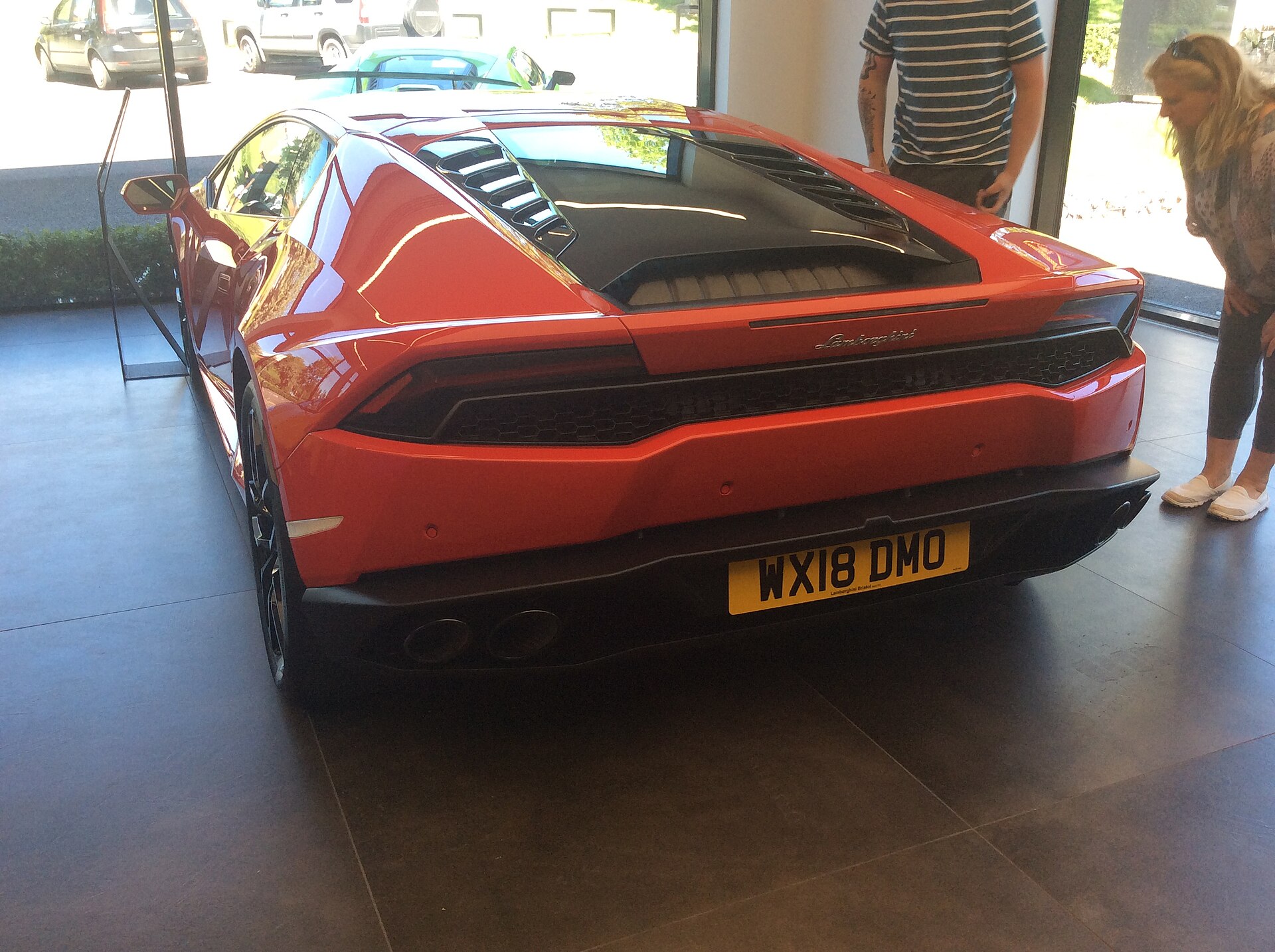
The Lamborghini Huracán is the V10 supercar that replaced the Gallardo in 2014 and stayed in production for ten years, until the hybrid Temerario took its place in 2024. Every version used the same naturally aspirated 5.2-litre V10 and a seven-speed dual-clutch gearbox, but the range grew from the original all-wheel-drive LP 610-4 to rear-wheel-drive, open, track-focused and even off-road models. On the racing side, the Huracán GT3 gave Lamborghini its first 24-hour victory at Daytona in 2018.
In short
- Revealed in December 2013, shown at the 2014 Geneva motor show and built until 2024; chassis by Audi in Neckarsulm, final assembly in Sant'Agata Bolognese.
- 5,204 cc naturally aspirated 90° V10, from 427 kW (580 PS) in the LP 580-2 to 471 kW (640 PS) in the Performante, EVO, STO and Tecnica.
- Main versions: LP 610-4, LP 580-2, Performante, EVO, EVO RWD, STO, Tecnica and Sterrato, most also as Spyder convertibles.
- Wikipedia's yearly production figures add up to roughly 30,000 cars between 2014 and 2024; successor: Temerario.
Specs by version
Engines
| Version | Engine | Gearbox | Drive | Production years |
|---|---|---|---|---|
| 5.2 L 10 cyl Automatic (AM-S7) · 2021 (EPA) | 5.2 l · 10 cyl 5,200 cc | 7-sp Dual-clutch | All-wheel drive | 2021 |
| 5.2 L 10 cyl Automatic (AM-S7) · 2020 (EPA) | 5.2 l · 10 cyl 5,200 cc | 7-sp Dual-clutch | All-wheel drive | 2020 |
| 5.2 L 10 cyl Automatic (AM-S7) · 2019 (EPA) | 5.2 l · 10 cyl 5,200 cc | 7-sp Dual-clutch | All-wheel drive | 2019 |
| 5.2 L 10 cyl Automatic (AM-S7) · 2018 (EPA) | 5.2 l · 10 cyl 5,200 cc | 7-sp Dual-clutch | All-wheel drive | 2018 |
| 5.2 L 10 cyl Automatic (AM-S7) · 2017 (EPA) | 5.2 l · 10 cyl 5,200 cc | 7-sp Dual-clutch | All-wheel drive | 2017 |
Performance
Show all 5 versions
| Version | Fuel consumption |
|---|---|
| 5.2 L 10 cyl Automatic (AM-S7) · 2021 (EPA) | 15.7 l/100 km15.0 mpg US · 18.0 mpg UK |
| 5.2 L 10 cyl Automatic (AM-S7) · 2020 (EPA) | 15.7 l/100 km15.0 mpg US · 18.0 mpg UK |
| 5.2 L 10 cyl Automatic (AM-S7) · 2019 (EPA) | 15.7 l/100 km15.0 mpg US · 18.0 mpg UK |
| 5.2 L 10 cyl Automatic (AM-S7) · 2018 (EPA) | 14.7 l/100 km16.0 mpg US · 19.2 mpg UK |
| 5.2 L 10 cyl Automatic (AM-S7) · 2017 (EPA) | 13.8 l/100 km17.0 mpg US · 20.5 mpg UK |
Verified Manufacturer and type-approval data from our catalog · Sources and methodology
Lamborghini Huracán at a glance
| Specification | Lamborghini Huracán |
|---|---|
| Production | 2014–2024, Sant'Agata Bolognese (Italy) |
| Cars built | roughly 30,000 (sum of yearly figures, 2014–2024) |
| Designers | Filippo Perini; facelift (EVO) Mitja Borkert |
| Platform | Volkswagen Group Modular Sports System, shared with the second Audi R8 |
| Body | two-seat coupé; Spyder convertible |
| Engine | 5,204 cc 90° V10, naturally aspirated, direct injection |
| Power | 427–471 kW (580–640 PS) |
| Torque | 540–601 Nm |
| Gearbox | seven-speed LDF dual-clutch |
| Drive | all-wheel drive or rear-wheel drive |
| Predecessor / successor | Gallardo / Temerario |
The Huracán replaced the Lamborghini Gallardo; the brand's V12 model of the same years was the Aventador. All models are in the Lamborghini catalogue.
Name and launch
Huracán is Spanish for "hurricane"; the name was inspired by a fighting bull of that name, known for its courage, that fought in 1879. The car was revealed online in December 2013, made its public debut at the Geneva motor show in March 2014 and reached customers in the second quarter of that year.
Demand was strong from the start. Lamborghini received more than 700 orders in the first month of the preview period and more than 1,000 before the official launch. The first full year of production, 2015, already brought 2,628 cars, and output peaked at 3,800 in 2023. In November 2022 Lamborghini confirmed that the Sterrato would be the last new model with a pure combustion engine; production of the Huracán ended in 2024.
| Year | Cars built |
|---|---|
| 2014 | 1,540 |
| 2016 | 2,419 |
| 2018 | 2,790 |
| 2020 | 2,010 |
| 2022 | 3,443 |
| 2023 | 3,800 |
| 2024 | 3,605 |
Design and platform
The Huracán was designed under Filippo Perini; the EVO facelift was the work of Mitja Borkert. Technically it is part of the Volkswagen Group: it uses the Modular Sports System platform and shares many components with the second-generation Audi R8. Audi builds the chassis in Neckarsulm, Germany, and the cars are assembled in Sant'Agata Bolognese.
All versions share a 2,620 mm wheelbase. The early coupé is 4,459 mm long and 1,924 mm wide; facelifted versions measure 4,520–4,567 mm in length and 1,933–1,956 mm in width. Lamborghini kept the drag coefficient secret until 2021, when it was given as 0.39.

Engine and gearbox
The engine is a 5,204 cc naturally aspirated 90° V10 with direct injection, two overhead camshafts per bank and four valves per cylinder, firing in the order 1-6-5-10-2-7-3-8-4-9. It was coded DFJ until 2018 and DGF from 2019. No manual gearbox was offered: every Huracán uses the seven-speed Lamborghini Doppia Frizione (LDF) dual-clutch transmission, with Strada, Sport and Corsa modes.
| Version | Years | Drive | Power | Torque | 0–100 km/h | Top speed |
|---|---|---|---|---|---|---|
| LP 610-4 | 2014–2019 | AWD | 449 kW (610 PS) at 8,250 rpm | 560 Nm | 3.1 s | 325 km/h |
| LP 580-2 | 2016–2019 | RWD | 427 kW (580 PS) at 8,000 rpm | 540 Nm | 3.4 s | 320 km/h |
| Performante | 2017–2019 | AWD | 471 kW (640 PS) at 8,000 rpm | 600 Nm | 2.9 s | 325 km/h |
| EVO | 2019–2024 | AWD | 471 kW (640 PS) at 8,000 rpm | 601 Nm | 2.9 s | 325 km/h |
| EVO RWD | 2020–2024 | RWD | 449 kW (610 PS) at 8,000 rpm | 560 Nm | 3.3 s | 325 km/h |
| STO | 2021–2024 | RWD | 471 kW (640 PS) at 8,000 rpm | 565 Nm | 3.0 s | 311 km/h |
| Tecnica | 2022–2024 | RWD | 471 kW (640 PS) | — | 3.2 s | 325 km/h |
| Sterrato | 2023–2024 | AWD | 449 kW (610 PS) | — | 3.4 s | 260 km/h |
The original LP 610-4 weighs 1,553 kg with fluids. Wikipedia's table also gives 0–200 km/h in 8.8 seconds and a braking distance from 100 km/h of 31.9 metres.

LP 610-4, LP 580-2 and the Spyders
The model names give the output in PS and the number of driven wheels: the LP 610-4 was the all-wheel-drive original with 449 kW (610 PS). From 2016 Lamborghini added the LP 580-2, a rear-wheel-drive version with 427 kW (580 PS), 540 Nm and a 0–100 km/h time of 3.4 seconds. It was the less expensive version: Wikipedia notes that the LP 610-4 cost considerably more. The Lamborghini Huracán LP 580-2 has its own article on 1CARS.
Open versions followed. The LP 610-4 Spyder (2016–2019) weighs about 120 kg more than the coupé and reaches 100 km/h in 3.3 seconds. The LP 580-2 Spyder was unveiled at the 2016 Los Angeles Auto Show. The first limited edition, the Huracán Avio of 2016, was built in 250 cars with a theme from the Italian Air Force — see our article on the Lamborghini Huracán Avio.
Performante and the ALA system
The Huracán Performante was shown at the 2017 Geneva motor show. Its V10 produced 471 kW (640 PS) and 600 Nm, it was 40 kg lighter than the LP 610-4 thanks to forged aluminium and carbon parts, and its springs, anti-roll bars and bushings were about 10 per cent stiffer. It reached 100 km/h in 2.9 seconds.
The Performante introduced ALA (Aerodinamica Lamborghini Attiva), an active aerodynamic system. Lamborghini said ALA was 80 per cent lighter than conventional hydraulic systems and produced 750 per cent more downforce than the standard Huracán. In October 2016 a Performante prototype driven by Marco Mapelli lapped the Nürburgring Nordschleife in 6:52.01. The time was disputed — critics questioned the video and the tyres — and Lamborghini answered with telemetry and the information that the car ran on Pirelli P Zero Trofeo R tyres. In September 2017 the Porsche 911 GT2 RS lapped faster, in 6:47.3. A Performante Spyder followed in 2018.

Huracán EVO and EVO RWD
The Huracán EVO of 2019 was the mid-life update. It took the 471 kW (640 PS) engine of the Performante and added rear-wheel steering, torque vectoring and a new central control system called LDVI (Lamborghini Dinamica Veicolo Integrata). LDVI uses sensors for acceleration, roll, pitch and yaw and predicts what the driver will do next. Inside, an 8.4-inch touchscreen brought Apple CarPlay and Android Auto. The EVO Spyder, introduced in February 2019, has a soft top that opens in 17 seconds at up to 50 km/h.
In January 2020 the EVO RWD replaced the LP 580-2. It has 449 kW (610 PS) and 560 Nm, a Performance Traction Control System (P-TCS) and a 0–100 km/h time of 3.3 seconds; a Spyder version was revealed in May 2020.
STO, Tecnica and Sterrato
The last years of the Huracán brought three very different models:
- STO (2021–2024): a track-focused road car with rear-wheel drive, 471 kW (640 PS), a body made of about 75 per cent carbon fibre and special driving modes called STO, Trofeo and Pioggia (rain). It brakes from 100 km/h in 30 metres.
- Tecnica (2022–2024): unveiled on 12 April 2022 and placed between the EVO RWD and the STO. It uses the STO's engine, is 61 mm longer than the EVO and, according to Lamborghini, has 35 per cent more downforce and 20 per cent less drag than the EVO.
- Sterrato (2023–2024): an off-road Huracán, first shown as a concept in June 2019 and unveiled in production form at Art Basel Miami on 30 November 2022. It has more ground clearance, 20-inch wheels with Bridgestone all-terrain tyres and a Rally driving mode; its top speed is limited to 260 km/h. Lamborghini built 1,499 cars.
The Italian State Police also used a Huracán LP 610-4: its equipment included a police computer, a camera, a defibrillator and a refrigerated compartment for transporting donor organs.

Racing: Super Trofeo and GT3
The Huracán was the basis of Lamborghini's racing programme. The Super Trofeo LP 620-2 of 2015, a one-make series car, has 456 kW (620 PS) and 570 Nm. The Huracán GT3, developed with Dallara, has 388 kW (527 PS) and weighs 1,230 kg; it won on its debut at Monza in 2015 with the Grasser Racing Team.
The biggest successes followed in the United States. In 2018 the Grasser car won the Daytona 24 Hours in the GTD class — Lamborghini's first 24-hour victory — and the Paul Miller Racing team won the drivers', teams' and manufacturers' titles. The GT3 EVO of 2019 won the GTD class at Daytona and Sebring again and took the Blancpain GT Series title with FFF Racing. With the GT3 EVO 2, Mirko Bortolotti won the 2024 DTM title, the first for Lamborghini, and in 2025 the Grasser Racing Team won the Spa 24 Hours outright. The 36-car EVO GT Celebration road edition marked the 2018 and 2019 victories at Daytona and Sebring.
Legacy
The Huracán turned Lamborghini's V10 car into a complete model family, from a rear-wheel-drive coupé to a rally-inspired Sterrato and a track-focused STO. The Sterrato was confirmed as Lamborghini's last model without hybrid assistance, and the role of the V10 car passed in 2024 to the Temerario. More about the company is in our history of Lamborghini.
Photo gallery


Lamborghini Huracán in our rankings
- No. 114 of 859 · Most powerful cars (471 kW · top 14%)
- No. 127 of 557 · Biggest engines: cars (5,200 cc · top 23%)
- No. 83 of 313 · Most powerful coupes (471 kW · top 27%)
- No. 34 of 127 · Most powerful Italian cars (471 kW · top 27%)
- No. 379 of 912 · Longest-running car nameplates (10 years · top 43%)
- No. 76 of 173 · Biggest engines: coupes (5,200 cc · top 44%)
More powerful than 86% of ranked cars in the 1CARS catalog (No. 114 of 859).
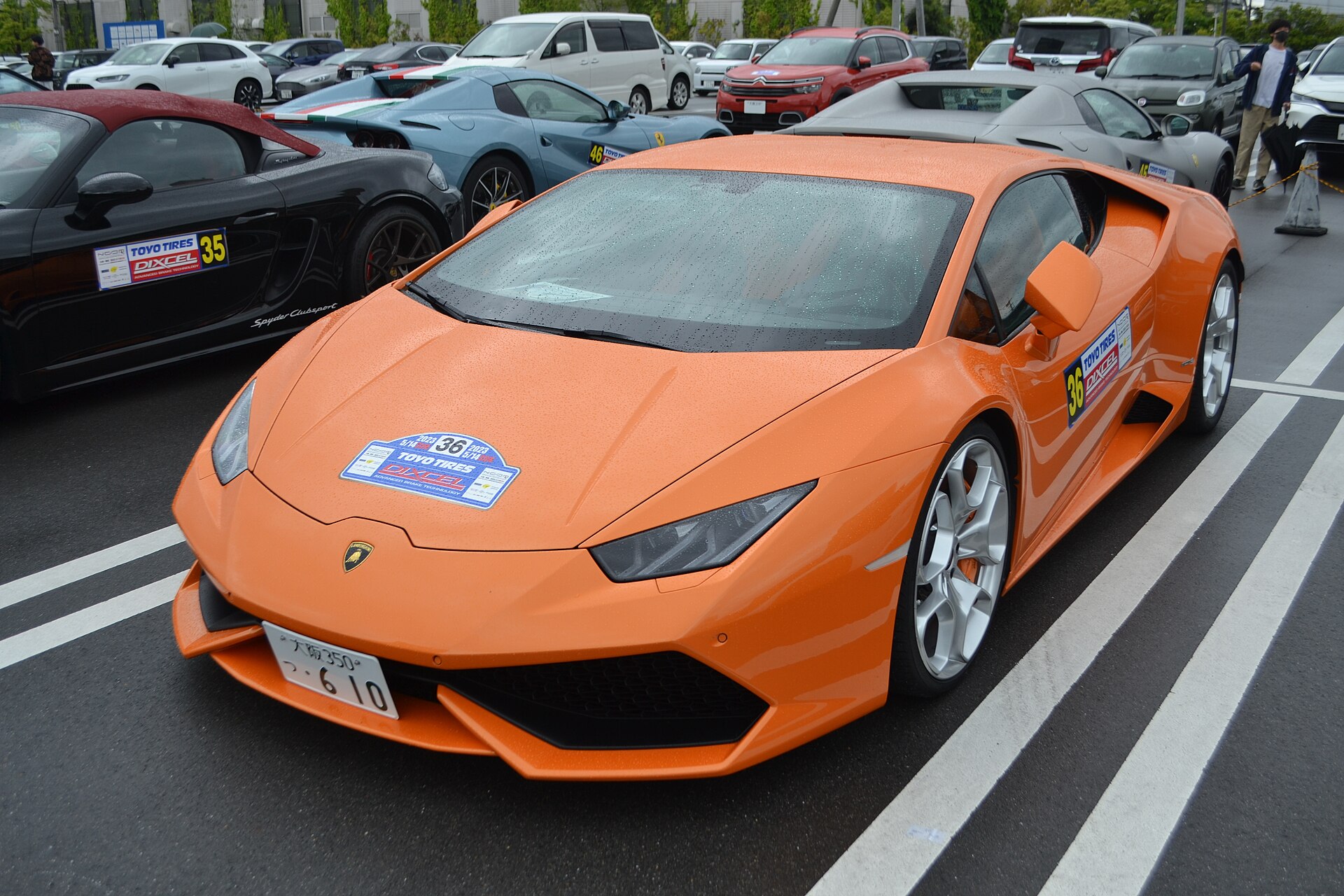
Lamborghini Huracán photos 6
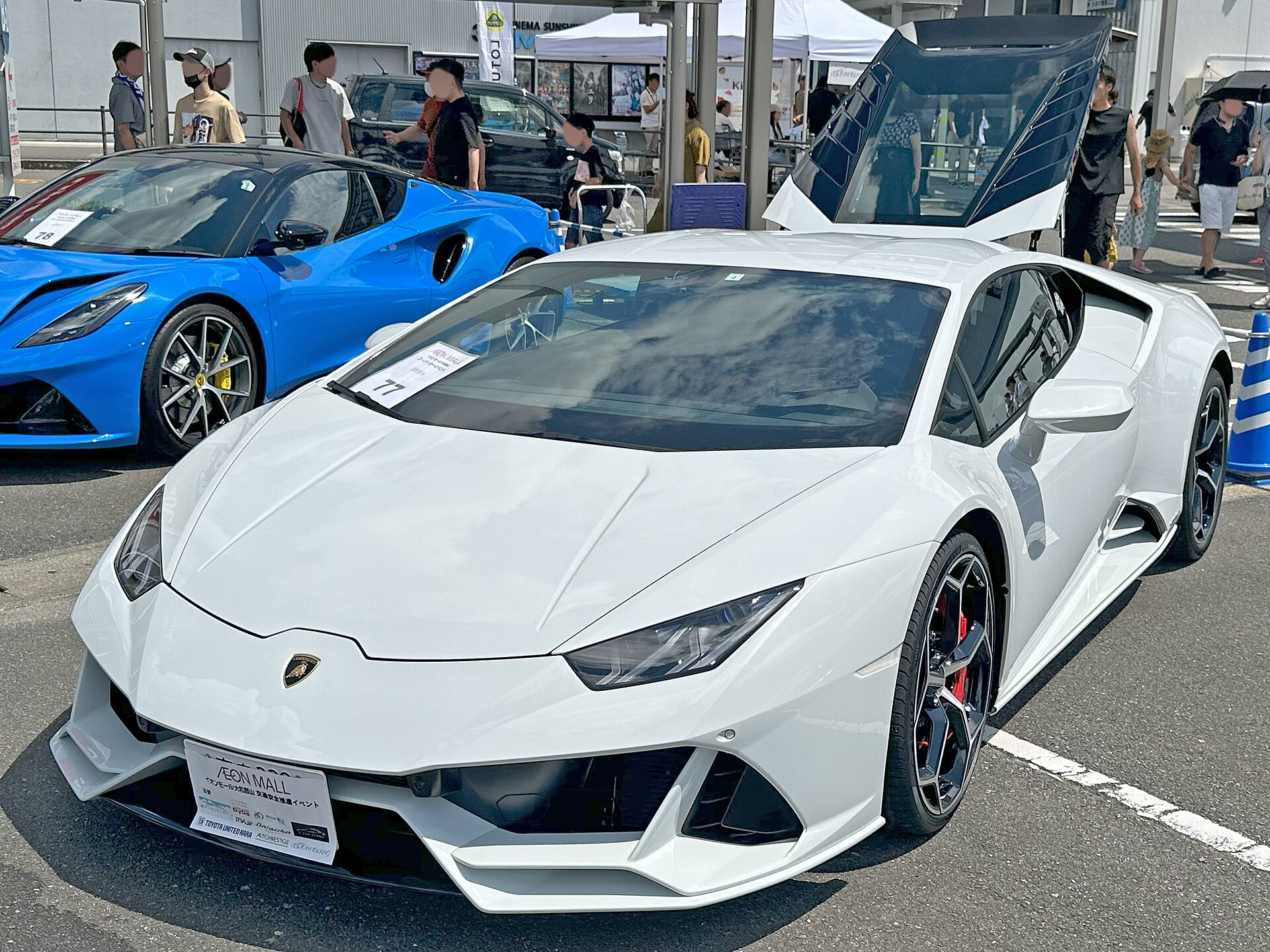
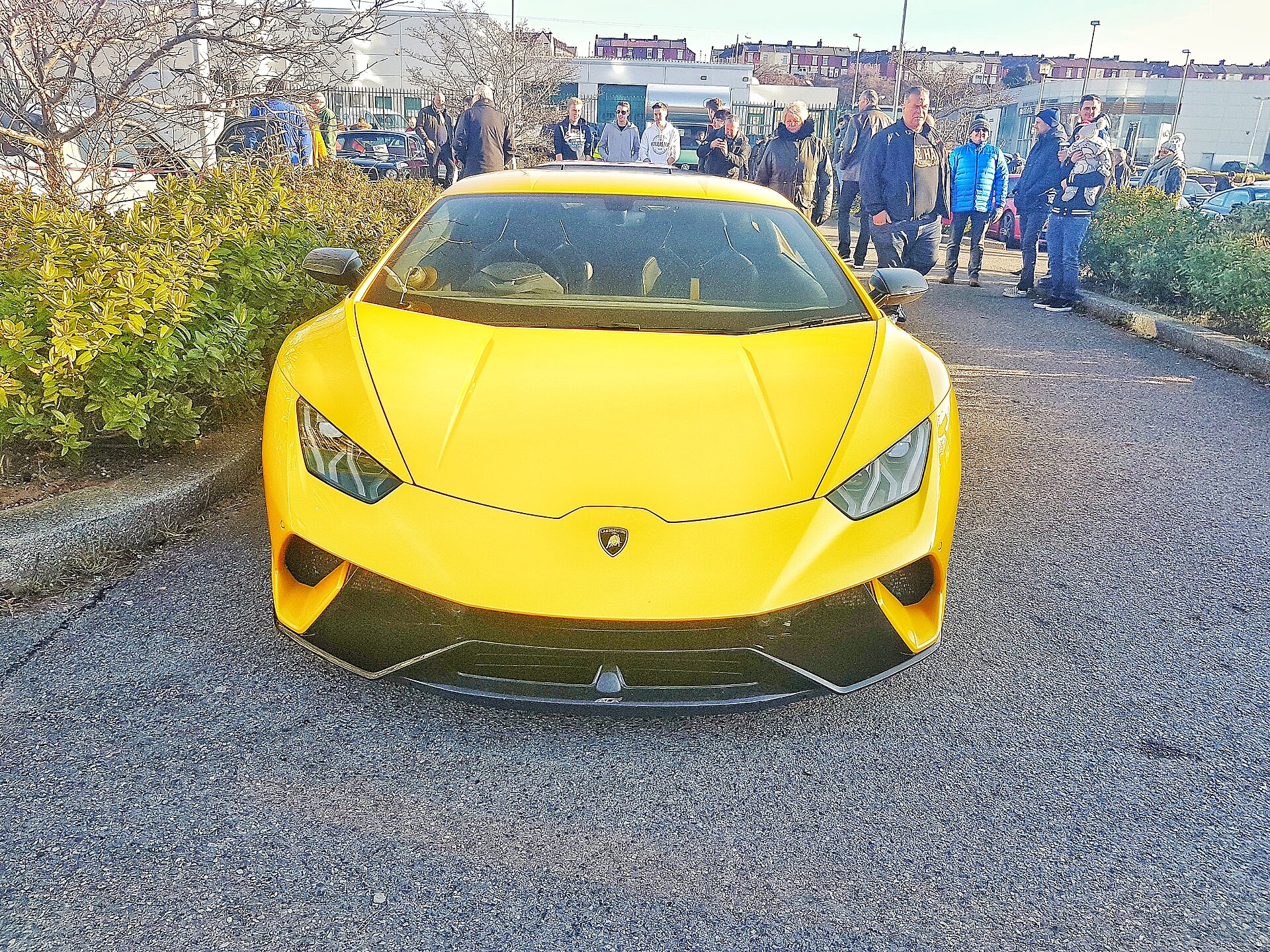
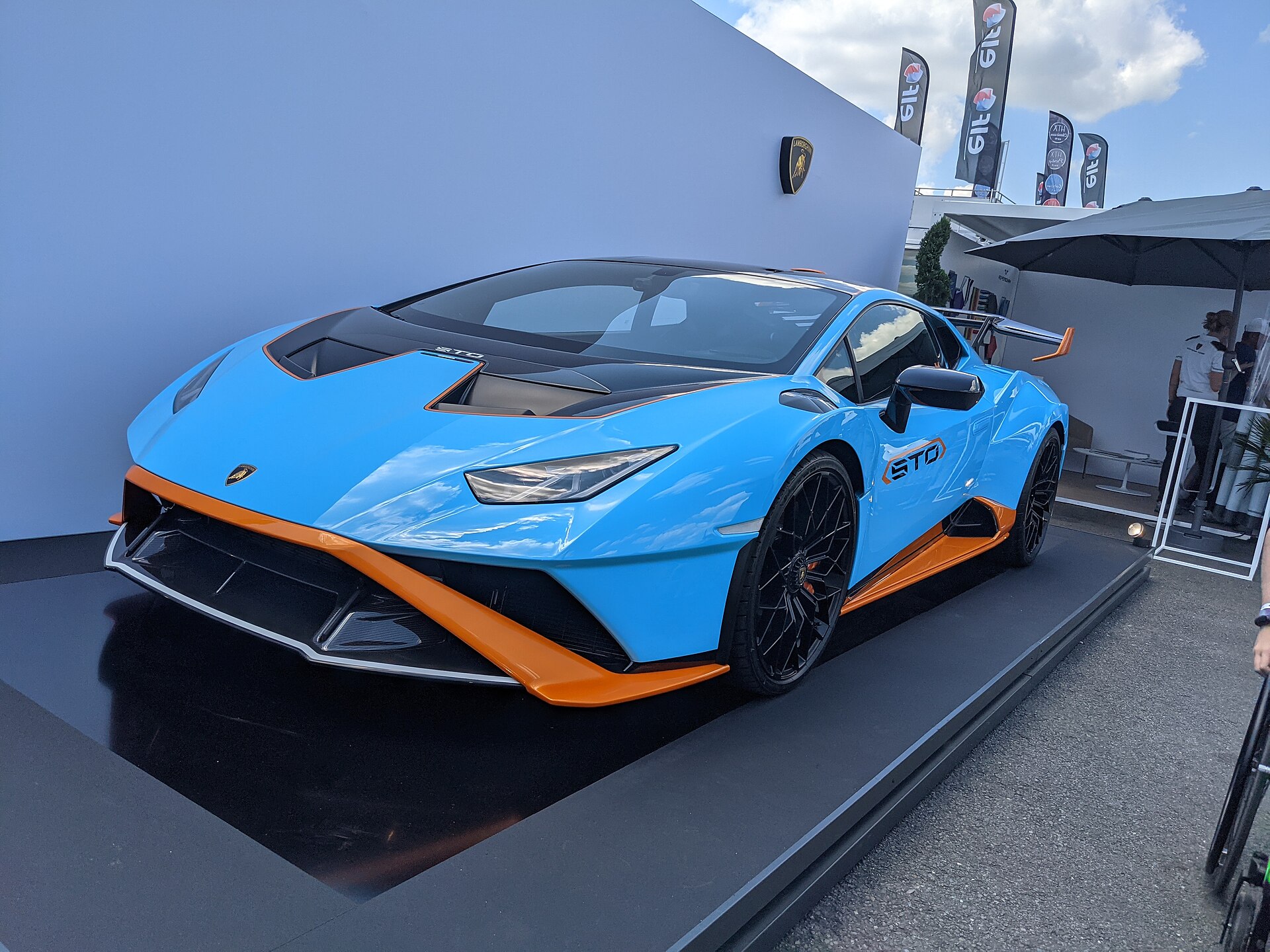
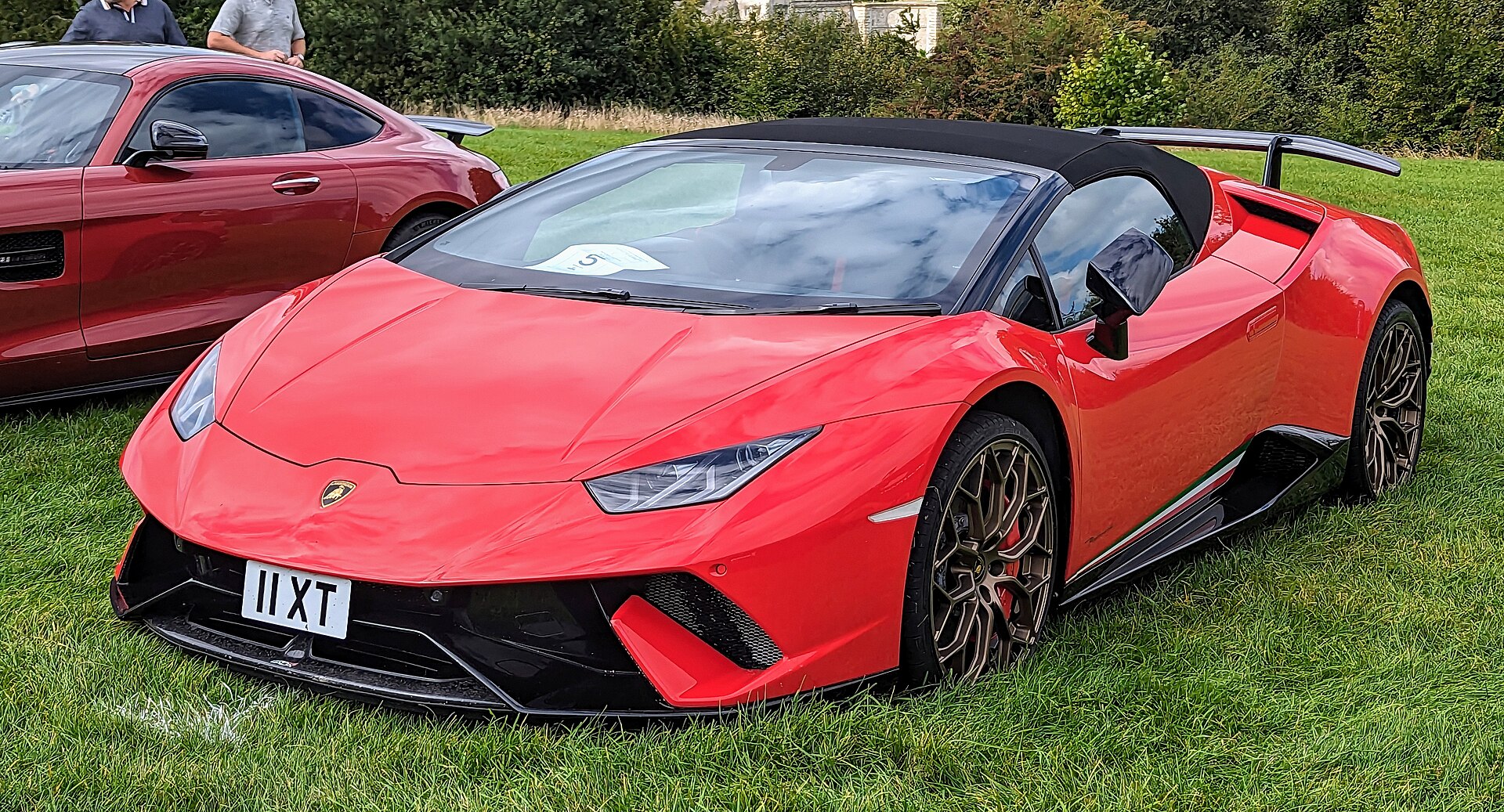

FAQ
How much power does the Lamborghini Huracán have?
Depending on the version, the 5.2-litre V10 produces from 427 kW (580 PS) in the LP 580-2 to 471 kW (640 PS) in the Performante, EVO, STO and Tecnica.
What is the difference between the LP 610-4 and the LP 580-2?
The numbers give the output in PS and the driven wheels: the LP 610-4 has 449 kW (610 PS) and all-wheel drive, the LP 580-2 has 427 kW (580 PS) and rear-wheel drive.
Which Huracán is the fastest?
The Performante and EVO reach 100 km/h in 2.9 seconds; most versions have a top speed of 325 km/h. The STO is limited to 311 km/h and the off-road Sterrato to 260 km/h.
What replaced the Lamborghini Huracán?
The Lamborghini Temerario, announced in 2024.
Data sources
Data checked by an editor against the sources below.
- Wikipedia — Lamborghini Huracán
- US EPA fueleconomy.gov — 42765.shtml
- US EPA fueleconomy.gov — 41396.shtml
- US EPA fueleconomy.gov — 40988.shtml
- US EPA fueleconomy.gov — 39532.shtml