 Lamborghini Silhouette
Specs, engines and history
Published Sources (1) Report an error
By Felix Hartmann, Automotive Technology & EV Contributor
- Built
- 1976–1979
- Top power
- 198 kW (269 PS)
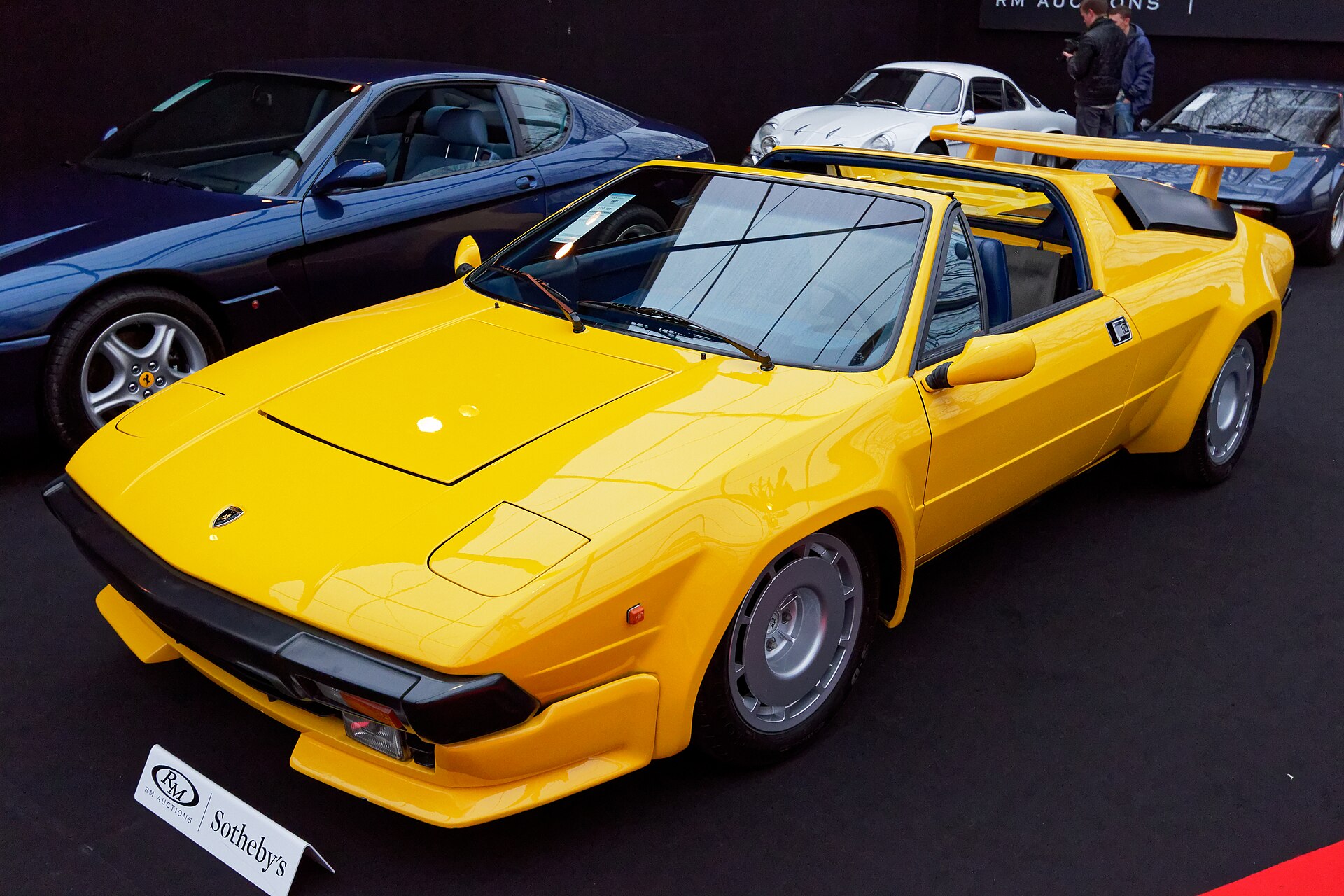
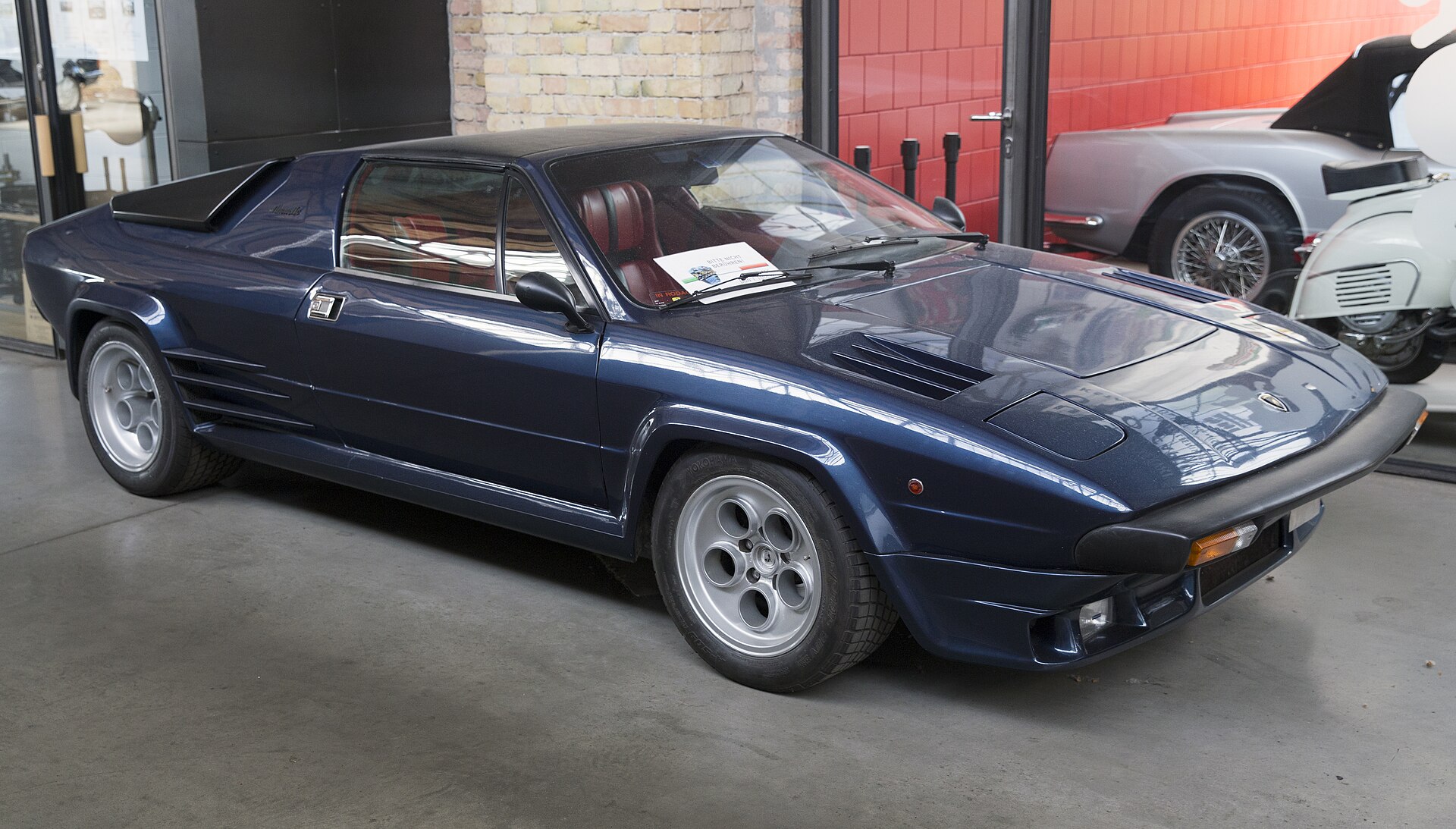
The Lamborghini Silhouette is a mid-engined two-seater with a removable roof panel that Lamborghini built in Sant'Agata Bolognese from 1976 to 1979. Designed by Marcello Gandini at Bertone and developed from the Urraco P300, it was the first Lamborghini sold with a targa top. Lamborghini itself calls it the first open car of normal production in its history. Only about 50 were made.
In short
- Presented at the Geneva motor show in 1976; built from 1976 to 1979, also known as the Silhouette P300.
- 54 cars according to Wikipedia (42 left-hand drive, 12 right-hand drive) or 52 according to Lamborghini; Wikipedia says 31 are known to exist.
- Transverse 2,997 cc V8 with four overhead camshafts: 198 kW (269 PS) and 275 Nm (Wikipedia); Lamborghini quotes 250 CV.
- Five-speed manual gearbox; 0–100 km/h in 6.5 s and a top speed of 260 km/h.
Lamborghini Silhouette at a glance
| Specification | Lamborghini Silhouette (P300) |
|---|---|
| Production | 1976–1979, Sant'Agata Bolognese (Italy) |
| Cars built | 54 (Wikipedia); 52 (Lamborghini) |
| Body | two-door, two-seat targa by Bertone |
| Designer | Marcello Gandini |
| Engine | 2,997 cc V8, transverse mid-mounted, chain-driven camshafts |
| Power | 198 kW (269 PS); Lamborghini: 250 CV |
| Torque | 275 Nm |
| Gearbox | five-speed manual, rear-wheel drive |
| Kerb weight | 1,240 kg (Wikipedia); under 1,400 kg (Lamborghini) |
| Dimensions | 4,320 mm long, 1,880 mm wide, 1,120 mm high, 2,450 mm wheelbase |
| Predecessor / successor | Urraco / Jalpa |
The Lamborghini catalogue lists every road model of the brand, and our history of Lamborghini covers the years in which the Silhouette was made.
Development and launch
In the mid-1970s Lamborghini sold two very different cars: the Countach flagship and the smaller V8-engined Urraco. The Silhouette added an open two-seater to this range. Bertone was again responsible for the body, as it had been for the Urraco, and Gandini gave the new car a more angular shape.
The finished car was shown at the Geneva motor show in 1976. Wikipedia lists Bertone as the manufacturer for Lamborghini, with assembly at Sant'Agata Bolognese. Production lasted only until 1979, and the total stayed close to 50 cars. Wikipedia counts 54, Lamborghini 52; both sources agree that 12 were built with right-hand drive.

From the Urraco P300 to the Silhouette
The base was the Urraco P300, the three-litre version of Lamborghini's 2+2 coupé. Wikipedia says the P300 was built from 1974 to 1979 and that 190 were made. Its 2,996 cc V8 had two chain-driven overhead camshafts per bank and 16 valves, and it was rated at 184 kW (250 PS) at 7,500 rpm.
For the Silhouette the Urraco chassis lost its fixed roof, and the 2+2 layout gave way to two seats. According to Lamborghini, the structure was revised and reinforced so that it kept its torsional stiffness without a roof. The finished car is only 1,120 mm high.
| Specification | Urraco P300 | Silhouette |
|---|---|---|
| Body | 2+2 coupé | two-seat targa |
| Years | 1974–1979 | 1976–1979 |
| Engine | 2,996 cc V8 | 2,997 cc V8 |
| Power | 184 kW (250 PS) at 7,500 rpm | 198 kW (269 PS) (Wikipedia) |
| Cars built | 190 | 52–54 |

Bertone design and the targa roof
The Silhouette has square, muscular lines. A front spoiler and flared wheel arches were added to cover the wide, low-profile tyres. The roof panel can be taken off and stowed, so the car could be driven either closed or open.
The five-hole wheels were taken from the Lamborghini Bravo, a Bertone prototype that Gandini had shown at the Turin motor show in 1974. Lamborghini calls them "Bravo type" rims. The Bravo itself was built on an Urraco chassis shortened by 175 mm and never reached production. Wikipedia records that it was sold at auction for €588,000 in May 2011.
The tyres measure 195/50-15 at the front and 285/40-15 at the rear. The suspension and brakes were adapted to them. Inside, the dashboard was completely new compared with the Urraco, with the main instruments set deep into the panel behind a steering wheel of distinctive shape.

Engine and performance
The V8 sits transversely behind the seats. This all-aluminium engine has chain-driven twin camshafts on each bank and delivers its power to the rear wheels through a five-speed manual gearbox.
| Figure | Lamborghini Silhouette |
|---|---|
| Displacement | 2,997 cc |
| Power | 198 kW (269 PS) (Wikipedia); 250 CV (Lamborghini) |
| Torque | 275 Nm |
| 0–100 km/h | 6.5 s |
| 0–100 mph | 16.1 s |
| Top speed | 260 km/h |
Wikipedia lists 0–100 km/h in 6.5 seconds and 260 km/h as official figures. Lamborghini confirms the top speed and compares the acceleration with that of the Miura SV. The weight figures differ: Wikipedia gives a kerb weight of 1,240 kg, while Lamborghini says only that the car weighed under 1,400 kg.

The Car magazine convoy
The Silhouette also appears in a well-known piece of motoring journalism. In February 1977 the British magazine Car published "Convoy" by its editor Mel Nichols. It described a drive from Sant'Agata Bolognese to England in three new Lamborghinis: a Countach, an Urraco and a Silhouette. Lamborghini notes that the timing was apt, because French speed limits came into force a few weeks later.
The Jalpa that followed
The Silhouette was not a commercial success, but its layout lived on. In 1981 Lamborghini presented the Jalpa, a similar-looking targa with the same basic structure and a V8 enlarged to 3.5 litres. Wikipedia describes the Jalpa as the more successful evolution of the Silhouette, and it stayed in production until 1988. The Silhouette therefore stands at the start of a line of open V8 Lamborghinis that the Jalpa continued for most of the 1980s.
Legacy
Because so few were built, the Silhouette is far less known than the Countach or the Miura. Its importance lies in its ideas. It was Lamborghini's first targa, and it bridged the gap between the Urraco and the Jalpa. Wikipedia says that 31 cars are known to exist, so a Silhouette is a rare sight even at classic car events.
Lamborghini Silhouette in our rankings
- No. 40 of 79 · Most powerful convertibles and roadsters (198 kW · top 51%)
- No. 50 of 88 · Most powerful cars of the 1970s (198 kW · top 57%)
- No. 488 of 859 · Most powerful cars (198 kW · top 58%)
- No. 89 of 127 · Most powerful Italian cars (198 kW · top 71%)
- No. 773 of 912 · Longest-running car nameplates (3 years · top 89%)
More powerful than 49% of ranked convertibles and roadsters in the 1CARS catalog (No. 40 of 79).
FAQ
How many Lamborghini Silhouettes were built?
Wikipedia counts 54 cars, 42 with left-hand drive and 12 with right-hand drive. Lamborghini's own history page gives 52, of which 12 had right-hand drive.
What engine does the Silhouette have?
A transverse three-litre V8 with chain-driven overhead camshafts, rated at 198 kW (269 PS) by Wikipedia and 250 CV by Lamborghini.
Was the Silhouette the first open Lamborghini?
Yes, in series production: Lamborghini calls it its first targa and the first convertible of normal production in its history.
What replaced the Silhouette?
The Jalpa of 1981, a similar targa with a 3.5-litre V8 that was built until 1988 and proved more successful.
Data sources
Data checked by an editor against the sources below.