
 Lamborghini Aventador
All generations, specs and history
Updated Published Sources (1) Report an error
By Felix Hartmann, Automotive Technology & EV Contributor Reviewed by Oleksandr Hnatiuk

- Built
- 2011–2022
- Generations
- 2
- Top power
- 574 kW (780 PS)
- New price
- from about €419,602 (2019)
Timeline
Aventador generations
Click a generation for its own page


LB834 and Gen 2 overlapped in 2018–2022, so Gen 2 sits on a second lane
- Aventador LB834 2011–2022 · Coupe, Roadster · 515–574 kW (700–780 PS)
- Aventador 2018–2022 · Coupe, Roadster · 544–574 kW (740–780 PS)
Newest first · 2 generations since 2011
-
2018
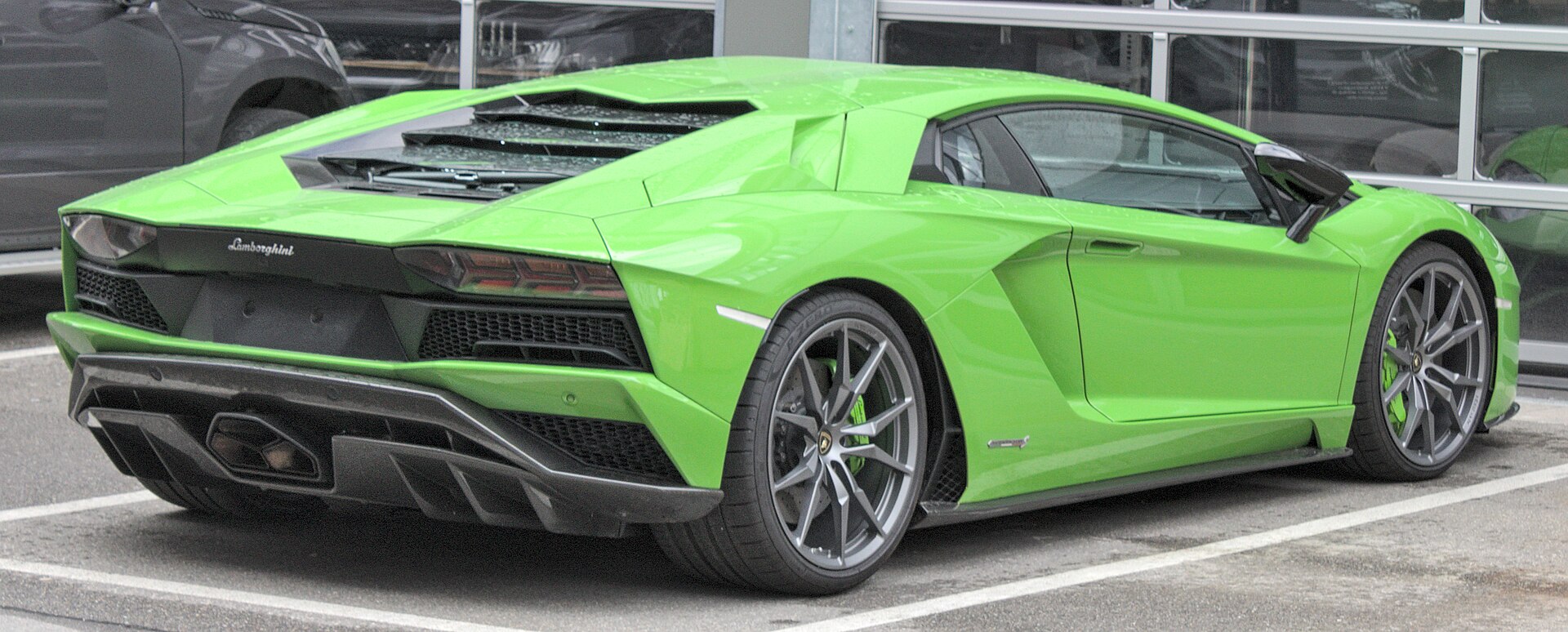
-
2011
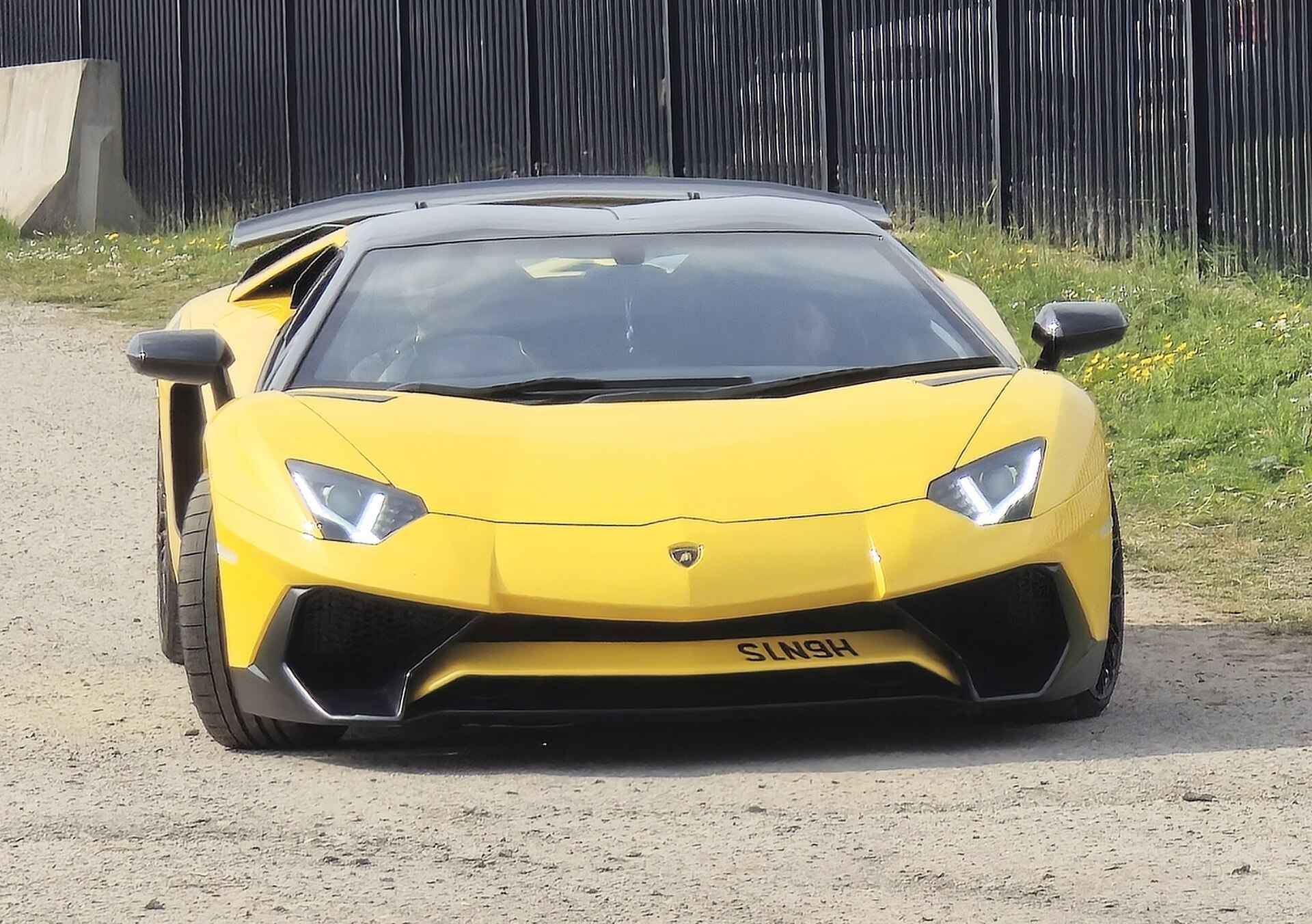
All generations by year: Aventador (2018–2022) · Aventador LB834 (2011–2022)
Which one is mine?
Pick the year of first registration to see which generation it is.
Check by VINWhich Aventador to buy
Our verdict · Felix Hartmann
The Aventador S is the best all-round choice: its rear-wheel steering and better dampers make it easier to drive than the LP700-4. The SVJ is the one for track days and for collectors, while the Ultimae is the most valuable as the last of the line. An early LP700-4 is the most affordable route into a V12 Lamborghini.
Before buying, check the clutch wear of the ISR gearbox, the service history at an official dealer and the state of the carbon parts. The founder's story is told on our Ferruccio Lamborghini page, and the whole company history is in the history of Lamborghini.
The Lamborghini Aventador is a mid-engined, all-wheel-drive V12 supercar built in Sant'Agata Bolognese from 2011 to 2022. It replaced the Murciélago and was offered as a coupé and a roadster. Its 6.5-litre naturally aspirated V12 grew from 515 kW (700 PS) in the LP700-4 to 574 kW (780 PS) in the final LP780-4 Ultimae.
In short
- Revealed at the Geneva Motor Show on 28 February 2011; the last car, an Ultimae, was completed in 2022.
- Carbon-fibre monocoque, pushrod suspension and a seven-speed single-clutch ISR gearbox.
- Main versions: LP700-4, Roadster, SV, S, SVJ and Ultimae, plus the Veneno, Centenario and Sián built on its basis.
- More than 11,000 cars built, which made it the best-selling V12 Lamborghini up to that time.

Size at a glance
| Dimensions | Lamborghini Aventador LB834 |
|---|---|
| Length | 4,780 mm188.2 in |
| Width | 2,030 mm79.9 in |
| Height | 1,136 mm44.7 in |
| Wheelbase | 2,700 mm106.3 in |
Specs by version
Engines
| Version | Engine | Power | Torque | Gearbox | Drive | Production years |
|---|---|---|---|---|---|---|
| LB834 · 2011–2022 | ||||||
| LB834 · LP 700-4 | 6.5 l · 12 cyl · Petrol 6,498 cc | 515 kW 700 PS691 hp | 690 Nm509 lb-ft | 7-sp Automated manual | All-wheel drive | 2011 |
| Aventador · SVJ | 6.5 l · 12 cyl · Petrol 6,498 cc | 566 kW 770 PS759 hp | - | 7-sp Automated manual | All-wheel drive | - |
| Aventador · LP 780-4 Ultimae | 6.5 l · 12 cyl · Petrol 6,498 cc | 574 kW 780 PS770 hp | 720 Nm531 lb-ft | 7-sp Automated manual | All-wheel drive | - |
Performance
Show all 2 versions
| Version | 0–100 km/h | Top speed |
|---|---|---|
| LB834 · 2011–2022 | ||
| LB834 · LP 700-4 | 2.9 s 0–62 mph | 350 km/h217 mph |
| Aventador · LP 780-4 Ultimae | 2.8 s 0–62 mph | 354 km/h220 mph |
Dimensions and weight
Show all 1 versions
| Version | Length | Width | Height | Wheelbase |
|---|---|---|---|---|
| LB834 · 2011–2022 | ||||
| LB834 · LP 700-4 | 4,780 mm188.2 in | 2,030 mm79.9 in | 1,136 mm44.7 in | 2,700 mm106.3 in |
Verified Manufacturer and type-approval data from our catalog · Sources and methodology
Aventador LP700-4 key specifications

| Parameter | Value |
|---|---|
| Engine | 6,498 cc V12 (L539), naturally aspirated, 60° bank angle, dry sump |
| Power | 515 kW (700 PS) |
| Torque | 690 Nm at 5,500 rpm |
| Gearbox | 7-speed ISR automated manual, single clutch |
| Drive | all-wheel drive with Haldex clutch |
| 0–100 km/h | 2.9 s |
| 0–200 km/h | 8.8 s (old 1cars text) |
| Top speed | 350 km/h |
| Dry weight | 1,575 kg |
| Length / width / height | 4,780 / 2,030 / 1,136 mm |
| Wheelbase | 2,700 mm |
| Front luggage space | about 140 l (old 1cars text) |
How the Aventador got its name and shape
Lamborghini unveiled the Aventador privately in Sant'Agata in late 2010 and showed it to the public in Geneva on 28 February 2011. Deliveries began in the second half of 2011. Like many Lamborghinis, the car is named after a fighting bull. Aventador was a bull raised by the sons of Don Celestino Cuadri Vides that won the Trofeo de la Peña La Madroñera for bravery in the arena at Zaragoza.

The code LP700-4 explains the layout. "LP" stands for longitudinale posteriore, an engine mounted lengthwise behind the cabin. "700" is the power in metric horsepower, and "4" means four-wheel drive. The same logic runs through the later LP750-4, LP740-4, LP770-4 and LP780-4.
Filippo Perini led the design. The sharp, angular body follows the line of the Countach and Murciélago and was refined in the wind tunnel. The car stands only 1,136 mm tall, and its scissor doors open upwards in the Lamborghini tradition.
Carbon monocoque, pushrod suspension and ISR gearbox
The Aventador was built around a one-piece carbon-fibre monocoque. According to the old 1cars text, the shell weighs about 148 kg, and aluminium front and rear frames are bolted to it. Only eight moulds were made for production, each expected to last about 500 cycles.

The suspension is mounted inboard and worked by pushrods, with the springs and dampers lying horizontally, as on racing cars. The SV and the later Aventador S added magnetorheological dampers, and the S introduced rear-wheel steering to make the long car easier to place.
The gearbox is Lamborghini's Independent Shifting Rod (ISR) unit, built by Graziano. It is an automated manual with a single clutch. The old 1cars text called it a double-clutch unit, which is wrong; the shift is quick because separate rods move each gear. A Haldex fourth-generation clutch sends drive to the front axle when needed, and a mechanical limited-slip differential works at the rear.
The 6.5-litre V12 engine
The L539 V12 was the first all-new Lamborghini twelve-cylinder since the original Bizzarrini design of the 1960s. It displaces 6,498 cc and has four valves per cylinder, variable valve timing and dry-sump lubrication, which allows it to sit low in the chassis. It has no turbochargers or hybrid assistance in the Aventador.

The old 1cars text quoted combined fuel use of 16.9 l/100 km for the coupé and more than 17 l/100 km for the SVJ. Real-world figures of 25 to 30 l/100 km are common in hard driving.
Every Aventador version with power and performance
| Version | Years | Power | Torque | 0–100 km/h | Top speed |
|---|---|---|---|---|---|
| LP700-4 coupé | 2011–2016 | 515 kW (700 PS) | 690 Nm | 2.9 s | 350 km/h |
| LP700-4 Roadster | 2013–2016 | 515 kW (700 PS) | 690 Nm | 2.9 s | 349 km/h |
| LP720-4 50° Anniversario | 2013 | 530 kW (720 PS) | - | - | - |
| LP750-4 Superveloce (SV) | 2015–2017 | 552 kW (750 PS) | 690 Nm | 2.8 s | above 350 km/h |
| S LP740-4 | 2017–2021 | 544 kW (740 PS) | 690 Nm | 2.9 s | 350 km/h |
| SVJ LP770-4 | 2018–2021 | 566 kW (770 PS) | 720 Nm | 2.8 s | above 350 km/h |
| LP780-4 Ultimae | 2021–2022 | 574 kW (780 PS) | 720 Nm | 2.8 s | 355 km/h |
By our calculation, power rose by 11 % over the life of the model, from 515 to 574 kW, without any change in displacement. The dry weight of the SVJ is 1,525 kg, which gives about 2.7 kg per kilowatt against 3.1 kg for the first coupé.

Roadster, SV and the facelifted Aventador S
The Roadster was revealed in late 2012 and went on sale in 2013. Its roof consists of two carbon panels of about 6 kg each, which are stored in the front boot. The 50° Anniversario of 2013 marked half a century of Lamborghini with a little more power and special paint.

The LP750-4 Superveloce of 2015 was 50 kg lighter and produced 180 % more downforce than the standard car. Lamborghini built 600 SV coupés and a separate run of 500 SV Roadsters until July 2017.
The facelifted Aventador S, shown at the end of 2016, replaced the LP700-4. It added rear-wheel steering, new front and rear styling, revised suspension and 544 kW (740 PS). The S Roadster followed in 2017. The old 1cars text notes 20-inch front and 21-inch rear wheels, which the S kept.
SVJ, the Nürburgring record and the final Ultimae
The SVJ appeared in August 2018. "SV" stands for Superveloce, and "J" refers to the Jota, a racing version of the Miura. Its ALA 2.0 active aerodynamics, first used on the Huracán Performante, open and close flaps to change downforce. The old 1cars text reports 40 % more downforce than the S and carbon-ceramic brakes of 400 mm at the front.

In July 2018 Lamborghini test driver Marco Mapelli lapped the Nürburgring Nordschleife in 6 min 44.97 s in an SVJ. That was the fastest time for a production road car at the time, ahead of the Porsche 911 GT2 RS. Lamborghini built 900 SVJ coupés, 63 SVJ 63 cars marking the founding year 1963 and 800 SVJ Roadsters.
The LP780-4 Ultimae closed the series in 2021 with 574 kW (780 PS), the most powerful Aventador of all. It was limited to 350 coupés and 250 roadsters. Part of the run replaced about 15 cars lost when the cargo ship Felicity Ace caught fire and sank in 2022. The last Ultimae left the factory in 2022.
Special models built on the Aventador
Lamborghini used the Aventador's chassis and V12 for several limited models:
| Model | Year | Power | Production |
|---|---|---|---|
| Aventador J | 2012 | 515 kW (700 PS) | one-off roadster |
| Veneno | 2013 | 552 kW (750 PS) | 3 coupés and 9 roadsters |
| Centenario | 2016 | 566 kW (770 PS) | 20 coupés and 20 roadsters |
| Sián FKP 37 | 2019 | 602 kW (819 PS) with supercapacitor hybrid | 63 coupés |
| Countach LPI 800-4 | 2021 | 599 kW (814 PS) hybrid | 112 cars |

The Veneno was priced at 4 million US dollars in 2013, about €3 million at the time. The one-off Aventador J later sold for 2.8 million US dollars.
Production, prices and the Revuelto successor
Production ran from 2011 to 2022, and the total exceeded 11,000 cars. The Murciélago, which the Aventador replaced, had reached about 4,100 cars, so the new model was more than twice as successful. In April 2022 the last Ultimae coupé sold for over 1.6 million US dollars (about €1.5 million) at an RM Sotheby's auction, together with a digital token.

The old 1cars text quoted US prices for the S and SVJ that we could not verify, so they have been removed. The Aventador's successor is the plug-in hybrid Lamborghini Revuelto, launched in 2023. For the model that came before it, see the Lamborghini Murciélago.
Lamborghini Aventador against its rivals
| Car | Engine | Power |
|---|---|---|
| Lamborghini Aventador SVJ | 6.5 V12, naturally aspirated | 566 kW (770 PS) |
| Ferrari 812 Superfast | 6.5 V12, naturally aspirated | 588 kW (800 PS) |
| McLaren 765LT | 4.0 V8, twin-turbo | 563 kW (765 PS) |
| Porsche 911 GT2 RS (991) | 3.8 flat-six, twin-turbo | 515 kW (700 PS) |
The Ferrari is front-engined and rear-driven, while the McLaren and Porsche are lighter and use turbocharged engines. The Aventador is the only one of the four with all-wheel drive and a mid-mounted V12. To compare power to weight across these cars, use the 1cars power-to-weight calculator, or set any two of them side by side in the comparison tool.

Lamborghini Aventador: first vs latest generation
| Spec | Aventador LB834 | Aventador | Change |
|---|---|---|---|
| Years | 2011–2022 | 2018–2022 | 7 years apart |
| Most powerful version | 574 kW (780 PS) | 574 kW (780 PS) | same (0%) |
| Best 0–100 km/h | 2.9 s | 2.8 s | −0.1 s |
| Top speed | 350 km/h | 354 km/h | +4 km/h |
Oldest and newest generation in the 1cars catalog. Power is the strongest version of each; other rows are shown only when both generations have the figure.
Image credits · Photos from Wikimedia Commons under free licences
- Lamborghini Aventador LB834 · Photo: Calreyn88 / Wikimedia Commons, CC BY-SA 4.0
- Lamborghini Aventador · Photo: Alexander Migl / Wikimedia Commons, CC BY-SA 4.0
Popular comparisons
Lamborghini Aventador in our rankings
- No. 2 of 38 · Fastest Italian cars (354 km/h)
- No. 4 of 38 · Quickest Italian cars, 0–100 (2.8 s)
- No. 6 of 144 · Fastest cars of the 2010s (354 km/h)
- No. 6 of 143 · Quickest cars of the 2010s, 0–100 (2.8 s)
- No. 7 of 28 · Most powerful V12 cars (574 kW)
- No. 10 of 376 · Fastest cars (354 km/h)
Faster than 97% of ranked cars in the 1CARS catalog (No. 10 of 376).
Lamborghini Aventador photos 23


Lamborghini Aventador videos 3

Lamborghini Aventador video 1

Lamborghini Aventador video 2

Lamborghini Aventador video 3
FAQ
How much horsepower does a Lamborghini Aventador have?
The first LP700-4 of 2011 had 515 kW (700 PS). Later versions increased that to 552 kW in the SV, 566 kW in the SVJ and 574 kW (780 PS) in the final Ultimae of 2021.
How fast is the Lamborghini Aventador?
Every coupé version reaches at least 350 km/h. The LP780-4 Ultimae has the highest official top speed at 355 km/h, and the SV and SVJ reach 100 km/h from rest in 2.8 seconds.
When did Lamborghini stop making the Aventador?
Production ended in 2022, when the last LP780-4 Ultimae left the factory in Sant'Agata Bolognese. The plug-in hybrid Revuelto, launched in 2023, took its place as Lamborghini's V12 flagship.
How many Lamborghini Aventadors were made?
More than 11,000 coupés and roadsters were built between 2011 and 2022. That made it the most successful twelve-cylinder Lamborghini up to then, well ahead of the Murciélago.
What does LP700-4 mean?
The letters LP mean longitudinale posteriore: the V12 sits lengthwise behind the cabin. The number gives the power in metric horsepower, and the final 4 shows that the car has four-wheel drive.
Data sources
Data checked by an editor against the sources below.


