
 Lamborghini Sian
Specs, engines and history
Updated Published Sources (2) Report an error
By Felix Hartmann, Automotive Technology & EV Contributor Reviewed by Oleksandr Hnatiuk

- Built
- 2019–2022
- Top power
- 602 kW (818 PS)
Our verdict: who the Sián suits
Our verdict · Felix Hartmann
The Sián is not a car anyone chooses on specifications alone. It suits collectors who want the first hybrid Lamborghini and one of the rarest modern cars from Sant'Agata. As a driver's car it offers the sound and response of a naturally aspirated V12 with slightly smoother gearshifts than an Aventador. For buyers who want the same experience to use more often, an Aventador SVJ or a Revuelto is easier to find and to service. Our car rankings show where the Sián sits among the most powerful road cars, and the comparison tool sets it against rivals of the same era. All the brand's models are in our Lamborghini catalogue.
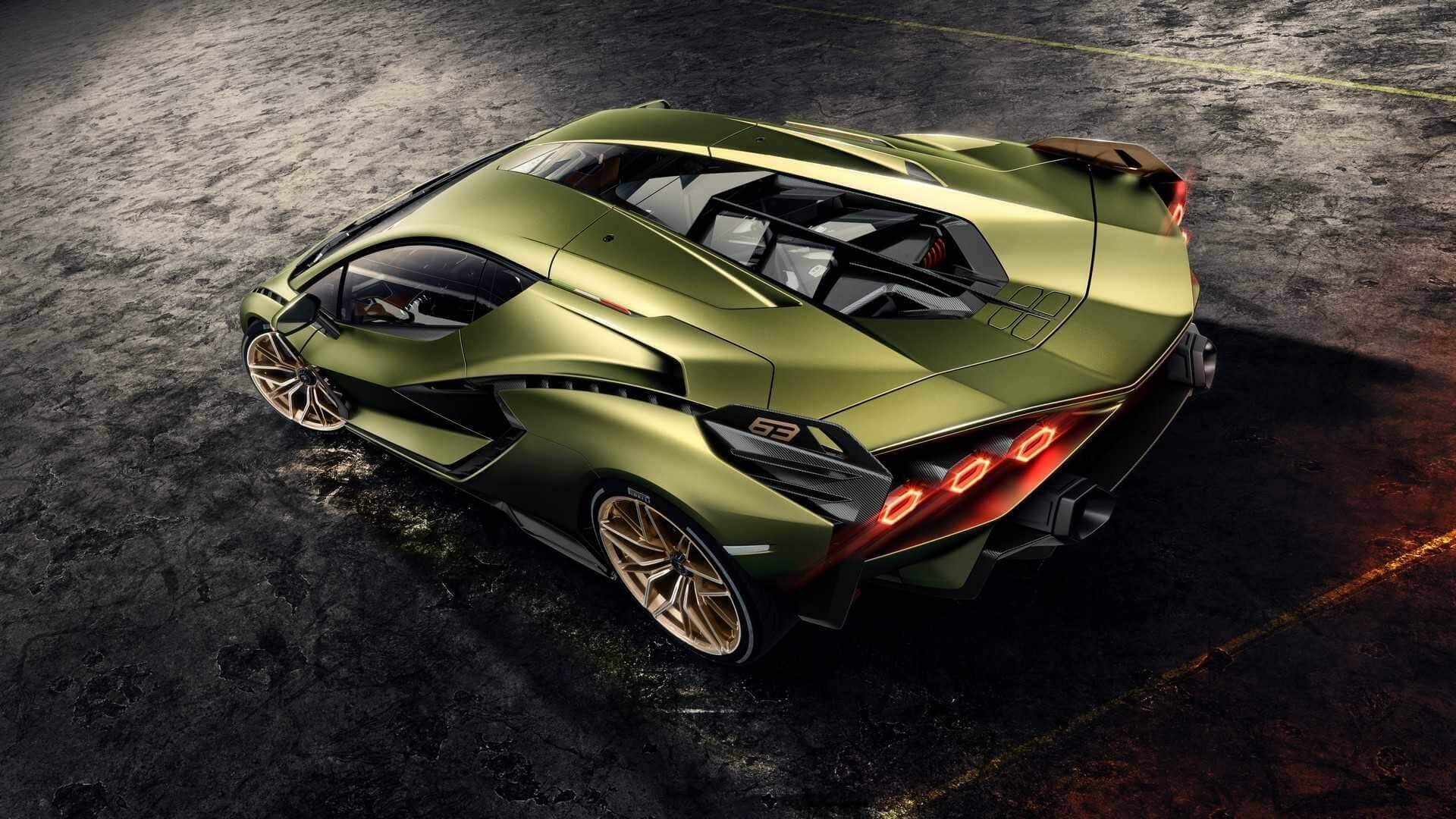
The Lamborghini Sián FKP 37 is a limited-edition supercar unveiled on 3 September 2019 and built at Sant'Agata Bolognese from 2020 to 2022. It was the first Lamborghini with any electric assistance: a 6.5-litre V12 works with a 25 kW electric motor fed by a supercapacitor, for 602 kW (819 PS) in total. Lamborghini made 63 coupés and 19 roadsters, all sold before production started.
In short
- Name: "Sián" means a flash of lightning in the Bolognese dialect; "FKP 37" honours Ferdinand Karl Piëch, born in 1937.
- Drivetrain: Aventador-based V12 with 577 kW plus a 48-volt motor in the gearbox; 0–100 km/h in 2.8 seconds and over 350 km/h.
- Energy store: a supercapacitor instead of a lithium-ion battery, recharged every time the car brakes.
- Numbers built: 63 coupés, a nod to the year Lamborghini was founded, followed by 19 roadsters.

Size at a glance
| Dimensions | Lamborghini Sian |
|---|---|
| Length | 4,980 mm196.1 in |
| Width | 2,101 mm82.7 in |
| Height | 1,133 mm44.6 in |
| Wheelbase | 2,700 mm106.3 in |
Specs by version
Engines
Performance
Show all 1 versions
| Version | 0–100 km/h | Top speed |
|---|---|---|
| Sián FKP 37 | 2.8 s 0–62 mph | 350 km/h217 mph |
Dimensions and weight
Show all 1 versions
| Version | Length | Width | Height | Wheelbase |
|---|---|---|---|---|
| Sián FKP 37 | 4,980 mm196.1 in | 2,101 mm82.7 in | 1,133 mm44.6 in | 2,700 mm106.3 in |
Verified Manufacturer and type-approval data from our catalog · Sources and methodology
Sián FKP 37 at a glance

| Item | Figure |
|---|---|
| Unveiled | 3 September 2019 online; Frankfurt Motor Show, September 2019 |
| Production | 2020–2022, Sant'Agata Bolognese, Italy |
| Cars built | 63 coupés, 19 roadsters |
| Base | Lamborghini Aventador (carbon fibre monocoque) |
| Engine | 6.5-litre L539 V12, naturally aspirated, 577 kW (785 PS) |
| Electric motor | 25 kW (34 PS), 48 volts, built into the gearbox |
| System output | 602 kW (819 PS) |
| Gearbox and drive | 7-speed ISR automated manual, all-wheel drive |
| 0–100 km/h | 2.8 s |
| Top speed | over 350 km/h |
| Length / width / height | 4,980 / 2,101 / 1,133 mm |
| Wheelbase | 2,700 mm |
What the name Sián FKP 37 means
Lamborghini named the car twice. "Sián" is the word for a flash of lightning in the dialect spoken around Bologna, where Sant'Agata lies. It refers to the electric part of the drivetrain, the first in the company's history.

"FKP 37" is a tribute to Ferdinand Karl Piëch, the engineer and long-time head of the Volkswagen Group, who was born in 1937 and died in August 2019, a few weeks before the reveal. Piëch had driven the Group's purchase of Lamborghini through Audi in 1998. The figure 63, used for the number of coupés and embossed on the rear wing, recalls 1963, the year Ferruccio Lamborghini founded the company. The full story of the brand is in our history of Lamborghini.
The V12 and the supercapacitor hybrid
The engine is the 6.5-litre naturally aspirated V12 known as L539, the unit of the Lamborghini Aventador SVJ. For the Sián it gained titanium intake valves, new engine software and a revised exhaust, which lifted output to 577 kW (785 PS). The 25 kW electric motor sits inside the seven-speed ISR gearbox and runs on a 48-volt system. Together they deliver 602 kW (819 PS), sent to all four wheels.

Instead of a battery, the motor draws on a supercapacitor. Lamborghini said that, for the same weight, it delivers three times the power of a lithium-ion battery and is three times lighter than a battery of the same power. It is mounted near the gearbox for better weight distribution and is fully recharged by regenerative braking each time the driver slows down. The motor adds torque up to 130 km/h and can move the car at walking pace on its own, which helps when parking.
| Figure | Value |
|---|---|
| V12 output | 577 kW (785 PS) |
| Torque | 720 Nm (old page and press figures) |
| E-motor | 25 kW (34 PS), 48 V |
| Combined | 602 kW (819 PS) |
| Energy store | supercapacitor, recharged by braking |
| 0–100 km/h | 2.8 s |
| 0–200 km/h | about 7.5 s (press figure) |
By our calculation, the electric motor adds only about 4 % to the V12's output (25 kW on top of 577 kW). Its job is less about peak power and more about instant response at low and medium speeds, where a naturally aspirated V12 has not yet reached its best. Lamborghini claimed the hybrid made the car about 10 % quicker in acceleration than the same car without the motor.
Design: Countach cues and smart materials
The body was designed by Lamborghini's Centro Stile and borrows the steep wedge and hexagonal details of the Countach, the car that defined Lamborghini's look in the 1970s. Y-shaped light signatures and hexagonal shapes on the rear continue the style of current Lamborghinis. The launch car was painted in a gold colour that Lamborghini called "electric gold", a reference to the hybrid system.

Two technical details stood out. Rear cooling vanes open by themselves when a heat-sensitive smart material reaches a set temperature, with no motor or sensor. Inside, the cabin used Poltrona Frau leather, the first 3D-printed interior parts in a Lamborghini and the portrait touchscreen of the Huracán Evo. Buyers could have almost any detail made to order by the Ad Personam department.
Lamborghini Sián Roadster
The open Sián Roadster was revealed in July 2020 in a blue launch colour called Blu Uranus. It has the same drivetrain and power as the coupé, and only 19 were made, delivered in 2021 and 2022. Its 3D-printed carbon fibre rear vents could carry the owner's initials. With so few cars built, a Roadster is even harder to find than the coupé, and it is one of the rarest open Lamborghinis of the modern era.

Price and rarity
Lamborghini never published an official price. At the 2019 reveal, US press reports put the coupé at around 2 million US dollars before taxes and options, roughly €1.8 million at the exchange rate of the time. The old version of this page quoted 3.6 million dollars, a figure we could not confirm. Every car had been sold by the time the Sián was shown, so it never reached a showroom.

Today Sián cars change hands privately or at auction, and values depend heavily on the individual specification. By our count, with 82 cars in total, there is less than one Sián for every 130 Aventadors, of which more than 11,000 were built from 2011 to 2022.
From the Sián to the Countach and Revuelto
The Sián was a test bed for Lamborghini's move to electrification. In 2021 the same V12, motor and supercapacitor went into the Countach LPI 800-4, a 112-car tribute to the original Countach. In 2023 the Lamborghini Revuelto replaced the Aventador with a full plug-in hybrid and three electric motors.
| Model | Years | System output | Electric part | Cars built |
|---|---|---|---|---|
| Aventador SVJ | 2018–2021 | 566 kW (770 PS) | none | series production |
| Sián FKP 37 | 2020–2022 | 602 kW (819 PS) | 25 kW motor, supercapacitor | 63 coupés + 19 roadsters |
| Countach LPI 800-4 | 2021–2022 | 599 kW (814 PS) | 25 kW motor, supercapacitor | 112 |
| Revuelto | 2023– | 747 kW (1,015 PS) | three motors, plug-in battery | series production |
The comparison shows that the Sián remains the most powerful of the supercapacitor cars. By our calculation it has 36 kW (about 6 %) more than the SVJ it is based on and 3 kW more than the Countach LPI 800-4, while the Revuelto adds another 145 kW. Specific output tells a similar story: 602 kW from 6.5 litres is about 93 kW per litre, against roughly 87 kW per litre for the SVJ. Readers can set these figures against other supercars with our power-to-weight calculator. The Revuelto, with full plug-in hybrid technology, finally moved Lamborghini beyond the mild-hybrid approach.
Rivals
Compare with…
Compare Lamborghini Sian with
- Bugatti La Voiture Noire quick spec comparison
-
Ended 2021
- Years
- 2019–2021
- Body
- Coupe
- Fuel
- Petrol
- Power
- 1,103 kW (1,500 PS)

Lamborghini Sian in our rankings
- No. 2 of 98 · Widest coupes (2,101 mm)
- No. 4 of 38 · Fastest Italian cars (350 km/h)
- No. 4 of 28 · Most powerful V12 cars (602 kW)
- No. 6 of 38 · Quickest Italian cars, 0–100 (2.8 s)
- No. 8 of 144 · Fastest cars of the 2010s (350 km/h)
- No. 8 of 143 · Quickest cars of the 2010s, 0–100 (2.8 s)
Wider than 97% of ranked coupes in the 1CARS catalog (No. 2 of 98).
Lamborghini Sian photos 15


Lamborghini Sian videos 3
Lamborghini Sian video 1

Lamborghini Sian video 2

Lamborghini Sian video 3
FAQ
Why is it called Sián FKP 37?
The first word is local dialect from the Bologna area for lightning, chosen to mark the electric motor. "FKP 37" honours Ferdinand Karl Piëch, the former Volkswagen Group chairman, who was born in 1937 and died shortly before the car was revealed.
How many Lamborghini Sián were made?
Lamborghini built 63 Sián coupés, a reference to the company's founding in 1963, and then 19 Sián Roadsters. All 82 cars were sold before production began, and none were offered to the general public.
Is the Lamborghini Sián a hybrid?
Yes, a mild hybrid. A 25 kW, 48-volt electric motor in the gearbox supports the V12, and it is powered by a supercapacitor rather than a battery. The car cannot travel any real distance on electricity alone.
How fast is the Lamborghini Sián?
The official figures are 2.8 s from rest to 100 km/h and a top speed beyond 350 km/h. The combined output of the V12 and electric motor is 602 kW (819 PS), making it the most powerful Lamborghini when it was launched.
What replaced the Lamborghini Sián?
The Sián had no direct successor, but its drivetrain was reused in the Countach LPI 800-4 of 2021. Lamborghini's flagship V12 hybrid since 2023 is the Revuelto, a plug-in hybrid with 747 kW.
Data sources
Data checked by an editor against the sources below.
- The text of this article (1cars archive)
- Wikipedia - Lamborghini Sián FKP 37


