
 Lamborghini Gallardo
Specs, engines and history
Updated Published Sources (2) Report an error
By Felix Hartmann, Automotive Technology & EV Contributor Reviewed by Oleksandr Hnatiuk

- Built
- 2003–2013
- Top power
- 419 kW (570 PS)
- New price
- from about €142,100 (2003)
- Used price today
- about €87,500–150,000 (AutoScout24, Nov 2026)
Which Gallardo to buy
Our verdict · Felix Hartmann
The LP 560-4 is the best all-round choice: the 5.2 engine, the facelift and better reliability than early cars. A manual is rarer and more involving than an e-gear car and is the enthusiast's pick. Early 5.0-litre cars are the cheapest way into a V10 Lamborghini but need a careful check of the engine history. The Superleggera, Balboni and Squadra Corse editions are collector's cars. Buy with a full specialist service history, original wheels and no cosmetic modifications. The Gallardo's successor, the Huracán, is covered in the Huracán LP 580-2 article, and the V12 flagship of the time in the Aventador page; the full range is in the Lamborghini catalogue.
The Lamborghini Gallardo is a mid-engined V10 supercar built at Sant'Agata Bolognese from 2003 to 25 November 2013, the second Lamborghini of the Audi era. With 14,022 cars, 9,640 coupés and 4,352 Spyders, it became the best-selling Lamborghini of its time. Power grew from 368 kW (500 PS) to 419 kW (570 PS), and the Huracán replaced it in 2014.
In short
- Designed by Luc Donckerwolke, based on Italdesign's 1995 Calà concept; facelift by Walter de Silva.
- 5.0 V10 with 368 kW, 382 kW from 2006; LP 560-4 of 2008 with a 5.2 direct-injection V10 and 412 kW.
- All-wheel drive with a six-speed manual or e-gear automated manual; rear-drive LP 550-2 versions later.
- 0–100 km/h in 4.2 seconds for the first car and 3.4 seconds or less for the LP 570-4 Superleggera; top speeds of 309 to 325 km/h.

Size at a glance
| Dimensions | Lamborghini Gallardo |
|---|---|
| Length | 4,300 mm169.3 in |
| Width | 1,900 mm74.8 in |
| Height | 1,165 mm45.9 in |
| Wheelbase | 2,560 mm100.8 in |
Specs by version
Engines
| Version | Engine | Power | Torque | Gearbox | Drive | Production years |
|---|---|---|---|---|---|---|
| Gallardo 5.0 | 5.0 l · 10 cyl · Petrol 5,000 cc | 368 kW 500 PS493 hp | 510 Nm376 lb-ft | 6-sp | All-wheel drive | 2003 |
| LP 560-4 | 5.2 l · 10 cyl · Petrol 5,200 cc | 412 kW 560 PS553 hp | 540 Nm398 lb-ft | - | All-wheel drive | 2008 |
Performance
Show all 2 versions
| Version | 0–100 km/h | Top speed |
|---|---|---|
| Gallardo 5.0 | 4.2 s 0–62 mph | 309 km/h192 mph |
| LP 560-4 | 3.7 s 0–62 mph | 325 km/h202 mph |
Dimensions and weight
Show all 2 versions
| Version | Length | Width | Height | Wheelbase | Kerb weight |
|---|---|---|---|---|---|
| Gallardo 5.0 | 4,300 mm169.3 in | 1,900 mm74.8 in | 1,165 mm45.9 in | 2,560 mm100.8 in | 1,597 kg3,521 lb |
| LP 560-4 | - | - | - | - | 1,501 kg3,309 lb |
Verified Manufacturer and type-approval data from our catalog · Sources and methodology
Lamborghini Gallardo at a glance
The Gallardo was Lamborghini's answer to the Ferrari 360 and F430: a smaller, cheaper and more usable car below the V12 flagships. It was shown at the Geneva Motor Show in March 2003 and named, like many Lamborghinis, after a breed of fighting bull. Audi, Lamborghini's owner since 1998, made it the core model of the brand; production peaked at 1,951 cars in 2007. The company's story is told in the history of Lamborghini.
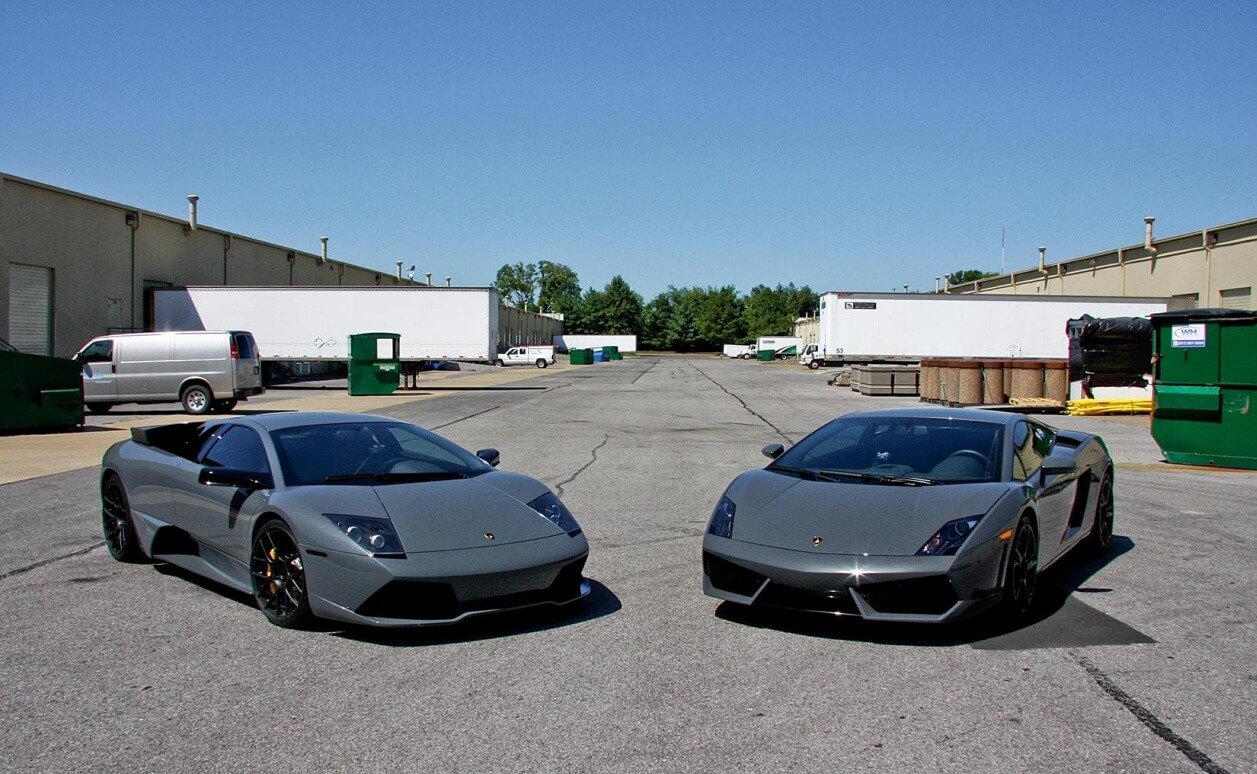
| Parameter | Metric | Imperial |
|---|---|---|
| Length | 4,300–4,386 mm | 169.3–172.7 in |
| Width | 1,900 mm | 74.8 in |
| Height | 1,165 mm (Spyder 1,184 mm) | 45.9 (46.6) in |
| Wheelbase | 2,560 mm | 100.8 in |
| Kerb weight | 1,520 kg (LP 570-4 Superleggera) to 1,733 kg (Spyder) | 3,351–3,821 lb |
| Layout | Mid-engine, all-wheel drive (some rear-drive versions) | – |
V10 engines, gearboxes and performance
| Version | Years | Engine | Power | Torque | 0–100 km/h | Top speed |
|---|---|---|---|---|---|---|
| Gallardo | 2003–2005 | 5.0 V10 | 368 kW (500 PS) | 510 Nm | about 4.2 s | 309 km/h |
| Gallardo (update) | 2006–2008 | 5.0 V10 | 382 kW (520 PS) | – | – | – |
| LP 560-4 | 2008–2013 | 5.2 V10 FSI | 412 kW (560 PS) | 540 Nm | 3.7 s | 325 km/h |
| LP 550-2 | 2009–2013 | 5.2 V10 | 405 kW (550 PS) | – | – | – |
| LP 570-4 Superleggera | 2010–2013 | 5.2 V10 | 419 kW (570 PS) | – | 3.2–3.4 s | about 325 km/h |
The V10 is a dry-sump engine, so the oil level must be checked correctly. Both gearboxes, the six-speed manual and the e-gear automated manual, are supplied by Graziano. The 5.2-litre LP 560-4 has 44 kW more than the original 5.0 and is about 0.5 seconds quicker to 100 km/h. With 419 kW and 1,520 kg, the LP 570-4 Superleggera has about 276 kW per tonne.

Body, cabin and practicality
The body uses an aluminium spaceframe with aluminium panels, built at the Audi plant in Neckarsulm before final assembly in Sant'Agata. The cabin is snug but usable for two, with Audi switchgear, a small front luggage compartment and, as an option, a 7-inch navigation screen. A front lift system raises the nose by 30 mm for ramps and speed bumps.

Running costs and buying checks
The V10 is durable if serviced on time, but the Gallardo remains an expensive car to keep:
- e-gear clutches wear with town driving; software updates help, and a specialist should check the remaining clutch life;
- some cars built before 2005 suffered con-rod bearing failures, which were fixed on most of them;
- throttle bodies can stick, causing an uneven idle;
- tyres wear quickly and the handbrake is a known weak point;
- ceramic brakes are costly to replace, though they usually wear out only with track use.
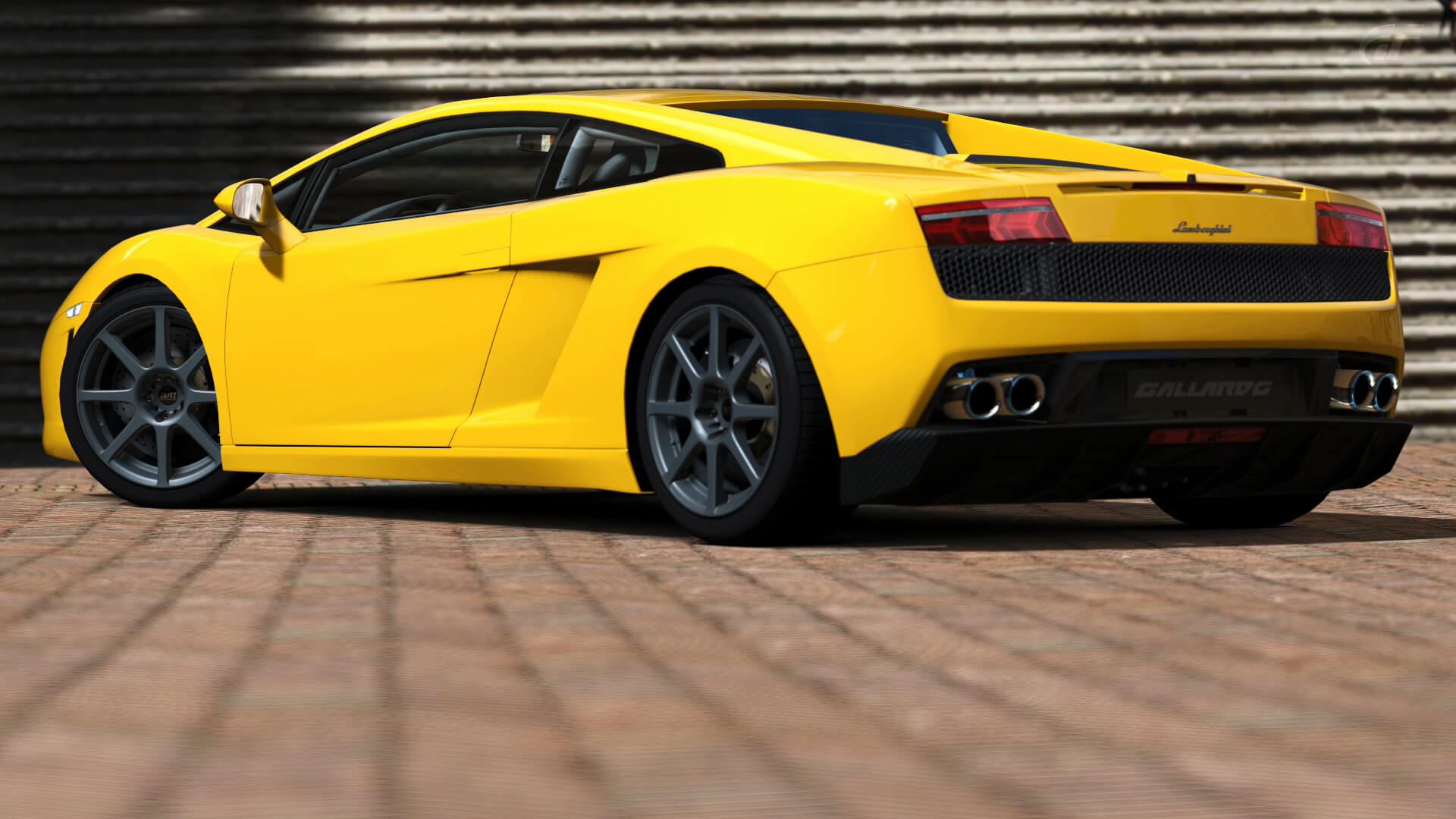
Fuel use is high, as expected from a 5-litre V10, and it rises sharply on track days.
Gallardo versions and special editions

| Version | Year | Details |
|---|---|---|
| Spyder | 2006 (Los Angeles show) | Soft-top roadster; 4,352 open cars in total |
| Superleggera | 2007 | About 100 kg lighter, carbon-fibre panels, 618 built |
| LP 560-4 | 2008 | 5.2 V10, facelift by Walter de Silva |
| LP 550-2 Valentino Balboni | 2009 | Rear-wheel drive, 250 built, named after the test driver |
| LP 570-4 Superleggera | 2010 | 419 kW, the lightest and fastest series Gallardo |
| Polizia | 2004, 2008 | Cars for the Italian State Police and highway police |
| Squadra Corse | 2013 | Road version of the Super Trofeo racer, 50 built |
Crash testing and the aluminium structure
As a low-volume supercar, the Gallardo was never crash-tested by Euro NCAP or the IIHS, so no official rating exists. Its crash structure is the rigid aluminium spaceframe.

Rivals: how the Gallardo compares
| Model | Engine | Power |
|---|---|---|
| Lamborghini Gallardo LP 560-4 | 5.2 V10, mid-mounted | 412 kW (560 PS) |
| Ferrari F430 | 4.3 V8, mid-mounted | 360 kW (490 PS) |
| Audi R8 V10 | 5.2 V10, mid-mounted | 386 kW (525 PS) |
| Porsche 911 Turbo (997) | 3.6–3.8 flat-six turbo | 353–368 kW (480–500 PS) |
Compared with the Ferrari F430, the LP 560-4 has 52 kW more and all-wheel drive, which makes it easier to use in poor weather. The Audi R8 V10 shares its basic engine and much of its structure but is softer and cheaper. Compare these cars in the 1cars comparison tool or see where the Gallardo stands in the fastest cars ranking.

Popular comparisons
Lamborghini Gallardo in our rankings
- No. 6 of 58 · Quickest cars of the 2000s, 0–100 (3.7 s)
- No. 7 of 56 · Fastest cars of the 2000s (325 km/h)
- No. 35 of 378 · Fastest cars (325 km/h · top 10%)
- No. 21 of 203 · Most powerful cars of the 2000s (412 kW · top 11%)
- No. 40 of 392 · Power-to-weight: cars (275 kW/t · top 11%)
- No. 53 of 344 · Quickest cars, 0–100 (3.7 s · top 16%)
Faster than 90% of ranked cars in the 1CARS catalog (No. 35 of 378).
Lamborghini Gallardo photos 12


Lamborghini Gallardo videos 3

Lamborghini Gallardo video 1
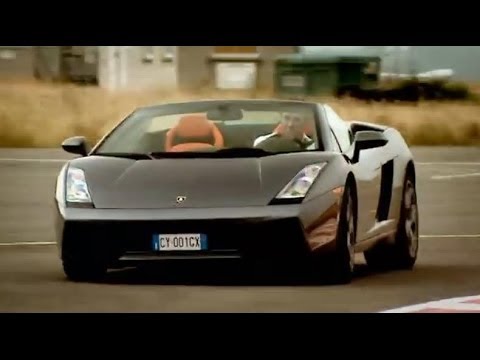
Test drive

Video overview
FAQ
How many Lamborghini Gallardos were made?
Lamborghini built 14,022 Gallardos between 2003 and 25 November 2013: 9,640 coupés and 4,352 Spyders. Output peaked at 1,951 cars in 2007, making it the best-selling Lamborghini until the Huracán.
What engine does the Lamborghini Gallardo have?
It has a mid-mounted V10: a 5.0-litre unit with 368 kW (500 PS), raised to 382 kW in 2006, and from 2008 a 5.2-litre direct-injection V10 with 412 kW (560 PS), reaching 419 kW in the LP 570-4.
Is the Lamborghini Gallardo all-wheel drive?
Most Gallardos are all-wheel drive, which is part of the "-4" in names such as LP 560-4. Rear-wheel-drive versions, the LP 550-2 and the Valentino Balboni edition, were added from 2009.
How fast is the Lamborghini Gallardo?
The original car reached 100 km/h in about 4.2 seconds and 309 km/h. The LP 560-4 cut the sprint to 3.7 seconds with a top speed of 325 km/h, and the LP 570-4 Superleggera was quicker still.
What are the main rivals of the Lamborghini Gallardo?
Its rivals were the Ferrari 360 and F430, the Porsche 911 Turbo and the Audi R8 V10, which shares its engine. The Gallardo stood out for its all-wheel drive and its V10 sound and styling.
Data sources
Data checked by an editor against the sources below.
- The text of this article (1cars archive)
- Wikipedia - Lamborghini Gallardo


