
 BMW M3 GTR
Specs, engines and history
Updated Published Sources (3) Report an error
By Felix Hartmann, Automotive Technology & EV Contributor Reviewed by Oleksandr Hnatiuk

- Built
- 2001
- Top power
- 331 kW (450 PS)
The BMW M3 GTR is a V8-powered racing version of the E46 BMW M3, introduced in February 2001 for the American Le Mans Series. Its 4.0-litre V8 won the 2001 ALMS GT class before a rule change forced it out. A few road versions were built for homologation, and the car later won the Nürburgring 24 Hours twice.
In short
- Race car: 3,997 cc P60 V8 with 330–331 kW, debut February 2001; 2001 ALMS GT class win with Jörg Müller.
- Road version: 285 kW (382 hp) at 7,000 rpm, six-speed manual, 295 km/h, 1,350 kg dry; 10 development cars built.
- Later success: overall wins at the Nürburgring 24 Hours in 2004 and 2005 with Schnitzer Motorsport.
- Fame: the hero car of Need for Speed: Most Wanted (2005).

BMW M3 GTR at a glance
By 2000 the E46 M3's straight-six was being outpaced in GT racing by rivals such as the Porsche 996 GT3. BMW Motorsport responded by fitting a V8 into the M3 bodyshell, creating the GTR. Because ALMS rules required race cars to be based on road cars, BMW also developed a road version. The M3 GTR sits in a long line of BMW motorsport road cars that began with the BMW M1, and the brand's wider story is told in the history of BMW. Current models are in the BMW catalogue.
| Fact | Value |
|---|---|
| Base model | BMW M3 (E46) coupé |
| Race debut | February 2001 |
| Engine | 3,997 cc P60 V8 |
| Race power | about 330 kW (443 hp) |
| Road power | 285 kW (382 hp) at 7,000 rpm |
| Gearbox (road) | 6-speed manual |
| Drive | Rear-wheel drive |
| Development road cars | 10 (3 production-ready) |
Timeline
| Year | Event |
|---|---|
| 2001 | Race debut in February; GT class win in the American Le Mans Series |
| 2001 | Road version shown at the Petit Le Mans; ten development cars built |
| 2002 | New rules demand 100 cars and 1,000 engines; BMW withdraws the GTR from the ALMS |
| 2003 | Two Schnitzer cars at the Nürburgring 24 Hours; third on the grid at the Bathurst 24 Hour |
| 2004 | Overall win at the Nürburgring 24 Hours |
| 2005 | Second Nürburgring 24 Hours win; hero car of Need for Speed: Most Wanted |
| 2024 | Race-winning car shown in the game's livery at BMW Welt |
The race car and the 2001 season
The M3 GTR made its racing debut in February 2001. Its 4.0-litre V8 was far more powerful and torquey than the E46 M3's six-cylinder, and the car used a dry-sump lubrication system and carbon-fibre body parts. In the 2001 American Le Mans Series it won the GT category, with Jörg Müller as its leading driver.
Rival teams then argued that the GTR was not a genuine production car. For 2002 the rules were changed to require at least 100 cars and 1,000 engines, which BMW was not prepared to build. BMW therefore withdrew the M3 GTR from the series after a single season.
The road version
To satisfy the 2001 rule that a road car must be offered for sale on at least two continents within twelve months, BMW developed a road-going M3 GTR during 2001 and showed it at the season-ending Petit Le Mans. Ten development cars were built, three of them production-ready display cars; the other seven prototypes were recycled. BMW announced a planned price of €250,000, and it stated that ten road cars were available for sale.

| Parameter | Metric | Imperial |
|---|---|---|
| Engine | 3,997 cc P60 V8 | 244 cu in |
| Power | 285 kW (388 PS) at 7,000 rpm | 382 hp |
| Gearbox | 6-speed manual, variable locking differential | – |
| Top speed | 295 km/h | 183 mph |
| Dry weight | 1,350 kg | 2,980 lb |
| Planned price (2001) | €250,000 | – |
The road car's V8 was detuned from the race engine's 331 kW to 285 kW and kept the dry-sump oil system. It uses a six-speed manual gearbox and the same variable locking differential as the race car. Carbon-fibre bumpers and rear wing help keep the dry weight to 1,350 kg. According to the old 1cars text, the carbon-fibre roof, vents in the bonnet, lowered suspension and twin-plate sports clutch were also part of the package, while comfort features such as air conditioning and a radio were omitted.
Return to endurance racing
Although the GTR left the ALMS, BMW kept racing it in Europe. In 2003 Schnitzer Motorsport entered two cars in the Nürburgring 24 Hours, and in 2004 and 2005 the M3 GTR won the race outright. It also competed in the 24 Hours of Spa. In Australia, a privately entered M3 GTR with a 5.0-litre version of the V8 qualified third for the 2003 Bathurst 24 Hour but retired after an accident.

BMW's later M3 race cars continued the tradition: in 2010 the M3 GT2 of BMW Motorsport and Schnitzer won the Nürburgring 24 Hours with Jörg Müller, Augusto Farfus, Pedro Lamy and Uwe Alzen.
The Need for Speed legend
The M3 GTR gained a cult following through Need for Speed: Most Wanted (2005), in which it is the player's hero car. Wikipedia notes that nearly 85% of search results about the GTR relate to the game. The car also appears in Real Racing 3. In November 2024 BMW wrapped the 2001 ALMS-winning number 42 GTR in the game's livery and displayed it at BMW Welt in Munich from December 2024 to January 2025.

Rarity today
With only a handful of road cars ever completed, the M3 GTR is one of the rarest BMWs. The old 1cars text reports that one road car went to a buyer in the United Arab Emirates and another is in the BMW Museum. It cannot be bought new, and genuine examples rarely, if ever, come up for sale. Today the M3 line continues with the BMW M3 Competition and BMW M4 both far more practical everyday cars.

Rivals: how the M3 GTR compared
On track, the M3 GTR's main rivals in the ALMS GT class were the Porsche 911 GT3 models, which it beat in 2001. In the higher GTS class, cars such as the Dodge Viper GTS-R raced with larger V10 engines. The GTR's strengths were its high-revving V8, balance and BMW Motorsport development; its weakness was the homologation dispute that ended its ALMS career after one season.

Rivals
Compare with…
Compare BMW M3 GTR with
- Dodge Viper GTS-R quick spec comparison
-
Ended 2005
- Years
- 1996–2005
- Body
- Coupe
- Fuel
- Petrol
- Power
- 450–570 kW (612–775 PS)

BMW M3 GTR in our rankings
- No. 45 of 207 · Most powerful cars of the 2000s (331 kW · top 23%)
- No. 274 of 1111 · Most powerful cars (331 kW · top 25%)
- No. 60 of 165 · Most powerful German cars (331 kW · top 37%)
- No. 142 of 373 · Most powerful coupes (331 kW · top 39%)
More powerful than 77% of ranked cars of the 2000s in the 1CARS catalog (No. 45 of 207).
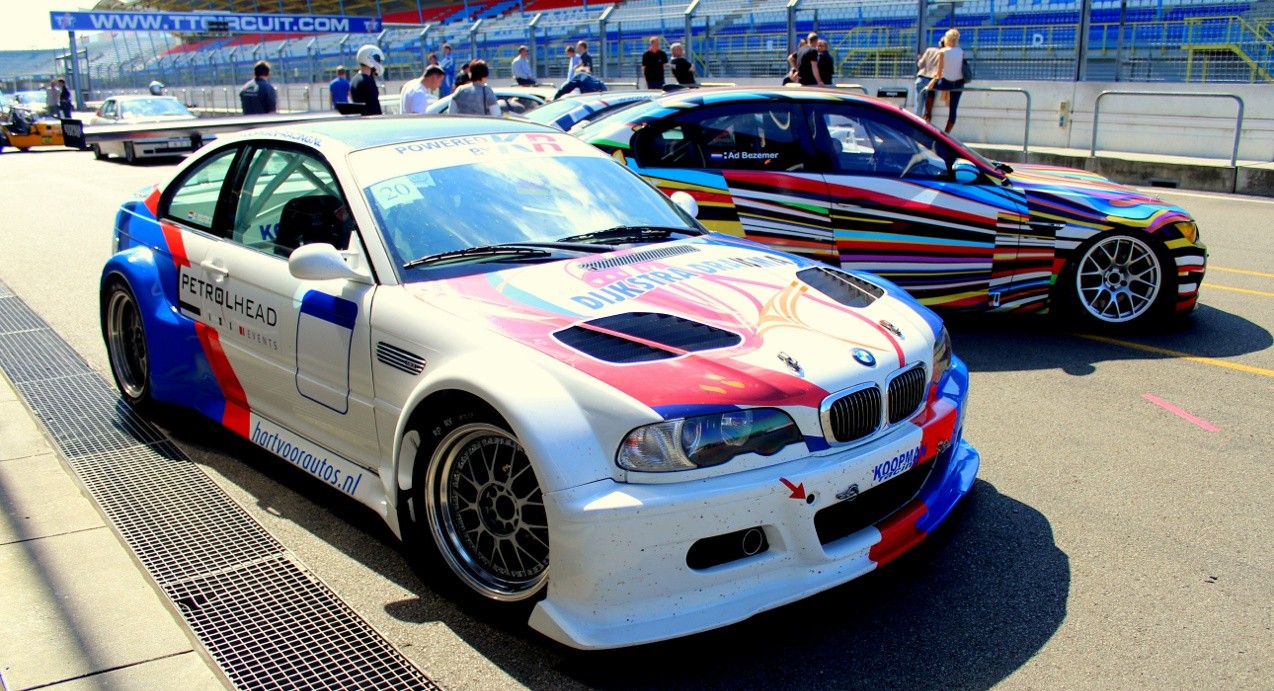
BMW M3 GTR photos 13



BMW M3 GTR videos 2
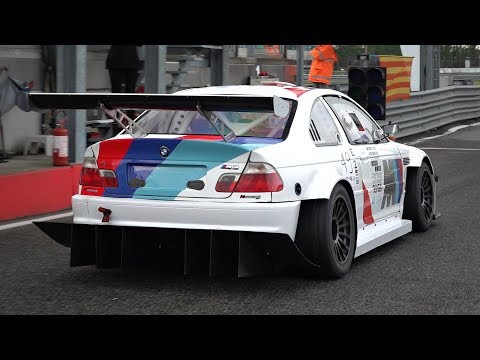
BMW M3 GTR video 1

BMW M3 GTR video 2
FAQ
How many BMW M3 GTR road cars were built?
BMW built ten development road cars in 2001, three of them production-ready display cars, and recycled the other seven prototypes. BMW said that ten road cars were available for sale.
What engine does the BMW M3 GTR have?
It uses the 3,997 cc P60 V8. The race car produced about 330 kW (443 hp), while the road version was detuned to 285 kW (382 hp) at 7,000 rpm and kept the dry-sump lubrication.
Why was the BMW M3 GTR banned?
Rivals argued it was not a real production car. For 2002 the ALMS required at least 100 cars and 1,000 engines to be built, which BMW did not do, so it withdrew the GTR after 2001.
Did the BMW M3 GTR win Le Mans?
No. It won the GT class of the 2001 American Le Mans Series and the Nürburgring 24 Hours outright in 2004 and 2005, but it did not win the 24 Hours of Le Mans.
Why is the M3 GTR famous?
Beyond its racing success, it became the hero car of the 2005 video game Need for Speed: Most Wanted, which gave it a cult following among younger enthusiasts worldwide.
Data sources
Data checked by an editor against the sources below.
- The text of this article (1cars archive)
- Wikipedia - BMW M3 GTR
- Wikipedia - BMW M3


