
 BMW i3
Specs, engines and history
Updated Published Sources (2) Report an error
By Felix Hartmann, Automotive Technology & EV Contributor Reviewed by Oleksandr Hnatiuk

- Built
- 2013–2022
- Top power
- 137 kW (186 PS)
- New price
- from about €34,950 (2013)
- Used price today
- about €13,000–24,500 (AutoScout24, Nov 2026)
Which BMW i3 to buy
Our verdict · Felix Hartmann
For most buyers, a 120 Ah car from 2019 onwards is the best choice, as it offers the longest range and the refreshed design. The i3s suits drivers who want sharper performance. The REx makes sense in areas with few charging points, but it adds weight and a petrol engine to maintain. On any used i3, check the battery health report, the charging equipment and the condition of the narrow tyres.
The BMW i3 is a compact five-door electric hatchback built by BMW in Leipzig, Germany, from September 2013 to July 2022. It was the first mass-produced car with most of its body and internal structure made of carbon-fibre reinforced polymer (CFRP). Around 250,000 were built, with a 125 kW electric motor, three battery sizes and an optional petrol range extender.
In short
- Revealed on 29 July 2013 in New York, London and Beijing; series production started on 18 September 2013.
- Batteries: 60 Ah (22 kWh), 94 Ah (33 kWh) from 2016 and 120 Ah (42.2 kWh) from 2018, with up to 359 km NEDC or 309 km WLTP.
- Motors: 125 kW in the i3, 135 kW in the sportier i3s from the 2018 model year; top speed 150 km/h.
- Euro NCAP 2013: four stars; 2014 World Green Car of the Year and World Car Design of the Year.

BMW i3 at a glance
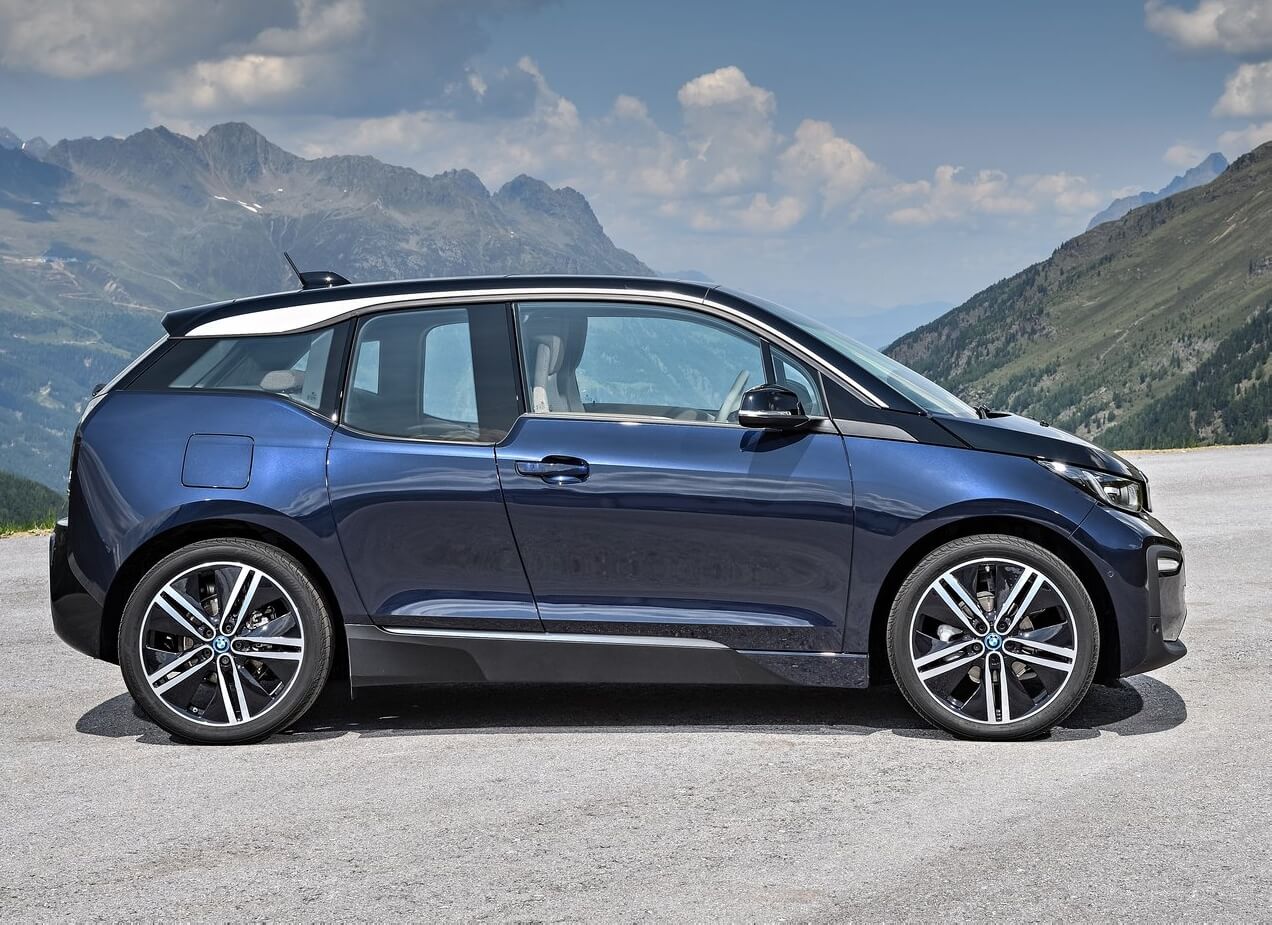
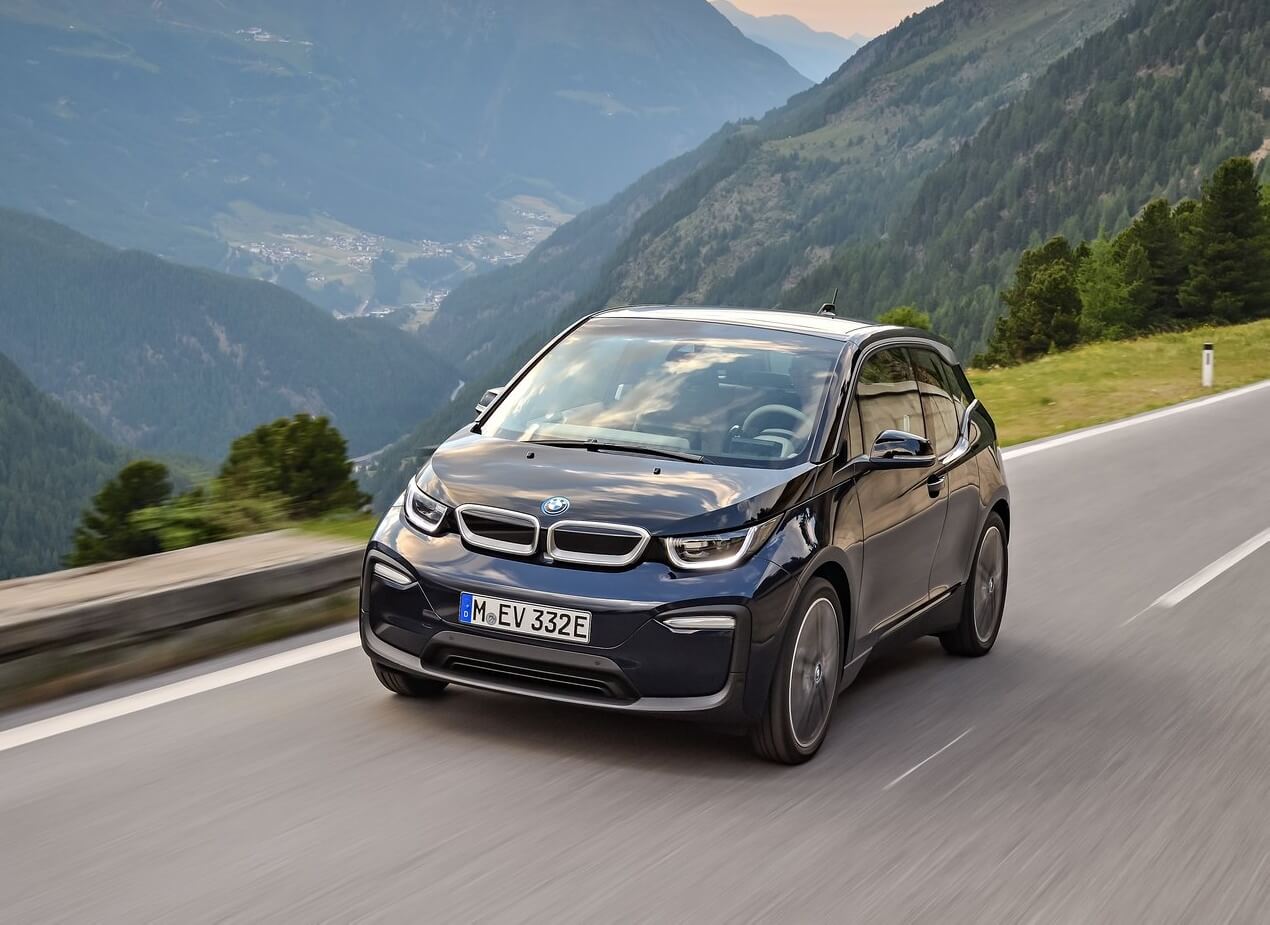
The i3 was the first model of BMW's "i" sub-brand, followed by the BMW i8 plug-in hybrid sports car. It was designed from the start as an electric car rather than adapted from a petrol model. The rear-mounted motor drives the rear wheels, and the rear doors are hinged at the back, opening like a clamshell without a central pillar. BMW's broader story is told in the history of BMW, and its range, from the BMW X1 to the 3 Series, is in the BMW catalogue.

| Fact | Value |
|---|---|
| Maker | BMW, Germany |
| Model code | I01 |
| Concept | Frankfurt Motor Show, September 2011 |
| Reveal | 29 July 2013 (New York, London, Beijing) |
| Production | 18 September 2013 – July 2022, Leipzig plant |
| Total built | About 250,000 |
| Body | 5-door hatchback, rear-hinged rear doors |
| Drive | Rear motor, rear-wheel drive |
| Designer | Richard Kim |
LifeDrive: carbon cell and aluminium chassis
The i3 uses the LifeDrive architecture. The passenger cell, called the Life Module, is made of CFRP and bonded with adhesive to an aluminium Drive Module that carries the battery, motor, frame and suspension. According to the old 1cars text, the outer body panels are plastic, made with technology similar to modern bumpers, which lowers the cost of production and repair. The carbon fibre for the i3 was produced at a plant in Moses Lake, in the US state of Washington, powered by hydroelectricity. This construction kept the kerb weight low for an electric car: 1,195 kg for the first battery version.

Batteries, range and charging
| Battery | Introduced | Gross / net capacity | Range |
|---|---|---|---|
| 60 Ah | 2013 | 22 kWh / about 18.2 kWh | 130–160 km NEDC; 130 km EPA |
| 94 Ah | July 2016 (2017 model year) | 33 kWh / 27.2 kWh | About 300 km NEDC; 183 km EPA |
| 120 Ah | Announced September 2018 | 42.2 kWh / 37.9 kWh | 359 km NEDC; 309 km WLTP; 246 km EPA |
Each battery update kept the same dimensions while increasing capacity, so the i3 gained range without losing interior space. The old 1cars text notes that the battery weighs around 230 kg. Like other electric cars, the i3 recovers energy when the driver lifts off the accelerator; the old 1cars text adds that the brake lights also come on when this regenerative braking slows the car noticeably.

Electric motors and performance
| Version | Motor | Power | Torque | Top speed |
|---|---|---|---|---|
| i3 | Synchronous permanent-magnet | 125 kW (170 PS) | 250 Nm (concept figure) | 150 km/h |
| i3s (from 2018 MY) | Synchronous permanent-magnet | 127–135 kW | 249–270 Nm | – |
| REx range extender | 647 cc two-cylinder petrol generator | 25 kW | 55 Nm | – |
The i3s, introduced with the 2018 model-year exterior refresh, has a more powerful motor and a slightly wider body: 1,791 mm compared with 1,775 mm for the standard car. Sources give its output as 127–135 kW and its torque as 249–270 Nm.

i3 REx: the range extender
The i3 REx carries a small 647 cc two-cylinder petrol engine, derived from the BMW C650 GT scooter, which acts as a generator to recharge the battery when it runs low. Derated from the scooter's 44 kW to 25 kW, it does not drive the wheels directly. The fuel tank holds 9 litres. With the 120 Ah battery, BMW stopped selling the REx in Europe.
| Battery | REx total range (EPA) | Of which electric |
|---|---|---|
| 60 Ah | 240 km | 116 km |
| 94 Ah | 290 km | 156 km |
| 120 Ah | 322 km | 203 km |
i3 size and weight

| Parameter | Value |
|---|---|
| Length | 3,999 mm |
| Width | 1,775 mm (i3s: 1,791 mm) |
| Height | 1,578 mm |
| Wheelbase | 2,570 mm |
| Kerb weight, 60 Ah | 1,195 kg (REx 1,315 kg) |
| Kerb weight, 120 Ah | 1,270 kg (REx 1,390 kg); i3s 1,290 kg |
Sustainable interior materials
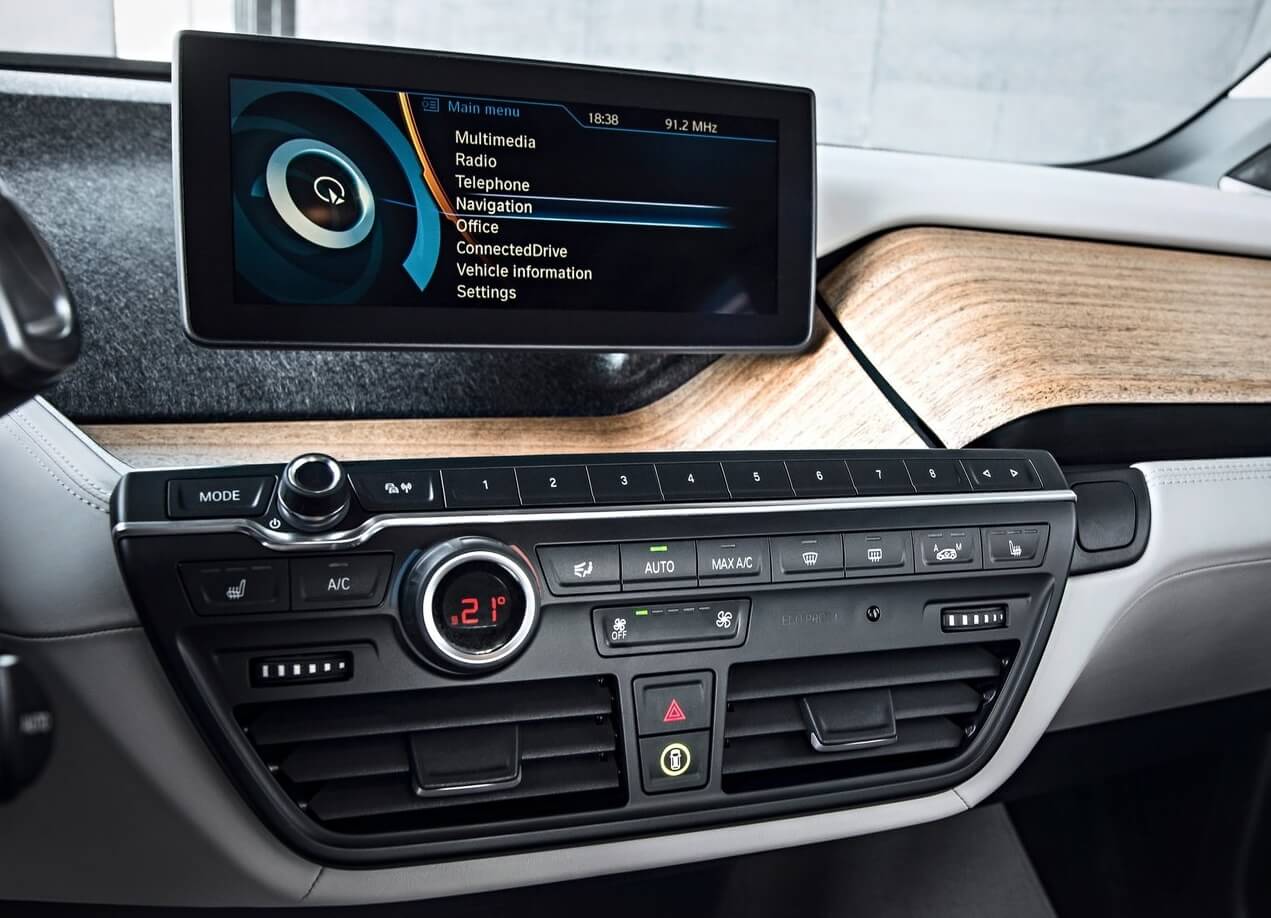
BMW used renewable materials inside the i3. The door panels contain hemp mixed with plastic, which reduces their weight by about 10%; the leather is tanned with olive-leaf extract, and the dashboard trim uses certified wood. The Leipzig plant draws about a fifth of its electricity from four wind turbines, and in 2017 BMW linked 700 used i3 batteries there as a stationary storage farm. According to the old 1cars text, the cabin offers enough space for rear passengers despite the car's short length.

Crash tests and awards
In the 2013 Euro NCAP test the i3 received four stars: 86% for adult occupants, 81% for children, 57% for pedestrians and 55% for safety assist. ANCAP awarded five stars in 2014. The i3 won the 2014 World Green Car of the Year and World Car Design of the Year titles, UK Car of the Year 2014 and, with the 94 Ah battery, the 2017 World Urban Car of the Year.

Sales and production milestones
| Date | Milestone |
|---|---|
| September 2014 | 10,000th i3 sold |
| July 2016 | 50,000 sold |
| October 2017 | 100,000th i3 built in Leipzig |
| 2019 | Record year with 39,501 sales |
| 15 October 2020 | 200,000th i3 built |
| July 2022 | Production ends after about 250,000 cars |
Germany was the largest market, with 47,536 cars registered by the end of 2021.

Rivals: how the i3 compares
The i3 competed with compact electric cars such as the Nissan Leaf, the Renault Zoe and the Volkswagen e-Golf. Its strengths are the lightweight carbon-fibre structure, rear-wheel-drive handling, a premium interior and the option of a range extender. Its weaknesses are a smaller battery than many later rivals, narrow tyres that limit grip.

BMW i3 in our rankings
- No. 58 of 161 · Most powerful hatchbacks (137 kW · top 37%)
- No. 547 of 1194 · Longest-running car nameplates (9 years · top 49%)
- No. 778 of 1133 · Most powerful cars (137 kW · top 70%)
- No. 115 of 155 · Most powerful electric cars (137 kW · top 75%)
- No. 132 of 168 · Most powerful German cars (137 kW · top 79%)
More powerful than 63% of ranked hatchbacks in the 1CARS catalog (No. 58 of 161).
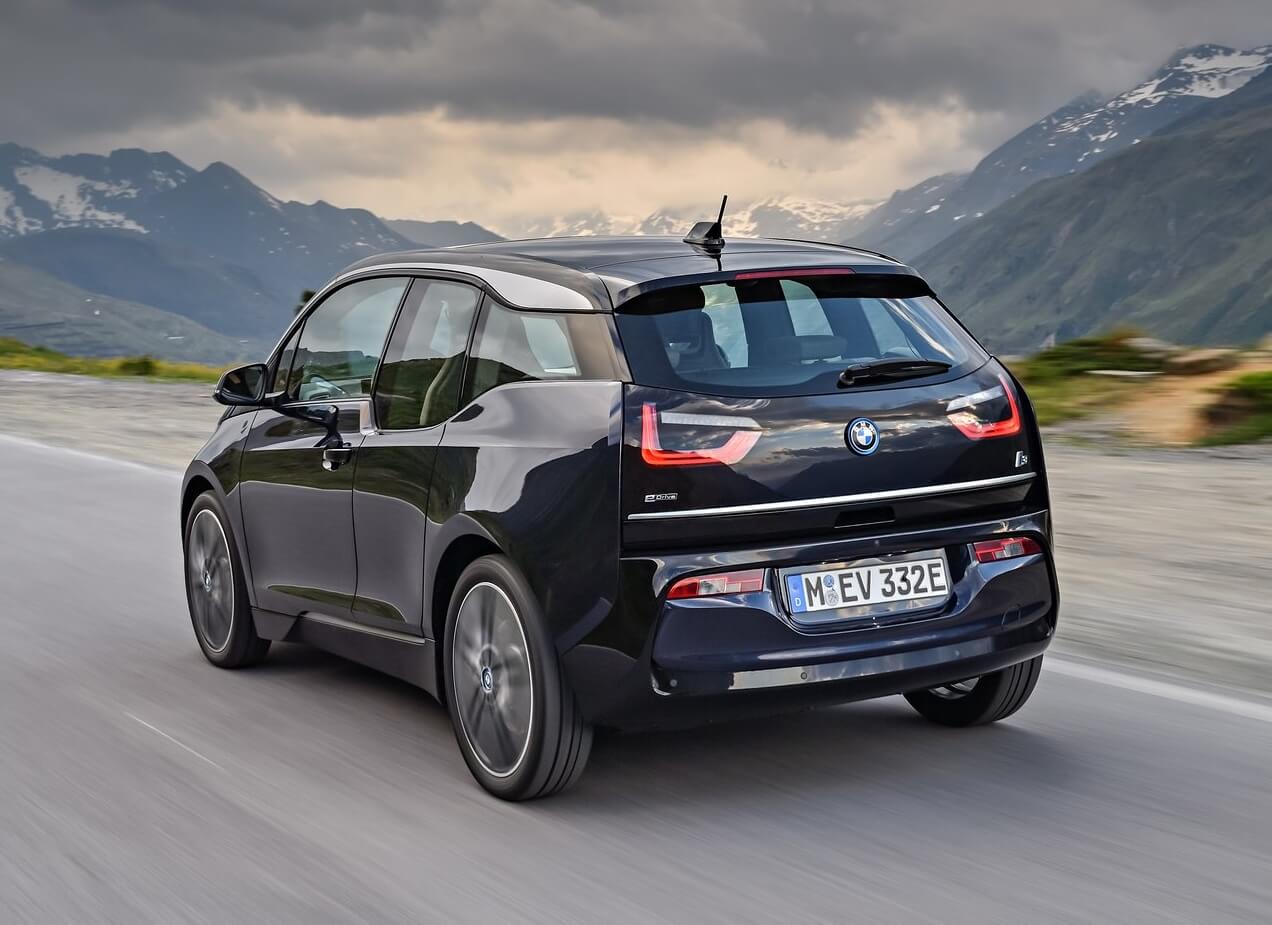
BMW i3 photos 32





BMW i3 videos 5

BMW i3 video 1

BMW i3 video 2

BMW i3 video 3
BMW i3 video 4

BMW i3 video 5
FAQ
How far can a BMW i3 drive on a charge?
It depends on the battery. The 120 Ah version reaches 359 km NEDC or 309 km WLTP, the 94 Ah version about 300 km NEDC, and the original 60 Ah version 130–160 km NEDC.
What is the BMW i3 REx?
The REx has a 647 cc two-cylinder petrol engine with 25 kW that works only as a generator, recharging the battery to extend the range. It has a 9-litre fuel tank.
What is the difference between the i3 and the i3s?
The i3s, introduced for the 2018 model year, has a more powerful motor of up to 135 kW and a slightly wider body of 1,791 mm. The standard i3 has a 125 kW motor.
Is the BMW i3 body made of carbon fibre?
Yes. The passenger cell is made of carbon-fibre reinforced polymer and bonded to an aluminium chassis module. It was the first mass-produced car with a mainly carbon-fibre structure.
When did BMW stop making the i3?
Production of the i3 hatchback ended at the Leipzig plant in July 2022, after about 250,000 cars had been built since September 2013. Sales in the United States had already ended in July 2021.
Data sources
Data checked by an editor against the sources below.
- Wikipedia - BMW i3 (hatchback)
- Euro NCAP - 0ea4bee8 C69e 41e9 Abf3 D6b9e88d8d89


