 Lamborghini 400 GT
Specs, engines and history
Published Sources (1) Report an error
By Felix Hartmann, Automotive Technology & EV Contributor
- Built
- 1966–1968
- Top power
- 235 kW (320 PS)
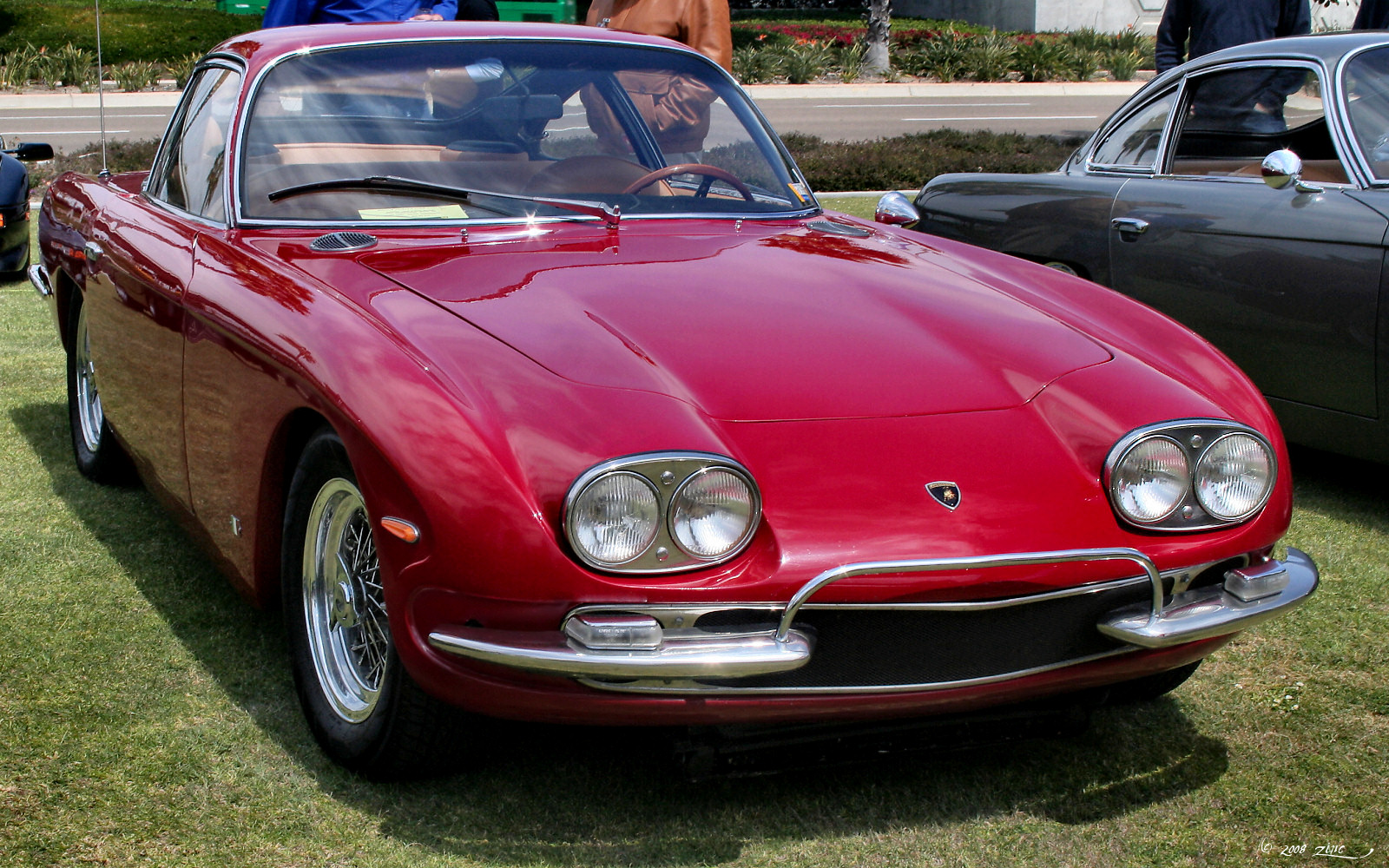
The Lamborghini 400 GT is the front-engined V12 grand tourer that Lamborghini built from 1966 to 1968 as the successor to the 350 GT. It was offered in two forms: the 400 GT "Interim", a 350 GT with a larger 3.9-litre engine, and the 400 GT 2+2, with a new roofline and two small rear seats. In total 247 cars were made. In 1968 the Islero replaced it.
In short
- Presented at the Geneva motor show in 1966 as the 400 GT 2+2; built from 1966 to 1968.
- 3,929 cc Lamborghini V12 with 235 kW (320 hp) and a five-speed gearbox designed by Lamborghini.
- 224 cars of the 400 GT 2+2 and 23 of the 400 GT Interim (three of them with aluminium bodies).
- Bodywork by Carrozzeria Touring, then by Marazzi after Touring's bankruptcy in 1967; successor: Islero.
Lamborghini 400 GT at a glance
| Specification | Lamborghini 400 GT 2+2 |
|---|---|
| Production | 1966–1968 |
| Cars built | 224 (plus 23 400 GT Interim) |
| Body | two-door 2+2 coupé, steel |
| Coachbuilder | Carrozzeria Touring, later Marazzi |
| Layout | front engine, rear-wheel drive |
| Engine | 3,929 cc Lamborghini V12 |
| Power | 235 kW (320 hp) |
| Gearbox | five-speed manual, designed by Lamborghini |
| Kerb weight | 1,472 kg |
| Dimensions | 4,470 × 1,727 × 1,257 mm, wheelbase 2,550 mm |
| Predecessor / successor | 350 GT / Islero |
All Lamborghini models are in the Lamborghini catalogue.
From the 350 GT to the 400 GT
The 350 GT, built from May 1964 to 1966 in 120 examples, was the first production car made by Lamborghini. Its V12 had been designed by Giotto Bizzarrini; after he left in 1963, Giampaolo Dallara developed the production version with Paolo Stanzani and test driver Bob Wallace. Touring built the 350 GT body with its Superleggera method, aluminium panels on a tubular frame. The 3,464 cc engine produced 206 kW (280 hp) at 6,500 rpm, and the car reached 254 km/h.
The successor started in a simple way. The 400 GT "Interim" was, according to Wikipedia, the older 350 GT fitted with the larger 3,929 cc V12. Only 23 were built, and three of them had aluminium bodywork.
The real new model was the 400 GT 2+2, presented at the Geneva motor show in 1966. All three cars — 350 GT, 400 GT Interim and 400 GT 2+2 — share the same 2,550 mm wheelbase.

Body and the extra seats
The 400 GT 2+2 has a steel body with a different roofline, larger side windows and a smaller rear window than the 350 GT. Its beltline is 66 mm higher and its floor slightly lower. These changes made room for two seats in the back, where the 350 GT had space only for luggage or an optional third seat.
Carrozzeria Touring revised the body for the 2+2 and built the first cars. When Touring went bankrupt in 1967, Marazzi took over production of the bodies.
| Dimension | Lamborghini 400 GT 2+2 |
|---|---|
| Length | 4,470 mm |
| Width | 1,727 mm |
| Height | 1,257 mm |
| Wheelbase | 2,550 mm |
| Kerb weight | 1,472 kg |
Engine and gearbox
The engine is a 3,929 cc Lamborghini V12 with 235 kW (320 hp), mounted at the front and driving the rear wheels. An important improvement was the gearbox. The 400 GT has a five-speed manual transmission designed by Lamborghini, with Porsche-type synchromesh on all gears, which Wikipedia says greatly improved the drivetrain. The original tyres were Pirelli Cinturato 205 VR15 (CN72).
| Version | Built | Body | Engine |
|---|---|---|---|
| 400 GT Interim | 23 | 350 GT body (3 in aluminium) | 3,929 cc V12 |
| 400 GT 2+2 | 224 | new steel 2+2 body | 3,929 cc V12 |
| Specification | 350 GT | 400 GT 2+2 |
|---|---|---|
| Years | 1964–1966 | 1966–1968 |
| Built | 120 | 224 |
| Engine | 3,464 cc V12 | 3,929 cc V12 |
| Power | 206 kW (280 hp) | 235 kW (320 hp) |
| Seats | 2 (+1 optional) | 2+2 |

Special bodies: Monza and Flying Star II
Two one-off cars were built on the running gear of the 400 GT. The 400 GT Monza is a two-seater made in 1966 by Neri and Bonacini on a 350 GT chassis (number 01030) with the 400 GT V12. It was shown at the Barcelona motor show in 1967 and sold there to a Spanish buyer.
The Flying Star II was a concept car built by Carrozzeria Touring on the 400 GT.

Successor: the Islero
In 1968 the 400 GT was replaced by the Islero, a rebodied 400 GT designed by Mario Marazzi of Carrozzeria Marazzi — the company that had taken over 400 GT body production after Touring's bankruptcy. The Islero kept the 3,929 cc V12, rated at about 243 kW (330 PS), and the Islero S of 1969 had about 261 kW (350 bhp). Lamborghini built 125 Isleros and 100 Islero S cars in 1968 and 1969. The name comes from the fighting bull that killed the matador Manolete in 1947. Ferruccio Lamborghini and his brother Edmondo both drove Isleros.
| Specification | 400 GT 2+2 | Islero | Islero S |
|---|---|---|---|
| Years | 1966–1968 | 1968–1969 | 1969 |
| Built | 224 | 125 | 100 |
| Engine | 3,929 cc V12 | 3,929 cc V12 | 3,929 cc V12 |
| Top speed | — | 248 km/h | 259 km/h |
Legacy
The 400 GT added a larger engine, two rear seats and a Lamborghini-designed gearbox to the formula of the 350 GT. Many 350 GTs were later fitted with the 400 GT engine. With 247 cars built, it continued the company's front-engined V12 line until the Islero replaced it in 1968. More about the company is in our history of Lamborghini.

Lamborghini 400 GT in our rankings
- No. 42 of 94 · Most powerful cars of the 1960s (235 kW · top 46%)
- No. 400 of 859 · Most powerful cars (235 kW · top 47%)
- No. 80 of 127 · Most powerful Italian cars (235 kW · top 63%)
- No. 217 of 313 · Most powerful coupes (235 kW · top 70%)
- No. 824 of 912 · Longest-running car nameplates (2 years · top 96%)
More powerful than 54% of ranked cars of the 1960s in the 1CARS catalog (No. 42 of 94).
FAQ
How many Lamborghini 400 GTs were built?
247: 224 of the 400 GT 2+2 and 23 of the 400 GT Interim.
What is the difference between the 400 GT Interim and the 400 GT 2+2?
The Interim is a 350 GT body and chassis with the larger 3.9-litre engine. The 2+2 has a new steel body with a higher roofline and two small rear seats.
What engine does the Lamborghini 400 GT have?
A 3,929 cc Lamborghini V12 with 235 kW (320 hp), combined with a five-speed gearbox designed by Lamborghini.
What replaced the Lamborghini 400 GT?
The Lamborghini Islero, in 1968.
Data sources
Data checked by an editor against the sources below.