 Lamborghini Urraco
Specs, engines and history
Published Sources (1) Report an error
By Felix Hartmann, Automotive Technology & EV Contributor
- Built
- 1972–1979
- Top power
- 184 kW (250 PS)
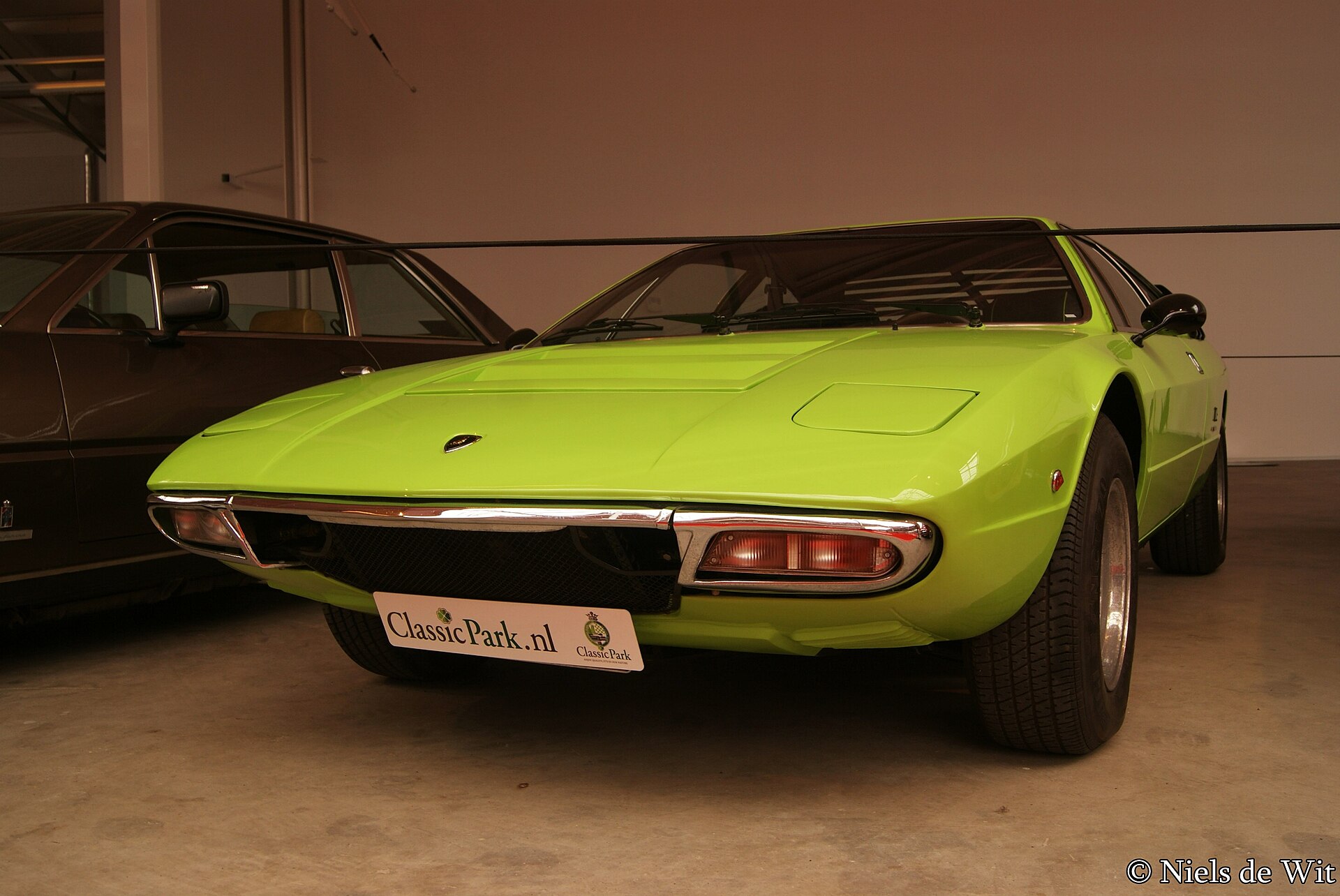
The Lamborghini Urraco is a compact mid-engined 2+2 coupé with a V8 engine, built in Sant'Agata Bolognese from 1972 to 1979. Shown as a prototype at the Turin Motor Show in 1970, it was meant to be a more affordable Lamborghini below the V12 models and to compete with cars such as the Ferrari Dino, the Maserati Merak and the Porsche 911. It was Lamborghini's first V8 car, and its basic design lived on in the Silhouette and the Jalpa.
In short
- Built for the 1972–1979 model years; about 790 cars: 520 P250, 190 P300 and 77 P200 according to Wikipedia.
- Transverse mid-mounted V8 of 2.0, 2.5 or 3.0 litres: from 134 kW (182 PS) in the P200 to 184 kW (250 PS) in the P300.
- Body designed by Marcello Gandini at Bertone, with room for two small rear seats.
- Top speeds from 215 km/h (P200) to 260 km/h (P300).
Lamborghini Urraco at a glance
| Specification | Lamborghini Urraco |
|---|---|
| Production | 1972–1979, Sant'Agata Bolognese (Italy) |
| Versions | P200, P250 (and P250 S), P300; P111 for the USA |
| Cars built | about 790 |
| Body | two-door 2+2 coupé |
| Engine | V8 of 1,994 cc, 2,463 cc or 2,996 cc, transverse mid-engine |
| Power | 134 kW (182 PS) to 184 kW (250 PS) |
| Gearbox | five-speed manual |
| Kerb weight | 1,250–1,300 kg |
| Dimensions | 4,250 mm long, 1,760 mm wide, 1,160 mm high, 2,450 mm wheelbase |
| Successors | Silhouette, Jalpa |
The Urraco was built alongside the V12 Miura and Countach and the front-engined grand tourers. All models are listed in the Lamborghini catalogue, and the story of the company is told in our history of Lamborghini.
An affordable Lamborghini: history
By the end of the 1960s Lamborghini sold expensive V12 cars only. To reach more buyers, the company planned a smaller, less expensive model with a V8 engine and room for four, and it presented the prototype at the Turin Motor Show in 1970. Like the Miura, the new car took its name from the world of bullfighting: Urraco is the name of a line of fighting bulls bred by the Miura family.
Production started two years after the show, in 1972, with the P250. Across the whole production run, Wikipedia counts 791 cars.
Design
The body was designed by Marcello Gandini, then at Bertone, who had also drawn the Miura and the Countach. The Urraco is compact — 4,250 mm long and only 1,160 mm high — with the engine mounted crosswise behind the seats. Despite the mid-engine layout, Gandini found space for two small rear seats, which made the Urraco a 2+2 like the Ferrari Dino 308 GT4 that competed with it.
The later P250 S brought more luxury: full leather upholstery, tinted electric windows and optional metallic paint. About 10 per cent of Urracos were built with right-hand drive; the great majority had left-hand drive. The P250 for the United States, known as P111, can be recognised by its larger front bumpers.

Engines and versions
The Urraco used Lamborghini's first V8 engine, mounted transversely behind the cabin and combined with a five-speed manual gearbox. The first engines had a single overhead camshaft per bank; the 3.0-litre engine of the P300 had a revised cylinder head with two chain-driven camshafts per bank.
| Version | Displacement | Power | Torque | 0–100 km/h | Top speed | Built |
|---|---|---|---|---|---|---|
| P200 | 1,994 cc | 134 kW (182 PS) at 7,500 rpm | 176 Nm | 7.2 s | 215 km/h | 77 |
| P250 | 2,463 cc | 162 kW (220 PS) at 7,500 rpm | 220 Nm | 6.9 s | 240 km/h | 520 |
| P300 | 2,996 cc | 184 kW (250 PS) at 7,500 rpm | 265 Nm | 5.6 s | 260 km/h | 190 |
The P250 was the first and most common version. A version for the United States, the P250 P111, had larger front bumpers, emissions equipment and less power; 21 were made.
The P200 was built for the Italian market. In Italy, cars with engines over two litres were taxed at a VAT rate of 38 per cent, so Lamborghini reduced the bore to bring the engine down to 1,994 cc. Only 77 were built.
The P250 S, introduced in 1973, added luxury features and, on cars without emissions equipment, Weber 40 DCNF carburettors.
The P300, introduced in 1974, was the most powerful Urraco. Its bigger engine, with twin overhead camshafts per bank and chain drive, produced 184 kW (250 PS) and allowed a top speed of 260 km/h.
The three engines differ mainly in bore and stroke: 77.4 × 53 mm for the P200, 86 × 53 mm for the P250 and 86 × 64.5 mm for the P300. The compression ratio is 8.6:1 for the two-litre engine and 10.5:1 for the larger ones. All three versions share the same body, 4,250 mm long and 1,760 mm wide on a 2,450 mm wheelbase, and weigh between 1,250 and 1,300 kg.

Rivals
The Urraco entered a busy class. The Ferrari Dino 308 GT4, also a mid-engined V8 2+2, appeared in 1973; the Maserati Merak was another Italian mid-engined 2+2; and the Porsche 911 offered a rear-engined alternative. Against these rivals the Urraco was built in small numbers.
Legacy
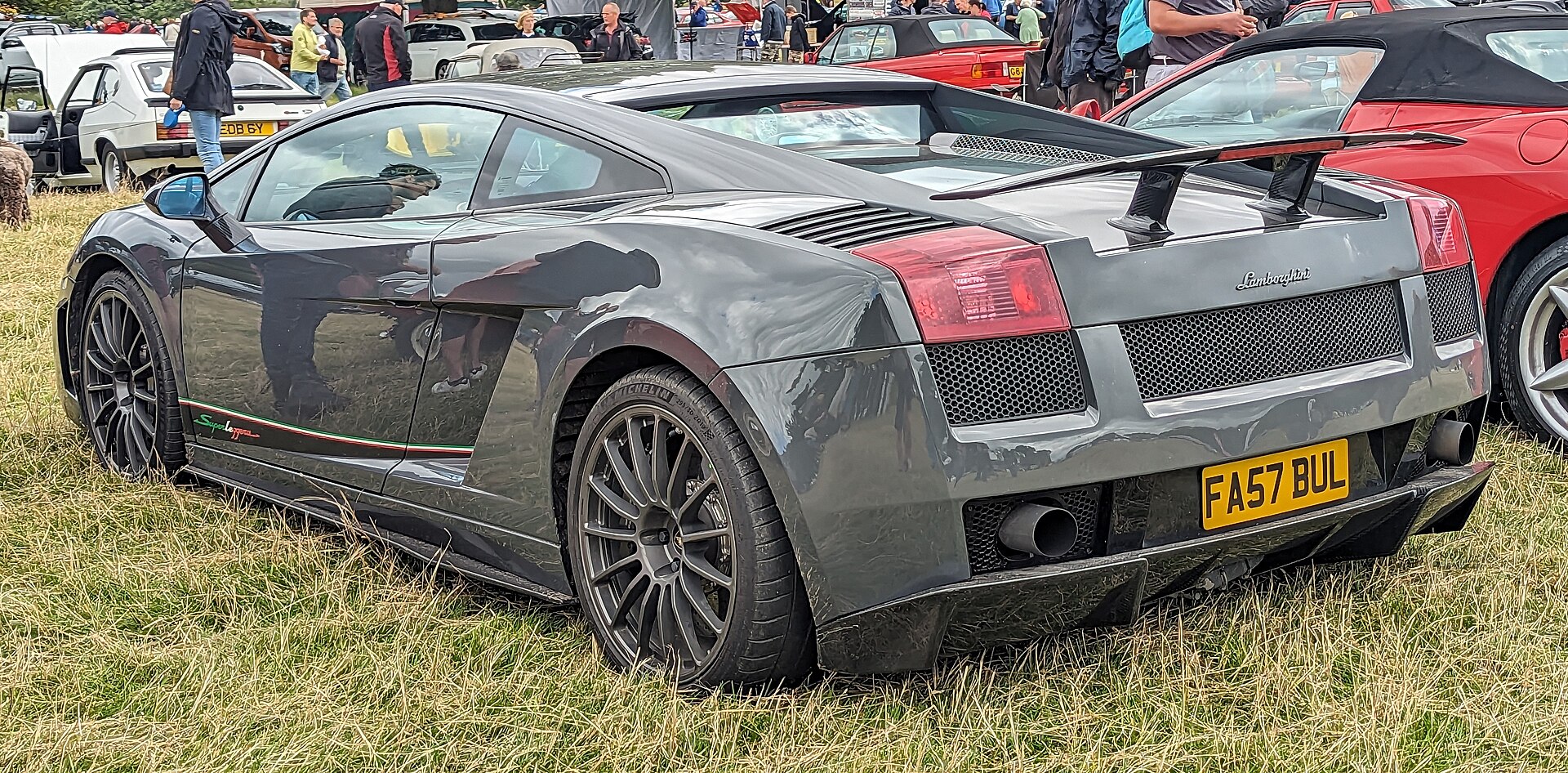
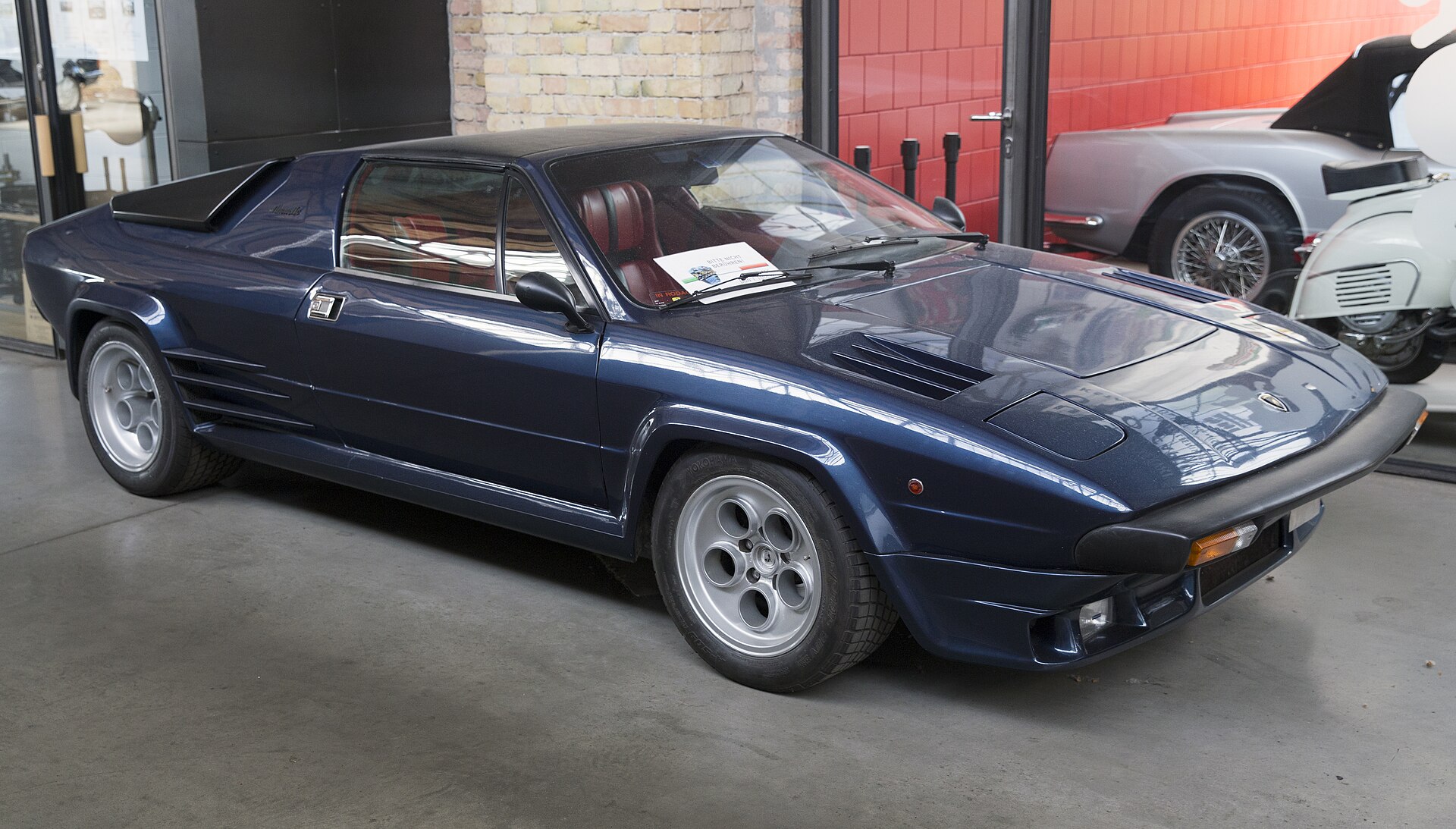
The Urraco never sold in large numbers, but it established Lamborghini's line of V8 cars. Its chassis and engine were the basis of the Silhouette, which added a removable roof panel, and of the Jalpa of the 1980s with a 3.5-litre V8. That line ended with the Jalpa; Lamborghini's next smaller model was the V10-engined Gallardo (see the Lamborghini Gallardo).

Photo gallery

Lamborghini Urraco in our rankings
- No. 52 of 88 · Most powerful cars of the 1970s (184 kW · top 60%)
- No. 493 of 912 · Longest-running car nameplates (7 years · top 60%)
- No. 518 of 859 · Most powerful cars (184 kW · top 61%)
- No. 97 of 127 · Most powerful Italian cars (184 kW · top 77%)
- No. 255 of 313 · Most powerful coupes (184 kW · top 82%)
More powerful than 40% of ranked cars of the 1970s in the 1CARS catalog (No. 52 of 88).
FAQ
What does Urraco mean?
It is the name of a line of fighting bulls bred by the Miura family, following Lamborghini's tradition of bull-related names.
How many Lamborghini Urracos were built?
Wikipedia gives 791 cars: 520 P250, 190 P300 and 77 P200.
What engine does the Urraco have?
A transverse mid-mounted V8 of 2.0, 2.5 or 3.0 litres with 134–184 kW (182–250 PS).
What replaced the Urraco?
The Silhouette, with a removable roof panel, and later the Jalpa with a 3.5-litre V8.
How fast is the Lamborghini Urraco?
According to Wikipedia, the top speed ranges from 215 km/h for the P200 to 260 km/h for the P300.
Data sources
Data checked by an editor against the sources below.