 Ferrari 330
All generations, specs and history
Published Sources (1) Report an error
By Felix Hartmann, Automotive Technology & EV Contributor
- Built
- 1963–1968
- Generations
- 3
- Top power
- 220 kW (299 PS)
Timeline
330 generations
Click a generation for its own page
GT 2+2 and GTC / GTS overlapped in 1966–1967, so GTC / GTS sits on a second lane
- 330 America 1963–1964 · Coupe · 220 kW (299 PS)
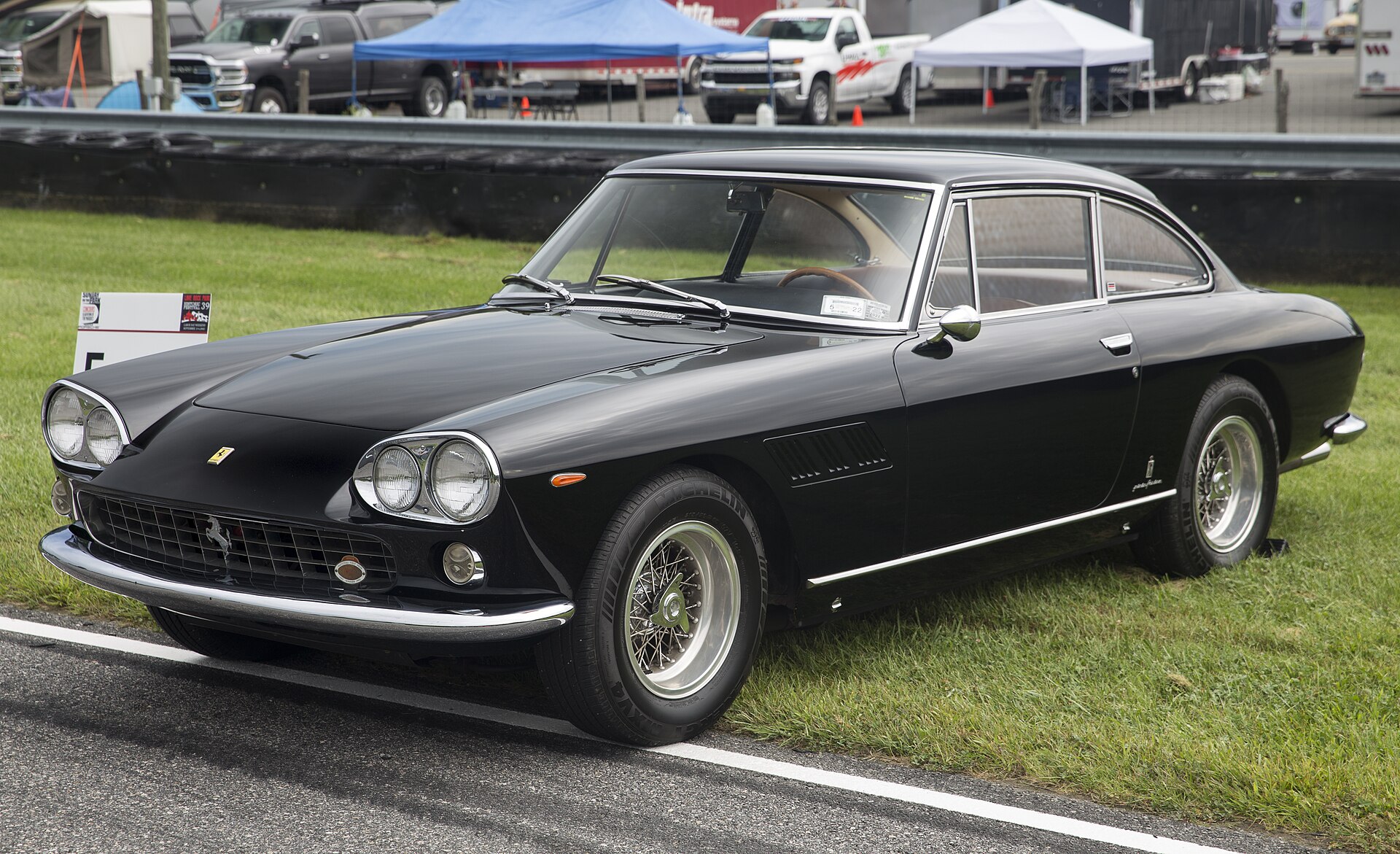
- 330 GT 2+2 1964–1967 · Coupe · 220 kW (299 PS)
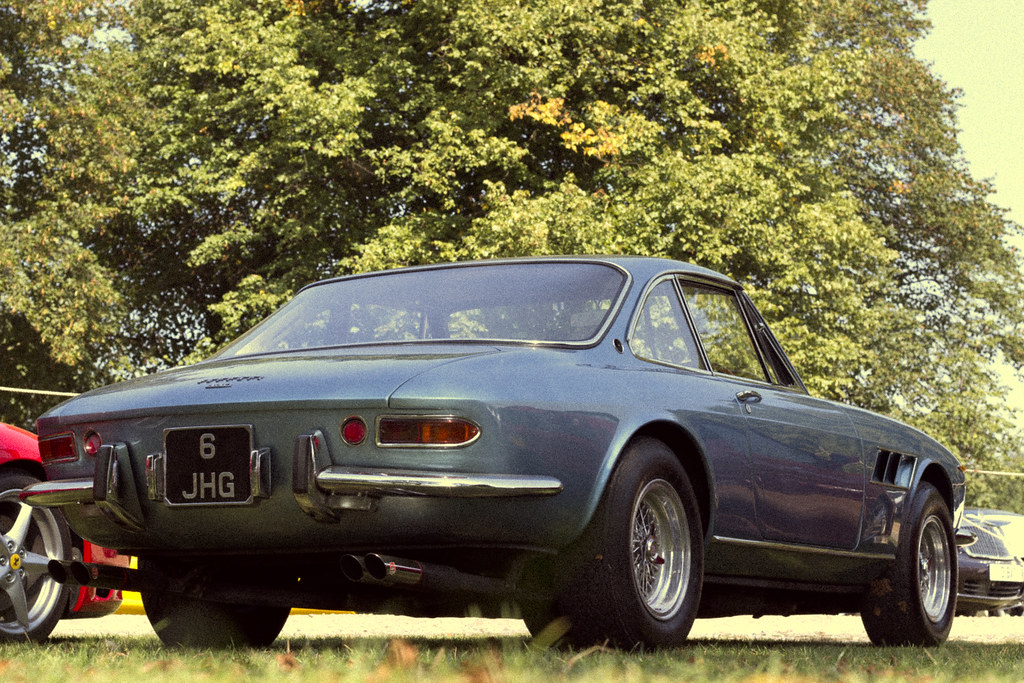
- 330 GTC / GTS 1966–1968 · Coupe · 220 kW (299 PS)
Newest first · 3 generations since 1963
-
1966
-
1964
- 1963 America 1963–1964 · Coupe · 220 kW (299 PS)


All generations by year: 330 GTC / GTS (1966–1968) · 330 GT 2+2 (1964–1967) · 330 America (1963–1964)
Which one is mine?
Pick the year of first registration to see which generation it is.
- 330 GTC / GTS 1966–1968
- 330 GT 2+2 1964–1967
- 330 America 1963–1964
The Ferrari 330 is a family of front-engined V12 road cars built from 1963 to 1968, all using the same 4.0-litre engine. It includes the 330 America of 1963, the four-seat 330 GT 2+2 and the two-seat 330 GTC coupé and 330 GTS spider of 1966. With about 1,800 cars, the 330 range helped Ferrari move from the 250 era to the more comfortable, more powerful grand tourers of the late 1960s.
In short
- Road cars built 1963–1968: 330 America (50 cars), 330 GT 2+2 (about 1,080–1,099), 330 GTC (about 600) and 330 GTS (about 100).
- 3,967 cc V12 (Tipo 209 in the America): 220 kW (300 PS) at 6,600 rpm in all versions.
- 330 GT 2+2 with four-speed gearbox and overdrive (Series I), then five-speed (Series II); GTC and GTS with independent rear suspension.
- Bodies by Pininfarina; the name 330 was also used for the P3 and P4 sports prototypes.
Ferrari 330 at a glance
| Model | Years | Body | Power | Built |
|---|---|---|---|---|
| 330 America | 1963 | 2+2 coupé (250 GT/E body) | 220 kW (300 PS) at 6,600 rpm | 50 |
| 330 GT 2+2 Series I | 1964–1965 | 2+2 coupé, four headlights | 220 kW (300 PS) | 625 |
| 330 GT 2+2 Series II | 1965–1967 | 2+2 coupé, two headlights | 220 kW (300 PS) | 455 |
| 330 GTC | 1966–1968 | two-seat coupé | 220 kW (300 PS) | about 600 |
| 330 GTS | 1966–1968 | two-seat spider | 220 kW (300 PS) | about 100 |
The 330 follows the 250 GT family and precedes the 365 series; earlier Ferraris of the period on 1CARS include the 250 GT Tour de France. All models are listed in the Ferrari catalogue.
The 330 America (1963)
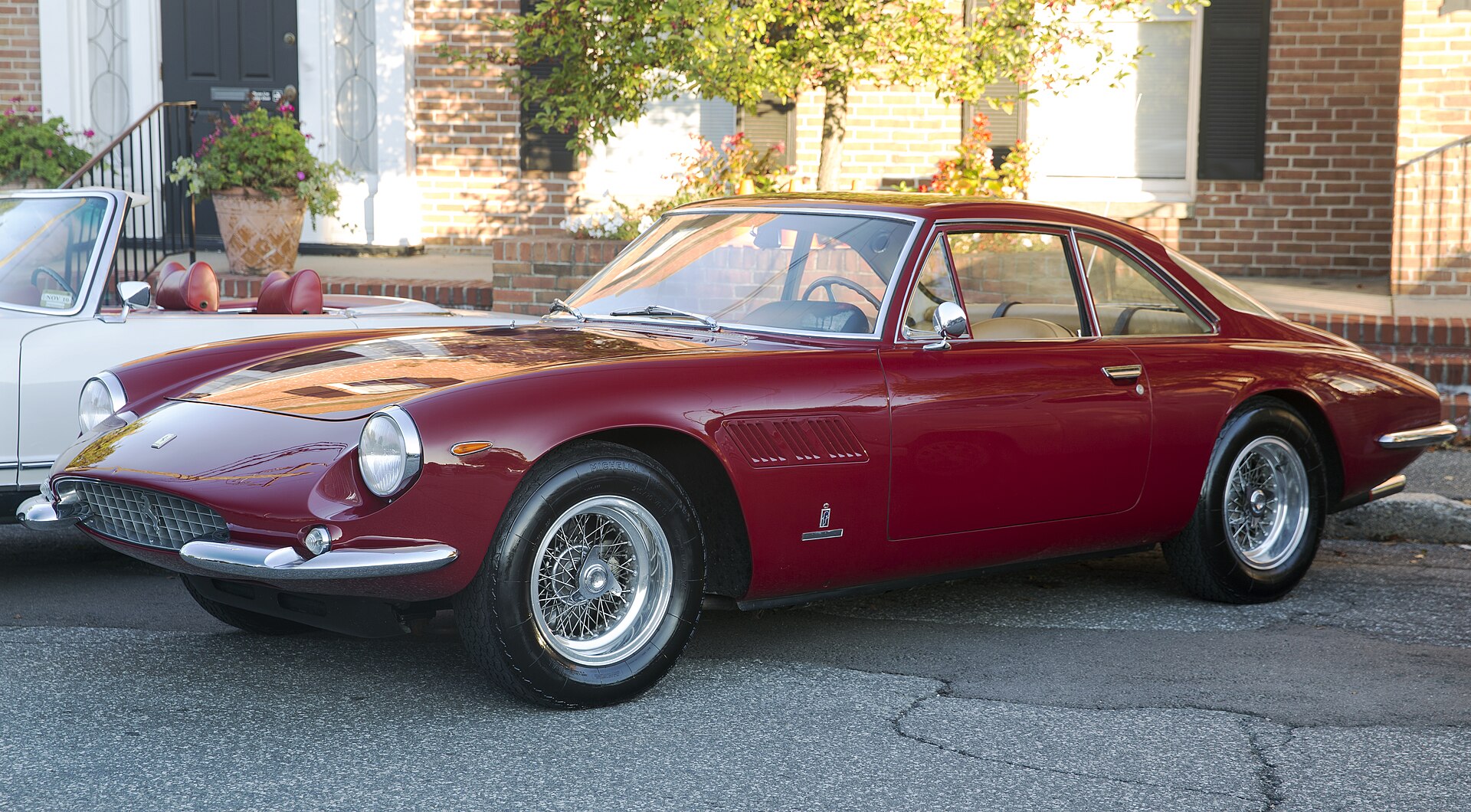
The first car with the new engine was the 330 America, built in late 1963. It used the chassis and body of the 250 GT/E 2+2 and looked almost identical to the Series III 250 GT/E — some cars carried an "America" badge on the boot. Under the bonnet, however, was the new Tipo 209 V12 of 3,967 cc with 220 kW (300 PS) at 6,600 rpm. Fifty were built, on Pirelli Cinturato 185VR15 tyres, before the larger 330 GT 2+2 took over.
The 330 GT 2+2 (1964–1967)
The 330 GT 2+2 was introduced in January 1964 and first shown at the Brussels motor show. Its wheelbase was 50 mm longer than the 250's, giving more room for the four seats. It had Koni adjustable dampers and dual-circuit Dunlop disc brakes on all four wheels.
Series I (1964–1965). The first cars are easy to recognise by their four headlights. They had a four-speed gearbox with overdrive and Pirelli Cinturato 205VR15 tyres. 625 were built, including 125 so-called "interim" cars.
Series II (1965–1967). The second series returned to two headlights and received a five-speed gearbox, alloy wheels and optional air-conditioning and power steering. 455 were built before the 365 GT 2+2 replaced the model in 1967.
The two series add up to 1,080 cars according to Wikipedia's text, while its infobox gives 1,099.


The 330 GTC and 330 GTS (1966–1968)
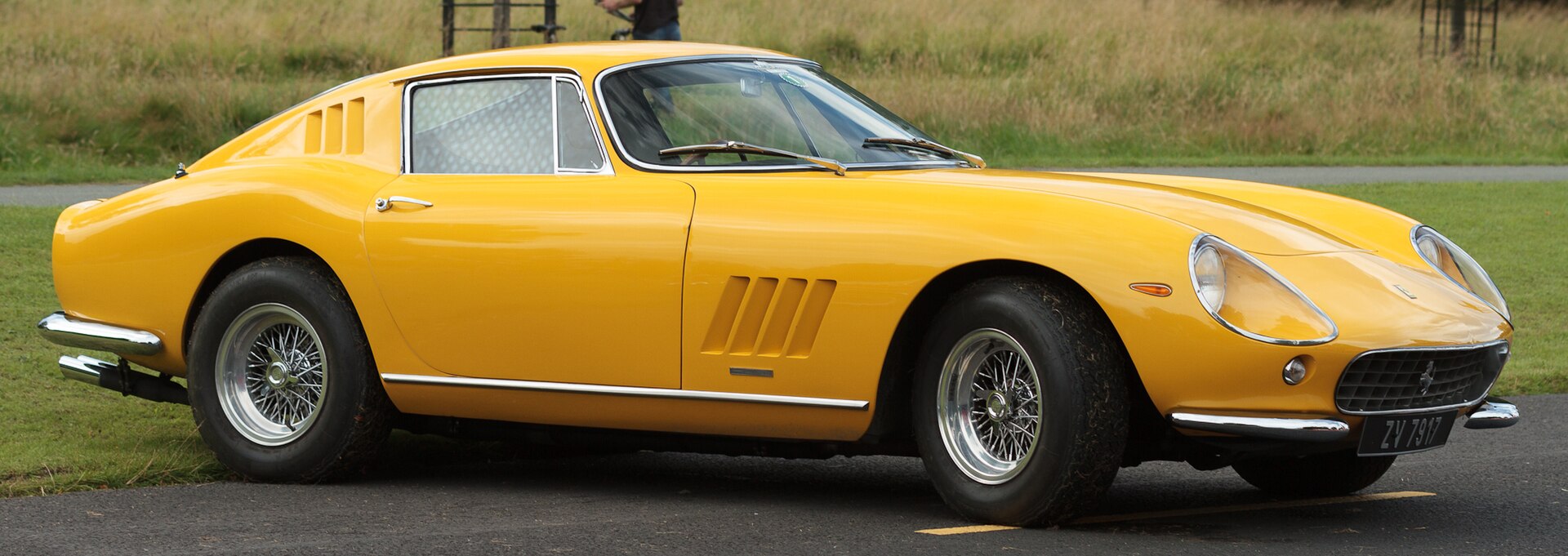
The 330 GTC, shown at the Geneva motor show in March 1966, is a two-seat coupé with a body designed by Pininfarina. It uses the short wheelbase and the independent rear suspension of the 275, and the cars ran on Michelin XWX 205VR14 tyres. With 220 kW (300 PS) from the 4.0-litre V12, it was more refined and quieter than earlier Ferraris. About 600 were built. In 1966 Pininfarina also made four GTC Speciale coupés, shown at the Brussels motor show in 1967.
The 330 GTS, presented at the Paris motor show in October 1966, is the open spider version with the same chassis and drivetrain. Only about 100 were made.
| Parameter | Metric | Imperial |
|---|---|---|
| Engine capacity | 3,967 cc | 242 cu in |
| Power | 220 kW (300 PS) at 6,600 rpm | — |
| GTC tyres | 205VR14 | — |
Timeline of the 330 road cars
| Year | Event |
|---|---|
| 1963 | 330 America: 4.0-litre V12 in the 250 GT/E body, 50 cars |
| 1964 | 330 GT 2+2 shown at the Brussels motor show in January |
| 1965 | Series II with two headlights and five-speed gearbox |
| 1966 | 330 GTC at Geneva (March) and 330 GTS at Paris (October); four GTC Speciale coupés |
| 1967 | 365 GT 2+2 replaces the 330 GT 2+2 |
Special bodies
Several one-off cars were built on 330 chassis. A 330 GT 2+2 received a body in the style of the 500 Superfast for Prince Bernhard of the Netherlands. A 1965 Series II was converted into a shooting brake by Luigi Chinetti Jr., Bob Peak and the coachbuilder Vignale.

The 330 name in racing
Ferrari also used the 330 designation for sports racing cars of the 1960s, including the 330 P3 and 330 P4. The 330 P4 produced 336 kW (450 hp) at 8,000 rpm, weighed 792 kg and reached about 320 km/h. These racing cars are not part of the road-car family described above. The 330 P4's one-two-three finish at Daytona in 1967 later inspired the Ferrari Daytona SP3.

Legacy
The 330 range marked a step up for Ferrari's road cars: more displacement, more comfort and, with the GTC and GTS, independent rear suspension in an elegant two-seater. It also paved the way for the 365 models that followed. For the company's history, see our history of Ferrari.
Photo gallery

Ferrari 330 evolution in numbers
Did you know?
- The Ferrari 330 ran for 5 years, from 1963 to 1968, over 3 generations in our catalog.
- The longest-running generation is the 330 GT 2+2 (1964–1967): 3 years.
Most powerful version, kW
Figures from the 1cars catalog: power is the strongest version of each generation; generations without the figure are left out.
Ferrari 330: first vs latest generation
| Spec | 330 America | 330 GTC / GTS | Change |
|---|---|---|---|
| Years | 1963–1964 | 1966–1968 | 3 years apart |
| Most powerful version | 220 kW (299 PS) | 220 kW (299 PS) | same (0%) |
Oldest and newest generation in the 1cars catalog. Power is the strongest version of each; other rows are shown only when both generations have the figure.
Image credits · Photos from Wikimedia Commons under free licences
- Ferrari 330 GTC / GTS · Photo: Spanish Coches / Flickr, CC BY 2.0
Ferrari 330 in our rankings
- No. 443 of 859 · Most powerful cars (220 kW · top 52%)
- No. 51 of 94 · Most powerful cars of the 1960s (220 kW · top 55%)
- No. 83 of 127 · Most powerful Italian cars (220 kW · top 66%)
- No. 143 of 345 · Cars with the most generations (3 generations · top 68%)
- No. 227 of 313 · Most powerful coupes (220 kW · top 73%)
- No. 634 of 912 · Longest-running car nameplates (5 years · top 77%)
More powerful than 48% of ranked cars in the 1CARS catalog (No. 443 of 859).
FAQ
What does "330" mean on a Ferrari?
It refers to the approximate swept volume of one cylinder, about 330 cc, of the 4.0-litre V12.
How many Ferrari 330s were built?
About 1,800 road cars: 50 America, about 1,080–1,099 GT 2+2, about 600 GTC and about 100 GTS.
What is the difference between the 330 GTC and 330 GTS?
The GTC is a two-seat coupé and the GTS the open spider version. Both use the same chassis and 220 kW (300 PS) V12.
How do you recognise a 330 GT 2+2 Series I?
By its four headlights. The Series II of 1965–1967 has two headlights and a five-speed gearbox.
Data sources
Data checked by an editor against the sources below.