 Ferrari 500 Superfast
Specs, engines and history
Published Sources (1) Report an error
By Felix Hartmann, Automotive Technology & EV Contributor
- Built
- 1964–1966
- Top power
- 294 kW (400 PS)
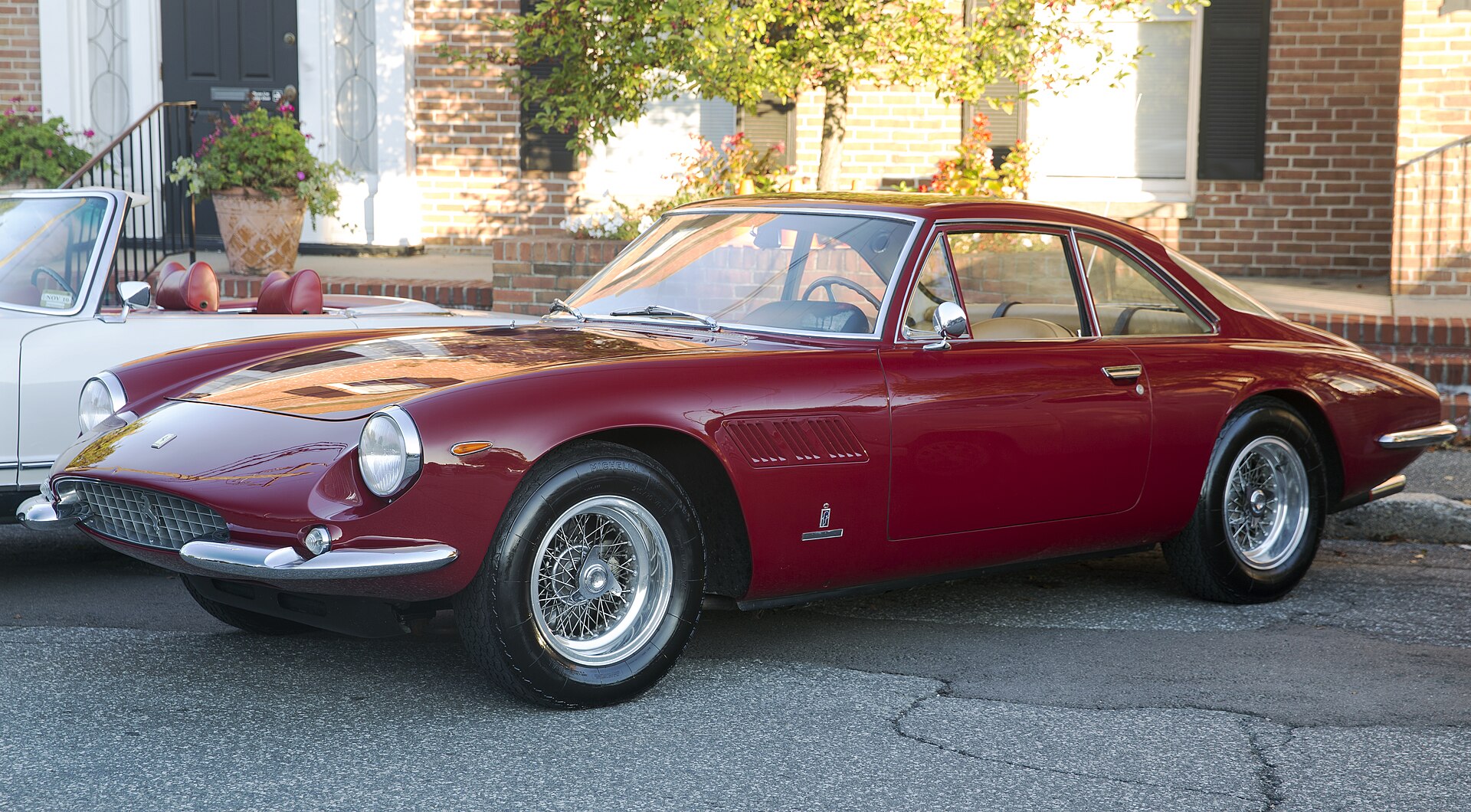
The Ferrari 500 Superfast is a two-door grand tourer that Ferrari built in Maranello from 1964 to 1966, with coachwork by Pininfarina. It was the company's most luxurious and most expensive car of the period and the final model of the America line of big-engined road Ferraris. Its five-litre V12 was used in no other Ferrari, and only about three dozen cars were made, in two series.
In short
- Shown at the Geneva motor show in March 1964; built until 1966, the last low-volume coupé of the America and Superamerica family.
- 37 cars according to Wikipedia and evo (25 Series I, 12 Series II); Ferrari lists 36 chassis numbers.
- 4,963 cc V12 with about 294 kW (394 hp) at 6,500 rpm and three twin-choke Weber carburettors.
- Four-speed gearbox with overdrive in the Series I, a true five-speed in the Series II; weight 1,397 kg (evo).
Ferrari 500 Superfast at a glance
| Specification | Ferrari 500 Superfast |
|---|---|
| Production | 1964–1966, Maranello (Italy) |
| Cars built | 37 (Wikipedia, evo); 36 chassis listed by Ferrari |
| Body | two-door coupé by Pininfarina, steel panels |
| Engine | 4,963 cc V12, one overhead camshaft per bank |
| Power | about 294 kW (394 hp) at 6,500 rpm; Ferrari quotes 298 kW (400 bhp) |
| Torque | about 476 Nm at 4,750 rpm (evo) |
| Gearbox | four-speed with overdrive (Series I), five-speed (Series II) |
| Wheelbase | 2,650 mm |
| Weight | 1,397 kg (evo) |
| Predecessor / successor | 400 Superamerica / 365 California |
The 500 Superfast closed the family that began with the 340 America of 1950. Ferrari's road models of all eras are listed in the Ferrari catalogue, and an early member of the same V12 lineage is described in our Ferrari 166 Inter article. For the wider story of the company, read our history of Ferrari.
A flagship for royalty and film stars
By the early 1960s Ferrari had sold its exclusive America and Superamerica coupés in tiny numbers to very wealthy buyers. evo counts only 19 cars of the 400 Superamerica by the end of 1963. The last 400 appeared in January 1964, and two months later the 500 Superfast took its place on the Ferrari stand at Geneva.
The name was new for a production Ferrari. "Superfast" had earlier been used only for one-off show cars, and Wikipedia describes the 500 as the first series model to carry it. The number refers to the engine size of five litres.
The car was priced far above any other Ferrari. Ferrari itself says that it cost about as much as two Rolls-Royces when new. The customers matched the price. Ferrari and evo name the Shah of Iran, who bought two cars within four months in 1965, the actor Peter Sellers, the Aga Khan and Prince Bernhard of the Netherlands. For Prince Bernhard the factory also built a 330 GT 2+2 with Superfast-style bodywork as a one-off.
The five-litre V12
The engine was designed specially for the model and combined ideas from Ferrari's two V12 families. evo explains that it used the long block of Aurelio Lampredi's V12 of 1950, with 108 mm between the bore centres. The cylinder heads came from the later short-block engine of Gioacchino Colombo, who also directed the conversion. Each bank has a single overhead camshaft, and the hemispherical combustion chambers are fed by three Weber 40 DCZ/6 carburettors.
| Figure | Ferrari 500 Superfast |
|---|---|
| Displacement | 4,963 cc |
| Power | about 294 kW (394 hp) at 6,500 rpm (Wikipedia, evo) |
| Torque | about 476 Nm at 4,750 rpm (evo) |
| Carburettors | three Weber 40 DCZ/6 |
| Ignition | twin coils |
| Top speed | claimed 170 mph, about 274 km/h (evo) |
evo calls the official peak power "probably optimistic", and it reports a claimed top speed of about 274 km/h. The speedometer reads to 180 mph, and the car could allegedly reach 174 mph. For comparison, the magazine notes that Jaguar's E-type of the same era was claimed at 150 mph.

Chassis and running gear
Under the body sits a tubular steel frame that is largely shared with the 400 Superamerica and has the same 2,650 mm wheelbase. At the front the car uses double wishbones, coil springs and an anti-roll bar. At the rear Ferrari kept a rigid axle on semi-elliptic leaf springs, located by a pair of radius arms and damped by telescopic shock absorbers.
Dunlop disc brakes are fitted at all four wheels, with separate hydraulic circuits for the front and the rear. The car rolls on Borrani wire wheels with knock-off hubs, measuring 7 × 15 inches. According to Ferrari, left- and right-hand drive were both available, and eight cars were built with right-hand drive.
Pininfarina body and cabin
The 400 Superamerica had grown out of Pininfarina's Aerodinamica concept of 1960, and the 500 Superfast kept its basic layout. Compared with the 400, the 500 Superfast has a cleaner flank without a side moulding, remodelled vents behind the front wheels and a recessed Kamm tail. The long, slim nose carries only a modest air intake, and a wraparound rear window lights the cabin.
Inside, evo describes a wood-fronted dashboard and binnacle, a wood-rimmed steering wheel with engraved alloy spokes, pleated leather seats, electric front windows and a long centre console with an armrest. Air conditioning was optional. Small rear seats could be specified in place of the luggage deck, although evo notes that they suit only small children.


Series I and Series II
The first 25 cars form the Series I. Most of them have a four-speed gearbox with a switchable overdrive on fourth gear, which gave the driver a fifth ratio. The remaining 12 cars, built from 1966, form the Series II and have a conventional five-speed gearbox.
| Specification | Series I | Series II |
|---|---|---|
| Cars | 25 | 12 |
| Gearbox | four-speed with overdrive | five-speed |
| Other changes | — | new clutch and pedals, different vents behind the front wheels |
The boundary is not perfectly clean. evo points out that chassis 6659 SF, a Series I car, was delivered with the five-speed gearbox of the Series II. The 500 Superfast was also the last Ferrari series whose chassis numbers carried letter suffixes, in this case "SF".

On the road
evo drove a right-hand-drive Series I car and found an engine that revs easily, with a precise throttle that makes heel-and-toe gearchanges a pleasure. The pull is assertive rather than violent and is strongest in the top third of the rev range. The steering is heavy at parking speeds and needs large inputs. The car rolls in tighter bends and feels big and driven by momentum. The magazine's verdict was a "rich if flawed Ferrari".
Legacy
The 500 Superfast ended Ferrari's tradition of coachbuilt V12 flagships offered in very small numbers. Wikipedia names the Ferrari 365 as its successor. Because so few were made, the cars are documented chassis by chassis, and Wikipedia's list also records which ones have changed hands at auction. One car, chassis 6345SF, was destroyed in a crash.
Ferrari 500 Superfast in our rankings
- No. 16 of 94 · Most powerful cars of the 1960s (294 kW · top 18%)
- No. 294 of 859 · Most powerful cars (294 kW · top 35%)
- No. 59 of 127 · Most powerful Italian cars (294 kW · top 48%)
- No. 160 of 313 · Most powerful coupes (294 kW · top 52%)
- No. 822 of 912 · Longest-running car nameplates (2 years · top 96%)
More powerful than 82% of ranked cars of the 1960s in the 1CARS catalog (No. 16 of 94).
FAQ
How many Ferrari 500 Superfast were built?
Wikipedia and evo give 37 cars, 25 in the first series and 12 in the second. Ferrari's own list contains 36 chassis numbers, from 05951SF to 08897SF.
What engine does the 500 Superfast have?
A unique 4,963 cc V12 that combined the long Lampredi block with Colombo cylinder heads, producing about 294 kW (394 hp).
How do the Series I and Series II cars differ?
Most Series I cars have a four-speed gearbox with overdrive, while the 12 Series II cars have a five-speed gearbox, a new clutch and revised vents.
Who bought the 500 Superfast?
Wealthy private clients. Ferrari and evo mention the Shah of Iran, Peter Sellers, the Aga Khan and Prince Bernhard of the Netherlands.
Data sources
Data checked by an editor against the sources below.