 Ferrari 212 Inter
Specs, engines and history
Published Sources (1) Report an error
By Felix Hartmann, Automotive Technology & EV Contributor
- Built
- 1951–1953
- Top power
- 114 kW (155 PS)
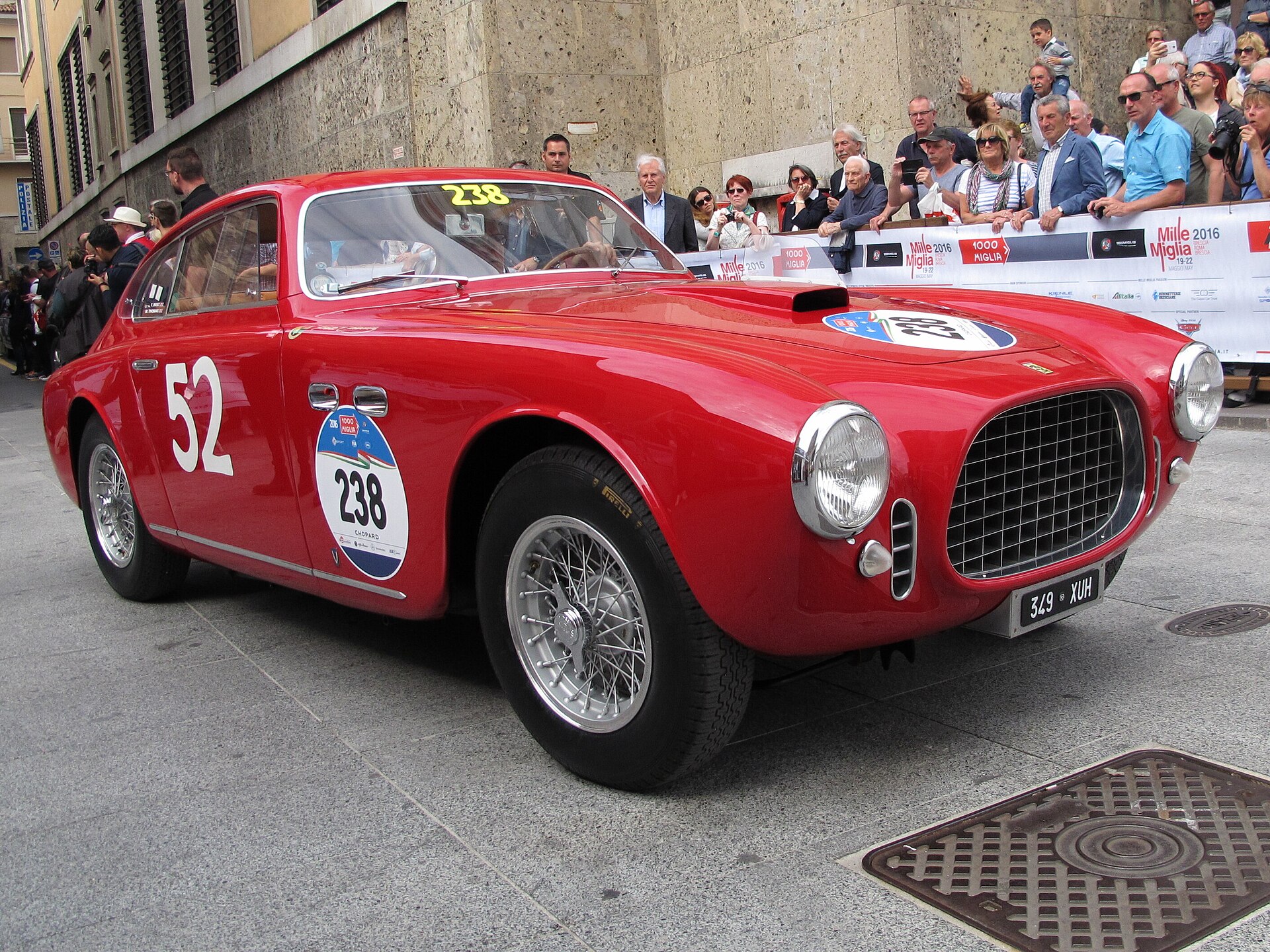
The Ferrari 212 Inter is an early Ferrari road car built in 1951 and 1952, a grand tourer with a 2.6-litre Colombo V12 in the front and bodies by several Italian coachbuilders. About 82 cars were made. It followed the 195 Inter, preceded the Ferrari 250 range, and it holds a special place in the company's history: a 212 Inter cabriolet was the first Ferrari ever bodied by Pinin Farina.
In short
- Built 1951–1952; about 82 cars, also known as the 212 Europa.
- 2,563 cc Colombo V12: 110 kW (150 PS) with one Weber carburettor; the 212 Export had three carburettors and 121 kW (165 PS).
- Five-speed manual gearbox, chassis similar to the 125 S, 2,600 mm wheelbase, kerb weight about 1,000 kg.
- Bodies by Vignale, Pinin Farina, Ghia, Touring and others; Vignale coupés finished first and second in the 1951 Carrera Panamericana.
At a glance: Ferrari 212 Inter
| Specification | Ferrari 212 Inter |
|---|---|
| Production | 1951–1952 |
| Cars built | about 82 |
| Body | coupé and cabriolet by various coachbuilders |
| Layout | front engine, rear-wheel drive |
| Engine | Colombo 2,563 cc V12, bore 68 mm |
| Power | 110 kW (150 PS); 212 Export 121 kW (165 PS) |
| Gearbox | five-speed manual |
| Suspension | double wishbones front, live rear axle |
| Kerb weight | about 1,000 kg (coupé) |
| Predecessor / successor | 195 Inter / Ferrari 250 |
The 212 Inter continued the early line of Ferrari road cars that began with models such as the Ferrari 166 Inter. The full range is in the Ferrari catalogue.
History of the Ferrari 212 Inter
Like other early Ferraris, the 212 took its name from the capacity of one cylinder in cubic centimetres. The 212, with a single-cylinder capacity of about 212 cc and a total of 2,563 cc, succeeded the 195 Inter. Two versions were offered: the 212 Inter and the more powerful 212 Export, which had a shorter wheelbase.
The Inter was produced in 1951 and 1952, and about 82 cars were built in total. It was replaced by the first models of the Ferrari 250 family.
The 195 Inter before it
The 212 Inter replaced the Ferrari 195 Inter, built in 1950 and 1951. The 195 Inter was a grand touring version of the 195 S sports racer, and only 27 were made, all with odd chassis numbers. Its bodies came mainly from Vignale (12 cars) and Ghia (11), with three by Touring and one by Motto.
The 195 Inter used a 2,341 cc version of the Colombo V12, with the bore enlarged from 60 to 65 mm, and produced 96 kW (130 PS) with a single Weber 36DCF carburettor. Its wheelbase was 2,500 mm. The 212 Inter, introduced at the Paris motor show in 1951, took the next step: a larger 2,563 cc engine with 110 kW (150 PS) and, in the Inter, a wheelbase of 2,600 mm.
| Specification | 195 Inter | 212 Inter |
|---|---|---|
| Years | 1950–1951 | 1951–1952 |
| Engine | 2,341 cc V12 | 2,563 cc V12 |
| Power | 96 kW (130 PS) | 110 kW (150 PS) |
| Wheelbase | 2,500 mm | 2,600 mm |
| Cars built | 27 | about 82 |
Coachbuilders and bodies
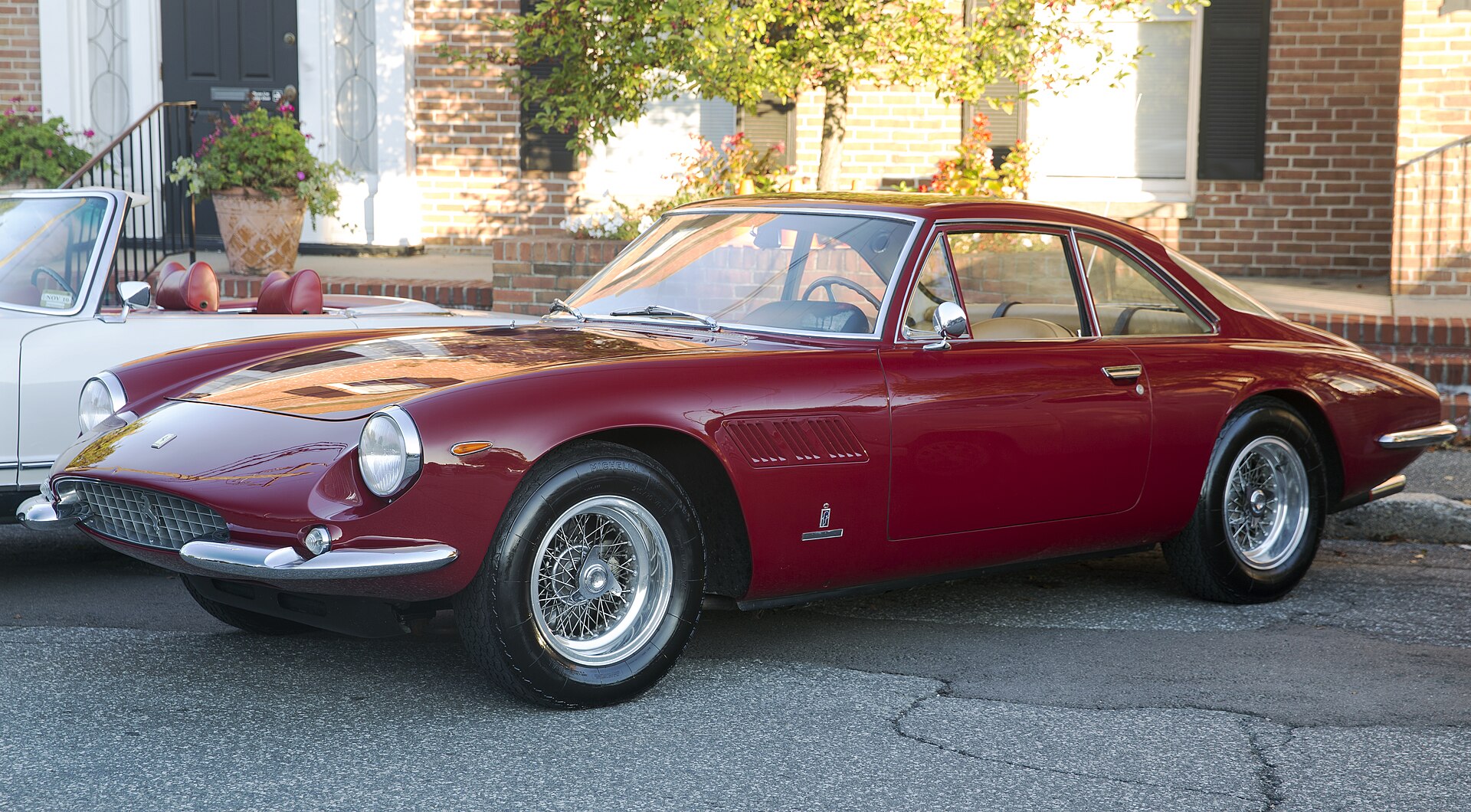
The bodies were made by outside coachbuilders; Wikipedia lists Vignale, Pinin Farina, Ghia, Touring, Ghia-Aigle and Stabilimenti Farina. The cars range from closed coupés to open cabriolets.
One car stands out in Ferrari's history: the 212 Inter cabriolet with chassis number 0177E was the first Ferrari bodied by Pinin Farina.
Other notable cars include chassis 0223EU, a one-off with a 2.7-litre engine on the longer Europa chassis and a Vignale coupé body drawn by Giovanni Michelotti, sometimes called the 225 Inter or 225 Europa. Chassis 0253EU, a 2.7-litre three-carburettor car with a Touring Superleggera barchetta body, was later bought by Ford for study and is now at the Petersen Automotive Museum.

Engine and chassis
The engine is the Colombo V12, named after its designer Gioacchino Colombo, here with 2,563 cc and a bore of 68 mm. In the Inter it breathes through a single Weber 36DCF carburettor and produces 110 kW (150 PS). The Export version has three Weber carburettors and 121 kW (165 PS). Improved cylinder heads added a further 4 kW (5 PS) in 1952.
| Version | Carburettors | Power | Wheelbase |
|---|---|---|---|
| 212 Inter | one Weber 36DCF | 110 kW (150 PS) | 2,600 mm |
| 212 Export | three Weber | 121 kW (165 PS) | 2,500 mm |
| 1952 update | improved heads | plus 4 kW (5 PS) | — |
Power goes to the rear wheels through a five-speed manual gearbox. The chassis is similar to that of the 125 S: double wishbones at the front and a live axle at the rear. The Inter's wheelbase of 2,600 mm is about 100 mm longer than the Export's, and a coupé weighs about 1,000 kg.

Performance
The British magazine Autocar tested what it described as a first production model, with the engine limited to 6,500 rpm because it was still new. It recorded a top speed of more than 187 km/h and 0–161 km/h in 22.5 seconds, and it noted that a fully run-in car would probably be faster.
Racing
The 212 was also raced. In the 1951 Carrera Panamericana in Mexico, two 212 coupés with Vignale bodies finished first and second, driven by Piero Taruffi and Luigi Chinetti and by Alberto Ascari and Luigi Villoresi.
Photo gallery

Ferrari 212 Inter in our rankings
- No. 663 of 859 · Most powerful cars (114 kW · top 78%)
- No. 114 of 127 · Most powerful Italian cars (114 kW · top 90%)
- No. 292 of 313 · Most powerful coupes (114 kW · top 94%)
- No. 816 of 912 · Longest-running car nameplates (2 years · top 96%)
More powerful than 22% of ranked cars in the 1CARS catalog (No. 663 of 859).
FAQ
How many Ferrari 212 Inters were built?
About 82 cars were built in 1951 and 1952, according to Wikipedia, with bodies by several coachbuilders.
What engine does the 212 Inter have?
A 2.6-litre Colombo V12 with a single Weber carburettor and 110 kW (150 PS). The 212 Export version had three carburettors and 121 kW (165 PS).
Who built the bodies of the 212 Inter?
Several coachbuilders, including Vignale, Pinin Farina, Ghia and Touring. A 212 Inter cabriolet was the first Ferrari bodied by Pinin Farina.
What does 212 mean?
It is the approximate capacity of one cylinder in cubic centimetres: twelve cylinders of about 212 cc give 2,563 cc.
Did the 212 race?
Yes. Vignale-bodied 212 coupés finished first and second in the 1951 Carrera Panamericana.
Data sources
Data checked by an editor against the sources below.