 Ferrari 166 Inter
Specs, engines and history
Published Sources (1) Report an error
By Felix Hartmann, Automotive Technology & EV Contributor
- Built
- 1948–1950
- Top power
- 66 kW (90 PS)
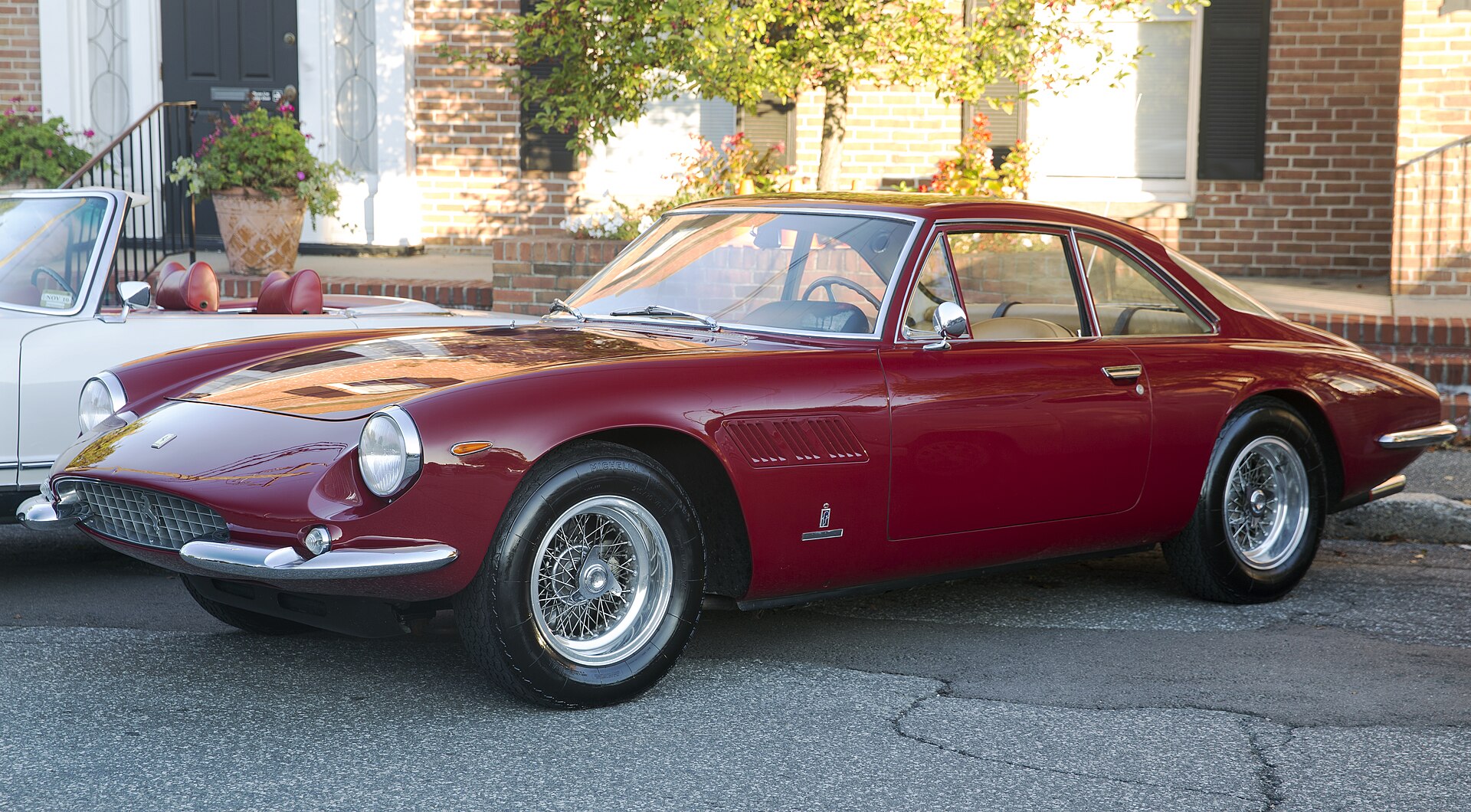
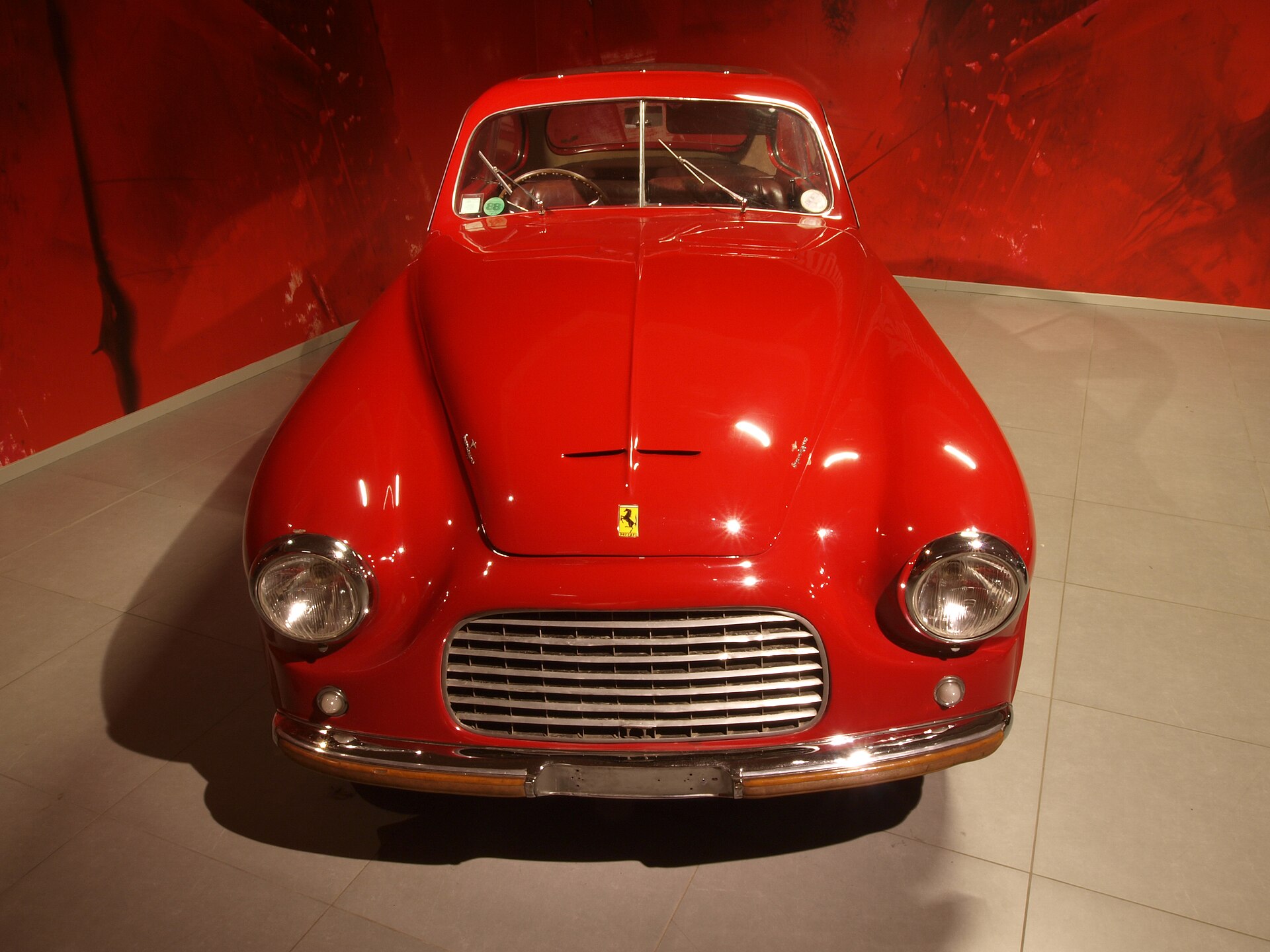
The Ferrari 166 Inter is the first Ferrari built for road use rather than for racing. Developed from the 125 S and 166 S racing cars, it was produced from 1948 to 1950 with bodies by several Italian coachbuilders. Its debut at the Paris Motor Show on 6 October 1949 marked the start of Ferrari's grand-touring tradition. Only 38 were built.
In short
- Built 1948–1950; 38 cars according to Wikipedia; coupé and barchetta bodies.
- 1,995 cc Colombo V12: 66 kW (90 PS) at 5,600 rpm with a single carburettor, according to Wikipedia; five-speed manual gearbox.
- Tubular frame by Aurelio Lampredi shared with the 125 S and 166 S; coupé weight about 900 kg.
- Replaced in 1950 by the 2.3-litre 195 Inter.
Ferrari 166 Inter at a glance
| Specification | Ferrari 166 Inter |
|---|---|
| Production | 1948–1950 |
| Cars built | 38 |
| Body | coupé, barchetta and cabriolet by various coachbuilders |
| Engine | 1,995 cc Colombo V12, front-mounted |
| Power | 66 kW (90 PS) at 5,600 rpm |
| Gearbox | five-speed manual |
| Weight | about 900 kg (coupé) |
| Wheelbase | 2,420 mm, later 2,500 and 2,620 mm |
| Successor | 195 Inter |
The 166 Inter is the ancestor of every Ferrari grand tourer that followed. For a coachbuilt 166 in more detail, see our Ferrari 166 Inter Berlinetta article; all models are listed in the Ferrari catalogue.
From racing cars to a road car
According to the Louwman Museum, the type 166 was the second model that Enzo Ferrari offered for sale after founding his factory in Maranello in 1947. His first cars were built for racing: the 125 S of 1947 and the 166 S that followed. The 166 Inter took their mechanical components and turned them into a car that customers could buy for the road. Its name honoured the victories of Scuderia Inter, a team that raced the 166 S. Confusingly, the racing 166 S and 166 F2 were also sometimes called "166 Inter" when entered by that team.
The first road-going Ferrari grand tourer was presented at the Paris Motor Show on 6 October 1949, and customer sales followed soon after. According to Wikipedia, the 166 Inter was the first Ferrari bought for the road rather than for the track.
Engine and chassis
The engine is the 1,995 cc V12 designed by Gioacchino Colombo, carried over from the 166 S. Each cylinder displaces about 166 cc, which gave the car its name - the same naming rule Ferrari later used for the 250, the 275 and the 365. In road form it had a single twin-choke Weber carburettor. Sources differ on the output. Wikipedia gives 66 kW (90 PS) at 5,600 rpm, while Conceptcarz quotes 75 kW (100 hp) in its text and 82 kW (110 hp) in its specification table; racing versions of the engine produced about 112 kW (150 hp). Wikipedia gives a top speed of about 150 km/h. The gearbox has five speeds.
The chassis is a steel tube frame designed by Aurelio Lampredi and shared with the 125 S and 166 S. At the front it uses double wishbones with a transverse leaf spring; at the rear, a live axle on semi-elliptic leaf springs located by torsion bars. Houdaille hydraulic dampers are fitted at all four wheels. The original wheelbase of 2,420 mm was later extended to 2,500 mm and 2,620 mm, giving more space for the coachbuilt bodies. The Touring coupé is 3,950 mm long, 1,410 mm wide and 1,390 mm high, and weighs about 900 kg.
Coachbuilders
The 166 Inter carried bodies by several coachbuilders.
| Coachbuilder | Bodies |
|---|---|
| Carrozzeria Touring (Milan) | the debut coupé and most of the bodies, as coupés or barchettas |
| Stabilimenti Farina | coupés and cabriolets |
| Vignale | seven bodies |
| Ghia | one coupé designed by Felice Mario Boano |
| Bertone | one cabriolet |
Touring designed the coupé shown in Paris and built most of the cars, using its Superleggera method of aluminium panels over a light framework of steel tubes. The bodies by Stabilimenti Farina, Vignale, Ghia and Bertone made almost every car slightly different.


Racing relatives and the 166 MM
The 166 Inter shared its basic engineering with the 166 racing cars, and the family's competition record helped to sell the road car. A closed 166 berlinetta driven by Clemente Biondetti and Igor Troubetzkoy won the 1948 Targa Florio, Ferrari's first major international victory. The open 166 MM - named after the Mille Miglia - won the Mille Miglia, the Targa Florio and the 24 Hours of Le Mans. According to Conceptcarz, it took more than 80 overall or class wins between 1948 and 1953.
Some road cars were raced by their owners too. The Louwman Museum in the Netherlands owns a Touring "Aerlux" coupé with a Plexiglas roof, the ninth 166 built. It was presented in Paris in 1949 and sold to the enthusiast Jean Renaldo from France. He won a race in Orléans in 1951 and took part in the Tour de France Automobile. In 1952 he won the GT Grand Prix at Albi and a class at the autumn races at Montlhéry.

Legacy
The 166 Inter was in production for only about two years, but it established the idea that Ferrari, a racing company, could also sell fast, elegant cars for the road. In 1950 it was replaced by the 195 Inter with a 2.3-litre engine, the first step in a line of grand tourers that led to the 250 GT series. The story of the company is told in our history of Ferrari.
Ferrari 166 Inter in our rankings
- No. 807 of 859 · Most powerful cars (66 kW · top 95%)
- No. 814 of 912 · Longest-running car nameplates (2 years · top 96%)
- No. 122 of 127 · Most powerful Italian cars (66 kW · top 97%)
- No. 307 of 313 · Most powerful coupes (66 kW · top 99%)
More powerful than 5% of ranked cars in the 1CARS catalog (No. 807 of 859).
FAQ
Was the 166 Inter the first Ferrari road car?
Wikipedia describes it as Ferrari's first true grand tourer and the first Ferrari bought for the road rather than the track.
How many Ferrari 166 Inters were built?
38 cars between 1948 and 1950.
What does 166 mean?
It is the displacement of one cylinder in cubic centimetres: twelve cylinders of about 166 cc make the 2.0-litre V12.
What replaced the 166 Inter?
The 195 Inter, with a 2.3-litre V12, in 1950.
Who designed the engine of the 166 Inter?
Gioacchino Colombo, who, like Enzo Ferrari, had previously worked at Alfa Romeo. His 2.0-litre V12 came from the 166 S racing car.
Data sources
Data checked by an editor against the sources below.