 Ferrari 275
All generations, specs and history
Published Sources (1) Report an error
By Felix Hartmann, Automotive Technology & EV Contributor
- Built
- 1964–1968
- Generations
- 2
- Top power
- 220 kW (299 PS)
Timeline
275 generations
Click a generation for its own page
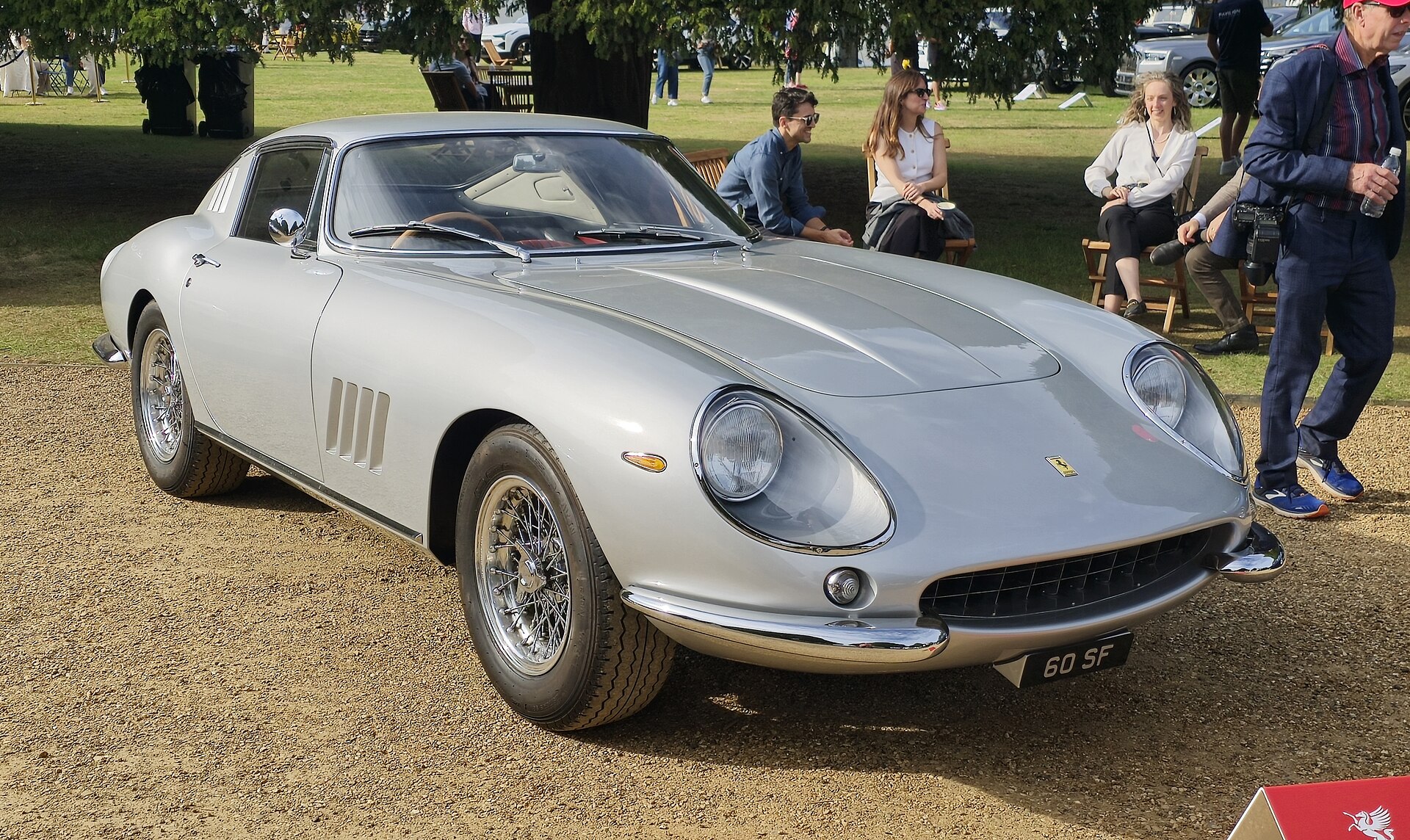
- 275 GTB / GTS 1964–1966 · Coupe · 190–210 kW (258–286 PS)
- 275 GTB/4 1966–1968 · Coupe · 220 kW (299 PS)
Newest first · 2 generations since 1964
-
1966
-
1964
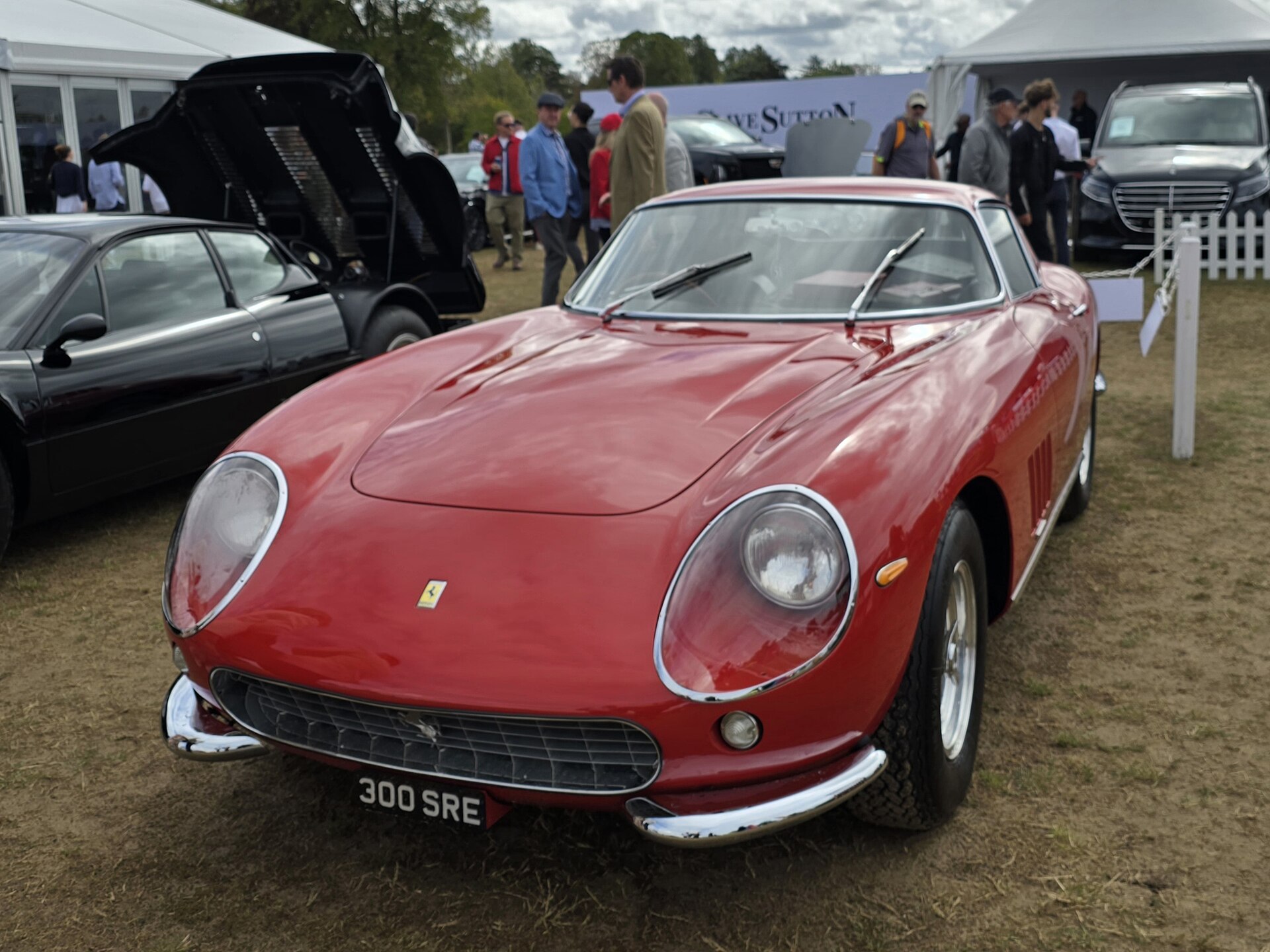


All generations by year: 275 GTB/4 (1966–1968) · 275 GTB / GTS (1964–1966)
Which one is mine?
Pick the year of first registration to see which generation it is.
- 275 GTB/4 1966–1968
- 275 GTB / GTS 1964–1966
The Ferrari 275 is a family of front-engined V12 grand tourers built from 1964 to 1968: the 275 GTB coupé, the 275 GTS spider, the four-cam 275 GTB/4 and a handful of competition cars. It replaced the 250 GT series and was the first Ferrari road car with a rear-mounted transaxle and independent suspension at all four wheels. Today it is regarded as one of the finest Ferraris of the 1960s and one of the most valuable.
In short
- Built 1964–1968 in Modena, with bodies designed by Pininfarina and built by Scaglietti; 442 GTB, 200 GTS, 330 GTB/4 and 10 NART Spiders according to Wikipedia.
- 3,286 cc Colombo 60° V12: two-cam engine with a claimed 209 kW (280 hp), four-cam GTB/4 with a claimed 224 kW (300 hp).
- Five-speed transaxle with limited-slip differential, double-wishbone suspension at all four wheels, disc brakes all round.
- Ferrari claimed 268 km/h for the GTB/4; a 275 GTB/C Speciale finished third overall at Le Mans in 1965.
Ferrari 275 at a glance
| Specification | Ferrari 275 |
|---|---|
| Production | 1964–1968, Modena (Italy) |
| Versions | 275 GTB, 275 GTS, 275 GTB/4, GTB/4 NART Spider, GTB/C |
| Cars built | 442 GTB, 200 GTS, 330 GTB/4, 10 NART Spiders, plus competition cars |
| Body | two-seat berlinetta (coupé) or spider; steel with aluminium panels, all-aluminium option |
| Engine | Colombo 60° V12, 3,286 cc, front-mounted |
| Power | 209 kW (280 hp) claimed for the GTB; GTB/4 224 kW (300 hp) |
| Gearbox | five-speed manual transaxle at the rear |
| Weight | about 1,300 kg (steel-bodied GTB/4) |
| Wheelbase | 2,400 mm |
| Predecessor / successors | 250 GT / 365 GTB/4 and 330 GTS |
The 275 bridges two eras of Ferrari: the 250 GT cars of the 1950s and early 1960s, such as the Ferrari 250 GT Tour de France, and the larger 365 models that followed. All Ferrari models are listed in the Ferrari catalogue.
History and development
Production of the 275 GTB and 275 GTS began in the autumn of 1964. The number 275 follows Ferrari's custom of the time: it refers approximately to the displacement of one cylinder in cubic centimetres, and twelve such cylinders give the 3.3-litre total.
The main advance over the 250 GT was in the chassis. Ferrari's racing cars had moved the gearbox to the rear years earlier, and for the 275 the road cars followed. Placing the five-speed gearbox together with the differential at the back gave a better weight distribution. At the same time the old live rear axle was replaced by independent suspension, making the 275 the first Ferrari road car with independent suspension at all four wheels. The racing driver and engineer Mike Parkes played a large part in developing the suspension.
The early transaxle cars had a problem: the engine and the transaxle were mounted separately, joined by an open propeller shaft with a central bearing, and keeping them in line was difficult. Ferrari added constant-velocity joints at the end of 1965, and from the second series the engine and gearbox were joined by a rigid torque tube. The spider never received the torque tube.

Design and bodywork
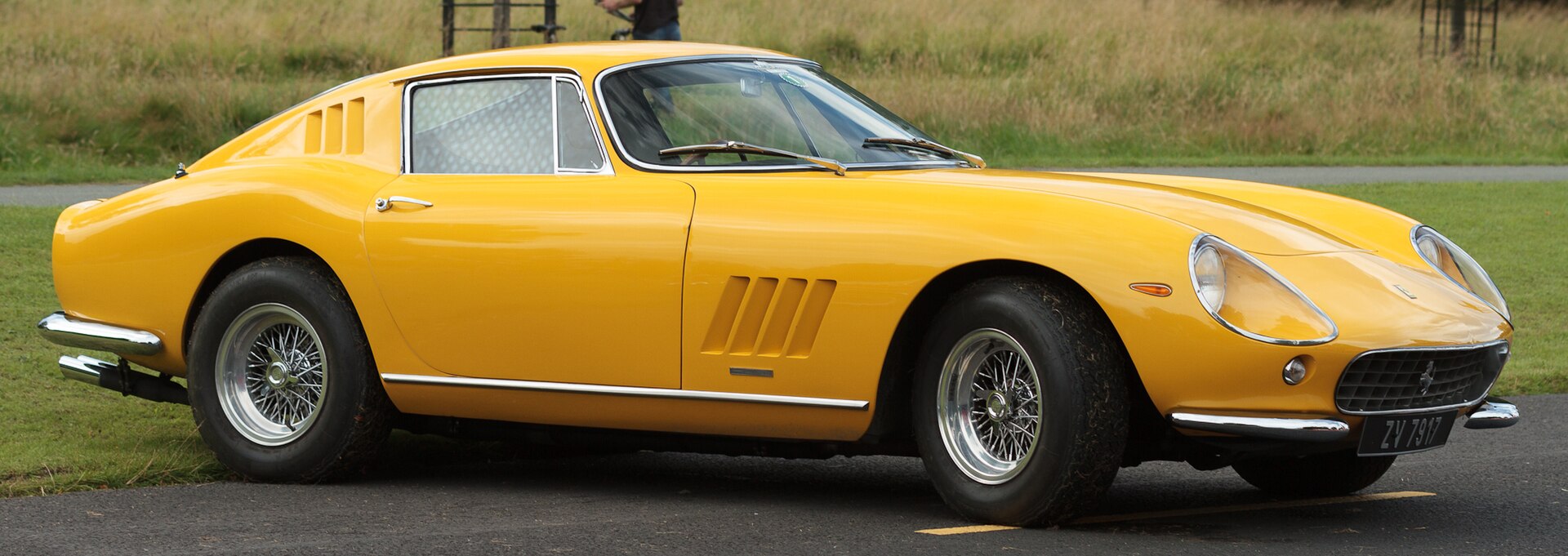
The coupé was designed by Pininfarina and built by Scaglietti in Modena. The body was mostly steel, with aluminium doors, bonnet and boot lid; at least 72 cars were ordered with an optional all-aluminium body. The berlinetta is short and muscular, with a long bonnet, a small cabin set well back and a fastback tail with a small spoiler.
In 1966 the GTB was updated. The first series (236 cars) became known as the "short nose"; the second series (206 cars) had a lower, longer nose with a smaller air intake, a larger rear window, external boot hinges and a relocated fuel filler, fuel tanks and spare wheel.
The spider, the 275 GTS, had a completely different body, also by Pininfarina but all steel. It was softer in character, with a shorter bonnet, smaller open headlights, a folding cloth roof and an optional removable hard top. It was meant as an open touring car rather than a sports car.
Engines: two-cam and four-cam V12
All 275s use a version of Gioacchino Colombo's 60° V12 with a displacement of 3,286 cc (bore 77 mm, stroke 58.8 mm). The two-cam engine, Tipo 213, has one overhead camshaft per bank. It normally breathed through three twin-choke Weber carburettors, with six Webers available as a factory option.
| Version | Engine | Claimed power | Notes |
|---|---|---|---|
| 275 GTS | Tipo 213, two-cam | 194 kW (260 hp) | spider |
| 275 GTB | Tipo 213, two-cam, three Webers | 209 kW (280 hp) at 7,600 rpm | real output closer to 179–186 kW (240–250 hp), according to Wikipedia |
| 275 GTB, six-carburettor option | Tipo 213, six Webers | 239 kW (320 hp) at 7,500 rpm | actual gain estimated at only 15–19 kW (20–25 hp) |
| 275 GTB/4 | Tipo 226, four-cam, six Webers, dry sump | 224 kW (300 hp) | from late 1966 |
The four-cam Tipo 226 engine was the big change of 1966. Ferrari's history page for the model describes the 275 GTB/4 as the first "production" Ferrari with the four-overhead-camshaft version of the V12, inherited from the P2 racing prototype. The engine also had dry-sump lubrication, six Weber 40 DCN carburettors as standard and a narrower valve angle of 54°. Ferrari claimed a top speed of 268 km/h for the GTB/4.

Chassis and running gear
The chassis is a ladder frame of oval-section steel tubes, with a 2,400 mm wheelbase. Double wishbones, coil springs and Koni dampers are used at all four corners, and Dunlop disc brakes are fitted to all wheels — although Wikipedia notes that the brakes were considered weak even at the time. The five-speed gearbox has Porsche-type synchromesh and drives through a limited-slip differential.
Cast magnesium 14-inch wheels were standard, with Borrani wire wheels as an option. The GTB/4 came with Campagnolo magnesium alloy wheels. A steel-bodied GTB/4 weighs about 1,300 kg.
The 275 GTB/4 NART Spider
Luigi Chinetti, Ferrari's importer in the United States and founder of the North American Racing Team (NART), asked the factory for an open version of the four-cam car. He planned 25 cars, but only 10 were built in 1967 and 1968. Scaglietti designed and built the bodies. The cars are known as the 275 GTB/4 NART Spider, GTB/4S or GTS/4 NART Spyder.
Road & Track tested a NART Spider in September 1967 and recorded a top speed of 249 km/h, 0–60 mph in 6.7 seconds and a standing quarter-mile in 14.7 seconds; the magazine called it "the most satisfying sports car in the world". One of the cars took part in the 1967 Sebring 12 Hours with Denise McCluggage and Marianne Rollo and finished 17th overall and second in its class. Because of their rarity, NART Spiders have become some of the most valuable cars ever sold at auction.

Racing versions and results
Ferrari also built competition versions of the 275 GTB:
| Version | Years | Number built | Notes |
|---|---|---|---|
| 275 GTB Competizione Speciale | 1964–1966 | 4 | engine tuned to 250 LM level, 216–227 kW (290–305 hp) |
| Customer competition GTB | — | 10 | alloy body, extra vents, larger fuel tanks |
| 275 GTB/C | 1966 | 12 | 205–210 kW (275–282 hp), dry sump, very thin aluminium body |
The Competizione Speciale entered by Ecurie Francorchamps and driven by Willy Mairesse and Jean Blaton finished third overall at the 1965 24 Hours of Le Mans. At Le Mans in 1966, the Maranello Concessionaires 275 GTB/C of Roy Pike and Piers Courage finished eighth overall and won its class. Tullio Sergio Marchesi won the Italian GT Championship in 1966 and 1967 in a 275 GTB/C.
The GTB/C had one dangerous weakness. Its Borrani wire wheels sometimes broke under the grip of the Dunlop racing tyres, causing accidents; after this, no competition Ferrari used wire wheels again.

Legacy
The 275 introduced the rear transaxle and fully independent suspension to Ferrari's road cars, and the four-cam engine brought racing technology to the street. The layout continued in the 365 GTB/4 "Daytona", the direct successor of the GTB/4, while the 330 GTS replaced the open 275 GTS.
Motor Trend Classic placed the 275 GTB and GTS third in its list of the ten greatest Ferraris of all time, and Sports Car International ranked the GTB/4 seventh among the top sports cars of the 1960s. The story of the company that built it is told in our history of Ferrari.
Photo gallery


Ferrari 275: first vs latest generation
| Spec | 275 GTB / GTS | 275 GTB/4 | Change |
|---|---|---|---|
| Years | 1964–1966 | 1966–1968 | 2 years apart |
| Most powerful version | 210 kW (286 PS) | 220 kW (299 PS) | +10 kW (+5%) |
Oldest and newest generation in the 1cars catalog. Power is the strongest version of each; other rows are shown only when both generations have the figure.
Image credits · Photos from Wikimedia Commons under free licences
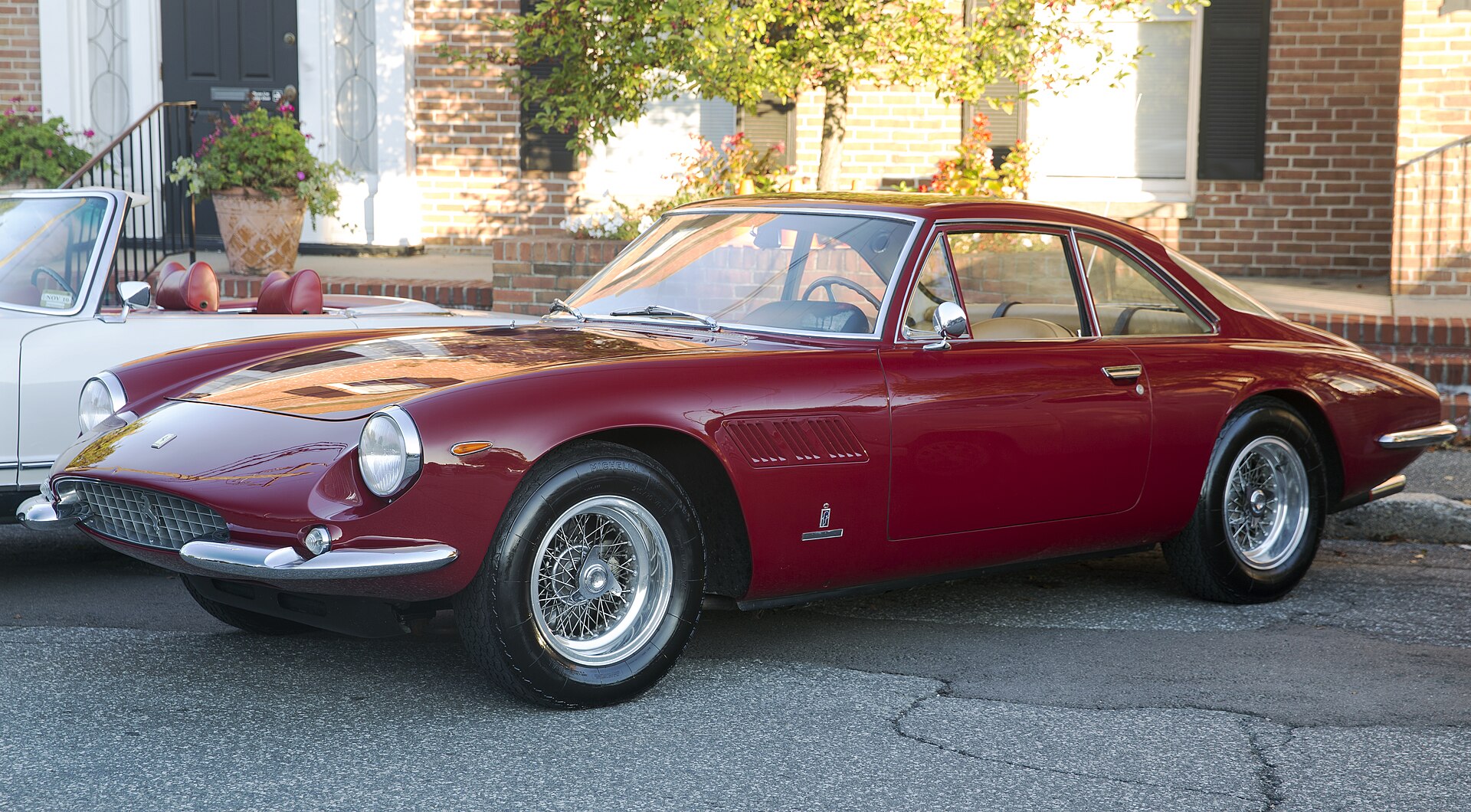
- Ferrari 275 GTB / GTS · Photo: Calreyn88 / Wikimedia Commons, CC BY-SA 4.0
- Ferrari 275 GTB/4 · Photo: Calreyn88 / Wikimedia Commons, CC BY 4.0
Ferrari 275 in our rankings
- No. 442 of 859 · Most powerful cars (220 kW · top 52%)
- No. 50 of 94 · Most powerful cars of the 1960s (220 kW · top 55%)
- No. 82 of 127 · Most powerful Italian cars (220 kW · top 66%)
- No. 226 of 313 · Most powerful coupes (220 kW · top 73%)
- No. 707 of 912 · Longest-running car nameplates (4 years · top 83%)
- No. 241 of 345 · Cars with the most generations (2 generations)
More powerful than 48% of ranked cars in the 1CARS catalog (No. 442 of 859).
FAQ
What does the name Ferrari 275 mean?
It refers approximately to the displacement of one cylinder in cubic centimetres; twelve of them make the 3,286 cc V12.
What is the difference between the 275 GTB and the 275 GTB/4?
The GTB has a two-cam V12; the GTB/4, introduced in 1966, has a four-cam V12 with dry-sump lubrication and six carburettors.
How many Ferrari 275s were built?
Wikipedia gives 442 GTB, 200 GTS, 330 GTB/4 and 10 NART Spiders, plus small numbers of competition cars.
What replaced the Ferrari 275?
The 365 GTB/4 "Daytona" replaced the GTB/4, and the 330 GTS replaced the 275 GTS.
Data sources
Data checked by an editor against the sources below.