
 Ferrari 250 GT Tour de France
Specs, engines and history
Updated Published Sources (3) Report an error
By Felix Hartmann, Automotive Technology & EV Contributor Reviewed by Oleksandr Hnatiuk

- Built
- 1956–1959
- Top power
- 191 kW (260 PS)
Our verdict: who the TdF suits
Our verdict · Felix Hartmann
The Tour de France berlinetta suits a collector who wants a 1950s Ferrari that can still be driven hard in historic events. It is less refined than a 250 GT Lusso and less powerful than the later SWB, but its racing record is stronger than that of any road 250 of its time. Its links to Battista Pininfarina and to Enzo Ferrari are covered in our people pages, and the wider story is in the history of Ferrari.
The Ferrari 250 GT Berlinetta "Tour de France" is a competition coupé built from 1956 to 1959 on a 2,600 mm chassis, with a 2,953 cc Colombo V12 producing 177–191 kW (240–260 PS). Pinin Farina drew the shape and Scaglietti built the aluminium bodies. About 77 were made, and the nickname comes from four straight wins in the Tour de France Automobile.
In short
- Years and numbers: 1956–1959, roughly 77 cars in four body series, plus five Zagato bodies and seven "Interim" cars.
- Engine: 60-degree single-cam V12, 73 × 58.8 mm, three Weber carburettors, four-speed gearbox, live rear axle.
- Results: Tour de France Automobile 1956, 1957, 1958 and 1959; GT class at Le Mans in 1959.
- Successor: the short-wheelbase 250 GT SWB of late 1959.

Specs by version
Verified Manufacturer and type-approval data from our catalog · Sources and methodology
The Tour de France berlinetta at a glance

| Fact | Detail |
|---|---|
| Maker | Ferrari, Maranello; bodies by Carrozzeria Scaglietti, Modena |
| Production | 1956–1959 |
| Number built | about 77 (sources give 72–84, depending on how Zagato and Interim cars are counted) |
| Layout | front engine, rear-wheel drive, two-seat closed body |
| Engine | 2,953 cc Colombo V12, 177 kW (240 PS) rising to about 191 kW (260 PS) |
| Wheelbase | 2,600 mm |
| Purpose | GT-category racing that could also be driven on public roads |
| Official name | 250 GT Berlinetta; "Tour de France" (TdF) was a nickname, never a factory designation |
Why the long-wheelbase berlinetta was built
By the mid-1950s Ferrari sold the 250 GT as a road coupé, but its customers also wanted a car for the new Gran Turismo racing classes. The answer was a lighter, more powerful berlinetta on the same 2,600 mm tubular chassis used for the Boano and Ellena road cars. It is often called the "long-wheelbase berlinetta", or LWB, to separate it from the 2,400 mm SWB that followed.

The car appeared in spring 1956. Its first outing, chassis 0503GT in the Giro di Sicilia in April 1956, ended with a class win. Within months the Marquis Alfonso de Portago had won the ten-day Tour de France Automobile in chassis 0557GT, and the name stuck. The event mixed circuit races, hill climbs and timed road sections across France, so a win there proved both speed and toughness.
Ferrari's own history notes stress that "Tour de France" was never an official model name. Period documents simply say 250 GT Berlinetta, and the factory referred to the frame as type 508 with suffix letters for later updates.
Four body series and the Interim cars
Pinin Farina designed the body, and Scaglietti built almost all of them in aluminium in Modena. The shape changed four times in three seasons, so the series can be told apart by the vents behind the side windows, which are called the sail panels.

| Variant | Years | Body / purpose | Engine | Notes |
|---|---|---|---|---|
| First series | 1956 | Scaglietti aluminium berlinetta, no sail-panel vents | 2,953 cc V12, 177 kW (240 PS) | 14 cars |
| Second series | early 1957 | fourteen small louvres on each sail panel | same, power rising | 9 cars |
| Third series | mid-1957 to 1958 | three vents, recessed covered headlamps | about 191 kW (260 PS) | 18 cars |
| Fourth series | 1958–1959 | single vent, covered or open headlamps | about 191 kW (260 PS), later 128DF engines | 36 cars |
| Zagato berlinetta | 1956–1957 | lightweight body to Ugo Zagato's design | same V12 | five cars: 0515GT, 0537GT, 0665GT, 0689GT, 1367GT |
| Interim berlinetta | 1959 | LWB chassis with the new SWB-style body and an extra rear quarter window | same V12 | seven cars, first seen at Le Mans in June 1959 |
In 1959 most cars lost their covered headlamps because Italian lighting rules changed. Some owners also had full bumpers fitted, which was rare on cars built for racing. The rear window was flat on the early cars, and the rear wings gained vertical tail lamps in the first revision, as the old version of this page noted.
Colombo V12, gearbox and chassis
The engine is the short-block 60-degree V12 designed by Gioacchino Colombo. It has an aluminium block and heads, cast-iron liners and one overhead camshaft per bank. Bore and stroke are 73 × 58.8 mm, which gives 2,953 cc, or close to 250 cc per cylinder, hence the "250" name.

Three twin-choke Weber carburettors, type 36 DCL3 or 36 DCZ3, feed the cylinders. Factory engine types ran from 128 to 128B, 128C, 128D and finally 128DF, the late version with its spark plugs moved to the outside of the heads. Early cars made 177 kW (240 PS), and the late 128DF engines were claimed to reach about 191 kW (260 PS).
Power goes through a four-speed, all-synchromesh gearbox and a propeller shaft to a rigid rear axle, which could be ordered with several ratios. Early cars had either a central or an offset gear lever; from 1958 the central lever became standard. The front suspension uses double wishbones and coil springs. All cars left the works with left-hand drive.
Ferrari 250 GT Tour de France specifications
| Parameter | Metric | Imperial |
|---|---|---|
| Engine | 60° V12, single overhead camshaft per bank | - |
| Displacement | 2,953 cc | 180.2 cu in |
| Bore × stroke | 73 × 58.8 mm | 2.87 × 2.31 in |
| Power | 177–191 kW (240–260 PS) | 237–256 hp |
| Carburettors | three Weber 36 DCL3 or 36 DCZ3 | - |
| Gearbox | four-speed manual, all-synchromesh | - |
| Wheelbase | 2,600 mm | 102.4 in |
| Weight | about 1,130 kg (one published estimate) | about 2,500 lb |
| Body | aluminium, Pinin Farina design, Scaglietti build | - |
By our calculation, 191 kW and about 1,130 kg give roughly 5.9 kg per kW, which was a strong figure for a closed GT car of 1958. You can test the same ratio for other cars with the power-to-weight calculator.

Racing record from 1956 to 1959
The car's fame rests on long road-and-circuit events rather than single sprints. Olivier Gendebien was its most successful driver in France.

| Year | Event |
|---|---|
| April 1956 | Giro di Sicilia: class win on the car's debut (0503GT) |
| 1956 | Tour de France Automobile: overall win for Alfonso de Portago (0557GT) |
| 1957 | Tour de France Automobile: overall win for Olivier Gendebien |
| 1958 | Tour de France Automobile: Gendebien wins again |
| June 1959 | Le Mans 24 Hours: a 250 GT Berlinetta is third overall and first in the 3-litre GT class |
| 1959 | Tour de France Automobile: fourth straight win, with Gendebien in an Interim car |
| late 1959 | the SWB replaces the LWB berlinetta |
Private owners kept racing these cars after 1959. In 1960, for example, chassis 1357GT won its class in the Targa Florio.
TdF compared with the SWB and the road coupé
The three closed 250 GT cars of the late 1950s share the Colombo V12 but differ in purpose. The figures below come from the sources used for this page.

| Point | 250 GT TdF (1956–1959) | 250 GT SWB (1959–1962) | 250 GT Coupé Pinin Farina (1958–1960) |
|---|---|---|---|
| Wheelbase | 2,600 mm | 2,400 mm | 2,600 mm |
| Body | aluminium, Scaglietti | steel or aluminium, Scaglietti | steel, Pinin Farina |
| Brakes | drums | discs | drums, later discs |
| Main use | GT racing | racing and road | touring |
Compared with the SWB, the TdF is 200 mm longer between the axles and still relies on drum brakes, so it feels older on track. Compared with the road coupé, it is lighter and more powerful but far less comfortable. To set any two modern cars side by side, use the 1cars comparison tool.
Cabin and road use
The interior was plain but finished with care, and most cabins were trimmed by Scaglietti. A three-spoke steering wheel with the prancing-horse badge faced two large dials: a speedometer marked to 300 km/h and a rev counter. Comfort came second to weight, as the class rules rewarded a light car.

Owners did drive these cars on the road, which was the point of the GT rules. Ferrari published no fuel or performance data for the series, and no reliable top-speed figure has survived. Today the cars are used in historic rallies such as the Tour Auto, the modern revival of the Tour de France Automobile.
Collecting a Tour de France today
A 250 GT TdF is one of the most valuable Ferraris of the 1950s. In 2008, chassis 1385GT sold at an RM Auctions sale in London for a reported 2,255,000 pounds sterling (about €2.8 million at the time). Prices have risen since, so a recent public sale is the only useful guide. Buyers should check:
- Body series: the louvre pattern and headlamps should match the chassis number and its documented history.
- Engine: the original engine type, from 128 to 128DF, should be present; many cars had replacement units in period.
- Race history: class wins or Tour de France entries add value but must be backed by period records.
- Certification: Ferrari Classiche papers and an independent marque expert's report.

For the complete 250 family, start with the 250 GT Coupé built by Boano, Ellena and Pinin Farina, then read about the successor, the 250 GT SWB berlinetta. The sports-racing sister car is the 250 Testa Rossa.
Ferrari 250 GT Tour de France in our rankings
- No. 320 of 688 · Biggest engines: cars (3,000 cc · top 49%)
- No. 599 of 1066 · Most powerful cars (191 kW · top 57%)
- No. 101 of 149 · Most powerful Italian cars (191 kW · top 68%)
- No. 288 of 360 · Most powerful coupes (191 kW · top 80%)
- No. 169 of 216 · Biggest engines: coupes (3,000 cc · top 80%)
- No. 938 of 1132 · Longest-running car nameplates (3 years · top 89%)
Bigger engine than 51% of ranked cars in the 1CARS catalog (No. 320 of 688).
Ferrari 250 GT Tour de France photos 15


Ferrari 250 GT Tour de France videos 3

Ferrari 250 GT Tour de France video 1

Test drive
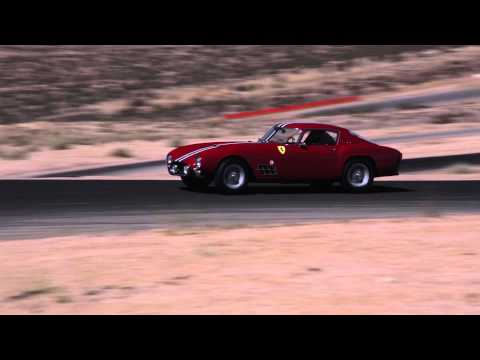
Video overview
FAQ
Why is it called the Tour de France?
The nickname comes from the Tour de France Automobile, a ten-day race of circuits, hill climbs and road sections. A 250 GT Berlinetta won it four years running, from 1956 to 1959. Ferrari itself never used the name officially.
How many 250 GT Tour de France cars were built?
About 77 were built between 1956 and 1959, in four body series of 14, 9, 18 and 36 cars. Some sources give 72 or 84, because they count the five Zagato cars and the seven Interim berlinettas differently.
What engine does the 250 GT Tour de France have?
It uses Gioacchino Colombo's 2,953 cc 60-degree V12 with one camshaft per bank and three Weber carburettors. Output rose from 177 kW (240 PS) on the first cars to about 191 kW (260 PS) on the last ones.
What is the difference between the TdF and the 250 GT SWB?
The TdF has a 2,600 mm wheelbase and drum brakes. The SWB of late 1959 has a 2,400 mm wheelbase, a new Pinin Farina body and disc brakes. Seven Interim cars of 1959 combined the old chassis with the new body style.
Who built the bodies?
Pinin Farina designed them and Carrozzeria Scaglietti built them in aluminium in Modena. Zagato built five cars to its own lightweight design, which saved weight for racing. All other bodies came from Scaglietti's works.
Data sources
Data checked by an editor against the sources below.
- The text of this article (1cars archive)
- Wikipedia - Ferrari 250 GT Berlinetta
- Wikipedia


