
 Ferrari California T
All generations, specs and history
Updated Published Sources (6) Report an error
By Felix Hartmann, Automotive Technology & EV Contributor Reviewed by Oleksandr Hnatiuk

- Built
- 2008–2017
- Generations
- 2
- Top power
- 412 kW (560 PS)
- New price
- from about €184,689 (2014)
Timeline
California T generations
Click a generation for its own page


- California 2008–2014 · Convertible · 338–360 kW (460–489 PS)
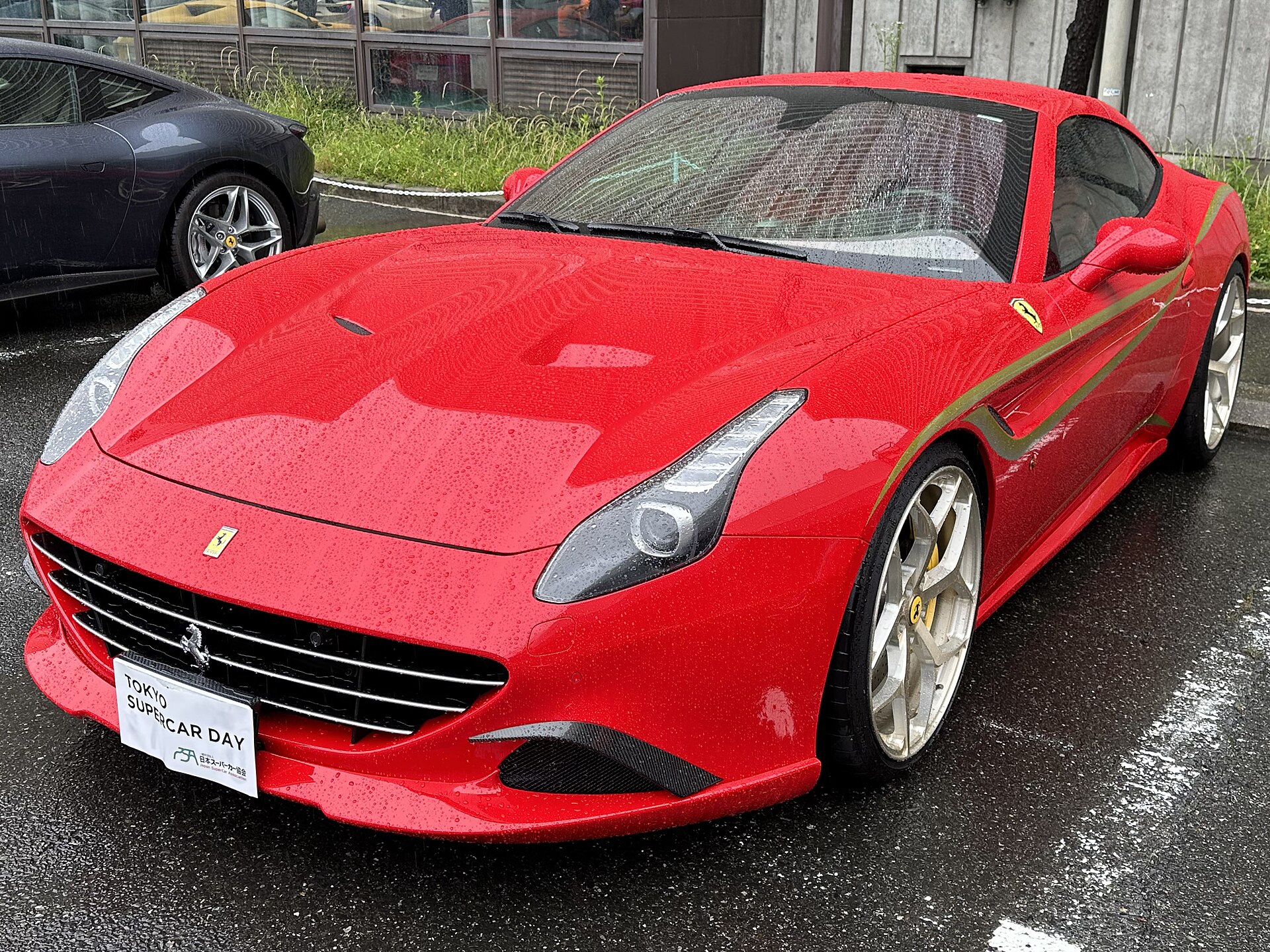
- California T 2014–2017 · Convertible · 412 kW (560 PS)
Newest first · 2 generations since 2008
-
2014
-
2008
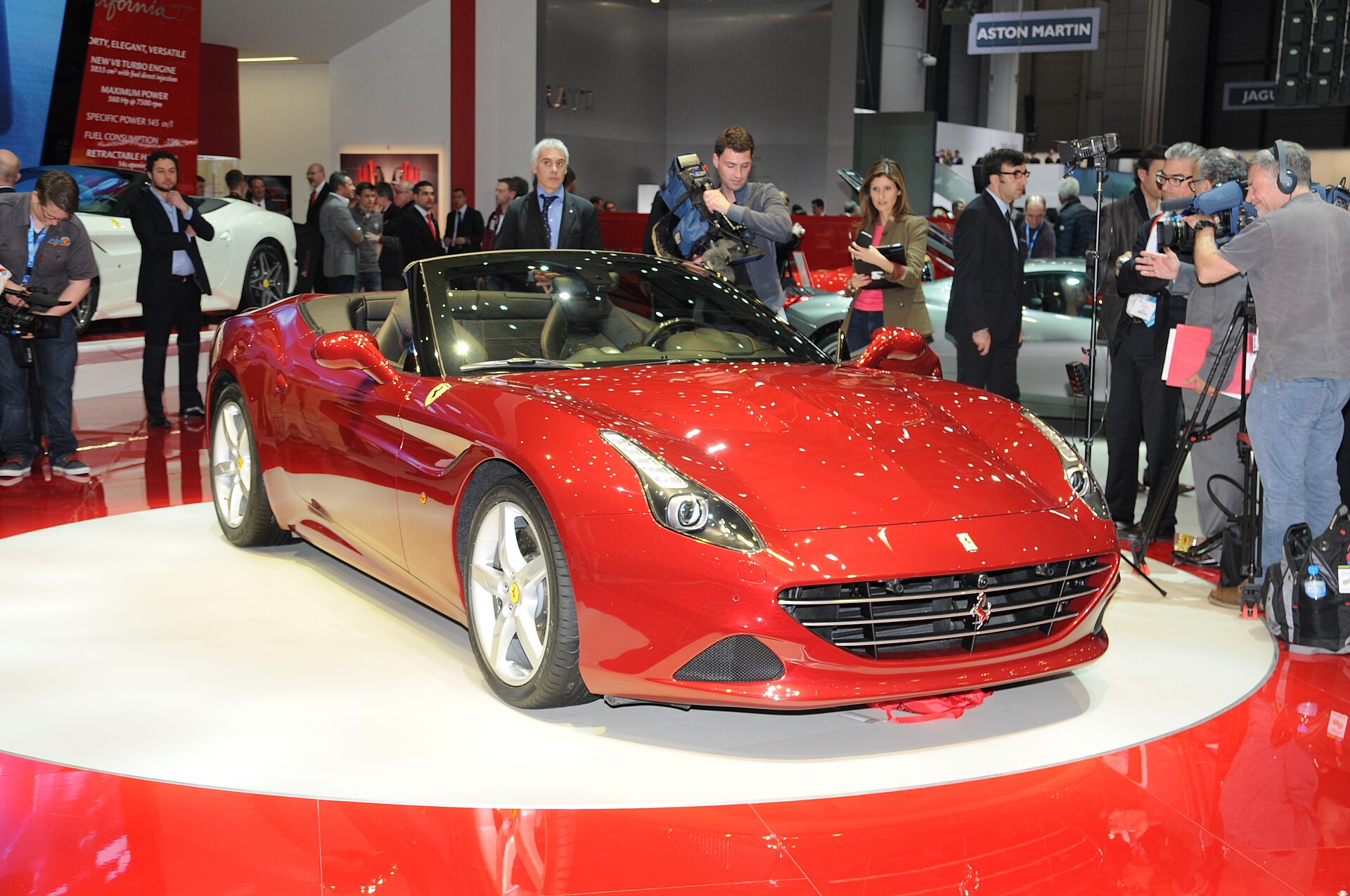
All generations by year: California T (2014–2017) · California (2008–2014)
Which one is mine?
Pick the year of first registration to see which generation it is.
- California T 2014–2017
- California 2008–2014
The Ferrari California is a front-engined V8 grand tourer with a folding metal roof and 2+2 seats, built in Maranello from 2008 to 2017. It started with a 4.3-litre engine of 338 kW (460 PS), rose to 360 kW in the California 30 of 2012, and became the turbocharged California T with 412 kW (560 PS) in 2014. The Portofino replaced it in 2017.
In short
- Three stages: California (2008–2012), California 30 (2012–2014) and California T (2014–2017), plus Handling Speciale packages.
- Engines: 4,297 cc naturally aspirated V8, then a 3,855 cc twin-turbo V8 with 755 Nm.
- Ferrari firsts: front-mounted V8, seven-speed dual-clutch gearbox, folding hard top, direct injection, multi-link rear axle.
- About 17,000 built in total, roughly 8,000 of them before the 2012 update.

Specs by version
Engines
| Version | Engine | Power | Torque | Gearbox | Drive | Production years |
|---|---|---|---|---|---|---|
| California 4.3 V8 (460 PS) | 4.3 l · 8 cyl · Petrol 4,297 cc | 338 kW 460 PS453 hp | 485 Nm358 lb-ft | 7-sp Dual-clutch | Rear-wheel drive | 2008–2012 |
| California 30 (490 PS) | 4.3 l · 8 cyl · Petrol 4,297 cc | 360 kW 489 PS483 hp | 505 Nm372 lb-ft | 7-sp Dual-clutch | Rear-wheel drive | 2012–2014 |
| California T · 3.9 L 8 cyl Automatic (AM7) · 2017 (EPA) | 3.9 l · 8 cyl 3,900 cc | - | - | 7-sp Dual-clutch | Rear-wheel drive | 2017 |
| California T · 3.9 L 8 cyl Automatic (AM7) · 2017 (EPA) | 3.9 l · 8 cyl 3,900 cc | - | - | 7-sp Dual-clutch | Rear-wheel drive | 2017 |
| California T · 3.9 L 8 cyl Automatic (AM7) · 2016 (EPA) | 3.9 l · 8 cyl 3,900 cc | - | - | 7-sp Dual-clutch | Rear-wheel drive | 2016 |
| California T · 3.9 L 8 cyl Automatic (AM7) · 2016 (EPA) | 3.9 l · 8 cyl 3,900 cc | - | - | 7-sp Dual-clutch | Rear-wheel drive | 2016 |
| California T · 3.9 L 8 cyl Automatic (AM7) · 2015 (EPA) | 3.9 l · 8 cyl 3,900 cc | - | - | 7-sp Dual-clutch | Rear-wheel drive | 2015 |
| California T · 3.9 L 8 cyl Automatic (AM7) · 2015 (EPA) | 3.9 l · 8 cyl 3,900 cc | - | - | 7-sp Dual-clutch | Rear-wheel drive | 2015 |
| California T 3.9 V8 turbo | 3.9 l · 8 cyl · Petrol 3,900 cc | 412 kW 560 PS553 hp | 755 Nm557 lb-ft | - | Rear-wheel drive | 2014–2017 |
Performance
Show all 8 versions
| Version | Fuel consumption |
|---|---|
| California 4.3 V8 (460 PS) | - |
| California 30 (490 PS) | - |
| California T · 3.9 L 8 cyl Automatic (AM7) · 2017 (EPA) | 13.1 l/100 km18.0 mpg US · 21.6 mpg UK |
| California T · 3.9 L 8 cyl Automatic (AM7) · 2017 (EPA) | 12.4 l/100 km19.0 mpg US · 22.8 mpg UK |
| California T · 3.9 L 8 cyl Automatic (AM7) · 2016 (EPA) | 13.1 l/100 km18.0 mpg US · 21.6 mpg UK |
| California T · 3.9 L 8 cyl Automatic (AM7) · 2016 (EPA) | 12.4 l/100 km19.0 mpg US · 22.8 mpg UK |
| California T · 3.9 L 8 cyl Automatic (AM7) · 2015 (EPA) | 13.1 l/100 km18.0 mpg US · 21.6 mpg UK |
| California T · 3.9 L 8 cyl Automatic (AM7) · 2015 (EPA) | 12.4 l/100 km19.0 mpg US · 22.8 mpg UK |
Verified Manufacturer and type-approval data from our catalog · Sources and methodology
California at a glance

| Item | Ferrari California / California T |
|---|---|
| Type | 2+2 coupé-convertible with folding aluminium hard top |
| Production | 2008–2017, dedicated assembly hall at Maranello |
| Layout | front-mid engine, rear-wheel drive |
| Engines | 4.3 l V8 (F136); 3.9 l twin-turbo V8 (California T) |
| Power | 338–412 kW (460–560 PS) |
| Gearbox | 7-speed dual-clutch, paddle shift |
| Boot | 240 l with the roof stowed, 340 l with it closed |
| Successor | Ferrari Portofino |
Why Ferrari built the California
Ferrari presented the California at the Paris Motor Show in October 2008 as a fourth model range, next to the mid-engined V8, the V12 coupé and the four-seater. The aim was to bring new customers to the brand. The car had to work every day, carry two children in the back and open its roof at the touch of a button. The name recalls the 250 GT California Spyder of the late 1950s and the 365 California of 1966.

It brought a list of firsts for a Ferrari road car. It had the first V8 mounted at the front and the first seven-speed dual-clutch gearbox. It was also first with a folding metal roof, a multi-link rear axle and direct petrol injection. An optional HELE package (High Emotion, Low Emissions) added the first stop-start system at Ferrari. Pininfarina designed the body, and Carrozzeria Scaglietti engineered and built the aluminium chassis.
California, California 30 and California T: the three stages
The model went through two updates. The catalogue treats them as two generations: the naturally aspirated California and the turbocharged California T.

| Generation | Code | Years | Body styles | Engines | Power (hp / kW) |
|---|---|---|---|---|---|
| California | F149 | 2008–2012 | coupé-convertible 2+2 | 4.3 l V8 | 453 hp / 338 kW |
| California 30 | F149 | 2012–2014 | coupé-convertible 2+2 | 4.3 l V8 | 483 hp / 360 kW |
| California T | F149M | 2014–2017 | coupé-convertible 2+2 | 3.9 l twin-turbo V8 | 553 hp / 412 kW |
California 30 (2012). Announced on 15 February 2012 and shown at Geneva the next month, it gained 22 kW (30 PS) and lost 30 kg, hence the name. Torque rose to 505 Nm and 0–100 km/h fell to 3.8 s. At the same time Ferrari dropped the manual gearbox option; only three manual Californias were ever built. A new Handling Speciale package added magnetorheological dampers, stiffer springs and quicker steering, 2.3 turns from lock to lock instead of 2.5.
California T (2014). Revealed at Geneva in March 2014, it brought turbocharging back to a Ferrari road car for the first time since the F40; the T stands for turbo. The 3.9-litre V8 uses two small twin-scroll turbochargers and variable boost management, which Ferrari used to keep turbo lag low. Ferrari said emissions fell by 15 %. It was also the first Ferrari with Apple CarPlay. A California T Handling Speciale followed at Geneva in 2016.
Engines, gearbox and performance
| Version | Engine | Power | Torque | 0–100 km/h | Top speed |
|---|---|---|---|---|---|
| California (2008) | 4,297 cc V8, direct injection | 338 kW (460 PS) at 7,750 rpm | 485 Nm at 5,000 rpm | 3.9–4.0 s | 310 km/h |
| California 30 (2012) | 4,297 cc V8 | 360 kW (490 PS) at 7,750 rpm | 505 Nm at 5,000 rpm | 3.8 s | 312 km/h |
| California T (2014) | 3,855 cc twin-turbo V8 | 412 kW (560 PS) at 7,500 rpm | 755 Nm at 4,750 rpm | 3.6 s | 315–316 km/h |
The turbo engine changed the character of the car more than the numbers suggest. By our calculation, torque rose by about 50 % from the California 30 to the T, while peak power rose by 14 %. German data put the original car's consumption at 13.1 l/100 km and 306 g/km of CO2; the old version of this page quoted 10.5 l/100 km for the California T. The T reaches 200 km/h in about 11.2 s.

All versions drive the rear wheels through a seven-speed dual-clutch gearbox mounted at the rear axle, with launch control. Weight distribution is 47 % front and 53 % rear.
Ferrari California T key specifications

| Parameter | Metric | Imperial |
|---|---|---|
| Engine | 3,855 cc twin-turbo V8 | 235 cu in |
| Power | 412 kW (560 PS) | 553 hp |
| Torque | 755 Nm | 557 lb-ft |
| Length / height | about 4,560 / 1,320 mm | 179.5 / 52.0 in |
| Weight | about 1,735 kg | 3,825 lb |
| Boot | 240 l (roof down) / 340 l (roof up) | 8.5 / 12.0 cu ft |
| 0–100 km/h | 3.6 s | 0–62 mph |
| Top speed | 315–316 km/h | 196 mph |
| Drag coefficient | Cd 0.32 (first California, roof up) | - |
Roof, cabin and everyday use
The two-piece aluminium roof folds into the boot in about 14 to 15 seconds. With it up, the car is a closed coupé; with it down, luggage space shrinks from 340 to 240 litres. Buyers could choose a 2+2 layout or a "2+" version with a luggage bench instead of rear seats. The rear seats are suitable only for children.

The cabin of early cars used an infotainment system that already felt dated during the car's life. The California T brought a new touchscreen and smartphone integration. Euro NCAP has not crash-tested this model, which is usual for low-volume sports cars.
How many were built
Ferrari built the car in its own assembly hall at Maranello. English sources give a total of 17,349 cars for 2008–2017; the yearly figures below add up to about that number.

| Year | Built |
|---|---|
| 2008–2012 | about 8,000 |
| 2013 | 1,219 |
| 2014 | 1,645 |
| 2015 | 2,638 |
| 2016 | 2,247 |
| 2017 | about 1,600 |
In Germany, 1,495 cars were newly registered between 2009 and 2019, with the best year in 2010 (271 cars). In May 2012 Ferrari recalled about 200 California and 458 Italia cars worldwide.
Rivals and prices
Its rivals were luxury convertibles rather than Ferrari's own mid-engined cars. A European source lists list prices before options of about €180,000 for the California and about €205,000 for the California T.
| Model | Engine type | Roof | Seats |
|---|---|---|---|
| Ferrari California T | twin-turbo V8, front | folding metal | 2+2 |
| Mercedes-Benz SL | V8 or V12, front | folding metal | 2 |
| Bentley Continental GTC | W12 or V8, front | fabric | 4 |
| Aston Martin DB9 Volante | V12, front | fabric | 2+2 |
| Porsche 911 Turbo Cabriolet | flat-six turbo, rear | fabric | 2+2 |
You can set it against these cars in our car comparison tool, and our cost of ownership calculator helps estimate running costs for a car of this class. Among Ferraris, its closest relatives are the Portofino that replaced it and the Roma.
Common problems and which California to buy
Known weak points concern the dual-clutch gearbox of early cars, where neglected maintenance can lead to expensive repairs, and the cost of carbon-ceramic brakes on cars that have them. A full service history is the best protection.

- California (2008–2012): the most affordable way into the model, with the sound of a naturally aspirated V8 at up to 7,750 rpm. Check the gearbox history and the infotainment functions.
- California 30 (2012–2014): more power, less weight and the option of the Handling Speciale package; the sweet spot for a buyer who wants a non-turbo Ferrari V8.
- California T (2014–2017): much stronger mid-range, lower consumption and a better cabin; the best choice for touring and daily use.
Our verdict: buy a 30 if the engine sound comes first, and a California T if you will drive it often. Either way it suits a buyer who wants a Ferrari for long trips with the roof down. The company's history is in our history of Ferrari.

Ferrari California T: first vs latest generation
| Spec | California | California T | Change |
|---|---|---|---|
| Years | 2008–2014 | 2014–2017 | 6 years apart |
| Most powerful version | 360 kW (489 PS) | 412 kW (560 PS) | +52 kW (+14%) |
Oldest and newest generation in the 1cars catalog. Power is the strongest version of each; other rows are shown only when both generations have the figure.
Image credits · Photos from Wikimedia Commons under free licences
- Ferrari California · Photo: Norbert Aepli, Switzerland (User:Noebu) / Wikimedia Commons, CC BY 3.0
- Ferrari California T · Photo: Tokumeigakarinoaoshima / Wikimedia Commons, CC BY-SA 4.0
Ferrari California T in our rankings
- No. 3 of 22 · Most torque: convertibles and roadsters (755 Nm)
- No. 5 of 16 · Quickest convertibles and roadsters, 0–100 (3.8 s)
- No. 6 of 24 · Fastest convertibles and roadsters (312 km/h)
- No. 10 of 58 · Quickest cars of the 2000s, 0–100 (4.0 s)
- No. 10 of 16 · Most economical convertibles and roadsters (12.4 l/100 km)
- No. 46 of 402 · Fastest cars (312 km/h · top 12%)
Faster than 88% of ranked cars in the 1CARS catalog (No. 46 of 402).
Ferrari California T photos 16


FAQ
What is the difference between the Ferrari California and the California T?
The California (2008–2014) has a naturally aspirated 4.3-litre V8 with 338–360 kW. The California T (2014–2017) has a 3.9-litre twin-turbo V8 with 412 kW and 755 Nm, new styling and a new cabin.
How many generations of the Ferrari California are there?
Two: the naturally aspirated California, updated in 2012 as the California 30, and the turbocharged California T. The Portofino of 2017 is its successor but carries a different name.
Is the Ferrari California a hard top or a soft top?
A hard top. The metal roof is made of two aluminium sections and stows above the luggage space, so the same car works as a closed coupé and as an open convertible. No earlier Ferrari had this kind of roof.
What is the fuel consumption of the Ferrari California?
German data list 13.1 l/100 km for the original 4.3-litre car. The turbocharged California T used less: about 10.5 l/100 km combined. No hybrid or all-wheel-drive version was made.
What are the main rivals of the Ferrari California T?
Luxury convertibles such as the Mercedes-Benz SL, the Bentley Continental GTC, the Aston Martin DB9 Volante and the Porsche 911 Turbo Cabriolet. Inside Ferrari, it was replaced by the Portofino.
Data sources
Data checked by an editor against the sources below.
- The text of this article (1cars archive)
- Wikipedia - Ferrari California
- US EPA fueleconomy.gov - 37805.shtml
- US EPA fueleconomy.gov - 37806.shtml
- US EPA fueleconomy.gov - 36946.shtml
- US EPA fueleconomy.gov - 36947.shtml


