
 Ferrari FXX K
Specs, engines and history
Updated Published Sources (4) Report an error
By Felix Hartmann, Automotive Technology & EV Contributor Reviewed by Oleksandr Hnatiuk
- Built
- 2014–2015
- Top power
- 772 kW (1,050 PS)
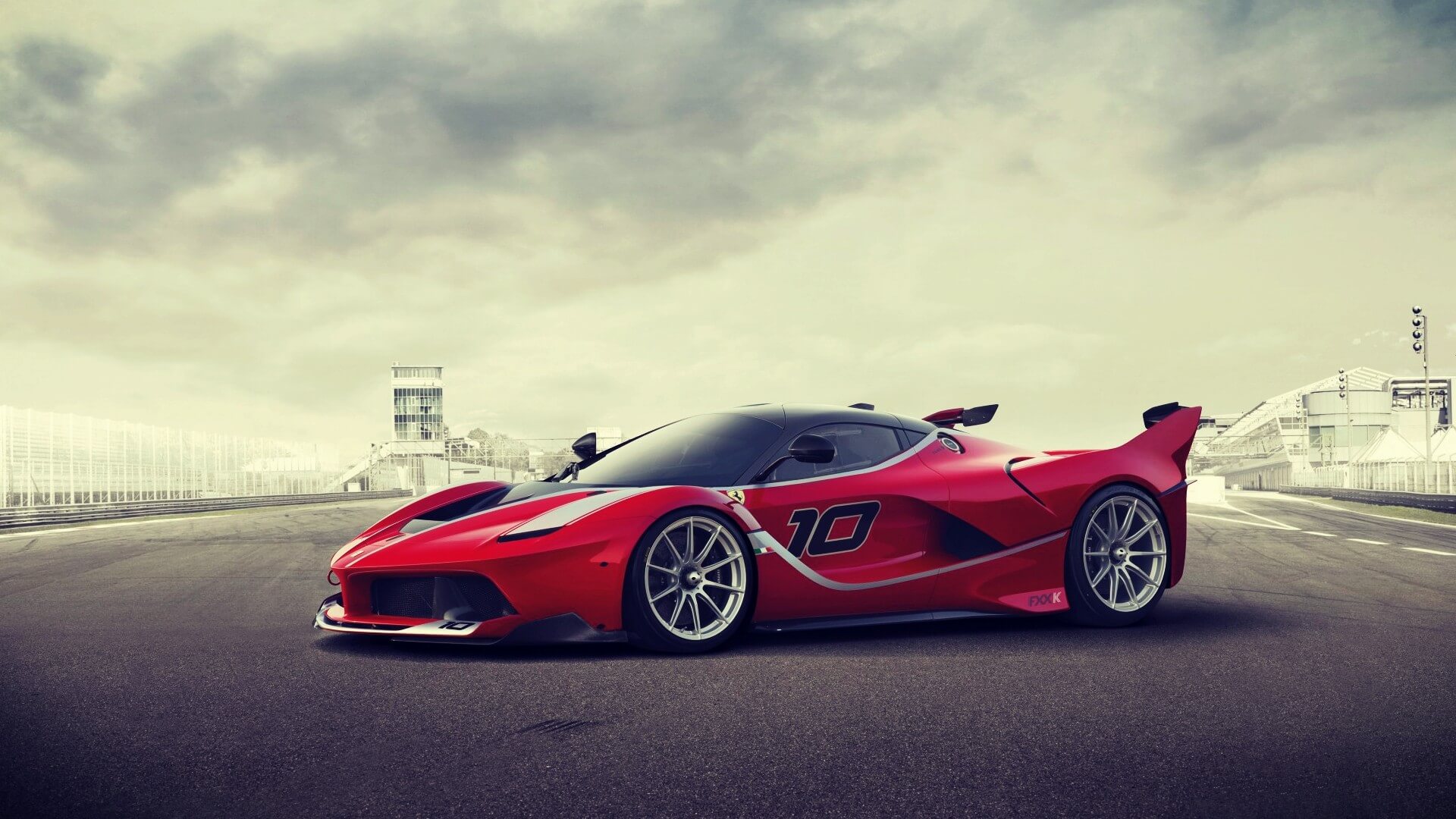
The Ferrari FXX K is a track-only hybrid hypercar based on the LaFerrari, revealed at the Yas Marina circuit in Abu Dhabi in December 2014. Its 6.3-litre V12 and HY-KERS electric motor produce 772 kW (1,050 cv). Ferrari built 40 cars for selected clients, who drive them at factory-run track days in the XX Programme instead of keeping them at home.
In short
- Power: 633 kW (860 cv) V12 plus a 140 kW (190 cv) electric motor, 772 kW (1,050 cv) and more than 900 Nm in total.
- "K" stands for KERS, the kinetic energy recovery system.
- Not homologated for the road and never raced: it is a research and development car for Ferrari and its clients.
- The 2017 FXX K Evo kit raised downforce by 23 % to 640 kg at 200 km/h.

Specs by version
Verified Manufacturer and type-approval data from our catalog · Sources and methodology
The FXX K at a glance

| Fact | Value |
|---|---|
| Revealed | December 2014, Yas Marina circuit, Abu Dhabi |
| Base | Ferrari LaFerrari |
| Engine | 6,262 cc V12, 633 kW (860 cv) at 9,200 rpm, 750 Nm at 6,500 rpm |
| Electric motor | 140 kW (190 cv), HY-KERS |
| Total output | 772 kW (1,050 cv), over 900 Nm |
| Gearbox | 7-speed dual-clutch |
| Dry weight | 1,165 kg |
| Downforce | 540 kg at 200 km/h (FXX K); 640 kg at 200 km/h (Evo) |
| Units | 40 |
| Status | Track use only, within Ferrari's XX Programme |
How the FXX K differs from the LaFerrari
The FXX K uses the LaFerrari's carbon monocoque and hybrid layout, but Ferrari developed it without the limits of road homologation or racing rules. The V12 received new camshafts, mechanical tappets in place of hydraulic ones, polished intake manifolds and an exhaust without silencers. Output rose from the road car's 708 kW to 772 kW, an increase of 64 kW, and the electric motor was turned up to 140 kW.

Aerodynamics changed most. The rear has two tail fins with an adjustable spoiler between them, the lights are new and the bumper and diffuser are larger. Launch figures put the length at about 4,895 mm and the width at 2,051 mm, while height and wheelbase stayed the same. Downforce reached 540 kg at 200 km/h. By our calculation, the car carries about 1.5 kg of dry weight per kW, against about 1.8 kg per kW for the road-going LaFerrari. The road car's history and figures are covered on our LaFerrari page.
HY-KERS and the Manettino modes
The hybrid system works as a performance tool rather than for economy. A four-position Manettino on the steering wheel lets the driver choose how the battery and motor are used:
| Mode | Purpose |
|---|---|
| Qualify | Maximum power for a limited number of laps |
| Long Run | Consistent performance over a longer session |
| Manual Boost | Instant maximum torque on demand |
| Fast Charge | Rapid recharging of the battery |

The car runs on Pirelli slick tyres with sensors that measure longitudinal, lateral and radial acceleration as well as temperature and pressure. These data feed the traction control system and Ferrari's development engineers. Carbon-ceramic brakes, 19-inch front and 20-inch rear wheels and a cabin with carbon bucket seats complete the package.
The XX Programme: how ownership works
Buying an FXX K did not mean taking it home. The cars are part of Ferrari's Client Test Driver programme: owners take part in a calendar of track events organised by Ferrari, while the factory stores, transports and maintains the cars. Each outing produces telemetry that Ferrari uses to develop its road and racing cars. The FXX K followed the FXX of 2005, based on the Enzo, and the 599XX.

Ferrari sold all 40 cars to invited clients, and press reports put the price at about 2.5 million euros in 2014. The car has no road homologation, and Ferrari never intended it for competition.
FXX K Evo: the 2017 upgrade
Ferrari presented the FXX K Evo at the Finali Mondiali at Mugello in 2017. Ferrari offered it both as a kit for existing XX cars and as a limited number of new cars, and it extended the programme for two more years.

| Feature | FXX K | FXX K Evo |
|---|---|---|
| Downforce at 200 km/h | 540 kg | about 640 kg |
| Maximum downforce | - | more than 830 kg |
| Downforce coefficient | base | +23 % (about +75 % over the road LaFerrari) |
| Rear aerodynamics | Twin fins, active spoiler | Twin-profile fixed wing, three fins, active spoiler |
| Power | 772 kW (1,050 cv) | 772 kW (1,050 cv) |
Additional downforce came from a reworked front bumper (about 10 %), an enlarged rear wheel-arch vent (about 5 %) and vortex generators under the floor, which account for about 30 % of the gain. Ferrari described the Evo's aerodynamics as close to those of its GT3 and GTE racing cars. Development took about 5,000 km of test running and 15,000 km of reliability testing.
How the FXX K compares with other track hypercars
| Model | Base | Powertrain | Character |
|---|---|---|---|
| Ferrari FXX K | LaFerrari | Hybrid V12, 772 kW (1,050 cv) | Factory-run programme, no road use |
| McLaren P1 GTR | P1 | Hybrid twin-turbo V8 | Track version of the P1, later road conversions |
| Aston Martin Vulcan | One-77 platform | Naturally aspirated V12 | Track car without hybrid assistance |
| Ferrari FXX | Enzo | Naturally aspirated V12 | First car of the XX Programme |
The road-going McLaren P1, the FXX K's closest technical rival, was built in a far larger run of 375 cars; see our McLaren P1 page. Compared with today's road cars, the FXX K would still rank near the top of the most powerful cars and among the most powerful supercars.

The FXX K's place in Ferrari history
The FXX K showed how Ferrari uses its wealthiest clients as development partners: Ferrari designed the programme to collect data for future road and racing cars, including later hybrids such as the SF90 Stradale. For collectors, it remains one of the rarest modern Ferraris, and the programme structure means most cars have a fully documented history at the factory. The wider story of the brand is in the history of Ferrari, and all models are listed in the Ferrari catalogue.


Ferrari FXX K in our rankings
- No. 3 of 146 · Most powerful Italian cars (772 kW)
- No. 25 of 1025 · Most powerful cars (772 kW · top 3%)
- No. 22 of 336 · Most powerful coupes (772 kW · top 7%)
More powerful than 97% of ranked Italian cars in the 1CARS catalog (No. 3 of 146).
Ferrari FXX K photos 14


FAQ
What does the K in FXX K stand for?
The "K" refers to KERS, the kinetic energy recovery system. Ferrari calls its version HY-KERS, a hybrid system that adds a 140 kW (190 cv) electric motor to the V12 for a total of 772 kW.
How many Ferrari FXX K were made?
Ferrari built 40 FXX K cars for selected clients. Some were later upgraded with the 2017 Evo kit, and a limited number of Evo cars were built new.
Can you drive the Ferrari FXX K on the road?
No. The FXX K is not homologated for road use and is not eligible for racing. Owners drive it at track events organised by Ferrari within the XX Programme, and the factory looks after the cars.
How much power does the FXX K have?
The 6.3-litre V12 produces 633 kW (860 cv) at 9,200 rpm, and the electric motor adds 140 kW (190 cv). Combined output is 772 kW (1,050 cv) with more than 900 Nm of torque.
What is the difference between the FXX K and the FXX K Evo?
The Evo keeps the same powertrain but has a new aerodynamic package with a twin-profile fixed rear wing. Downforce rises by 23 %, to about 640 kg at 200 km/h and more than 830 kg at top speed.
Data sources
Data checked by an editor against the sources below.
- The text of this article (1cars archive)
- Wikipedia - LaFerrari
- Ferrari - Fxx K
- Wikipedia - Ferrari FXX K


