Most reliable SUVs 2026: eight used SUVs with the fewest breakdowns
The most reliable SUVs on the used market are not always the ones with the best reputation. ADAC, Germany's motoring club, publishes how often its patrols are called out to each model, per 1,000 cars on the road and by year of first registration. The Pannenstatistik 2026 covers breakdowns in 2025 for 158 model series registered from 2016 to 2023. The eight SUVs below have the lowest rates in their classes for recent registration years, and all are common used buys: ADAC only rates series registered in thousands every year.
Quick picks
- Most reliable overall: BMW X3 (G01) – 0.7 breakdowns per 1,000 for 2023 cars.
- Most reliable premium mid-size: Audi Q5 (FY) – 1.1 for 2023 and 2.0 for 2022.
- Most reliable large SUV: BMW X5 (G05) – 1.0 for 2023.
- Best value: SEAT Ateca – 1.5 for 2023 from a mainstream brand.
- The one to avoid: Toyota RAV4 (2017–2022), with 31 to 54 breakdowns per 1,000 cars.
The table shows ADAC breakdown rates per 1,000 cars for the three most recent registration years. Lower is better; most are caused by flat starter batteries, which ADAC says account for 45.4 per cent of all breakdowns in 2025.
| Model (generation) | 2021 | 2022 | 2023 | Euro NCAP |
|---|---|---|---|---|
| BMW X3 (G01, 2017–2024) | 2.5 | 1.8 | 0.7 | 5 stars, 2017 |
| Audi Q5 (FY, 2017–2024) | 2.6 | 2.0 | 1.1 | 5 stars, 2017 |
| BMW X5 (G05, 2018–2026) | 2.4 | 1.9 | 1.0 | 5 stars, 2018 |
| BMW X1 (F48 and U11) | 2.4 | 2.0 | 1.9 | 5 stars, 2015 / 2022 |
| Volvo XC40 (2017–) | 5.0 | 4.2 | 1.1 | tested 2018 (97% adult) |
| SEAT Ateca (2016–2026) | 5.3 | 3.6 | 1.5 | 5 stars, 2016 |
| Audi Q3 (F3, 2018–2025) | 4.9 | 3.3 | 1.6 | 5 stars, 2018 |
| Mazda CX-5 (KF, 2017–2025) | 8.8 | 2.0 | 2.7 | 5 stars, 2017 |
| Toyota RAV4 (XA50) – avoid | 38.4 | 31.0 | – | 5 stars, 2019 |
Need something smaller for town? See the best small city cars. Considering a large used SUV? The BMW X5 buying guide lists every generation and engine.
-
1. BMW X3 G01
Most reliable overall
- Production years
- 2017–2024
- Body type
- SUV
- Fuel
- Petrol, Diesel
The third-generation X3 was built from 2017 to 2024, mainly at Spartanburg in the USA, and was facelifted in 2021. ADAC records just 0.7 breakdowns per 1,000 for 2023 cars, the lowest SUV figure in this list, plus 1.8 for 2022 and 2.5 for 2021. Engines include 2.0-litre four-cylinder and 3.0-litre six-cylinder petrols, 2.0 and 3.0-litre diesels and the xDrive30e plug-in hybrid with a 12 kWh battery. Euro NCAP awarded five stars in 2017. The drawback: early cars are less impressive, with 6.2 to 6.5 breakdowns per 1,000 for 2017 and 2018 registrations.
Full review: BMW X3 G01Pros
- 0.7 breakdowns per 1,000 (2023 cars)
- Wide choice of petrol, diesel and plug-in hybrid
- Five-star Euro NCAP (2017)
Cons
- 2017–2018 cars break down far more often
-
2. Audi Q5 FY
Most reliable premium mid-size SUV
- Production years
- 2017–2024
- Body type
- SUV
- Fuel
- Hybrid, Plug-in hybrid
The second Q5, coded FY, was built from 2016 at San José Chiapa in Mexico on the MLB Evo platform and facelifted in 2020. A coupé-style Sportback joined in 2021. ADAC records 1.1 breakdowns per 1,000 for 2023 cars, 2.0 for 2022 and 2.6 for 2021, with no recurring cause listed. The 2.0 TFSI launch engine has 188 kW (255 PS), and the 55 TFSI e plug-in hybrid 270 kW (367 PS). Euro NCAP awarded five stars in 2017. The drawback: the 2016 and 2017 cars record 11.1 and 9.1 breakdowns per 1,000.
Full review: Audi Q5 FYPros
- 1.1 breakdowns per 1,000 (2023 cars)
- No recurring breakdown cause listed by ADAC
- Plug-in hybrid with up to 270 kW
Cons
- Early cars much weaker (11.1 per 1,000 for 2016)
-
3. BMW X5 G05
Most reliable large SUV
- Production years
- 2018–2026
- Body type
- SUV
- Fuel
- Petrol, Diesel, Plug-in hybrid
- Power output
- 195–460 kW (265–625 PS)
The G05 X5 was built from 2018 to 2026 on BMW's CLAR platform and updated in 2023. ADAC records 1.0 breakdowns per 1,000 for 2023 cars, 1.9 for 2022 and 2.4 for 2021, outstanding for a heavy, complex SUV. Choices include the xDrive30d diesel with 195 kW and 620 Nm, the xDrive40i petrol and the xDrive45e plug-in hybrid with 290 kW and a 24 kWh battery. Euro NCAP awarded five stars in 2018. The drawback: the rate triples to 6.9 per 1,000 for 2020 cars, so later registrations are the safer buy.
Pros
- 1.0 breakdowns per 1,000 (2023 cars)
- Strong diesel and plug-in hybrid choices
- Five-star Euro NCAP (2018)
Cons
- 6.9 to 8.9 per 1,000 for 2017–2020 cars
Spec sheet: BMW X5 G05 4.4 l M50i 390 kW (530 PS)
Full review: BMW X5 G05 -
4. BMW X1 (U11)
Most reliable compact premium SUV
- Production years
- 2022–present
- Body type
- SUV
- Fuel
- Petrol, Diesel, Plug-in hybrid, Electric
- Power output
- 100–240 kW (136–326 PS)
ADAC's data for the X1 covers the F48, built from 2015 to 2022, and the current U11, which has been made since 2022 on the same UKL2 platform. The U11 adds mild-hybrid, plug-in hybrid and the electric iX1 versions. Recent registrations are consistently good: 2.4 breakdowns per 1,000 for 2021, 2.0 for 2022 and 1.9 for 2023. Euro NCAP awarded five stars to the F48 in 2015 and to the U11 in 2022. The drawback: 2016 to 2018 F48s record about 15 breakdowns per 1,000, mostly from starter batteries.
Full review: BMW X1 (U11)Pros
- Steady 1.9–2.4 breakdowns per 1,000 (2021–2023)
- Petrol, diesel, plug-in hybrid and electric (iX1)
- Five-star Euro NCAP (U11, 2022)
Cons
- 2016–2018 cars at about 15 per 1,000
-
5. Volvo XC40 I
Best compact SUV
- Production years
- 2017–present
- Body type
- SUV
- Fuel
- Petrol, Diesel, Hybrid, Plug-in hybrid, Electric
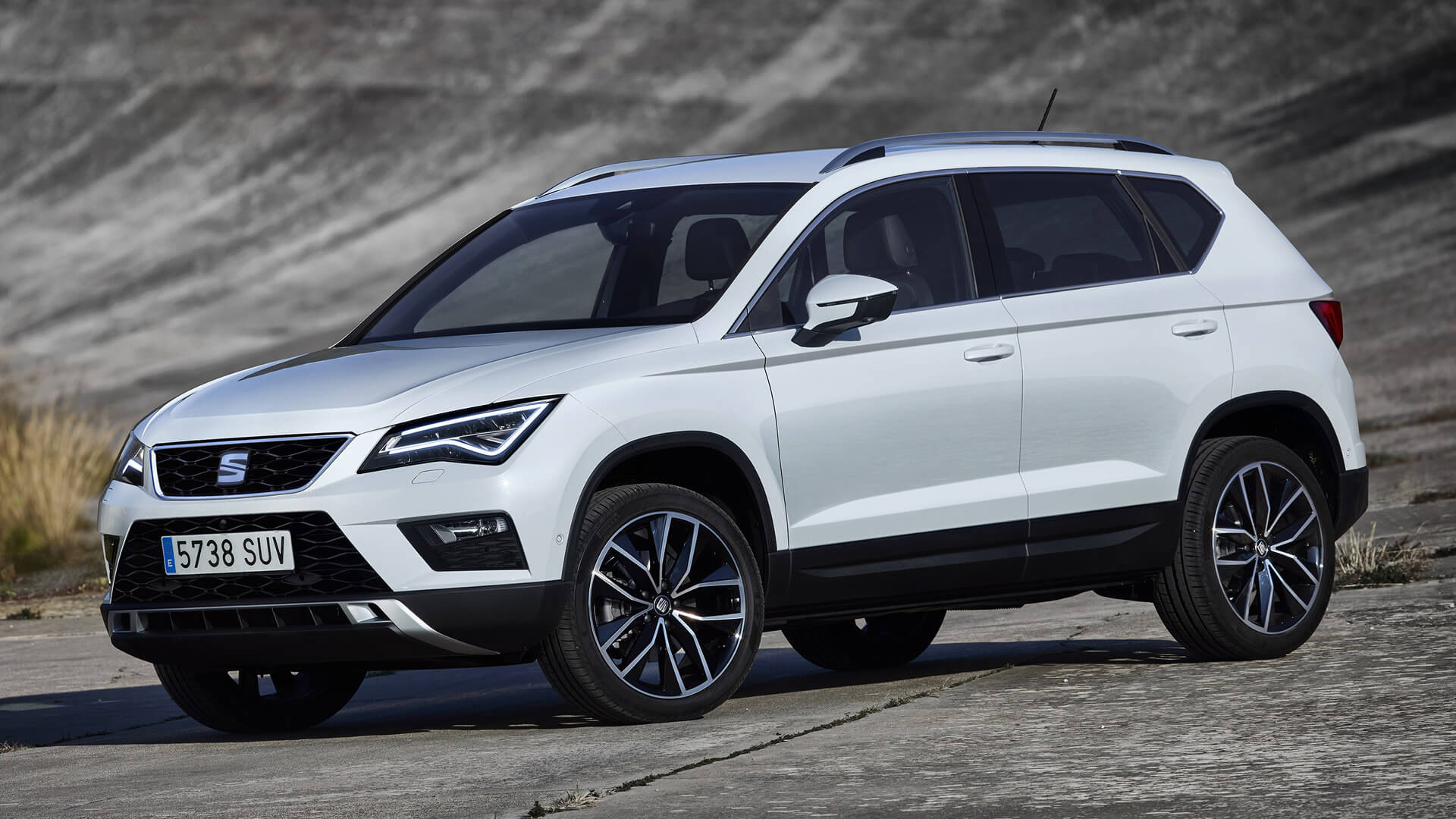
The XC40 was Volvo's first car on the CMA platform, built at Ghent in Belgium from November 2017 and voted European Car of the Year 2018. Engines range from 1.5-litre three-cylinder and 2.0-litre petrols to B4 mild hybrids, the T5 Recharge plug-in hybrid and an electric version, renamed EX40 in 2024. ADAC records 1.1 breakdowns per 1,000 for 2023 cars, 4.2 for 2022 and 5.0 for 2021. In its 2018 Euro NCAP test it scored 97 per cent for adult occupants. The drawback: 2019 and 2020 cars are weaker, at 8.9 and 6.4.
Full review: Volvo XC40 IPros
- 1.1 breakdowns per 1,000 (2023 cars)
- 97 per cent adult occupant score (2018)
- Plug-in hybrid and electric versions
Cons
- 8.9 per 1,000 for 2019 cars
-
6. SEAT Ateca KH7
Best value
- Production years
- 2016–2026
- Body type
- SUV
- Fuel
- Petrol, Diesel
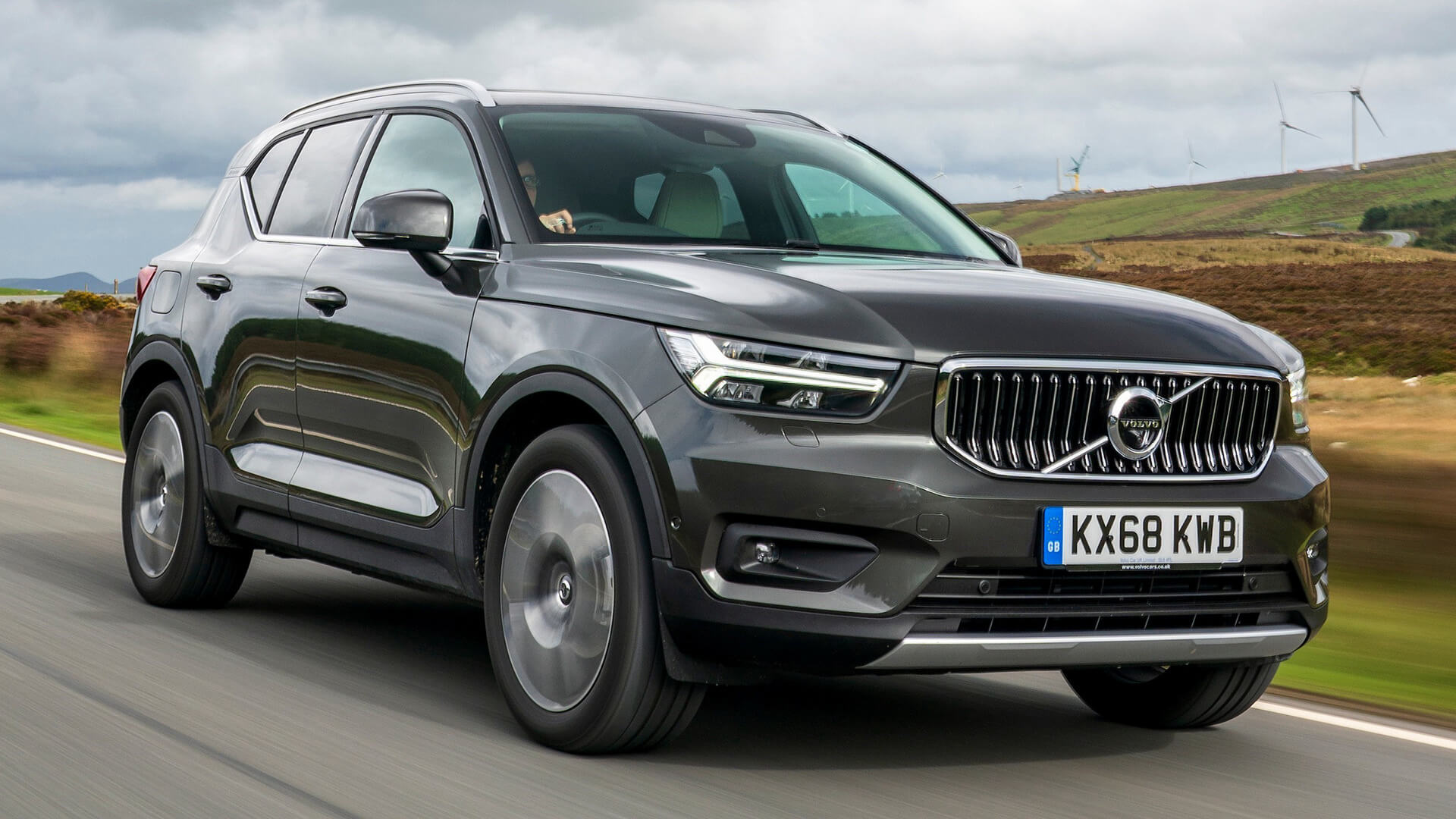
SEAT's first SUV went on sale in September 2016 and is built at Škoda's Kvasiny plant in the Czech Republic on the MQB platform. It was facelifted in 2020, and production ends in 2026. Petrol engines run from a 1.0 TSI with 85 kW (115 PS) to a 2.0 TSI with 140 kW (190 PS), and diesels from 1.6 to 2.0 TDI. ADAC records a steady fall to 3.6 breakdowns per 1,000 for 2022 cars and 1.5 for 2023. Euro NCAP awarded five stars in 2016. The drawback: ADAC notes that the cabin is roomy but not very versatile.
Full review: SEAT Ateca KH7Pros
- 1.5 breakdowns per 1,000 (2023 cars)
- Proven MQB engines and gearboxes
- Five-star Euro NCAP (2016)
Cons
- Cabin space good but not versatile (ADAC)
-
7. Audi Q3 F3
Most reliable small premium SUV
- Production years
- 2018–2025
- Body type
- SUV
- Fuel
- Petrol, Diesel, Plug-in hybrid
The second-generation Q3, coded F3, was unveiled in July 2018 on the MQB platform and built at Győr in Hungary until 2025. A Sportback version followed in 2019, and a plug-in hybrid with a 1.4-litre engine in 2021. ADAC records 1.6 breakdowns per 1,000 for 2023 cars, 3.3 for 2022 and 4.9 for 2021. Euro NCAP awarded five stars in 2018. The successor arrived in 2025 and also scored five stars. The drawback: 2018 cars stand out with 11.9 breakdowns per 1,000, so look for later registrations.
Full review: Audi Q3 F3Pros
- 1.6 breakdowns per 1,000 (2023 cars)
- Sportback and plug-in hybrid versions
- Five-star Euro NCAP (2018)
Cons
- 11.9 per 1,000 for 2018 cars
-
8. Mazda CX-5 KF
Most reliable mainstream SUV
- Production years
- 2017–2025
- Body type
- SUV
- Fuel
- Petrol, Diesel
- Power output
- 110–190 kW (150–258 PS)
The second CX-5, coded KF, reached Europe in May 2017 and was facelifted in 2021. Engines include 2.0 and 2.5-litre Skyactiv-G petrols and a 2.2-litre Skyactiv-D diesel, and all-wheel drive was optional in most markets. ADAC records 2.0 breakdowns per 1,000 for 2022 cars and 2.7 for 2023, among the best of any mainstream SUV. Euro NCAP awarded five stars in 2017. The drawbacks: 2021 cars reach 8.8 per 1,000, and ADAC lists oil-pressure breakdowns for 2016 and 2017 cars.
Pros
- 2.0 breakdowns per 1,000 (2022 cars)
- All-wheel drive available
- Five-star Euro NCAP (2017)
Cons
- Oil-pressure breakdowns on 2016–2017 cars
Spec sheet: Mazda CX-5 KF 2.0 e-Skyactiv G (24 V mild hybrid) 121 kW (165 PS)
Full review: Mazda CX-5 KF




How we chose
Selection. The list covers SUVs with a published model page on 1cars whose ADAC breakdown rates for 2021, 2022 and 2023 registrations are among the lowest of any SUV in the ADAC data. Models without values for those years, such as the Land Rover Defender and Toyota Land Cruiser, could not be judged. The Mercedes-Benz GLC was left out because its 2023 rate rose to 7.1 per 1,000, with the starter battery listed as the cause.
Data sources. Breakdown rates come from the ADAC Autokatalog model pages, which show the Pannenstatistik 2026 values by registration year (accessed October 2026); the method comes from the ADAC Pannenstatistik 2026 report of 23 April 2026. ADAC counts only technical breakdowns its patrols attend, about half of all breakdowns in Germany, and leaves out driver errors and tyres. Generation details come from English-language Wikipedia; Euro NCAP stars with their test year come from the 1cars catalogue or Wikipedia. The TÜV Report 2026 was used as a cross-check: it named the Volkswagen T-Roc the best SUV at two to three years old.
Ranking. The order is editorial and is based mainly on the 2022 and 2023 rates, with older years as a tie-breaker. Breakdown rates say nothing about repair costs at a garage, so have any used SUV checked before you buy. More on the leaders is on the 1cars pages for the BMW X3 and the Audi Q5.
Frequently asked questions
What is the most reliable SUV?
On ADAC breakdown data, the BMW X3 of the G01 generation: 0.7 breakdowns per 1,000 cars for 2023 registrations and 1.8 for 2022. The BMW X5 (1.0) and Audi Q5 and Volvo XC40 (1.1 each) follow for 2023 cars.
Is the Toyota RAV4 reliable?
Not on ADAC's numbers. The RAV4 is one of the worst mid-size models in the Pannenstatistik 2026, with 38.4 breakdowns per 1,000 for 2021 cars and up to 53.7 for 2020. ADAC lists the starter battery as the cause for every year from 2016 to 2023.
Why do SUVs break down?
Mostly because of the 12-volt starter battery. ADAC says it caused 45.4 per cent of all breakdowns its patrols attended in 2025.
Are older SUVs much less reliable?
Breakdown rates rise with age. The Audi Q5 goes from 1.1 per 1,000 for 2023 cars to 11.1 for 2016 cars, and the BMW X1 from 1.9 to 15.7. ADAC also reports that the breakdown probability of five-year-old cars fell from 3.6 per cent in 2015 to 2.1 per cent in 2025.
Which SUVs should I avoid on reliability?
ADAC names the Toyota RAV4 (2017–2022), the Hyundai Ioniq 5 (2022–2023), the Ford Kuga (2021), the Nissan Qashqai (2019) and the Toyota C-HR (2020–2022) among the worst in their classes. The Ford Kuga recorded 42.6 breakdowns per 1,000 for 2021 cars.