 Volvo XC40
Specs, engines and history
Published Sources (1) Report an error
By Felix Hartmann, Automotive Technology & EV Contributor
Verdict
Our verdict · Felix Hartmann
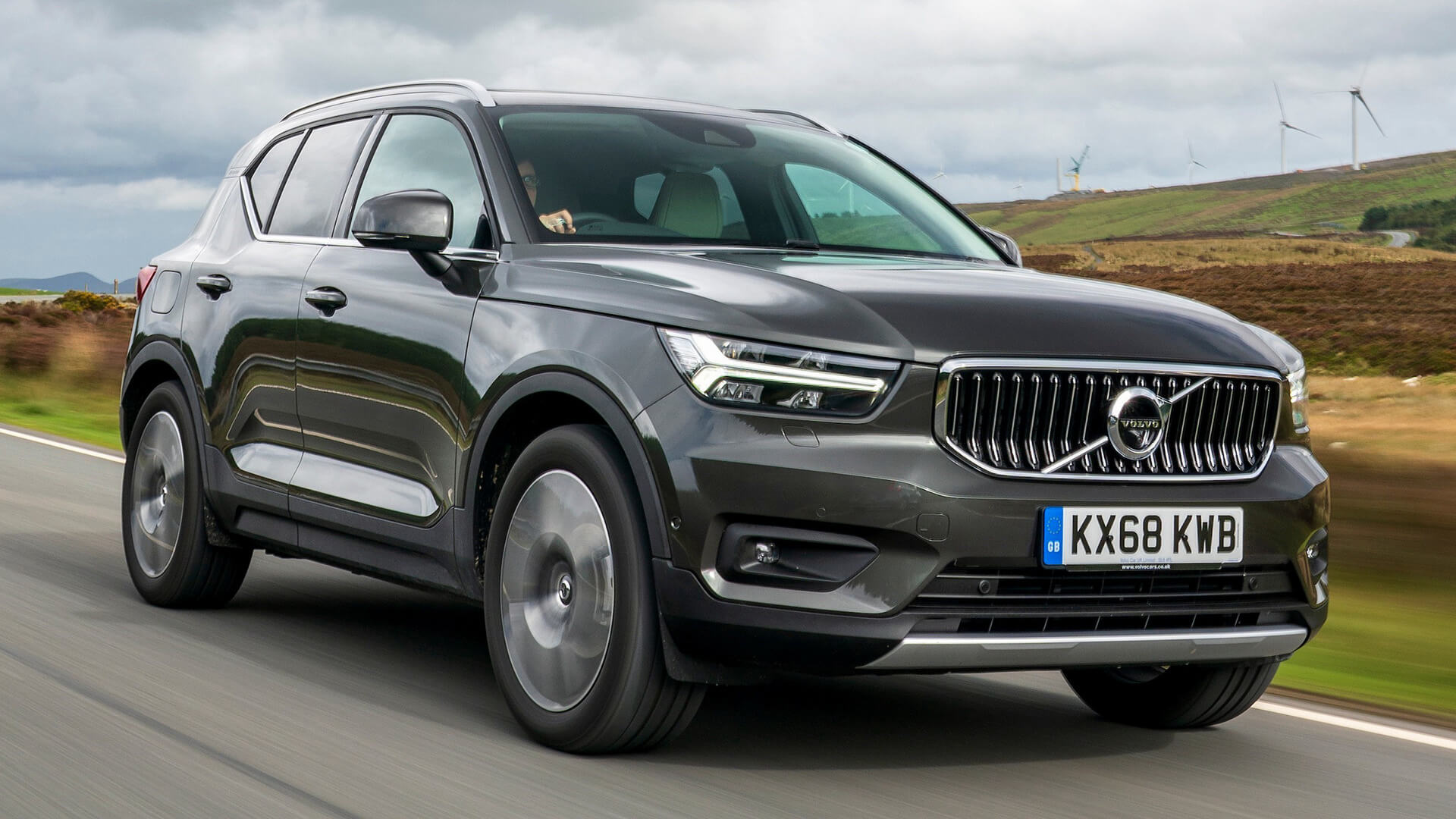
The XC40 stands out for its stylish, modern exterior and lighting, its innovative interior and its technology. Volvo entered this class successfully enough to worry the German premium brands. The rear seat is not the most comfortable, but this is a compact car. The price may seem high, but with solid equipment, an excellent safety level, good ground clearance and available all-wheel drive, it is clear why the XC40 costs what it does.
The Volvo XC40 is a compact premium crossover with front- or all-wheel drive and the first car of its class in Volvo's history. Unveiled on 21 September 2017 at a special event in Milan, it quickly proved its strength: in 2018 it was named European Car of the Year. The XC40 brings Volvo's design and safety into the small-SUV segment long dominated by BMW, Audi and Mercedes-Benz, and it is built in Ghent, Belgium.
In short
- The first Volvo on the Compact Modular Architecture (CMA); revealed in September 2017, European Car of the Year 2018, facelifted for the 2023 model year.
- Petrol engines from 95 to 185 kW (129–252 PS), diesels with 110 and 140 kW (150 and 190 PS), plug-in hybrids and a 300 kW (408 PS) electric version.
- Eight-speed automatic or seven-speed dual-clutch gearbox; AWD on the more powerful versions.
- 460 litres of boot space, expanding to 1,336 litres.
Volvo XC40 at a glance
Volvo originally considered the XC40 a replacement for the V40 Cross Country, but both were sold side by side for a while. The XC40 offers a striking interior, powerful turbocharged engines, modern technology and rich equipment. More Volvo models are listed in our Volvo catalogue, and its big brother is covered in our Volvo XC90 article.
| Item | Detail |
|---|---|
| Reveal | 21 September 2017, Milan |
| Platform | CMA (Compact Modular Architecture) |
| Award | European Car of the Year 2018 |
| Plant | Ghent, Belgium |
| Facelift | 2023 model year |
| Electric version | XC40 Recharge, renamed EX40 in 2024 |
Exterior
The XC40 looks tough. Despite sharing its platform with several other cars, its style is clearly Volvo and close to the larger XC60 and XC90.
The front has crisp, almost perfect surfaces. The bonnet, which runs parallel to the road, has several raised ridges on top, while its sides drop away vertically, making the creases stand out. Below the bonnet are large rectangular headlights with LED technology (xenon on some early cars), styled in Volvo's "Thor's hammer" design - and they are fitted even to the base car. Two LED strips that stretch from the centre to the outer edge serve as daytime running lights and indicators, and automatic high-beam control is available. Between the headlights sits a grille in black chrome with a very fine mesh, followed by a wide body-coloured section that juts forward. Below it are one rectangular and two triangular intakes; the side intakes hold fog lamps with cornering lights. Sensors for the safety systems are integrated, and the lowest part of the bumper has protective plastic cladding.
In profile the XC40 has compact side windows, small square mirrors mounted on the doors, sculpted door panels and plastic protection along the bottom. The mirrors have LED indicators, electric adjustment and automatic folding as standard, with memory as an option. A two-tone paint finish is available, with the roof in a contrasting colour; a kink in the rear door window line emphasises the colour split. The short rear wings show that the XC40 was conceived as a compact car - there is room only for the fuel flap between the rear door and the tail light. The wheel arches have black plastic trims. Standard wheels are 18 inches, with up to 21 inches optional, and there is a sportier-looking R-Design version. Ground clearance is a useful 211 mm.
The rear follows Volvo tradition. A large gloss-black spoiler with an LED brake light crowns the tailgate, and the L-shaped LED tail lights sit entirely on the body rather than on the tailgate. The tailgate has a window, the number-plate recess and an opening button moved closer to the bumper, plus chrome badges that identify the version. The two-part rear bumper is body-coloured at the top and black plastic at the bottom, with LED fog lamps and twin exhaust tips on some versions. One drawback: the black diffuser is gloss, so scratches and chips will show over time. The roof has rails in the roof colour and can be ordered with an electric sunroof.
Interior
The cabin largely mirrors the larger XC60 but has its own touches. The front seats are partly leather-trimmed, with heating; electric adjustment and ventilation are options. They have an ergonomic profile, well-shaped bolsters and a suitable cushion length. The driver faces a new three-spoke leather steering wheel with chrome spokes and many buttons for the trip computer and infotainment.
Behind it is a large, modern 12.3-inch digital instrument display with four layouts, which can show navigation information and adjusts its brightness to the cabin lighting; the base version has simpler instruments. The centre console holds the 9-inch Sensus touchscreen with Apple CarPlay, Android Auto, a Wi-Fi hotspot and voice control. Unusually, a large subwoofer is integrated into the dashboard. Below the screen are a 12 V socket, two USB ports and a phone tray with wireless charging. There is no separate climate panel; climate functions are controlled through the touchscreen.
The tunnel is stylish and modern, with a minimalist leather-trimmed gear selector, cupholders with the parking-brake and park-mode buttons next to them, storage spaces and a large armrest. Build quality and materials are good; automatic lighting for the footwells and door pockets is a nice touch, as are the vertical chrome-trimmed air vents. Options include a large panoramic roof and a Harman Kardon premium sound system with 13 speakers.
The rear bench is designed for three adults but is really comfortable for two, because of its shape and the high central tunnel. There is a fold-down armrest with cupholders. Space is not lavish, as the car's dimensions do not allow more, but the XC40 does not lose out to its rivals. The boot holds 460 litres - enough for shopping trips - and folding the rear backrests in three sections creates a flat floor and 1,336 litres.
Engines and transmissions
| Version | Engine | Power (kW / PS) | Torque | Notes |
|---|---|---|---|---|
| T2 | 1.5 three-cylinder turbo petrol | 95 kW / 129 PS | 245 Nm | From 2020 |
| T3 | 1.5 three-cylinder turbo petrol | 120 kW / 163 PS | 265 Nm | From 2018 |
| T4 | 2.0 four-cylinder turbo petrol | 140 kW / 190 PS | 300 Nm | From 2018 |
| T5 AWD | 2.0 four-cylinder turbo petrol | 182 kW / 247 PS | 350 Nm | Later 185 kW / 252 PS |
| D3 | 2.0 four-cylinder turbodiesel | 110 kW / 150 PS | 320 Nm | 2018–2020 |
| D4 AWD | 2.0 four-cylinder turbodiesel | 140 kW / 190 PS | 400 Nm | 2017–2020 |
| T4 Recharge | 1.5 petrol plug-in hybrid | 157 kW / 214 PS combined | - | 2020–2023 |
| T5 Recharge | 1.5 petrol plug-in hybrid | 195 kW / 265 PS combined | - | 2019–2023 |
| P8 Recharge | Two electric motors | 300 kW / 408 PS | 660 Nm | Electric, AWD |
The 2.0-litre petrol engines belong to Volvo's Drive-E family, with turbocharging, 16 valves, direct injection and variable valve timing. The T4 and T5 reach 100 km/h in 6.5–8.4 seconds and top out at 210–230 km/h, using 6.9–7.2 l/100 km on the combined cycle. The diesels reach 100 km/h in 7.9–10.4 seconds, with top speeds of 200–210 km/h and consumption of 5.0–5.4 l/100 km.
Most versions use an eight-speed automatic; some smaller petrol engines and the plug-in hybrids use a seven-speed dual-clutch gearbox. The D3 is front-wheel drive as standard with optional all-wheel drive, while the D4 and T5 come with AWD. The all-wheel-drive system uses a multi-plate clutch that can send up to 50% of the torque to the rear wheels.
Chassis
The CMA platform has a transverse engine and a body with a high proportion of high-strength steel. The front suspension uses MacPherson struts and the rear a multi-link arrangement, with passive dampers and anti-roll bars all round; a sports chassis or adaptive dampers with electronic control are optional. Rack-and-pinion steering has electric assistance with adjustable characteristics, and ventilated disc brakes work with the usual electronic aids.
Safety and equipment
Volvo has long been known for building some of the safest cars in the world, and the XC40 continues that tradition despite its compact cabin and sporty look. Depending on the version, it offers front, side and curtain airbags and a driver's knee airbag, a 360-degree camera, pedestrian detection, rear collision warning, traffic-sign and pedestrian recognition, adaptive headlights, automatic emergency braking, blind-spot monitoring, lane keeping assist, driver alert, hill-start and hill-descent assistance, Pilot Assist semi-automated driving, automatic parking, rear cross-traffic alert, ISOFIX mounts and tyre-pressure monitoring. Comfort features include navigation, adaptive cruise control, Qi wireless charging, keyless entry, rain and light sensors, a power tailgate, smartphone control and three-zone climate control.
The owner can even send a digital key to another person's smartphone and let them unlock and start the car from another country. Volvo also launched the XC40 with "Care by Volvo", a subscription service in several countries: the car is ordered online and a single monthly fee covers its use and most services, with no haggling at the dealer and no separate insurance or loan paperwork.
The well-equipped base version has air conditioning, LED headlights, 17-inch alloys, cruise control, automatic emergency braking, lane keeping assist, rain and light sensors, Bluetooth, USB, seven airbags, electric windows and an infotainment system. Higher trims add leather upholstery, an electric driver's seat with memory, twin exhausts, fog lamps, tyre-pressure monitoring, hill-descent control, voice control, the 9-inch touchscreen, the Harman Kardon audio system, the 360-degree camera, Pilot Assist and 19-inch wheels.
Rivals
The XC40 competes with the BMW X1, Audi Q2 and Q3, Mercedes-Benz GLA, Range Rover Evoque, Jaguar E-Pace, Volkswagen Tiguan, Toyota RAV4 and Hyundai Tucson.
Volvo XC40 in our rankings
- No. 443 of 912 · Longest-running car nameplates (9 years · top 49%)
- No. 182 of 305 · Oldest car models still on sale (9 years · top 60%)
In production longer than 51% of ranked nameplates in the 1CARS catalog (No. 443 of 912).
FAQ
When was the Volvo XC40 launched?
It was unveiled on 21 September 2017 and named European Car of the Year in 2018.
What engines does the Volvo XC40 have?
Petrol engines from 95 to 185 kW (129–252 PS), diesels with 110 and 140 kW (150 and 190 PS) until 2020, plug-in hybrids and an electric version with 300 kW (408 PS).
How big is the Volvo XC40 boot?
460 litres, or 1,336 litres with the rear seats folded.
Is there an electric Volvo XC40?
Yes. The XC40 Recharge has two electric motors with 300 kW (408 PS); in 2024 it was renamed EX40.
Data sources
Data checked by an editor against the sources below.