
 Volvo XC90
All generations, specs and history
Updated Published Sources (5) Report an error
By Felix Hartmann, Automotive Technology & EV Contributor Reviewed by Oleksandr Hnatiuk

- Built
- 2002–present
- Generations
- 2
- Top power
- 335 kW (455 PS)
Timeline
XC90 generations
Click a generation for its own page


- XC90 I 2002–2014 · SUV · 155–232 kW (211–315 PS)
- XC90 II Current 2015–now · SUV · 140–335 kW (190–455 PS)
Newest first · 2 generations since 2002
-
2015

-
2002

All generations by year: XC90 II (2015–now) · XC90 I (2002–2014)
Which one is mine?
Pick the year of first registration to see which generation it is.
Check by VINWhich Volvo XC90 to buy
Our verdict · Felix Hartmann
First-generation cars are now affordable family transport; the D5 is the most durable choice, while the V8 is rare and thirsty. Among second-generation cars, the facelifted B5 or B6 mild hybrids suit long distances, and the T8 Recharge from 2021 with the larger battery is the best choice for drivers who can charge at home. Check the service history, the condition of the air suspension where fitted, and on early T8s the state of the battery and charging equipment.
The Volvo XC90 is a large seven-seat SUV built in Torslanda, Sweden, since 2002. The first generation (P2 platform, 2002–2014) introduced Roll Stability Control and side curtains for the third row; the second generation, revealed on 26 August 2014 on the SPA platform, uses four-cylinder Drive-E engines up to the T8 plug-in hybrid with 335 kW (455 PS). It scored 97% for adult protection in Euro NCAP's 2015 test.
In short
- First generation: 2002–2014 (China as XC Classic to 2016); five- and six-cylinder engines, a Yamaha V8 and D5 diesel.
- Second generation: from 2015, 4,950 mm long, 2,984 mm wheelbase, designed under Thomas Ingenlath.
- Engines since 2015: D4, D5, T5, T6, then B5/B6 mild hybrids and the T8 plug-in hybrid (renamed Recharge in 2021).
- Facelifts in 2019 and September 2024; the electric EX90 is sold alongside it.
Size at a glance
Tesla Model X
The Volvo XC90 II is 86 mm shorter, 76 mm narrower and 91 mm taller than the Tesla Model X.
| Dimensions | Volvo XC90 II | Tesla Model X | Difference |
|---|---|---|---|
| Length | 4,950 mm194.9 in | 5,036 mm198.3 in | −86 mm−3.4 in |
| Width | 1,923 mm75.7 in | 1,999 mm78.7 in | −76 mm−3.0 in |
| Height | 1,775 mm69.9 in | 1,684 mm66.3 in | +91 mm+3.6 in |
| Wheelbase | 2,984 mm117.5 in | 2,965 mm116.7 in | +19 mm+0.7 in |
| Boot | 613 L21.6 cu ft | - | - |
Running cost
Fuel · XC90 D5 165 kW (224 PS) SUV
about 1,650 EUR fuel a year at 15,000 km
6.7 l/100 km · diesel at 1.65 EUR/l · change mileage, fuel price or version
Specs by version
Engines
| Version | Engine | Power |
|---|---|---|
| Plug-in hybrid · 2 versions | ||
| XC90 II · 294 kW (400 PS) SUV | Plug-in hybrid | 294 kW 400 PS394 hp |
| XC90 II · T8 Recharge AWD | 4 cyl · Plug-in hybrid | 335 kW 455 PS449 hp |
| Diesel · 1 version | ||
| XC90 II · D5 165 kW (224 PS) SUV | Diesel D5 | 165 kW 224 PS221 hp |
| Petrol · 7 versions | ||
| XC90 I · 2.5 T | 2.5 l · 5 cyl · Petrol 2,500 cc | 155 kW 211 PS208 hp |
| XC90 I · 3.2 | 3.2 l · 6 cyl · Petrol 3,200 cc | 175 kW 238 PS235 hp |
| XC90 I · T6 2.9 | 2.9 l · 6 cyl · Petrol 2,900 cc | 200 kW 272 PS268 hp |
| XC90 I · 4.4 V8 (B8444S) | 4.4 l · 8 cyl · Petrol 4,400 cc | 232 kW 315 PS311 hp |
| XC90 II · B5 AWD (mild hybrid) | 4 cyl · Petrol | 175 kW 238 PS235 hp |
| XC90 II · 183 kW (249 PS) SUV | Petrol | 183 kW 249 PS245 hp |
| XC90 II · B6 AWD (mild hybrid) | 4 cyl · Petrol | 221 kW 300 PS296 hp |
| Other · 2 versions | ||
| XC90 II · 147 kW (200 PS) SUV | - | 147 kW 200 PS197 hp |
| XC90 II · 235 kW (320 PS) SUV | - | 235 kW 320 PS315 hp |
Performance
Show all 4 versions
| Version | CO₂ |
|---|---|
| Diesel · 1 version | |
| XC90 II · D5 165 kW (224 PS) SUV | 179 g/km |
| Petrol · 2 versions | |
| XC90 II · B5 AWD (mild hybrid) | 222 g/km |
| XC90 II · 183 kW (249 PS) SUV | 222 g/km |
| Other · 1 version | |
| XC90 II · 147 kW (200 PS) SUV | - |
Dimensions and weight
Show all 9 versions
| Version | Length | Width | Height | Wheelbase | Kerb weight | Boot |
|---|---|---|---|---|---|---|
| Plug-in hybrid · 2 versions | ||||||
| XC90 II · 294 kW (400 PS) SUV | 4,950 mm194.9 in | 1,923 mm75.7 in | 1,775 mm69.9 in | 2,984 mm117.5 in | - | 613 l21.6 cu ft |
| XC90 II · T8 Recharge AWD | 4,950 mm194.9 in | 1,923 mm75.7 in | 1,775 mm69.9 in | 2,984 mm117.5 in | - | - |
| Diesel · 1 version | ||||||
| XC90 II · D5 165 kW (224 PS) SUV | 4,950 mm194.9 in | 1,923 mm75.7 in | 1,775 mm69.9 in | 2,984 mm117.5 in | 2,170 kg4,784 lb | 613 l21.6 cu ft |
| Petrol · 4 versions | ||||||
| XC90 I · 2.5 T | - | 1,898 mm74.7 in | - | 2,857 mm112.5 in | - | - |
| XC90 II · B5 AWD (mild hybrid) | 4,950 mm194.9 in | 1,923 mm75.7 in | 1,775 mm69.9 in | 2,984 mm117.5 in | 1,998 kg4,405 lb | - |
| XC90 II · 183 kW (249 PS) SUV | 4,950 mm194.9 in | 1,923 mm75.7 in | 1,775 mm69.9 in | 2,984 mm117.5 in | 1,998 kg4,405 lb | 613 l21.6 cu ft |
| XC90 II · B6 AWD (mild hybrid) | 4,950 mm194.9 in | 1,923 mm75.7 in | 1,775 mm69.9 in | 2,984 mm117.5 in | - | - |
| Other · 2 versions | ||||||
| XC90 II · 147 kW (200 PS) SUV | 4,950 mm194.9 in | - | 1,700 mm66.9 in | - | - | 613 l21.6 cu ft |
| XC90 II · 235 kW (320 PS) SUV | 4,950 mm194.9 in | 1,923 mm75.7 in | 1,775 mm69.9 in | 2,984 mm117.5 in | - | 613 l21.6 cu ft |
Verified Manufacturer and type-approval data from our catalog · Sources and methodology
Volvo XC90 at a glance
The XC90 was Volvo's first SUV. A concept appeared at the Detroit show in January 2001, and the production car followed there a year later. It was North American Car of the Year and Motor Trend SUV of the Year for 2003, and the second generation repeated the Motor Trend title and won North American Utility Vehicle of the Year in 2016. The brand's story is told in the history of Volvo, and the range is in the Volvo catalogue.

| Generation | Platform | Years | Engines | Power (kW / PS) |
|---|---|---|---|---|
| 1st | P2 | 2002–2014 (XC Classic in China to 2016) | 2.5T, T6, 3.2, V8, D3/D5 | 120–232 / 163–315 |
| 2nd | SPA | 2015– | D4, D5, T5, T6, B5, B6, T8 PHEV | 140–335 / 190–455 |
First generation (2002–2014)
Design and layout
The first XC90 shared the P2 platform with the S80 and the all-wheel-drive V70 Cross Country. Its design combined a high, estate-like body with the trapezoidal grille and broad shoulders of contemporary Volvos. All engines were mounted transversely: this short engine package left room for a larger front crumple zone and a longer cabin. Updates in 2007, 2010 and 2012–2013 brought a revised front and rear, new interior trim, LED tail lights and LED daytime running lights.

Engines and gearboxes
| Engine | Power | Torque | Notes |
|---|---|---|---|
| 2.5T five-cylinder turbo | 155 kW (211 PS) | 320 Nm | FWD or AWD |
| T6 2.9 twin-turbo six | 200 kW (272 PS) | 380 Nm | AWD only |
| 3.2 six-cylinder | 175 kW (238 PS) | – | From 2007; later 179 kW (243 PS) |
| V8 4.4 (Yamaha-developed) | 232 kW (315 PS) | 441 Nm | From 2005; 0–100 km/h in about 7.3 s |
| D3 diesel | 120 kW (163 PS) | – | – |
| D5 diesel | 136 kW (185 PS) | 400 Nm | 2005–2011 rating |
Gearboxes included a 6-speed manual and 4-, 5- and 6-speed automatics (Geartronic). AWD used a Haldex clutch that normally sent almost all torque to the front wheels and moved it rearwards when they slipped; the front-drive bias explains why the XC90 was never a true off-roader. Petrol engines were thirsty: the 2.5T used about 15 L/100 km in town and the V8 about 20 L/100 km, while the D5 averaged about 7.5–11 L/100 km.
Cabin and seven seats
The cabin seats seven. The middle bench consists of three individually adjustable seats; the centre one slides forward to bring a child closer to the front seats and can convert into a booster seat or a table. The two third-row seats fold into the floor, leaving 613 litres with a flat load floor, and with the rear seats folded the XC90 carries objects nearly 3 metres long. The split tailgate's lower section doubles as a bench. Rear passengers have their own audio controls and air vents.
Safety innovations
Volvo designed the XC90 to be as safe as its saloons, and it introduced several firsts:
- Roll Stability Control (RSC): a gyroscopic sensor detects the risk of rollover and reduces engine power and brakes individual wheels.
- Roll-over protection (ROPS): a roof structure reinforced with ultra-high-strength boron steel.
- Third-row curtain airbags: inflatable curtains covering all three rows, with the strengthened third-row seats placed above the rear axle for side-impact protection.
- DSTC, SIPS and WHIPS: stability control, side-impact protection and whiplash-reducing front seats.
Active bi-xenon headlights turn up to 15° in each direction, and a reversing camera shows the planned path. The IIHS rated the XC90 Good and named it a Top Safety Pick.
Second generation (2015 to today)
Design and platform
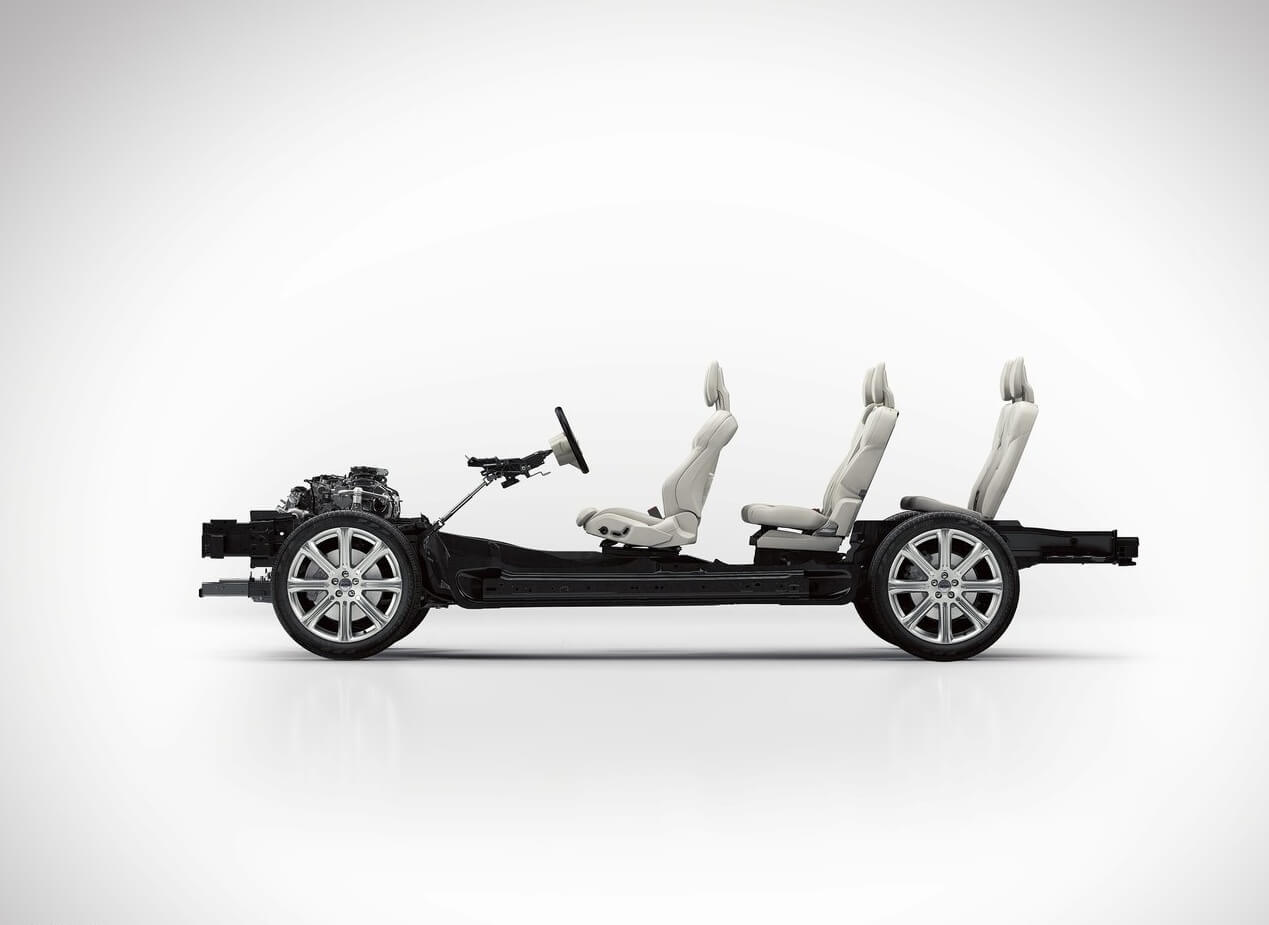
Revealed in Stockholm on 26 August 2014 and on sale from 2015, the second XC90 was the first Volvo on the Scalable Product Architecture (SPA). More than 90% of its parts were new. Designed under Thomas Ingenlath, with an interior by Robin Page, it introduced Volvo's "Thor's hammer" LED daytime running lights and a vertical-bar grille, building on the XC Coupé concept of 2013. The body mixes aluminium with several grades of high-strength steel, the drag coefficient is 0.30, and lightweight construction cut weight compared with the old car despite larger dimensions. Production is at Torslanda, with assembly in Malaysia and India.

Engines, gearbox and drive
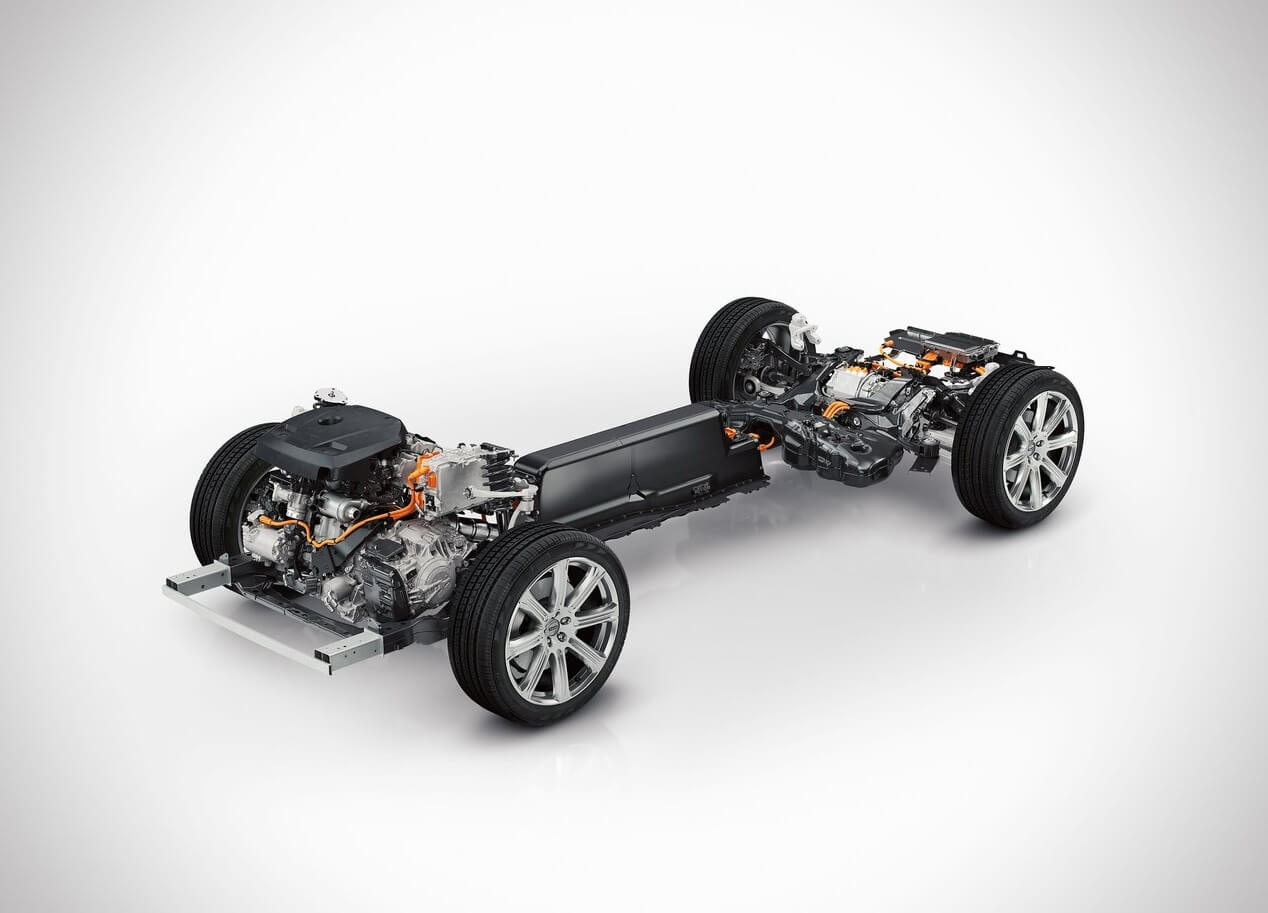
All engines are 2.0-litre four-cylinder Drive-E units with direct injection and turbocharging; the T6 adds a supercharger, and the T8 combines that engine with an electric motor driving the rear wheels.
| Engine | Type | Power | Torque |
|---|---|---|---|
| D4 | Diesel | 140 kW (190 PS) | 400 Nm |
| D5 | Twin-turbo diesel | 165–173 kW (225–235 PS) | 470 Nm |
| T5 | Petrol | 180 kW (245 PS) | – |
| T6 | Turbo + supercharger | 235 kW (320 PS) | 400 Nm |
| B5 | Mild hybrid (from 2019) | 175 kW (235 hp) | – |
| B6 | Mild hybrid petrol | 221 kW (300 PS) | – |
| T8 / Recharge | Plug-in hybrid | 298–335 kW (400–455 PS) | 640–709 Nm |
Every engine uses an 8-speed Aisin automatic. AWD uses a fifth-generation Haldex system; front-wheel drive was offered with smaller engines in some markets. The T6 reaches 100 km/h in 6.9 seconds and 230 km/h. The T8's battery grew from 9.2 kWh in 2016 to about 18.8 kWh in 2021, when its electric motor was upgraded to 107 kW. Volvo built its last diesel car in March 2024, ending the D5 and B5 diesel.
Chassis
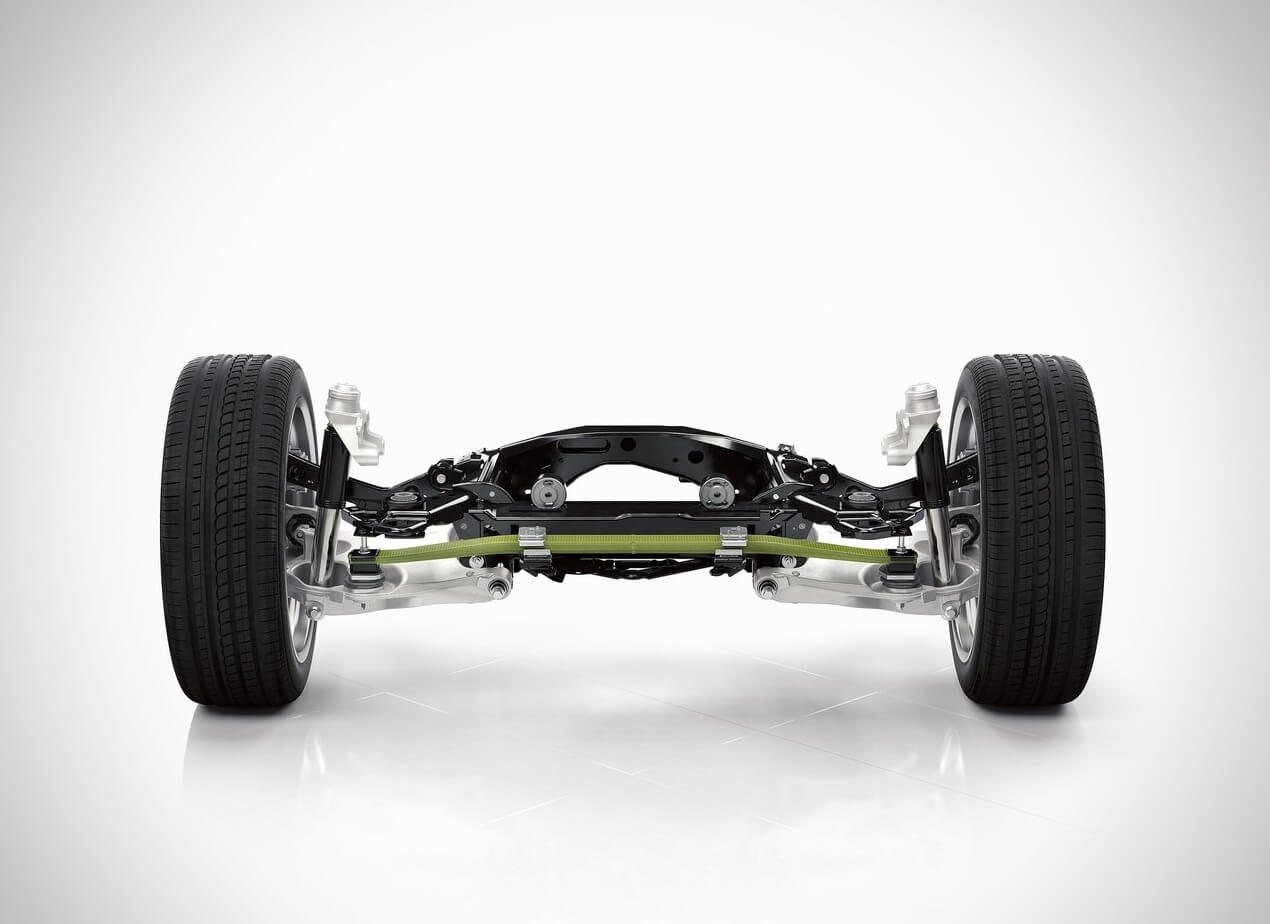
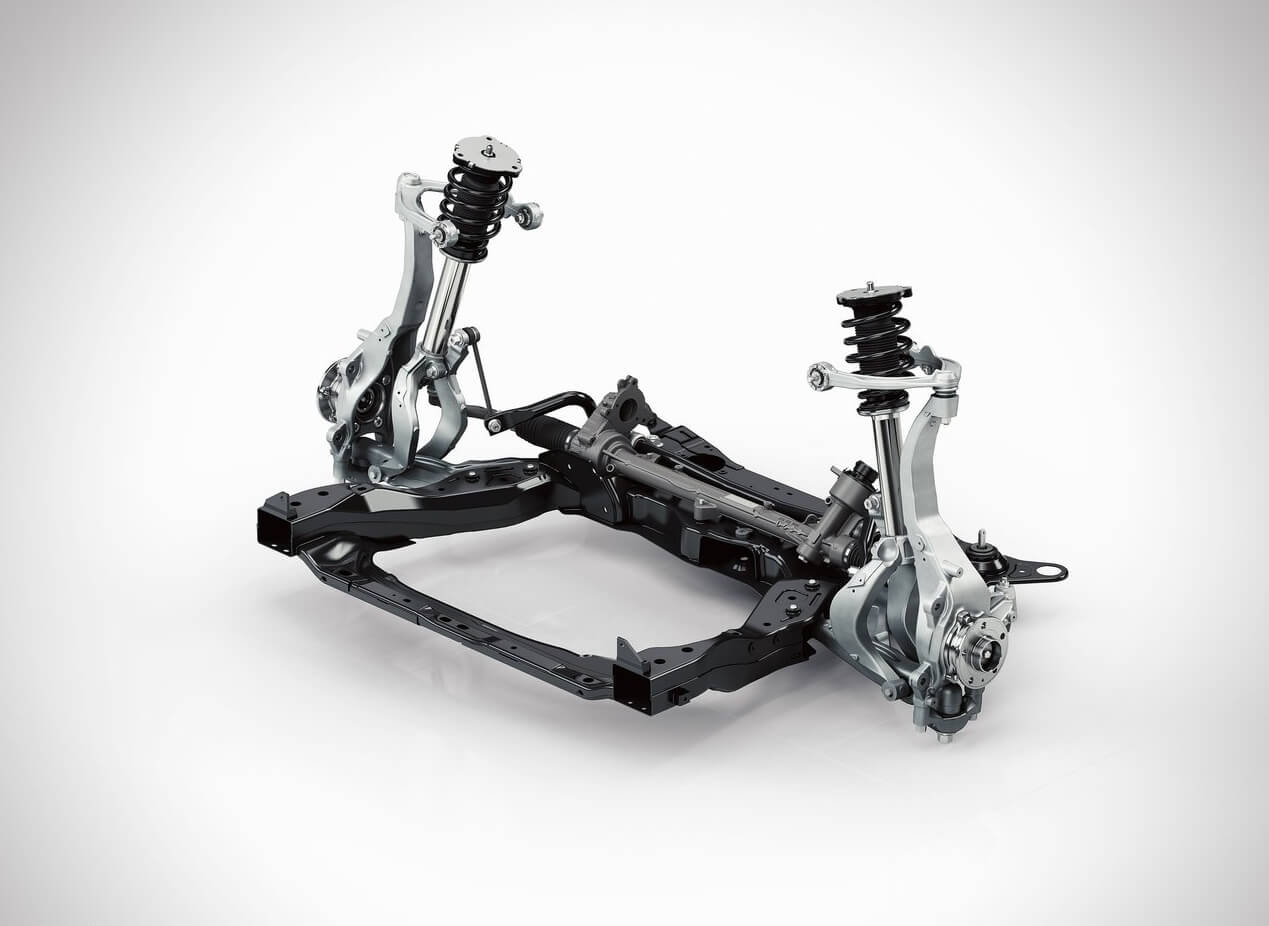
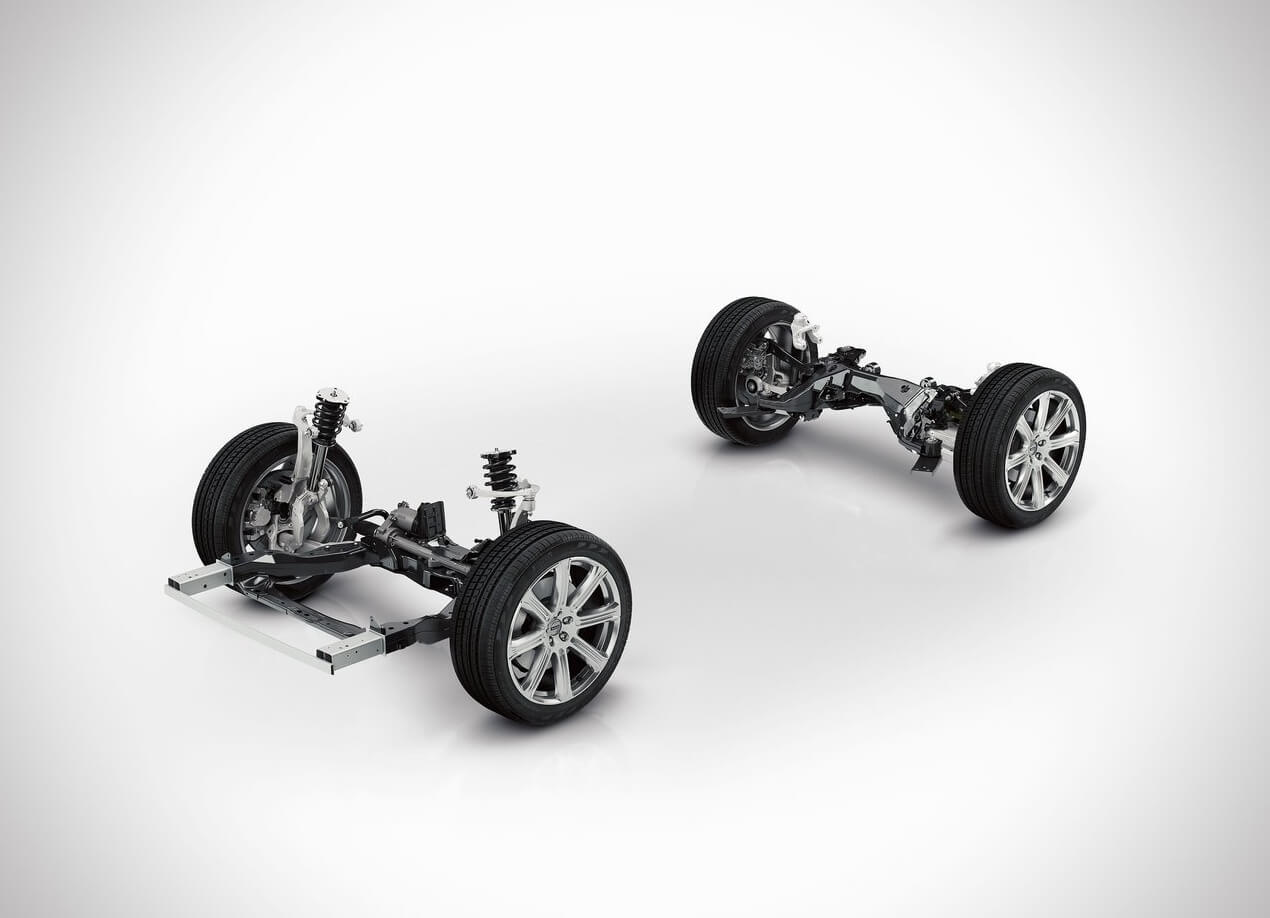
Suspension uses double wishbones at the front and an integral-link rear axle with a transverse composite leaf spring, mounted on steel subframes. Optional air suspension raises or lowers the car depending on road conditions and driving mode.
Dimensions, interior and boot
| Parameter | Metric | Imperial |
|---|---|---|
| Length | 4,950 mm | 194.9 in |
| Width | 1,923 mm (2,008 mm with mirrors) | 75.7 in |
| Height | 1,775 mm | 69.9 in |
| Wheelbase | 2,984 mm | 117.5 in |
| Ground clearance | up to 235 mm (air suspension) | 9.3 in |
| Boot (7 seats up / 5 seats / max) | 451 L / about 613 L / 1,899 L | 15.9 / 21.6 / 67.1 cu ft |
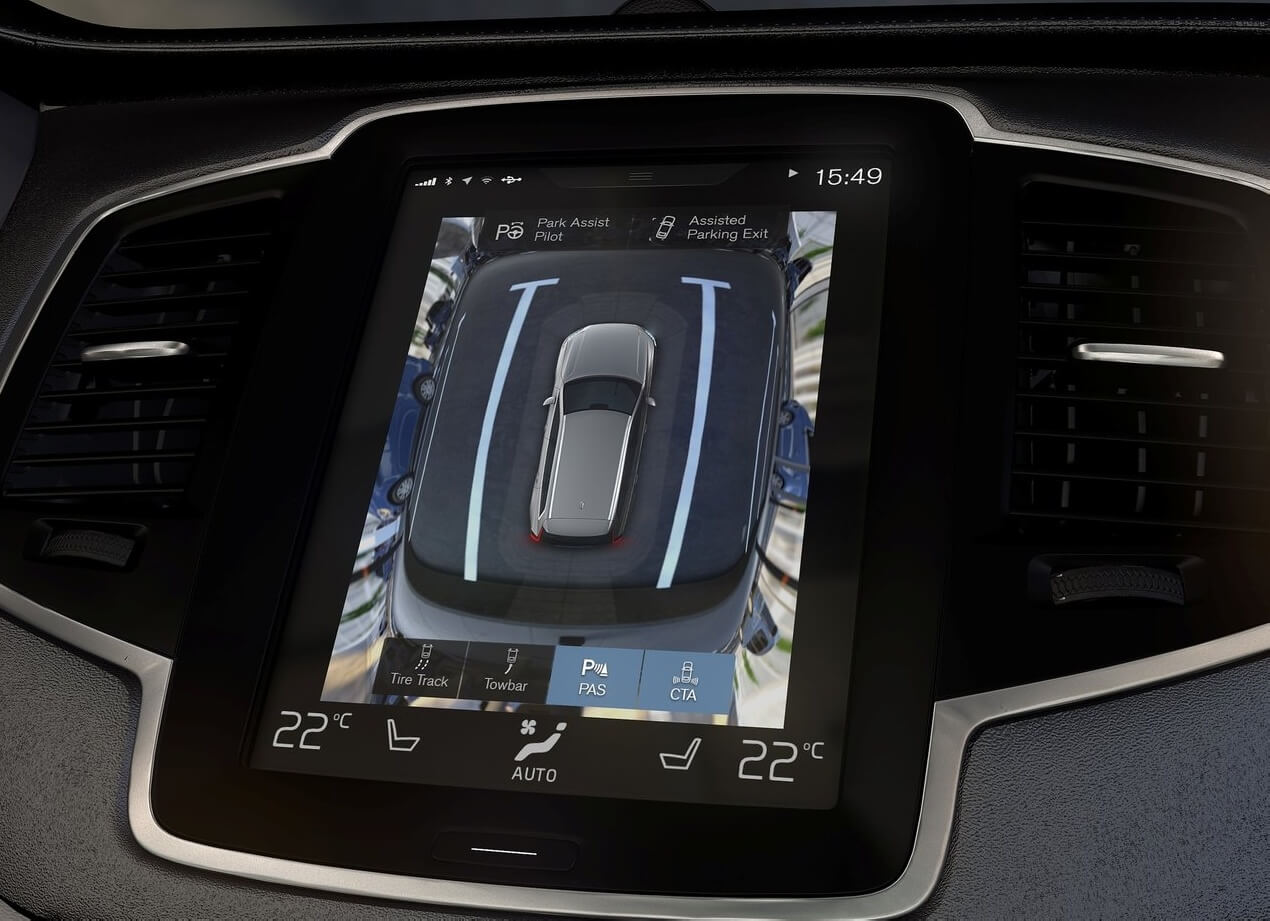
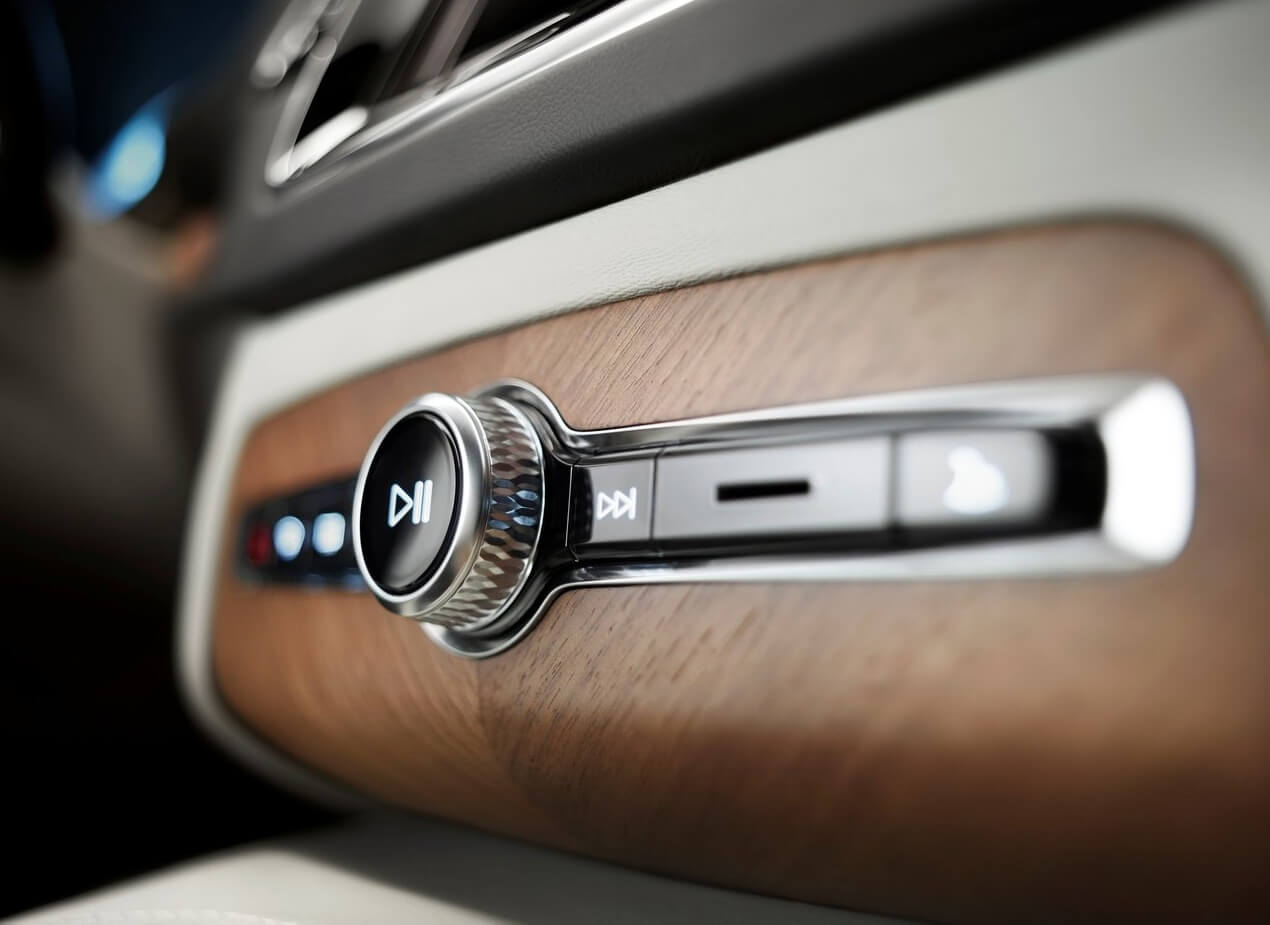
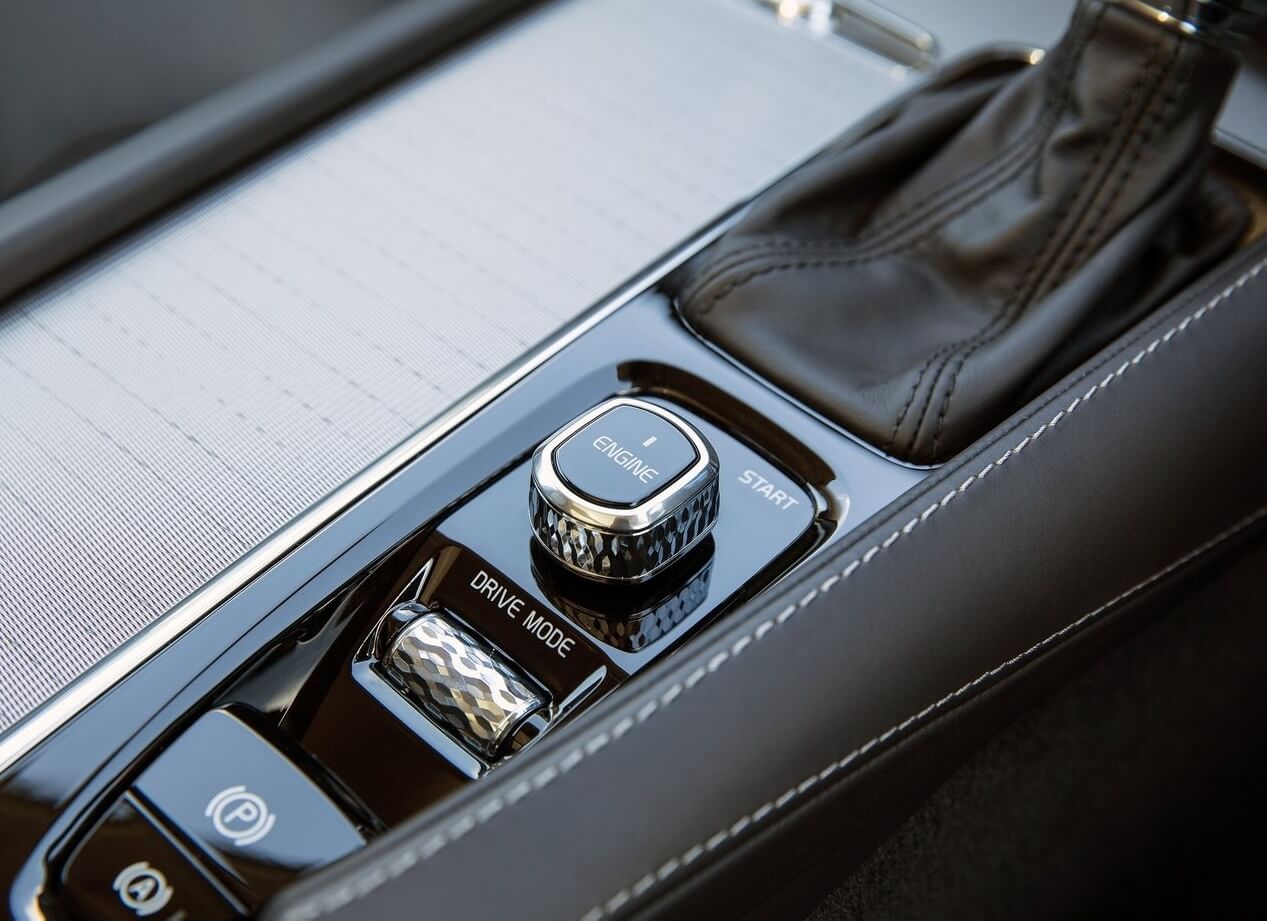
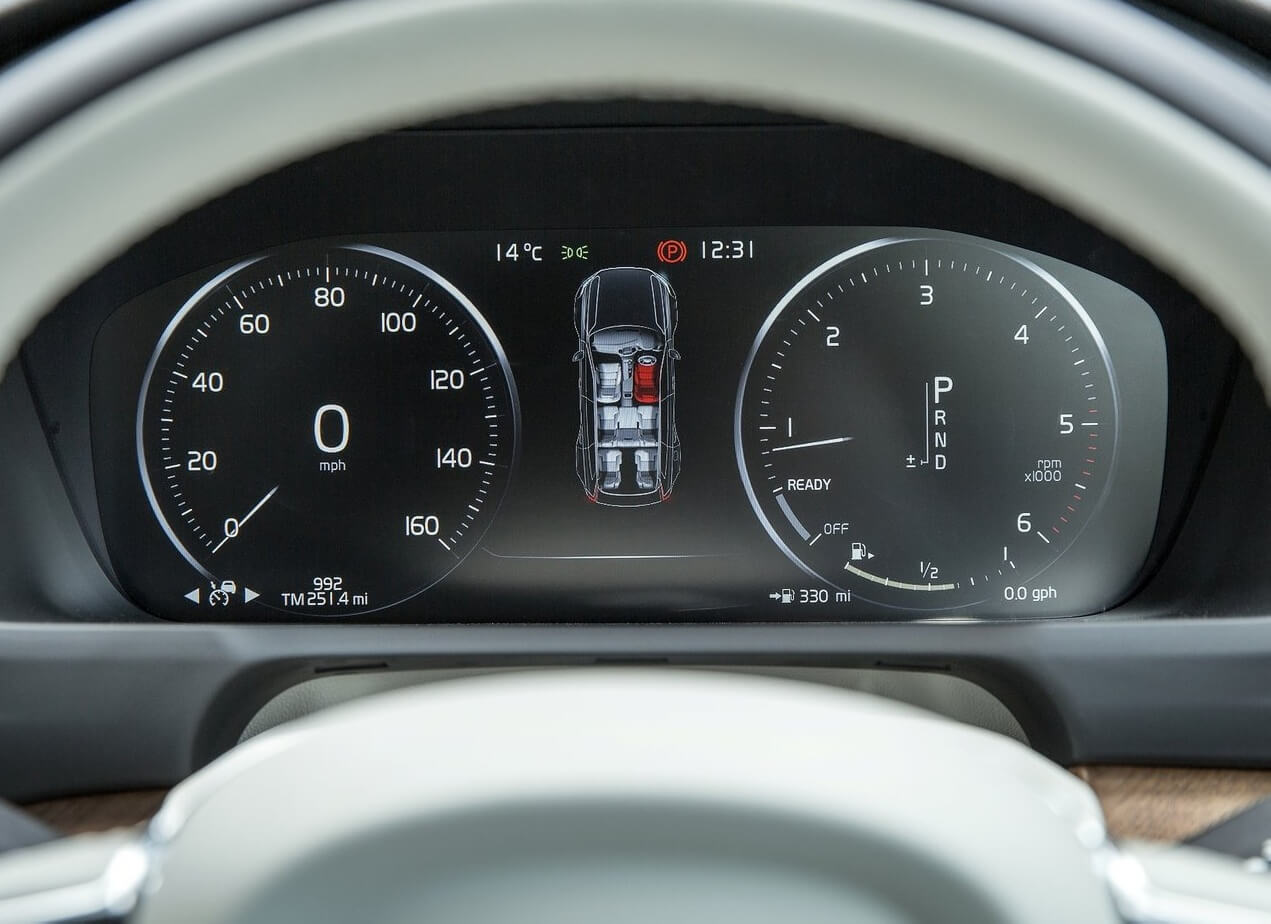
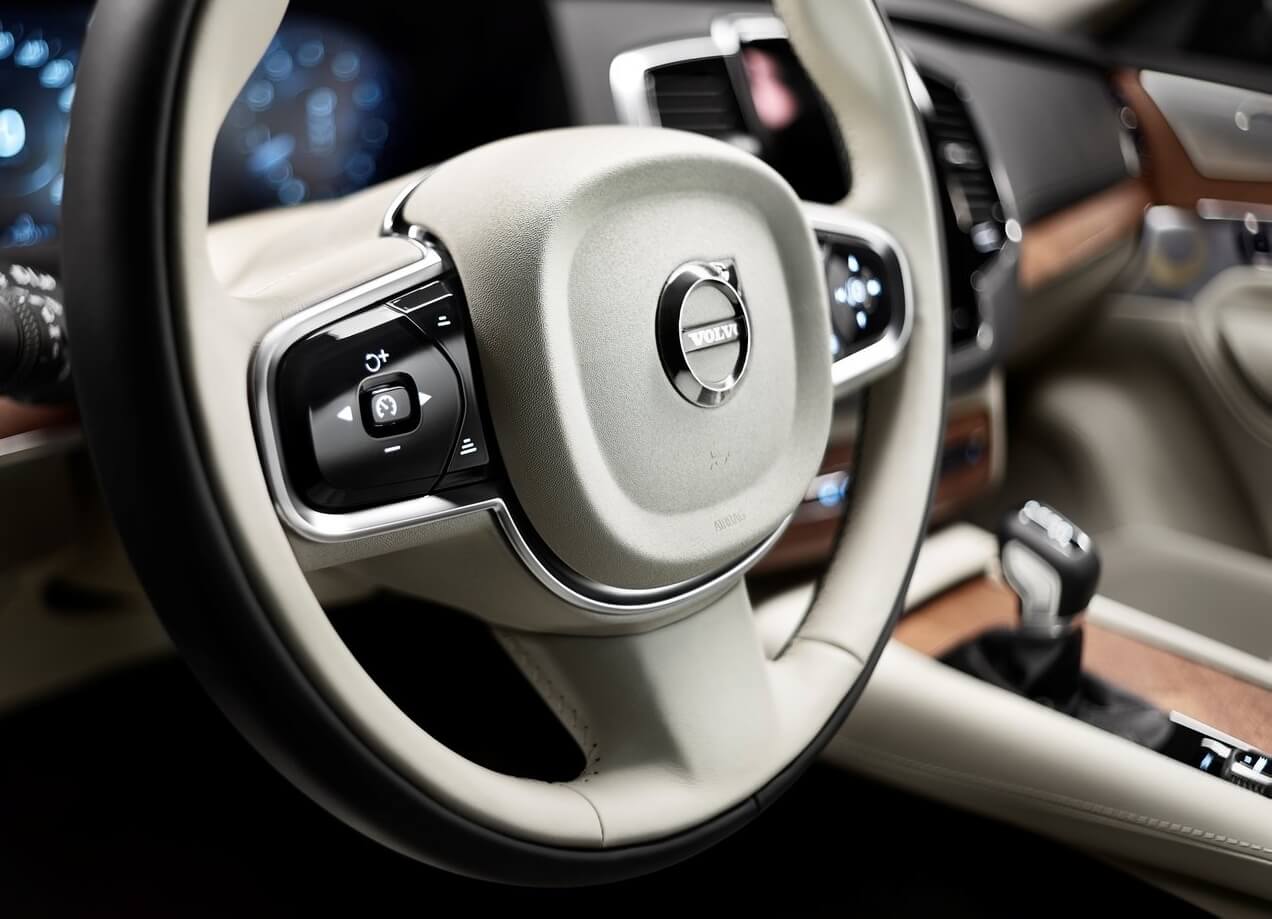
The cabin replaced most buttons with a Sensus portrait touchscreen of about 9 inches and a 12.3-inch digital instrument display, with leather, wood, metal and, on top versions, an Orrefors crystal gear selector. The three second-row seats adjust individually, and the third row suits passengers up to about 170 cm. The load floor is up to 2,040 mm long with the seats folded.
Safety and assistance
Euro NCAP tested the XC90 in 2015 and gave it five stars, with 97% for adult occupants, 87% for child occupants, 72% for pedestrians and 100% for safety assist. Its IntelliSafe systems included City Safety, which detects vehicles, pedestrians, cyclists and large animals and brakes automatically, including when turning across traffic at junctions; Run-off Road Protection, which tightens the seat belts and absorbs vertical forces if the car leaves the road; Pilot Assist semi-autonomous steering and speed control; and blind-spot and cross-traffic alerts.
Facelifts
- 2019 (2020 model year): new grille and bumpers, Android Auto, brake energy recovery and the B5/B6 mild hybrids.
- 2021: T8 renamed Recharge, with a bigger battery and electric motor.
- 2023: trim levels renamed Core, Plus and Ultimate.
- September 2024 (2025 model year): new headlights and grille, an 11.2-inch touchscreen, more recycled materials; Ultimate renamed Ultra.
The all-electric Volvo EX90, unveiled in late 2022, was first presented as the XC90's successor, but in September 2024 Volvo confirmed that both will be sold side by side.
Rivals: how the XC90 compares
The XC90 competes with the Audi Q7, BMW X5, Mercedes-Benz GLE and GLS, Range Rover Sport, Lexus RX and the Volkswagen Touareg. Its strengths are safety, seven proper seats, a calm Scandinavian interior and the plug-in hybrid option; its weaknesses are the lack of six-cylinder engines in the second generation, a firm ride on the largest wheels and expensive parts. Volvo's other large cars include the S90 saloon and V90 estate. More Swedish models are listed among Swedish cars.

Volvo XC90: first vs latest generation
| Spec | XC90 I | XC90 II | Change |
|---|---|---|---|
| Years | 2002–2014 | 2015–present | 13 years apart |
| Most powerful version | 232 kW (315 PS) | 335 kW (455 PS) | +103 kW (+44%) |
| Width | 1,898 mm | 1,923 mm | +25 mm |
| Wheelbase | 2,857 mm | 2,984 mm | +127 mm |
Oldest and newest generation in the 1cars catalog. Power is the strongest version of each; other rows are shown only when both generations have the figure.
Rivals
Compare with…
Compare Volvo XC90 with
- Tesla Model X quick spec comparison
-
EV
Ended 2026
- Years
- 2015–2026
- Body
- SUV
- Fuel
- Electric
- Power
- 190–760 kW (258–1,033 PS)

Volvo XC90 in our rankings
- No. 21 of 321 · Biggest boot: cars (613 l · top 7%)
- No. 25 of 198 · Longest SUVs and crossovers (4,950 mm · top 13%)
- No. 17 of 140 · Biggest boot: SUVs and crossovers (613 l · top 13%)
- No. 145 of 1082 · Longest-running car nameplates (24 years · top 14%)
- No. 76 of 531 · Longest cars (4,950 mm · top 15%)
- No. 67 of 391 · Heaviest cars (2,170 kg · top 18%)
Bigger boot than 93% of ranked cars in the 1CARS catalog (No. 21 of 321).
Volvo XC90 photos 45






Volvo XC90 videos 7

Volvo XC90 video 1

Volvo XC90 video 2

Volvo XC90 video 3

Volvo XC90 video 4

Volvo XC90 video 5

Volvo XC90 video 6

Volvo XC90 video 7
FAQ
How many seats does the Volvo XC90 have?
Most XC90s have seven seats in three rows: two in front, three individual seats in the middle and two in the third row, which fold into the floor. Five-seat versions were also sold.
What is the Volvo XC90 T8?
The T8 (Recharge from 2021) is a plug-in hybrid combining a 2.0 turbo and supercharged petrol engine with a rear electric motor. It produces up to 335 kW (455 PS), and its battery grew to about 18.8 kWh in 2021.
How safe is the Volvo XC90?
The second generation scored five Euro NCAP stars in 2015 with 97% for adult occupants. The first generation introduced Roll Stability Control, a reinforced roof and curtain airbags for the third row.
Does the Volvo XC90 still have a diesel engine?
No. Volvo built its last diesel car in March 2024. Current XC90s are mild-hybrid petrol models (B5, B6) or the T8 plug-in hybrid, depending on the market.
What replaced the first-generation XC90?
The second-generation XC90 on the SPA platform replaced it in 2015. The original P2 model continued in China as the XC Classic until 2016, and the last Swedish-built car was number 636,143.
Data sources
Data checked by an editor against the sources below.
- The text of this article (1cars archive)
- Wikipedia - Volvo XC90
- Euro NCAP - Volvo Xc90 2003
- Euro NCAP - New Ratings Released Ahead Of The 2015 Frankfurt Motor Show
- EEA CO₂ monitoring (European Environment Agency, CC BY 4.0)


